- The paper demonstrates that introducing an interacting dark matter subcomponent coupled with dark radiation can reduce the Hubble tension by modifying early-universe dynamics.
- MCMC analyses with Planck, BAO, SNIa, and SH0ES data reveal that models, particularly with exponential decoupling (n=0), yield best-fit parameters such as H0 ≈ 72.6 km/s/Mpc.
- The study highlights that precise measurements from small-scale CMB and LSS data critically constrain the dark radiation energy density and interacting dark matter fraction.
Cosmological Implications of Dark Matter–Dark Radiation Interactions for the Hubble Tension
Introduction
This paper ["Dark Matter-Dark Radiation Interactions and the Hubble Tension" (2511.16554)] systematically investigates a class of cosmological models wherein a subcomponent of dark matter (DM) interacts with a dark radiation (DR) sector to address the tension in measurements of the Hubble constant, H0. The persistent discrepancy between the H0 inferred from early-universe measurements (Planck CMB: H0≈67 km/s/Mpc) and local distance-ladder calibrations (SH0ES: H0≈73 km/s/Mpc) motivates extensions to ΛCDM. The authors focus on models where the interacting DM fraction (iDM) is in thermal equilibrium with DR during the early universe, decoupling at a redshift near matter-radiation equality, thereby impacting key cosmological observables such as the sound horizon, matter power spectrum (MPS), and CMB anisotropies.
Model Framework and Parameterization
The central framework assumes that while the bulk of DM is cold and non-interacting, a small fraction (typically O(1%)) is coupled to a DR sector populated after BBN. The interaction between iDM and DR is quantified via a momentum exchange rate, Γd, modeled as a power law in temperature, Γd∝T2+n. The benchmark scenarios, characterized by n=4 (four-fermion interaction), n=2 (Compton-like), and n=0 (Coulomb-like, with an exponential suppression at late times), correspond to physically motivated dark sector realizations. The cosmological impact is governed by three parameters: the DR density (ΔNeff), the iDM fraction (fidm), and the decoupling redshift (zdec).
The mechanism provides a means to decrease the sound horizon through an excess Neff but—by virtue of altered tight-coupling and structure growth suppression—avoids the enhanced Silk damping that plagues minimal DR scenarios. The decoupling dynamics imprint distinct features in both the MPS and the CMB.
Cosmological Observables: Matter Power Spectrum and CMB
The models predict several unique phenomenological signatures:
- Matter Power Spectrum Modifications: iDM-DR interactions suppress growth on scales entering the horizon before decoupling, producing characteristic dark acoustic oscillations. Abrupt decoupling (as in n=0) leads to prominent, unsmeared features, whereas slower decoupling introduces broadening.
- CMB Signatures: The evolution of the gravitational potential in response to the coupling modifies both the temperature and polarization power spectra. Increased DR energy density is partially compensated by the interacting component, reducing the otherwise strong constraints on ΔNeff from Planck CMB data.
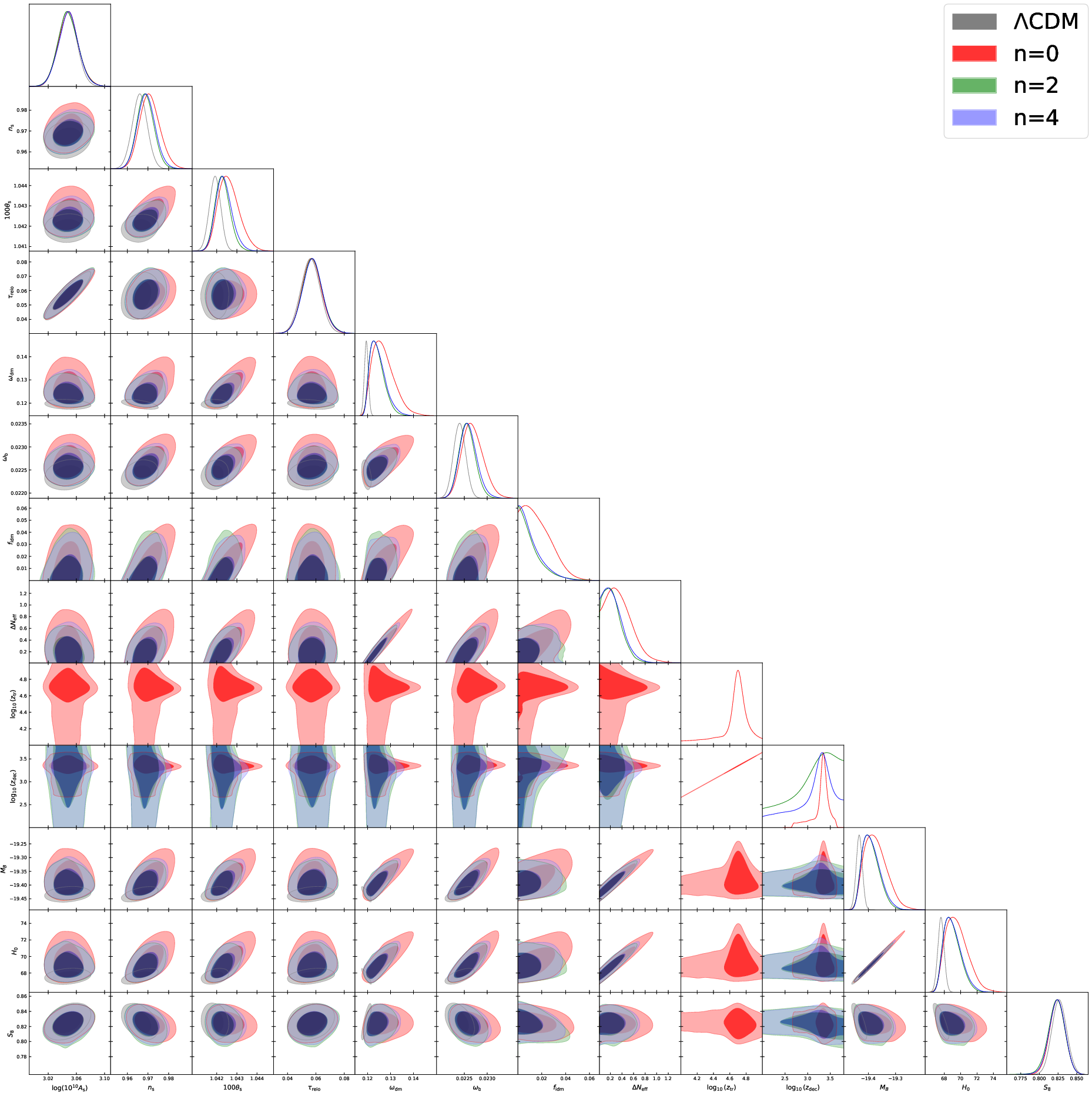
Figure 1: 1D and 2D posterior distributions of the parameters for ΛCDM (gray), n=0 (red), n=2 (green), and n=4 (blue) models, showing fits to the Planck+BAO+SNIa dataset.
Statistical Analysis and Dataset Integration
The modified models were implemented into the CLASS Boltzmann code and analyzed via MCMC methods (Cobaya), scanning over all relevant cosmological and model-specific parameters. The analysis utilizes several data combinations:
- Planck 2018 CMB (temperature, polarization, lensing)
- BAO (6dFGS, SDSS, eBOSS, DESI)
- Pantheon+ SNIa
- SH0ES (H0 via Cepheid calibration)
- ACT DR6 (CMB small-scale lensing and temperature)
- Full-shape matter power spectrum (BOSS, eBOSS, EFT-of-LSS analysis)
Akaike Information Criterion (AIC) is used to assess model preference accounting for increased degrees of freedom. Posterior analyses include joint constraints on ΔNeff, fidm, zdec, and derived H0, S8.
Results: Efficacy in Addressing the Hubble Tension
Key numerical findings are as follows:
- No SH0ES Prior: For Planck+BAO+SNIa, the model extensions yield negligible improvements over ΛCDM. The information criterion penalizes the model complexity.
- With SH0ES Prior: All three benchmark scenarios significantly reduce the tension, with the n=0 (fast/exponential decoupling) case favored (ΔAIC ≈−29 for PH). The tension is reduced to less than 1σ for best-fit parameters: ΔNeff∼0.9, fidm∼3%, H0∼72.6 km/s/Mpc.
- Inclusion of Small-Scale CMB (ACT DR6): Constraints on ΔNeff tighten due to sensitivity to silk damping; the best-fit H0 shifts downward (H0∼70.7 km/s/Mpc), corresponding to a <3σ reduction in tension.
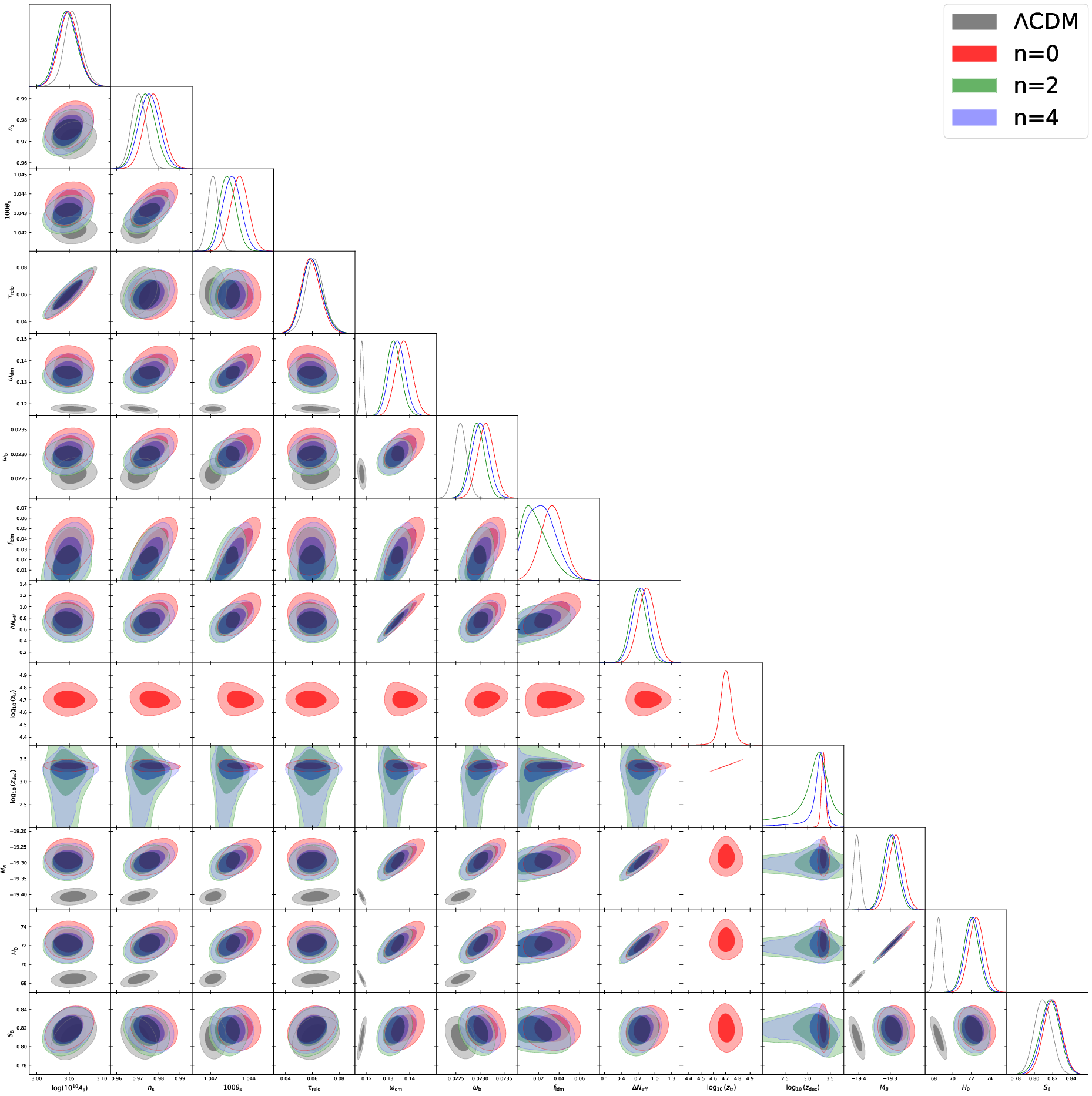
Figure 2: Posterior distributions for ΛCDM and benchmark models fitted to Planck+BAO+SNIa+SH0ES data, demonstrating substantial expansion in the allowed H0 region for interacting scenarios.
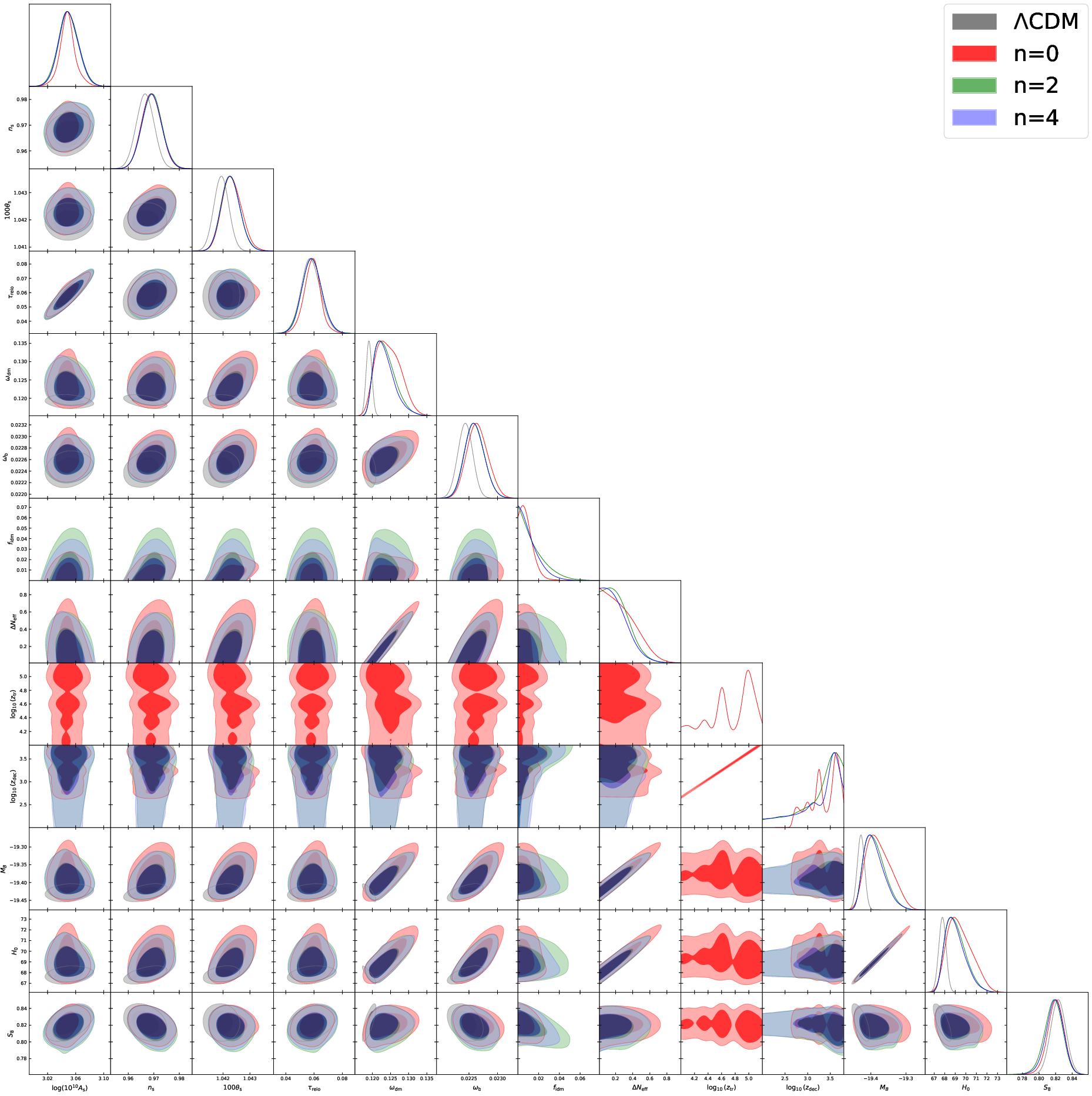
Figure 3: Results for full-shape MPS analysis (BOSS/eBOSS), showing constraints on dark acoustic oscillation amplitude and correlating preference for higher zdec with larger fidm.
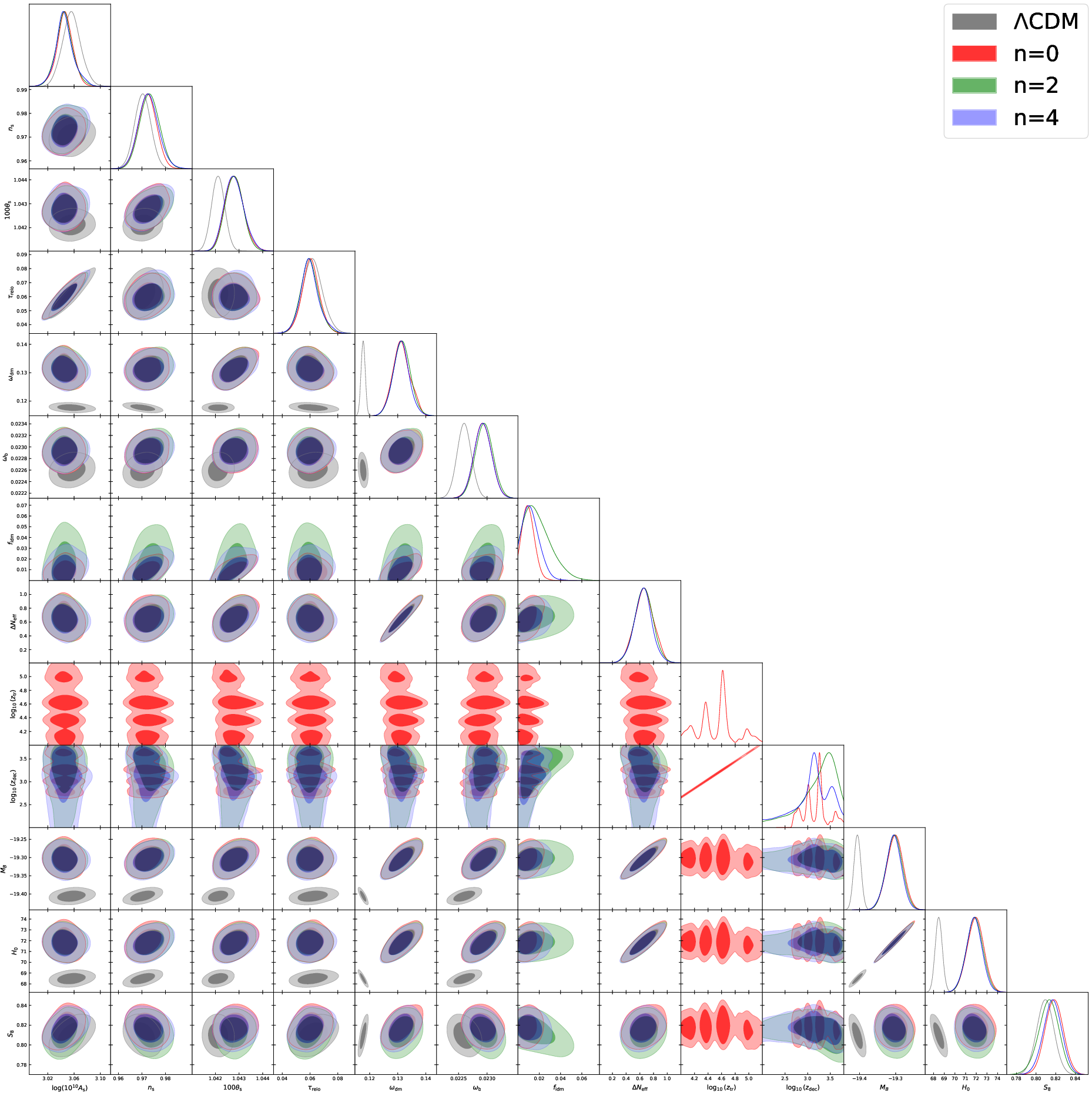
Figure 4: Posterior constraints from combined Planck+BAO+SNIa+Full-Shape MPS+SH0ES data, with tight bounds on both ΔNeff and fidm.
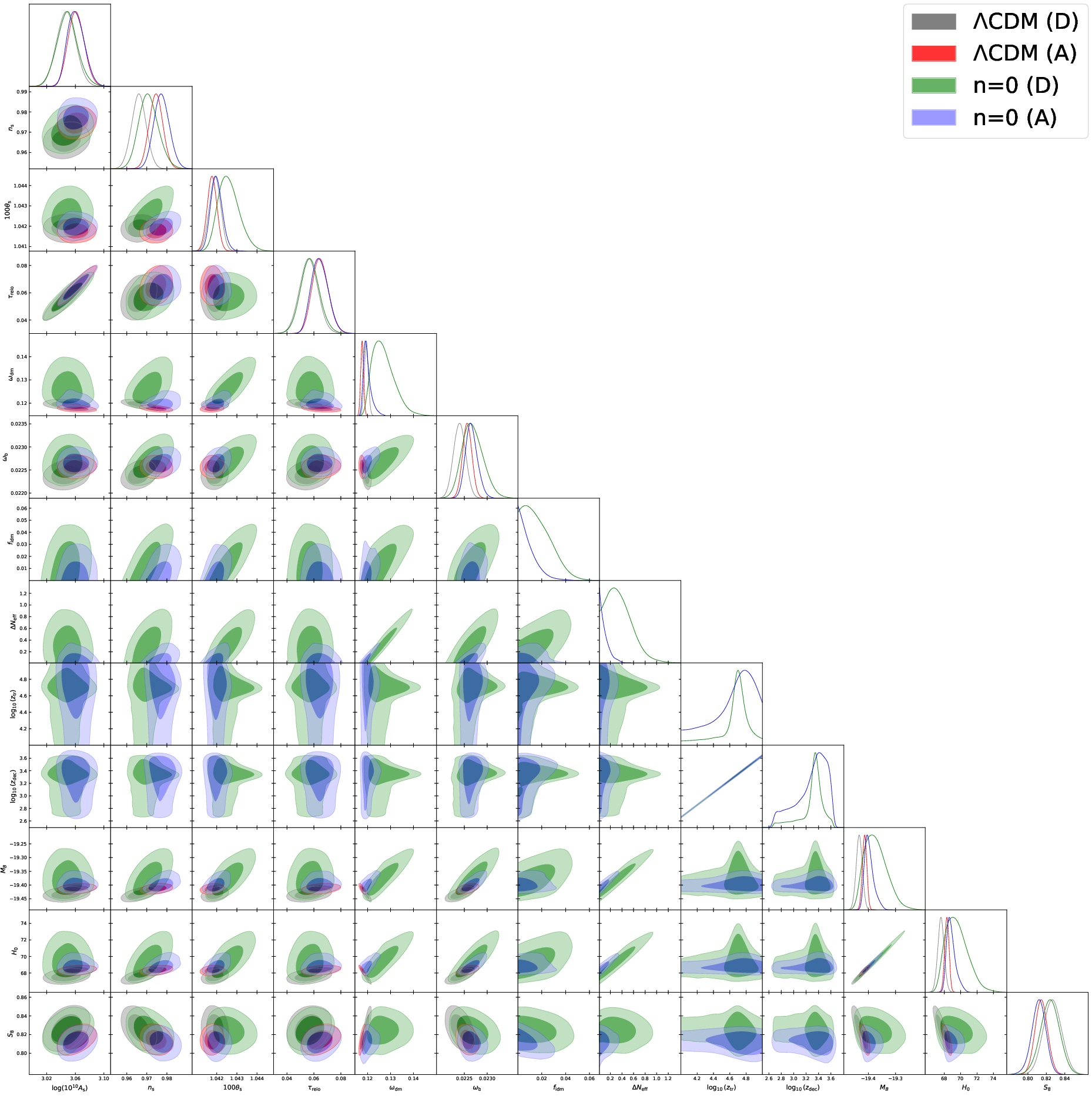
Figure 5: Comparison of posterior distributions for Planck and ACT datasets, highlighting stronger constraints from ACT on ΔNeff and H0.
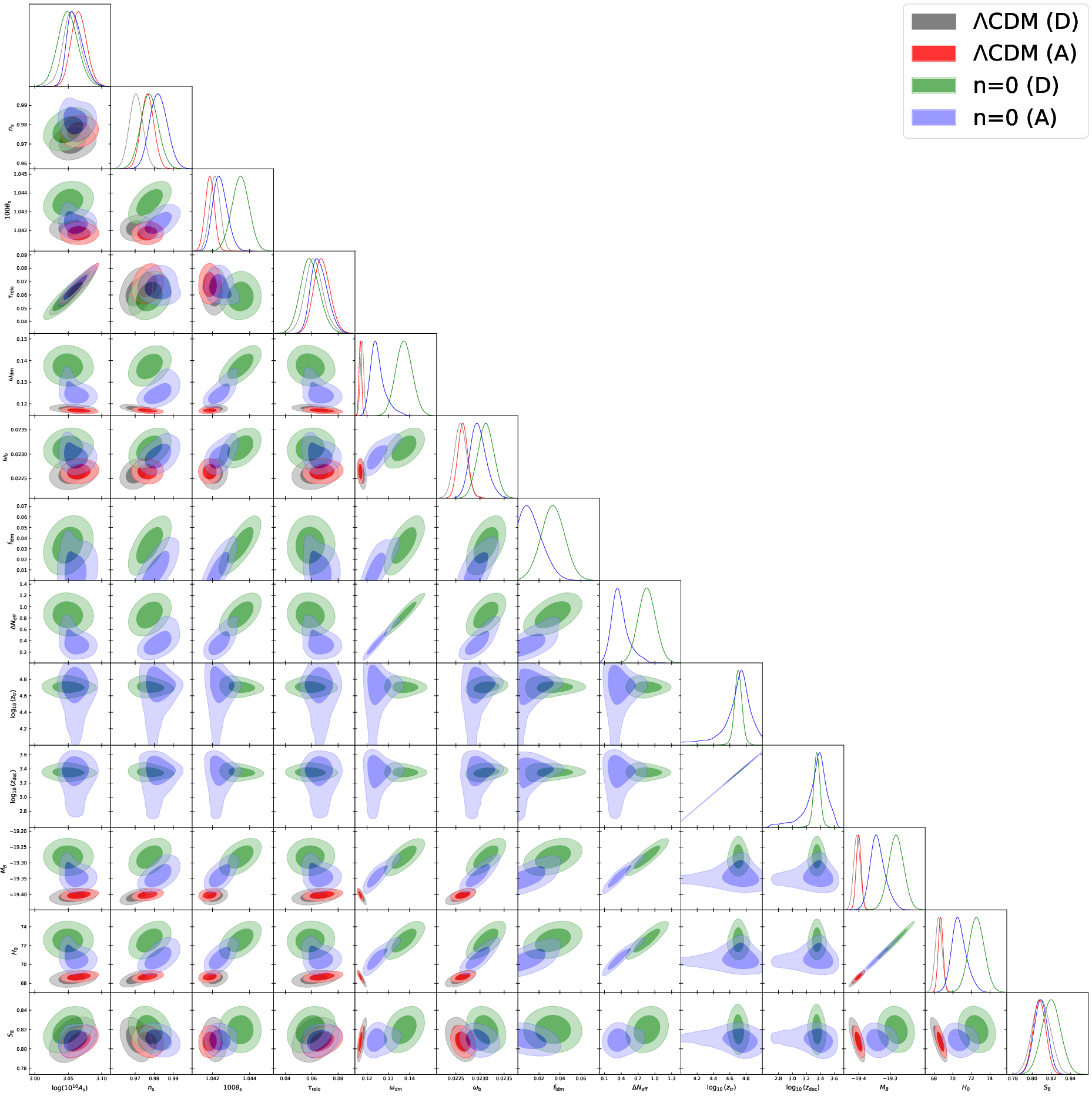
Figure 6: Posterior distributions for fits including local H0 and ACT DR6, showing residual tension and limited expansion in viable H0.
Theoretical and Practical Implications
The principal theoretical implication is that a small interacting DM subcomponent (fidm∼1−3%) coupled to an increment in dark radiation relaxes the CMB bounds on ΔNeff, enabling reconciliation of early and late universe H0 measurements. However, the resolution is sensitive to small-scale CMB and LSS constraints, whose increased precision already disfavors arbitrarily large ΔNeff and large iDM fractions.
On a practical level, these models suggest new directions for both direct DM searches and phenomenological model building, emphasizing the need for early-universe signatures distinguishable from late-time modifications. Future CMB and LSS data (Stage-IV CMB, DESI, Euclid) will further constrain the permitted parameter space, potentially falsifying or substantiating such models. The robust identification of dark acoustic oscillations in the nonlinear MPS may serve as a distinctive experimental probe.
Future Directions
Further developments could address:
- UV completions for generic n parameterizations, with specific attention to couplings realized in particle physics models
- Improved treatment of non-linear structure formation in presence of dark sector interactions
- Joint forecasts utilizing high-ℓ CMB, BAO, SNIa, and direct H0 probes from future surveys to definitively assess the viability of interacting dark sector models
- Synergy with other Hubble tension resolution attempts (e.g., early dark energy, modified gravity)
Conclusion
The analysis establishes that dark matter–dark radiation interactions with rapid decoupling provide a compelling framework for mitigating the Hubble tension. While inclusion of local H0 measurements favors these models—particularly those featuring exponential decoupling—precision small-scale CMB and full-shape LSS data substantially restrict the model parameter space. The correlation between ΔNeff and fidm underscores the need for tightly coupled early-universe probes. Future experiments will offer decisive tests for these scenarios, and the continued interplay between theory and data will be essential for resolving the H0 tension within a consistent cosmological model.