- The paper presents a physically-motivated parameterization that derives the supernova neutrino spectrum from first-principles thermal diffusion theory using a single spectral parameter τ(t).
- It validates the model using SN1987A data and high-fidelity 3D simulations, achieving a best-fit χ²ν of 1.07 and revealing a significant negative correlation between τ and total energy Q.
- The framework establishes multi-messenger synergies by correlating neutrino spectra with gravitational wave signals, offering a new diagnostic tool for probing progenitor mass and explosion dynamics.
A Physically-Motivated Parameterization of Core-Collapse Supernova Neutrino Spectra
Introduction
This paper establishes a new analytic parameterization for the neutrino energy spectrum emitted by core-collapse supernovae (CCSNe), directly linking the observed spectral shape to the underlying physical processes via a single interpretable parameter, τ(t). Building from first-principles thermal diffusion theory rather than purely phenomenological models such as the Keil–Raffelt–Janka (KRJ) parameterization, the framework robustly bridges spectral observables with the thermodynamic evolution of the explosion engine. The model demonstrates both strong statistical consistency with the landmark SN1987A neutrino burst and broad applicability to a suite of high-fidelity 3D supernova simulations, yielding unique physical insights and multi-messenger connections.
Theoretical Framework and Spectral Model
The central advance is the derivation of the energy spectrum shape from the solution to the diffusion equation in an idealized scenario representing the CCSN core as a point source embedded in a homogeneous medium. The model defines the spectral parameter τ(t) as the time-integrated thermal diffusion area, τ(t)=∫0tκ′(s)ds, where κ′ is the thermal diffusivity. This quantity physically maps to the square of the diffusion length, directly controlling energy transport efficiency during the explosion. The analytic spectrum takes the form:
φ(E,t)∼A(⟨E⟩E)τm⟨E⟩/E∗exp[−τ(⟨E⟩∗E)β]
with A for normalization, m the energy-conducting particle mass (assumed unity), and β=2 for time-resolved spectra, β=1 for time-integrated. Unlike KRJ's α parameter, τ emerges from direct physical modeling, enabling the inference of explosion conditions from observed neutrino spectra.

Figure 1: Illustration of the toy model’s thermal energy diffusion stages, emphasizing the role of τ in describing energy transport.
The framework does not attempt to solve for neutrino oscillation physics, focusing instead on the final, observed spectrum—allowing extraction of the underlying explosion thermodynamics from post-oscillation data.
Empirical Validation: SN1987A and 3D Simulation Data
SN1987A Fit
Applying the new parameterization to SN1987A neutrino data via a Bayesian-optimized genetic algorithm yields statistically significant fits, outperforming both "hot" and "cold" KRJ models particularly at the non-thermal spectrum tails. The best-fit χν2=1.07 for 37 degrees of freedom (p = 0.358) substantiates physical model validity.
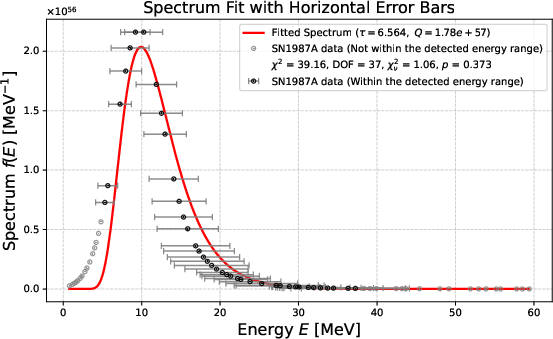
Figure 2: Model fit to SN1987A spectrum shows excellent agreement and highlights the physical interpretability of τ compared to phenomenological models.
Posterior analysis confirms that τ is well constrained by data, with negative correlation to the normalization parameter Q. No observational constraints currently exist at low neutrino energies (E≲5 MeV), but the model's deviation in this domain presents a testable prediction for future sensitive observations.
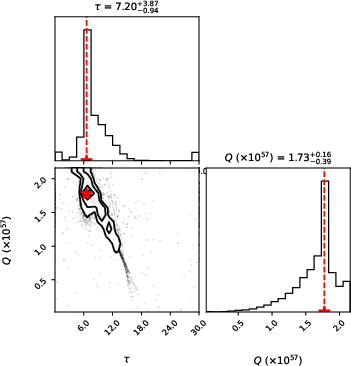
Figure 3: Posterior distributions for τ and Q show tight constraints and clear anti-correlation.
3D Simulation Trends
A systematic assessment across 3D simulations reveals a highly significant linear relation between the time-integrated spectral parameter τint and the total energy Qint released in the first 2 seconds post-bounce for successful explosions:
τint=(7.76±0.38)−(4.56±0.86)×10−53Qint
This negative slope quantifies the trade-off between heating and transport: higher Q requires lower transport efficiency for explosion.
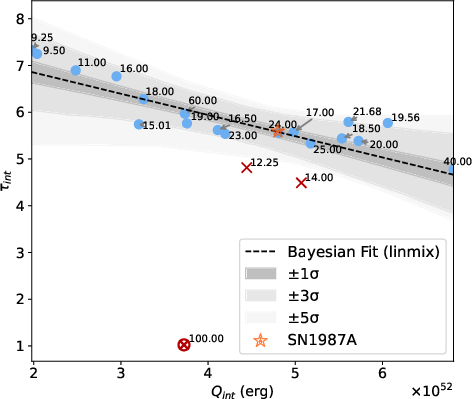
Figure 4: Linear relation between integrated energy and thermal diffusion parameter, with progenitor masses annotated.
Kernel density estimation in the τint–Qint space yields only weak constraints on Betelgeuse-like progenitors, highlighting the need for denser model grids and improved statistics.
Spectral Parameter as a Progenitor Diagnostic
The distribution of τQ as a function of progenitor mass distinguishes explosion regimes, with an apparent transition near M∼40M⊙. Smoothed Isotonic Regression applied to low-mass models enables a robust estimate of the progenitor mass for SN1987A, yielding M∼19M⊙ within 10–30% uncertainty bands, aligning with independent evolutionary inferences.
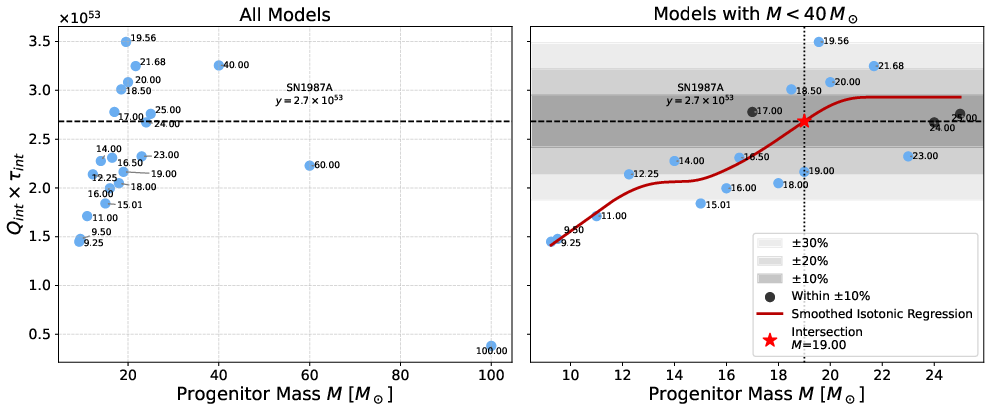
Figure 5: Spectral parameter versus progenitor mass; intersection with SN1987A value yields a mass estimate.
Figure 6: Monotonic trend in spectral parameter fit with isotonic regression, further supporting mass constraints.
Dynamical Classification and Multi-messenger Synergies
Parameter Evolution and Clustering
Temporal evolution of τ(t) clearly separates failed (monotonic decay) and successful (rebounds, oscillations) explosions, as captured via unsupervised clustering on engineered volatility and rebound features. This dichotomy reflects the physical aftermath of shock revival and can serve as a multi-messenger diagnostic.
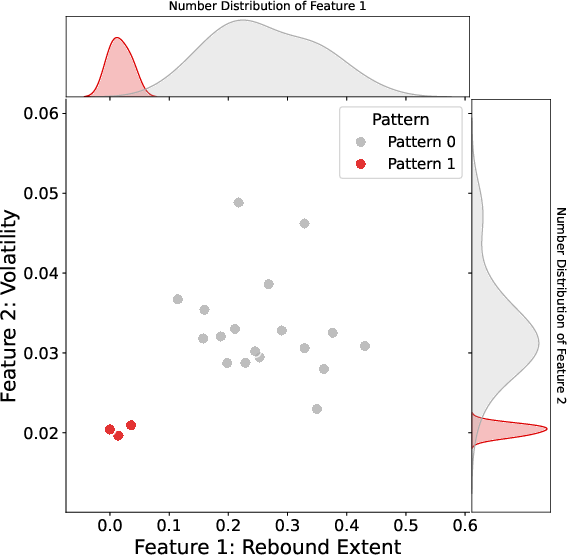
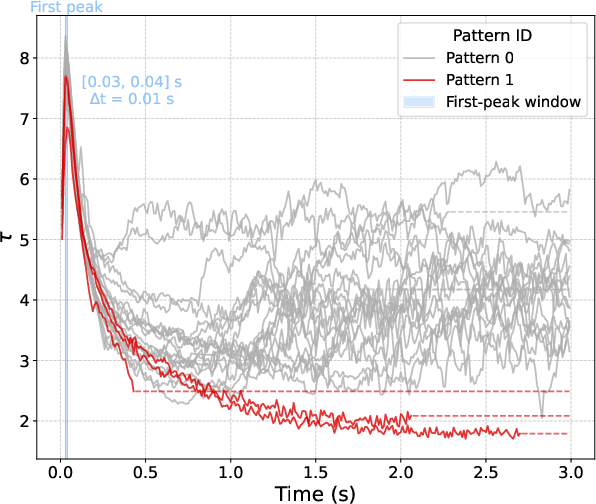
Figure 7: Temporal clustering of τ separates successful and failed models robustly.
Frequency-domain PSDs of τ display broad spectral power in successful explosions and quiescence in failures, connecting neutrino transport signatures directly to hydrodynamic instabilities (SASI, convection).
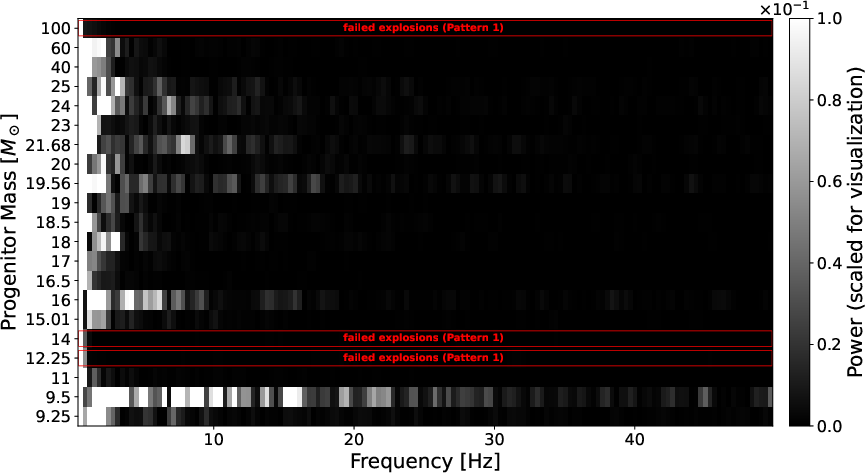
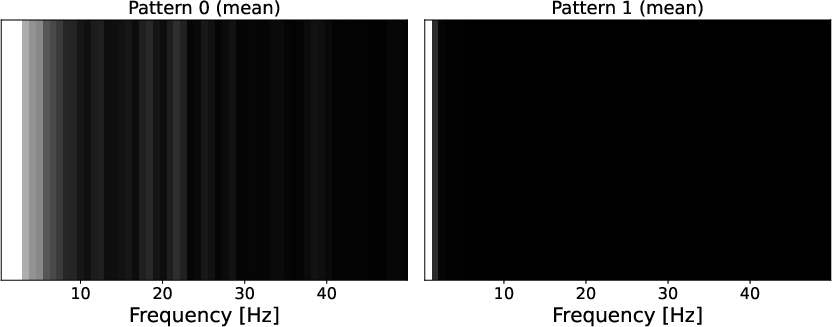
Figure 8: Power spectral density of τ for different progenitor masses, highlighting failed explosions.
Co-evolution with Gravitational Waves
Applying an Unscented Kalman Filter state-space analysis, the evolution rates of τ(t) and GW strain amplitude yield near-unity correlation (ρ′>0.98) across all models, indicating a tight coupling between core energy transport and GW emission geometry—in both success and failure regimes.
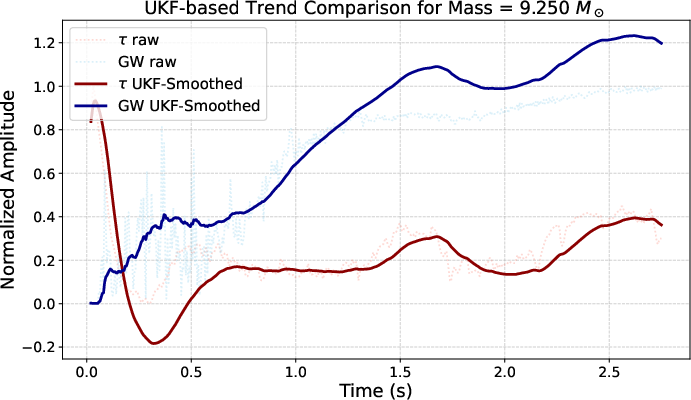
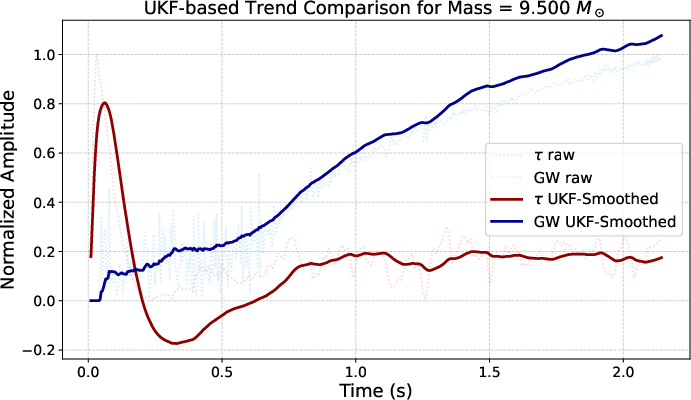
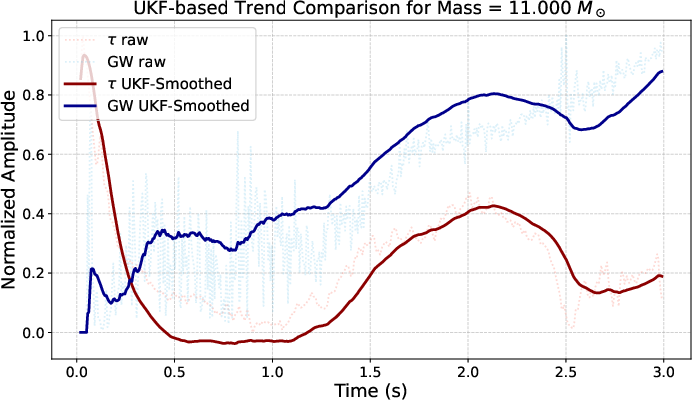
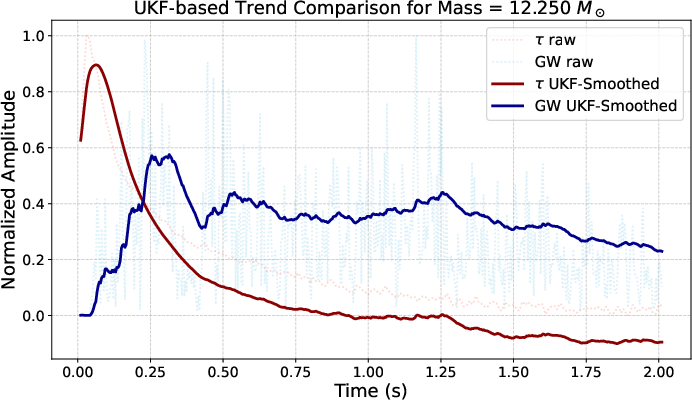
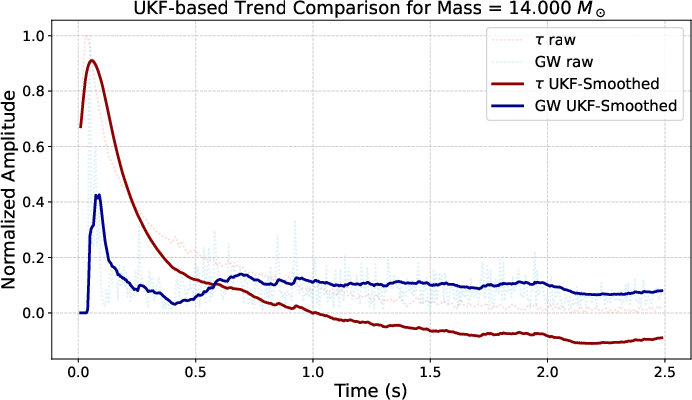
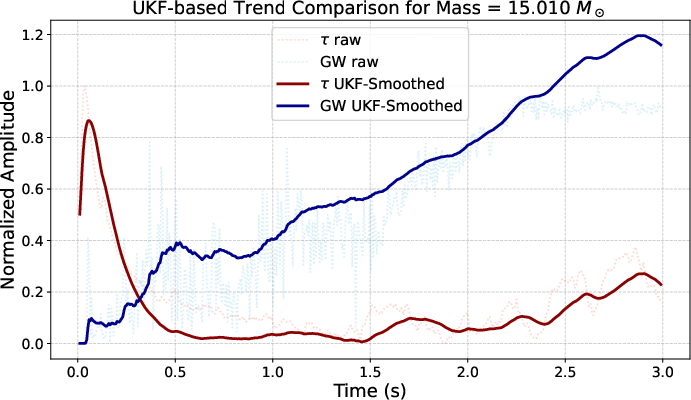
Figure 9: Evolution of GW amplitude and τ are strongly synchronized for various progenitor masses.
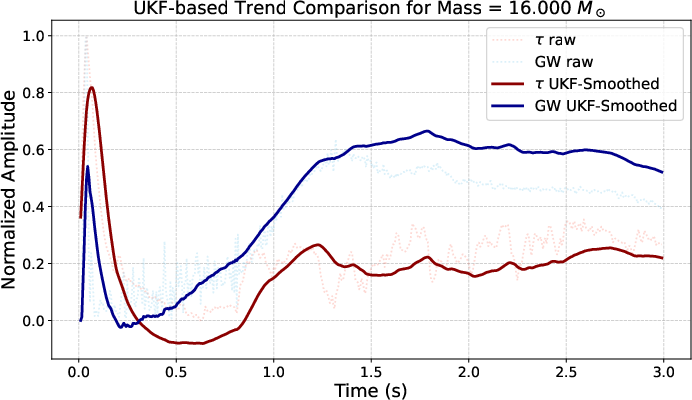
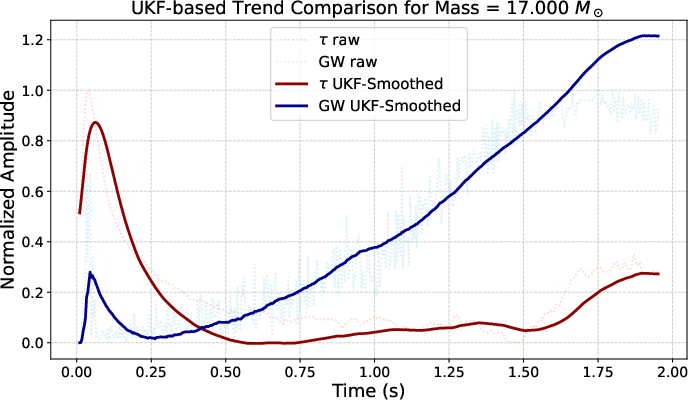
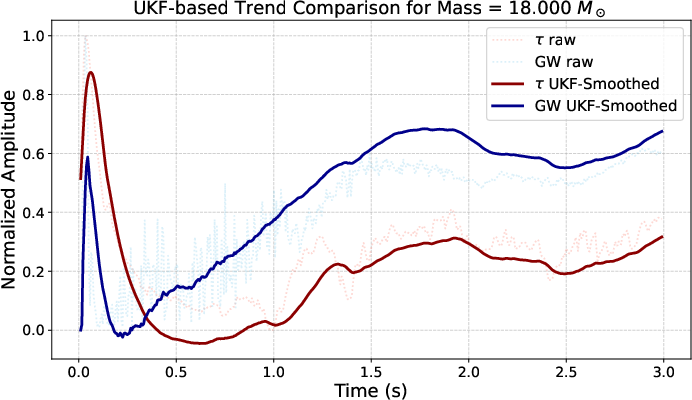
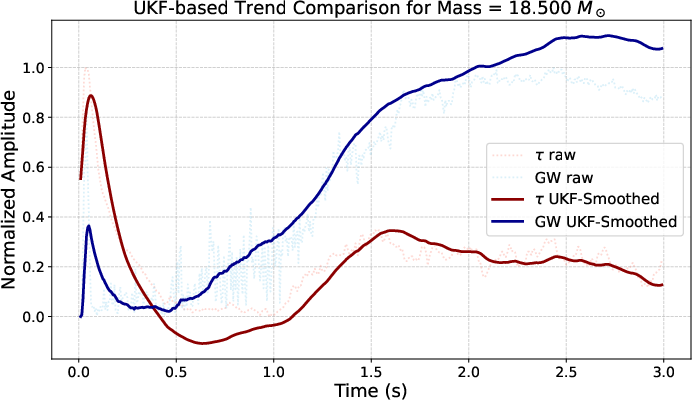
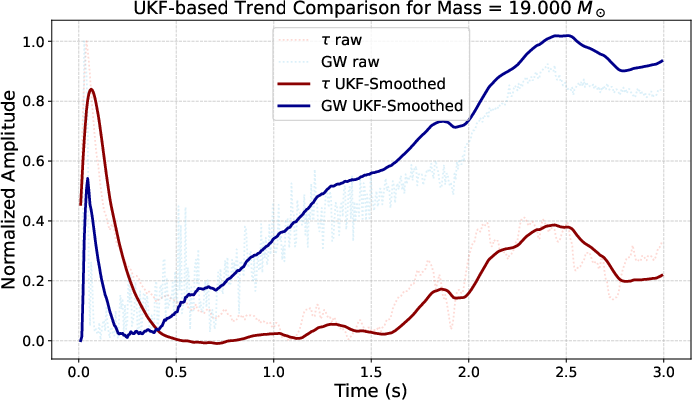
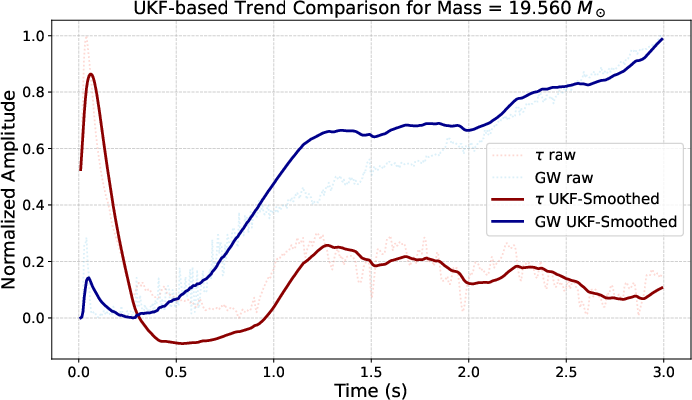
Figure 10: Further examples of τ–GW co-evolution across the parameter space.
This inextricable link provides a path to indirect GW detection/characterization via neutrino spectra, crucial for current and future GW observatories where matched-filter searches remain intractable for CCSNe signals.
Implications, Robustness, and Future Directions
The physically-interpretable τ parameterization is robust across diverse supernova scenarios, but its utility outside CCSNe—for low-energy events or binary-altered progenitors—remains probabilistic and will require broader validation. The connection between τ and core compactness/structure indicators (ξM, M4–μ4) is conceptually promising, representing a bridge between progenitor structure and explosion outcome, though direct empirical calibration awaits expanded multi-messenger datasets.
Phenomenological limitations include τ’s insensitivity to flavor-conversion microphysics; further refinement will require integrating fast flavor conversion and post-shock oscillation physics via more complex modeling. Extension to other transients (novae, luminous red novae, optical transients) is speculative but empirically motivated.
Conclusion
This work introduces and validates a new parameterization for CCSN neutrino spectra, extracting maximally interpretable physical diagnostics from available data. The central spectral parameter τ(t) correlates strongly with explosion success, progenitor mass, and GW emission patterns, and enables rigorous post-explosion classification. Application to SN1987A yields both statistically significant spectral fits and credible progenitor mass constraints. In forward-looking terms, this model provides a template for future multi-messenger analysis frameworks, which will increasingly rely on joint neutrino and GW detections to probe the microphysics and dynamics of galactic supernovae.