- The paper introduces a multi-parent recombination operator leveraging binomial weights to control variance and enhance evolutionary convergence.
- It demonstrates significant improvements in PID tuning, FIR filter design, wireless resource allocation, and TSP via precise variance contraction metrics.
- Theoretical links to Bernstein polynomials and prospects for adaptive weight strategies offer promising directions for future research.
Pascal-Weighted Genetic Algorithms: A Binomially-Structured Recombination Framework
Framework Overview and Theoretical Foundations
The Pascal-Weighted Recombination (PWR) operator introduces a multi-parent crossover strategy for genetic algorithms (GAs) leveraging normalized binomial coefficients from Pascal's triangle. By constructing offspring as structured convex combinations of m parents, with weights drawn from a symmetric, unimodal binomial distribution, PWR emphasizes central inheritance while controlling disruptive variance. Formally, offspring o are computed as o=∑i=1mwipi, with wi=(i−1m−1)/2m−1. Parents undergo random permutation prior to weight assignment to mitigate positional bias.
From a variance propagation perspective, PWR achieves strict contraction, with offspring variance given by σo2=σp24m−1(m−12m−2). For m>2, variance is both less than parent variance and smaller than in equal-weight averaging, yielding self-regularization without hyperparameter tuning.
This binomial structure naturally corresponds to the evaluation of Bernstein basis polynomials at t=1/2, aligning PWR with classical Bézier curve interpolation. Accordingly, offspring lie within the parent convex hull, maintaining stability and shape preservation—key attributes for steady evolutionary convergence.
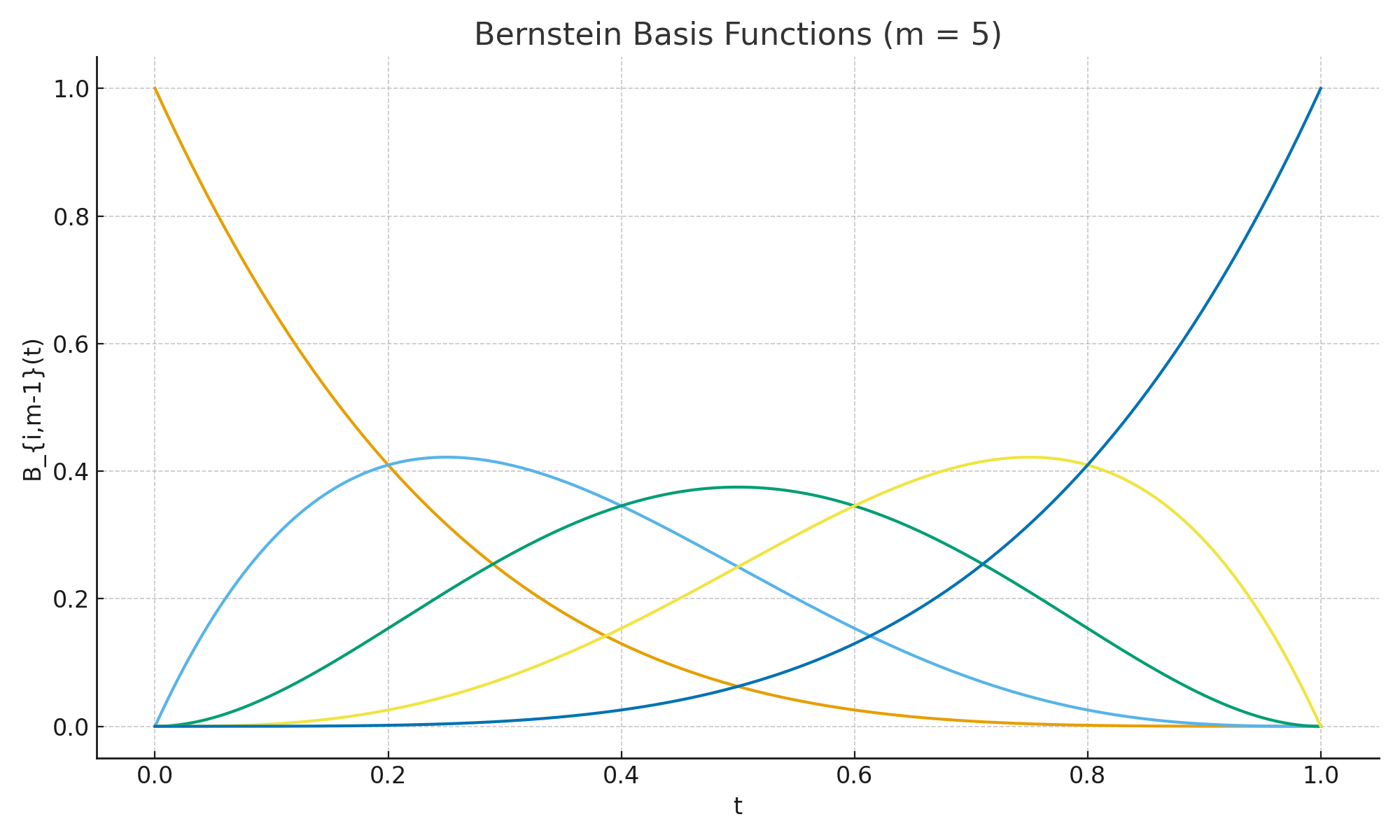
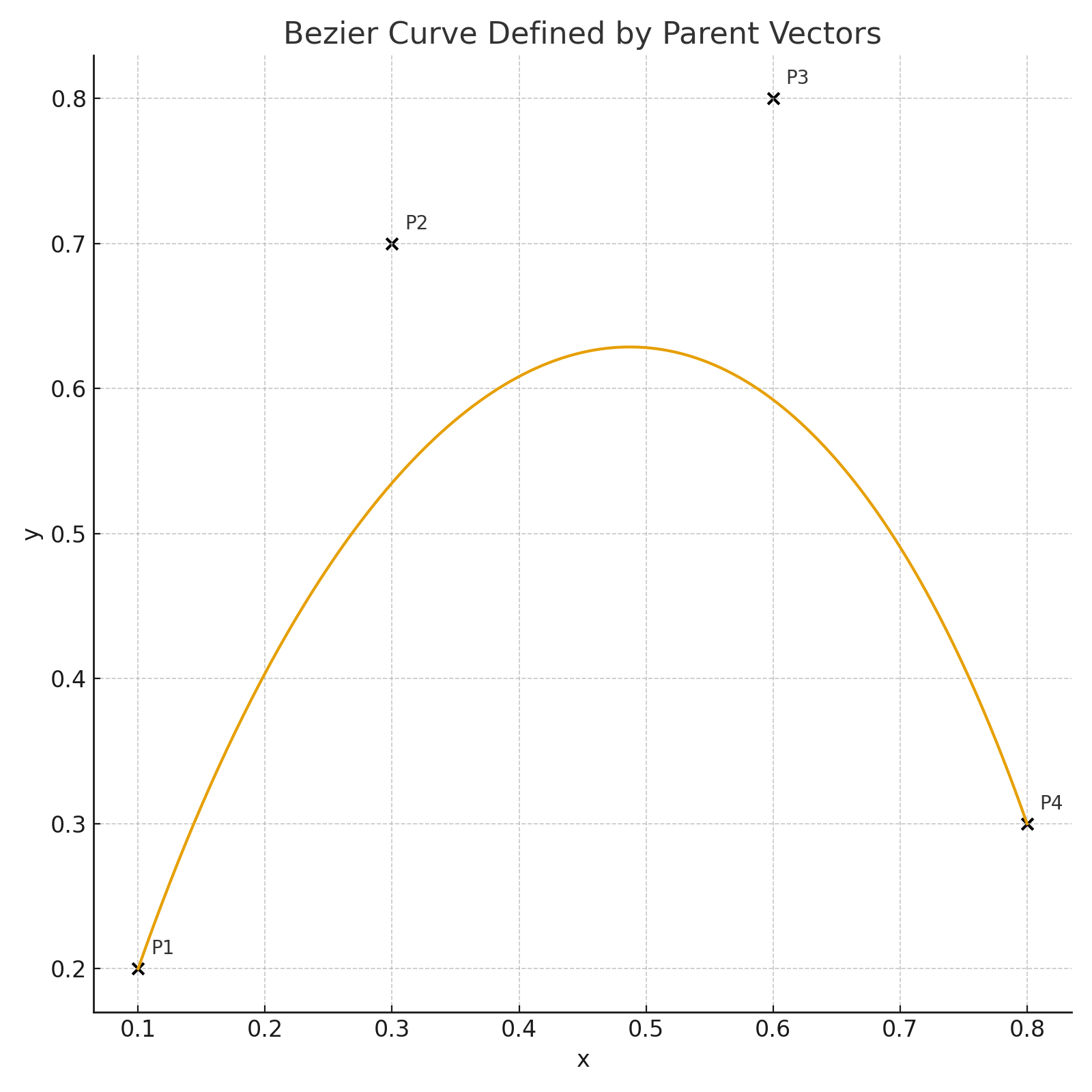
Figure 1: Bernstein basis functions (degree 4, m=5) used in binomial weighting, enforcing smooth convex inheritance in PWR.
Integration and Representation Extensions
PWR integrates seamlessly into standard GA pipelines with complexity O(md), analogous to arithmetic crossover. For real-coded domains, weighted summation is direct. Binary alleles are mixed in logit space; the mixture is transformed via the logistic sigmoid and sampled as Bernoulli. Permutation-based and combinatorial domains employ weighted allele selection followed by conflict repair, tailored to maintain feasibility, e.g., duplicate removal and incremental cost minimization for TSP routing.
Empirical Evaluation Across Benchmarks
PID Controller Tuning
PWR demonstrates superior stability and convergence in PID parameter evolution, measured with the ITAE metric. Empirical results across 20 trials reveal PWR-3 achieving a median ITAE of 1.557, outperforming classical two-parent (median ITAE 1.842) and BLX-α variants, with notably reduced inter-run variance.
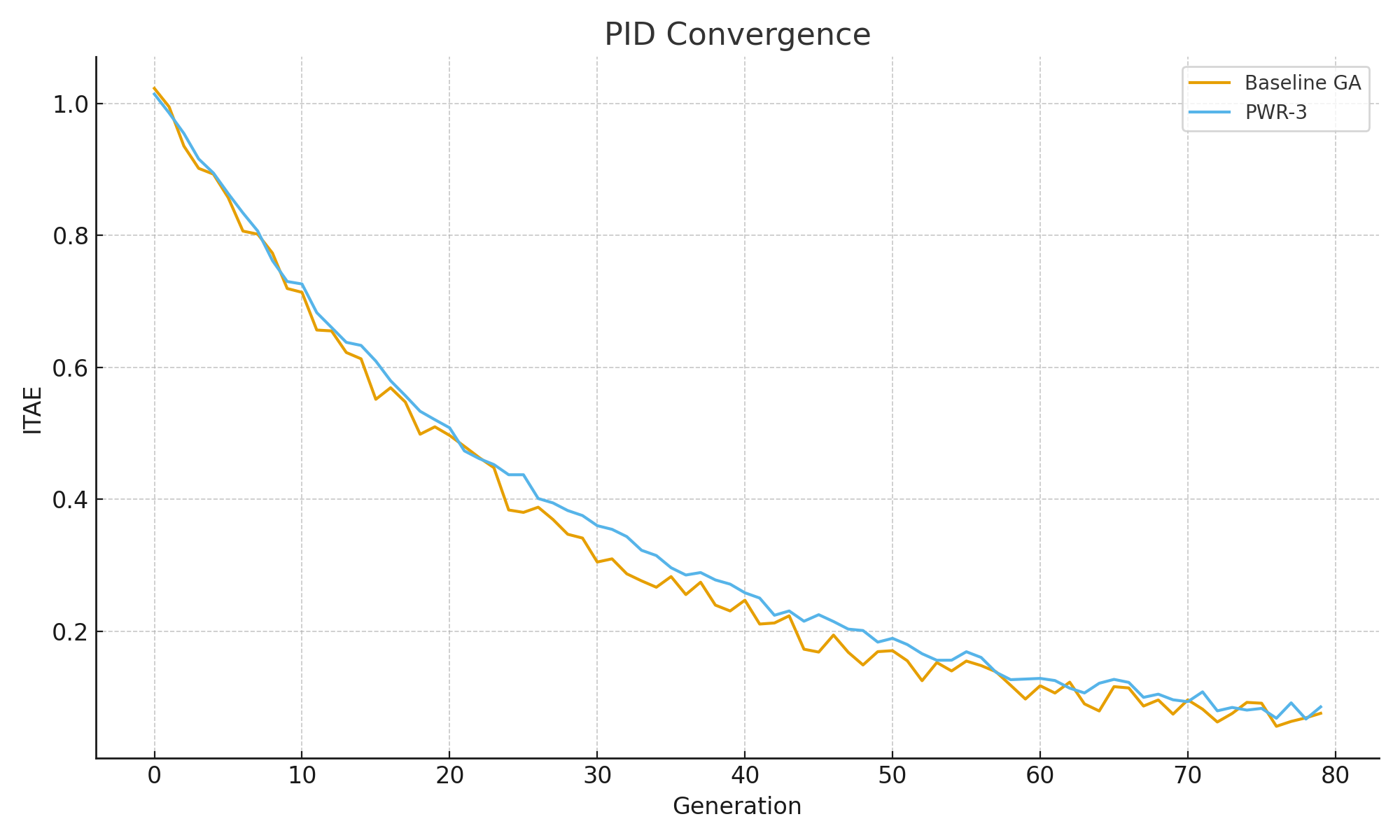
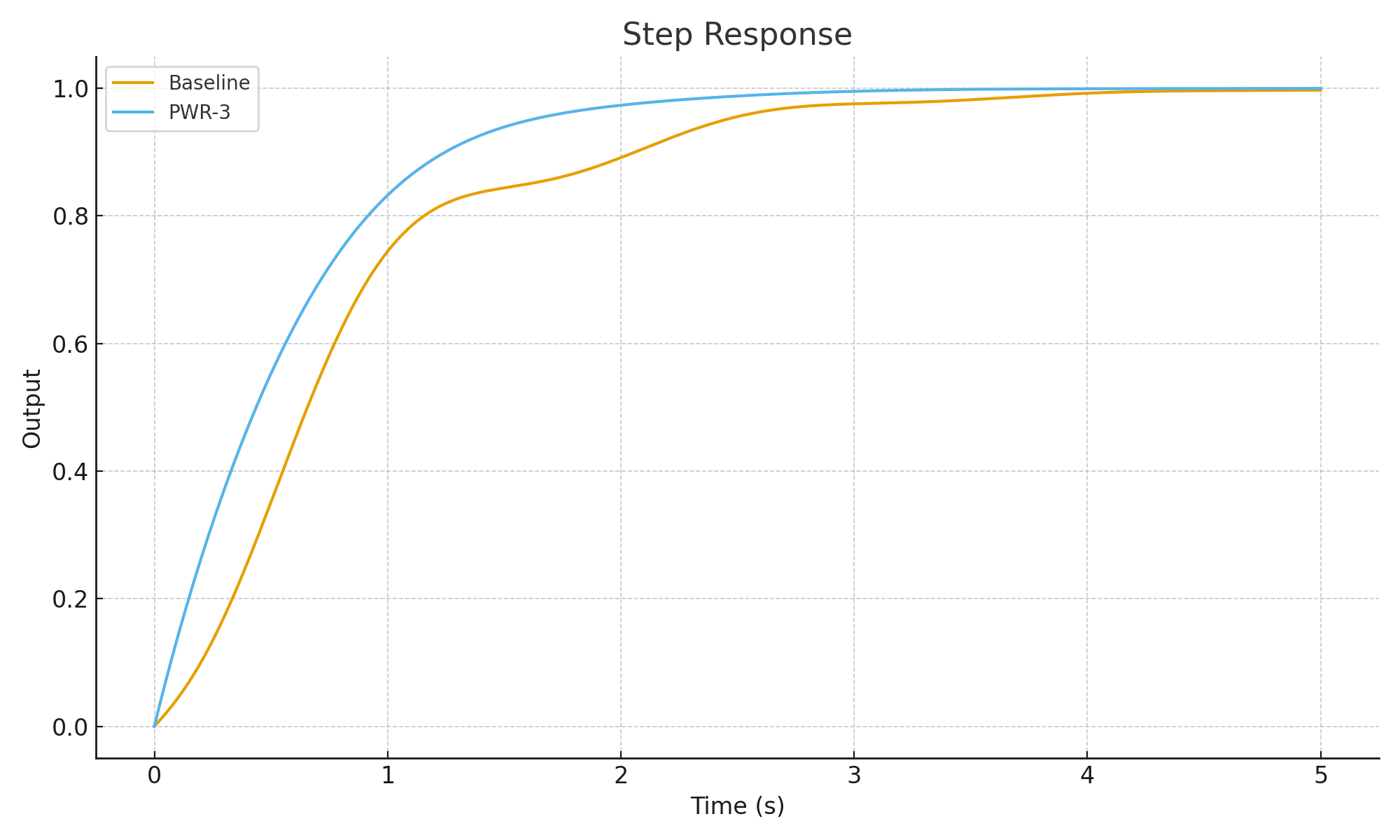
Figure 2: ITAE convergence for PID tuning, showing suppressed oscillations and lower final errors via Pascal-weighted multi-parent GA.
FIR Filter Design
In FIR coefficient evolution, PWR-3 achieves lower mean objective (0.0257) compared to two-parent (0.0324), BLX-α, and equal-weight averaging, with improved stopband attenuation and ripple suppression.
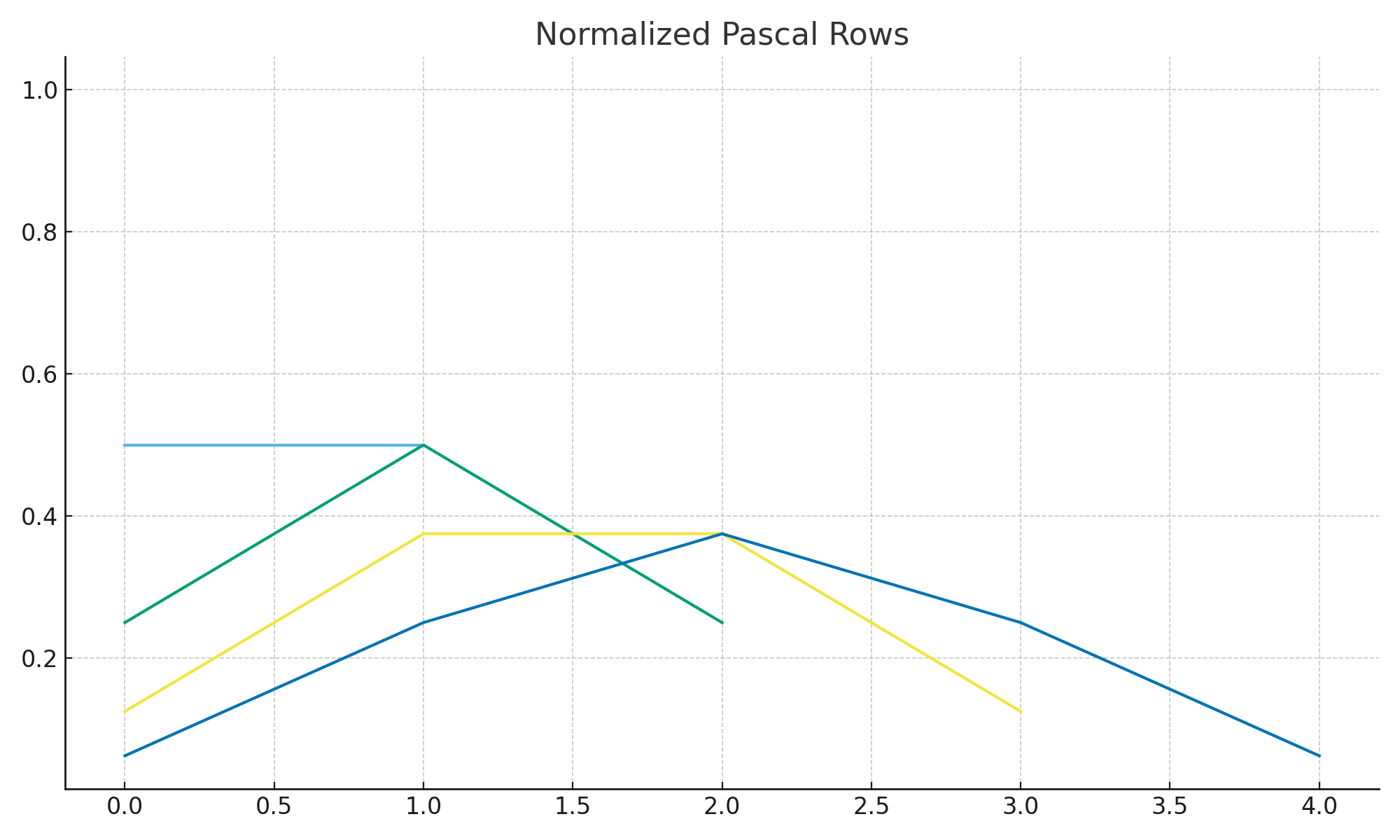
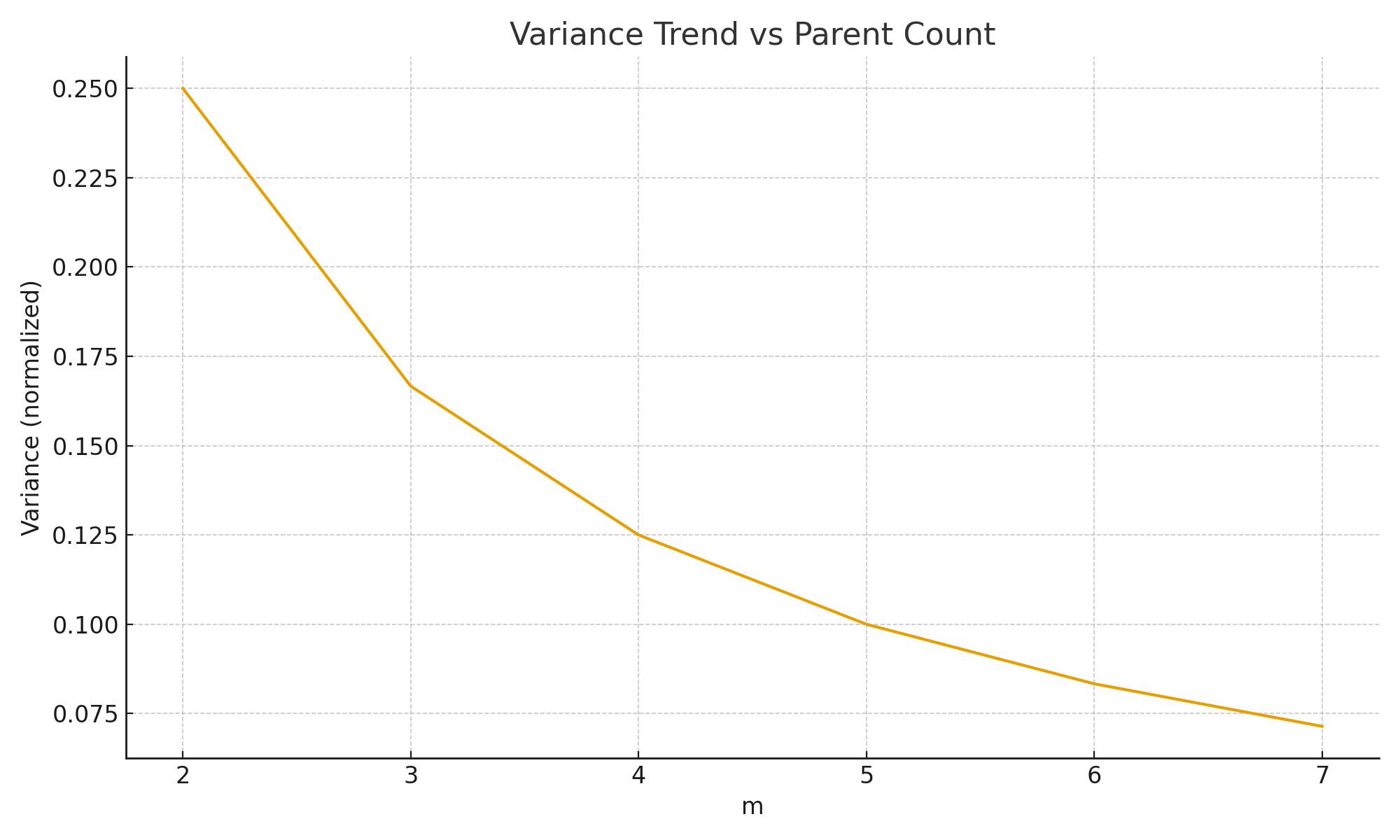
Figure 3: Normalized Pascal rows for m∈{2,…,5}, illustrating central bias intensification as parent count increases.
Wireless Resource Allocation
For SINR-constrained wireless optimization, PWR-based GAs deliver higher network utility, improved feasibility, and pronounced variance reduction. PWR-3 yields a median utility of 47.1, outperforming DE-style and SBX operators, with feasibility surpassing 87%—a gain relative to standard GA baseline.
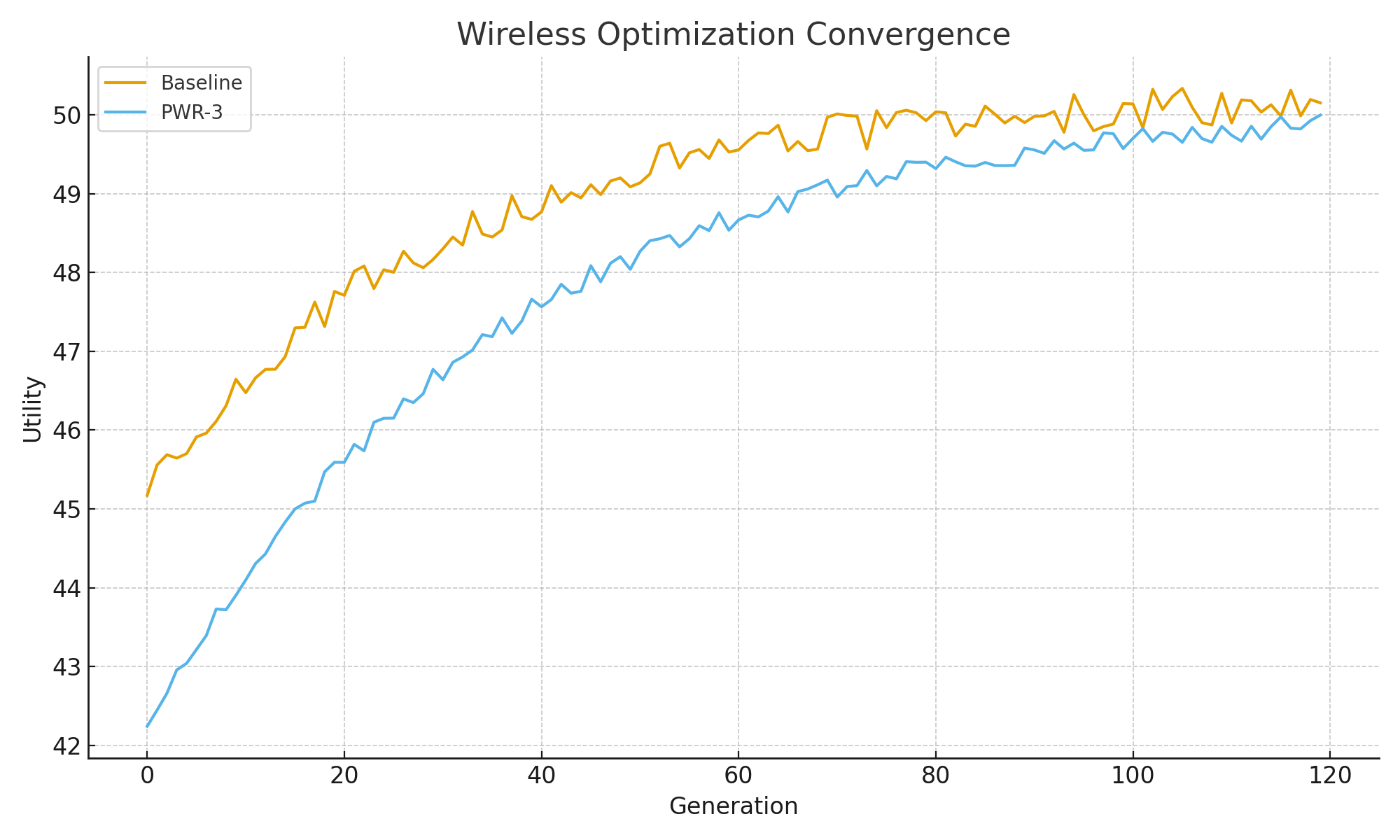
Figure 4: Wireless resource allocation utility convergence, PWR-3 rapidly achieves higher utility and reduced variability compared to baseline GA.
Combinatorial Optimization: Traveling Salesman Problem
Permutation PWR-3 consistently produces shorter tours (median length 6.402 vs. PMX 6.443) and lower variance, demonstrating the efficacy of structured multi-parent recombination in discrete optimization.
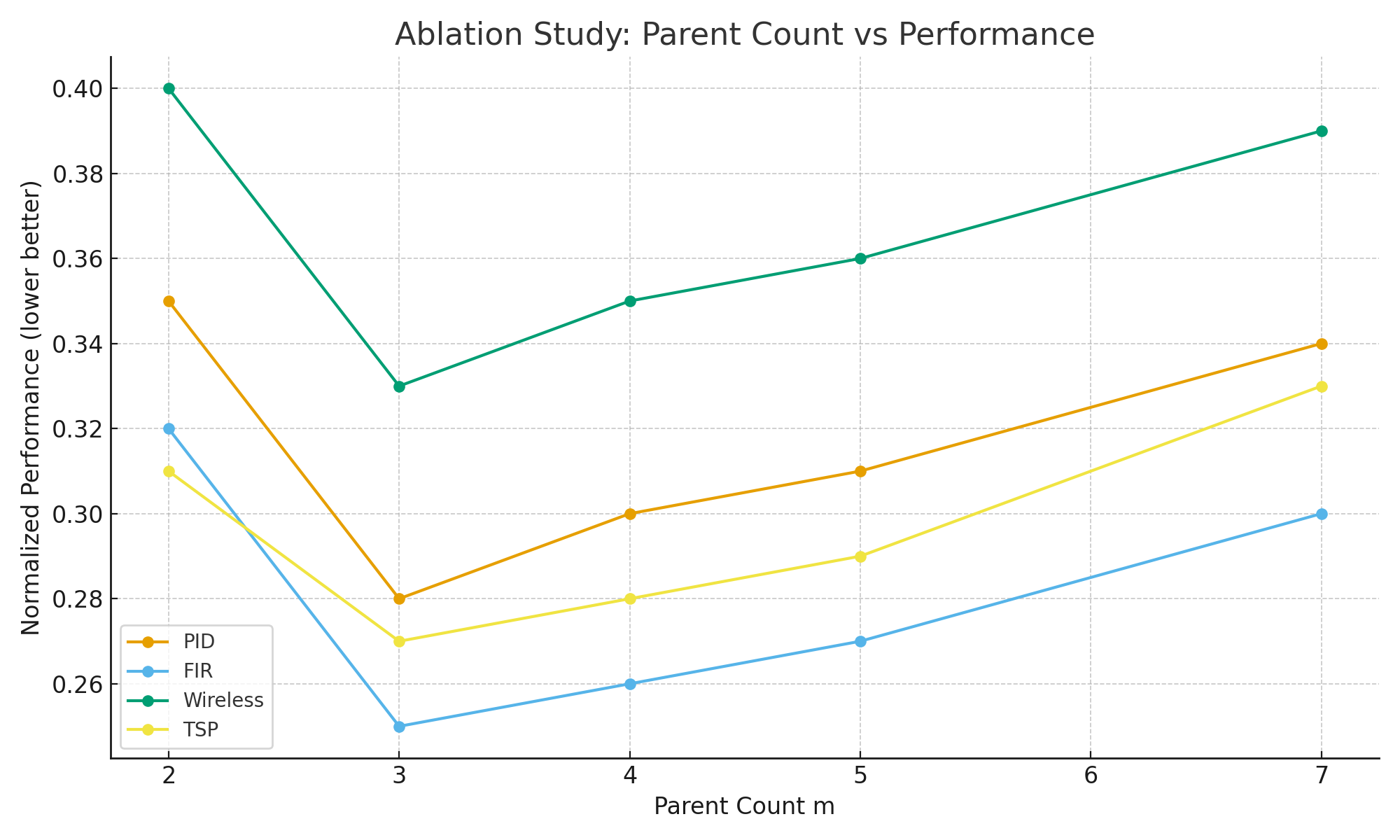
Figure 5: Effect of varying parent count m on normalized performance (PID, FIR, Wireless, TSP); m=3 achieves optimal trade-offs across domains.
Ablation and Sensitivity Analysis
Parent count m acts as a control for variance contraction; m=3 delivers optimal blend of stability and exploration across benchmarks. Increasing m further provides smoother convergence but may induce conservatism. Binomial weighting dominates equal and Dirichlet-random assignments in convergence quality and variance reduction.
Mutation rate sensitivity is dampened in PWR compared to classical operators; moderate rates suffice for exploration without destabilizing the search. Selection pressure via tournament size k aligns optimally with k=3 for PWR, larger k risks diversity collapse. In permutation domains, increasing m exacerbates repair overhead.
Theoretical Implications and Connections
PWR's foundation in binomial coefficients links directly to broader combinatorial phenomena—Fibonacci sequences and the golden ratio—suggesting pathways for adaptive parent count scheduling and ratio-inspired designs. The operator provides a mathematically interpretable means to engineer inheritance surfaces, potentially extendable to self-adaptive or multi-objective frameworks (e.g., NSGA-II, MOEA/D).
Limitations
Despite robust variance reduction and convergence, PWR may under-explore highly multimodal landscapes, necessitating hybridization with exploration-enhancing mutation or crossover. Permutation repair complexity grows with problem size. Fixed binomial schemes could be superseded by adaptive or learned weight structures for further improvement. Explicit diversity preservation mechanisms are absent in PWR.
Conclusion
Pascal-Weighted Recombination defines a principled, algorithm-agnostic multi-parent crossover mechanism structured by binomial weights aligned with Bernstein polynomial interpolation. Demonstrated across PID tuning, FIR design, wireless optimization, and permutation-based tasks, PWR reliably provides smoother convergence, reduced variance, and enhanced solution quality over conventional operators. Future research encompasses adaptive weight designs, operator hybridization, extension to large-scale combinatorial problems, formal convergence analysis, and integration into multi-objective evolutionary frameworks. The combinatorial foundation of Pascal weights positions PWR as a compelling tool for structured, variance-aware evolutionary search methodologies.