- The paper demonstrates that large-scale migration from Reddit led to a 100% increase in toxicity on Voat, with less than 5% of newcomers assuming hub status, indicating a peripheral-driven norm shift.
- Methodologically, it employs matched-pair comparisons across six Voat subverses and utilizes advanced measures like RoBERTa-ToxiGen and DIBRM to assess network trust and toxicity dynamics.
- Findings highlight the critical need for proactive moderation, as delayed interventions allow toxic norms to equilibrate and irreversibly transform community structures.
Introduction
The paper "Reddit Deplatforming and Toxicity Dynamics on Generalist Voat Communities" (2512.22348) conducts a rigorous longitudinal analysis of migration-induced norm transformations on Voat, emphasizing the repercussions of Reddit's deplatforming events on receiving, generalist-oriented communities. Unlike previous research that centers on source platforms or banned niche communities, this work interrogates the collateral impact on alt-tech platforms' ecosystem-wide health, employing matched-pair comparisons across six large Voat subverses and their Reddit counterparts.
Methodological Framework
The study leverages the MADOC dataset to cover Voat's entire operational lifespan (2014–2020) and matches six key Voat subverses with scaled Reddit analogues (covering media-sharing and topic-oriented communities like /v/funny and /v/gaming). The authors utilize:
- Retrospective cohort segmentation aligned with four key Reddit ban events.
- Interaction network analysis (degree distributions, assortativity, E-I index for cohort segregation).
- RoBERTa-ToxiGen-based community toxicity detection optimized for implicit hate speech.
- DIBRM dynamic reputation modeling to track structural trust.
This methodology permits decomposition of migration outcomes into regime-dependent mechanisms, supporting inference on whether transformation is hub-driven or periphery-driven.
Regime Analysis of Migration Dynamics
Following four major Reddit ban events—FatPeopleHate (2015), Pizzagate (2016), QAnon/GreatAwakening (2018), The_Donald (2020)—Voat's generalist communities experienced discontinuous structural and toxicity shifts, as shown in platform-level timeseries.
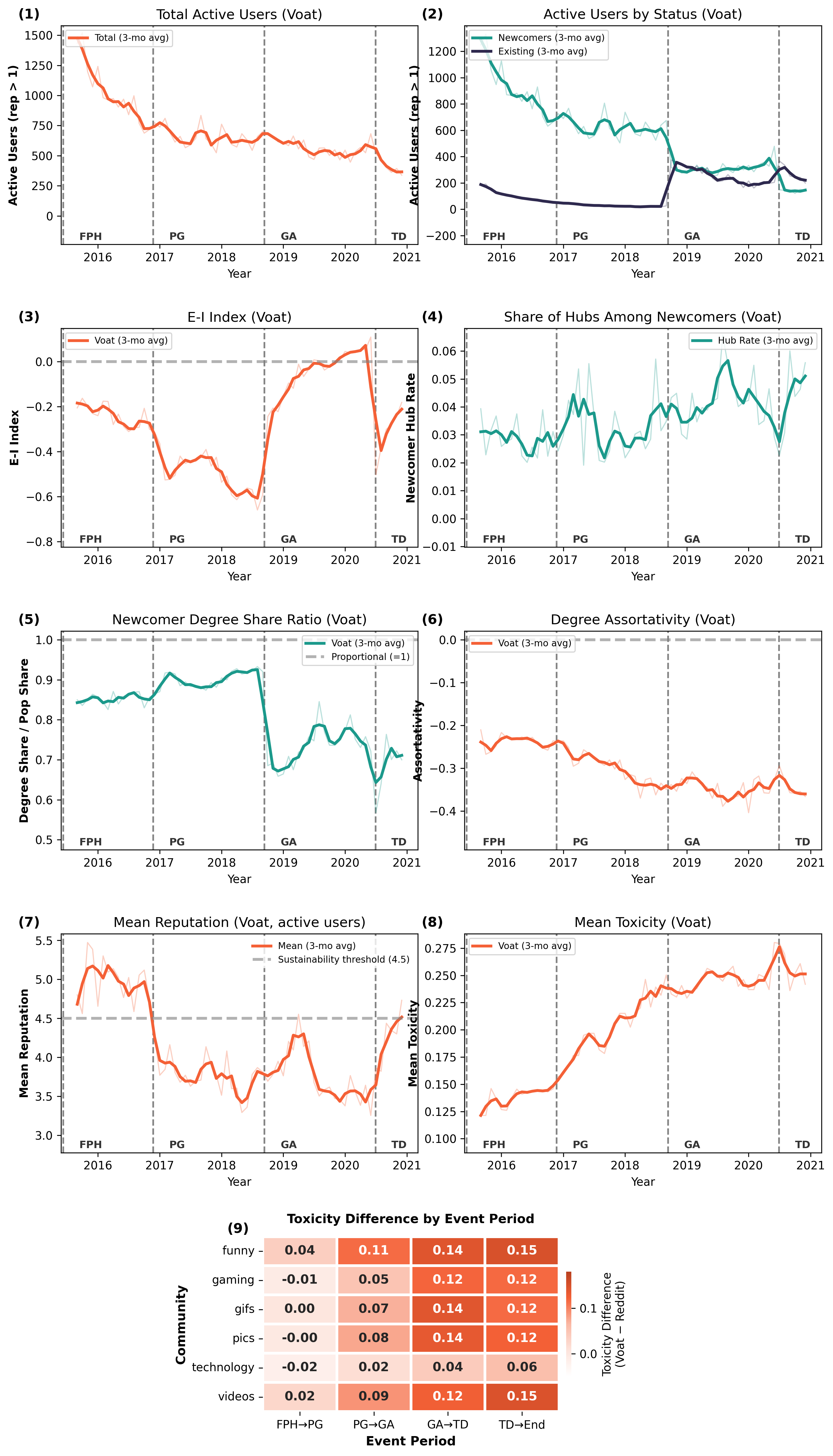
Figure 1: Aggregate Voat community dynamics showing user activity, cohort composition, network integration, newcomer centrality, and toxicity metrics across ban events.
Regime 1: Hostile Takeover via Peripheral Volume (2015–2018)
During the initial post-ban waves, there was a pronounced collapse of cross-cohort interaction (E-I Index from −0.35 to −0.66) and a doubling of mean toxicity (from $0.12$ to $0.24$). Notably, the proportion of newcomers achieving high-degree (hub) status in the interaction network never exceeded 5%, with the rate typically in the 2–6% range, invariant across ban events. Rather than capturing structural influence, migrants formed parallel social structures that circumvented established user cores.
The corresponding flattening in community reputation, with the average deteriorating below the Stack Exchange "sustainability" threshold (4.5), signaled a systemic loss of network trust. This indicates that when migration exceeds a critical volume threshold, transformation is not dependent on prominent network actors but on "bypass through numbers," subverting reputation-based anchoring and structural resilience.
Regime 2: Toxic Equilibrium and Integration (2018–2020)
After the QAnon (GA) ban, cross-cohort interaction rapidly rebounded (E-I Index returns to zero), toxicity plateaued at a new baseline (∼0.25), and the pre-migration elite dissolved, creating an egalitarian interaction pattern. Newcomer hub rates remained static, affirming that community transformation did not require integration into legacy elite strata—rather, the legacy structure itself was subsumed. In this regime, migrants, instead of forming isolated enclaves, became incorporated into what had become a predominantly toxic community, with cohort distinctions progressively erased.
/v/funny
The /v/funny community is emblematic of the regime dynamics uncovered. Quantitatively, /v/funny achieved the highest toxicity relative to its Reddit analogue (ratio 1.81, absolute delta +0.102). Despite this, mean reputation stabilized after transient post-migration oscillations, indicating that persistent user engagement continued under altered norms.
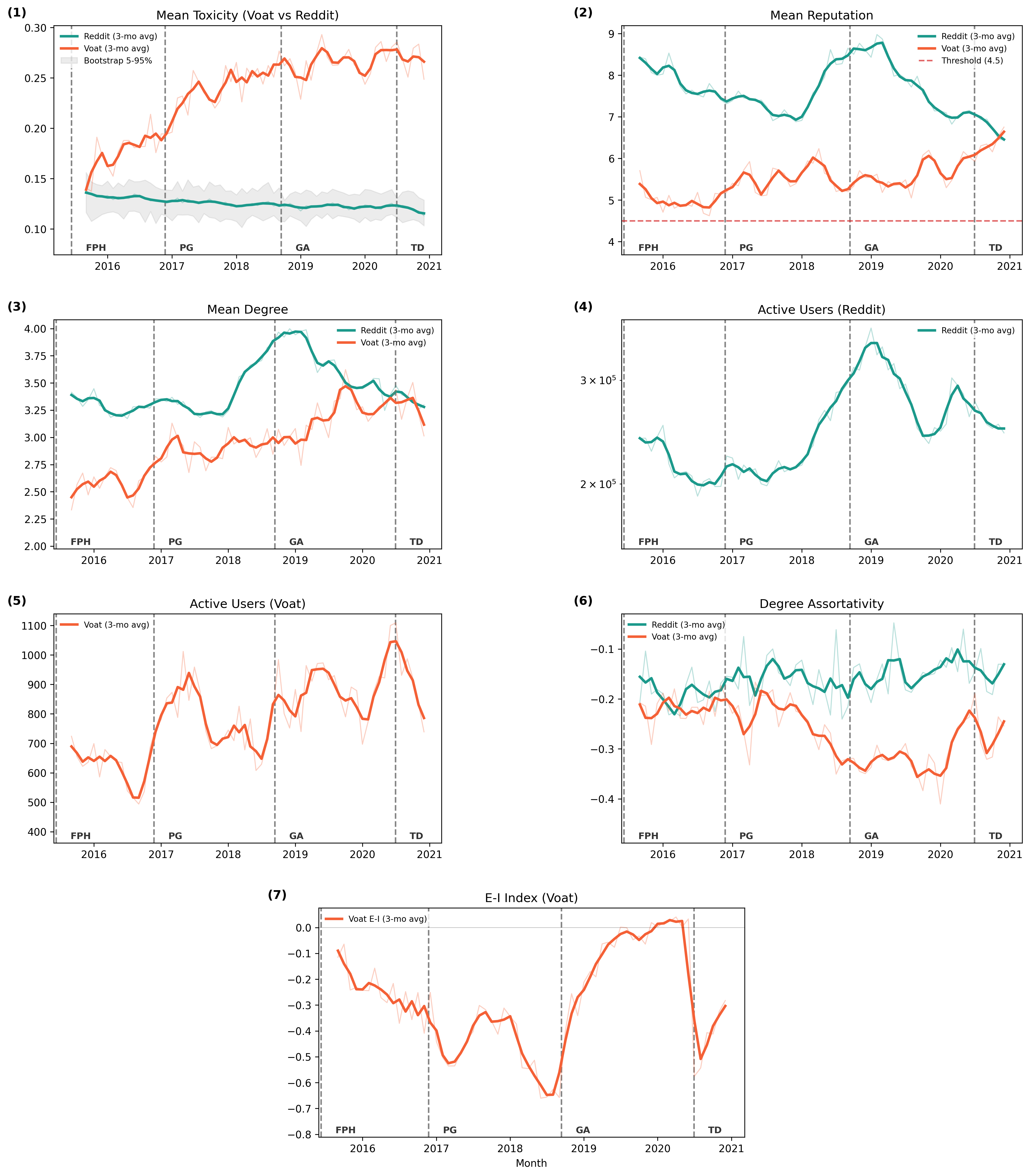
Figure 2: Comparative dynamics of /v/funny and /r/funny illustrating regime transitions in toxicity and community reputation.
Other Generalist Communities
The two-regime paradigm manifested across other Voat subverses, with media-sharing and topic-oriented communities displaying similar inflection points post-ban. Notably, the effect was attenuated in /v/technology, where topic discipline may have constrained the adoption of high-toxicity discourse, with Voat-to-Reddit toxicity ratios near unity.
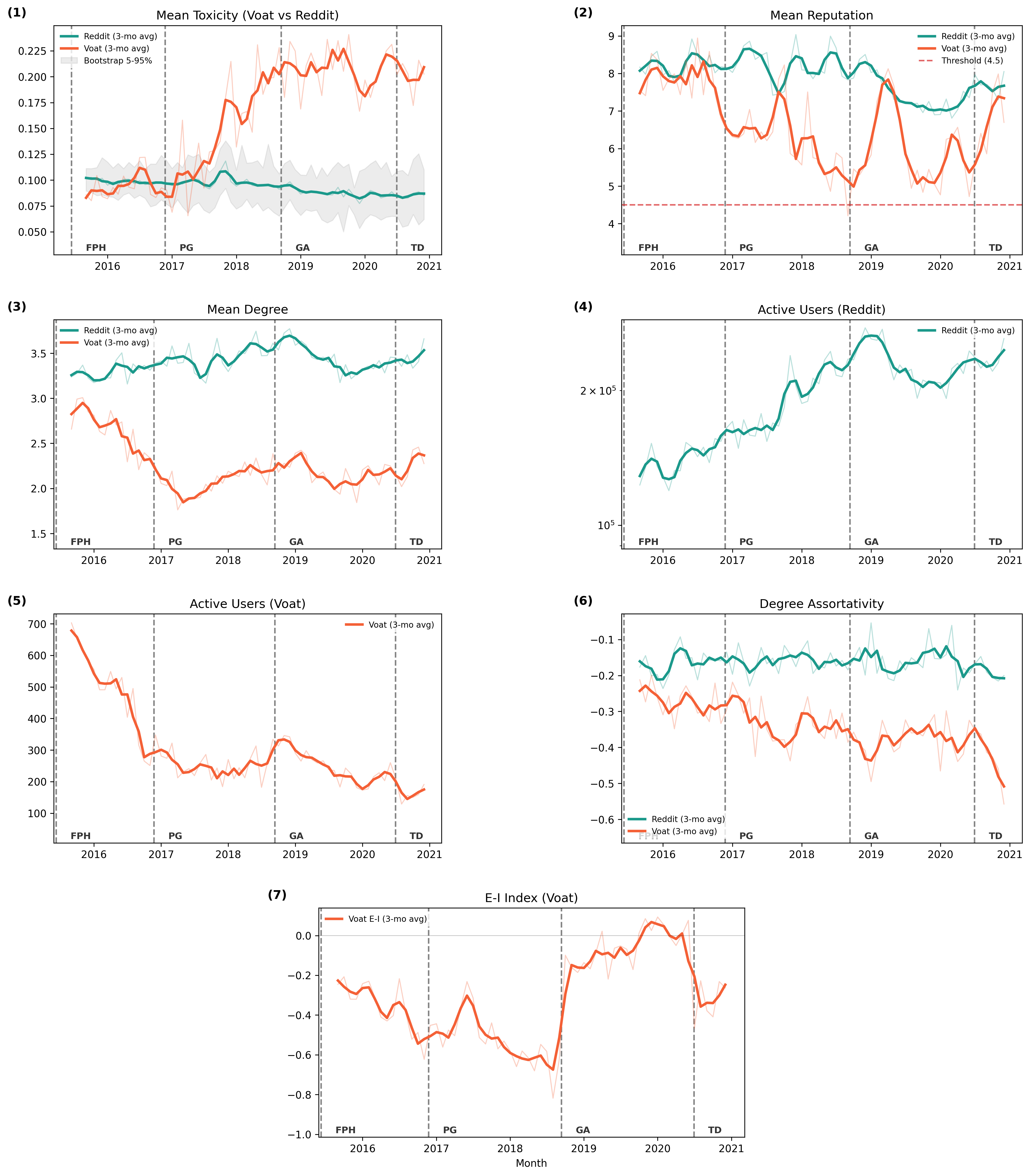
Figure 3: /v/gaming and /r/gaming dynamics: an acute activity spike after Event A with sustained toxicity elevation through two regimes.
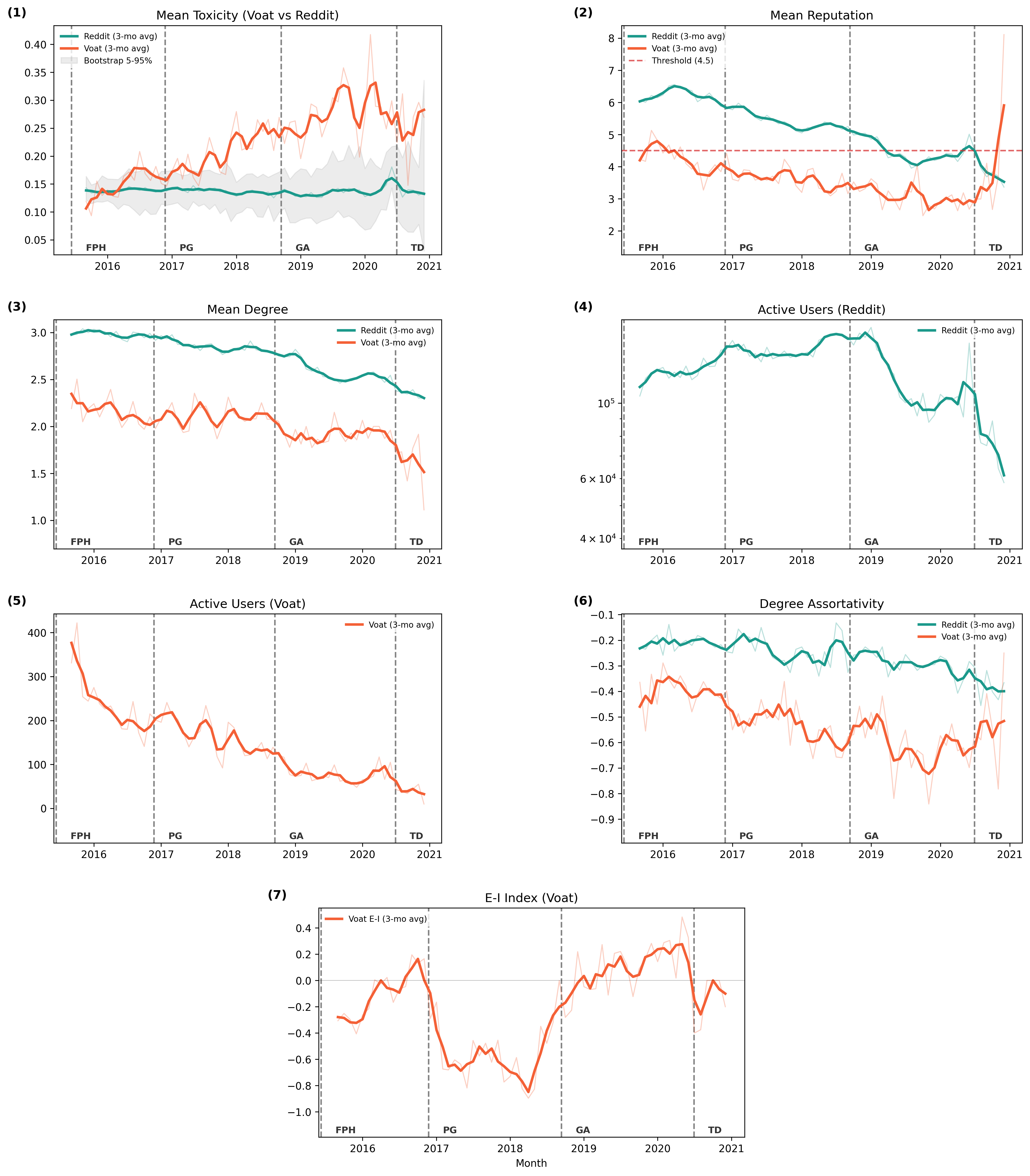
Figure 4: /v/gifs vs. /r/gifs shows the canonical two-regime toxicity elevation.
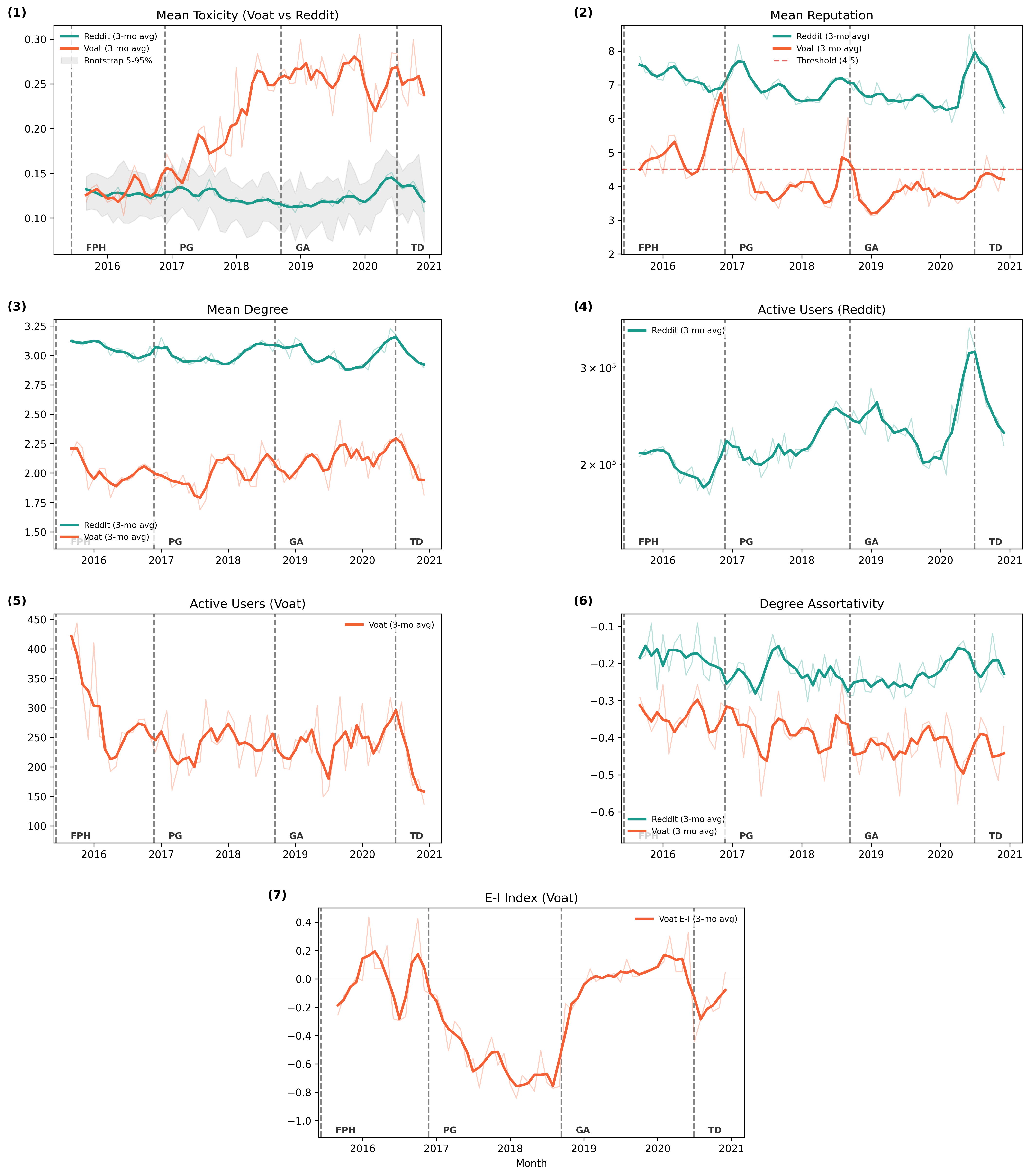
Figure 5: /v/pics and /r/pics, exhibiting regime-aligned transformations.
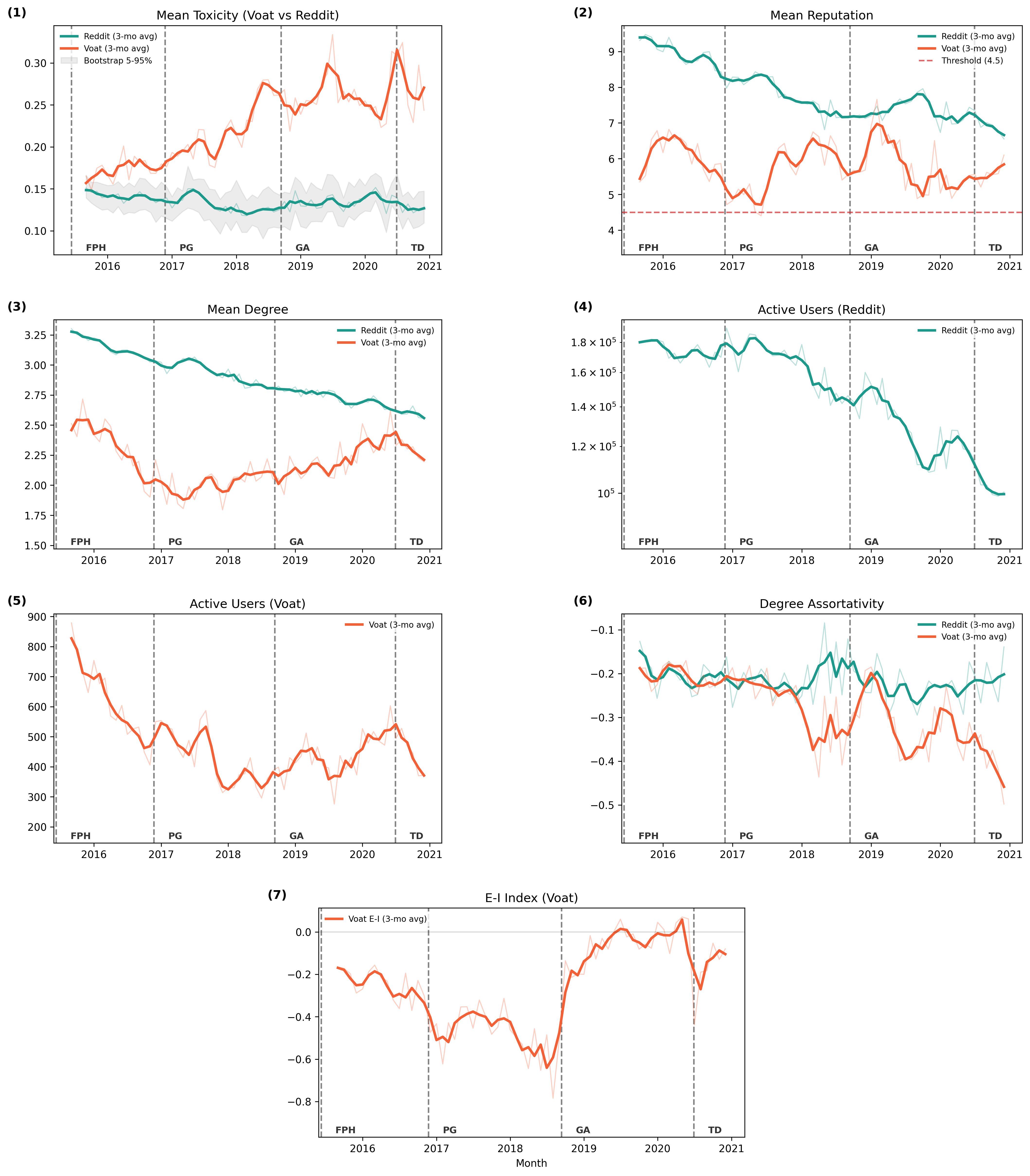
Figure 6: /v/videos vs. /r/videos dynamics align with the overall two-regime pattern.
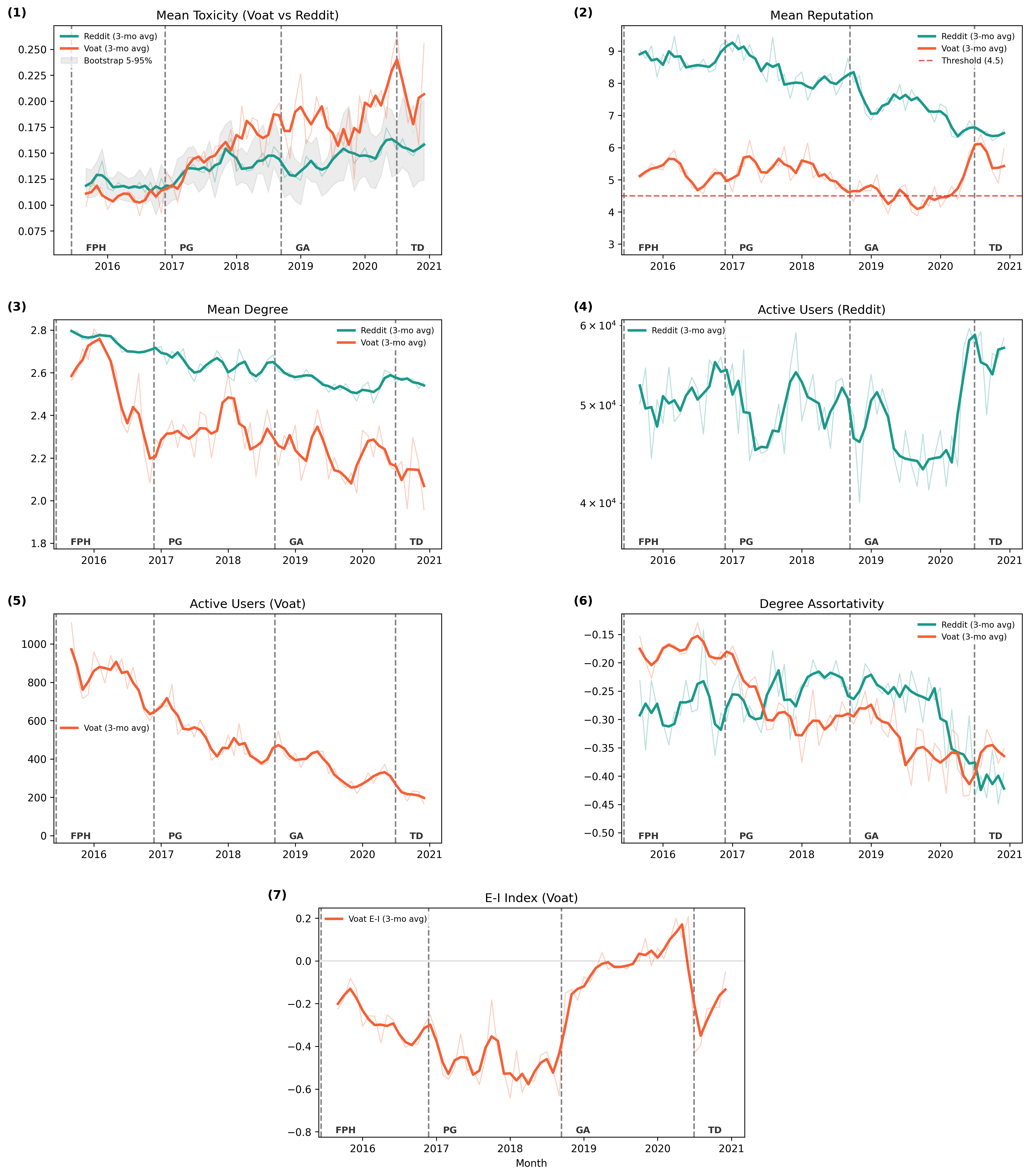
Figure 7: /v/technology vs. /r/technology, demonstrating subdued regime shifts, likely due to technical-topic insulation.
Principal Findings
- Transformation operates peripherally: Less than 5% of newcomers captured network hubs; yet, toxicity rose by 100%, indicating fundamental norm change through peripheral swarm rather than elite replacement.
- Two-regime structural discontinuity: Hostile Takeover was characterized by parallel newcomer networks and elite irrelevance, whereas Toxic Equilibrium involved flattened hierarchy and full newcomer integration after norm transformation.
- Generalist communities are susceptible: Even non-extremist, high-population communities became toxicity sinks under large-scale migration, with divergence in toxicity sustaining through platform end-of-life.
- Timing of intervention is critical: The "hostile takeover" window offers the sole opportunity for effective moderation; by the second regime, toxic norms have equilibrated and are resistant to further governance efforts.
Theoretical and Practical Implications
The results underscore that deplatforming, while effective on source platforms, externalizes negative externalities to alt-modality, generalist community structures. Mechanistically, norm transformation is predominately a function of periphery-driven cohort redundancy, not elite or influencer displacement. Moderation strategies focused on actor centrality or visible "bad apples" are likely to be suboptimal.
Targeted, volume-limiting measures (e.g., rate limiting, phased onboarding, posting locks for newcomers) are theoretically justified interventions, given that norm shifts propagate through aggregation of marginal actors. The irreversibility of toxic norm equilibrium illuminates platform path-dependency and cautions against underestimating the velocity and resilience of periphery-driven norm metastasis in decentralized migration events.
The robust two-regime pattern revealed across six communities, supported by matched cross-platform counterfactuals (Reddit), confirms these mechanisms are not artifacts of organic platform drift, but fundamental attributes of large-scale toxic migration.
Conclusion
This study provides compelling evidence that large-scale user migration prompted by deplatforming can fundamentally alter the normative and structural fabric of generalist communities on alt-tech platforms via periphery-driven transformation. The distinction between hostile takeover by volume and toxic equilibrium through integration is substantiated by cross-metric convergence (toxicity, reputation, network structure) and precise breakpoint alignment with external ban events.
Critically, effective governance must anticipate and regulate peripheral volume influx, not simply monitor and moderate visible or central actors. Given the demonstrated durability of toxic equilibria once established, receiving platforms must mobilize countermeasures during the initial influx regime or risk irreversible community transformation. These insights are directly salient for the design of moderation protocols, platform architecture, and the study of norm dynamics in online migration events.
Future research should extend this framework to newer alt-tech platforms and examine the long-term, cross-platform portability of community-derived toxic equilibria.