Quantum Speed Limits Based on the Sharma-Mittal Entropy
Published 30 Dec 2025 in quant-ph | (2512.24070v1)
Abstract: Quantum speed limits (QSLs) establish intrinsic bounds on the minimum time required for the evolution of quantum systems. We present a class of QSLs formulated in terms of the two-parameter Sharma-Mittal entropy (SME), applicable to finite-dimensional systems evolving under general nonunitary dynamics. In the single-qubit case, the QSLs for both quantum channels and non-Hermitian dynamics are analyzed in detail. For many-body systems, we explore the role of SME-based bounds in characterizing the reduced dynamics and apply the results to the XXZ spin chain model. These entropy-based QSLs characterize fundamental limits on quantum evolution speeds and may be employed in contexts including entropic uncertainty relations, quantum metrology, coherent control and quantum sensing.
The paper introduces a novel framework for quantum speed limits by employing Sharma-Mittal entropy to parameterize state evolution solely via eigenvalues.
It provides tight, computationally efficient bounds for nonunitary dynamics across single-qubit, many-body, and non-Hermitian systems.
Simulation results demonstrate that tuning the entropy parameters optimizes bound sensitivity to spectral characteristics and evolution speed.
Quantum Speed Limits Based on the Sharma-Mittal Entropy: An Expert Analysis
Introduction and Motivation
Quantum speed limits (QSLs) are fundamental constraints on the minimal time required for a quantum system to evolve between two states under prescribed dynamical laws. Historically, such bounds—principally the Mandelstam-Tamm (MT) and Margolus-Levitin (ML) inequalities—have been framed in terms of intrinsic system properties, specifically energy variance and mean energy above the ground state under unitary evolution. Extensions to mixed-state scenarios, open system dynamics, and the inclusion of geometric and entropic distinguishability measures have generated significant cross-disciplinary attention due to the direct implications for quantum technology, including computation, metrology, and coherent control.
This paper introduces a comprehensive, spectrum-based approach to QSLs via the two-parameter Sharma-Mittal entropy (SME), which interpolates between Rényi, Tsallis, and von Neumann entropies, thus unifying a broad class of information measures. The core contribution is a set of QSL expressions for general nonunitary quantum dynamics, parametrized exclusively by the eigenvalues of the state, yielding robust and computationally accessible bounds that are particularly stable in high-dimensional or many-body contexts.
Mathematical Preliminaries and Sharma-Mittal Entropy
Let ρ be a d-dimensional density operator. The Sharma-Mittal entropy is parametrized by q and z as follows:
Sq,z(ρ)=z−11(i=1∑dλiq)1−q1−z−1,
where {λi} are the eigenvalues of ρ. SME unifies several well-known entropy measures: it recovers the Rényi entropy as z→1, the Tsallis entropy as z→q, and the von Neumann entropy as q,z→1.
Key properties include unitary invariance, nonnegativity, and a clear dependency on the spectral rank of d0. Crucially, as a spectral quantity, SME allows for state distinguishability measures that are operationally agnostic to the specific representation of d1.
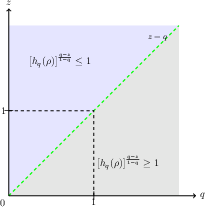
Figure 1: The phase structure of d2 reveals regimes in the d3-d4 parameter space where the SME-based bounds are tight or loose.
Upper Bounds and Differential Constraints for SME Evolution
The authors derive differential bounds on the rate of change of SME along a quantum trajectory, employing the Schatten 1-norm speed:
d5
where the auxiliary function d6 encapsulates spectral dependence via the minimal eigenvalue. The norm quantifies the instantaneous "speed" of state evolution under general nonunitary processes, without explicit reference to the generator's structure, extending applicability far beyond CPTP semigroups or Lindbladian models.
The manuscript establishes tightness criteria via a normalized relative error metric, directly comparing the total SME change with the integrated spectral speed. This enables quantification and benchmarking of bound utilization in both analytically tractable and numerically simulated scenarios.
SME-Based Quantum Speed Limits: General Case, Quantum Channels, and Non-Hermitian Systems
The fundamental result is the lower bound on evolution duration,
d7
where d8 denotes the time-averaged, d9-weighted Schatten speed.
Analysis of limiting cases demonstrates that for q0 (Rényi) and q1 (Tsallis), the formalism recovers QSLs based on these more standard entropies, but that the sensitivity to dissipative (nonunitary) evolution is generically maximized only for q2 significantly different from unity.
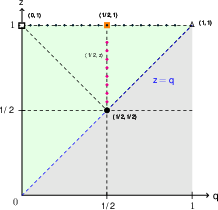
Figure 2: Phase diagram of q3 parameter regimes where the SME-based QSLs have operational significance and where they collapse to triviality.
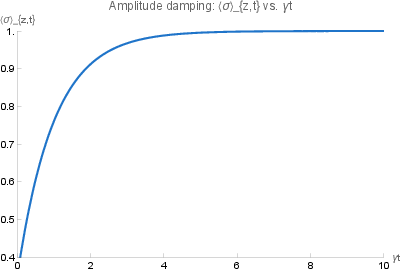
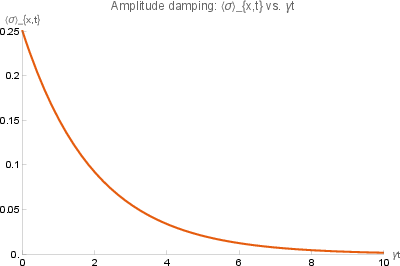
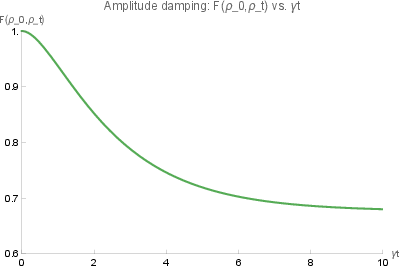
The treatment of quantum channels proceeds through Kraus representations, allowing explicit calculation of both the spectral weights and Schatten speeds for single-qubit amplitude damping channels and their time evolution, including the analytic expressions for eigenvalues as functions of process parameters. The analysis shows that "physical" features of the system's trajectory (e.g., approach to a pure fixed point, as in amplitude damping) lead to divergence or collapse of the spectral prefactor q4, rendering the QSL bounds loose as expected in stationary regime.
Figure 3: Physical diagnostics for amplitude damping: longitudinal and transverse polarizations, along with the fidelity, demonstrate nonorthogonal evolution and asymptotic relaxation, in correspondence with the saturation and subsequent loosening of SME-based QSLs.
In the case of non-Hermitian dynamics (e.g., q5-symmetric Hamiltonians), the authors develop bounds involving both the real and imaginary components of the effective generator. They demonstrate how to refine these by state-dependent operator variances, providing much tighter constraints, particularly for dissipative two-level systems traversing different symmetry regimes (unbroken and broken q6 symmetry).
Many-Body Quantum Dynamics
The extension to many-body systems leverages the SME's spectral flexibility for marginal (reduced) states, which allows the analysis of subsystem dynamics even under global unitary evolution. By incorporating reduced density matrix spectra, the authors construct QSLs for nonunitary reduced dynamics, linking the speed bound's denominator to the global Hamiltonian variance. Explicit simulations in the XXZ spin chain with various entropic parameters reveal how subsystem dynamical features (oscillations, recurrences) are captured in the bounds, and how these depend on coupling constants and entropy parameters.
Numerical Results and Analysis
The numerical implementation, especially for single-qubit and two-qubit instances, attests to the sensitivity of the SME-based bounds to the details of state spectrum and channel characteristics. The results highlight that the tightness of the QSL is maximized at early to intermediate times and for intermediate values of q7 and q8, aligning with periods of maximum state distinguishability and nontrivial dynamical evolution. As the system relaxes to a fixed point, both the entropy change and the speed collapse, confirming the physical meaningfulness of the SME-based bounds.
Theoretical and Practical Implications
The approach developed provides several distinct advantages over previous QSL formulations:
Spectrum-Only Parameterization: Bounds rely solely on state eigenvalues and trace speeds, bypassing the need for explicit generator representations or generator optimization.
Computational Efficiency: Particularly in high-dimensional or many-body systems, where full knowledge of the Lindbladian or global Hamiltonian is infeasible.
Tunability: The q9 and z0 parameters allow adaptation to different dynamical regimes and noise strengths, thus optimizing the sensitivity of the bound to system specifics and physical observables.
Applicability to Nonunitary Dynamics: The formulation naturally extends to generic open system processes, non-Hermitian evolutions, and reduced dynamics in many-body settings.
These features position the SME-based QSL framework as an appealing tool for analyzing information-theoretic and operational properties of quantum processes, including in scenarios relevant to quantum computation, metrology, and communication under realistic noisy and open-system conditions.
Future Directions
Open avenues for research include:
Optimization over z1 and z2: Systematically maximizing the tightness of QSLs for specific physical tasks and dynamical regimes.
Connections with Other Resource Theories: Relating SME-based QSLs to speed limits on coherence, entanglement, and more general quantum resource interconversions.
Statistical Mechanics and Quantum Thermodynamics: Probing the interplay between entropy production, quantum fluctuations, and dynamical limitations in non-equilibrium many-body settings.
Extensions to Relative Entropies: Developing QSLs based on Sharma-Mittal relative divergence, aiming for even tighter and more general bounds.
Conclusion
This work establishes a general, entropic class of quantum speed limits via the Sharma-Mittal entropy, yielding versatile and computationally tractable lower bounds on the evolution time for finite-dimensional quantum systems subject to arbitrary nonunitary dynamics. The unifying framework and its analytical and numerical substantiation imply significant implications for both theoretical investigations and experimental design in emerging quantum technologies, illuminating the nuanced interplay between entropy production, spectral evolution, and dynamical constraints (2512.24070).