- The paper presents a causal analysis linking GenAI bot blocking to significant traffic losses (-23.1% change in log monthly visits) for large publishers.
- It employs rigorous econometric techniques including SDID and TWFE estimators to quantify a -13.2% average treatment effect on news site visits.
- The study reveals that publishers respond by shifting toward multimedia-rich, interactive layouts while maintaining stable or increased editorial hiring.
The Impact of LLMs on News Consumption and Production
Introduction
The paper "The Impact of LLMs on Online News Consumption and Production" (2512.24968) presents a rigorous causal analysis of generative AI’s (GenAI’s) effects on the online news ecosystem. Leveraging high-frequency panel data across publisher traffic, website policies, organizational hiring, and content structural attributes, the authors dissect four critical mechanisms by which LLMs—and publishers’ strategic responses to them—are reshaping both news consumption and production. Notably, the paper delivers strong empirical evidence that blocking GenAI bots is associated with significant traffic and audience losses for large news publishers, a finding with immediate implications for content access policy, platform bargaining, and copyright strategy.
Traffic Evolution and the Onset of Decline
Traffic to news publishers evidences a stepwise, punctuated decline only after August 2024—a temporal correspondence with the intensification of LLM-powered discovery (notably post-Google AI Overview). Prior to this regime change, aggregate publisher visits, as measured by SimilarWeb, show stability despite growing GenAI adoption.
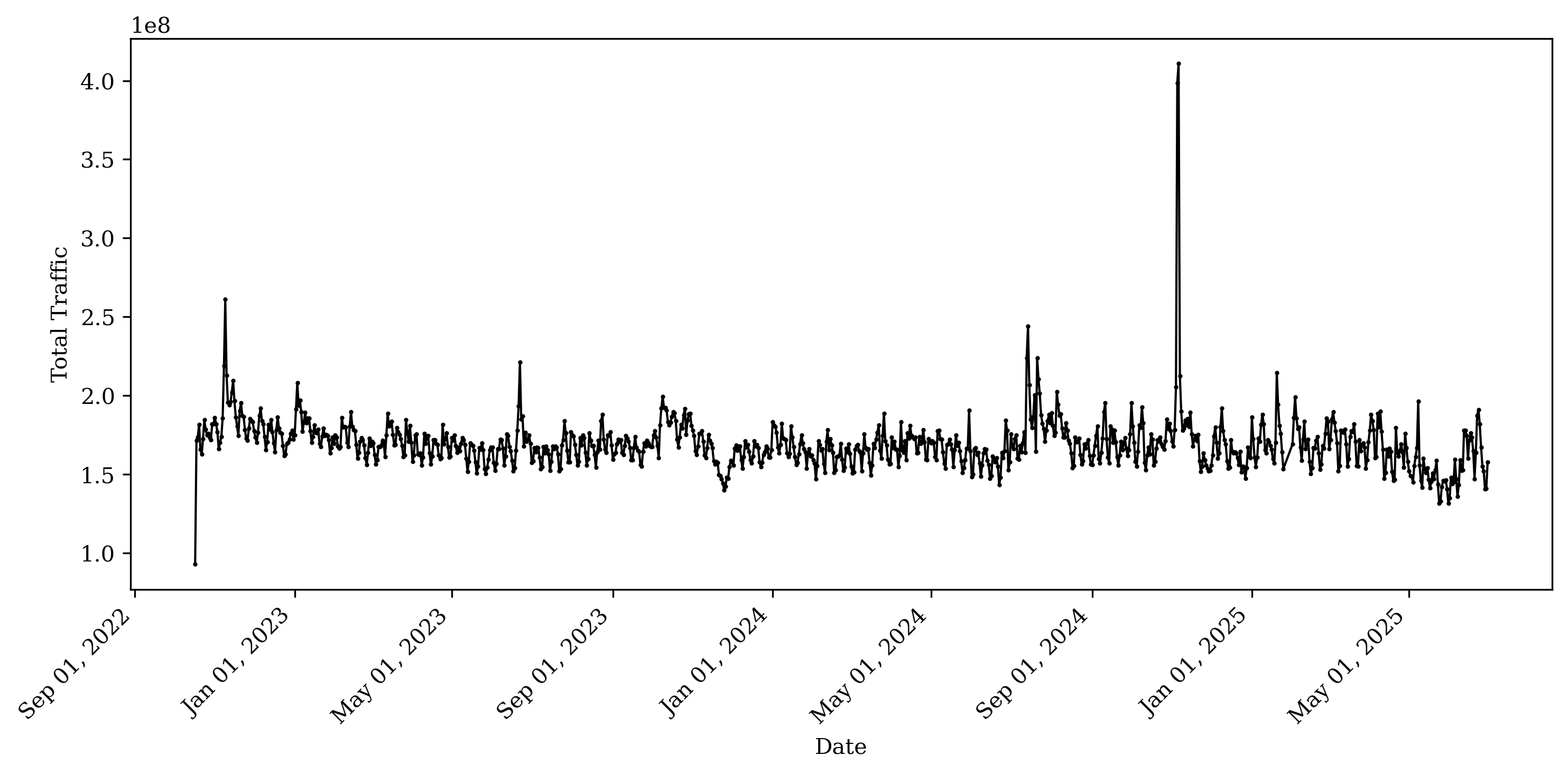
Figure 1: Publisher daily traffic trend from SimilarWeb, highlighting stable traffic until significant declines emerge after August 2024.
Structural break detection (PELT algorithm on de-seasonalized log-traffic) localizes the significant downward regime shift to mid-2024, with earlier minor breaks in April and November 2023 (statistically nonsignificant once accounting for concurrent macro trends).
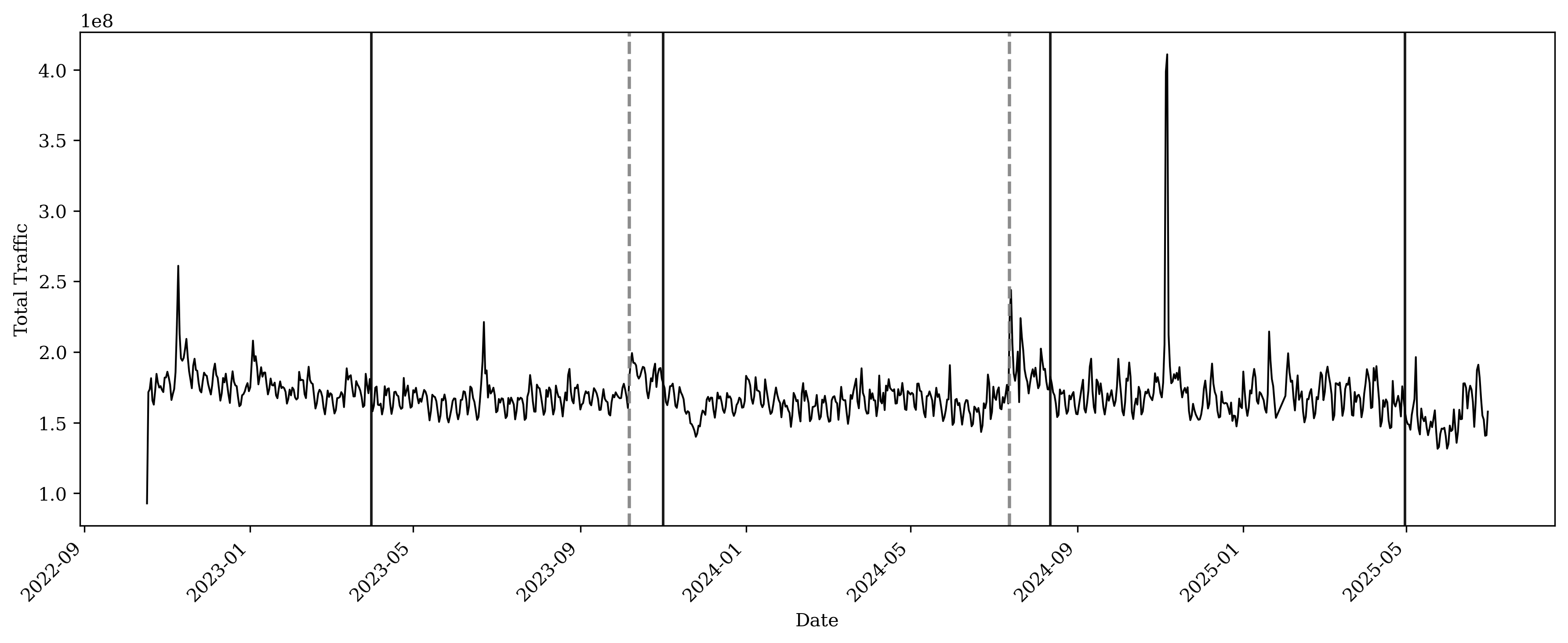
Figure 2: Detected structural change-points in publisher traffic, with vertical lines at the primary breaks.
Synthetic Difference-in-Differences (SDID) and TWFE estimators, anchored against top-100 retail sites (control), yield an average treatment effect (ATT) of -13.2% for publisher traffic post-August 2024. The November 2023 and April 2023 shifts are indistinguishable from noise relative to controls.
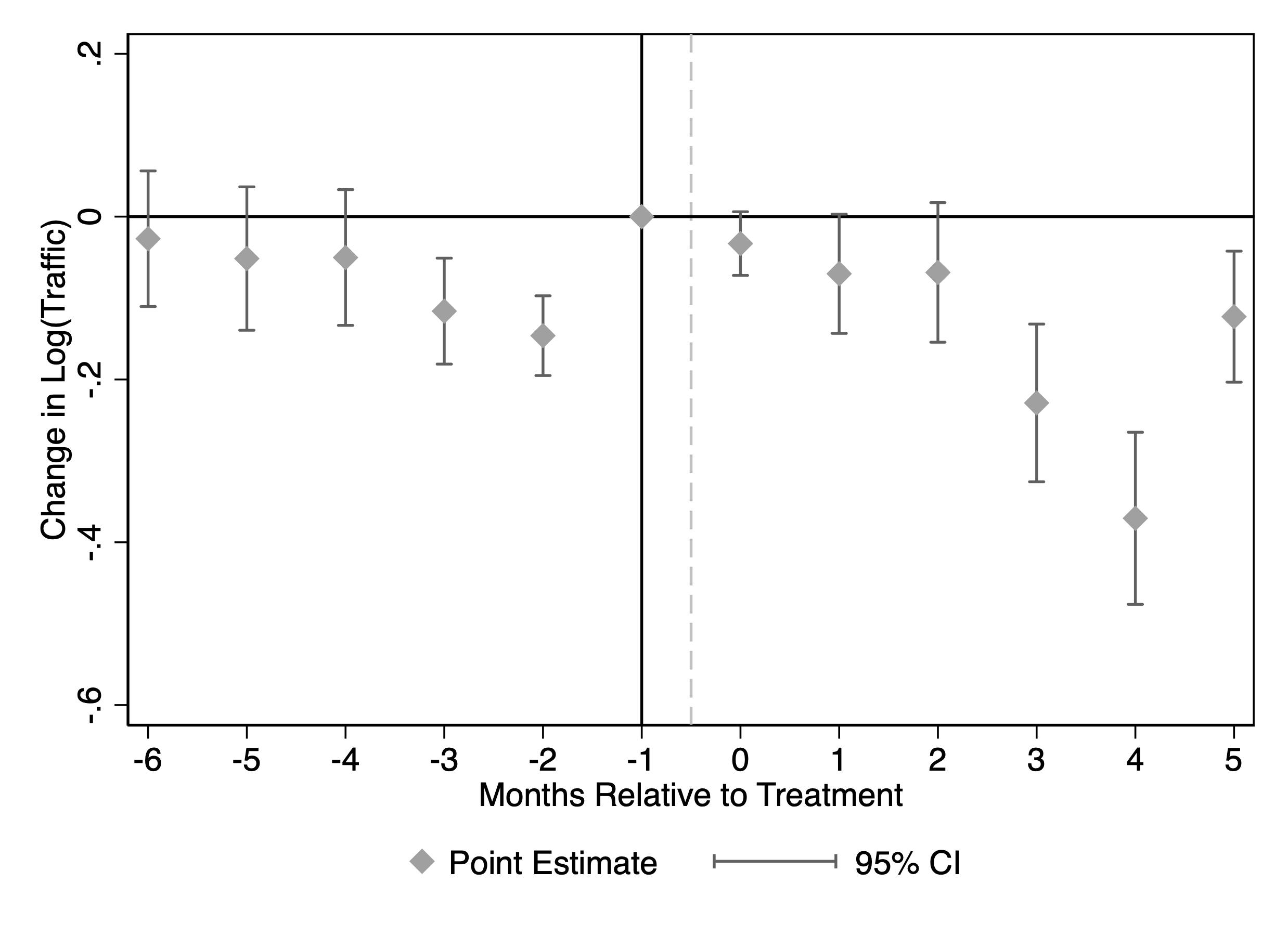
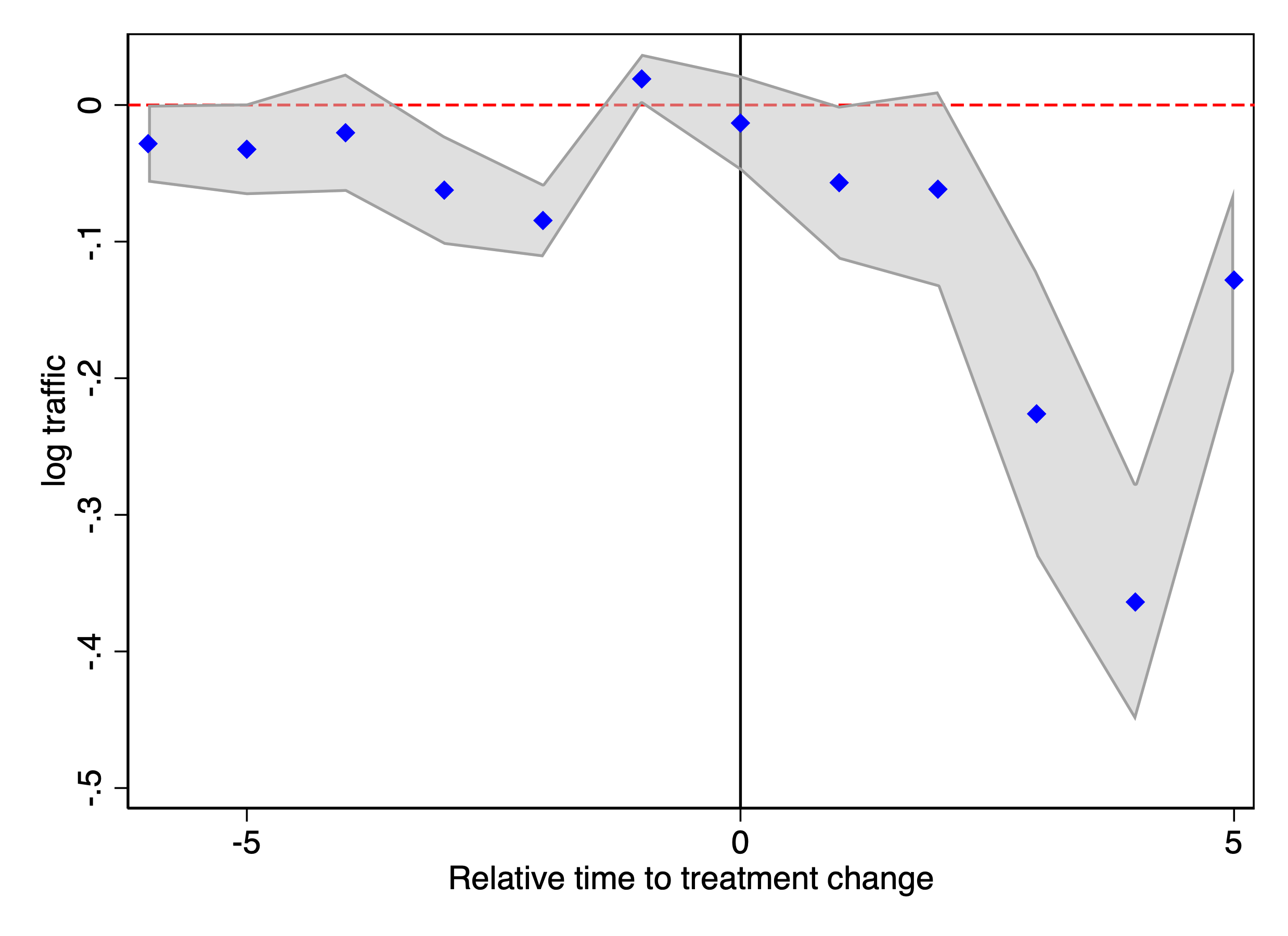
Figure 3: News publishing website traffic around August 2024; both SDID and TWFE models show significant decline post-break.
Access Policy: Blocking GenAI Bots and Causal Effects
Publishers widely adopt robots.txt-based blocking of GenAI crawlers with a staggered timeline (majority post mid-2023), driven by concern over uncompensated content reuse and potential cannibalization of referral traffic.
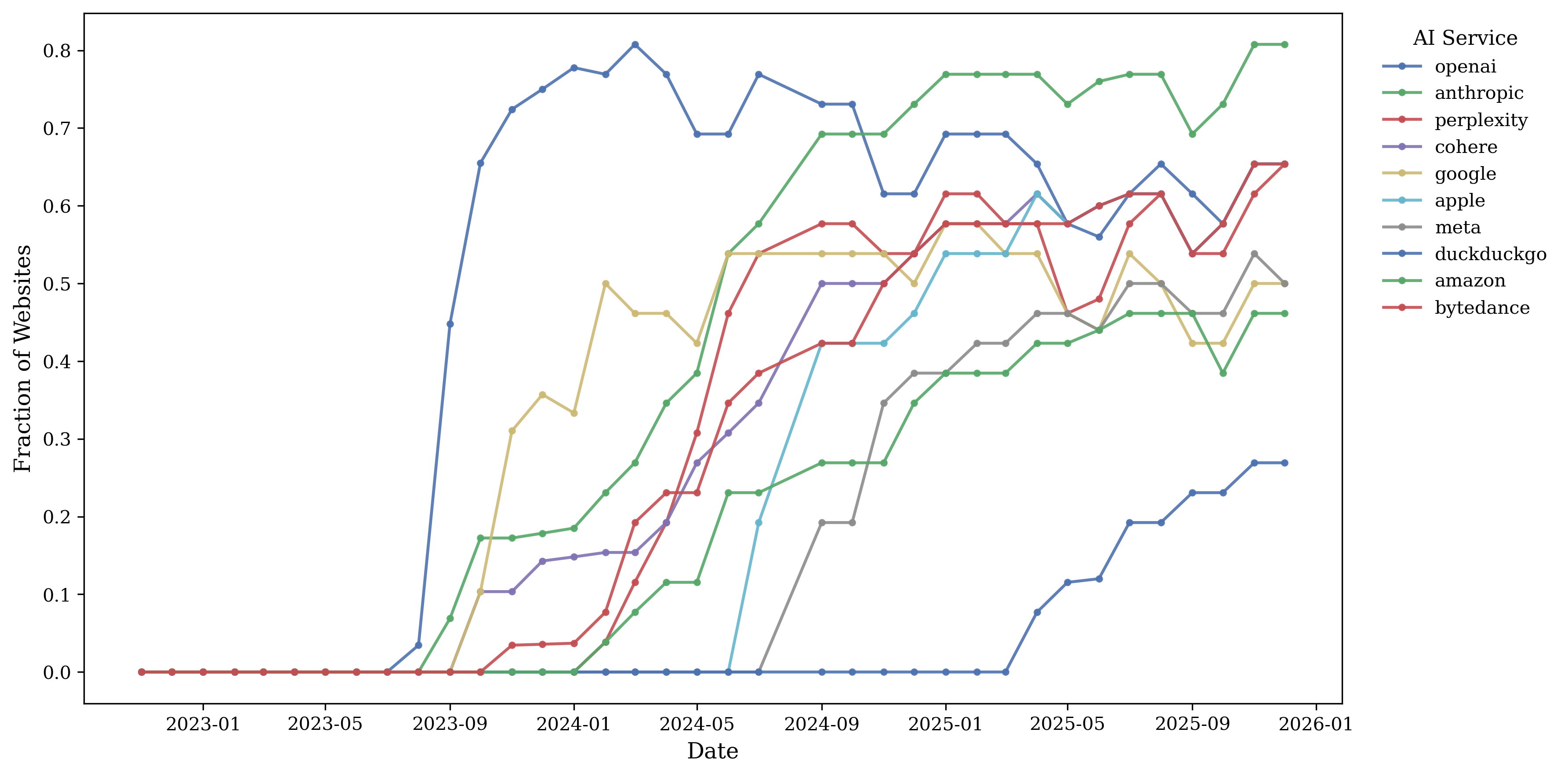
Figure 4: Fraction of news publisher domains disallowing GenAI bots, showing rapid increase since mid-2023.
Importantly, event-study estimates exploiting the staggered introduction of Disallow rules demonstrate statistically significant declines in both total and human traffic post-blocking for large publishers. Blocking is associated with a -23.1% change in log monthly visits (SimilarWeb) and -13.9% in Comscore panel human traffic, with no pre-trends. These effects are not attributable solely to the removal of bot visits.
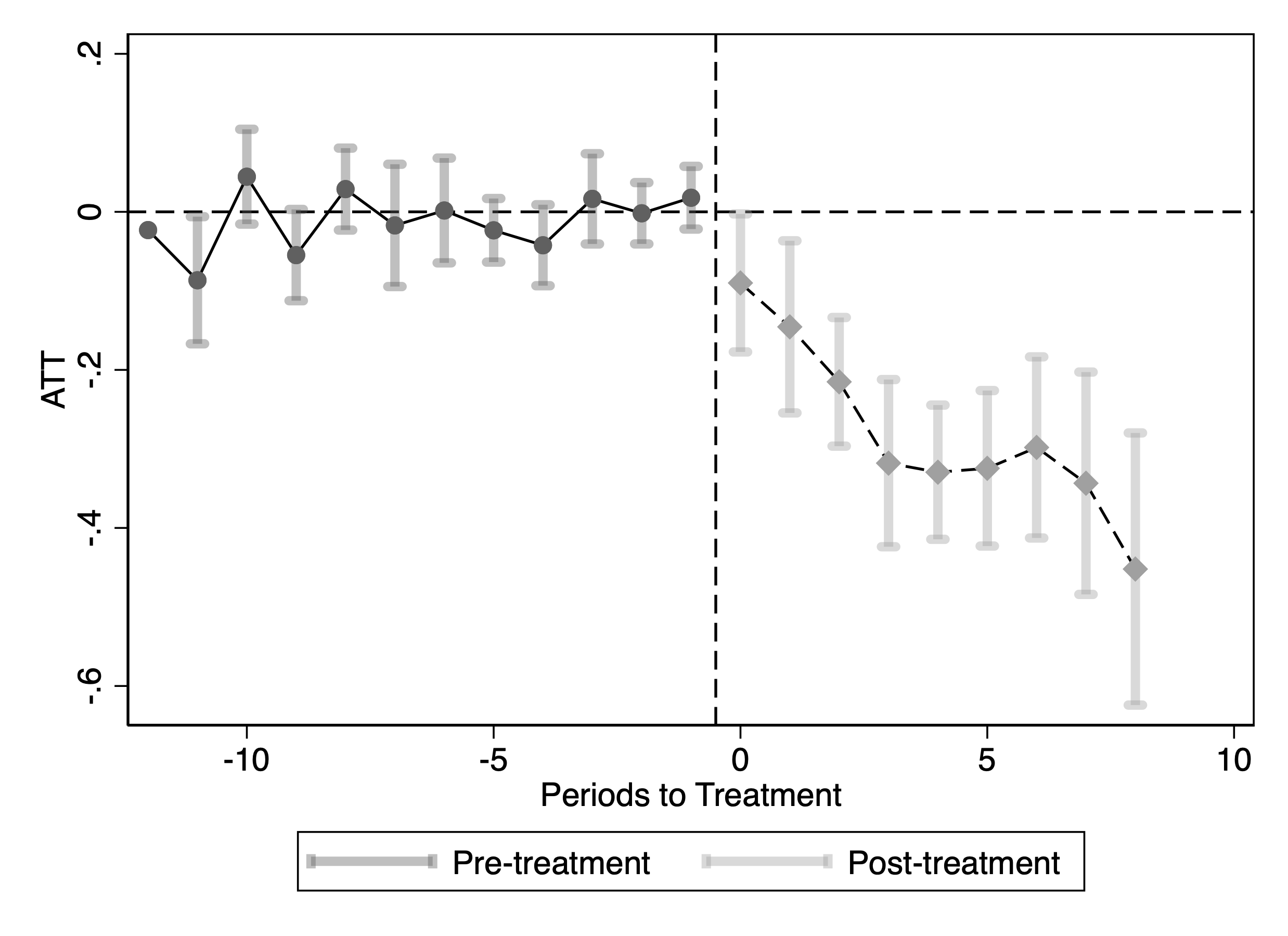
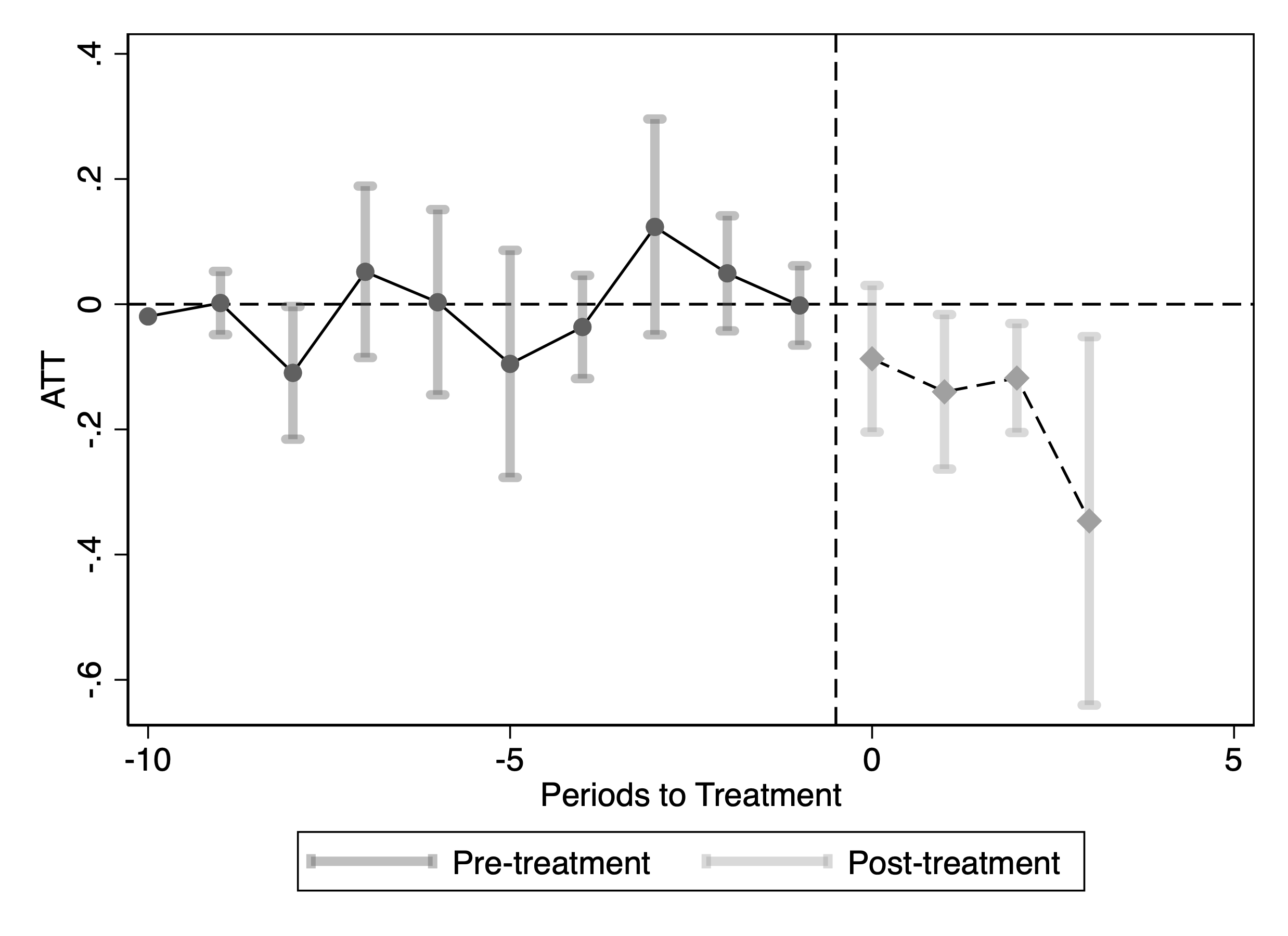
Figure 5: Staggered DiD estimates; blocking GenAI bots causally reduces both bot and measured human traffic.
Effect heterogeneity analysis reveals that smaller publishers (<10 Comscore visits/day) can see neutral or even positive effects—suggesting asymmetric platform referral and content value chains at different publisher scales.
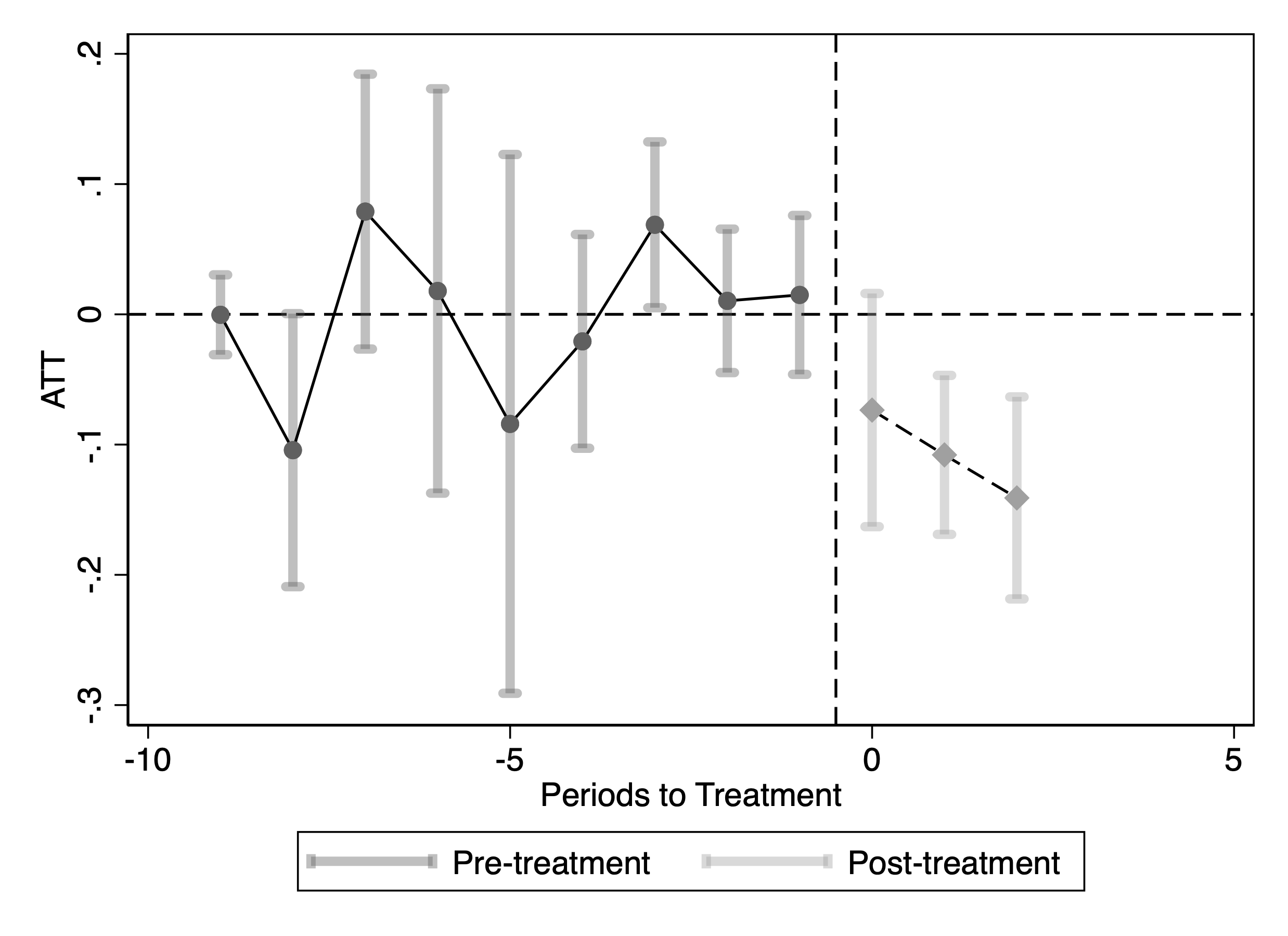
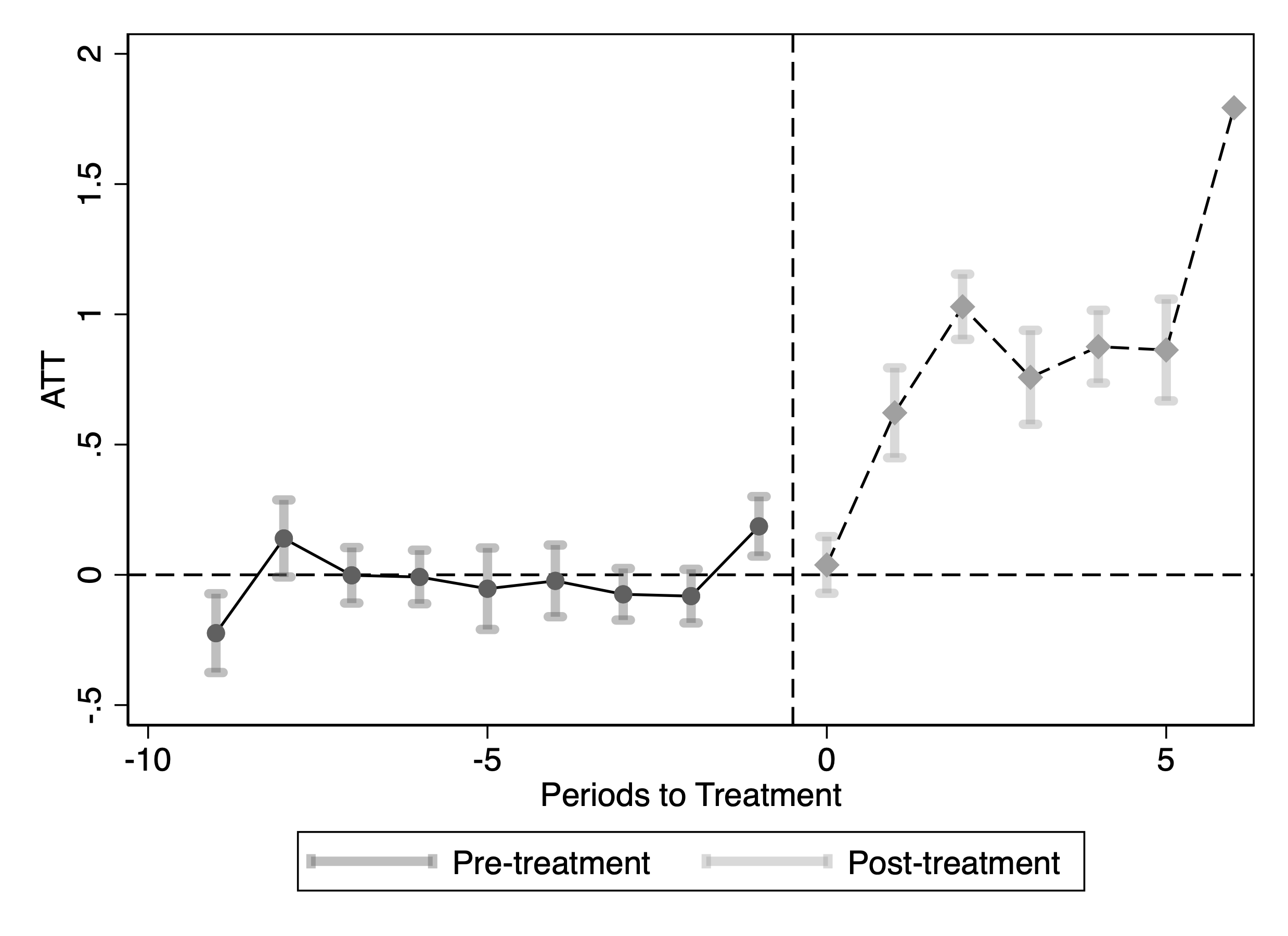
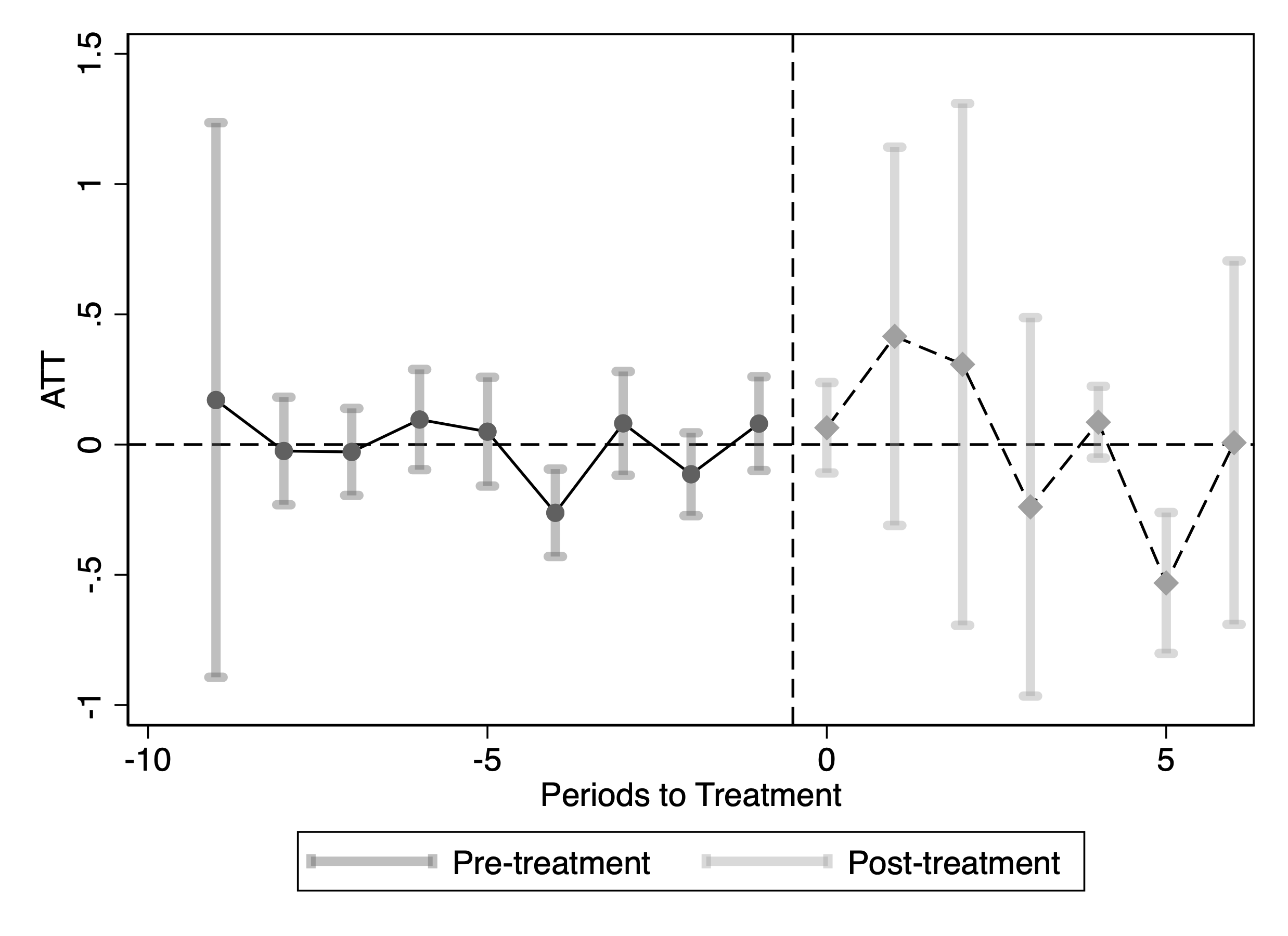
Figure 6: Heterogeneous DiD estimates; large publishers experience losses, some lower-tier publishers see traffic gains post-blocking.
Labor Market Dynamics: Editorial and Non-Editorial Hiring
Contrary to speculation about imminent automation-induced contractions, the study finds no evidence of a negative LLM-induced demand shock for editorial and content-production roles in newsrooms. Analysis of job postings (Revelio Labs) indicates that not only do absolute counts of editorial postings remain stable, but their share relative to non-editorial postings increases post-GenAI diffusion.
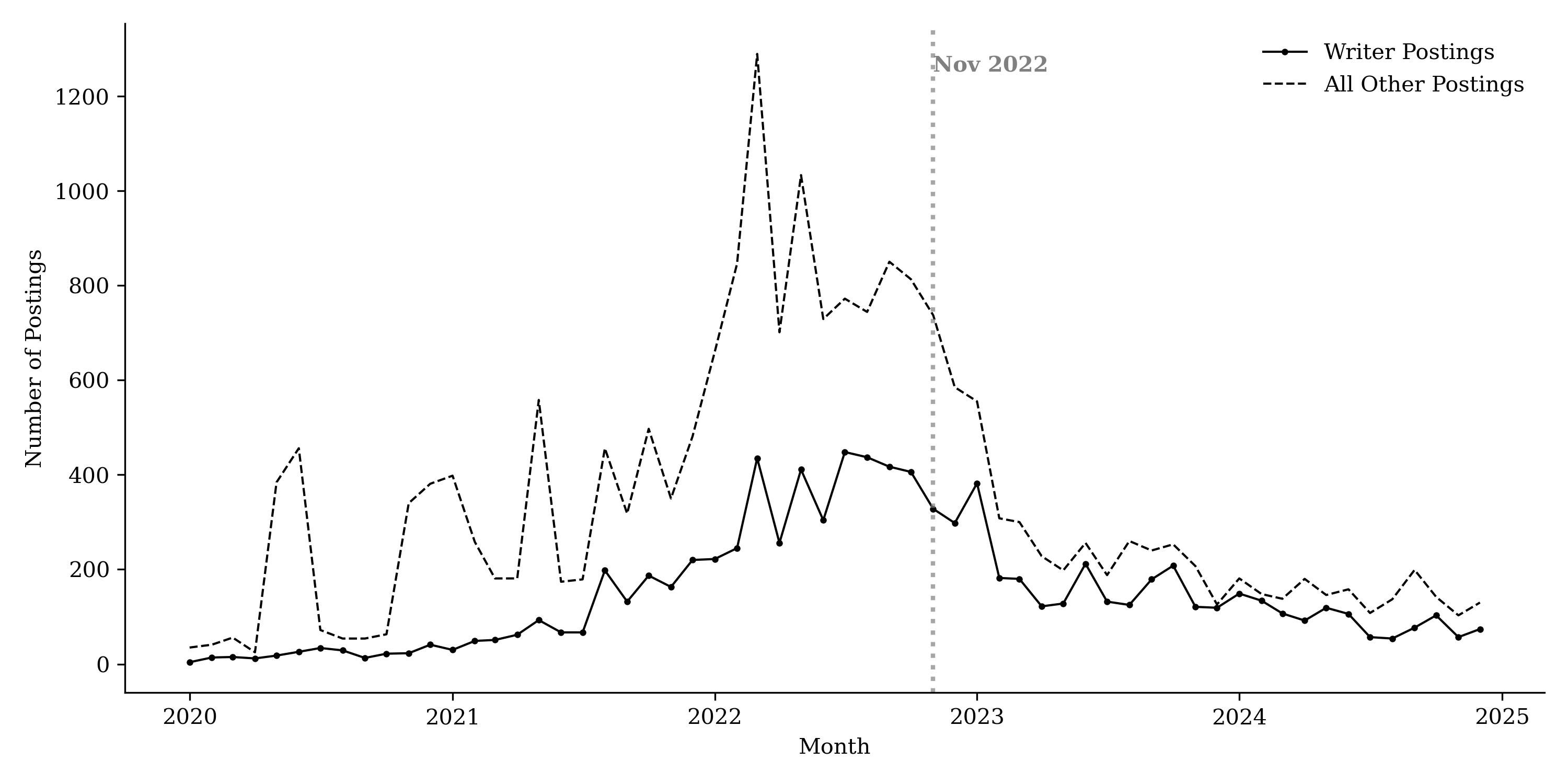
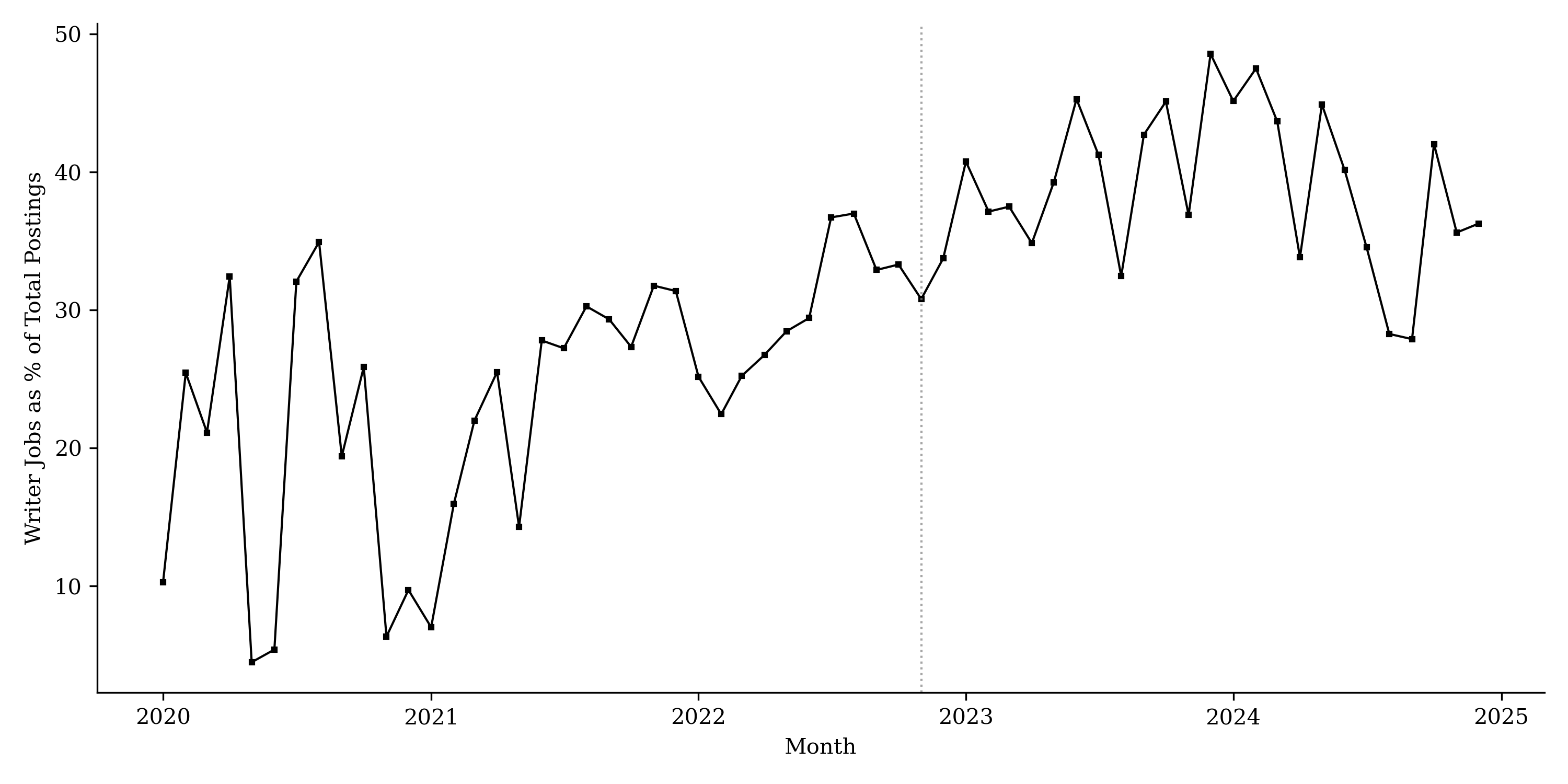
Figure 7: Trends in editorial (writer/content) and other job postings as well as their share; editorial roles are not disproportionately reduced.
The aggregate ATT on editorial postings is positive and significant, refuting the hypothesis of immediate large-scale newsroom labor displacement precipitated by LLM adoption during the observation window.
Content Strategy Reconfiguration: From Text to Rich Media and Interactivity
Examining structural attributes of content using HTML element counts (HTTP Archive) and unique URL types (Wayback Machine), the data reveal a pronounced shift toward multimedia-rich and interactive page layouts, not an expansion in textual/article production.
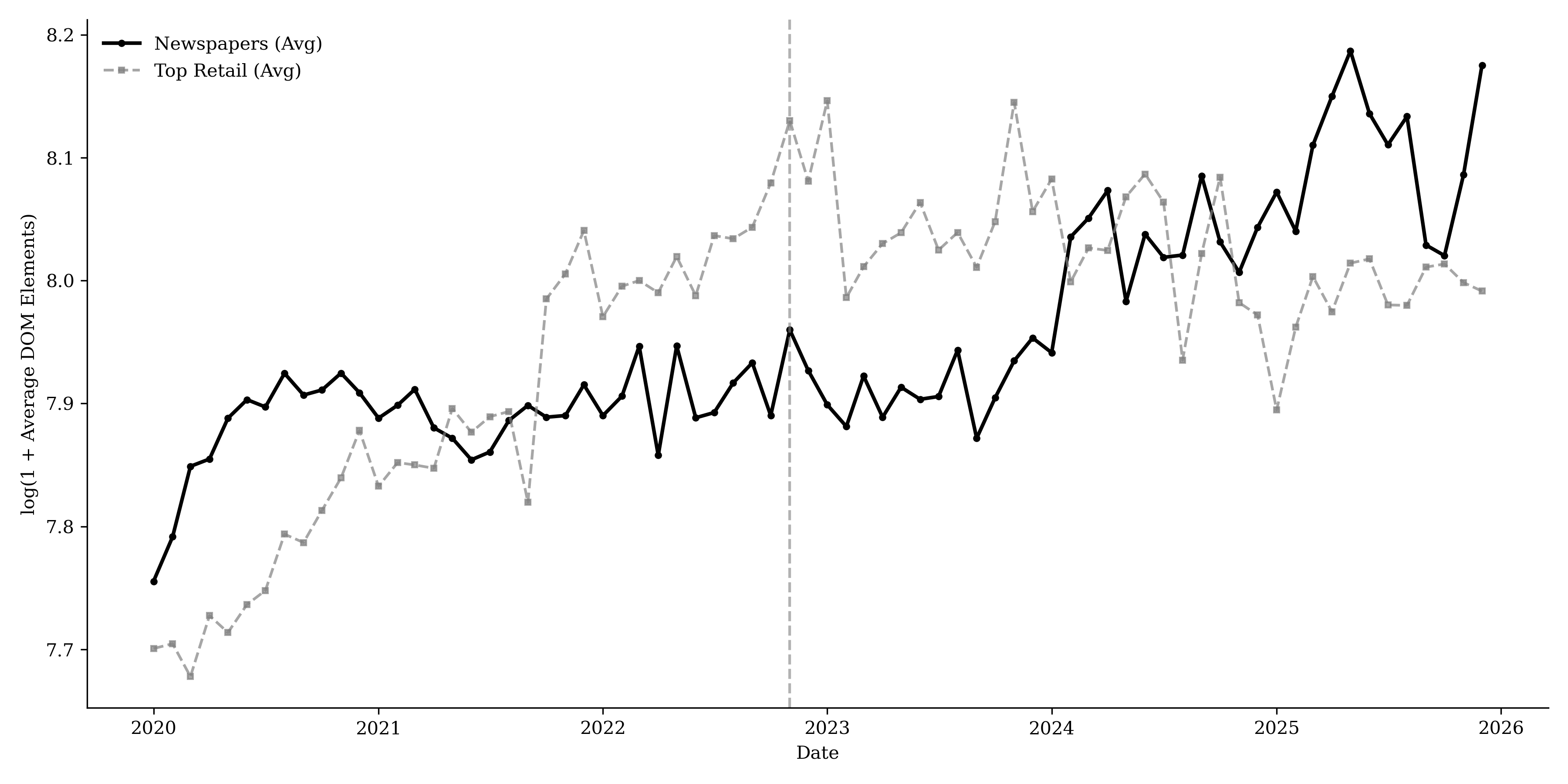
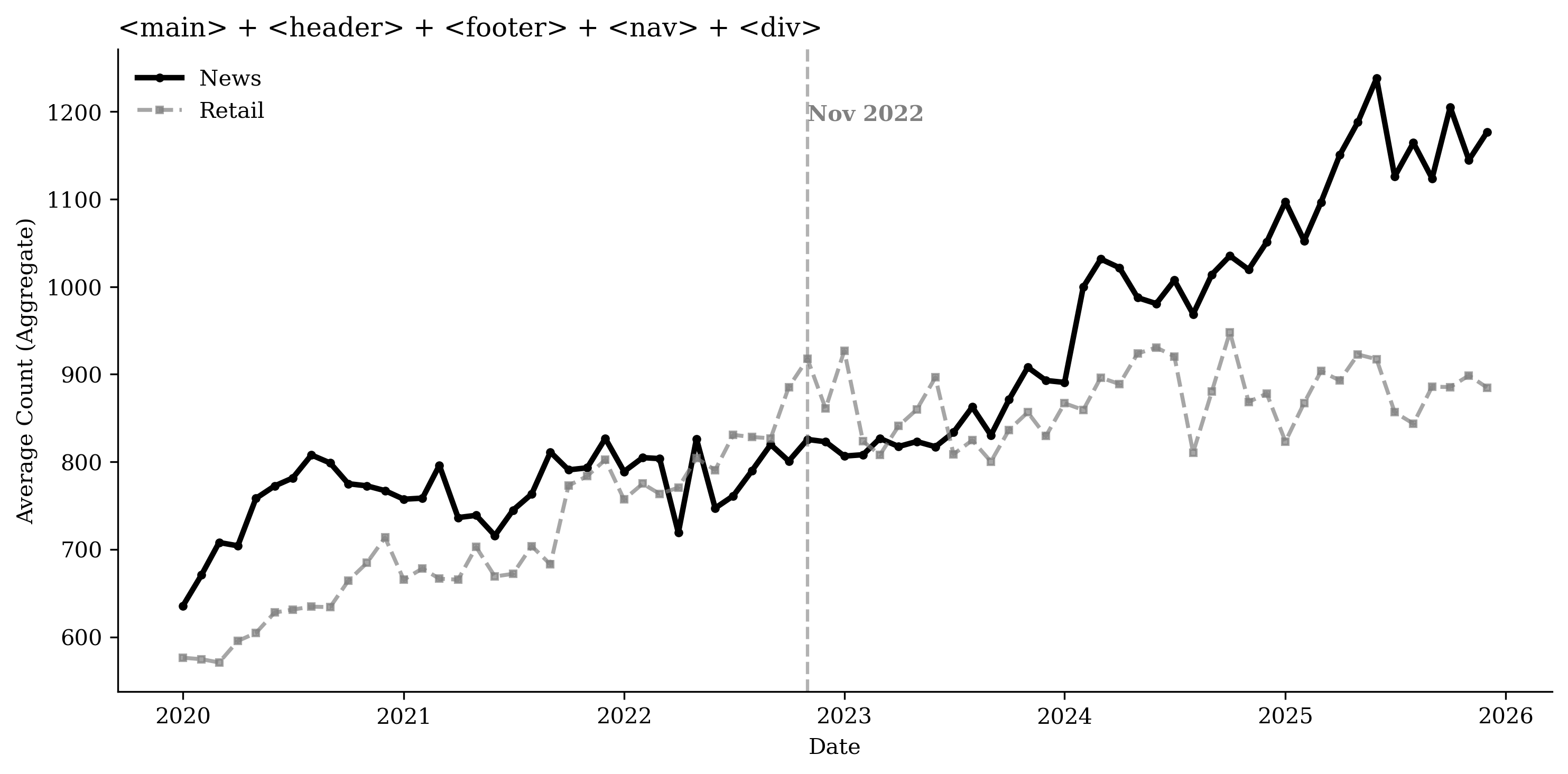
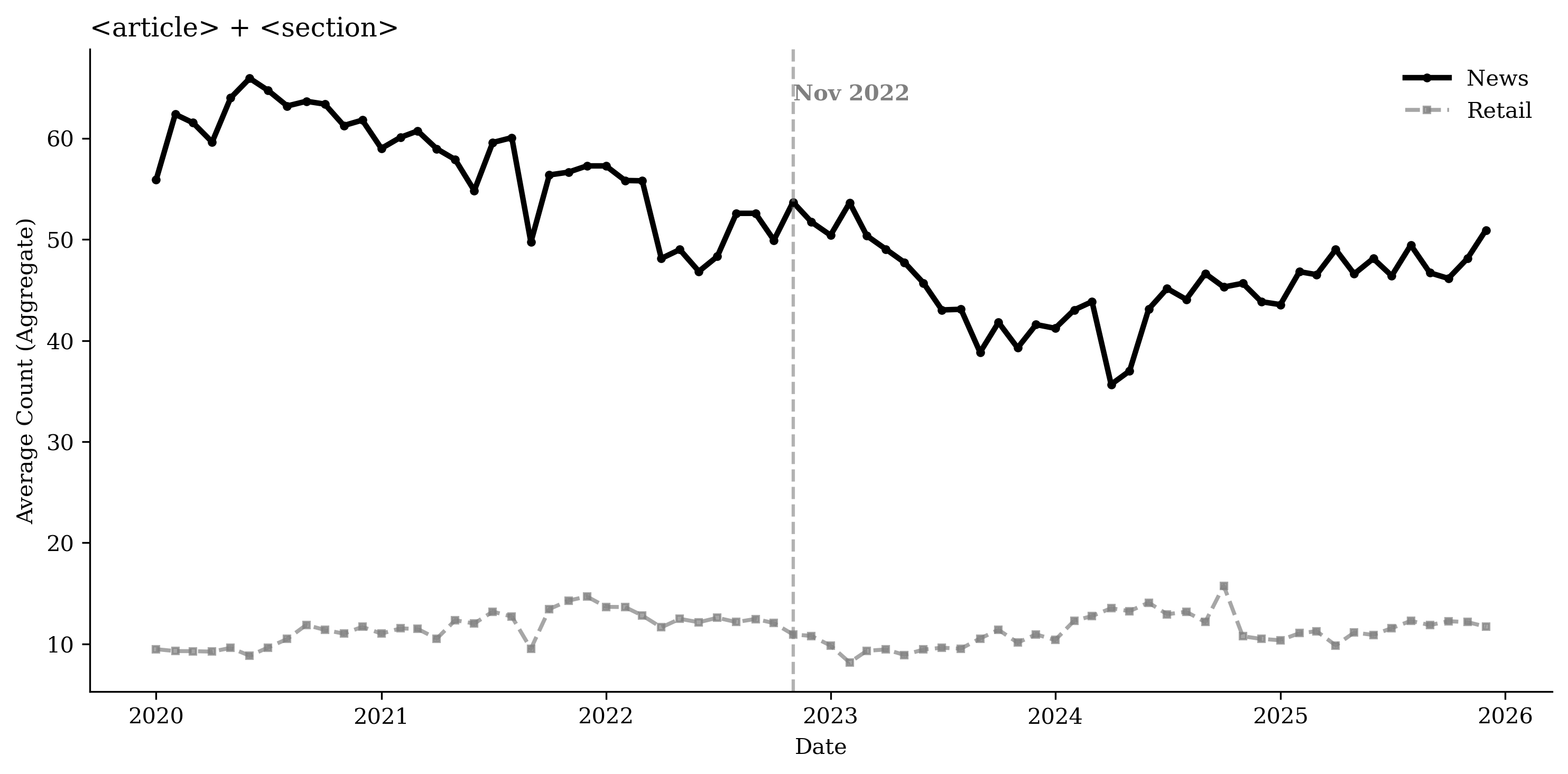
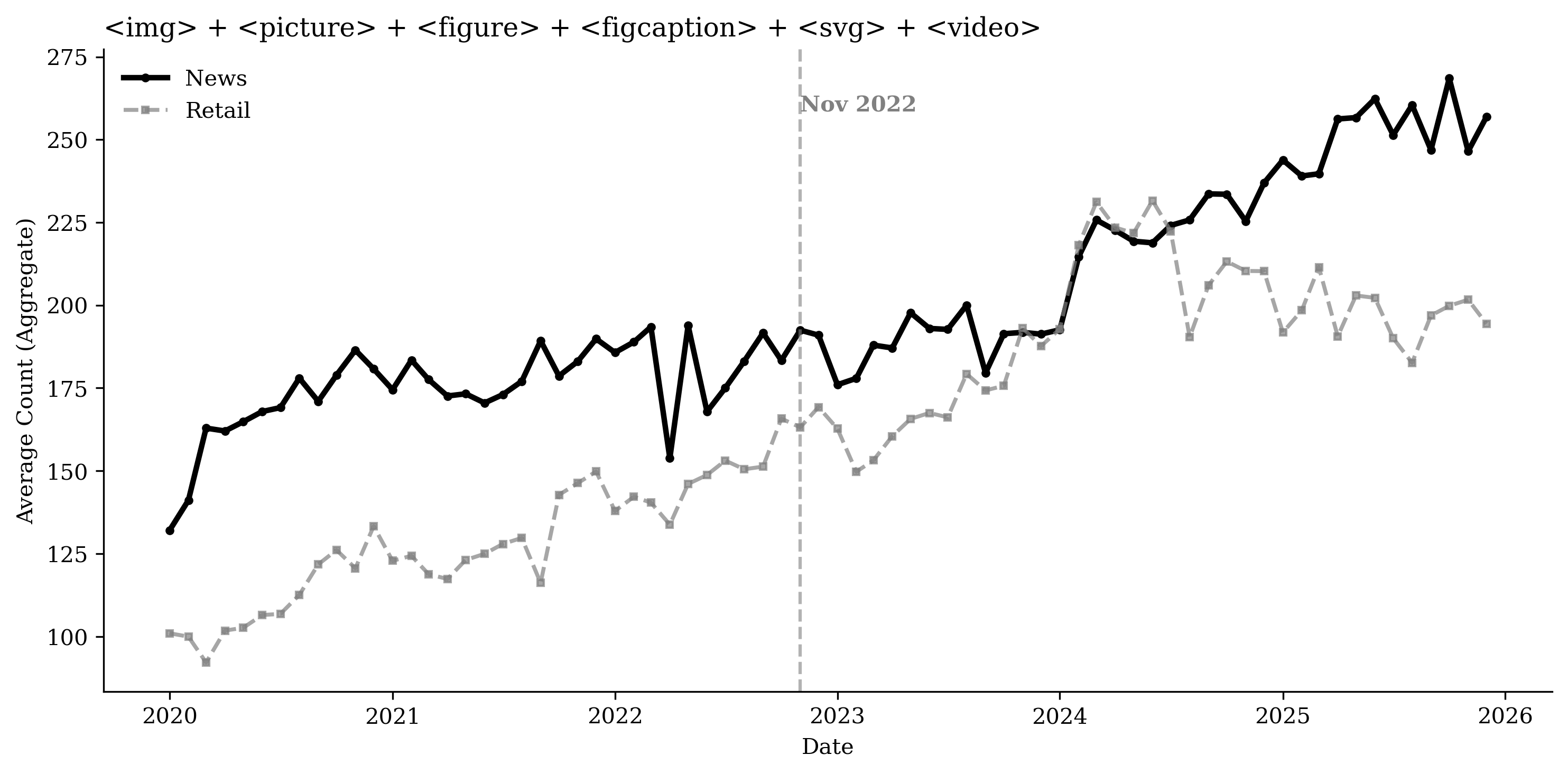
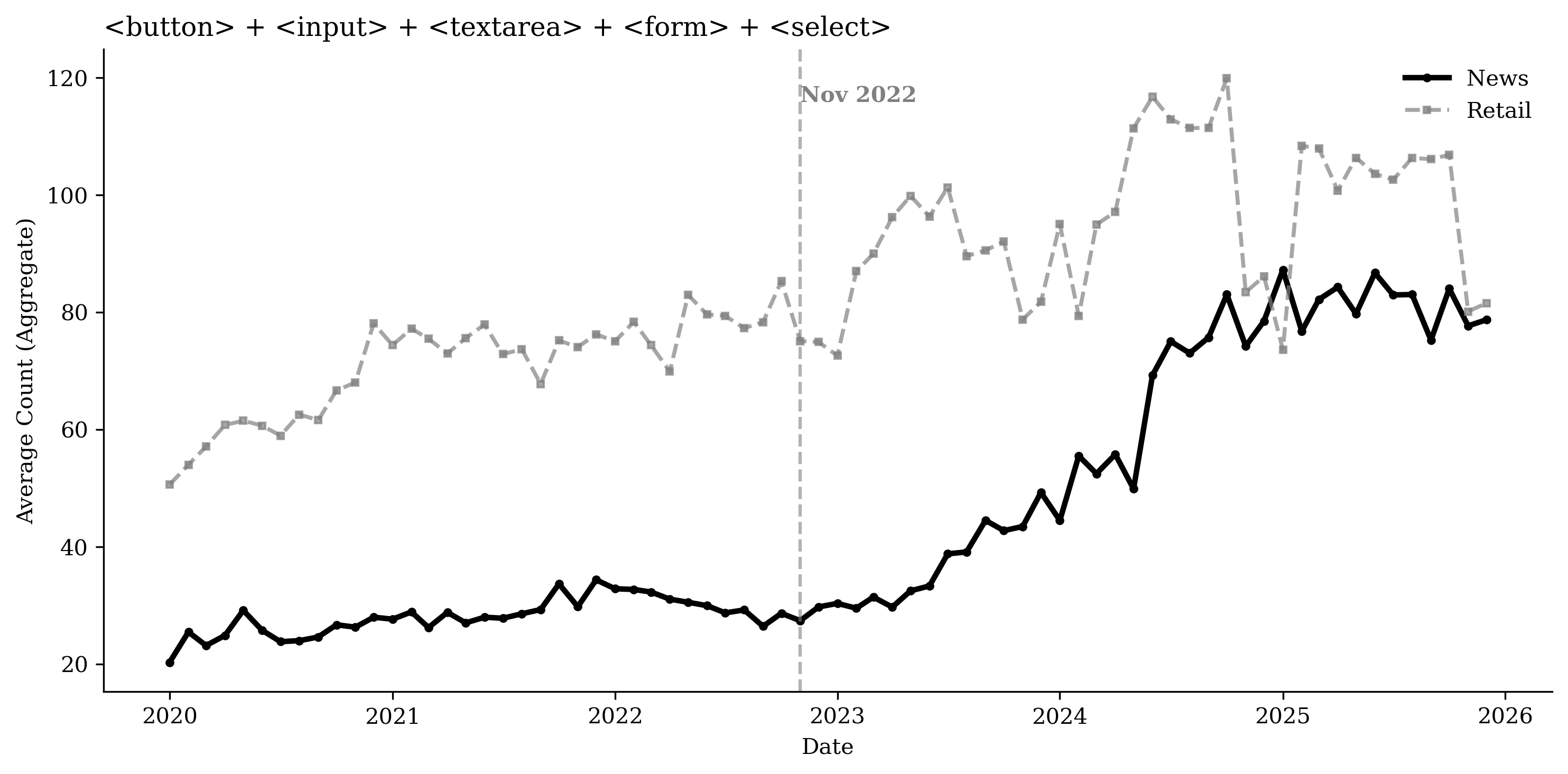
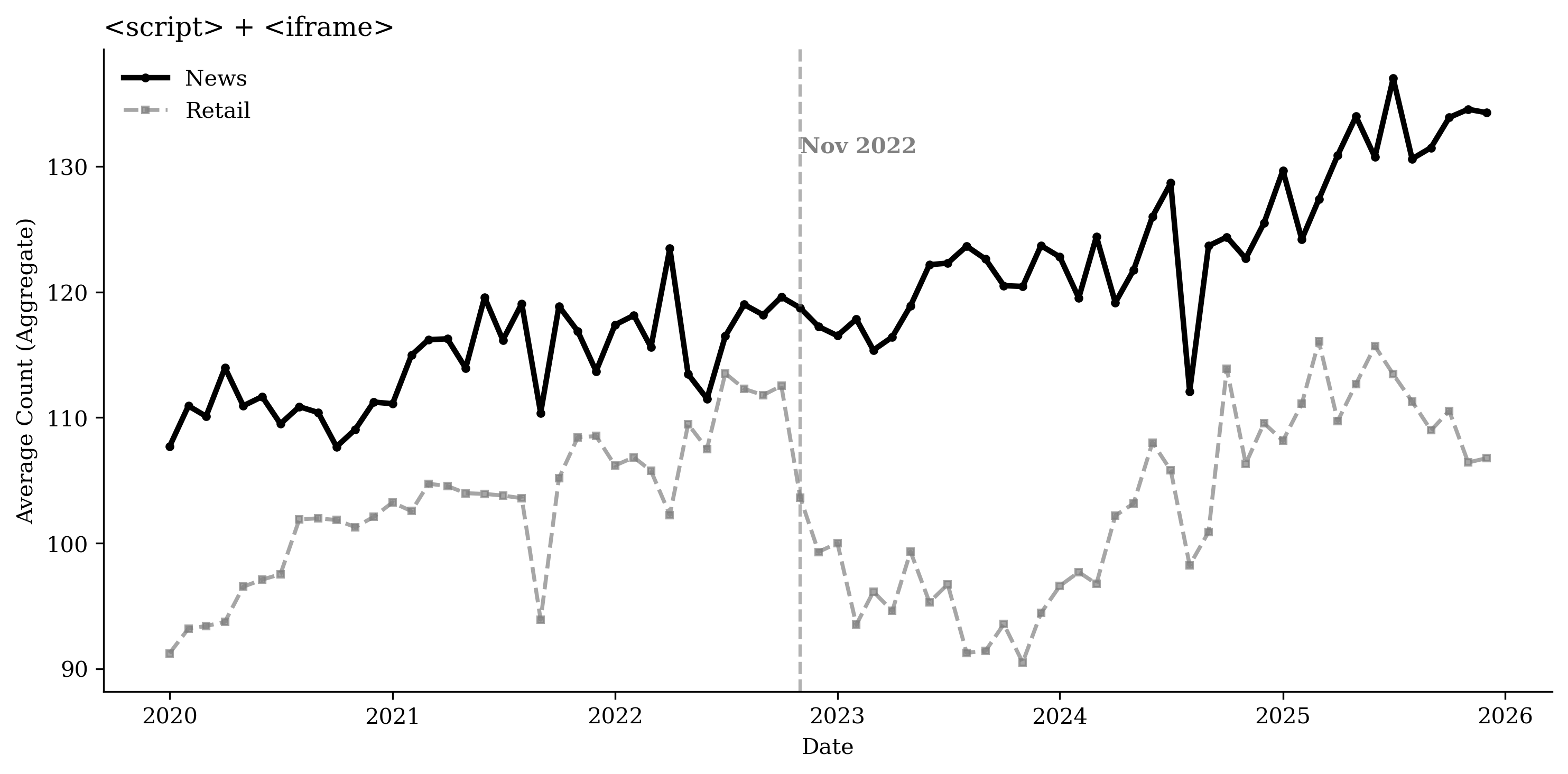
Figure 8: Aggregate evolution in DOM elements—rise is primarily in advertising, multimedia, and interactive engagement, not text.
- Article volume declines 31.2%, as measured by core
<article> and <section> tags.
- Interactive elements (buttons, forms, scripts) surge by 68.1%, advertising and targeting modules by 50.1%, and general layout containers by 70.2%.
- The primary growth in new URLs observed in the Wayback Machine is concentrated in image rather than text assets.
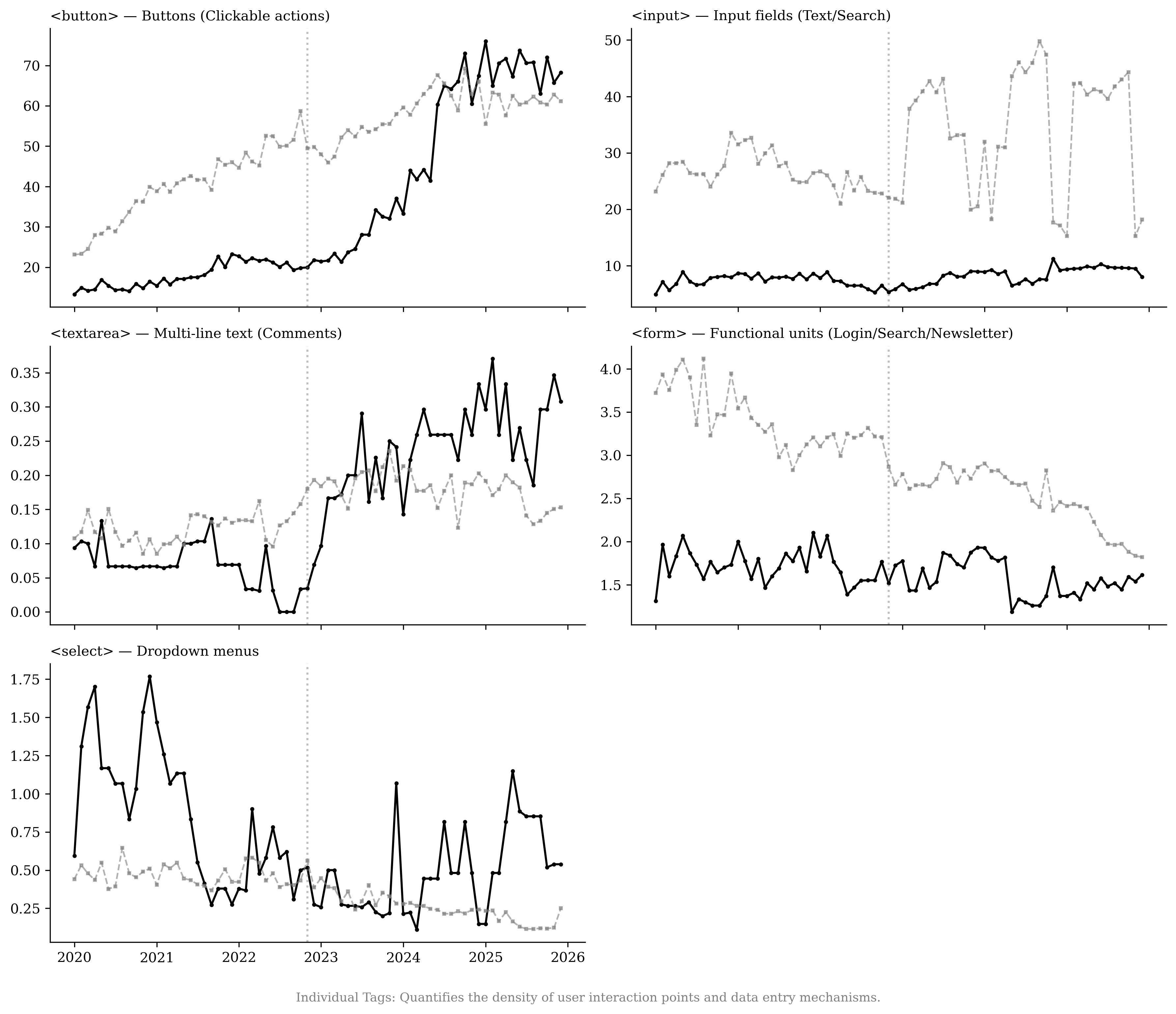
Figure 9: Growth in interactive DOM elements in publisher webpages outpaces changes in the retail sector.
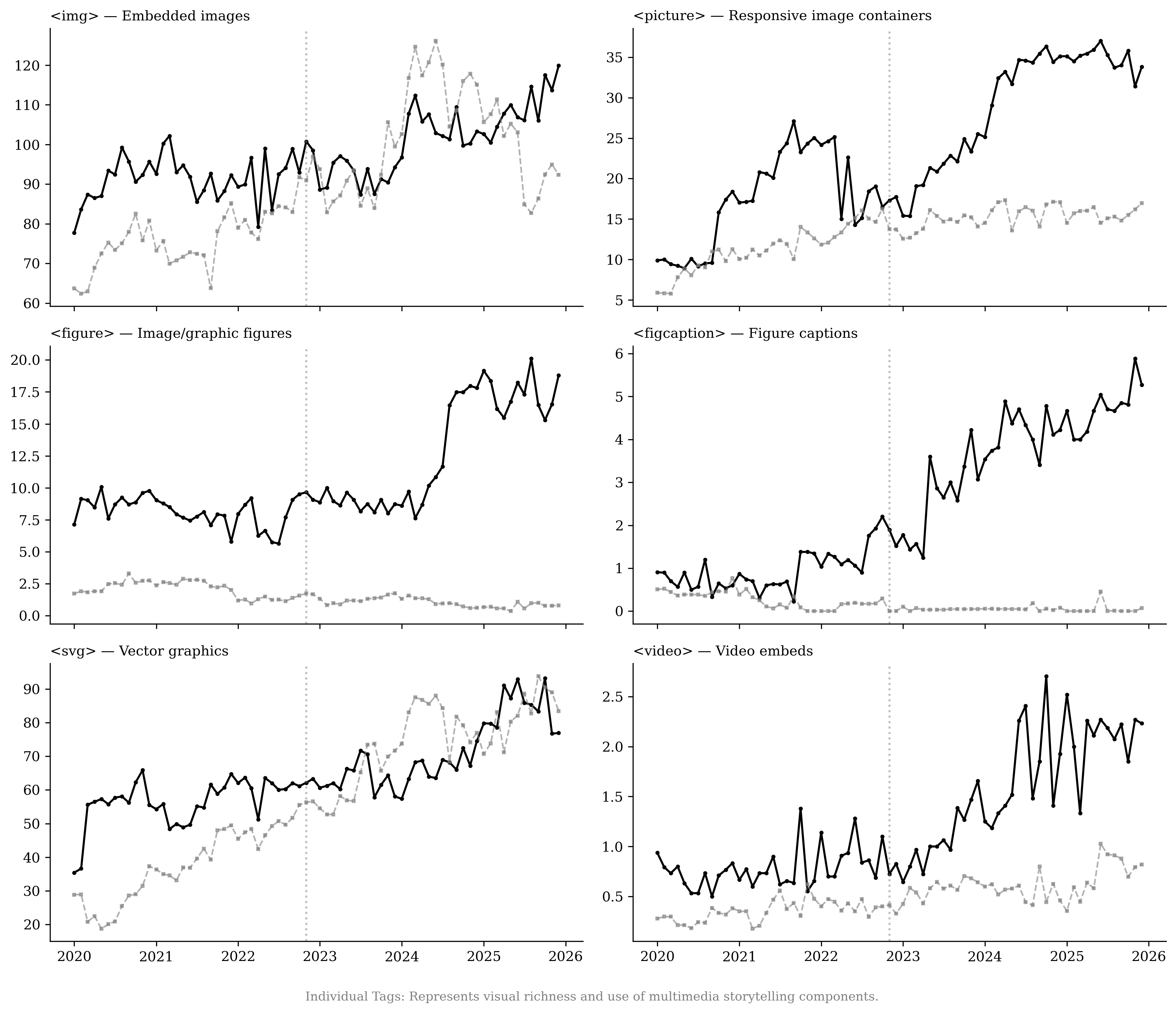
Figure 10: Visual/multimedia (image, video) element counts, showing publishers matching or exceeding retail growth rates post-LLM shift.
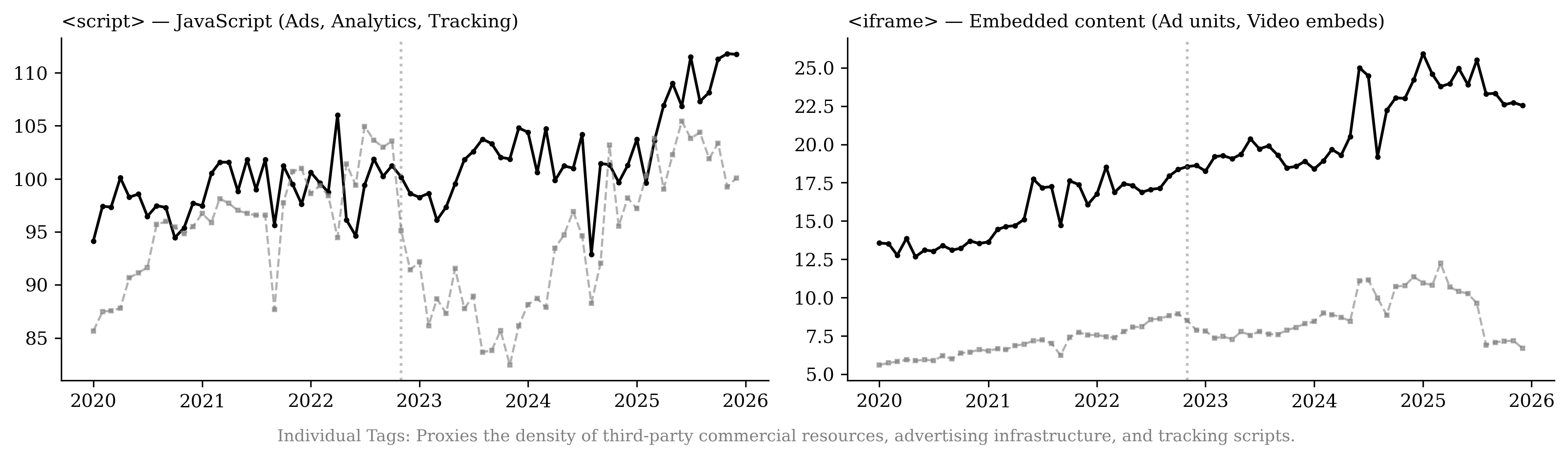
Figure 11: Increase in advertising/targeting elements per publisher page, indicative of intensified efforts to monetize shrinking audiences.
Strategic Implications and Prospective Directions
The study demonstrates that GenAI’s primary disruption is not a generalized collapse of publisher economics, but a reconfiguration of strategic variables: access control, labor composition, and content format. The consistent and significant finding that blocking GenAI bots produces negative audience and traffic effects for large publishers, including human visits, is immediately actionable—cautioning against blanket exclusion strategies without compensatory access-channel deals or technical innovations for enforcement beyond robots.txt (which suffers incomplete compliance).
From a labor economics perspective, the data suggest that LLMs are not a short-run substitute for core content roles but may reinforce editorial differentiation as publishers compete to retain audience engagement with richer, more interactive, and multimedia-dense experiences.
Practically, the pivot toward enhanced media richness and interactive ad-tech reflects a rational adaptation to the eroding value of commodity textual content in a world where LLMs synthesize and summarize at scale. Publishers optimizing for user engagement likely intensify product differentiation along dimensions that are hard for LLMs to capture, scrape, or summarize (i.e., multimedia, interactive features, gated storytelling, and personalized content).
Conclusion
This work delivers clear evidence that publisher responses to GenAI—especially in access control—carry substantial endogenous risks of revenue and audience contraction, particularly for market leaders. LLMs are not yet a complete substitute for traditional news production, but they catalyze both product and process innovation in format and engagement strategies. Future research should integrate direct measurements of LLM referral and discovery, robustly instrument for enforcement efficacy in content access, and dissect the evolving equilibrium between publisher strategies and AI intermediated discovery as GenAI capabilities and integration schemes advance further.