- The paper introduces a novel correspondence between 2d unitary SCFTs from 4d reductions and non-unitary 2d CFTs derived from protected VOAs.
- It employs rigid off-shell supergravity methods to construct S²×Σ backgrounds preserving four supercharges and uses GLSM techniques to reveal duality frames.
- Explicit algorithms and matching partition functions demonstrate the framework’s potential to extend AGT-like correspondences and compute protected observables.
$2+2=4$: A 2d/2d Unitary/Non-Unitary Correspondence
Overview and Main Proposal
The paper "$2+2=4$: A 2d/2d unitary/non-unitary correspondence" (2601.00058) introduces and rigorously formulates a novel correspondence between two-dimensional (2d) quantum field theories obtained from dimensional reduction of four-dimensional (4d) N=2 superconformal field theories (SCFTs) on various curved backgrounds. The central observation is that reduction of a 4d N=2 SCFT T on S2×Σ—where S2 is a two-sphere and Σ a Riemann surface with n punctures—relates quantities in seemingly disparate types of 2d QFTs:
- Unitary side: Reduction on Σ with a specific SU(2)R topological twist yields a family of 2d (2,2) unitary SCFTs, denoted F[T,Σ], extending the notion of class S in 4d.
- Non-unitary side: Reduction on S2 produces a generally non-unitary 2d CFT C[T] whose chiral algebra is the protected sector (VOA) V[T] associated to T via the SCFT/VOA correspondence.
- A precise relation (the "2+2=4" correspondence) is established: the S2 partition function of the unitary theory F[T,Σ] is computed by certain correlation functions in the non-unitary CFT C[T] on Σ.
This framework can be regarded as a 2d/2d analog of the powerful 4d/2d AGT correspondence, where instead of relating 4d partition functions to 2d chiral correlators (as in AGT), partition functions of $2d$ theories of "class F" are related to full correlators of non-unitary $2d$ CFTs built from (generally non-rational) VOAs associated to the parent $4d$ SCFTs.
Key Structural Elements and Technical Results
Moduli and Compactification Backgrounds
By leveraging rigid off-shell supergravity methods, the paper constructs the required S2×Σ backgrounds that preserve four supercharges. Two inequivalent choices are crucial:
- B-type background: Preserves SU(2∣1)B on S2, matches with the holomorphic-topological (HT) twist used for extracting the full chiral algebra from 4d, and is central to the main correspondence.
- A-type background: Preserves SU(2∣1)A on S2, leading to a distinct correspondence with topological quantum field theories (TQFTs) in 2d.
With the B-type background, exactly marginal deformations of the 2d theory correspond to complex structure moduli of Σ, and the S2 partition function is sensitive to these. Importantly, the partition function is subject to holomorphic ambiguity, inherited from Kähler transformations, though this ambiguity vanishes upon considering the full 4d S2×Σ partition function.
Schematic Depiction of the Moduli Space
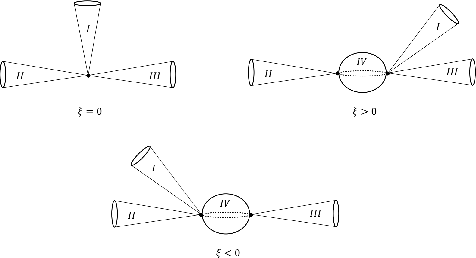
Figure 2: Schematic depiction of the moduli space for the (2,2) GLSM arising via SU(2)R twisted compactification of (A1,A2) on a four-punctured sphere, illustrating the structure relevant for pairing with Lee-Yang minimal model correlators.
Relation to Chiral Algebras and SCFT Constructions
The chiral algebra V[T] of a 4d N=2 SCFT, as described by Beem et al., is elevated from a merely holomorphic (chiral) VOA to a full non-chiral 2d CFT C[T] via reduction on S2. The correlation functions on Σ provide the S2 partition functions of class F theories. The analogy with AGT is manifest: the full 2d CFT's correlators generalize conformal blocks in Toda theory, and the "pants decompositions" reflect duality frames for the 2d (2,2) theory.
Explicit Algorithm and Strong Numerical Evidence
For Argyres–Douglas theories of type (A1,A2k), with Σ a punctured sphere, the authors provide an explicit algorithm to realize the associated 2d (2,2) theories as GLSMs. For the minimal (A1,A2) theory:
- The associated VOA V[(A1,A2)] is the c=−22/5 Virasoro algebra, i.e., the chiral algebra of the Lee–Yang minimal model, which is rational and non-unitary.
- The explicit GLSM with twisted matter and a specific superpotential (matching the chiral ring structure, R-charges, and exact marginal FI parameters with the Lee–Yang four-point function) is constructed. The B-type S2 partition function, computed via localization, matches Lee-Yang four-point conformal blocks and full correlators, up to the expected holomorphic ambiguities.
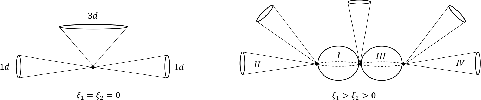
Figure 4: Schematic depiction of the moduli space for the 2d (2,2) GLSM arising from (A1,A2) compactified on a five-punctured sphere, exhibiting the structure of conformal block decompositions and additional FI moduli.
The procedure generalizes to higher k and more complicated punctured spheres, with the structure constants and propagators of the 2d TQFT controlling the elliptic genus, and again matching mathematical expectations for M(2,2k+3) minimal models.
Correlators and Elliptic Genus via 2d TQFT
A further set of strong results is provided for the computation of the elliptic genus of the class F (2,2) theories. These quantities are shown to be algebraic functions arising from TQFT gluing rules, analogous to the structure of indices in 4d class S theories.
Implications and Theoretical Impact
This correspondence provides new tools for studying non-unitary 2d CFTs constructed as "doubles" of protected sector VOAs of 4d SCFTs, conceptually tying together several themes:
- VOA categorification: The work suggests a procedure to go from (quasi-lisse, possibly non-rational) VOAs to full CFT data, at least in the case where the VOAs are rational.
- Modularity and duality: Dualities among the 2d (2,2) (generally non-Lagrangian) IR fixed points arise naturally from distinct degenerations of Σ, paralleling duality phenomena known from higher-dimensional theories.
- Protected structure and strong coupling: The mapping allows for the computation of protected (and thus possibly exactly computable) quantities in both 2d and 4d, even for non-Lagrangian or strongly coupled CFTs.
- Extension of AGT-like correspondences: The 2d/2d structure introduced here removes the necessity for a 6d parent theory, and extends the field of QFT/CFT correspondences to other compactification scenarios.
Prospects and Future Directions
This framework opens multiple avenues for further investigation:
- Generalization to quasi-lisse VOAs: Most 4d SCFTs with non-trivial Higgs branches yield quasi-lisse but non-rational VOAs. It remains open to extend these results to such settings, where modular invariance and existence of a full non-chiral CFT are more subtle.
- Categorification and boundary conditions: The TQFT gluing rules suggest deeper categorical structures underlying dimensional reductions, particularly relating to boundary conditions and functorial field theory.
- Relation to 3d TQFTs and boundary VOAs: The authors hint at connections with Kapustin–Saulina's description of rational CFTs via three-dimensional TQFTs compactified on an interval, suggesting a higher-dimensional origin for various dualities.
Conclusion
The paper $2+2=4$ (2601.00058) constructs a compelling and precise correspondence linking unitary 2d (2,2) superconformal field theories to non-unitary 2d CFTs, themselves determined by the protected chiral algebra sectors of 4d N=2 SCFTs. Through explicit construction, strong computational checks, and a clear algebraic framework, the work both clarifies the structure of 2d theories arising from 4d compactifications and provides crucial insight into the modular structure of protected operator algebras in quantum field theory.
Figure 2: Moduli space schematic for the 2d (2,2) GLSM from (A1,A2) on a four-punctured sphere, encoding exactly marginal moduli matching the Lee–Yang minimal model.
Figure 4: Schematic of the moduli space for the 2d (2,2) GLSM from (A1,A2) on a five-punctured sphere, illustrating the emergence of higher-dimensional conformal block structure and gluing rules.
References:
This work enriches the landscape of field theory dualities and suggests further exploration of non-unitary 2d CFTs, gives new computational methods for protected quantities in and from 4d, and highlights the role of global geometry and topology in the structure of lower-dimensional quantum field theories.