The Lazuli Space Observatory: Architecture & Capabilities
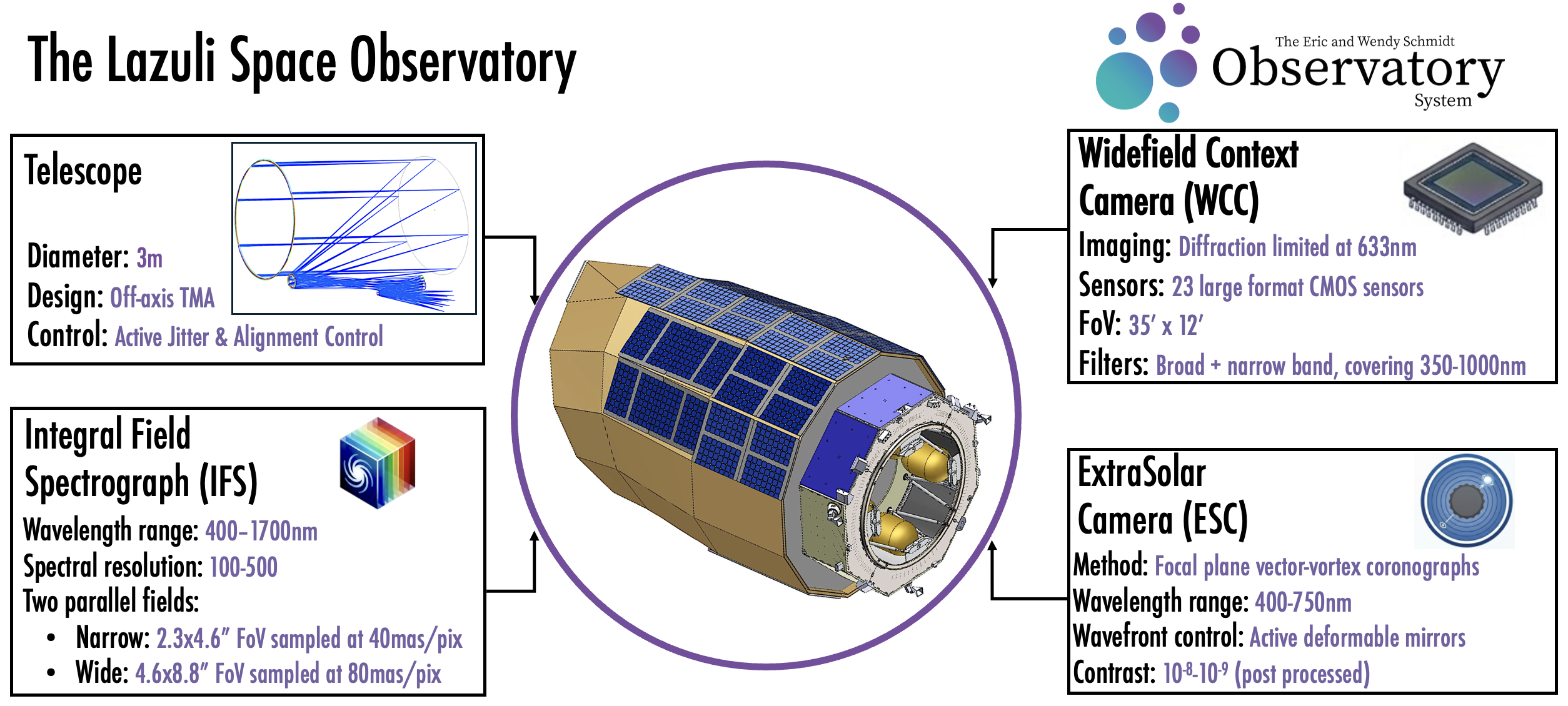
Abstract: The Lazuli Space Observatory is a 3-meter aperture astronomical facility designed for rapid-response observations and precision astrophysics across visible to near-infrared wavelengths (400-1700 nm bandpass). An off-axis, freeform telescope delivers diffraction-limited image quality (Strehl $>$0.8 at 633 nm) to three instruments across a wide, flat focal plane. The three instruments provide complementary capabilities: a Wide-field Context Camera (WCC) delivers multi-band imaging over a 35' $\times$ 12' footprint with high-cadence photometry; an Integral Field Spectrograph (IFS) provides continuous 400-1700 nm spectroscopy at R $\sim$ 100-500 for stable spectrophotometry; and an ExtraSolar Coronagraph (ESC) enables high-contrast imaging expected to reach raw contrasts of $10{-8}$ and post-processed contrasts approaching $10{-9}$. Operating from a 3:1 lunar-resonant orbit, Lazuli will respond to targets of opportunity in under four hours--a programmatic requirement designed to enable routine temporal responsiveness that is unprecedented for a space telescope of this size. Lazuli's technical capabilities are shaped around three broad science areas: (1) time-domain and multi-messenger astronomy, (2) stars and planets, and (3) cosmology. These capabilities enable a potent mix of science spanning gravitational wave counterpart characterization, fast-evolving transients, Type Ia supernova cosmology, high-contrast exoplanet imaging, and spectroscopy of exoplanet atmospheres. While these areas guide the observatory design, Lazuli is conceived as a general-purpose facility capable of supporting a wide range of astrophysical investigations, with open time for the global community. We describe the observatory architecture and capabilities in the preliminary design phase, with science operations anticipated following a rapid development cycle from concept to launch.
Paper Prompts
Sign up for free to create and run prompts on this paper using GPT-5.
Top Community Prompts
Explain it Like I'm 14
Overview
This paper introduces the Lazuli Space Observatory, a new 3-meter space telescope designed to work fast and precisely. Its main purpose is to quickly point at sudden, short-lived events in the universe (like cosmic “fireworks”) and to study stars, planets, and the universe’s history using sharp images and detailed rainbow-like light signatures from 400 to 1700 nanometers (from visible light into the near-infrared). Lazuli aims to respond to new discoveries in under four hours—much faster than most big space telescopes—so scientists can catch important moments that fade quickly.
Key Objectives and Questions
The observatory is built to answer a few big, easy-to-understand questions:
- What happens in the very first hours and days after cosmic events like exploding stars or signals from merging neutron stars? (These change fast, like a firework that’s brightest at the start.)
- What can we learn about planets around other stars by directly imaging them and by studying the light from their atmospheres?
- How can we use precise observations of certain supernovae to better understand the universe’s expansion and dark energy?
- How can we speed up space science by flying promising technologies sooner, instead of waiting decades?
How Lazuli Works: Methods and Approach
Think of Lazuli as a fast, sharp-eyed photographer with three special cameras and a quick getaway car.
The Telescope
- Lazuli uses a 3-meter mirror with a design called an “off-axis three-mirror anastigmat.” In plain language: three carefully shaped mirrors bend light to create a wide, flat, very sharp image.
- “Off-axis” means the secondary mirror doesn’t block the middle of the main mirror. Imagine moving your hand out of the way so it doesn’t block your flashlight—this helps the telescope reach very high image quality.
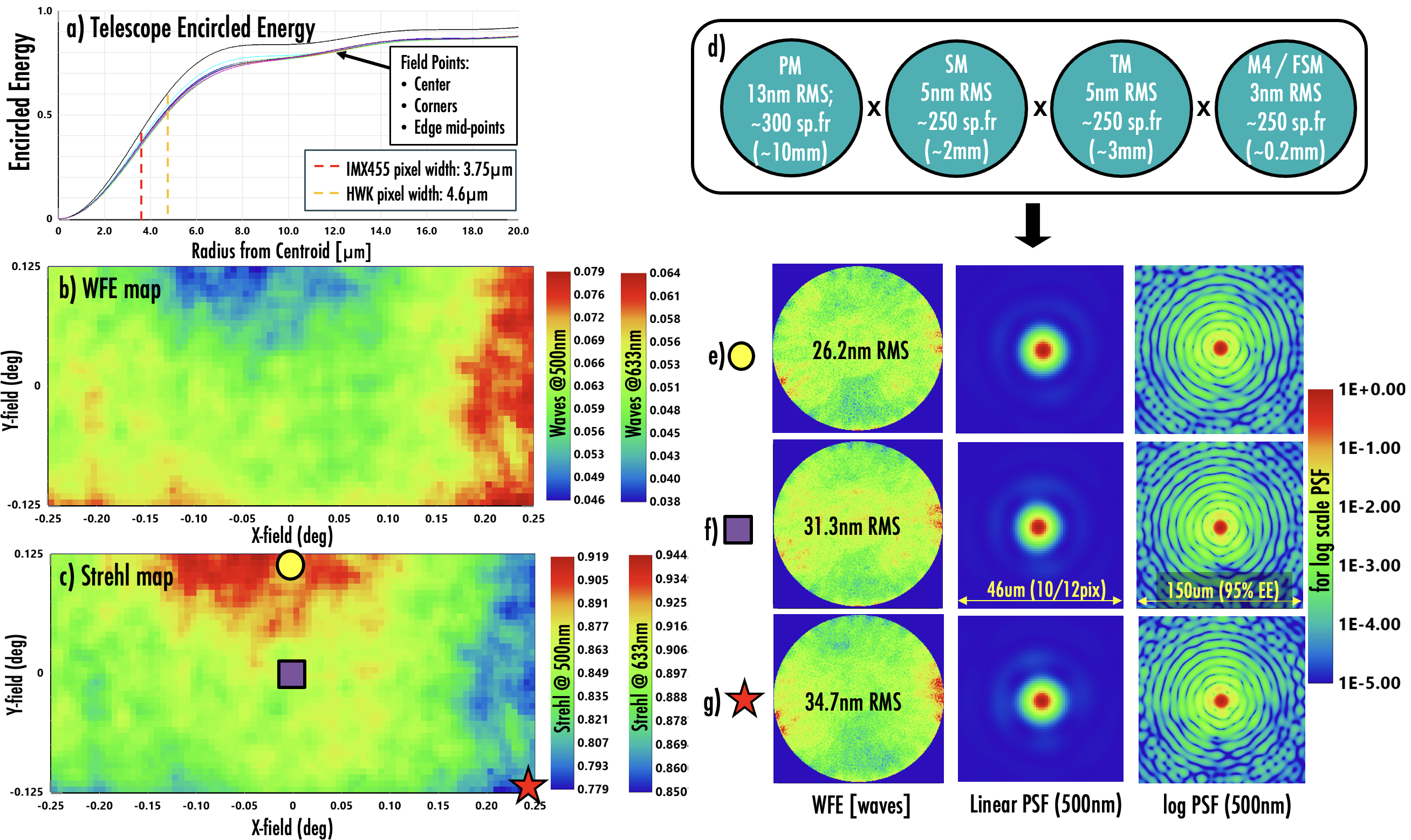
- It aims for “diffraction-limited” sharpness, which is basically “as sharp as physics allows.” A “Strehl ratio > 0.8” is like a score where 1 is perfect; 0.8 means it’s very close to perfect sharpness.
The Three Instruments
Lazuli carries three tools that work together, like a team of specialists:
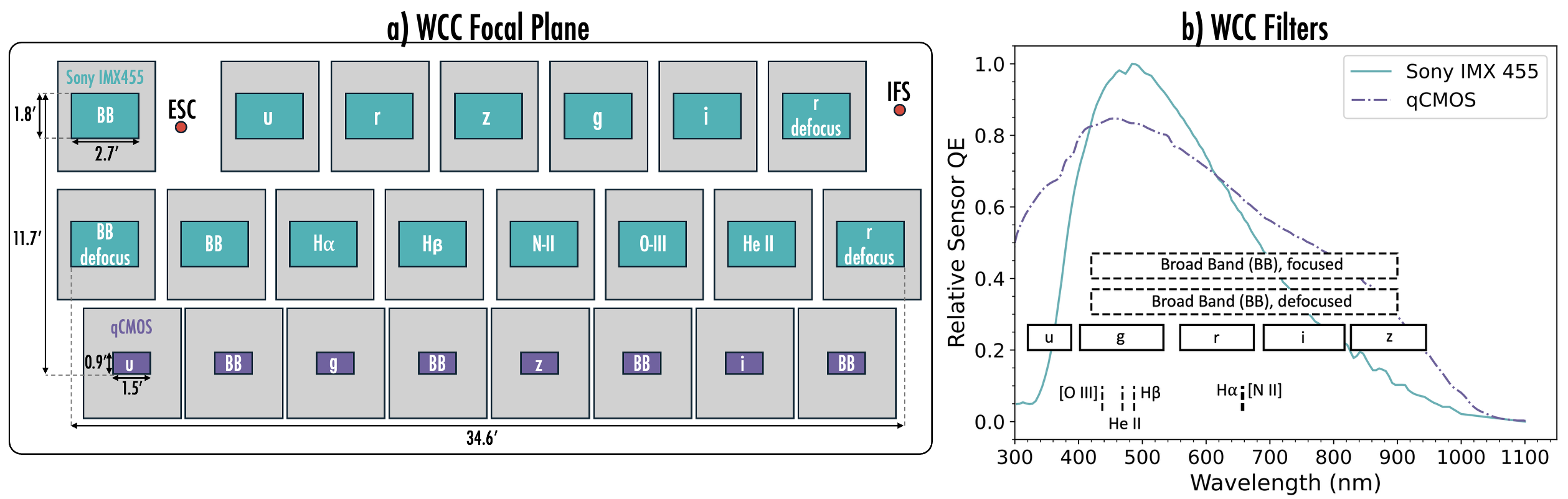
- Wide-field Context Camera (WCC): Takes fast, multi-color pictures over a relatively wide area (about 35 by 12 arcminutes—think of a rectangular view of the sky). “High-cadence” means lots of images in quick succession, great for catching fast changes.
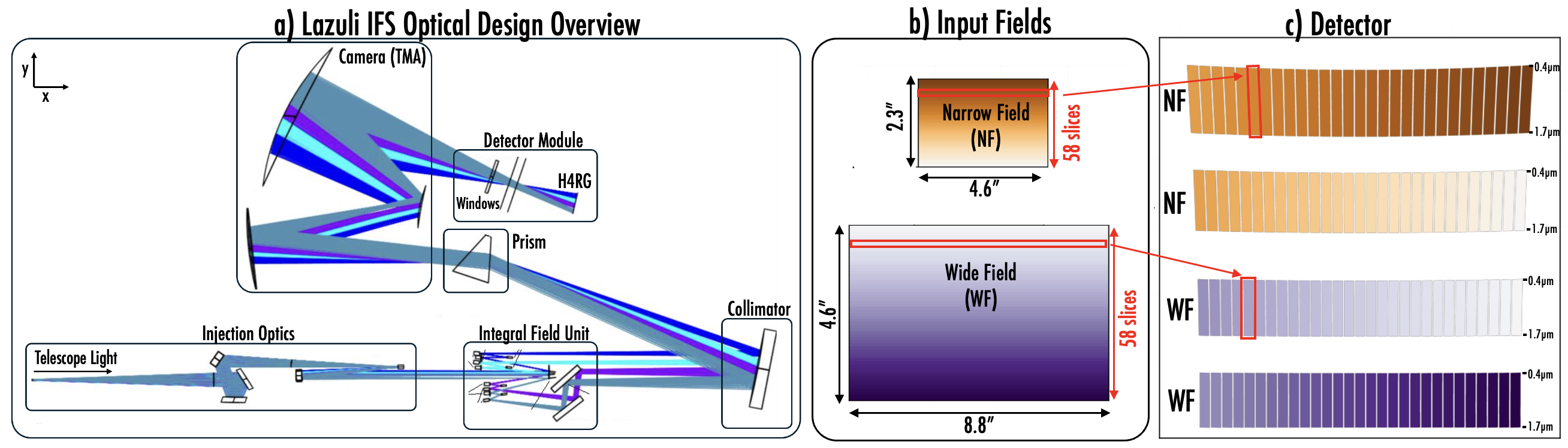
- Integral Field Spectrograph (IFS): Splits light into its rainbow (spectrum) from 400 to 1700 nm, with a resolution of about R ~ 100–500. A spectrograph is like a prism that turns light into a barcode of colors; each barcode reveals what an object is made of and how it’s moving.
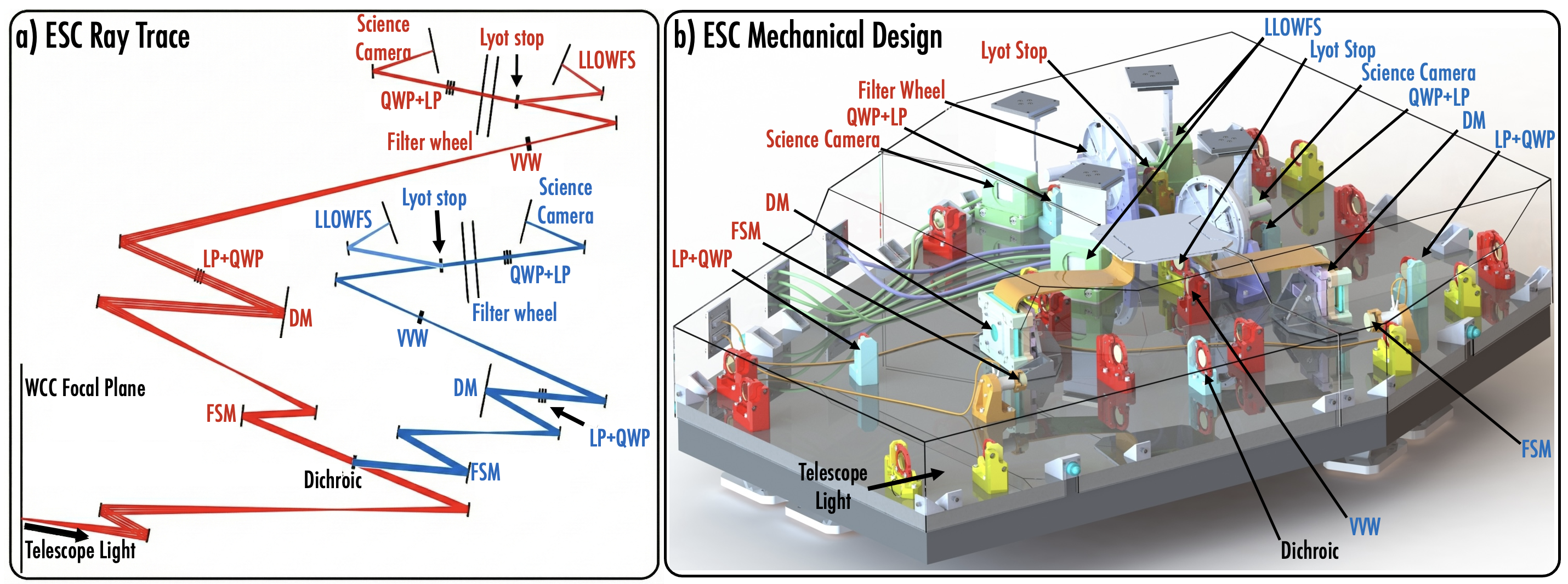
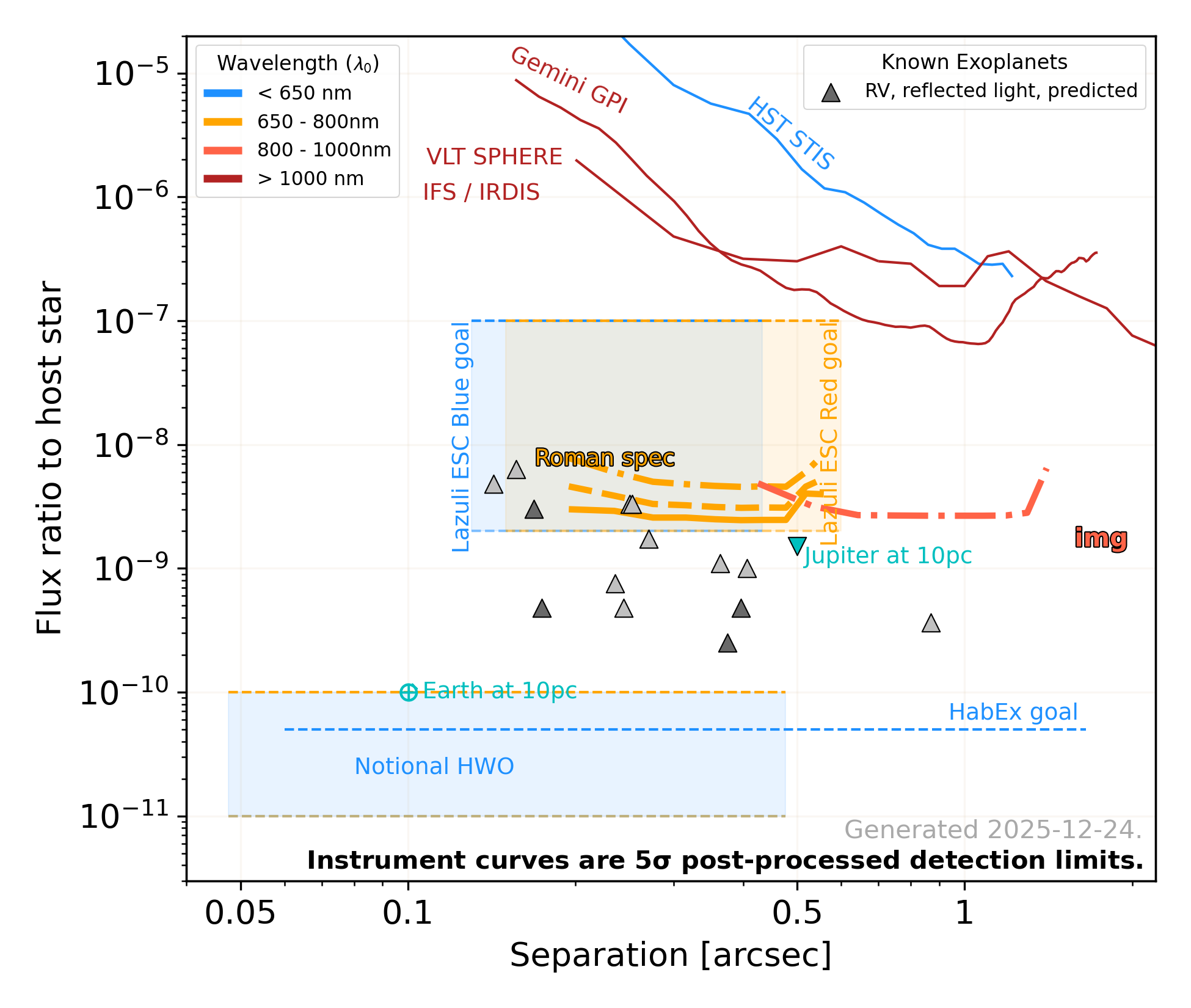
- ExtraSolar Coronagraph (ESC): Blocks a star’s glare to see faint nearby objects (like exoplanets and dust). This works a bit like using your hand to block a streetlamp so you can spot fireflies around it. It uses “deformable mirrors” to shape light waves—similar to noise-canceling headphones blocking sound—to reach extremely high contrast. Lazuli aims for raw contrast of 10⁻⁸ and about 10⁻⁹ after processing, meaning it can dim starlight by up to a billion times.
Fast Orbit and Operations
- Lazuli orbits in a “3:1 lunar-resonant” path with a 9-day period, using the Moon’s gravity to help set a stable, efficient orbit. This keeps it away from the worst radiation zones and provides steady temperatures.
- It’s built to be nimble: from receiving a “go look now!” alert to pointing and observing can take under 4 hours (the goal is 90 minutes), which is unusually fast for a large space telescope.
- It uses body-mounted solar panels and careful engineering to keep pointing steady. A “fast steering mirror” acts like tiny, rapid adjustments of a camera tripod to keep the view still.
Design Approach
- Lazuli is funded philanthropically and built on a rapid timeline (about 3–5 years) using proven parts where possible, but it also flies ambitious tech (like the coronagraph) to learn by doing.
- The instrument suite is focused—fewer modes, less complexity—so the team can deliver high-quality performance faster.
- The observatory is meant to be a general-purpose tool with open data for the global community, not just a single-mission specialist.
Main Capabilities and Why They Matter
Here are the highlights and their importance:
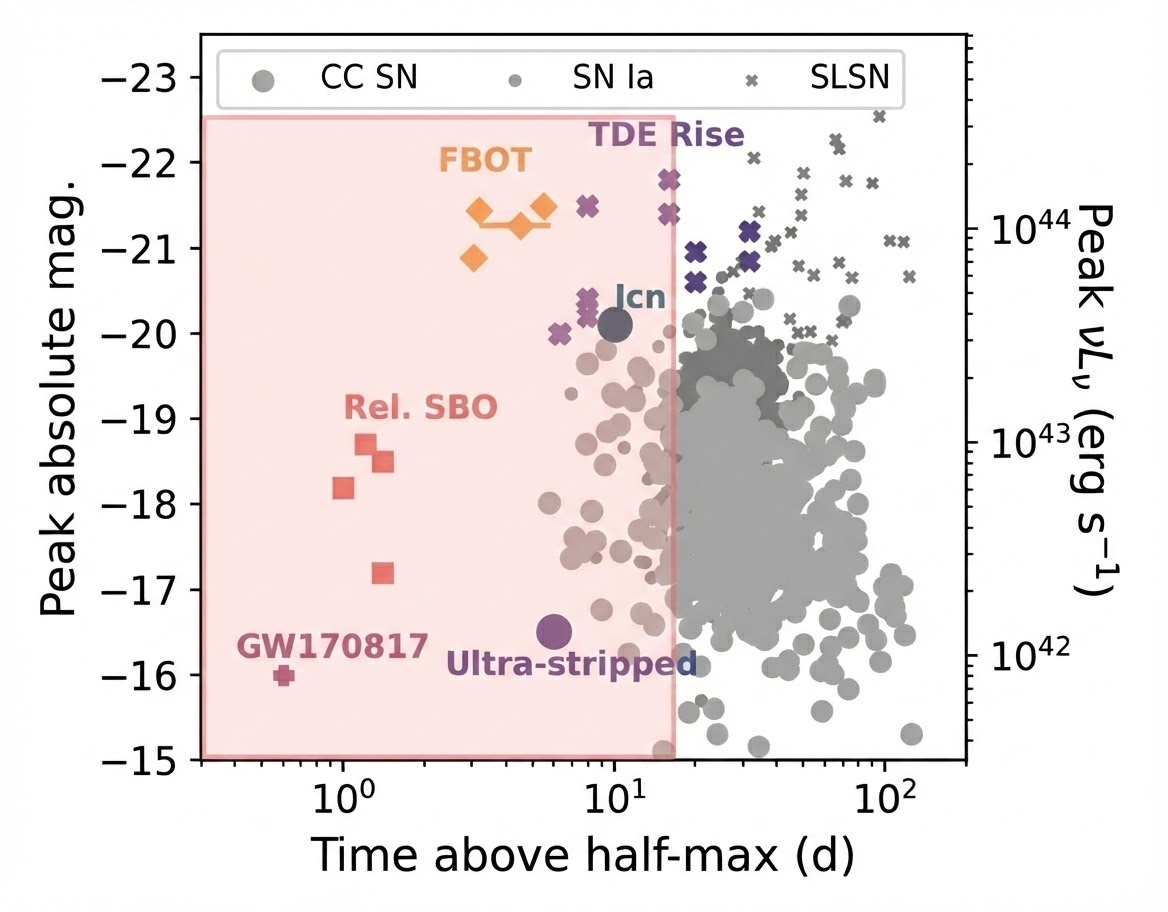
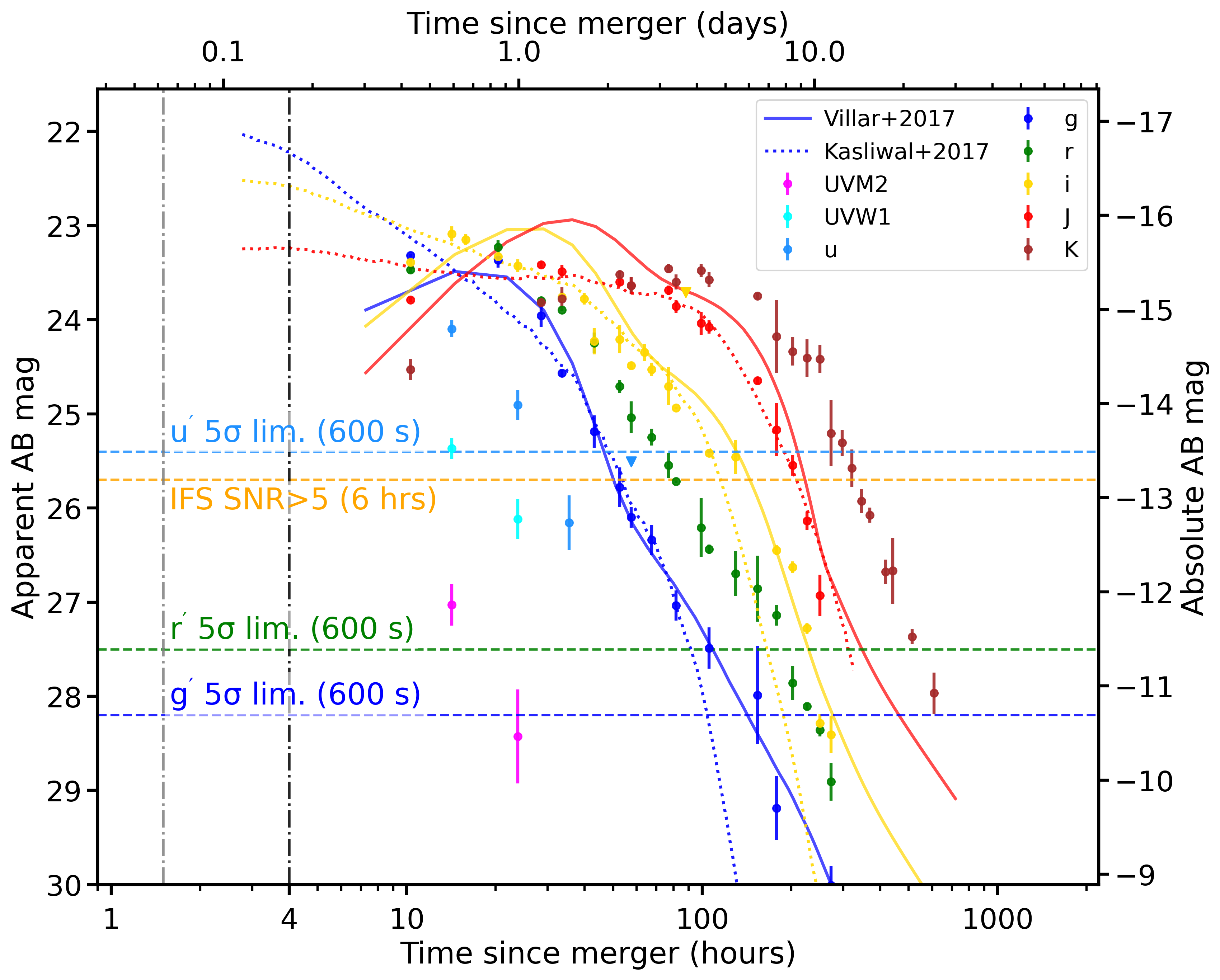
- Speed: Responds to new discoveries in under four hours. This captures early moments in events like gravitational-wave counterparts and fast transients that often fade within hours or days.
- Sharp Vision: Diffraction-limited optical quality with a Strehl ratio above 0.8 at 633 nm. That means crisp images and precise measurements, crucial for teasing out tiny signals.
- Broad Light Coverage: From 400 to 1700 nm. This lets Lazuli study both visible light and near-infrared, revealing chemistry, temperature, and motion.
- Detailed Spectra: The IFS gives continuous spectra at R ~ 100–500. This “color barcode” reveals what objects are made of and how they’re changing over time.
- Exoplanets in High Contrast: The ESC can block starlight to see nearby faint objects, aiming for contrasts up to one billion times dimmer than the star. This enables direct imaging of exoplanets and dusty disks.
- Wide-Field Imaging: The WCC captures a sizeable patch of sky quickly and repeatedly, ideal for tracking rapid changes and providing context around targets.
- Community-Oriented: Open time and rapid data release support scientists worldwide, and Lazuli complements other telescopes like JWST and Roman rather than duplicating them.
These capabilities empower three major science areas:
- Time-domain and multi-messenger astronomy: fast-evolving events, gravitational-wave counterparts, and unusual transients.
- Stars and planets: imaging exoplanets and studying their atmospheres.
- Cosmology: following Type Ia supernovae to refine measurements of the universe’s expansion.
Implications and Impact
- Faster Discoveries: By getting on target within hours, Lazuli can catch the “first light” moments that reveal the physics behind cosmic explosions and mergers.
- Better Exoplanet Techniques: Flying advanced coronagraph and wavefront control in space builds real-world experience needed for future missions that aim to find Earth-like planets (like the proposed Habitable Worlds Observatory).
- Sustaining Optical–NIR Space Capability: With Hubble aging and JWST focused more on infrared, Lazuli helps keep sharp optical-to-NIR space observations going, right when they’re most needed.
- Accelerating Science: The philanthropic, rapid-build model shows a way to deliver powerful space science on shorter timelines, potentially reshaping how big observatories get developed.
- Global Benefit: With open data and a general-purpose design, Lazuli will support many kinds of research, including ideas that haven’t been imagined yet.
In short, Lazuli is built to be fast, sharp, and versatile. It aims to catch the universe in the act, help us see exoplanets directly, sharpen our cosmic measurements, and speed up the path to future space missions—all while sharing data widely so the whole scientific community can benefit.
Knowledge Gaps
Knowledge gaps, limitations, and open questions
Below is a single, consolidated list of concrete gaps and unresolved questions that future work should address to validate and operationalize the Lazuli Space Observatory as described.
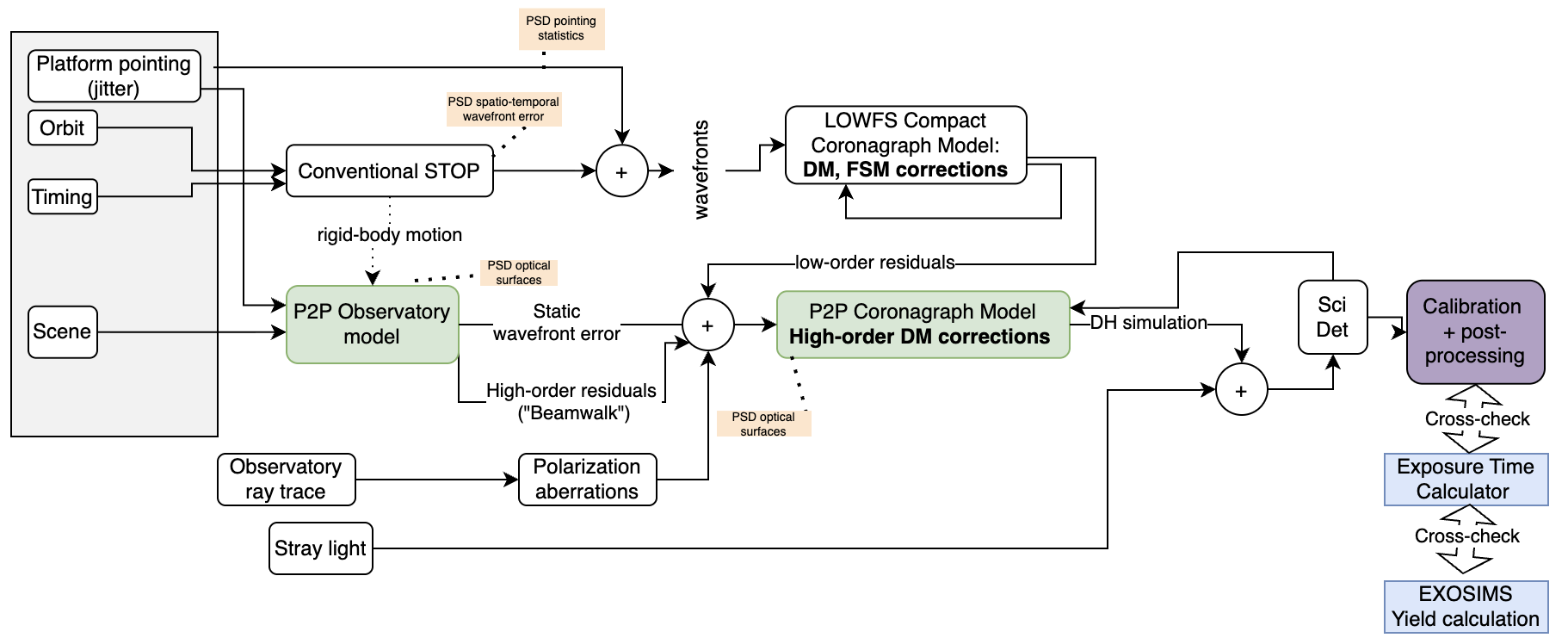
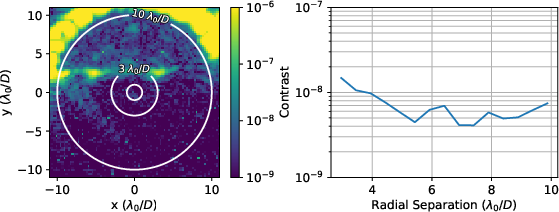
- Coronagraph end-to-end error budget: A quantitative, closed error budget linking wavefront stability, thermal drift, LOS jitter, DM performance, and optical aberrations to the claimed raw/post-processed contrasts of 1e-8/1e-9 is not provided; required loop bandwidths, sensing latencies, stability margins, and disturbance rejection across the reaction-wheel spectrum remain unspecified.
- Selection and validation of HOWFS/LOWFS modalities: The specific wavefront sensing approach (e.g., ZWFS, LLOWFS, LSI), its sensitivity to low-order aberrations, and demonstrated on-orbit performance metrics are not defined; DM actuator count, layout, stroke, calibration and radiation tolerance are unreported.
- ESC chromatic performance and filter set: Detailed wavelength-dependent contrast, throughput, polarization sensitivity, and speckle stability across the Blue (400–540 nm) and Red (560–750 nm) arms, and the exact filter set (>5) with band definitions and science trade-offs, are absent.
- Planet yield modeling: No quantitative target list or yield forecast exists (expected number and types of detectable planets vs distance and contrast, exposure times, completeness vs IWA/OWA); the sensitivity of yield to post-processing choice and PSF stability is not quantified.
- Stray light and ghost control: An analysis of stray light, ghosting, and scattering for the off-axis TMA and instrument baffles (including Earth/Moon/zodiacal backgrounds and internal reflections) and their impact on coronagraph contrast and IFS photometry is missing.
- Radiation environment effects on detectors: TID/TNID/SEE rates for the 3:1 lunar resonant orbit and their impact on Sony IMX455, BAE HWK4123 qCMOS, and H4RG-10 detectors (e.g., dark current growth, hot pixel evolution, persistence, PRNU drift, IPC changes) are not characterized; shielding and mitigation plans (anneals, EDAC, on-orbit calibrations) are not described.
- Structural-Thermal-Optical-Performance (STOP) analysis: A complete STOP model across perigee/apogee thermal cycles with predicted WFE drift, PSF stability, and temperature gradients (telescope and instruments), including margins to meet Strehl >0.8 at 633 nm, is not presented.
- Pointing stability budget and performance: Quantitative allocations and measured/expected PSDs for LOS jitter (reaction wheels, isolators, FSM residuals, structural modes) are not provided; required settle times and jitter floors per instrument/mode are unspecified.
- Slew rates and rapid-response feasibility: The 4-hour threshold/90-minute goal for ToOs lacks hard numbers on slew rates, slew-and-settle times, Sun-angle constraints from body-mounted arrays, uplink latency/ground-station coverage windows, and the probability of success versus sky location.
- Large-error-box tiling strategy: With WCC’s 35′×12′ FOV, the plan to cover tens to hundreds of deg² GW/localization regions (tiling strategy, exposure time calculator, prioritization of probability maps, trade between WCC and IFS usage) is not provided.
- Data volume and downlink budgeting: The 70 GB/day downlink is not reconciled with worst-case high-cadence multi-sensor WCC operations plus IFS and ESC data; compression schemes, onboard coaddition/ROI cropping, prioritization for ToO events, and expected latency to public release are unspecified.
- Photometric and spectrophotometric calibration: A calibration ladder (standard star network, absolute flux scale across 400–1700 nm, cross-band ties), flat-field and nonlinearity correction plans, wavelength calibration stability, and IPC characterization for the IFS are not described.
- ESC post-processing approach: The choice among ADI/RDI/KLIP/SCC/CDI, required reference-star libraries, scheduling constraints for reference observations, expected throughput losses/biases, and on-orbit validation plan are open.
- IFS IFU architecture and extraction: The IFU technology (lenslet vs image slicer), spectral format, crosstalk, extraction algorithms, and implications of variable R=100–500 on key science (SN Ia cosmology, exoplanet atmospheres) are not specified; spectral stability requirements and budgets are missing.
- Detector thermal control and margins: Achievable operating temperatures, TEC capacity, thermal margins, and dark-current stability (especially for COTS CMOS at −20°C) are not detailed; contingency for radiation-induced dark-current increases is absent.
- Contamination control during operations: Risks and mitigations for hydrazine thruster plume contamination, outgassing from bus materials, on-orbit bakeout/venting strategy, and observational constraints post-momentum dumps are not articulated.
- Baffle design and ghost path analysis: Quantitative ghost path identification, pupil glint mitigation, surface scatter specifications (mid-spatial frequency), and their effect on coronagraph and IFS performance require definition and verification.
- Polarization effects: The vector vortex waveplate’s polarization sensitivity, telescope/instrument polarization cross-talk, and required polarization calibration to preserve contrast and photometric accuracy are not addressed.
- Orbit dynamics, station-keeping, and lifetime: Long-term orbital stability under lunisolar perturbations, eclipse frequency/duration, thermal cycling impacts, radiation variation, station-keeping Δv budget and margins, and end-of-life disposal are not reported.
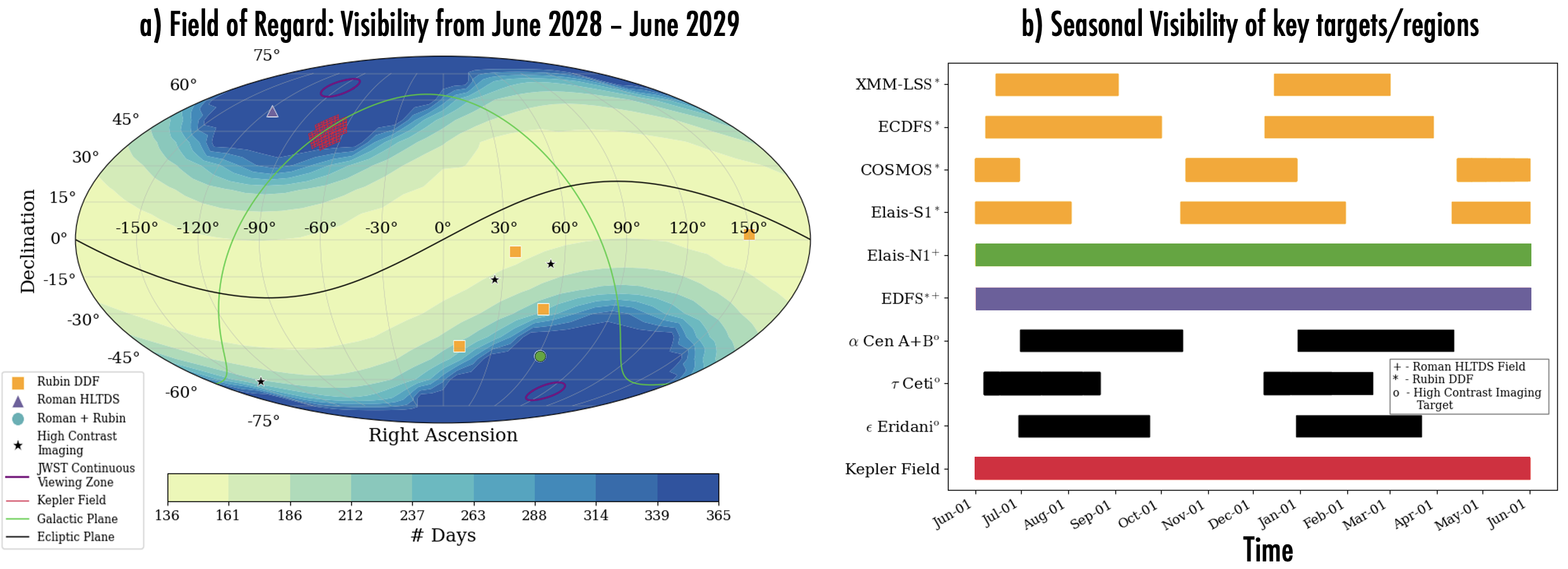
- Sun-angle and power constraints on pointing: Quantitative pointing constraints from body-mounted solar panels (minimum Sun avoidance angles, seasonal impact on field-of-regard and ToO responsiveness) and how these affect scheduling are not specified.
- Fault management and autonomy: Fault detection, isolation, and recovery (FDIR), safing sequences, autonomy for real-time ToO replanning, and redundancy levels per subsystem under the accepted higher risk posture remain undefined.
- Community access and data policy details: Proprietary period (if any), data formats, archive architecture, pipeline versions/validation thresholds, alert ingestion/trigger policy for external facilities, and scheduling transparency are not laid out.
- Instrument resource conflicts and reconfiguration overheads: Constraints on simultaneous instrument use, time costs of mode switching, co-alignment and dithering overheads, and the scheduling heuristics to manage conflicts are not quantified.
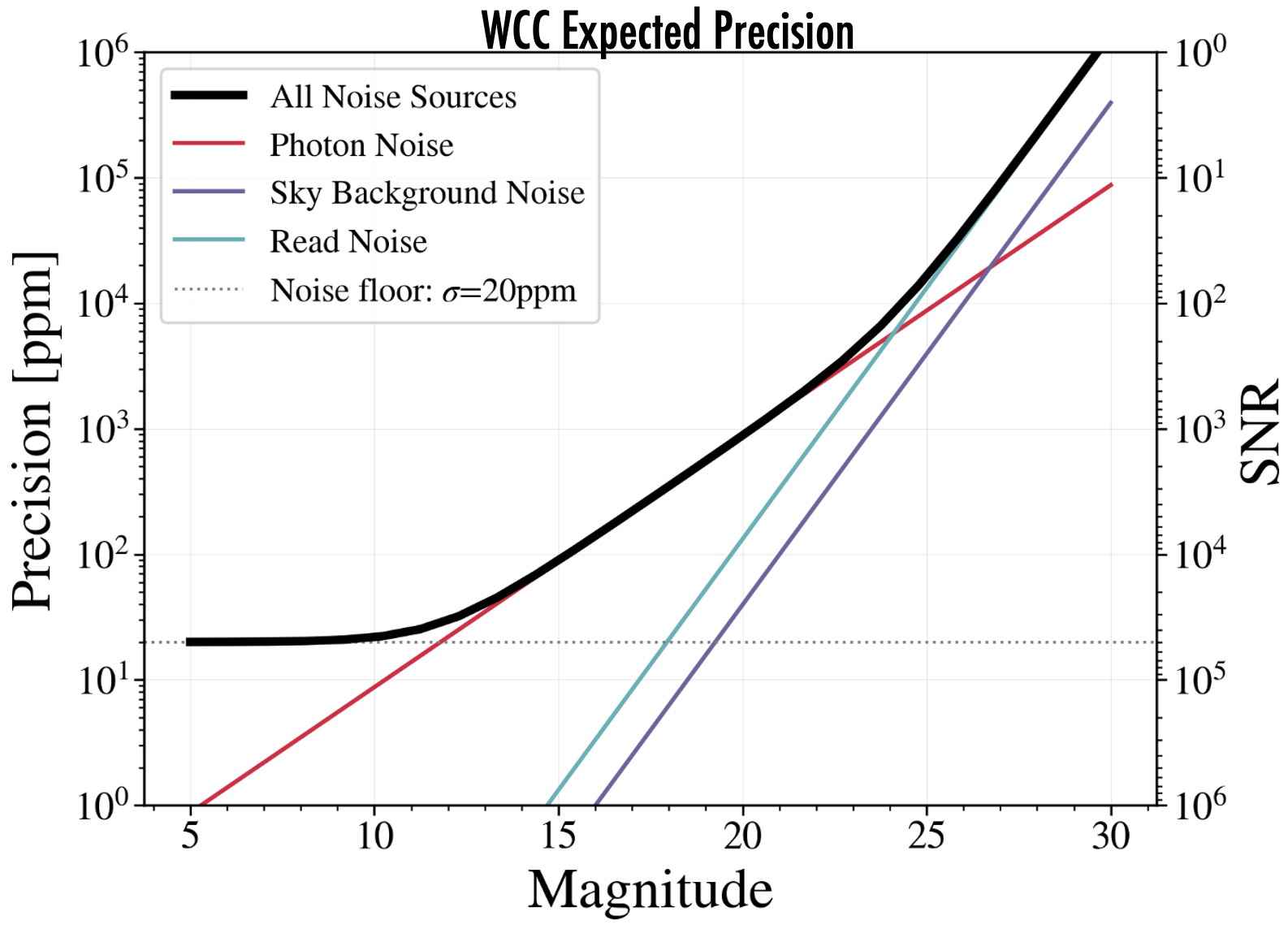
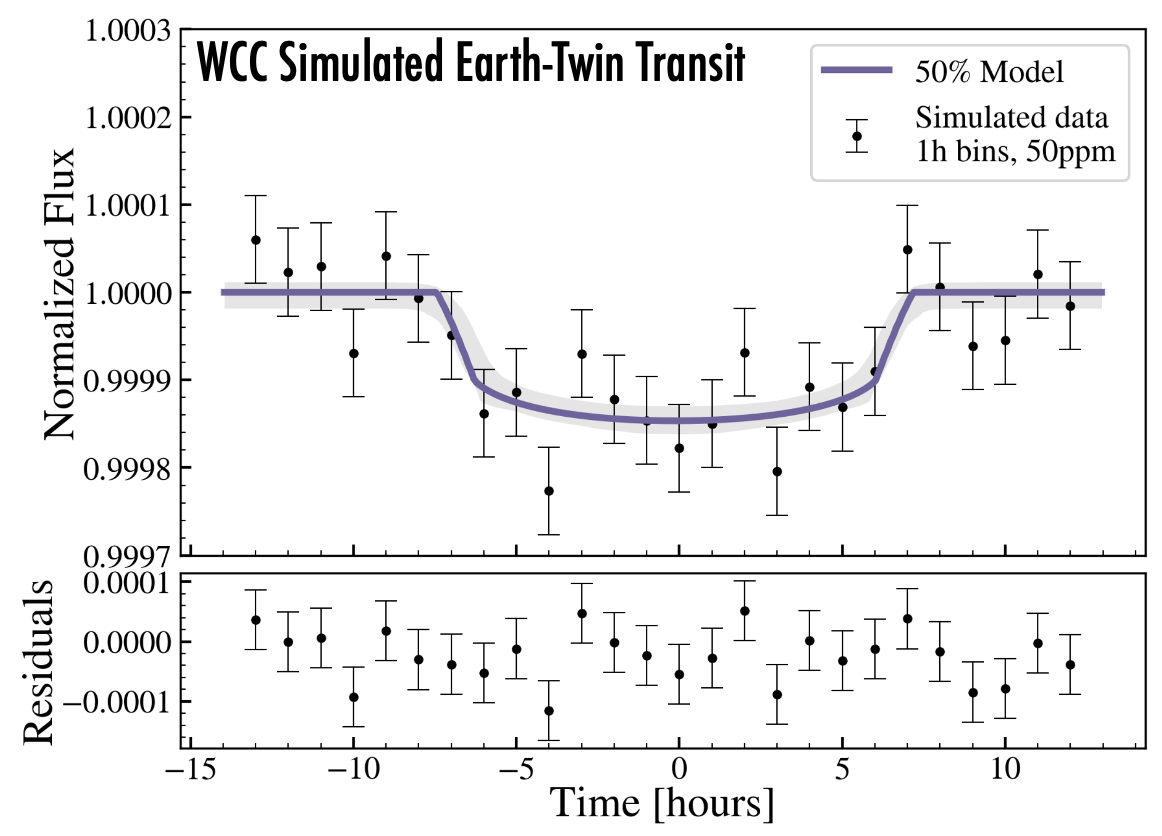
- WCC photometric precision targets: Quantified high-cadence photometric stability (e.g., ppm targets), jitter-to-photometry coupling, intrapixel sensitivity effects, rolling-shutter artifacts (if any), and suitability for transit timing/short-timescale variability are not established.
- PSF temporal stability requirements: The required PSF stability over minutes–days for coronagraph post-processing and SN spectrophotometry (and methods to monitor/maintain it on-orbit) are not defined.
- Commissioning timeline and contingencies: A detailed on-orbit commissioning sequence (wavefront calibration, instrument alignment, performance verification), timelines, risk mitigations, and fallback plans for underperforming subsystems are missing.
- Manufacturing and alignment tolerances: Mirror figure specifications (including mid-spatial frequency limits), alignment tolerances for M2–M4 and the Aft-Optics Assembly, metrology approaches (gravity-release error treatment), and their impact on Strehl and ESC performance require documentation.
- Security and command uplink: Encryption/authentication and operational security mechanisms for real-time uplink under open-data philosophy, and their potential impact on responsiveness, are not discussed.
- SN Ia cosmology program design: Target selection, cadence, redshift coverage, calibration strategy to control systematics (<1% level), comparison and complementarity to Roman and ground-based surveys, and expected constraints are not quantified.
- ESC spectral/photometric characterization: Plans for planet spectral characterization in 560–750 nm (filter widths, color indices, achievable photometric precision), and synergy with IFS for atmospheric retrievals are not detailed.
- Ground system and scheduling software: The scheduling engine’s constraint model, performance under rapid replanning, integration with external alert brokers (Rubin, GW networks), optimization criteria, and reliability metrics are not presented.
Practical Applications
Immediate Applications
Below are specific, deployable-now applications that leverage Lazuli’s findings, methods, and development model. Each bullet lists sectors, concrete uses, potential tools/products/workflows, and key assumptions that affect feasibility.
- Rapid, event-driven space operations and tasking
- Sectors: software, space operations, disaster response, defense/ISR, astronomy
- Use: Adopt Lazuli’s fast target-of-opportunity (ToO) model—event brokers, real-time scheduling, and commercial ground station integration—to retask satellites for urgent observations (e.g., post-disaster imaging, maritime anomalies, wildfire tracking) and to speed astrophysical transient follow-up from ground assets.
- Tools/workflows: Event-driven schedulers; low-latency uplinks over commercial ground station networks; automated observation planning and constraint checking; ops runbooks designed for <4-hour (goal 90-min) response.
- Assumptions/dependencies: Reliable wide-area alert streams (e.g., VOEvent for astronomy or disaster feeds); sufficient ground station coverage; satellite agility; compatible licensing/security for real-time uplinks.
- Low-jitter, line-of-sight stabilization architecture
- Sectors: space hardware, Earth observation, robotics, precision manufacturing
- Use: Port Lazuli’s layered pointing stability approach (reaction wheel balance/isolation, structural mode placement, fast steering mirror loop closure) to small- and mid-class satellites, robotic optics benches, and precision gimbals to improve image sharpness and inspection yield.
- Tools/products: Reaction wheel balancing and passive isolators; fast steering mirrors; structural mode avoidance design guides; jitter budgeting and verification protocols.
- Assumptions/dependencies: Availability of FSMs and isolators sized for platform; accurate structural dynamics models; acceptance of added SWaP for stability.
- Freeform, off-axis telescope design practices
- Sectors: optical instrumentation, Earth observation, semiconductor inspection
- Use: Apply Lazuli’s unobscured, off-axis TMA design and MRF-polished freeform optics to increase contrast and throughput in compact imaging systems (e.g., high-res EO payloads, industrial metrology).
- Tools/products: Off-axis TMA design templates; tolerance and STOP analysis playbooks; MRF finishing workflows; ULE and low-CTE structural integration patterns.
- Assumptions/dependencies: Supply chain access to freeform optics and metrology; cost/lead time acceptance; thermal stability provisions.
- High-cadence, low-noise CMOS/qCMOS imaging chains
- Sectors: life sciences imaging, machine vision, astronomy instrumentation
- Use: Deploy Lazuli-like imaging stacks (e.g., Sony IMX455-class CMOS; BAE qCMOS) for high-cadence, low-light applications (biophotonics, microscopy, industrial inspection, speckle/flow imaging).
- Tools/products: Low-read-noise camera controllers; thermal control (TEC) for dark current suppression; PRNU/DSNU calibration pipelines; defocus imaging modes for precision photometry/photometry-like metrology.
- Assumptions/dependencies: Detector availability and export/licensing; dark noise at operational temperatures (e.g., −20 C) meets use-case needs; vibration control for high frame rates.
- Hyperspectral/IFS data reduction recipes for stable spectrophotometry
- Sectors: remote sensing, environmental monitoring, spectroscopy
- Use: Reuse the 400–1700 nm, R~100–500 IFS calibration and reduction workflows (flat-fielding, wavelength solutions, cross-band calibration) for airborne/smallsat hyperspectral payloads, lab spectrometers, and cross-calibration of ground/space sensors.
- Tools/workflows: Stable spectrophotometric pipelines; reference star-based calibration; uncertainty propagation and end-to-end error budgets; stray light management.
- Assumptions/dependencies: Access to spectral standards; sensor stability; comparable optical layouts to leverage pipeline components.
- High-contrast post-processing algorithms for glare/background suppression
- Sectors: computational imaging, medical imaging, inspection, autonomy
- Use: Adapt algorithms like ADI/RDI, KLIP, CDI, and template subtraction—developed for coronagraphy—to remove structured backgrounds/glare in endoscopy, ophthalmic imaging, industrial defect detection, and autonomous perception in high-glare scenes.
- Tools/products: Open-source implementations (e.g., KLIP variants), model-based background subtraction, SVD/NMF pipelines, speckle statistics modeling.
- Assumptions/dependencies: Availability of reference frames or controlled acquisition geometries; compute resources for near-real-time processing; domain-specific validation.
- Open, rapid data access as an engagement and reproducibility model
- Sectors: academia, policy, education, software
- Use: Emulate Lazuli’s open-time/open-data posture to increase scientific ROI: publish prompt, standardized data products; provide cloud-hosted archives and APIs; integrate with community tools for rapid reuse and cross-facility synthesis.
- Tools/workflows: FAIR-compliant archives; cloud object storage; JupyterHub workspaces; DOIs for datasets; event-driven data release (near real-time).
- Assumptions/dependencies: Sustainable cloud funding; clear IP/data rights; PII/ITAR-free datasets; curation staffing.
- Agile, risk-tolerant development and philanthropic funding template
- Sectors: policy, R&D management, philanthropy, venture-building
- Use: Adopt Lazuli’s schedule-first, focused requirements, risk-acceptance framework and philanthropic funding approach to accelerate other high-impact scientific infrastructure (e.g., biobank platforms, climate sensors).
- Tools/workflows: Agile systems engineering; minimum viable instrument suites; phased risk retirement on-orbit; lightweight governance and community access frameworks.
- Assumptions/dependencies: Donor appetite for risk; clear scope control; independent verification of safety-critical systems.
- Multi-observatory coordination and alert interoperability
- Sectors: astronomy, emergency management, space traffic management
- Use: Replicate Lazuli’s coordination with Rubin/Roman/GW networks for other domains—e.g., standardized alert formats and brokering for wildfire, flood, space-debris events—so assets can be retasked quickly.
- Tools/workflows: Common schemas (VOEvent-like), publish/subscribe brokers, priority queues, pre-negotiated MOUs for shared access.
- Assumptions/dependencies: Cross-agency agreements; uptime SLAs for brokers; agreed priorities and arbitration protocols.
- Cloud-scale telemetry and downlink operations patterns
- Sectors: smallsat ops, telecom, software
- Use: Apply the 70 GB/day downlink model with commercial ground stations to optimize data latency and cost for small-to-mid missions; automate pass scheduling and parallel downlinks.
- Tools/workflows: Multi-ground-station orchestration; adaptive compression; forward error correction; near-real-time ETL to cloud archives.
- Assumptions/dependencies: Ground station contracts; regulatory approvals (frequency coordination); onboard storage margins.
Long-Term Applications
These applications require on-orbit results from Lazuli, further research, maturation, or scaling before deployment.
- Space-qualified high-contrast imaging (10-9 class) for exo-Earth precursors
- Sectors: space science, optics manufacturing, photonics
- Use: Leverage Lazuli’s on-orbit coronagraph (vector vortex + active DMs) heritage to de-risk next-gen missions (e.g., Habitable Worlds Observatory) and inform commercial high-contrast imaging payloads.
- Tools/products: Space-qualified MEMS DMs; vector-vortex masks; LOWFS/HOWFS control software; in-flight calibration playbooks.
- Assumptions/dependencies: Achieving raw 10-8 and post-processed ~10-9 contrasts; radiation and contamination tolerance; repeatable wavefront control stability over months.
- Transfer of wavefront control to free-space optical communications
- Sectors: telecom, defense/ISR, deep-space networks
- Use: Adapt closed-loop wavefront sensing/control (EFC, iEFC, LDFC, ZWFS) to stabilize and shape lasercom beams (e.g., at 1550 nm), improving link margins and atmospheric compensation in hybrid GEO/LEO-to-ground links.
- Tools/products: Space-hardened wavefront sensors and DMs; control firmware; beam quality monitors.
- Assumptions/dependencies: Wavelength scaling; jitter environments; interoperability with existing modems and safety standards (eye-safe power levels).
- Cislunar, lunar-resonant orbit operations as a reusable architecture
- Sectors: space infrastructure, SSA, climate and astronomy platforms
- Use: Standardize Lazuli’s 3:1 lunar-resonant orbit playbook (radiation avoidance, thermal stability, communications) for future cislunar observatories and SSA sensors.
- Tools/workflows: Trajectory design libraries; thermal-vacuum qualification for HEO-like environments; on-orbit station-keeping concepts.
- Assumptions/dependencies: Launch vehicle performance; station-keeping Δv budgets; ground coverage for high apogee passes.
- Off-axis freeform telescopes for next-gen Earth observation
- Sectors: Earth observation, agriculture, energy, urban planning
- Use: Scale Lazuli’s unobscured aperture approach to high-resolution, high-contrast EO platforms with improved MTF for urban analytics, vegetation stress (NIR), methane plume detection.
- Tools/products: Compact off-axis payloads with wide, flat focal planes; low-jitter buses; hyperspectral variants.
- Assumptions/dependencies: Cost-effective freeform manufacturing at volume; thermal/stray light controls; regulatory/data privacy frameworks.
- Biomedical imaging leveraging coronagraphic contrast concepts
- Sectors: healthcare, medical devices
- Use: Translate glare/speckle suppression and coherent differential imaging to ophthalmology (retinal imaging), endoscopy, and wide-field fluorescence, increasing contrast of faint structures near bright features.
- Tools/products: Clinical-grade wavefront sensors, spatial light modulators, vector-vortex-like polarization optics; real-time background suppression software.
- Assumptions/dependencies: Miniaturization and biocompatibility; regulatory approvals; robust performance in scattering tissues.
- Robust, space-qualified IFS for climate and resource monitoring
- Sectors: environmental monitoring, energy, commodities
- Use: Mature 400–1700 nm, R~100–500 IFS heritage for spaceborne mapping of vegetation water stress, mineralogy, and methane/NO2 proxies with high stability and rapid tasking.
- Tools/products: Ruggedized IFS payloads; cross-sensor calibration using stellar standards; cloud-native analytics pipelines.
- Assumptions/dependencies: Sensor stability over mission life; radiometric cross-calibration; sustainable revisit rates.
- Precision jitter suppression for autonomous robotics and manufacturing
- Sectors: robotics, semiconductor, metrology
- Use: Bring space-derived multi-tier jitter suppression (structural + active FSM) into industrial robotics and wafer inspection to enhance throughput and micrometer-level precision during high-acceleration moves.
- Tools/products: FSM-integrated end-effectors; structural mode-shaping CAD rules; vibration-aware trajectory planners.
- Assumptions/dependencies: Cost/complexity tradeoffs; environmental vibration spectra; integration with safety controls.
- Open, real-time multi-agency alert ecosystems
- Sectors: policy, emergency management, environmental security
- Use: Scale Lazuli’s multi-facility transient coordination model into standardized, open alert ecosystems for disasters (wildfires, floods), epidemiology signals, or space debris events, with prioritized cross-asset tasking.
- Tools/workflows: Open schemas/APIs; governance charters; priority arbitration; audit trails for accountability.
- Assumptions/dependencies: Cross-jurisdiction agreements; sustained funding; cybersecurity and misinformation resilience.
- Education-at-scale via authentic, cloud-hosted space datasets
- Sectors: education, workforce development
- Use: Use Lazuli-like open archives to build university and high-school curricula in optics, controls, data science, and astronomy; expand citizen science around transients.
- Tools/products: Classroom-ready notebooks; simulated ToO exercises; sandboxed subsets of real data; educator PD programs.
- Assumptions/dependencies: Long-term data hosting; accessible documentation; inclusive licensing.
- Public–philanthropic partnership frameworks for large science
- Sectors: policy, funding, innovation ecosystems
- Use: Generalize Lazuli’s philanthropic-first, schedule-driven approach to other capital-intensive research infrastructures (e.g., carbon monitoring, pathogen surveillance), with rapid community access and open-data defaults.
- Tools/workflows: Contracting templates; milestone-based governance; open data and IP policies; independent risk audits.
- Assumptions/dependencies: Donor and public agency alignment; mechanisms for post-deployment O&M; alignment with export control and ethics guidelines.
Notes on cross-cutting assumptions
- Mission performance dependencies: Achieving the stated image quality (Strehl > 0.8 at 633 nm), contrasts (10-8 raw; ~10-9 post-processed), pointing stability, and downlink rates (~70 GB/day) are prerequisites for some tech transfer claims.
- Technology readiness: Space heritage for MEMS DMs, vector-vortex masks, and some control algorithms is limited; adaptations to different wavelengths/environments may be required.
- Regulatory and policy: Export controls (ITAR/EAR), radiofrequency coordination, data privacy (for EO analogs), and medical device regulations can impact deployment timelines.
- Supply chain: Availability of freeform optics, low-CTE materials, space-qualified FSMs, and high-performance detectors affects schedule and cost.
- Sustained funding and operations: Open data/cloud hosting and real-time alert brokers require ongoing operational budgets and cybersecurity investments.
Glossary
- Bandpass: The range of wavelengths an instrument or system can observe. "400--1700~nm bandpass"
- Cryogenic systems: Hardware cooled to very low temperatures to reduce thermal noise and improve performance. "thermal stability for cryogenic systems"
- Deformable mirrors: Mirrors whose surface can be actively reshaped to correct optical aberrations. "Active deformable mirrors"
- Delta-v (Δv): The change in velocity required for spacecraft maneuvers. "provides 450~m s"
- Diffraction-limited: Imaging performance limited primarily by diffraction, indicating near-ideal optical quality. "delivers diffraction-limited image quality (Strehl 0.8 at 633~nm)"
- Encircled energy: The fraction of the total point-spread energy enclosed within a given radius. "Encircled energy versus radius at various field points compared to the diff. limit."
- Exoplanet atmospheres: The gaseous envelopes surrounding planets outside our Solar System. "spectroscopy of exoplanet atmospheres."
- Fast Blue Optical Transients (FBOTs): Rapid, luminous transient events with blue optical colors and short timescales. "Fast Blue Optical Transients (FBOTs) evolve on hour-to-day timescales"
- Fast-Steering Mirror (FSM): A rapidly actuated mirror used to stabilize line-of-sight pointing. "A Fast-Steering Mirror (FSM) is commanded to suppress adverse LOS motion"
- Focal plane: The surface where the telescope forms an image of the sky. "across a wide, flat focal plane."
- Gravitational wave electromagnetic counterparts: Light-based signals associated with gravitational wave events. "Gravitational wave electromagnetic counterparts fade rapidly, often within hours to days"
- Highly Elliptical Orbit (HEO): A long-period orbit with high eccentricity used for specific mission advantages. "transfer to the operational Highly Elliptical Orbit (HEO)"
- High-contrast imaging: Techniques that suppress starlight to reveal faint nearby objects like exoplanets. "enables high-contrast imaging expected to reach raw contrasts of "
- Hydrazine: A commonly used monopropellant for spacecraft propulsion. "The monopropellant hydrazine propulsion system provides 450~m s"
- Inner Working Angle (IWA): The smallest angular separation at which a coronagraph can effectively detect a companion. "Inner (IWA) and outer working angles (OWA)"
- Integral Field Spectrograph (IFS): An instrument that simultaneously yields spatially resolved spectra across a 2D field. "Integral Field Spectrograph (IFS) provides continuous 400--1700~nm spectroscopy at --500"
- Lunar gravity assist: A trajectory maneuver that uses the Moon’s gravity to alter the spacecraft’s path and energy. "via a lunar gravity assist."
- Lunar-resonant orbit: An orbit whose period is in resonance with the Moon, aiding stability and access. "Operating from a 3:1 lunar-resonant orbit"
- Multi-messenger astronomy: The study of astrophysical phenomena using multiple signal types (e.g., EM radiation, gravitational waves). "time-domain and multi-messenger astronomy,"
- Photometry: Measurement of the brightness of astronomical sources. "high-cadence photometry"
- Plate scale: The angular size on the sky corresponding to each detector pixel. "Plate scale: 17mas/pix for each pixel"
- Point Spread Function (PSF): The response of an optical system to a point source, describing image blurring. "delivers diffraction limited Point Spread Function (PSF) quality across a wide focal plane"
- Post-processed contrast: Contrast achieved after data processing to further suppress residual starlight and speckles. "post-processed contrasts approaching "
- Reaction wheel: A spinning wheel used to control spacecraft attitude; its disturbances can affect pointing. "Primary reaction wheel disturbances are minimized at the source"
- Spectral resolution (R): A measure of how finely an instrument can distinguish different wavelengths. "spectroscopy at --500"
- Spectrophotometry: Precise measurement of flux as a function of wavelength. "for stable spectrophotometry"
- Strehl ratio: A metric comparing the peak intensity of an observed PSF to the ideal diffraction-limited case. "Strehl 0.8 at 633~nm"
- Targets of opportunity (ToOs): Rapid-response observations triggered by unexpected or transient events. "respond to targets of opportunity in under four hours"
- Three-mirror anastigmat (TMA): A telescope design with three mirrors optimized to correct aberrations over a wide field. "off-axis three-mirror anastigmat (TMA) telescope"
- Vector-vortex coronagraph: A phase-mask coronagraph that enables small inner working angles for exoplanet imaging. "employs a vector-vortex coronagraph with active wavefront control"
- Wavefront control: Methods to measure and correct optical wavefront aberrations for improved image quality. "active wavefront control"
- Wavefront error: The deviation of an optical wavefront from the ideal shape, impacting image quality. "Wavefront error map in waves across the telescope focal plane"
- Widefield Context Camera (WCC): An imaging instrument providing multi-band context and high-cadence observations. "Wide-field Context Camera (WCC) delivers multi-band imaging over a footprint with high-cadence photometry;"
- X-band downlink: Use of the X-band radio frequency for transmitting data from spacecraft to ground stations. "Science data handling includes an X-band downlink to a network of commercial ground stations."
Collections
Sign up for free to add this paper to one or more collections.

