- The paper establishes a robust statistical framework to define the temperate zone for exoplanets around fully convective M dwarfs.
- High-precision radii (with <7% uncertainty) from TESS and ground-based photometry confirm Earth-sized and Neptune-sized planets.
- Rigorous validation through spectroscopy, multi-band transits, and high-resolution imaging effectively rules out false positives.
Discovery and Validation of Two Temperate Earth- and Neptune-sized Planets around Fully Convective M Dwarfs
Context and Scientific Motivation
The identification and characterization of temperate exoplanets orbiting low-mass stars is essential for advancing both planetary formation theory and atmospheric characterization strategies. M dwarfs, particularly those that are fully convective (Teff≤3400 K), offer advantageous observational prospects due to small host radii and close-in temperate zones. This work establishes a robust statistical framework for the "temperate zone" (instellation fluxes 0.1<S/S⊕<5; equilibrium temperature Teq<400 K) to address inconsistencies in the literature and systematically expands the current sample with two well-validated planets: TOI-6716b (Earth-sized) and TOI-7384b (Neptune-sized).
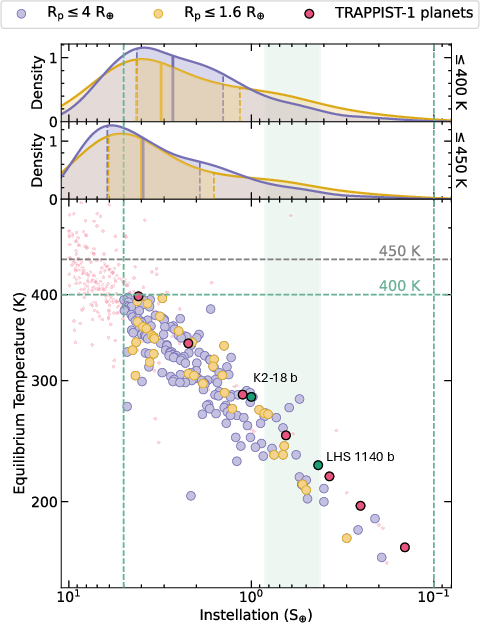
Figure 1: Distribution of known transiting exoplanets in equilibrium temperature and instellation space with the adopted definition of the temperate zone.
Defining the Temperate Zone
The classical habitable zone (HZ) operational paradigm is restrictive and unevenly applied across studies of small exoplanets. This work systematically compiles parameters from the literature, determining the empirical distribution of irradiation among purportedly "temperate" planets, and statistically motivates the 0.1<S/S⊕<5 boundaries. These boundaries, while extending beyond the conservative HZ (e.g., Kopparapu et al. 2014), encompass key benchmark systems (TRAPPIST-1, K2-18b, LHS 1140b). Such a zone is astrophysically justified both by extremophile survival limits and exoplanet atmospheric modeling.
Observational Program and Sample Construction
The TEMPOS program (Temperate M dwarf Planets with SPECULOOS) assembles a comprehensive target list of transiting exoplanets with Teff≤3400 K and 0.1<S/S⊕<5. Achieving radius precisions <7% (ideally <3%) is a central objective, since such precision is necessary for robust placement with respect to the radius valley and informs atmospheric follow-up strategies. The present work advances this effort by providing high-precision (<7%) measurements for both new planets despite the well-known empirical challenges for M-dwarf parameters.
Host Star Characterization
Comprehensive stellar characterization employed both optical and NIR spectroscopy.
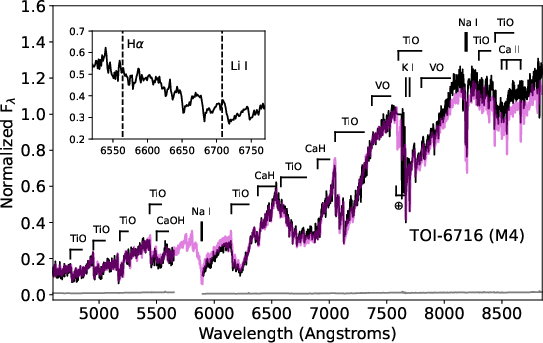
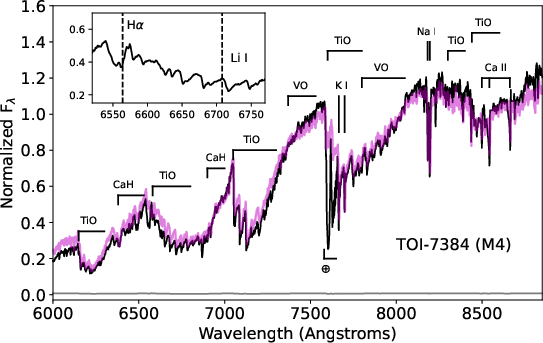
Figure 2: Optical spectra of TOI-6716 and TOI-7384 compared to M4 templates, demonstrating the spectral classification used in parameter inference.
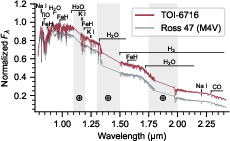
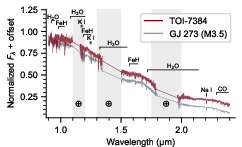
Figure 3: NIR spectra of TOI-6716 and TOI-7384 with M4 and M3.5 standard comparisons, confirming metallicity and temperature estimates.
Stellar effective temperatures (Teff=3110±80 K for TOI-6716, 3185±75 K for TOI-7384) and radii were derived via full SED fitting spanning $0.4-10$ μm combined with Gaia DR3 parallaxes. Metallicities are consistent with solar ([Fe/H] ∼ 0), and the stars' kinematics and spectral activity diagnostics are indicative of main sequence mid-M dwarfs.
Transit Detection, Confirmation, and Statistical Validation
TESS photometry was central to the detection of both transiting events. Extensive follow-up with ground-based facilities (SPECULOOS, TRAPPIST-S, LCOGT), high-resolution imaging (Gemini/Zorro, SOAR), and archival astrometry excluded contaminating sources and false positives.
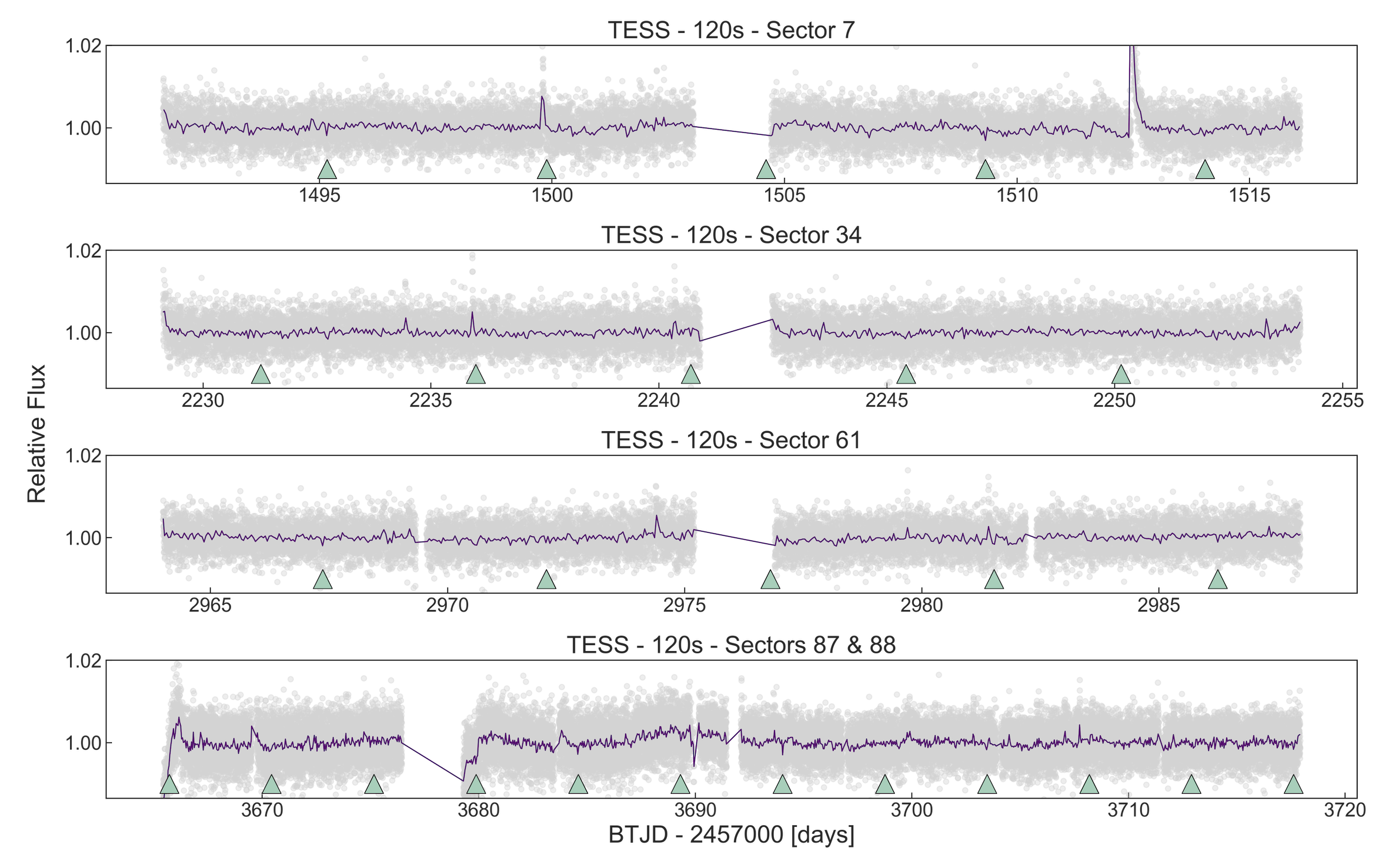
Figure 4: TESS 2-min cadence light curves for TOI-6716 in multiple sectors, with transits indicated.
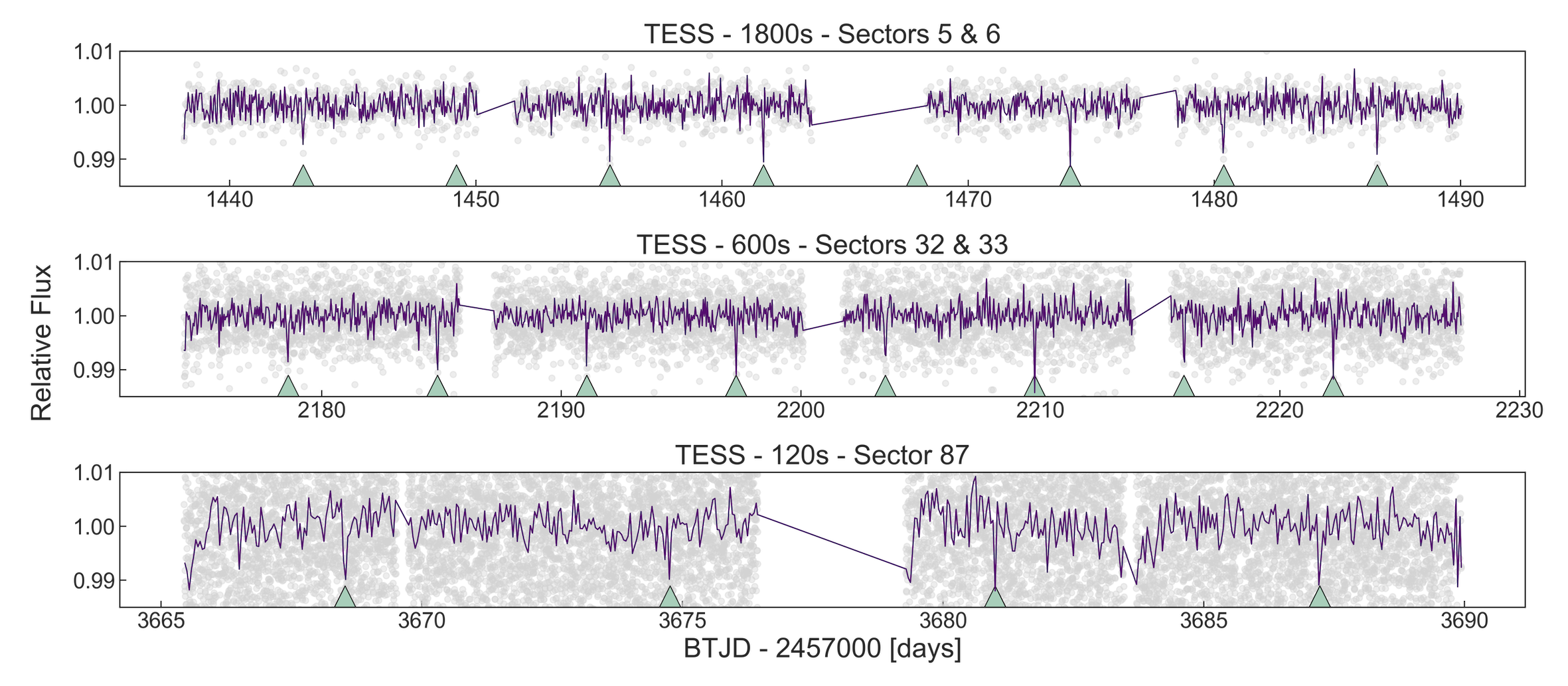
Figure 5: TESS photometry for TOI-7384 at multiple cadences and sectors, confirming transit periodicity.
Injection and recovery simulations quantified the detectability limits for additional short-period companions, demonstrating completeness thresholds in terms of minimum detectable planet size as a function of period.
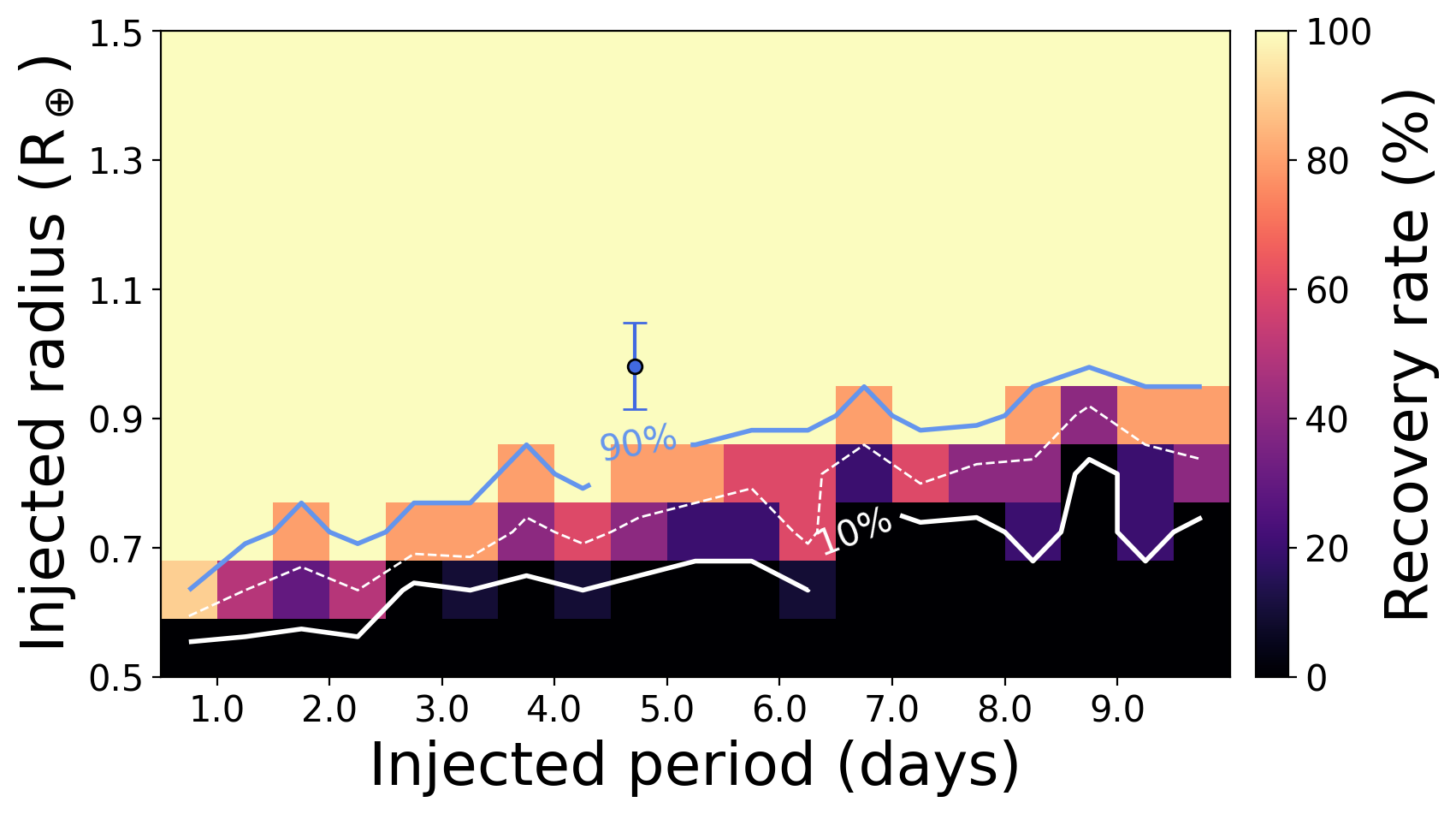
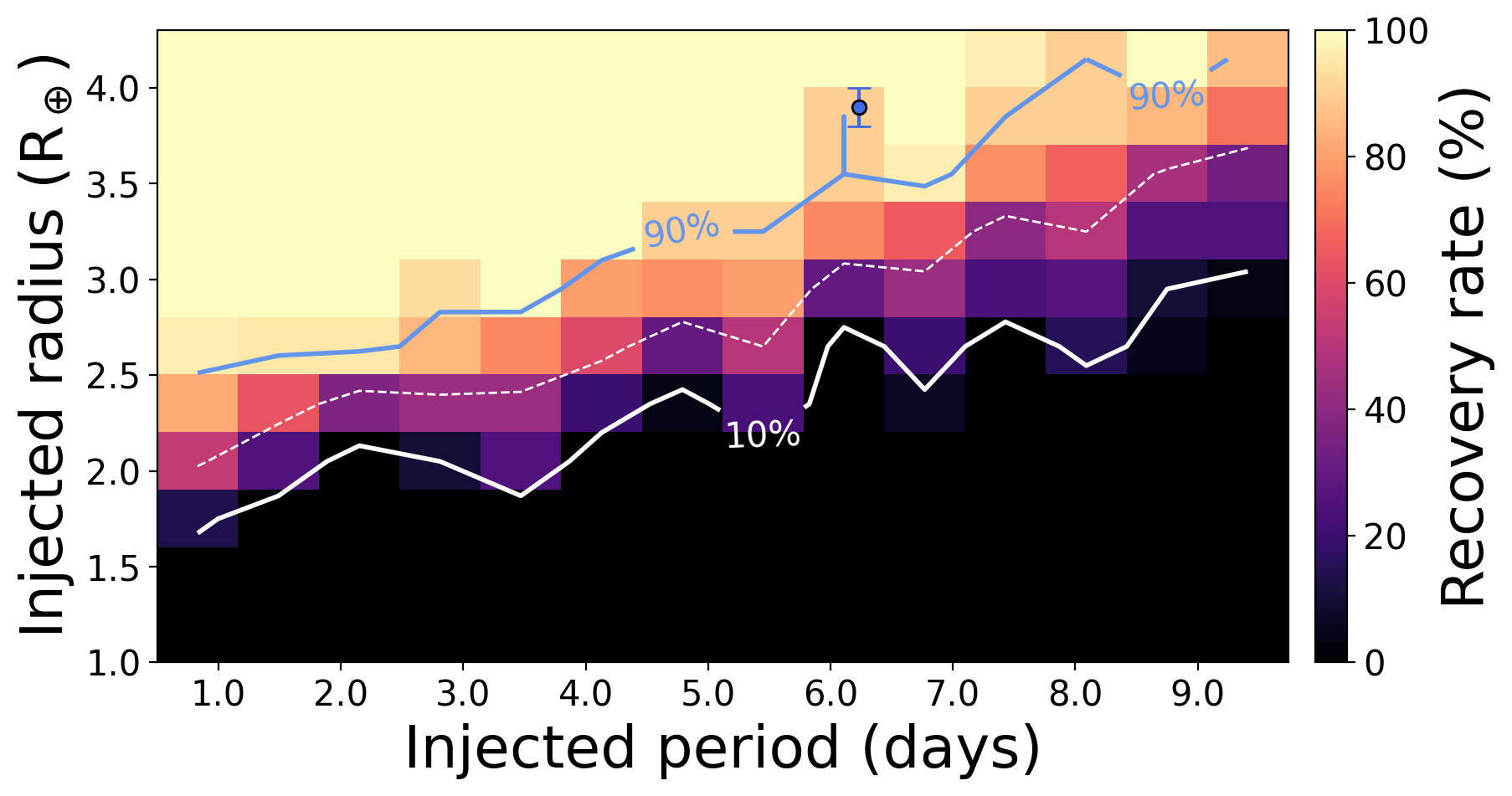
Figure 6: Injection-and-recovery experiment output: no undetected transiting planets larger than 1R⊕ (TOI-6716) or 2.5R⊕ (TOI-7384) at short periods.
Centroid analysis, archival imaging, and contrast curves from high-resolution imaging rule out background eclipsing binaries and nearby contaminating stars.
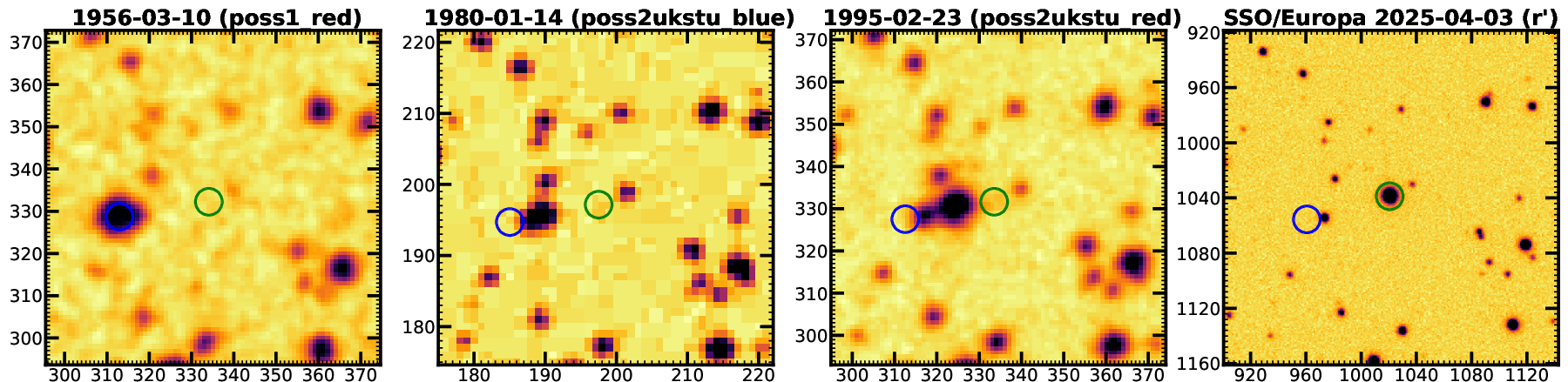
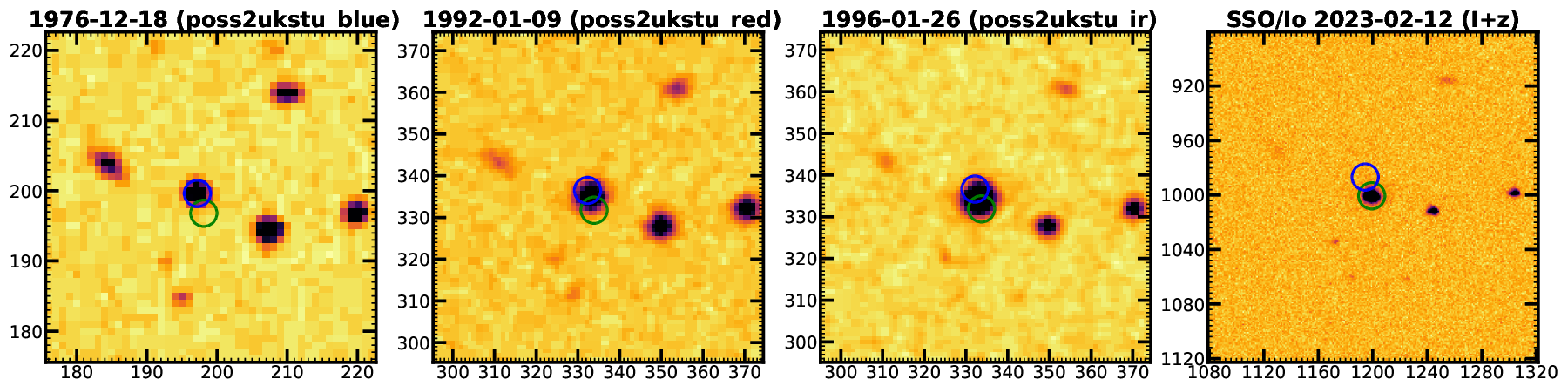
Figure 7: Archival astrometry for TOI-6716 and TOI-7384 excludes background blends at current positions due to high proper motion.
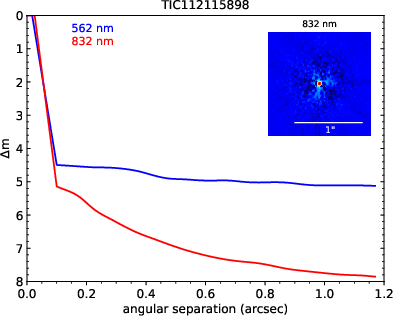
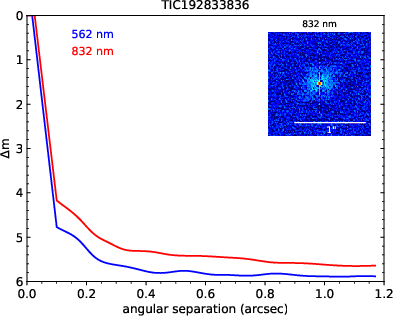
Figure 8: Gemini/Zorro contrast curves and reconstructed speckle images confirm no companions within detection limits at close separations.
Global Light Curve Modeling and Chromaticity Tests
Joint modeling of all available photometry with hierarchical Bayesian inference (allesfitter) yielded robust system parameters. The planets' transit depths are achromatic across all bands, precluding chromatic dilution and further affirming planetary nature.
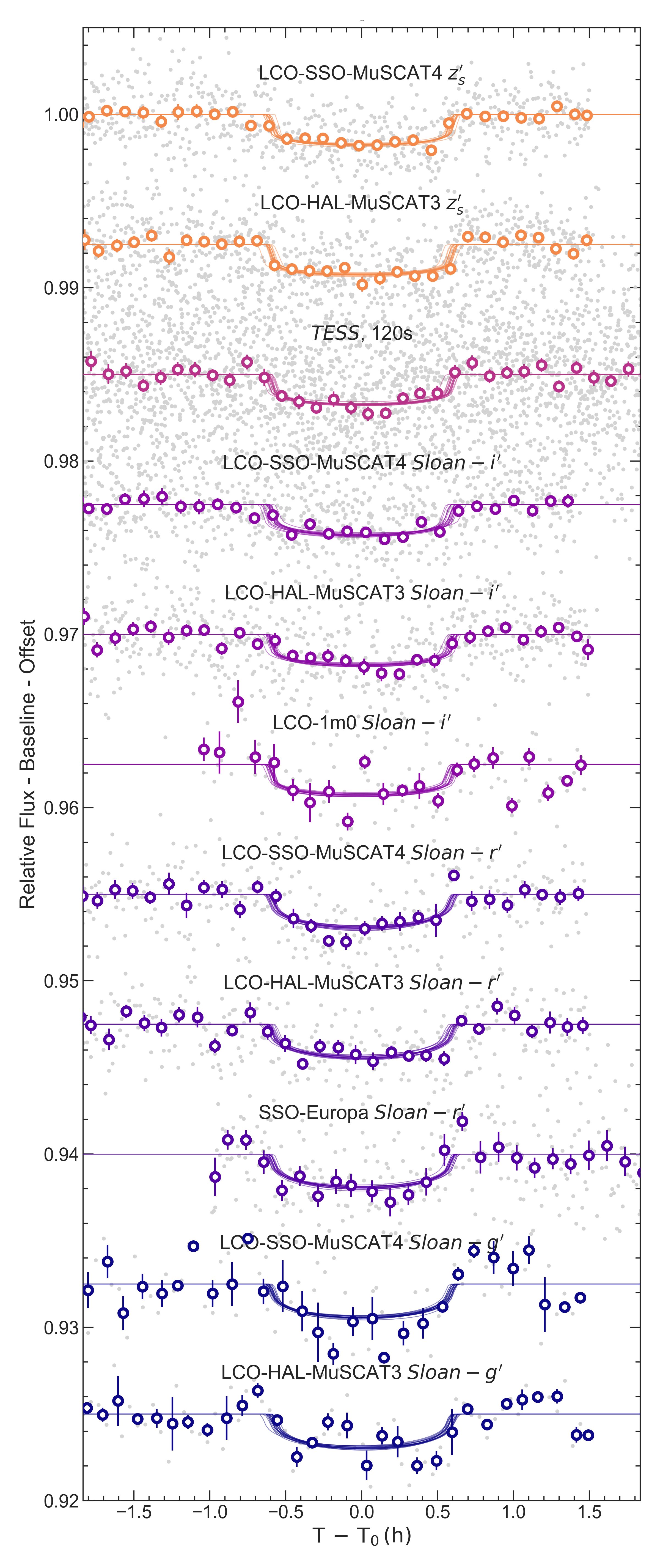
Figure 9: Phase-folded TESS and ground-based transits of TOI-6716b with multi-dataset posterior draw models.
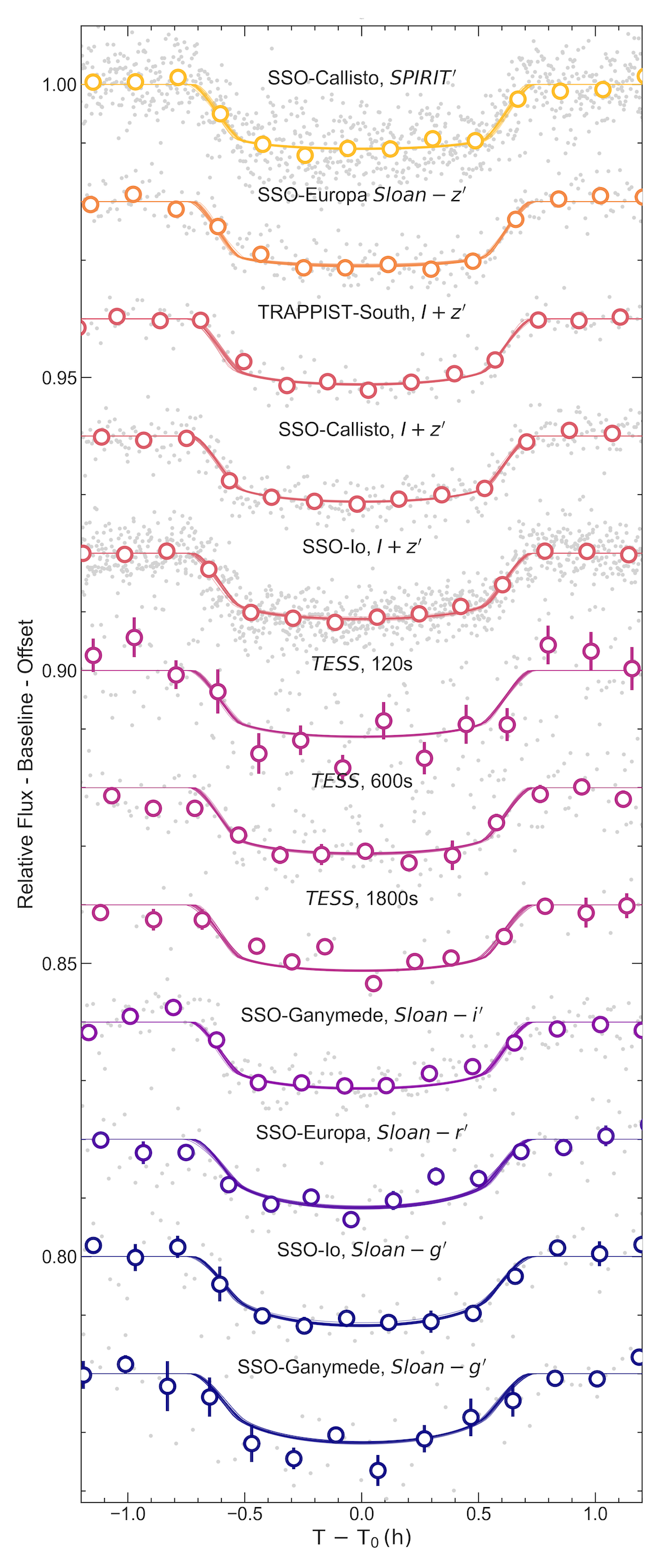
Figure 10: Phase-folded TESS and ground-based transits of TOI-7384b, including all cadences with baseline-corrected models.
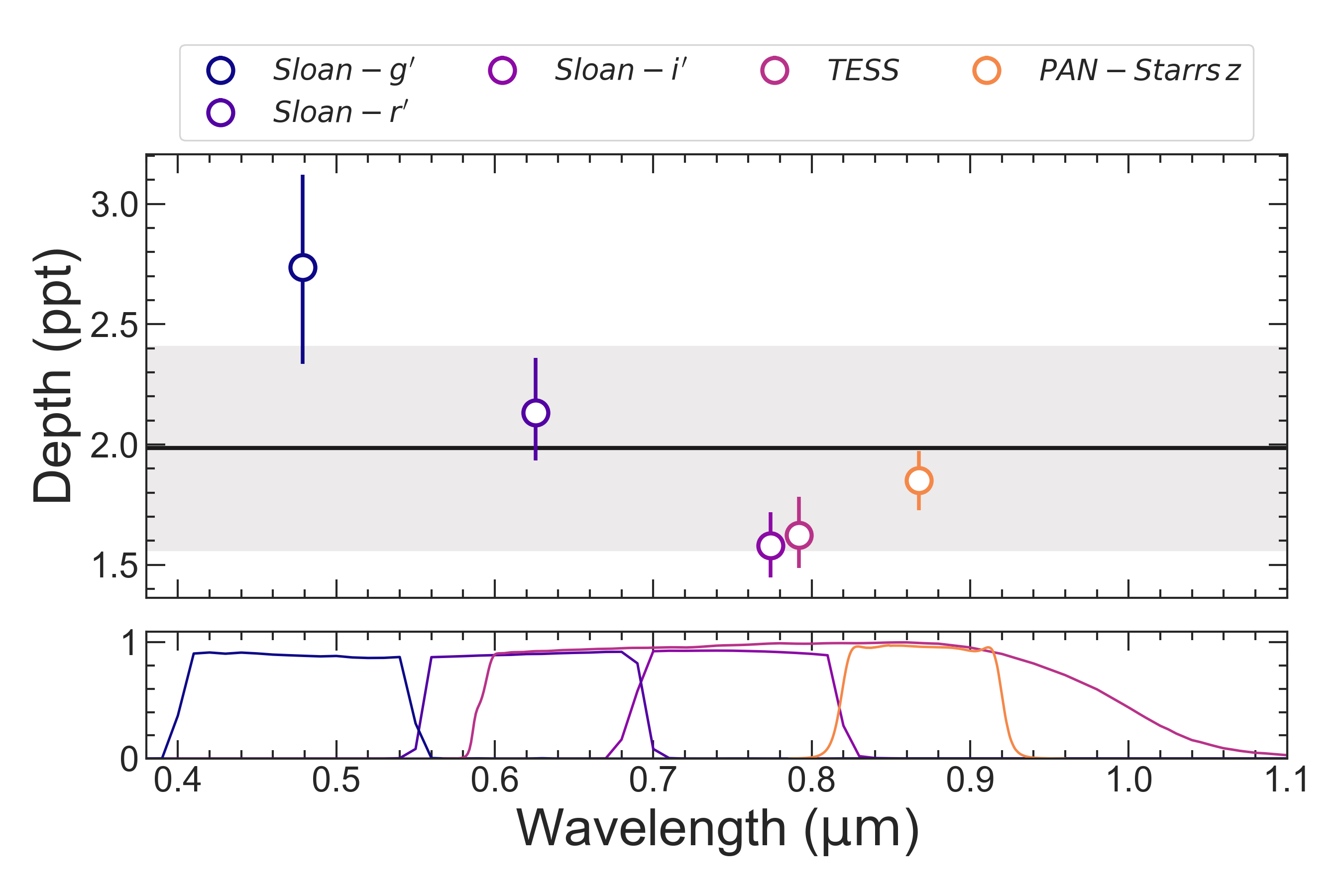
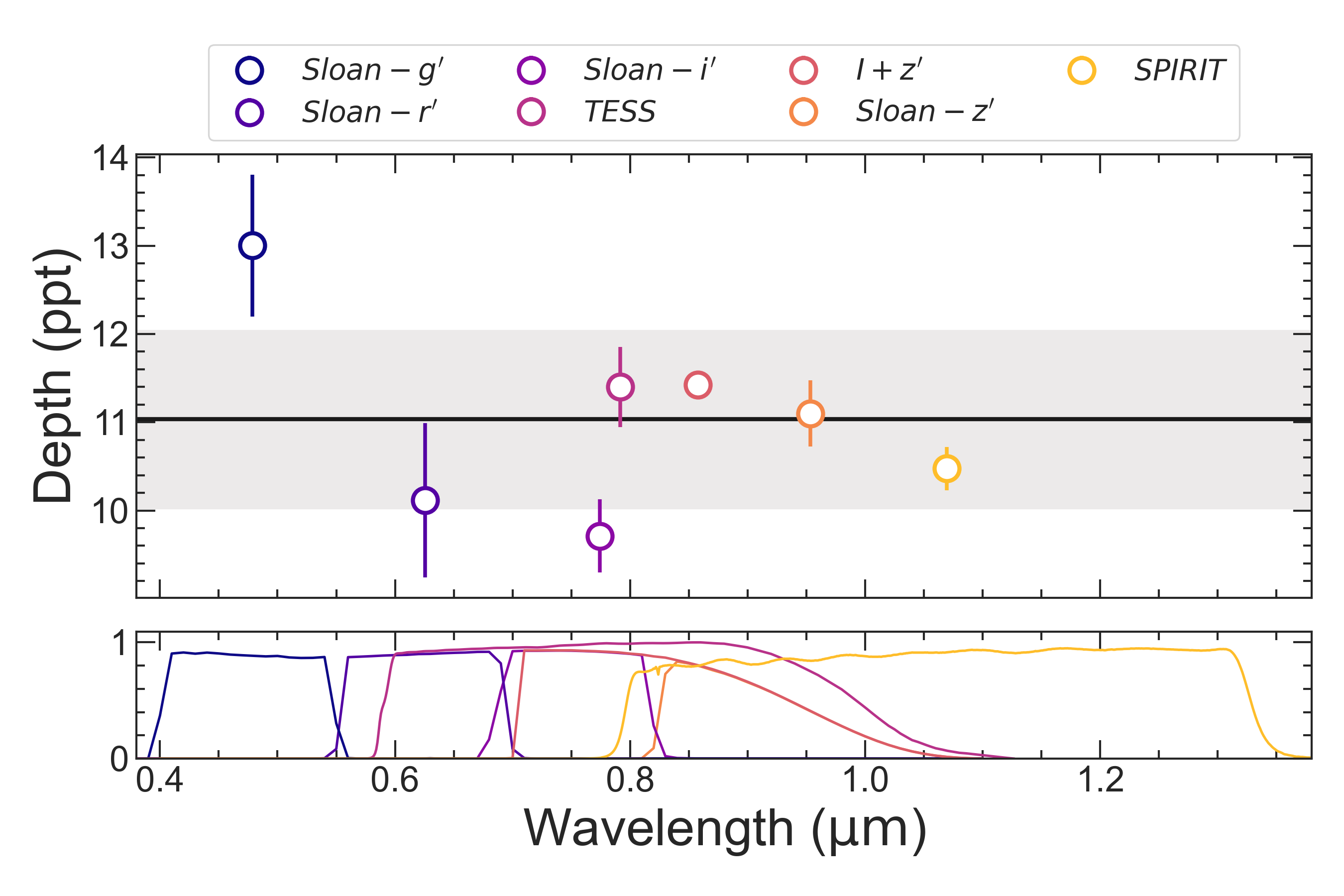
Figure 11: Chromaticity check: consistent transit depths across photometric bands for both planets, within 1.3σ and 1.6σ.
System Parameters and Implications
TOI-6716b:
- Rp=0.98±0.07R⊕, P=4.72 d, Teq=369K (close to the inner edge of the temperate zone).
- Host: M⋆=0.223±0.011M⊙, R⋆=0.231±0.015R⊙
- No significant eccentricity inferred; circular solutions sufficient given data.
TOI-7384b:
- Rp=3.56±0.21R⊕, P=6.23 d, Teq=378K.
- Host: M⋆=0.318±0.016M⊙, R⋆=0.319±0.018R⊙
Both planets are statistically validated with false positive probabilities < 10−8. Currently, no additional companions are robustly detected at periods <10\,d for TOI-6716 (to 1R⊕) or <2.5\,R⊕ for TOI-7384. Precision of radii (∼7\%) is limited by the host stellar parameters, and further improvements are expected from empirical calibrators (e.g., EBLM project results).
Context within the Temperate Exoplanet Population
These planets occupy a sparsely sampled regime of the current radius/instellation parameter space, with TOI-6716b probing the Earth-sized, high-irradiation tail near the inner temperate edge, and TOI-7384b sampling temperate sub-Neptune diversity.
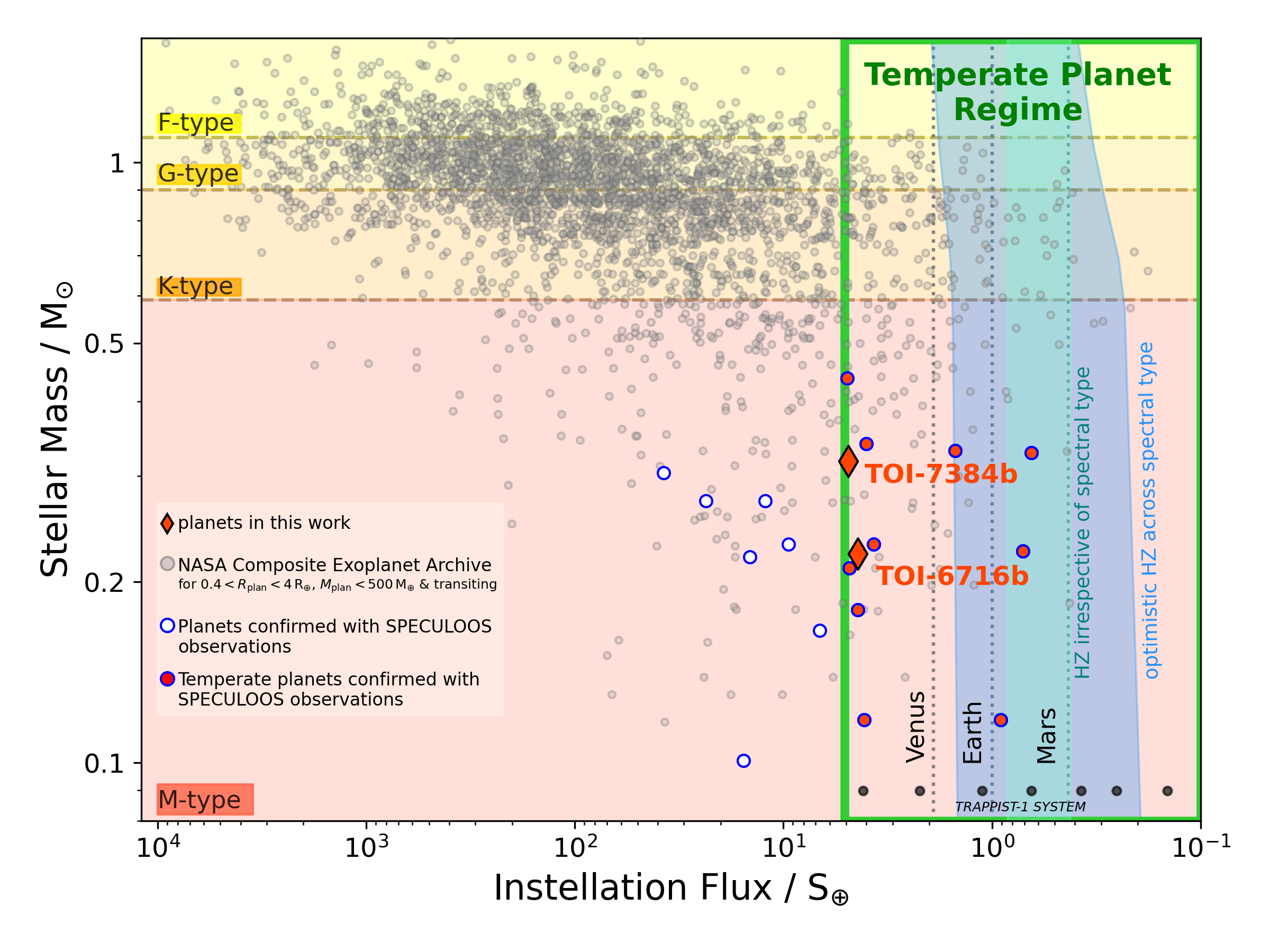
Figure 12: Distribution of stellar mass vs instellation for 0.4<Rp<4R⊕ planets showing TOI-6716b and TOI-7384b at the inner edge of the temperate zone.
Both systems broaden statistical samples beyond the HZ-centric focus, contributing to empirically constraining planetary occurrence rates, atmospheric loss via XUV-driven escape, and demographic features such as the radius valley.
Prospects for Characterization and Future Work
Predicted RV amplitudes (0.9 and 9 m/s) imply that TOI-7384b is a plausible candidate for RV mass measurement, while TOI-6716b remains challenging. For atmospheric studies, the transmission spectroscopy metric (TSM) of TOI-6716b is similar to TRAPPIST-1 planets; whether it has retained a substantial atmosphere remains in question given its location beyond the XUV-driven cosmic shoreline for volatile retention. TOI-7384b, given its size and predicted mass, is well placed for JWST atmospheric transmission spectroscopy assuming sufficient host brightness.
The empirical definition of the temperate zone and programmatic assembly of high-precision characterized planets will enable robust statistical studies of planetary composition, bulk density distributions, and formation/migration histories for planets in the non-HZ but potentially clement regime.
Conclusion
This work robustly expands the sample of temperate, transiting exoplanets orbiting fully convective M dwarfs with two statistically validated planets. The planets are benchmark objects for advancing population studies of small, temperate exoplanets and for prioritizing future efforts in bulk density and atmospheric characterization. The precise methodology—combining TESS detection, targeted multi-wavelength ground-based photometry, rigorous host star characterization, and statistical false positive assessment—represents the current standard for validating low-mass exoplanetary systems in parameter regimes essential for constraining the limits of planetary habitability and informing atmospheric observational campaigns.
(2601.05799)