- The paper demonstrates that spatial-temporal coupled compact element methods achieve superior stability and reduced numerical dissipation compared to decoupled approaches.
- It employs eigenvalue-based Fourier analysis to quantify stability, revealing that coupled schemes maintain eigenvalues closer to the unit circle over a wider range of CFL numbers.
- The study shows that coupled methods enable larger stable time steps and robust shock-capturing, making them highly effective for advanced CFD algorithms.
Stability Priority of Spatial-Temporal Coupled Compact Element Methods over Decoupled Compact Element Methods
Introduction
High-order numerical schemes are indispensable in computational fluid dynamics (CFD) for solving hyperbolic conservation laws, especially in resolving complex, convection-dominated flows. This paper provides a comprehensive comparative stability analysis of two classes of methods widely used in the field: spatial-temporal decoupled schemes (exemplified by Runge-Kutta (RK) method of lines, as in DG and FR) and spatial-temporal coupled compact element schemes (exemplified by Lax-Wendroff (LW)-type multi-stage multi-derivative (MSMD) approaches, e.g., CGKS and GRP). The focus is on their respective stability, dissipation, and dispersion characteristics as quantified through rigorous Fourier analysis. The results sharply differentiate the two approaches and have broad implications for future CFD algorithm development (2601.17264).
Both the decoupled (RK-DG/FR) and spatial-temporal coupled (CGKS, GRP) approaches are analyzed using a two-moment formulation, whereby the evolution of cell-averaged quantities is tracked in tandem with the evolution of their spatial derivative averages. For DG/FR, the standard method-of-lines framework is combined with explicit RK time-stepping, producing a sequential and spatially decoupled update process. In contrast, the CGKS and GRP solvers achieve high temporal accuracy through a coupling of local spatial and temporal expansions, directly advancing the solution and corresponding derivatives using physical models (BGK for CGKS, generalized Riemann for GRP).
The BGK-based gas kinetic description underlying CGKS enables a mathematically-physically consistent evolution of both solution and derivatives, facilitating a physically justified compactness and robust shock-capturing with reduced numerical dissipation. The RK-based FR and DG, meanwhile, rely on polynomial bases (e.g., Legendre for DG) and appropriate flux reconstructions—potentially incorporating endpoint-correcting functions (Radau, g2)—but their time discretization does not exploit the spatial-temporal coupling inherent to the physical system.
Fourier Stability and Dissipation Analysis
A central analysis tool in this paper is eigenvalue-based Fourier stability evaluation for both families under matched two-moment discretizations. Amplification factors for both mean (λ) and derivative (μ) evolution are extracted as functions of non-dimensional wavenumber, with scheme stability governed by the largest modulus of these eigenvalues.
Second-Order Schemes
In CGKS frameworks, the fully coupled (spatial-temporal) S1O2 time discretization and the Runge-Kutta 2 (RK2) decoupled variant are both examined. For both, all eigenvalues reside within the unit circle, signaling formal stability. However, their proximity to the unit circle differs, with the CGKS S1O2 spectrum remaining closer for a larger range of CFL numbers, indicating less numerical dissipation and superior high-frequency stability.
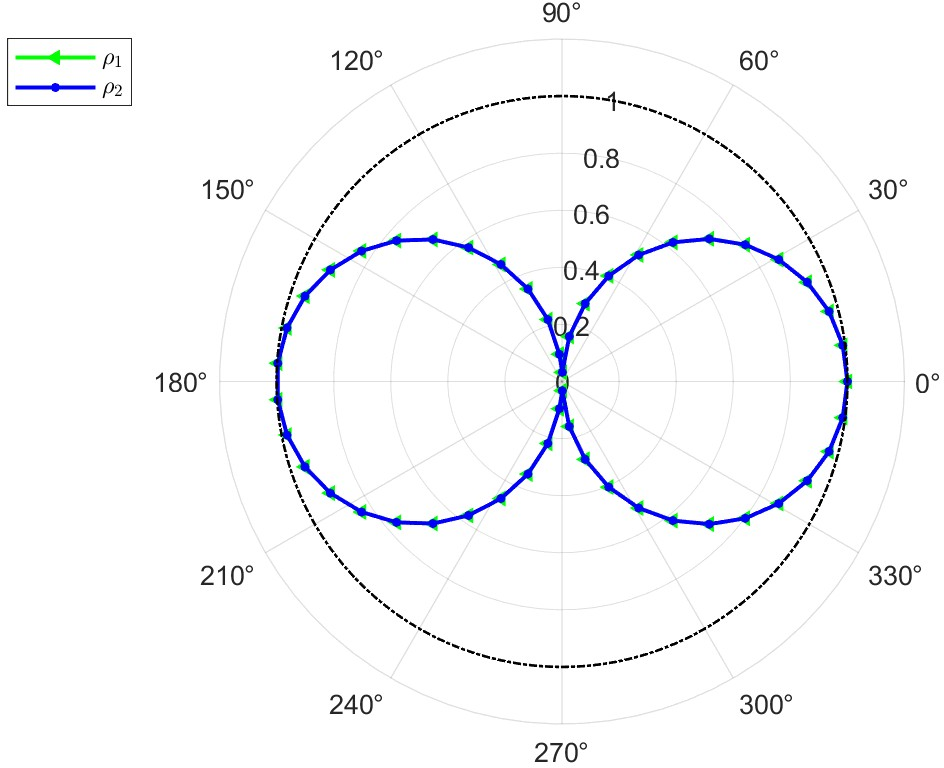
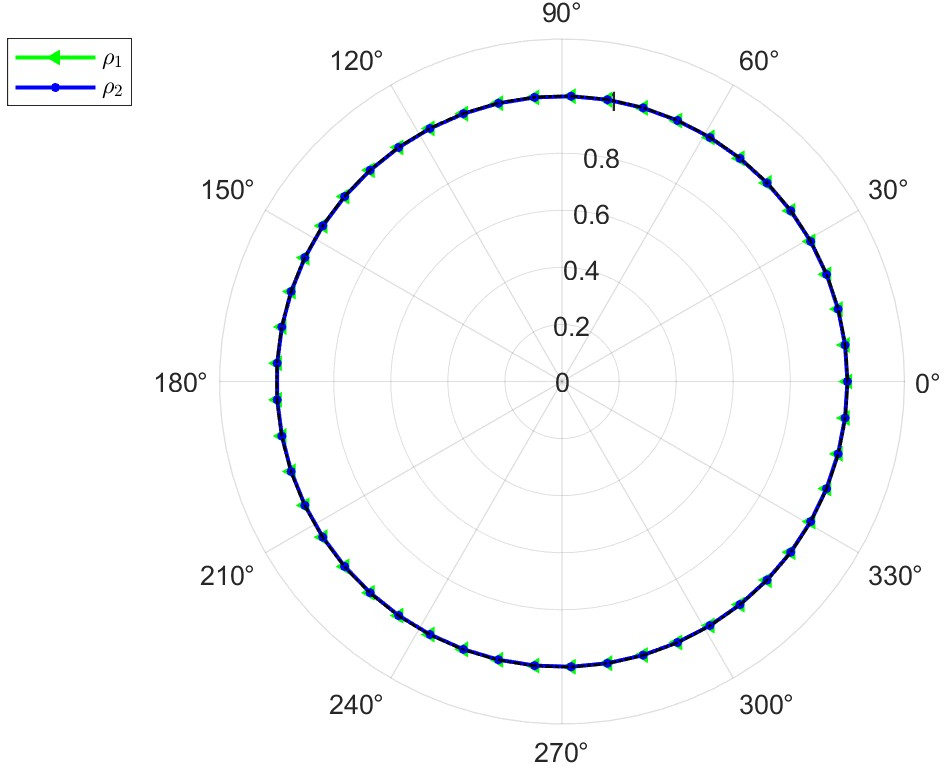
Figure 1: Eigenvalue spectrum for CGKS-RK2 at CFL=1.0.
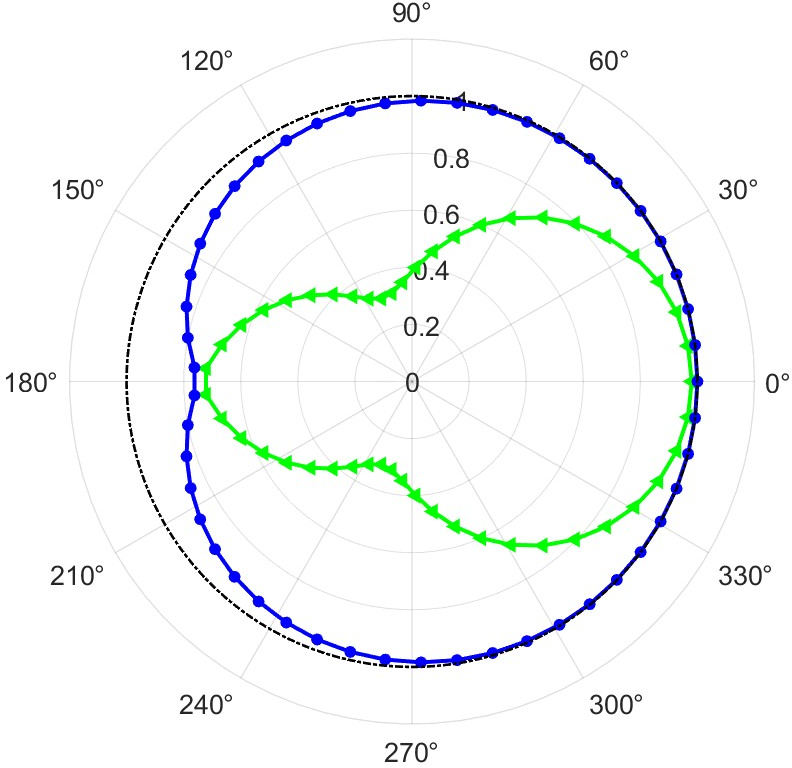
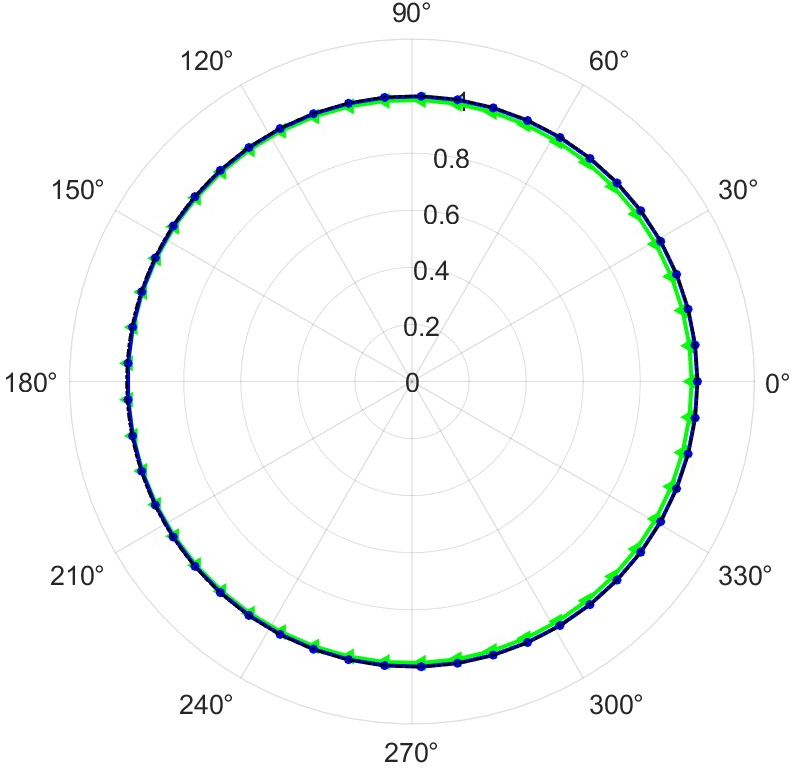
Figure 2: Eigenvalue spectrum for DG-RK2 at CFL=0.33.
High-Order Schemes
For fourth-order temporal accuracy, the two-stage S2O4 CGKS is compared with a correspondingly accurate DG scheme. In S2O4 CGKS, cell-averaged and derivative values are advanced via intermediate state expansions, achieving full fourth-order accuracy with concise compact stencil reconstructions. The CFL-stability threshold for CGKS-S2O4 is empirically demonstrated at 0.56, significantly higher than the DG limit (0.11) for the same accuracy.
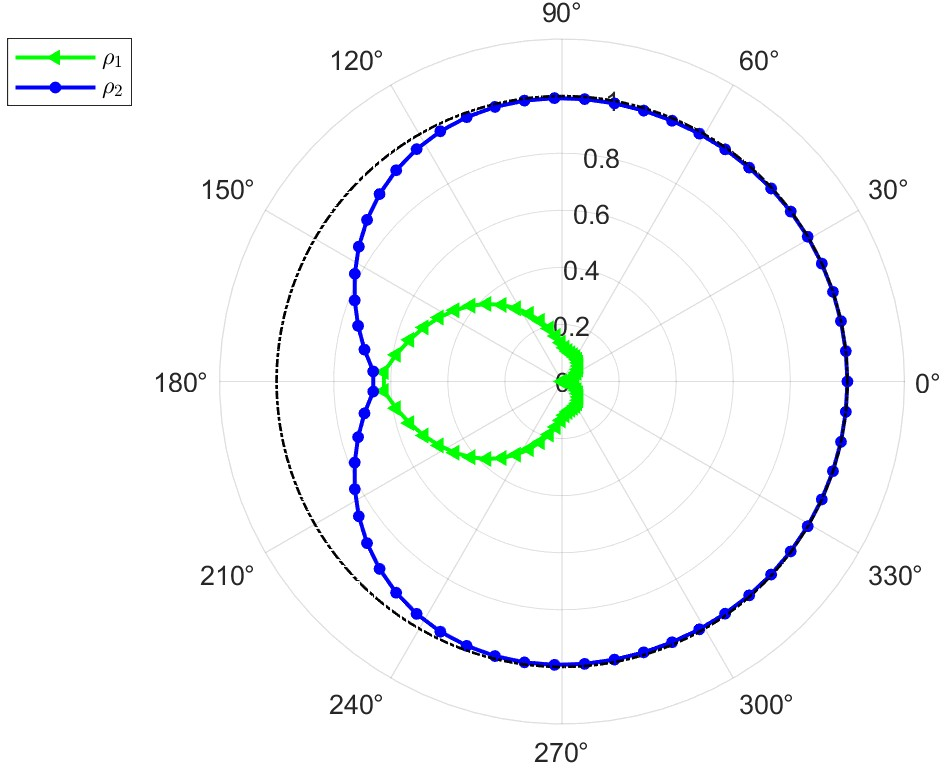
Figure 3: Eigenvalue distribution for the fourth-order compact gas-kinetic scheme (CGKS-S2O4).
Correction Functions in FR Schemes
In FR schemes, the choice of correction function materially impacts dissipation and stability. The gRadau function restricts the CFL limit, while the g2 function allows larger time steps, making the spectrum of the fully discretized method congruent with that of explicit RK2 time stepping.
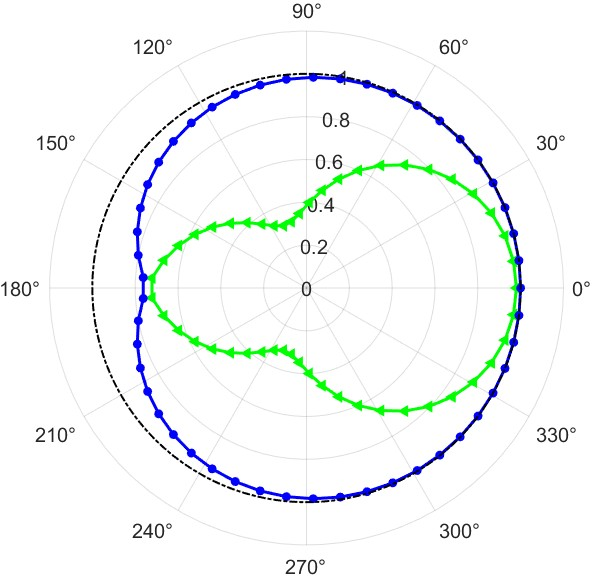
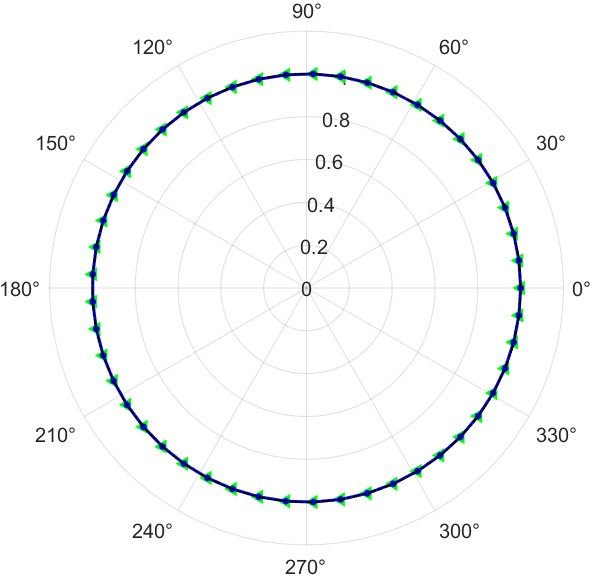
Figure 4: Eigenvalue spectrum for FR-RK with gRadau correction function at CFL=0.33.
Numerical Validation and Quantitative Findings
Numerical experiments performed on representative linear advection problems confirm the theoretical findings. Under increasing CFL numbers, both CGKS and DG schemes exhibit rapid error growth once crossing their respective stability thresholds, but the CGKS maximum CFL number is three times greater than that of DG. Quantitative error measures in L1 and L2 norms robustly support this finding (errors increase from O(10−6) to O(1013) for CGKS at CFL=1.1, and from O(10−6) to O(109) for DG at CFL=0.34).
Furthermore, truncation error analysis reveals that spatial-temporal coupled schemes (CGKS, GRP) incur less dispersion and dissipation compared to decoupled RK-DG/FR at equivalent (or even lower) computational cost.
Theoretical and Practical Implications
The results attribute the observed stability superiority of CGKS and similar LW-type methods directly to their spatial-temporal coupling:
- Physical Consistency: The coupled approach propagates spatio-temporal information in harmony with the physical structure of hyperbolic PDEs, honoring the natural compatibility of flow evolution.
- Larger Stable CFL: For a given degree of freedom and stencil width, spatial-temporal coupled schemes admit larger stable time steps, reducing computational cost and easing parallel algorithm design.
- Compactness and Robustness: Simultaneous update formulas for solution and derivatives enhance local accuracy, compactness, and shock-capturing robustness, all without requiring complex limiters or excessive reconstructions.
These properties are consistently observed across a range of test problems and are further exacerbated at higher formal accuracy—where RK-based decoupled schemes typically demonstrate order barriers and stricter stability constraints.
Future Directions
Although the analysis in this paper is framed primarily for linear problems and two-moment schemes, the implications extend to general nonlinear conservation laws, including the Navier-Stokes system, particularly as handled by gas-kinetic-based solvers. The design of high-order, large time-step, spatial-temporal coupled methods for arbitrary nonlinear systems remains a compelling research frontier.
Conclusion
A rigorous Fourier stability and dissipation analysis demonstrates that spatial-temporal coupled compact element methods (such as CGKS and GRP solvers) exhibit a clear stability advantage over spatial-temporal decoupled compact element methods (RK-DG/FR). These advantages—manifest as less numerical dissipation, smaller dispersion, and relaxed CFL constraints for a given accuracy—arise from the physically consistent spatio-temporal treatment of information evolution inherent to coupled schemes. For CFD practitioners and developers of high-order schemes, these findings advocate for increasing adoption of spatial-temporal coupled frameworks, particularly when computational efficiency and robustness at high order are critical requirements. Theoretical generalization to nonlinear, multi-dimensional, and turbulent flows is a natural next step in the continued advancement of CFD algorithms.