- The paper presents a novel framework demonstrating that directed simplicial complexes universally exhibit global topological synchronization due to enlarged kernel structures.
- It employs algebraic topology methods, including Hodge Laplacians and Betti numbers analysis, to derive spectral stability conditions for synchronization.
- Numerical experiments reveal that while hollow complexes permit stable synchronization for odd-dimensional signals, tessellated variants may suppress this effect.
Topological Structures and Higher-Order Global Synchronization
Introduction and Motivations
The paper "Topology and higher-order global synchronization on directed and hollow simplicial and cell complexes" (2602.09715) explores the interplay between generalized topological structures and their dynamical properties in the context of higher-order networks. The primary focus is on the conditions under which global topological synchronization (GTS)—a dynamical state in which cochains associated with higher-dimensional simplices or cells oscillate in unison—can exist and be stable. The work advances beyond undirected, unweighted complexes, introducing directed simplicial complexes (DSCs), hollow simplicial complexes (HSCs), and their tessellated variants, as well as directed and hollow cell complexes. Given the critical role of directionality and topological holes in natural and engineered systems, including neuroscience and biological transport, the theoretical and practical implications are significant.
The theoretical foundation is established using algebraic topology, specifically Hodge Laplacians and Betti numbers associated with generalized complexes. Simplicial complexes encode interactions via simplices of various dimensionalities, where cell complexes generalize these by allowing regular polytopes as building blocks. Dynamics on these structures are formulated through higher-order cochains, which are vectors indexed by n-simplices or cells and evolved via diffusive interactions governed by the corresponding Hodge Laplacian.
GTS is defined as the state in which every n-cochain element follows identical dynamics, up to an overall sign. The spectral condition for GTS is that a vector with constant absolute value elements lies in the kernel of the Hodge Laplacian, i.e., L[n]u=0 for u such that ∣uα∣=1. Existence and stability of GTS are subject to intricate constraints imposed by the topology and combinatorial structure, as well as the nature (double vs single orientation, hollowing) of the complexes considered.
Generalized Complexes: Structural Implications
The introduction of directed and hollow complexes alters the combinatorial and topological landscape:
- Directed Simplicial Complexes (DSC): Each simplex (except nodes) is replaced with two oppositely oriented single simplices. The kernel of the Hodge Laplacian is highly enlarged, with Betti numbers βn(D)=N[n]+βn for n>0, leading to universal existence of GTS regardless of underlying topology.
- Hollow Simplicial Complexes (HSC): These complexes introduce internal replica nodes and hollow facets, creating additional disconnected components and holes. The Betti numbers exhibit a more nuanced modification, e.g., βD−1(H)=βD−1−βD+N[D], reflecting new (D−1)-dimensional holes.
- Tessellated Hollow and Generalized Cell Complexes: These incorporate more complex connectivity and tessellation, further modulating Betti numbers and kernel dimensionality.
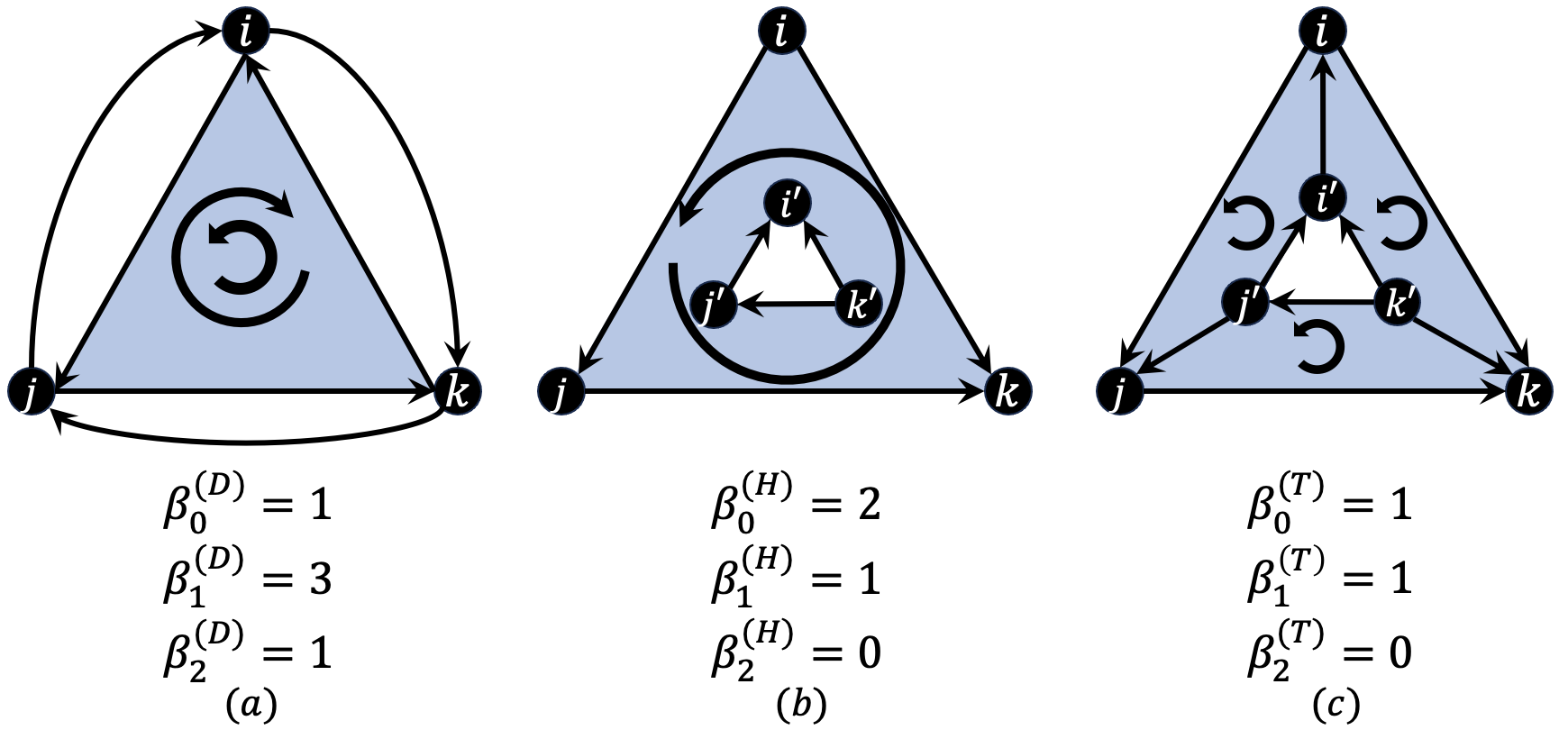
Figure 1: Schematics of DSC, HSC, and TSCC complexes with corresponding Betti numbers, illustrating the structural differences and topological invariants.
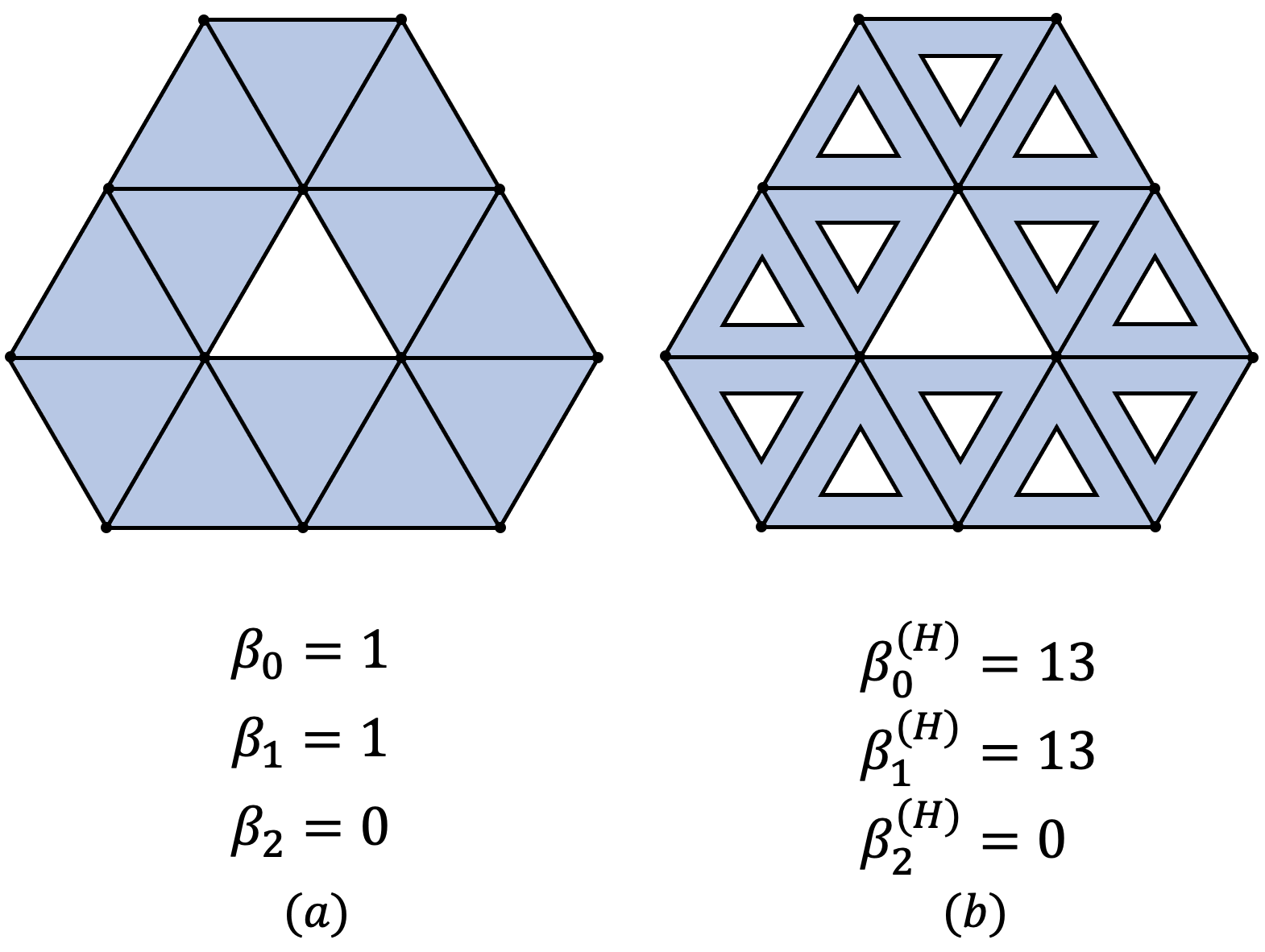
Figure 2: Visualization of the topology of HSCs and the impact on Betti numbers, highlighting the increase in holes and disconnected components.
Existence and Stability of Global Topological Synchronization
The dynamical investigation employs the Stuart-Landau model coupled via generalized Hodge Laplacians, and the stability criterion is analyzed through the Master Stability Function (MSF) formalism. The numerical experiments and analytical results yield strong, nontrivial claims:
- DSCs Always Admit GTS: Regardless of topological constraints, DSCs universally support GTS for any higher-order signal. However, the kernel's high degeneracy prevents asymptotic stability; GTS is neutrally stable, meaning generic perturbations may drift along the kernel, precluding robust synchronization.
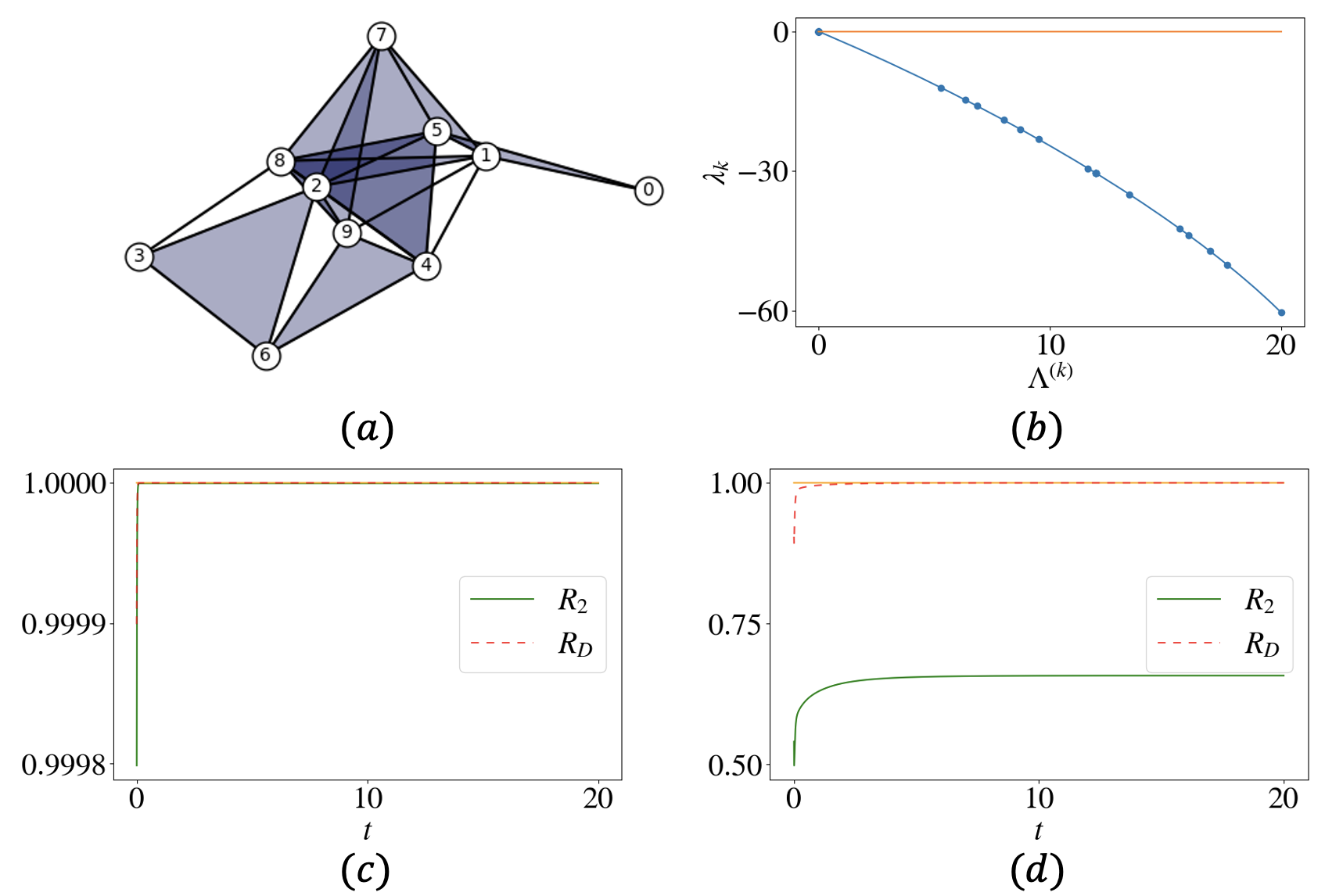
Figure 3: The MSF analysis for GTS in DSCs demonstrates negative Floquet eigenvalues for modes orthogonal to the kernel, but only neutral stability within the kernel.
- HSCs Enable Stable GTS for Odd-Dimensional Signals: Unlike standard complexes, HSCs can facilitate stable GTS for signals associated to odd-dimensional simplices (e.g., edge signals), provided there exists a divergence-free vector of constant absolute value. This is exemplified on hollow triangulated $2$D tori, where edge signals can synchronize globally.
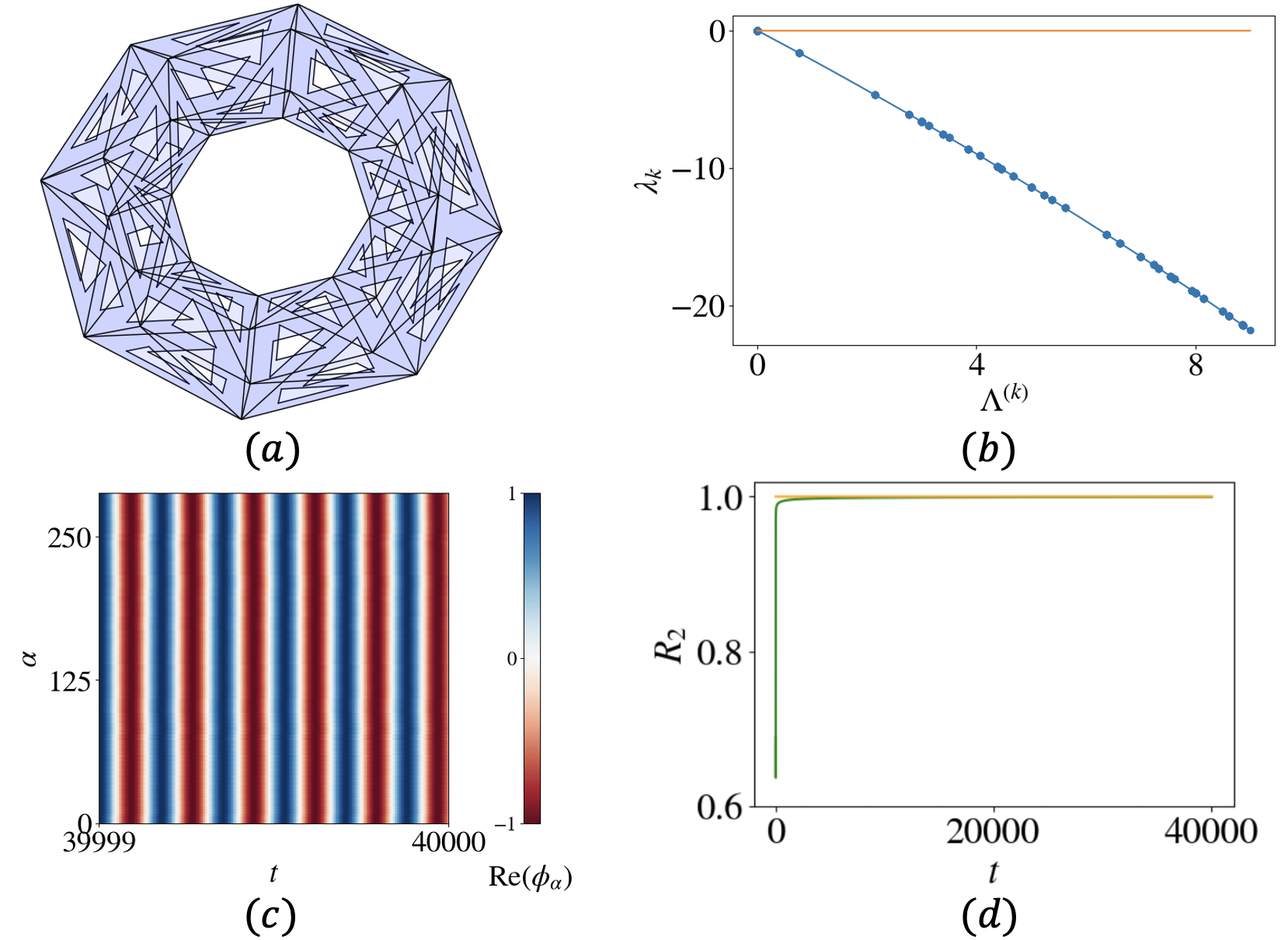
Figure 4: Stable GTS on a hollow triangulated torus (HSC), as evidenced by rapid convergence of R2 to unity and persistent phase coherence.
- Tessellated Hollow and Cell Complexes May Suppress GTS: Even when the corresponding hollow complex supports GTS, the tessellated variant can fail to satisfy the spectral conditions, suppressing synchronization.
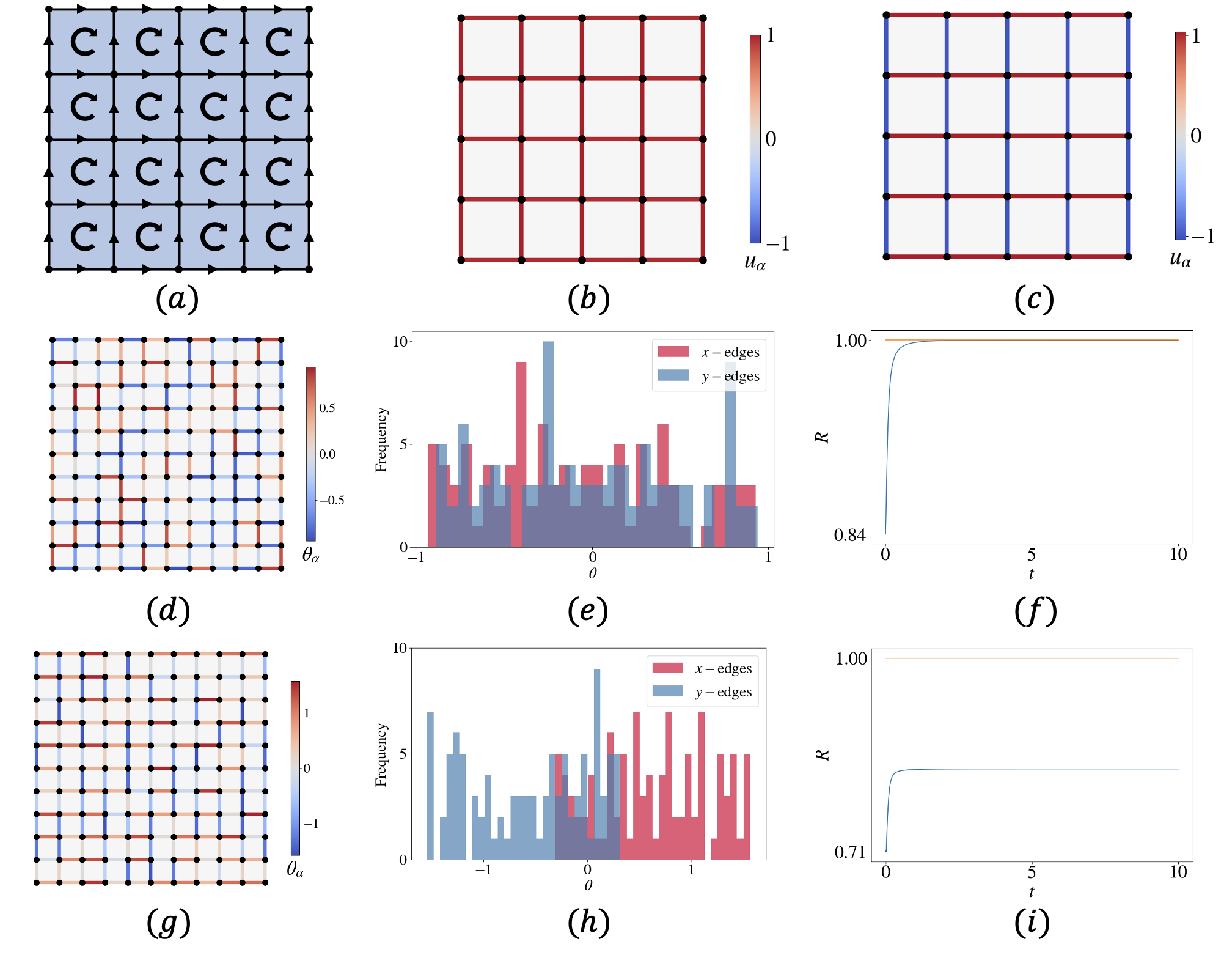
Figure 5: Absence of GTS in the tessellated hollow cell complex (THCC), despite predicted stability for perturbations orthogonal to the kernel.
Harmonic Modes, Marginal Stability, and Order Parameters
A detailed analysis shows that in certain cell complex configurations, multiple orthogonal eigenvectors of type u reside in the kernel, rendering GTS only marginally stable against perturbations aligned with alternate eigenvectors. This marginality is apparent in numerical experiments; biased initial conditions can prevent convergence to the GTS state, though directional sub-synchronization persists among edges aligned along lattice directions.
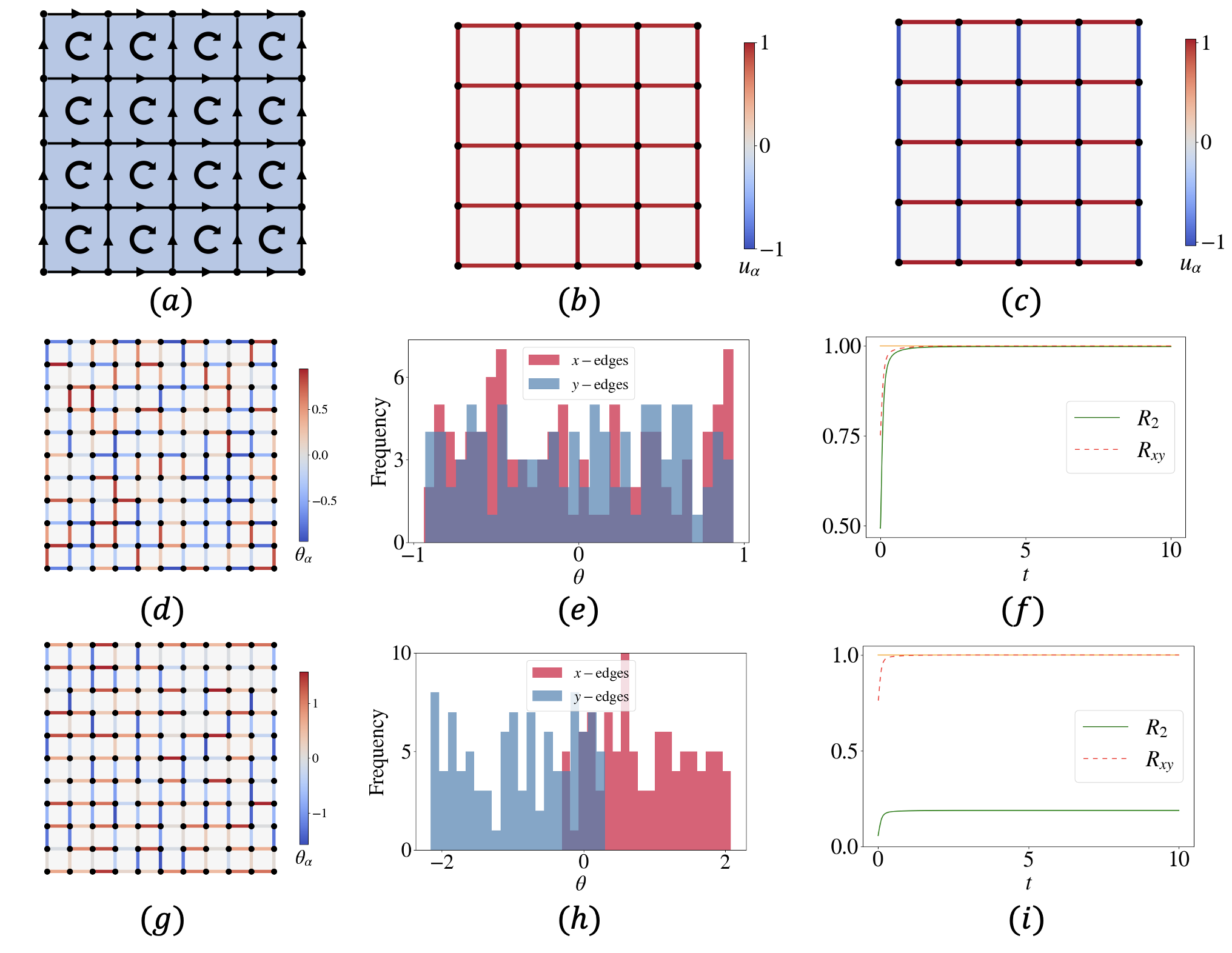
Figure 6: Visualization of harmonic eigenstates and the marginal stability phenomenon for GTS on a square-lattice cell complex torus.
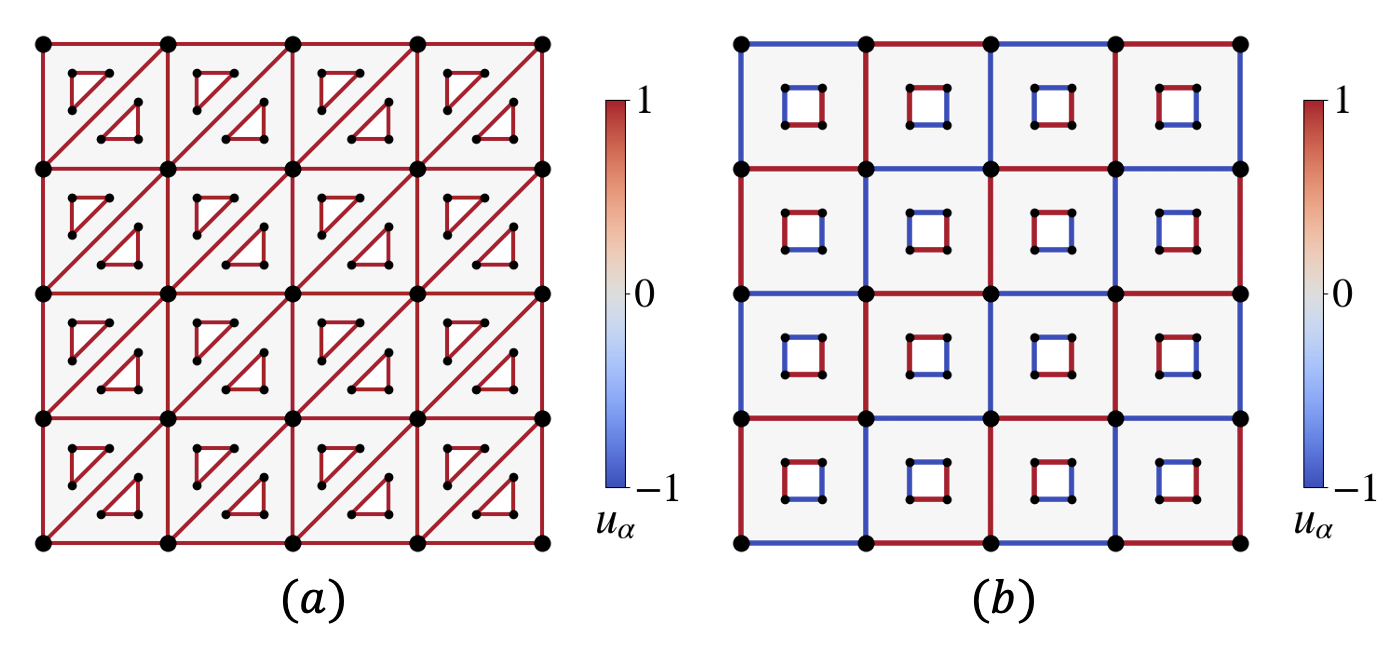
Figure 7: Unique harmonic eigenvector of type u in HSC and HCC, confirming the divergence-free condition.
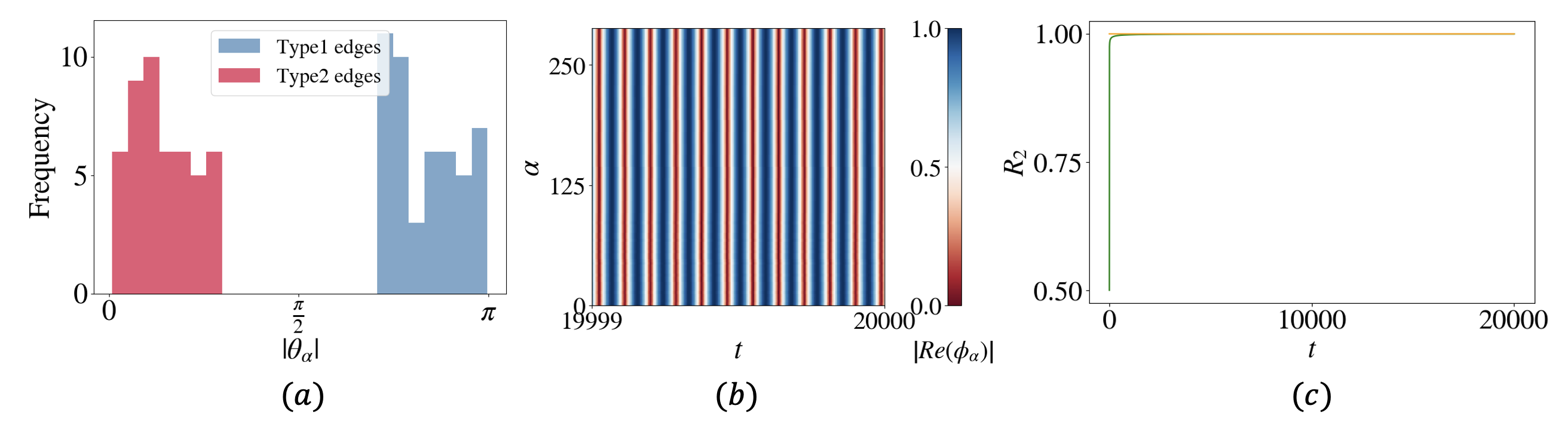
Figure 8: Rapid stabilization of GTS in HCCs, reflected in converging distribution of signal phases.
Theoretical and Practical Implications
The paper underscores that relaxation of standard topological assumptions—incorporating directionality and hollow structures—fundamentally alters the existence and stability of synchronization in higher-order networks. These findings are directly pertinent to:
- Neuroscience / Biological Systems: Directionality and nontrivial topological holes are ubiquitous; robust higher-order synchronization criteria will influence modeling methodologies and intervention design.
- Topological AI and Dynamical Processing: Algorithms leveraging higher-order dynamics must account for the combinatorial modifications and enhanced synchronization landscapes in generalized complexes.
- Material Science and Transport Networks: Hollowing and directionality affect global coherence and transport efficiency, with implications for design and analysis.
The authors speculate that further exploration in weighted complexes, persistent topological structures, and Dirac operator couplings will continue to refine synchronization theory and its applications in complex systems and AI.
Conclusion
This paper rigorously characterizes the conditions for global topological synchronization in generalized simplicial and cell complexes. Directed complexes universally permit GTS but only in neutral stability regimes; in contrast, hollow complexes can uniquely support stable synchronization of signals otherwise forbidden in standard structures. Tessellated variants may nullify these benefits. The theoretical advancement informs both principled analysis of higher-order topological dynamics and practical algorithmic designs in AI and complex systems, highlighting the necessity to consider enriched topological and combinatorial models for the emergent dynamics of many-body interactions.