Intermodal quantum key distribution over an 18 km free-space channel with adaptive optics and room-temperature detectors
Abstract: Intermodal quantum key distribution at telecom wavelengths provides a hybrid interface between fiber connections and free-space links, both essential for the realization of scalable and interoperable quantum networks. Although demonstrated over short-range free-space links, long-distance implementations of intermodal quantum key distribution remain challenging, due to turbulence-induced wavefront aberrations which limit efficient single-mode fiber coupling at the optical receiver. Here, we demonstrate a real-time intermodal quantum key distribution field trial over an 18 km free-space link, connecting a remote terminal to an urban optical ground station equipped with a 40 cm-class telescope. An adaptive optics system, implementing direct wavefront sensing and high-order aberration correction, enables efficient single-mode fiber coupling and allows secure key generation of 200 bit/s using a compact state analyzer equipped with room-temperature detectors. We further validate through experimental data a turbulence-based model for predicting fiber coupling efficiency, providing practical design guidelines for future intermodal quantum networks.
Paper Prompts
Sign up for free to create and run prompts on this paper using GPT-5.
Top Community Prompts
Explain it Like I'm 14
Easy Explanation of “Intermodal quantum key distribution over an 18 km free-space channel with adaptive optics and room-temperature detectors”
What this paper is about (big picture)
This paper shows how to send super-secure messages (using quantum physics) across the air for 18 kilometers, then neatly feed that signal into a regular fiber‑optic cable—like combining a laser beam through the sky with the same kind of glass fibers used for the internet. To make this work, the team used “adaptive optics,” a smart mirror system that fixes the blur caused by the atmosphere, and they proved it works even with simple, room‑temperature photon detectors.
What questions the researchers asked
- Can we connect a free‑space laser link (through the air) to a standard fiber link and still run quantum key distribution (QKD) reliably?
- Can adaptive optics fix the “wobbly” light caused by air turbulence well enough to push the beam into a very thin fiber?
- Is it possible to get secure keys not just with fancy, super‑cold detectors, but also with simpler detectors that work at room temperature?
- Can we predict how well the light will couple into the fiber by measuring how “bumpy” the air is?
How they did it (in simple terms)
Imagine shining a very faint, carefully encoded flashlight beam from a hilltop to a telescope in the city. That faint beam carries secret bits you can use to build an unbreakable password (that’s QKD). But the air in between is messy—heat, wind, and turbulence make the beam shimmer and distort, like how things look wavy over a hot road.
To handle that:
- The sender (on a hill) sent two beams: the quantum signal (the “secret”) and a slightly brighter “beacon” beam that acts like a guide star.
- The receiver (a 40 cm telescope on a building) used adaptive optics: a camera that senses the wavefront (a grid of tiny lenses that feel the “bumps” in the beam) and a flexible mirror that changes shape in real time to flatten those bumps.
- Once the beam was “flattened,” they focused it into a very thin straw of glass called a single‑mode fiber. This is tricky—if the beam is even a little messy, most light won’t fit in.
- That fiber then carried the quantum signal to a QKD box in another building, where it was turned into a secure key.
- They tried two types of photon detectors: super‑sensitive, very cold ones (SNSPDs) and simpler, room‑temperature ones (SPADs).
- They also measured how strong the turbulence was using a standard score called the Fried parameter (think of it as a number that says how smooth or rough the air is). With that number, they tested a model that predicts how much light should make it into the fiber.
What they found and why it matters
Here are the main results they reported:
- The system worked in real time over 18 km across a city, then into fiber—no special redesign of the QKD device was needed.
- Secret key rates:
- About 1,000 bits per second using the super‑cold detectors (SNSPDs).
- About 200 bits per second using room‑temperature detectors (SPADs).
- The error rates (QBER) stayed low (around 1–2%), which means the keys are secure.
- Overall losses were high (around −29 to −30 dB), which is normal for long air paths, but the system still produced secure keys.
- Adaptive optics boosted how much light fit into the thin fiber. They measured fiber‑coupling efficiencies around 12–19%.
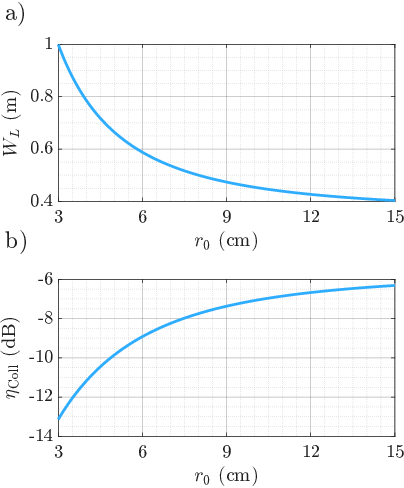
- Their turbulence‑based model predicted the fiber coupling well (within about 2 dB of what they measured), which helps engineers plan future systems.
Why this matters:
- It proves you can connect free‑space and fiber parts of a quantum network using off‑the‑shelf QKD gear, as long as you add good adaptive optics.
- It shows you don’t always need expensive, cryogenic detectors—room‑temperature ones can work, too, making real-world systems cheaper and easier to run.
What this could lead to
- Better “quantum internet” building blocks: ground stations that can talk to many users and satellites by mixing air and fiber links.
- Simpler and more affordable city‑to‑satellite quantum connections (important for secure communications over long distances).
- The technique isn’t just for QKD; it can help with other quantum tasks like sharing entanglement for secure computing and sensing.
- For even tougher conditions (like strong daytime turbulence), faster adaptive optics control will help—future systems with quicker electronics could keep the beam sharp even when the air is really messy.
In short: The team showed that with smart optics and careful design, quantum‑secure communication can hop from the sky into standard fiber smoothly, using practical hardware. This brings us closer to robust, large‑scale quantum networks on the ground and with satellites.
Knowledge Gaps
Knowledge gaps, limitations, and open questions
Below is a single, consolidated list of concrete gaps and open questions that remain unresolved and could guide future research:
- Daytime operation under strong turbulence: no experimental validation of performance in long-range daylight conditions with high background light and stronger turbulence; quantify link availability, SKR, and QBER vs solar elevation and aerosol load.
- AO control bandwidth: the AO loop is limited to ~10 Hz by software/USB; required rejection bandwidths vs Greenwood frequency across realistic wind profiles are not quantified; need experiments with real-time controllers (≥100 Hz) to map SMF-coupling and SKR improvements.
- AO telemetry vs channel models: WFS-based r0 estimation and coupling model were validated on limited snapshots; systematic validation across diverse conditions (seasonality, temperature inversions, boundary-layer dynamics, non-Kolmogorov statistics) is missing.
- Temporal dynamics: Greenwood frequency fG was inferred from weather-station wind, not from AO telemetry; direct estimation of fG from closed-loop AO data and its correlation with coupling/SKR remains unreported.
- Beam propagation modeling: horizontal path modeled with a single r0; lack of path-resolved Cn2 profiling and multi-layer turbulence modeling to predict AO performance and scintillation for different elevation angles/slant paths.
- Non-Kolmogorov turbulence and scintillation: model assumes Kolmogorov statistics and small scintillation penalties; need tests under strong scintillation (e.g., midday, hot surfaces) and evaluation of amplitude-phase coupling on SMF coupling.
- Wavefront sensing limitations: performance losses from low-intensity lenslets and centroid dropouts were observed; robustness of SH-WFS vs alternative sensors (pyramid, quad-cell, sensorless AO) under speckle/scintillation not assessed.
- AO architecture choices: only single-conjugate AO was used; potential benefits of tip–tilt plus high-order correction, predictive control, or multi-conjugate AO for extended horizontal/vertical paths remain unexplored.
- Beacon design and co-propagation: impact of wavelength offset (1545 nm beacon vs 1565.5 nm quantum) on differential turbulence, chromatic anisoplanatism, and co-alignment errors is not quantified; required beacon power and link budgets for satellite scenarios are unreported.
- Crosstalk and noise from beacons: no measurements of Raman scattering, spectral leakage, or detector afterpulsing induced by strong beacon light in shared optics/fiber; filter isolation and DWDM rejection requirements are not characterized.
- Polarization fidelity: end-to-end polarization rotation/drift through telescope, AO bench, and 0.5 km fiber is not characterized; absence of polarization compensation/calibration metrics (DOP, Mueller matrix, temporal stability) vs QBER.
- Daylight background suppression: only a 40 nm BPF and SMF spatial filtering used; required spectral filtering (narrow DWDM, etalons/atomic filters) and timing/windowing strategies to achieve daylight SKRs are not established experimentally.
- Detector optimization at room temperature: SPAD-based SKR (≈200 bit/s) leaves large gap to SNSPDs; the roles of dark counts, afterpulsing, dead time, timing jitter, and gating strategy were not optimized or reported.
- Source clock rate and decoy parameters: pulse repetition rate, mean photon numbers (signal/decoy), and basis probabilities were not provided; sensitivity of SKR to these parameters over free-space with AO is not explored.
- Finite-key security parameters: the final security level (e.g., ε-security) and reconciliation efficiency β used in the real-time post-processing are not reported; the impact of finite-size blocks under fluctuating channels remains unquantified.
- Authentication and networking: classical-channel authentication method and key consumption were not specified (VPN is not a cryptographic authenticator); overheads and net secret-key yield after authentication remain unknown.
- Untrusted OGS assumptions: while OGS is described as non-trusted, no formal security model is given for physical access to the OGS optics/fiber; implications for network architectures (e.g., MDI-QKD or optical-by-pass switching) are not analyzed.
- Multi-user operation: claim of serving multiple users via a transparent OGS is not demonstrated; practical optical switching, alignment time, and scheduling across users and modes are untested.
- Mobility and tracking dynamics: only a static horizontal link was tested; pointing/tracking under fast angular rates and vibration typical of LEO/GEO passes or moving platforms has not been evaluated.
- Range scaling: experiments at a single 18 km distance; scaling laws and demonstrations for longer links (e.g., 30–50 km ground, high-elevation slant paths) and with larger/smaller apertures are absent.
- Link availability and weather statistics: no long-term statistics on uptime, SKR distribution, and channel loss under varying meteorology (fog, haze, precipitation, strong winds); operational envelopes remain undefined.
- Calibration and uncertainty: the 2 dB gap between modeled and measured SMF coupling is attributed to alignment and WFS dropouts but not rigorously quantified; a full uncertainty budget (loss metrology, detector calibration) is missing.
- Impact of AO on polarization: potential polarization-dependent effects from mirrors, coatings, and deformable mirror curvature are not characterized; need to quantify any polarization-mode coupling vs QBER.
- Timing stability: turbulence-induced time-of-flight fluctuations and their impact on Qubit4Sync and gating were not measured; jitter tolerance and resynchronization performance under fast channel fluctuations remain unclear.
- Safety and regulatory constraints: beacon power levels, eye safety classification, and regulatory considerations for urban free-space operation are not discussed.
- Satellite applicability: feasibility of direct wavefront sensing with a satellite beacon (link budgets, reciprocity, coordination) and AO performance with fast-evolving turbulence along slant paths are open.
- Hardware-in-the-loop RTC: no demonstration of low-latency AO pipelines (camera–RTC–DM) or predictive control; required computational budgets, latencies, and robustness metrics are unreported.
- Alternative encodings: only polarization BB84 was tested; performance and AO implications for time-bin/phase-encoded or high-dimensional modalities with SMF coupling have not been investigated.
- Security side channels via AO/WFS: potential information leakage or attack surfaces introduced by beacons/WFS paths (e.g., Trojan-horse, blinding, control-loop injection) are not analyzed or mitigated.
- Integration with network services: key management, handover between links, and interworking with terrestrial QKD backbones were not demonstrated; end-to-end network performance with intermodal nodes remains to be shown.
Practical Applications
Overview
This paper demonstrates real-time, intermodal quantum key distribution (QKD) at telecom wavelengths over an 18 km urban free-space link, using high-order adaptive optics (AO) to achieve efficient single-mode fiber (SMF) coupling and secure key generation with both cryogenic and room-temperature detectors. It validates a turbulence-based model that predicts fiber coupling efficiency from wavefront sensor (WFS) data and offers practical design guidelines for interoperable fiber–free-space quantum networks.
Below are practical applications derived from the paper’s findings and methods, grouped into immediate and long-term opportunities. Each item includes sector alignment, likely tools/products/workflows, and key assumptions or dependencies.
Immediate Applications
The following applications can be deployed now, leveraging commercially available QKD systems, AO components, and the validated design/modeling methodology.
- Urban last‑mile quantum‑safe links to bridge fiber gaps
- Sector: telecom, finance, government, defense, critical infrastructure (energy, water), healthcare
- Tools/products/workflows: “Intermodal QKD gateway” combining a C‑band beacon, Shack‑Hartmann WFS, deformable mirror (DM), DWDM filtering, and SMF coupling; site survey workflow using WFS to estimate and predict coupling; plug‑and‑play fiber QKD systems (e.g., polarization‑encoded BB84 platforms) connected via free-space to existing fiber backbones
- Assumptions/dependencies: line‑of‑sight between endpoints; weak‑to‑moderate turbulence (better at night); compliance with laser safety and spectrum rules; existing fiber access for backhaul; acceptable key rates (≈200 bit/s with room‑temperature SPADs, ≈1 kbit/s with SNSPDs) for target use cases
- Rapid, temporary secure links for disaster response and field operations
- Sector: public safety, defense, utilities
- Tools/products/workflows: portable AO‑assisted free‑space terminals on rooftops/towers; VPN‑enabled post‑processing and QKD sync; standardized deployment checklist (coarse alignment, beacon acquisition, AO calibration, DWDM separation)
- Assumptions/dependencies: portable power; trained operators; moderate weather; key rate sufficient for time‑bounded mission needs
- Upgrading optical ground stations (OGS) to intermodal fiber–free‑space QKD
- Sector: aerospace, national labs, telecom operators
- Tools/products/workflows: AO upgrade kit (Shack‑Hartmann WFS, DM with ~64 actuators, RTC-ready control software), DWDM filters and SMF injection optics; AO calibration workflow (interaction matrix characterization); integration with existing telescope apertures (~40 cm class)
- Assumptions/dependencies: telescope mechanical/optical compatibility; AO rejection bandwidth ≥10 Hz (software‑limited in the paper) acceptable for current operations; beacon laser availability; nighttime operations preferred
- Campus and cross‑building secure research testbeds
- Sector: academia, R&D consortia, municipal innovation hubs
- Tools/products/workflows: multi‑building QKD trials using the validated turbulence‑aware coupling model to plan AO design and link budgets; comparative trials with SPADs vs. SNSPDs to match performance/cost constraints
- Assumptions/dependencies: rooftop siting, fiber access between buildings, ability to schedule links for favorable turbulence
- Predictive planning software for intermodal quantum links
- Sector: software, systems integrators, telecom engineering
- Tools/products/workflows: “Turbulence‑aware link planner” that ingests WFS data (Zernike variances), local weather (wind, temperature), and telescope parameters to estimate SMF coupling efficiency () and secret key rates; integrates the validated model for , , and
- Assumptions/dependencies: availability of WFS logs or representative measurements; model validity in weak‑to‑moderate turbulence regimes
- Cost‑effective deployments using room‑temperature detectors
- Sector: telecom, finance, SMEs, municipal IT
- Tools/products/workflows: QKD receiver configurations prioritizing InGaAs SPADs for lower cost/complexity; workflow to size QKD traffic policies around ≈200 bit/s SKR under ≈−29 dB channel loss
- Assumptions/dependencies: application data rates (e.g., key refresh intervals) compatible with SKR; classical cryptographic overlay (e.g., one‑time pad for limited streams or hybrid with PQC)
- Transparent OGS relay architecture (non‑trusted node)
- Sector: telecom, aerospace
- Tools/products/workflows: OGS that performs only AO correction and SMF coupling, routing quantum signals over fiber to secure receiver sites; operational procedures to avoid quantum measurements at OGS
- Assumptions/dependencies: reliable fiber links from OGS to secure facilities; physical security and tamper protections; compliance with network trust requirements
- Procurement and policy guidance for quantum‑safe infrastructure
- Sector: public policy, standards bodies, regulators, CIO offices
- Tools/products/workflows: specification templates for intermodal QKD (C‑band wavelengths, DWDM spacing ~100 GHz, telescope aperture class, AO correction order, detector choice, expected losses); siting and safety protocols
- Assumptions/dependencies: harmonized standards and certification frameworks; alignment with local regulations for free‑space optical links
Long‑Term Applications
These opportunities require further R&D, scaling, or technology maturation (e.g., higher‑bandwidth AO controllers, stronger turbulence handling, daytime operation).
- Daylight and strong‑turbulence operation with high‑bandwidth AO
- Sector: telecom, aerospace, smart cities
- Tools/products/workflows: real‑time controllers (RTC) with >100 Hz rejection bandwidth; faster WFS/DM actuation; enhanced filtering and background suppression; autonomous tracking and beam control
- Assumptions/dependencies: improved AO electronics/software; robust beaconing under sunlight; thermal and mechanical stability; regulatory approvals for daytime operation
- Satellite‑to‑ground QKD integration (Eagle‑1, SAGA, and beyond)
- Sector: aerospace, national security, pan‑European quantum infrastructure
- Tools/products/workflows: space‑qualified beaconing, pointing‑tracking‑AO subsystems at OGS; intermodal gateways that route satellite free‑space quantum channels into terrestrial fiber networks; scheduling and weather‑adaptive operations
- Assumptions/dependencies: satellite mission timelines; standardized interlink protocols; resilience to low link efficiencies and atmospheric windows; coordination with ESA and national bodies
- City‑scale intermodal quantum networks with multi‑user OGS hubs
- Sector: telecom, municipal infrastructure, cloud providers
- Tools/products/workflows: OGS nodes acting as transparent optical relays for multiple endpoints; dynamic routing of quantum channels across mixed media; network management systems aware of turbulence and AO status
- Assumptions/dependencies: scalable AO across multiple beams/users; spectrum management; interoperable security policies; integration with SDN/NFV orchestration
- Protocol‑agnostic quantum networking (entanglement distribution, delegated computing, sensing)
- Sector: cloud and HPC, industrial sensing, metrology
- Tools/products/workflows: entanglement sources and distribution over intermodal links; timing/synchronization protocols (e.g., Qubit4Sync variants) adapted for entanglement; application workflows for delegated secure computation and quantum sensing
- Assumptions/dependencies: availability of entanglement sources and repeaters; end‑to‑end calibration; new standards for quantum network interoperability
- Productization of AO subsystems tailored for quantum communications
- Sector: photonics manufacturing, systems integrators
- Tools/products/workflows: modular AO benches (WFS+DM+RTC) with standardized interfaces; deformable mirrors with higher actuator counts; integrated OGS‑in‑a‑box offerings; lifecycle maintenance and calibration services
- Assumptions/dependencies: cost/size reductions; reliability in field conditions; vendor ecosystem and supply chain
- Automation and ML‑assisted operations
- Sector: software, operations technology
- Tools/products/workflows: ML models predicting and SMF coupling from weather feeds and historical WFS data; closed‑loop optimization for alignment and AO parameters; autonomous fault detection and recovery
- Assumptions/dependencies: data availability; safety and reliability certification; human‑in‑the‑loop oversight
- Hybrid cryptographic deployments (QKD + post‑quantum cryptography)
- Sector: finance, healthcare, government IT
- Tools/products/workflows: policies and tooling to combine QKD‑derived keys with PQC schemes; key management workflows for heterogeneous networks (fiber, free‑space, satellite)
- Assumptions/dependencies: standards convergence; performance baselines; compliance frameworks
- Standards and certification for intermodal quantum links
- Sector: ETSI/ITU/ISO, national standards agencies
- Tools/products/workflows: test suites for AO performance (spatial/temporal efficiency, coupling metrics), link budget models incorporating validated turbulence terms, security profiles for transparent OGS relays
- Assumptions/dependencies: stakeholder alignment; multi‑site trials confirming generality; incorporation into procurement and regulatory regimes
- Mobile platforms (UAVs/aircraft) providing aerial quantum backhaul
- Sector: defense, disaster response, rural connectivity
- Tools/products/workflows: stabilized AO‑assisted terminals on mobile platforms; adaptive beaconing/tracking; free‑space to ground intermodal gateways
- Assumptions/dependencies: platform stability; safety approvals; robust operation under variable turbulence and motion
- Resilient national quantum communication backbones
- Sector: national infrastructure, defense
- Tools/products/workflows: mixed fiber/free‑space/satellite architectures with redundant OGS nodes; policy frameworks for mission‑critical operations; training and certification pipelines
- Assumptions/dependencies: funding and governance; technology maturity for strong‑turbulence and daylight; integration with classical network resilience plans
Notes on Feasibility
- The validated turbulence‑based coupling model provides actionable design guidance for AO and link budgets under weak‑to‑moderate turbulence; performance in strong turbulence (especially daytime) depends on higher AO bandwidth and improved filtering.
- Room‑temperature detectors enable immediate, lower‑cost deployments at reduced SKR; cryogenic detectors improve rates but increase complexity and cost.
- Transparent OGS relays avoid trust‑node constraints but still require robust physical security and fiber connectivity to secure receiver sites.
- Line‑of‑sight, siting, weather, and regulatory considerations are critical across all applications; standardized deployment workflows and safety practices are recommended.
Glossary
- Adaptive optics (AO): Real-time optical correction system that compensates turbulence-induced wavefront distortions using controllable optics. "To address these challenges, high-orders adaptive optics (AO) utilize a deformable mirror driven by a sensor's feedback"
- Angle-of-arrival stabilization: Low-order correction that stabilizes beam pointing (tip–tilt) at the receiver. "simple angle-of-arrival stabilization is sufficient"
- Aperture-averaged scintillation index: Measure of turbulence-induced intensity fluctuations averaged over the receiver aperture. "aperture-averaged scintillation index"
- BB84 protocol: Foundational quantum key distribution scheme using two non-orthogonal bases. "3-state 1-decoy efficient BB84 protocol"
- C-band: Wavelength band around 1550 nm commonly used in telecom and quantum optics. "C-band beacon laser"
- Closed-loop configuration: Control mode where sensor feedback continuously drives corrective elements. "By operating in a closed-loop configuration, these systems can dynamically compensate the phase aberrations"
- Deformable mirror (DFM): Mirror with actuators that shape the optical wavefront for adaptive correction. "deformable mirror (DFM) correction"
- Dense wavelength-division multiplexer (DWDM): Component that combines/separates tightly spaced wavelength channels. "a dense wavelength-division multiplexer (DWDM) with 100~GHz spacing"
- Fried parameter (): Coherence length describing atmospheric turbulence strength. "the Fried parameter "
- Full width at half maximum (FWHM): Standard measure of filter or spectral bandwidth. "full width at half maximum (FWHM)"
- Greenwood frequency: Characteristic frequency of turbulence evolution that sets AO temporal requirements. "the Greenwood frequency, which represents the rate at which phase distortions in the wavefront evolve due to wind motion"
- InGaAs: Indium gallium arsenide, a semiconductor material used for near‑infrared photodetectors. "InGaAs single-photon avalanche diodes (SPADs)"
- Kolmogorov power spectral density: Statistical model describing the spectrum of turbulence-induced refractive index fluctuations. "assuming a Kolmogorov power spectral density for the refractive index fluctuations"
- Mode-field diameter (MFD): Effective width of the fundamental mode in a single-mode fiber. "mode-field diameter (MFD) of 10.4~m"
- Optical ground station (OGS): Ground terminal for free-space optical/quantum communication. "an optical ground station (OGS) located in an urban environment"
- Polarization-encoded: Using photon polarization states to encode quantum information. "polarization-encoded QKD devices"
- Quantum key distribution (QKD): Protocols that generate shared secret keys using quantum states. "quantum key distribution (QKD)"
- Quantum-bit-error-rate (QBER): Fraction of erroneous bits in the raw quantum key. "quantum-bit-error-rate (QBER)"
- Qubit4Sync: Qubit-based method for clock and offset recovery between QKD parties. "Qubit4Sync"
- Rayleigh range (): Distance over which a beam stays near its waist size before diverging significantly. "Rayleigh range "
- Rytov variance: Parameter quantifying the strength of turbulence-induced log-amplitude fluctuations. "the Rytov variance"
- Scintillation: Rapid intensity fluctuations of a light beam caused by atmospheric turbulence. "due to scintillation"
- Secret key rate (SKR): Rate of final secure bits generated after error correction and privacy amplification. "The secret key rate (SKR) generated during the different runs"
- Shack-Hartmann wavefront sensor (WFS): Device measuring local wavefront slopes via a lenslet array for AO control. "a Shack-Hartmann wavefront sensor (WFS)"
- Single-mode fiber (SMF): Optical fiber supporting only the fundamental spatial mode. "single-mode fiber (SMF)"
- Single-photon avalanche diode (SPAD): Geiger-mode avalanche photodiode for single-photon detection. "single-photon avalanche diodes (SPADs)"
- Superconducting nanowire single-photon detector (SNSPD): Ultra-sensitive single-photon detector using superconducting nanowires. "superconducting nanowire single-photon detectors (SNSPDs)"
- Telecommunication wavelength: Wavelengths near 1550 nm used in fiber-optic systems and compatible quantum links. "telecommunication wavelength"
- Tip--tilt stabilization: Lowest-order AO correction compensating image motion (pointing jitter). "tip--tilt stabilization"
- Variable optical attenuator (VOA): Device that controllably reduces optical power in a fiber link. "variable optical attenuator (VOA)"
- Wavelength-division multiplexer (WDM): Component that combines or separates optical signals by wavelength. "wavelength-division multiplexers (WDMs)"
- Zernike polynomials: Orthogonal functions on a unit disk used to represent optical wavefront aberrations. "Zernike polynomials can be used to represent the Kolmogorov specturm of atmospheric turbulence"
Collections
Sign up for free to add this paper to one or more collections.