Dark energy from string theory: an introductory review
Published 26 Mar 2026 in hep-th, astro-ph.CO, gr-qc, hep-ph, and math-ph | (2603.25797v1)
Abstract: Dark energy, the main constituent in our expanding universe, responsible for its acceleration, is currently observed at unprecedented precision by different experiments. While several cosmological models can fit this latest data, deriving some of them from string theory would provide a valuable theoretical prior, with information on the nature of dark energy. This article reviews the efforts towards such a derivation, namely the options from string theory to get a cosmological constant (a de Sitter solution) or a dynamical dark energy (via a quintessence model). After a brief historical perspective, we first review proven or conjectured constraints in getting dark energy from string theory, in classical or asymptotic regimes. Circumventing such obstructions, by changing regime or ansatz, one can try to construct a de Sitter solution: we present a long list of such attempts, and the difficulties encountered. Among them, we discuss in detail efforts towards classical de Sitter solutions. Then, we review quintessence from string theory, focusing on single-field exponential models. Related topics are discussed, including the coupling to matter, the comparison to observational data, and the absence of a cosmological event horizon.
The paper critically assesses challenges of realizing dark energy via metastable dS vacua in string theory, highlighting rigorous no-go theorems.
It analyzes scalar field potentials from compactification, showing how moduli stabilization and quantum corrections shape effective 4D theories.
The review contrasts dS constructions with quintessence models, linking swampland criteria to observational tensions in cosmic acceleration.
Dark Energy from String Theory: An Introductory Review
Context and Motivation
The quest to derive dark energy—the dominant component driving the universe's accelerated expansion—from first-principles quantum gravity is an enduring frontier in theoretical physics. "Dark energy from string theory: an introductory review" (2603.25797) provides a comprehensive synthesis of efforts to realize four-dimensional (4D) positive vacuum energy within string theory, critically examines the constraints arising from both classical and quantum considerations, and assesses the viability of key paradigms such as the cosmological constant, de Sitter (dS) vacua, and quintessence in light of string-theoretic structures.
The review is timely: observational progress (e.g., DES, DESI, Euclid, LSST) now demands not only phenomenological fits but also theoretically robust explanations for late-time cosmic acceleration. String theory, as the leading candidate for UV-complete quantum gravity, must then account for dark energy in a manner consistent with its mathematical architecture, internal consistency conditions (tadpoles, moduli stabilization, etc.), and the swampland program's exclusionary criteria on effective field theories.
String-Derived Cosmological Models
At the level of 4D effective theory, dark energy scenarios generically reduce to scalar field theories, minimally coupled to gravity:
S4d=∫d4x−g4[2Mp2R4−21gij∂μφi∂μφj−V(φ)]
String theory naturally produces such actions upon compactification from ten dimensions, with moduli fields φi encoding the geometry and fluxes of the internal manifold. The potential V(φ) aggregates contributions from classical fluxes, curvature, brane and orientifold sources, quantum corrections (perturbative and nonperturbative), and threshold or Casimir effects.
There are two principal string-theory-motivated classes of dark energy models:
Cosmological Constant / de Sitter (dS) Models: The vacuum energy arises from the value of V at an extremum—ideally a metastable or stable minimum.
Quintessence Models: Time-dependent evolution arises from rolling moduli on a positive, runaway potential V(φ).
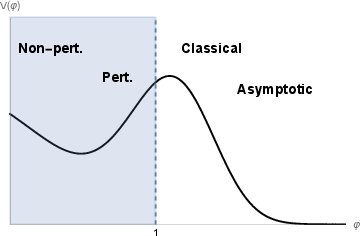
A schematic profile of string-motivated V(φ), capturing various contributions and the regimes associated with different moduli limits, is presented and analyzed in the review.
Figure 1: Schematic of typical 4D scalar potential V(φ) obtained in effective string theory: perturbative/nonperturbative regions (φ<1), classical (φ>1), and asymptotic (φ→∞) behavior. Construction of dS minima/maxima and their vulnerability to corrections are indicated, as well as the typical asymptotic runaway forbidding dS extrema.
Swampland Constraints and No-Go Theorems
A central thesis of the review is the incompatibility between the requirements for controlled dS vacua and the structural and quantum consistency conditions of string theory. Analyses, both 10D and 4D, underline a pattern of rigorous no-go theorems and conjectural swampland constraints. These can be grouped as follows:
Maldacena-Nuñez–type No-Go Theorems: Forbidding dS solutions on compact manifolds without negative-tension objects (orientifolds), unless curvature, suitable fluxes, and sources are specifically arranged. For instance, dS vacua with only D-branes and fluxes are excluded.
Swampland Program: The de Sitter swampland conjecture (dSC) postulates that controlled dS vacua are absent from the string landscape, replaced by the refined conjecture allowing only unstable dS extrema and requiring a steep slope, as quantified by φi1 with φi2, particularly in asymptotic field regions. The strong dS conjecture (SdSC) restricts this to field space asymptotics, with precise bounds derived and tested against string constructions, most notably φi3 in exponential potentials.
These constraints are formalized in both 10D (cohomological and energy conditions) and 4D (scalars' slow-roll parameters, mass matrix eigenvalues) analyses and have been tested against explicit compactifications (e.g., group manifolds, Calabi-Yau scenarios) and generalized in higher and lower dimensions.
Classical dS Construction Attempts and Obstacles
The review catalogs (Section 4) the major known strategies for realizing dS in string theory, including:
Perturbative and Nonperturbative Effects: The KKLT [Kachru-Kallosh-Linde-Trivedi] and LVS [Large Volume Scenario] approaches leverage nonperturbative contributions (D-brane instantons, gaugino condensation) for moduli stabilization/upshifting, but are marred by singular bulk regions, insufficient control over corrections, or instabilities.
Classical Flux Vacua: Searches for dS solutions in the classical regime (geometric flux compactifications, group manifolds) have encountered either an absence of solutions, excessive instability (φi4), or lack of parametric control (e.g., Romans mass φi5 in massive IIA).
Backreaction and Smearing Issues: The necessity of negative-tension orientifolds and their backreaction leads to localized singularities, challenging the use of smeared or partially backreacted solutions.
Alternative Approaches: Casimir energy, non-geometric fluxes, or non-supersymmetric string theory constructions are discussed as further avenues, each with its own limitations—especially regarding control over quantum corrections or tadpole cancellation.
The upshot is that no well-controlled, stable or metastable 4D dS vacuum is established at the time of writing; all known candidates are subject to uncontrolled corrections, unresolved singularities, or severe tachyonic instability.
Quintessence and Runaway Potentials
Faced with formidable obstacles to constructing stable dS minima, the review pivots to quintessence as a leading candidate for stringy dark energy—scalar fields evolving on runaway potentials (often exponential) consistent with the swampland's slope bounds.
The single-field exponential model,
φi6
emerges naturally in many regimes, with universal lower bounds on φi7 imposed by the SdSC (φi8).
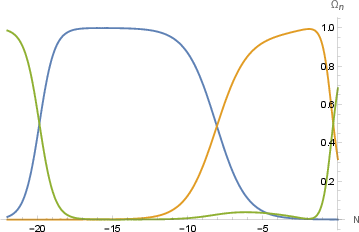
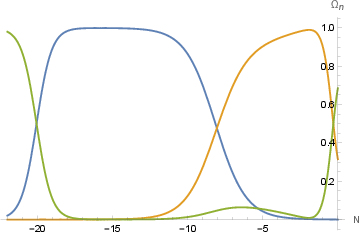
Dynamical System Analysis: The review provides a detailed phase-space investigation, identifying attractor solutions (kinetic, scaling, curvature, and potential dominated phases), and the conditions for sustained or transient acceleration.
Observational Comparison: For high φi9, transient acceleration is possible but the asymptotic attractors (e.g., V(φ)0, V(φ)1) do not match a cosmological constant or yield eternal acceleration. Current cosmological data prefer smaller V(φ)2, in tension with string swampland constraints.
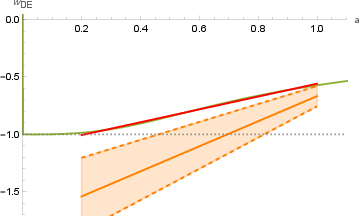
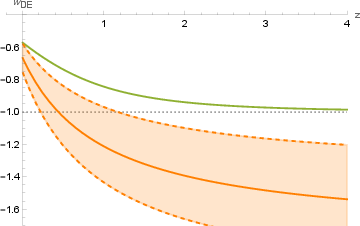
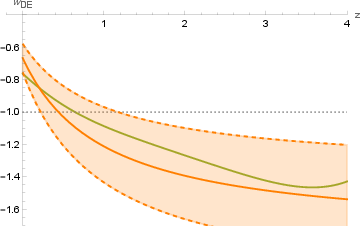
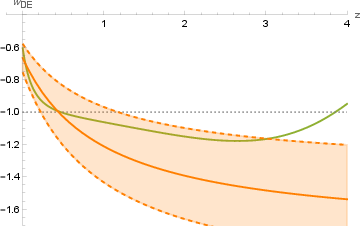
Matter Couplings and Phantom Regimes: To explain recent hints of a "phantom" (V(φ)3) dark energy, the review discusses models where quintessence couples (non-minimally) to matter. Such couplings allow effective V(φ)4 in a healthy theory, revive larger-V(φ)5 models, and fit the latest observational profiles, at the cost of introducing further theoretical (model-dependent) complexity.
Theoretical and Phenomenological Implications
The review's analysis yields several key takeaways:
Landscape/Swampland Demarcation: The lack of parametric control for stringy dS vacua strengthens the conjecture that metastable and stable 4D de Sitter vacua are in the swampland. This has sweeping consequences for both cosmology and string phenomenology.
Quintessence as the Stringy Default: In the absence of dS vacua, accelerated expansion must be traced to steep, (meta)stable runaway potentials, with tight constraints from both theory (swampland) and data (upper bounds on allowed V(φ)6).
Critical Role of Backreaction and Matter: Omitted ingredients (nonperturbative effects, backreaction, detailed matter couplings) may alter the phenomenology, but at the potential price of calculational control or internal consistency.
Cosmological Horizons and Holography: The absence of eternal acceleration and event horizons in string-theoretic cosmologies lines up with quantum gravity arguments against dS holography and the construction of an S-matrix on dS backgrounds.
Future Developments: Forthcoming observational data may further clarify the status (or necessity) of exotic matter couplings, the reality of a phantom regime, and the direct testability of the swampland program's impact on cosmological model-building.
Conclusion
This review (2603.25797) provides an authoritative account of the deep tension between the apparent simplicity of observed cosmic acceleration and the intricate, sometimes prohibitive, consistency requirements of string theory. The cumulative weight of classical constraints, swampland conjectures, and the lack of well-controlled dS vacua suggests that if string-theoretic dark energy is realized, it is most likely via some stringy quintessence model, possibly coupled to matter, and subject to tight theoretical and observational bounds. While conclusive string constructions remain elusive, the interplay between high-precision cosmology, mathematical constraints, and UV completion requirements continues to refine our understanding of the universe's ultimate fate and its field content.
Figure 2: Dynamical evolution of the dark energy equation of state V(φ)7 (number of e-folds) in representative quintessence models, illustrating the interplay between theoretical slope bounds and observational fits, including the possibility of transient or phantom-like behavior due to matter coupling.
Figure 3: Evolution of energy density fractions V(φ)8 in single-field exponential quintessence, showing radiation, matter, and dark energy domination epochs, along with constraints from the swampland on the allowed asymptotic behavior.
In summary, this review synthesizes the state-of-the-art on dark energy from string theory, highlights the technical obstacles facing dS constructions, articulates the consequences of swampland bounds for cosmological phenomenology, and delineates the emerging role of quintessence as the viable string-theoretic paradigm in the current theoretical and observational landscape.