- The paper quantifies dipolar coupling and magnetic field distributions in FGT/graphite vdW heterostructures using cross-sectional LTEM and electron holography.
- It identifies a critical separation (λ = 34 ± 4 nm) marking the transition from aligned to misaligned domains, influencing interlayer interaction strength and device design.
- Micromagnetic simulations confirm that narrow, Bloch-like domain walls arise without the need for Dzyaloshinskii-Moriya interaction, emphasizing the role of sample geometry and surface effects.
Quantification of Magnetic Interactions in van der Waals Heterostructures via Cross-Sectional Lorentz TEM and Electron Holography
Introduction and Motivation
This study rigorously investigates magnetic coupling and domain structures in Fe3GeTe2 (FGT)/graphite/FGT van der Waals (vdW) heterostructures utilizing cross-sectional Lorentz transmission electron microscopy (LTEM) and off-axis electron holography (OAEH). The work addresses limitations of conventional plan-view magnetic imaging, where signals are integrated along the sample thickness, obscuring layer-specific magnetization. By preparing cross-sectional lamellae with variable vertical spacing controlled by graphite spacers, the authors resolve dipolar coupling between ferromagnetic layers and quantify the local magnetic field distributions and domain wall properties within and between the stacked vdW magnets.

Figure 1: Schematic depiction of the cross-sectional TEM lamella used for magnetic imaging, highlighting FGT and graphite layer orientations and thicknesses.
Measurement of Dipolar Coupling and Domain Alignment
LTEM imaging reveals domain alignment behavior as a function of vertical separation between FGT layers. At separations below a characteristic length scale (λ=34±4 nm), domain alignment persists, indicating robust dipolar coupling. Misalignment emerges at larger separations, defining λ as the dipolar coupling threshold for the studied geometry. This result is consistent across multiple heterostructure lamellae and is modulated by FGT layer thickness. Additionally, comparative analysis between FIB-patterned lamellae and as-exfoliated FGT flakes demonstrates reduced domain widths in lamellae, attributable to both altered anisotropy and increased side-surface stray field contributions post-FIB processing.
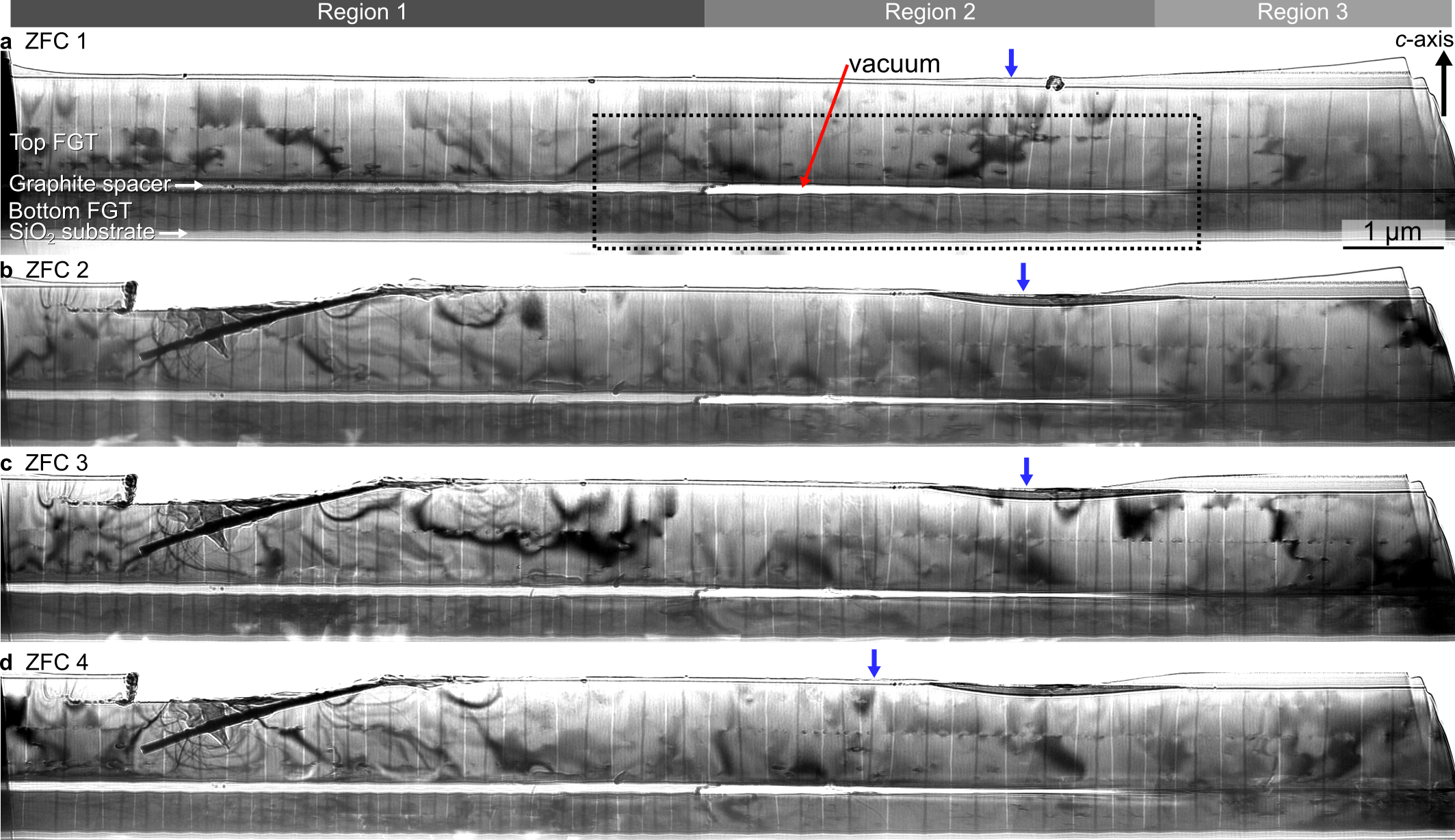
Figure 2: LTEM images illustrating domain wall positions and the emergence of misalignments as layer separation increases.
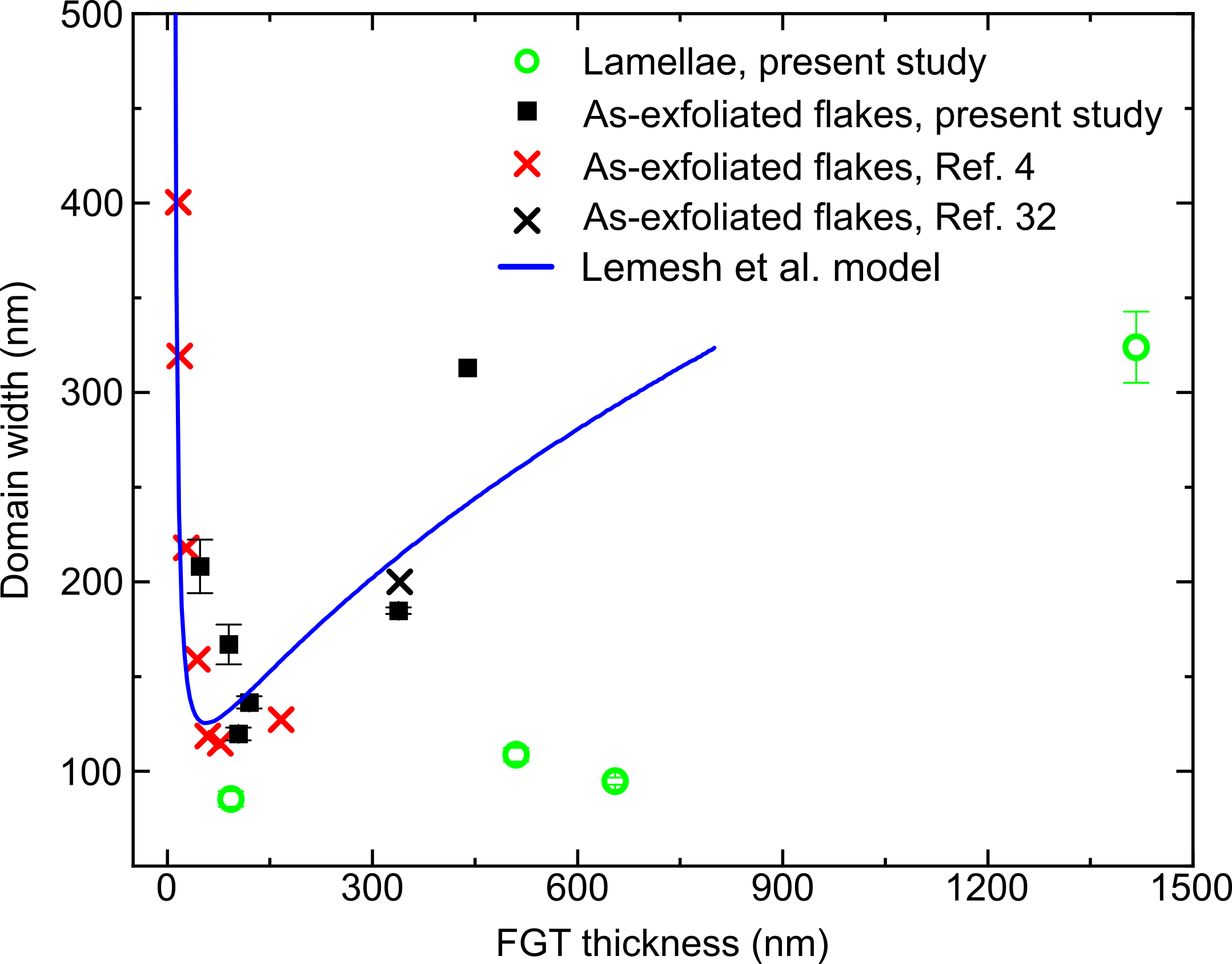
Figure 3: Domain width as a function of FGT thickness comparing FIB-prepared lamellae and exfoliated flakes, with theoretical stripe-domain predictions.
Quantitative Magnetic Field Mapping
OAEH provides high-resolution maps of internal and stray magnetic fields, enabling extraction of projected in-plane induction values within FGT layers and across spacers. Within bulk FGT, ∣B⊥∣ ranges from ∼130–220 mT, the magnitude scaling with layer thickness and location. Critically, at separations near λ, the induction in the spacer region is reduced by approximately 50% relative to the bulk value, directly correlating dipolar coupling strength with field attenuation.
Surface effects manifest as reduced projected induction and magnetization canting up to ∼100 nm from free surfaces, confirmed via model-based iterative reconstruction. These phenomena persist even after accounting for demagnetizing fields, indicating intrinsic surface-driven canting.
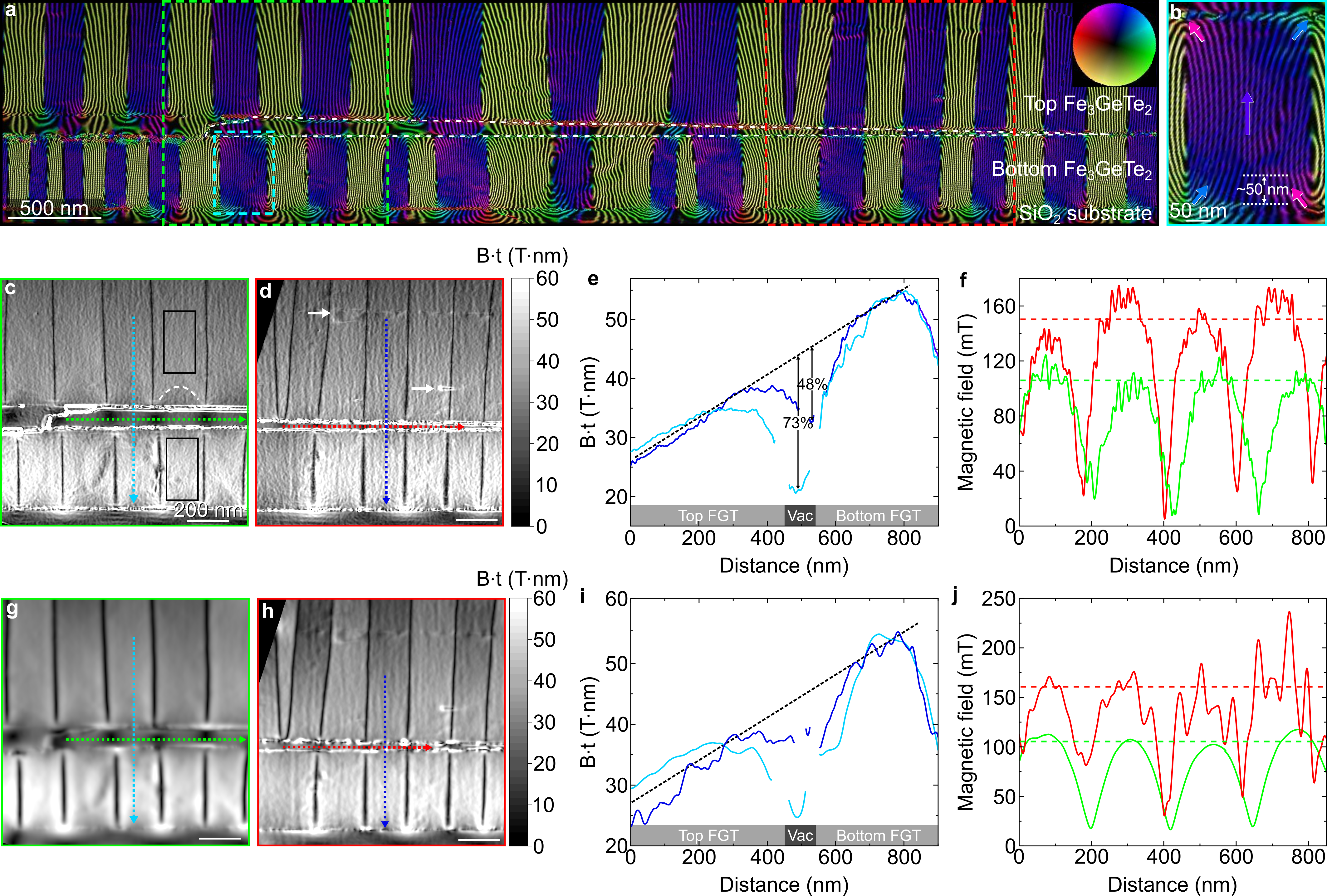
Figure 4: OAEH contour maps visualizing magnetic induction distributions in cross-sectional lamellae and illustrating flux closure at domain corners.
Domain Wall Characterization
The study probes domain wall topology in Fe-rich FGT, evaluating Bloch and N\'eel characteristics using both LTEM with sample tilt and cross-sectional OAEH. LTEM contrast emerges only upon tilting the sample, typically interpreted as N\'eel-type behavior, but cross-sectional OAEH reveals extremely narrow domain walls (w=8.9±1.5 nm), compatible with strong perpendicular anisotropy. Micromagnetic simulations, absent Dzyaloshinskii-Moriya interaction (DMI), reproduce both domain textures and wall widths, demonstrating that DMI is not required for the observed domain structure in this off-stoichiometric FGT.
Detailed comparison of phase-gradient profiles with simulated N\'eel and Bloch wall models finds marginally better agreement for Bloch-like topology, though experimental noise limits definitive assignment. The LTEM contrast is predominantly sensitive to the adjacent domain magnetization rather than wall internal structure. Additional surface oxidation or FIB-induced effects may also bias domain wall properties, underscoring the need for complementary methods such as vector field electron holography or in-plane biasing experiments.
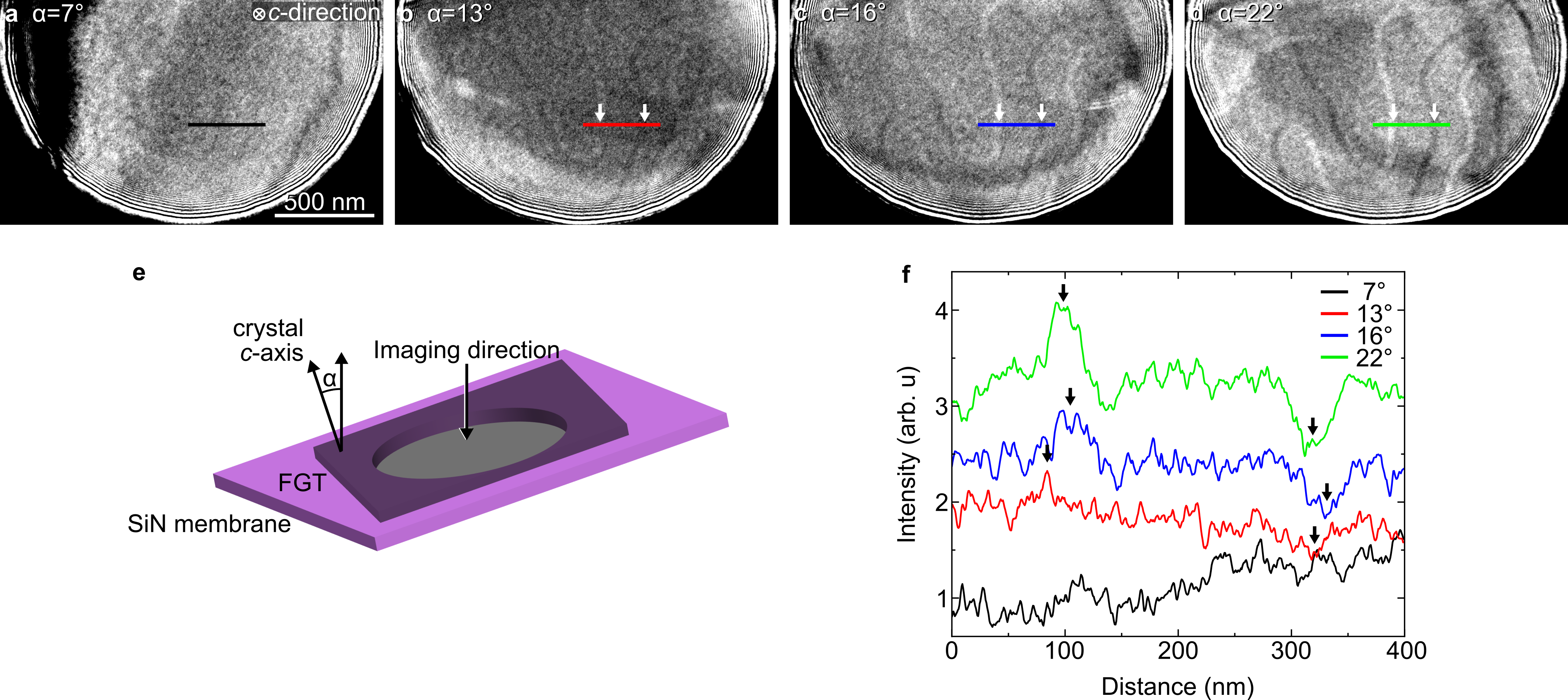
Figure 5: LTEM images of exfoliated FGT flakes acquired at different tilt angles, showing tilt-dependent domain wall contrast.
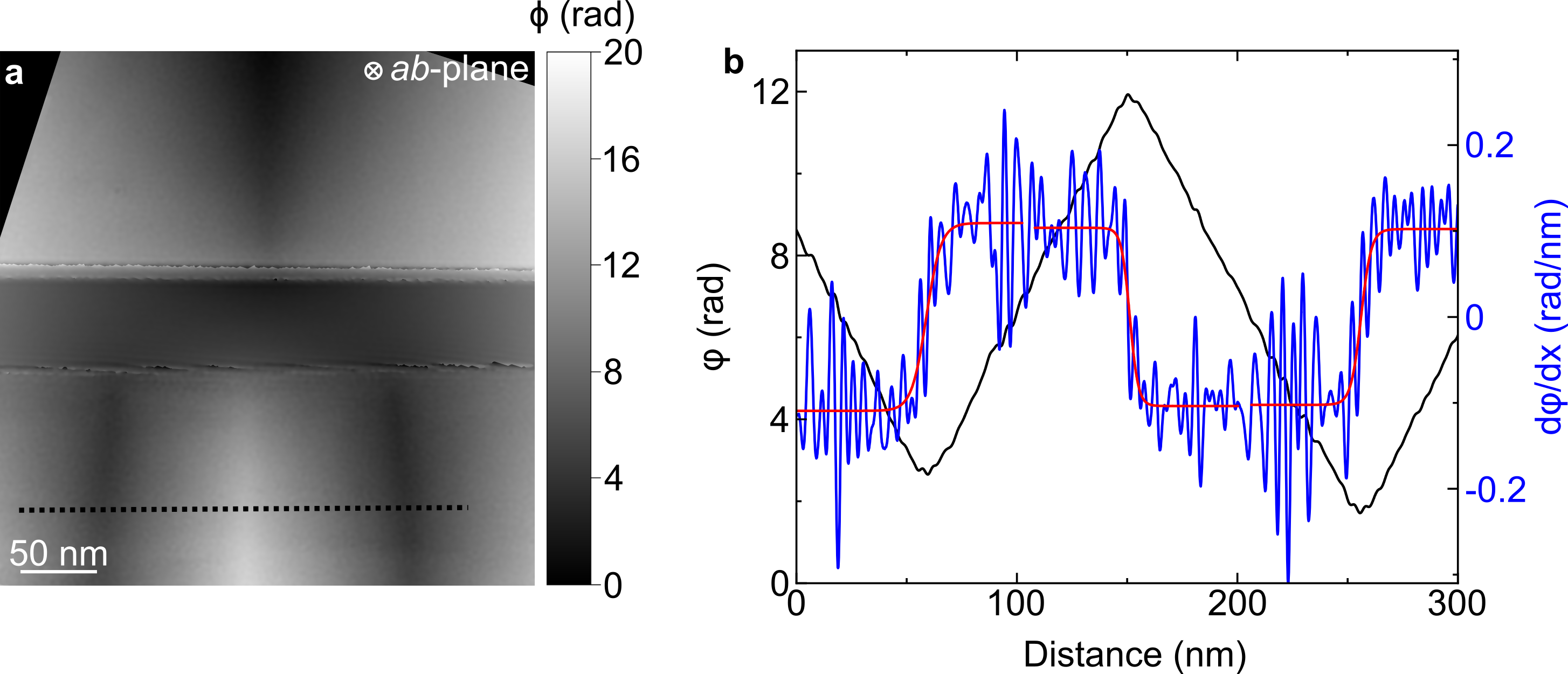
Figure 6: OAEH-derived phase shift profiles across domain walls in cross-sectional geometry, fitted to extract wall width.
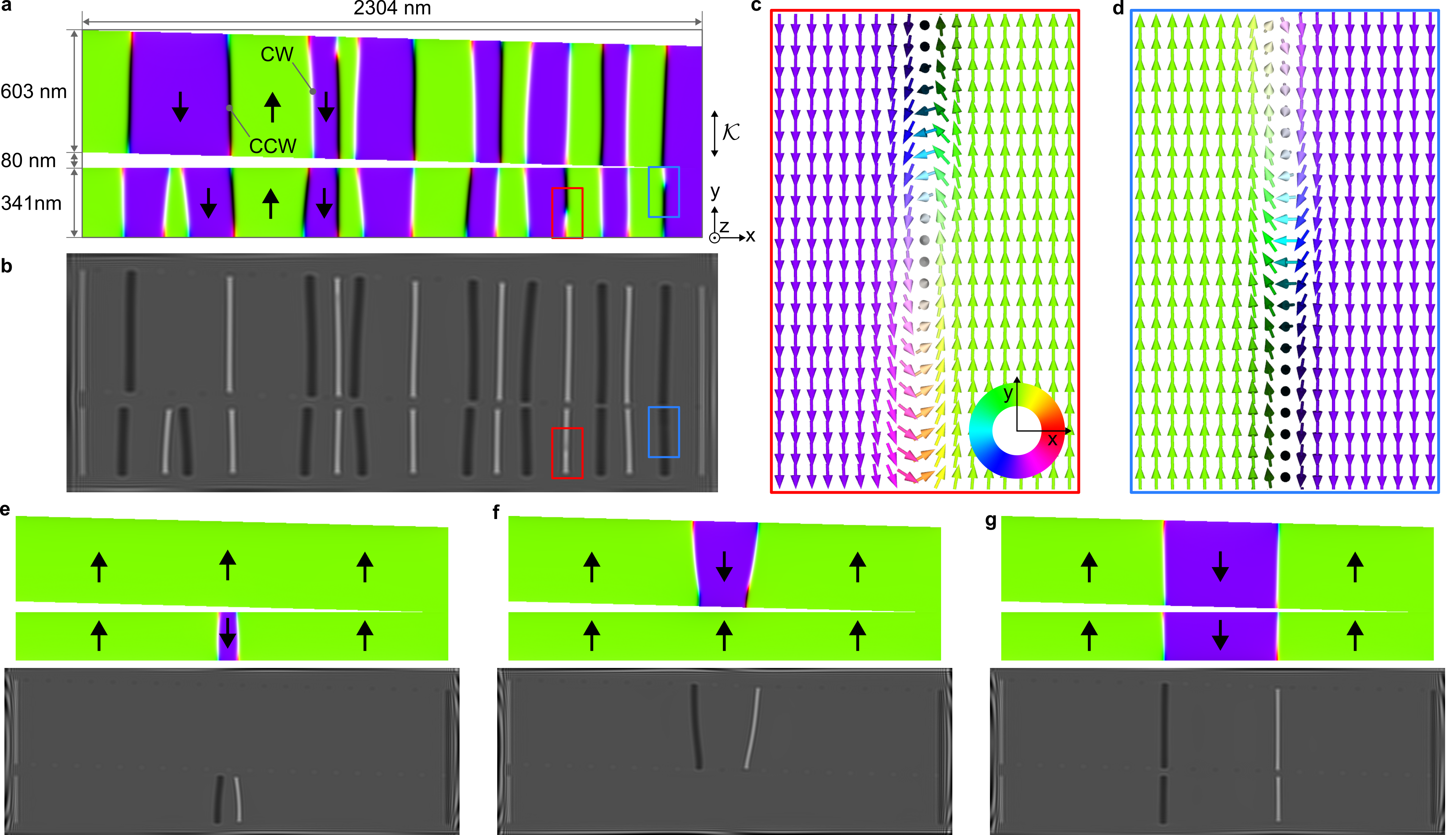
Figure 7: Micromagnetic simulation results for coupled FGT layers, illustrating domain texture, wall morphology, and theoretical LTEM contrast.
Practical and Theoretical Implications
This work provides a rigorous framework for engineering interlayer magnetic coupling in vdW heterostructures, directly linking spacer thickness to dipolar interaction strength and domain alignment. The λ length scale offers a design rule for device architectures requiring field-tunable domain coupling, including spin valves, magnetic tunnel junctions, and spin-orbit torque memories. Surface effects, notably magnetization canting over 20100 nm, necessitate careful consideration in flakes and lamellae with sub-100 nm thickness, as they substantially alter local induction and domain wall properties.
From a theoretical perspective, the results challenge assumptions that tilt-dependent LTEM contrast uniquely identifies N\'eel walls and emphasize the primacy of narrow wall width in Fe-rich FGT. Simulations confirm that basic micromagnetic interactions suffice to model domain structures in these heterostructures, minimizing the necessity for DMI-inclusive models in centrosymmetric FGT. Future advances may involve three-dimensional field mapping via vector electron holography, phase-shifting holography for enhanced spatial resolution, and real-time visualization of domain dynamics under external fields and temperature stimuli.
Conclusion
The quantification of dipolar coupling, domain alignment, and magnetic field distributions in FGT/graphite/FGT vdW heterostructures establishes a predictive link between geometric layer separation and interaction strength, evidenced by a well-defined coupling length scale and corresponding induction attenuation. Surface-driven magnetization canting and narrow domain wall widths arise prominently in device-scale flakes and lamellae. Micromagnetic modeling substantiates the experimental findings, highlighting the minimal role of DMI and underscoring the importance of sample geometry and surface effects. The methodologies and insights presented here lay a foundation for advanced spintronic and quantum information devices based on tunable coupling in vdW magnetic heterostructures.

