Probing excited-state quantum phase transitions with trapped cold ions
Published 30 Mar 2026 in quant-ph, cond-mat.stat-mech, and nucl-th | (2603.28509v1)
Abstract: We propose concrete protocols to realize quantum criticality due to excited-state quantum phase transitions (ESQPTs) experimentally in presumably the simplest and most resilient system involving a single trapped ion oscillating in a radio-frequency Paul trap. We identify a specific class of excited states of the Extended Rabi Model (ERM) Hamiltonian, which occur between two critical ESQPT energies of the model in its (anti)Jaynes-Cummings superradiant phase. Properties of these states motivate the definition of several ESQPT witness observables. We study their critical scaling behaviors as well as various distinct state evolutions by driving the system across the quantum criticalities by changing the qubit-phonon coupling strength linearly in time at different finite rates. A mapping of the theoretical control parameters of the ERM to the experimental parameters of a trapped ion setup is provided, and simulations are performed for values referencing existing state-of-the-art setups, addressing both unitary state evolutions as well as relevant open-system corrections.
The paper introduces a method using engineered time-dependent protocols in trapped ion systems to robustly observe excited-state quantum phase transitions marked by emergent S2 states.
It maps the extended Rabi model parameters to experimentally tunable quantities, enabling precise detection through observables like phonon number and vacuum survival probability.
The work highlights that finite-size scaling and minimal decoherence effects allow clear differentiation between ground state and emergent excited-state dynamics.
Excited-State Quantum Phase Transitions in Trapped Cold Ions: Experimental Probes and Theoretical Perspectives
Introduction
This work rigorously explores the experimental realization and diagnosis of excited-state quantum phase transitions (ESQPTs) in a single trapped cold ion system. It leverages the extended Rabi model (ERM), which interpolates between Jaynes-Cummings (JC), anti-Jaynes-Cummings (aJC), and Rabi-type interactions. The analysis is rooted in both the theoretical structure of ESQPTs and their practical accessibility using state-of-the-art trapped-ion platforms. The authors provide a detailed mapping between the ERM parameters and experimentally tunable quantities such as sideband detunings and Rabi frequencies. They identify observable signatures—ESQPT witnesses—within accessible experimental protocols and discuss the influence of realistic open-system decoherence. The paper makes the key claim that ESQPTs can be robustly observed and characterized in existing trapped ion setups via carefully engineered time-dependent driving protocols, with the identification of a new family of emergent excited states ('S2-emergent states') as a central diagnostic.
Extended Rabi Model Mapping and Experimental Implementation
The interaction of a single trapped ion's internal qubit and motional phonon mode in a radio-frequency Paul trap encompasses a broad spectrum of system Hamiltonians, achieved via bichromatic driving on first sidebands. The model Hamiltonian
incorporates effective system size Δ, interaction strength λ, and a regime parameter δ interpolating among Rabi, JC, and aJC dynamics.
The implementation relates these abstract parameters to experimental control via sideband detunings δr,b and effective Rabi frequencies Ω1,2 on the red and blue sidebands. The authors provide explicit protocols to reach the ultrastrong coupling necessary for quantum critical behavior, leveraging the known techniques for QPT observation but targeting the previously unexplored ESQPT regime.
Phase Structure and ESQPT Classification
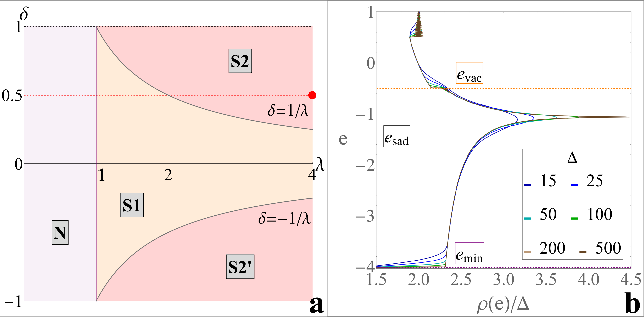
A central contribution of the work is the detailed classification of the ERM's phase diagram in the (λ,δ) parameter space. The ground-state QPT separating normal (N) and superradiant (S) phases occurs at λc=1, independent of δ. Above this threshold, the excitation spectrum divides further:
First superradiant phase (S1, "Rabi-type"): For 1<λ<1/∣δ∣, the system supports degenerate minima corresponding to superpositions of qubit and oscillator modes.
Second superradiant phase (S2, "(anti)JC-type"): For Δ0, additional saddle points emerge, and the spectrum exhibits a coexistence of superradiant and vacuum-dominated states, leading to more complex ESQPT structure.
These regimes are sharply defined by non-analytic features in the semiclassical density of states Δ1. The transition lines and the identification of ESQPT critical energies are exemplified in the phase diagram below.
Figure 1: Phase structure of the semiclassical ERM Hamiltonian in the Δ2 plane, with distinct regimes marked by the stability and degeneracy of vacua and superradiant states.
Spectral and Structural Diagnostics: Emergent States and Entanglement
The paper undertakes a fine-grained analysis of the ERM's spectral dynamics and eigenstate properties as the system is driven across the ESQPTs. Using both exact diagonalization and semiclassical analysis, the authors distinguish between bulk excitations and a localized subset of "emergent" states in S2 phases:
S2-emergent states: These excited states exist strictly between the two ESQPT energies (Δ3) in S2. They retain significant projection onto the phonon vacuum and are uniquely characterized by suppressed boson number and localized Wigner distributions around the vacuum point in phase space. Their existence is both a theoretical hallmark of ESQPTs and the target of proposed experimental detections.
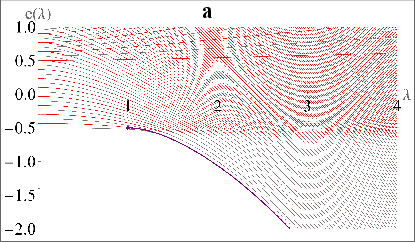
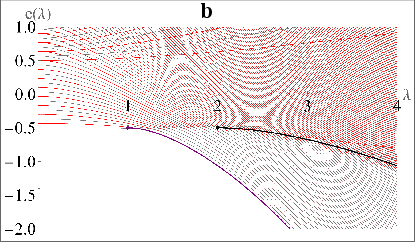
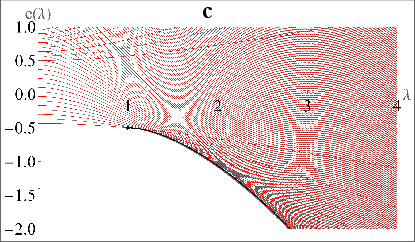
The energy spectrum evolution with varying Δ4 is depicted in:
Figure 2: Level dynamics of the ERM Hamiltonian under changing Δ5, with distinct regions in the spectrum corresponding to the ground and emergent excited states as well as parity structure.
The entanglement entropy color-mapped over energy levels reveals the unique behavior of emergent states and supports their identification as non-maximally entangled, in contrast to the S1-S2 ground and bulk states.
ESQPT-Witness Observables and Time-Dependent Protocols
The identification of ESQPTs in experiment is rooted in observable signatures measurable in trapped ion setups. The authors focus on:
Phonon number (Δ6): Exhibits discontinuous or sharp changes when crossing ESQPT lines.
Vacuum survival probability (Δ7): The overlap of the evolved state with the phonon vacuum is nontrivially stabilized in the S2 phase due to the emergent state trapping.
Quasispin projection (Δ8): Sensitive to the qubit-oscillator interaction regime.
Time-dependent driving protocols—especially linear ramps of Δ9—are simulated, contrasting sudden quenches (nonadiabatic) and slow (adiabatic) ramps. Fast ramps populate the emergent state manifold and maximize ESQPT observability, while slow protocols favor ground-state preparation.
Strength-function analysis is provided, highlighting the energy-resolved population distribution and exhibiting clear signatures of emergent state trapping in instantaneous and finite-duration ramps.
Open-System Dynamics and Experimental Realism
A comprehensive treatment of experimental feasibility is presented. The theory is embedded in the Lindblad master equation framework, incorporating motional dephasing, heating/damping, and qubit dephasing via relevant dissipators. Monte Carlo wave-function simulations demonstrate that—with current achievable coherence times and parameter regimes—non-Hermitian effects exert minimal impact on the detection of the primary ESQPT observables, as evidenced in Rabi oscillation patterns and vacuum population robustness.
Finite-Size Scaling and Control Parameter Dependence
The analysis is systematically extended to finite-size systems, with λ0 spanning realistic experimental ranges. The critical behavior becomes increasingly sharp with larger λ1, yet clear ESQPT signatures persist for moderate system sizes accessible in actual Paul trap experiments. The dependence of vacuum survival probability λ2 on both protocol ramp duration and system size is quantitatively established, supporting direct experimental benchmarking strategies.
Practical and Theoretical Implications
The work substantiates the feasibility of observing ESQPTs in a single trapped ion setting and provides experimentally applicable protocols for their unambiguous identification. The discovery and characterization of S2-emergent states as unique ESQPT witnesses open pathways not only for exploring fundamental quantum phase transition phenomena beyond the ground state but also for enhancing quantum technologies. Of note is the application potential in quantum metrology and sensing—emerging states in the ESQPT region display properties (e.g., low boson number, specific Wigner squeezing) that can be harnessed for sensitive state preparation and displacement estimation.
The theoretical framework also invites further generalization: from scaling to larger ion systems, leveraging different Hamiltonian classes (including those relevant in superconducting circuits), to exploring new forms of quantum criticality and their corresponding observable diagnostics.
Conclusion
This paper presents an authoritative theoretical and numerical study of ESQPTs in a single trapped ion system governed by the ERM, establishing a clear set of experimentally accessible observables and realistic protocols for their detection. The identification of the S2-emergent state family, robust under finite-size effects and decoherence, represents a crucial step in the experimental pursuit of excited-state quantum critical phenomena. These results establish a foundation for the systematic interrogation of quantum criticality in controlled quantum platforms, with significant implications for quantum information processing, metrology, and fundamental studies of non-equilibrium quantum dynamics.