- The paper introduces a novel heuristic linking SF narrative frequency with prioritized exoplanet search regions.
- It employs extensive OCR analysis of pulp magazine archives to statistically map and quantify constellation references.
- Findings suggest dual survey strategies: one following narrative consensus and another based on a Dark Forest-inspired selective search.
Narrative Evidence and the Search for Habitable Exoplanetary Regions
Introduction and Motivation
The identification and prioritization of regions in the sky for astrobiological and exoplanetary searches critically depends on a range of astrophysical, instrumental, and sociotechnical considerations. Stanway (2026) proposes and interrogates an unconventional prior: the prevalence of constellation references in pulp-era science fiction (SF) magazines, predicated on the well-documented predictive efficacy of SF narratives in technological domains. The underlying hypothesis is that the collective focus of a technically literate SF community may encode a non-obvious but non-trivial predictor for localization of habitable zones, as implicitly inferred from narrative frequency data.
Data Sources and Extraction Methodology
The study leverages the fully-indexed archives of six leading SF pulp magazines, spanning Amazing Stories, Isaac Asimov’s Science Fiction Magazine, Astounding Stories of Super-Science/Analog, The Magazine of Fantasy & Science Fiction, Galaxy Science Fiction, and a composite group comprising Worlds of If, New Worlds, and Planet Stories. These archives, predominantly hosted by archive.org, cover publication epochs centered on 1930–1980. Procedurally, both official IAU constellation names and their genitive forms—crucial for star designations—were exhaustively searched via OCR, with careful de-duplication across issues and international editions. The sample was constrained to northern constellations (δ>−30∘) due to the demographic bias of the SF community and archival coverage.
Evolution in Astronomical Depictions
The socio-aesthetic evolution of astronomical motifs in SF is documented with representative cover art showcasing the shift from overt sensationalism to more scientifically nuanced visualizations, illustrating changes in the interplay between speculative narrative and contemporary astronomical understanding.
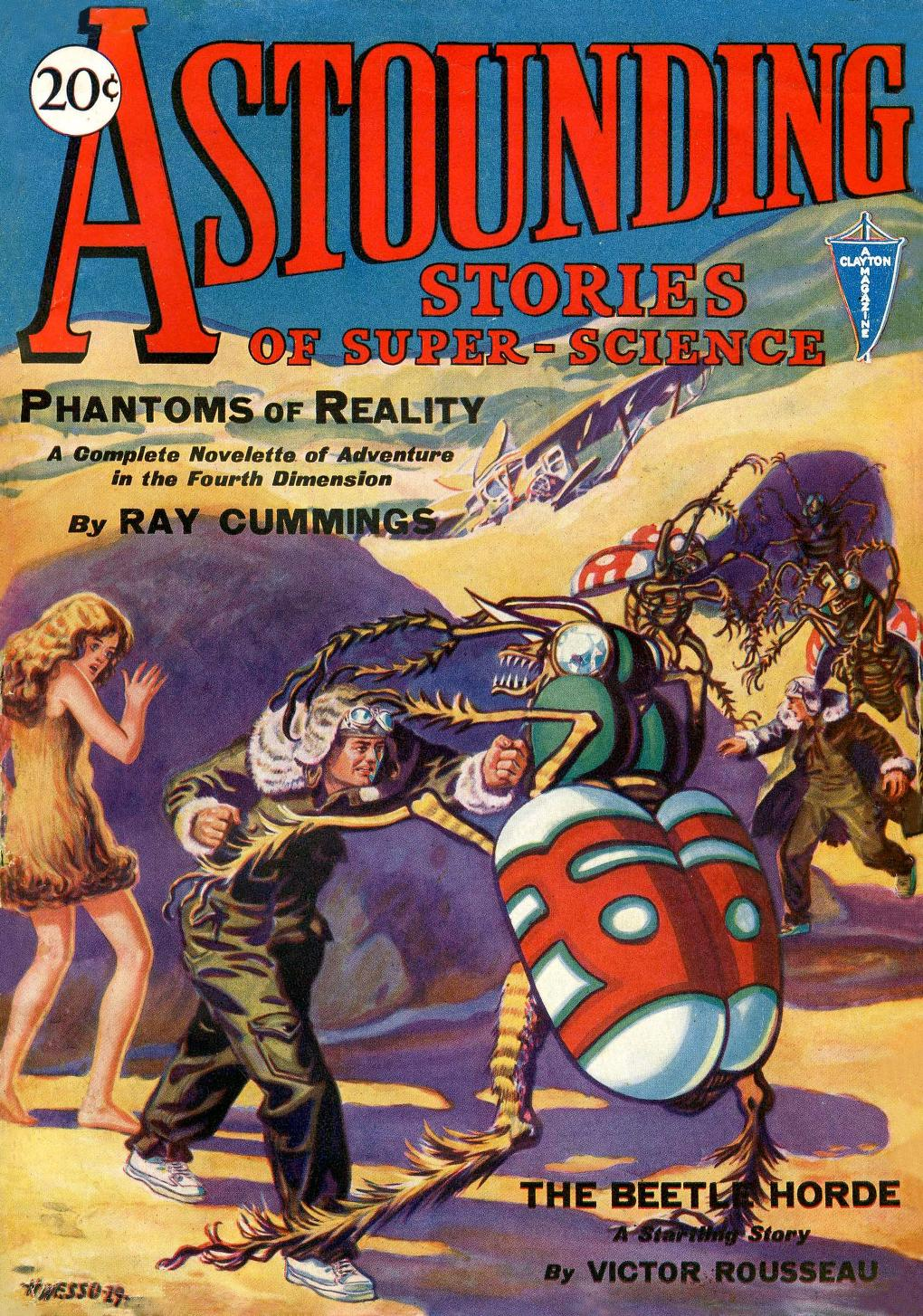
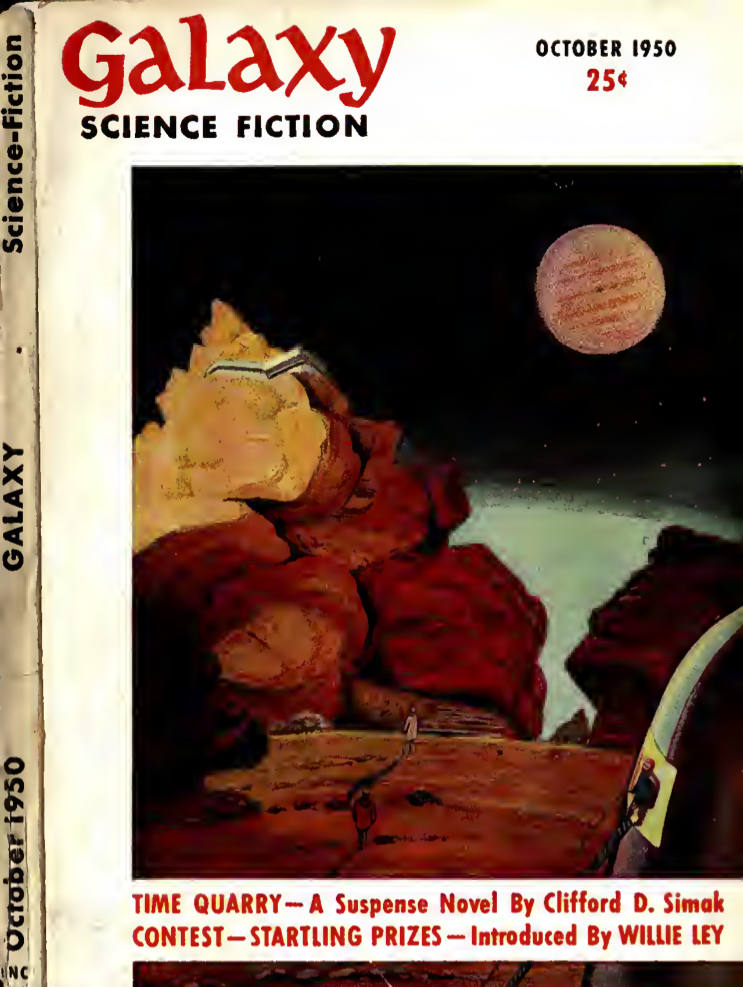
Figure 1: Pulp magazine covers illustrating the transition from sensationalistic to scientifically-attentive astronomical themes.
Statistical Mapping of Constellation References
Frequency distributions for both standard and genitive constellation names were constructed in each magazine cohort, then mapped onto the celestial sphere. Visualized as heatmaps in equatorial coordinates, the distributions highlight robust cross-publication consistency: Orion, Andromeda, Pegasus, Gemini, Taurus, Sagittarius, as well as genitive forms Ceti, Eridani, Cygni, and others, are recurrently referenced.
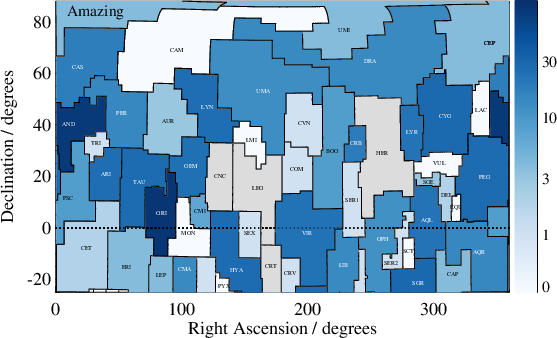
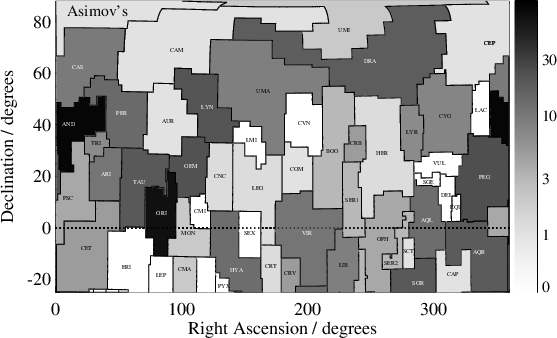
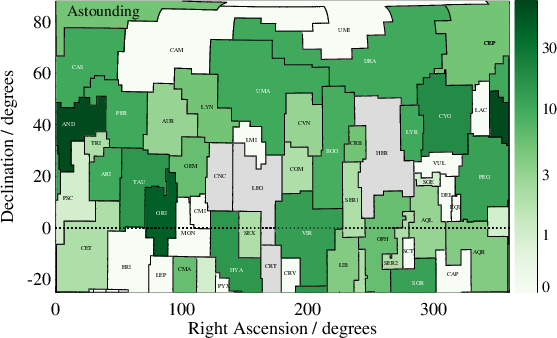
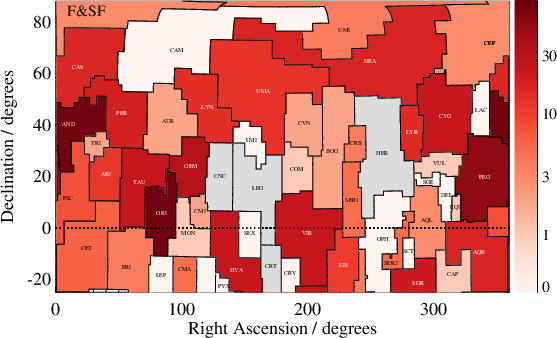
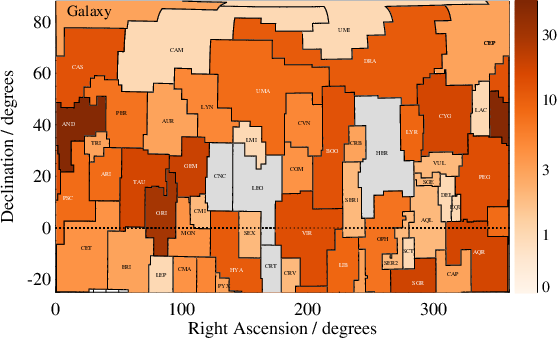
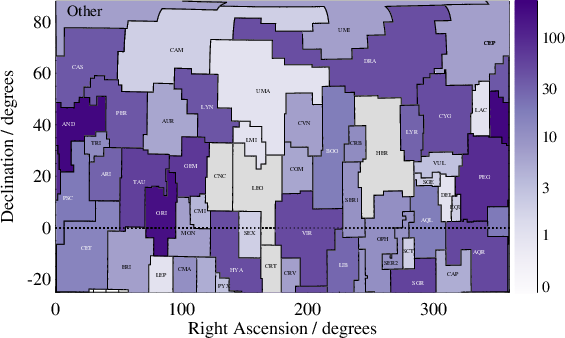
Figure 2: Spatial mapping of references to northern constellations by name, with darker shades indicating greater narrative attention.
Distinct patterns emerge for reference forms: while standard constellation names cluster around well-known asterisms, genitive forms are dominated by specific star systems (e.g., Tau Ceti, Epsilon Eridani, 61 Cygni).
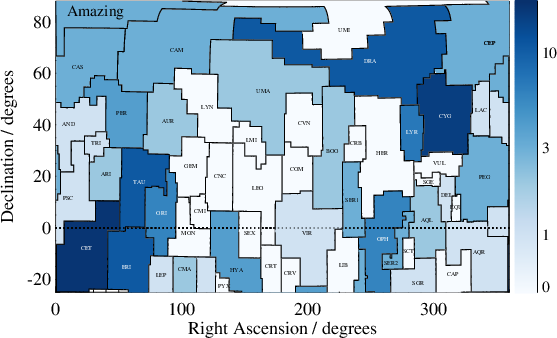
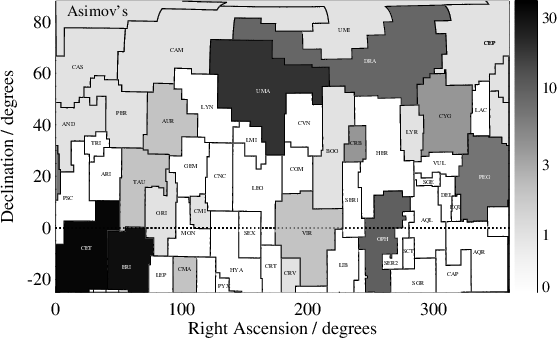
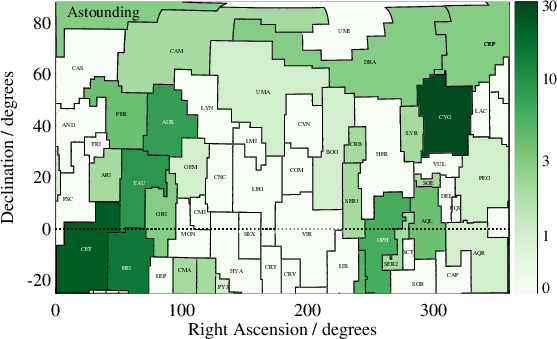
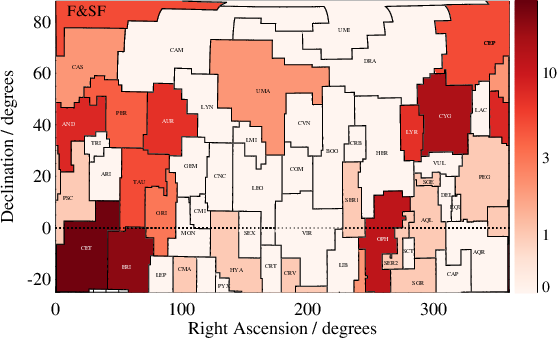
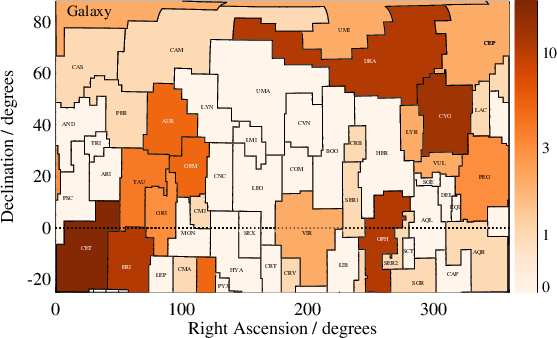
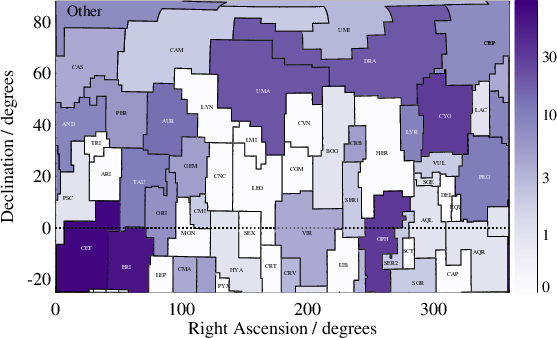
Figure 3: Frequency and distribution of genitive-form constellation references, highlighting the prevalence of certain canonical exoplanet hosts.
Aggregate statistics reveal a significant concentration on Andromeda (572 mentions by name), Orion (496), and genitive Ceti (201), with a pronounced underrepresentation of Lacerta, Scutum, Delphinus, and Equuleus (each with ≤5 appearances).
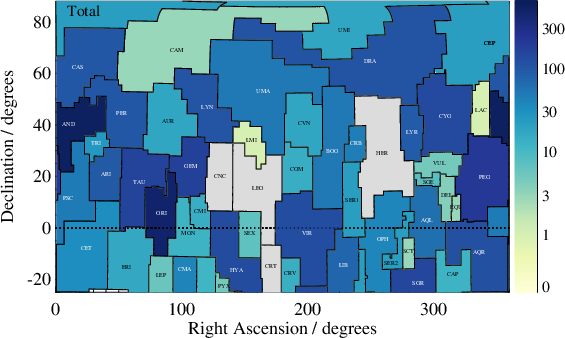
Figure 4: Total references to constellations by name, showing strong peaks for Orion, Andromeda, and Pegasus.
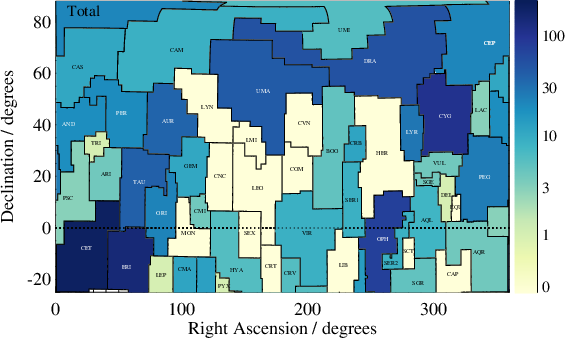
Figure 5: Total references to constellation names by genitive form, showing Ceti, Eridani, and Cygni as dominant.
Astrobiological Contextualization
Direct mapping against a simple Milky Way Galactic Habitable Zone (GHZ) toy model (adopting 7<Rkpc<9) indicates weak spatial correlation between SF-driven interest and objective habitable column density. Notable exceptions include Cygnus, which is prominent in both SF narratives and habitable volume. Constellations with maximal habitable zone pathlength (e.g., Scutum, Lacerta) are not frequently referenced, suggesting an outlier set for targeted searches.
Interpretations and Inversion: The Dark Forest Hypothesis
Stanway considers the game-theoretic implications of the “Dark Forest” hypothesis, proposing that regions rarely mentioned may be those where advanced civilizations exert active self-concealment, either through narrative suppression or mental influence. Under this inversion, under-discussed constellations such as Equuleus, Lacerta, Pyxis, and Scutum become high-priority targets for technosignature and biosignature surveys.
Methodological Limitations and Narrative Context
The methodology is clear about the heuristic—and in the context of the original’s framing, partly satirical—nature of the approach. OCR limitations, possible non-astronomical attributions for keywords, and the speculative intentions of SF authors limit direct causal inferences. The analysis explicitly notes the non-trivial influence of specific star systems—e.g., Tau Ceti and Epsilon Eridani—on genitive-form results, which have been canonical targets in SF and are known exoplanet hosts. The lack of correspondence between local solar analog distribution and narrative frequency further weakens the case for an underlying astrophysical driver.
Implications and Speculation for Future Astrobiology
The findings suggest two orthogonal survey strategies: (1) follow the strong consensus of the SF corpus, prioritizing regions such as Andromeda, Orion, Cygnus, Cetus, and Eridanus; or (2) under the Dark Forest logic, prioritize constellations systematically omitted from the SF canon. This mode of evidence, even where heuristic or tongue-in-cheek, provides a formally constructed sociotechnical prior, which, when combined with conventional astrophysical data, could inform search strategies or serve as a case study in interdisciplinary methodology.
Conclusion
This study presents a formally-structured, if primarily satirical, statistical analysis correlating SF narrative focus and exoplanet survey prioritization. While the strongest result is the consistency of constellation interest across half a century of technically sophisticated SF, there is minimal empirical alignment with established models of galactic habitability. The paper highlights both the pitfalls and creative potential of extending narrative-evidentiary frameworks into astrobiology, serving to provoke reflection on the epistemic status of sociocultural priors and the boundaries of evidentiary legitimacy in scientific prioritization.

