- The paper demonstrates that J1222 exhibits moderate r-process enhancement with a clear actinide-boost signature, indicating enrichment from NSMs/BH-NSMs.
- It employs high-resolution Gemini-S/GHOST spectroscopy and spectral synthesis to determine abundances for 47 elements and confirm low metallicity and mixing evidence.
- The findings constrain r-process nucleosynthesis timescales and reveal inhomogeneous mixing in early Milky Way halo substructures, informing chemical evolution models.
Detailed R-Process Abundance Analysis of the Actinide-Boost Star LAMOST J122216.85-063345.2
Observational Strategy and Data Quality
The study utilized Gemini-S/GHOST high-resolution spectroscopy of the very metal-poor halo giant LAMOST J122216.85-063345.2 (hereafter J1222), achieving R∼55,000 and signal-to-noise ratios of up to 260 in the red and 200 at 5600 Å, with significant sensitivity in the blue for neutron-capture element diagnostics. The normalized, order-combined spectrum provides full coverage from 3600–10000 Å. The radial velocity and astrometric measurements confirm J1222 as a single giant star associated, both chemically and dynamically, with the I'itoi Galactic halo substructure.
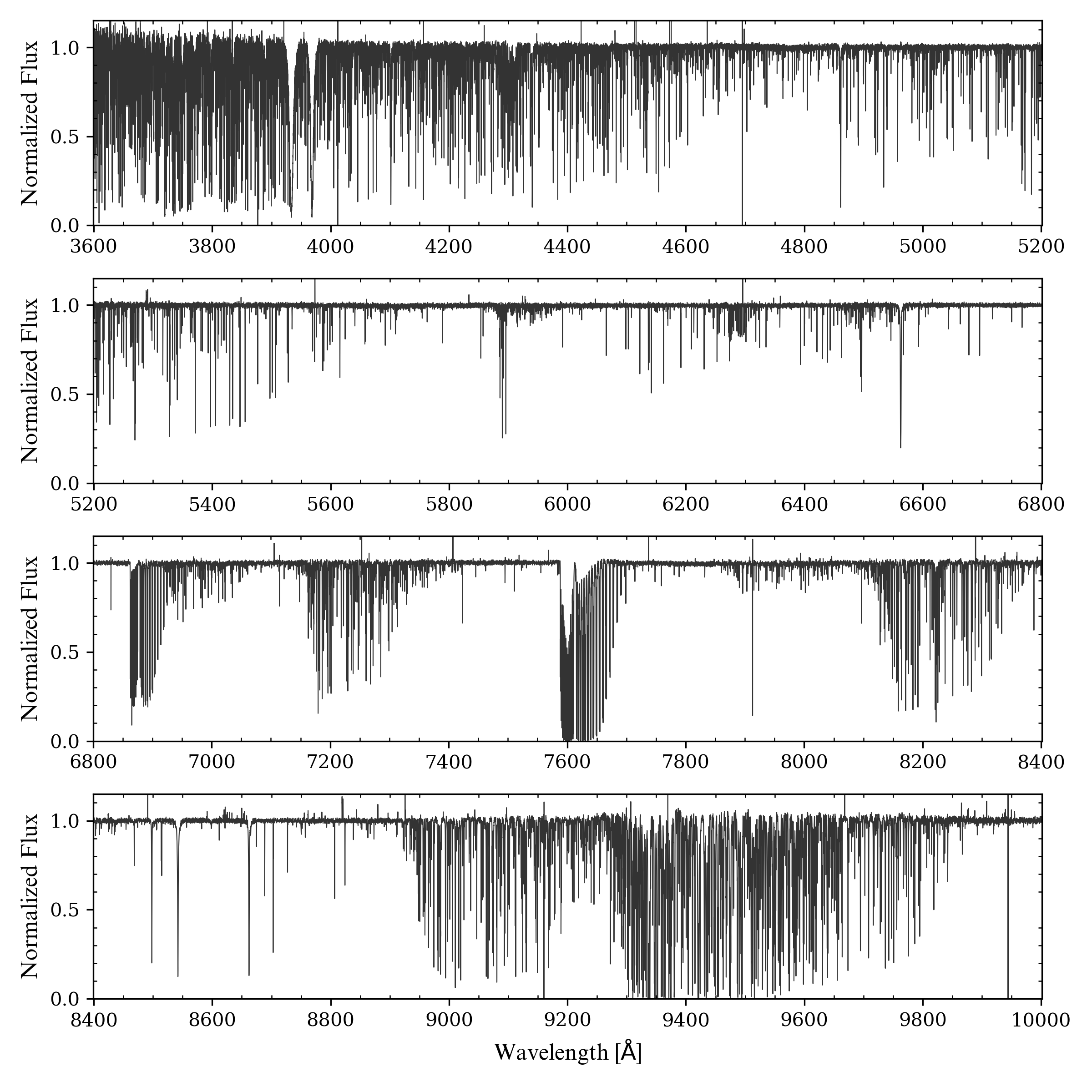
Figure 1: Normalized, order-combined spectrum of J1222, covering the wavelength range 3600–10000 Å.
Stellar Parameters and Light Element Abundances
Atmospheric parameters were derived via iterative fits using EW and spectral synthesis, yielding Teff=4724±55K, logg=1.35−0.12+0.09, [Fe/H]=−2.45±0.01, and ξ=2.0±0.2 km/s. Evolution-corrected carbon and nitrogen abundances from CH and CN bands indicate significant internal mixing (12C/13C=4.0), with logϵ(C)=5.53 and logϵ(N)=5.88.
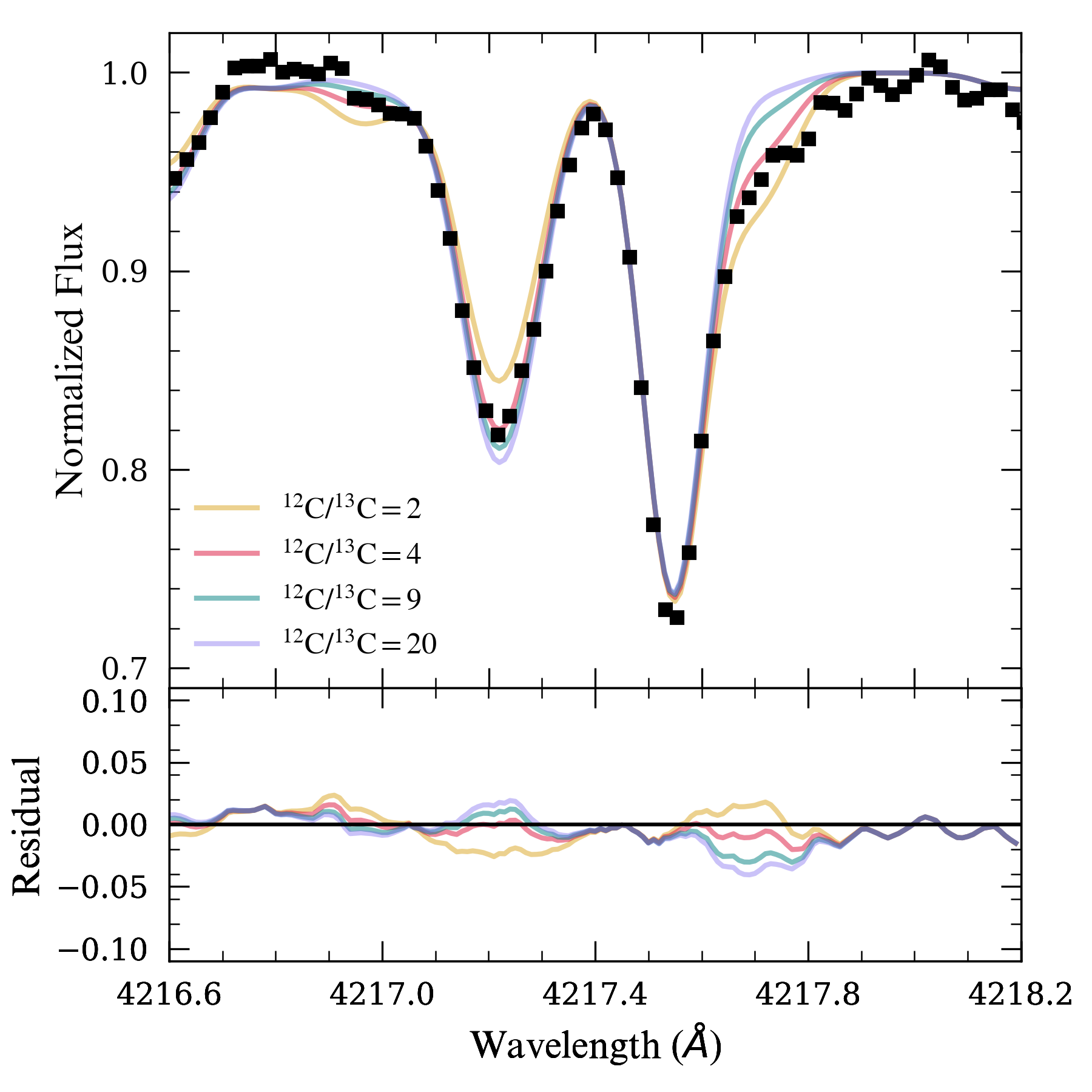
Figure 2: Carbon isotope ratio determination for J1222; 12C/Teff=4724±55K0C=4.0, showing conversion via mixing.
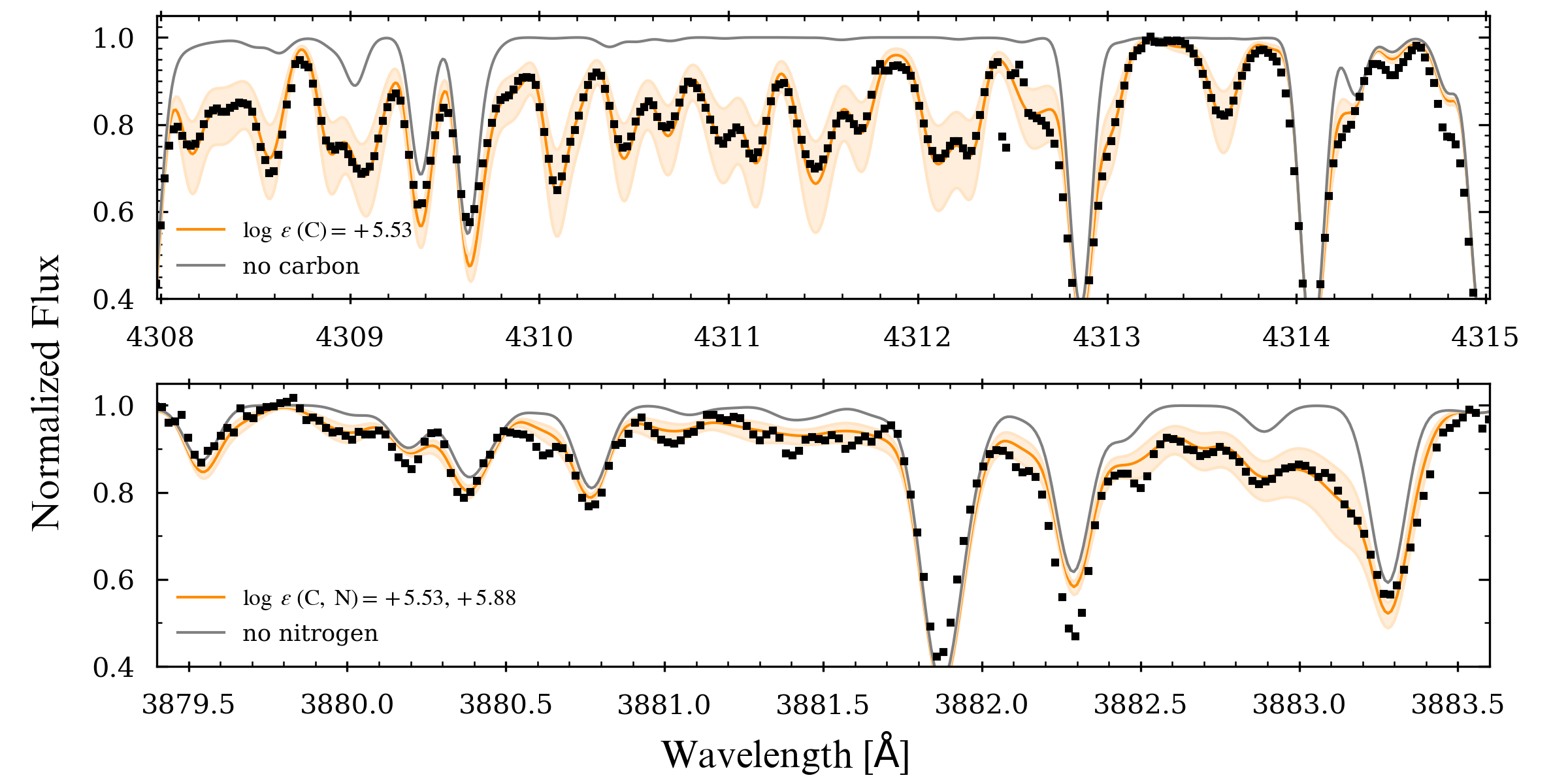
Figure 3: Fitted CH-G and CN band spectra establishing carbon and nitrogen abundances for J1222.
Lithium is strongly depleted (Teff=4724±55K1(Li) < –0.60), confirming post-RGB mixing, consistent with theoretical models of Li depletion.
Neutron-Capture Abundance Pattern and Actinide Classification
Abundances for 47 elements were determined via EW and spectral synthesis, focusing on first-, second-, and third-peak neutron-capture elements. J1222 exhibits moderate Teff=4724±55K2-process enhancement ([Eu/Fe]=+0.61) and an actinide-boost signature (Teff=4724±55K3(Th/Dy)=–0.74), clearly satisfying contemporary actinide-boost criteria.
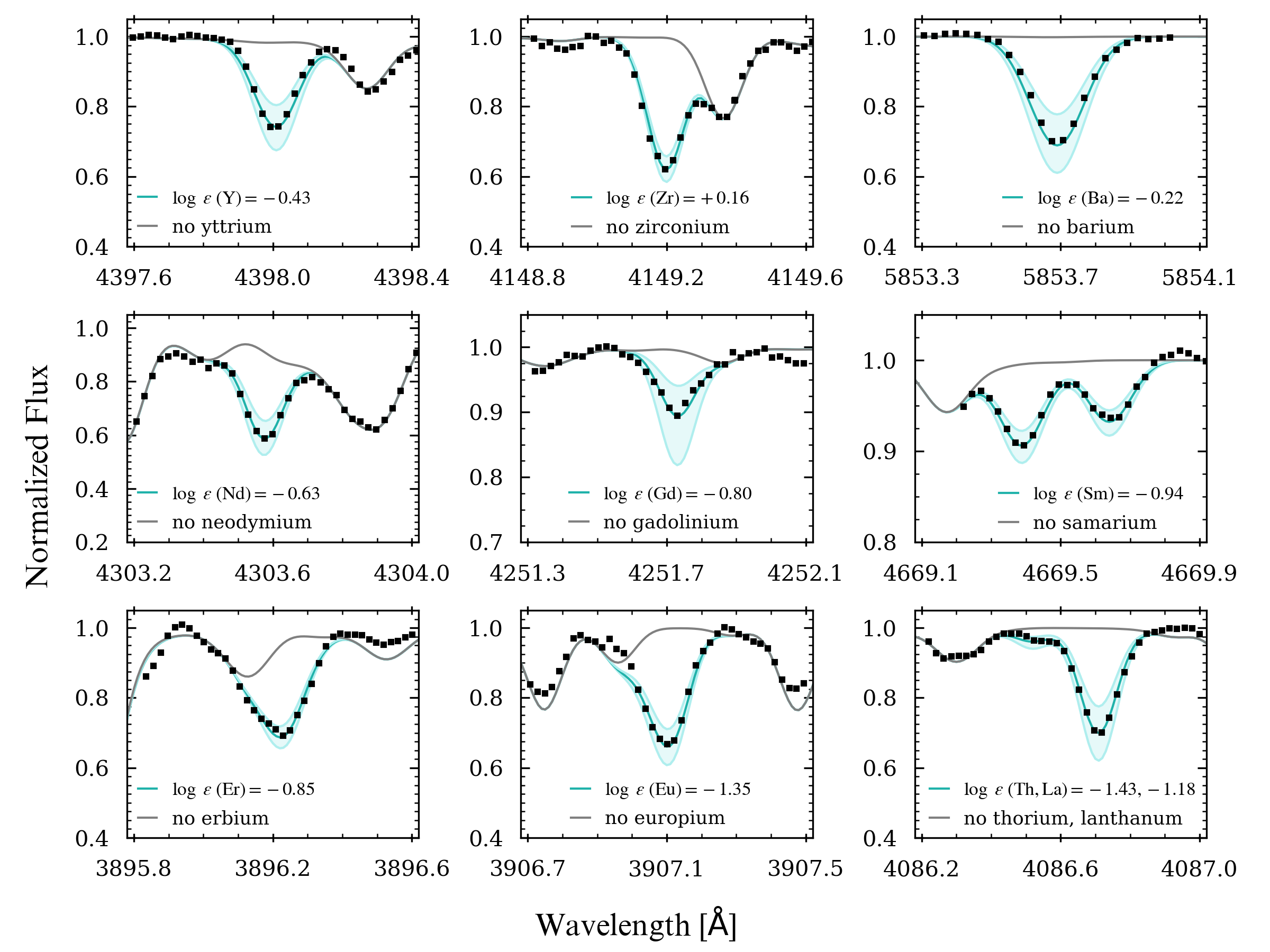
Figure 4: Spectral synthesis results for neutron-capture elements: Y, Zr, Ba, Nd, Gd, Sm, Er, Eu, La, Th.
The abundance pattern matches the scaled solar Teff=4724±55K4-process curve for Teff=4724±55K5 heavy elements, with notable offsets for Sr, Y, and Mo. The residuals highlight a lack of Teff=4724±55K6-process signatures ([Ba/Eu]=–0.52, [La/Eu]=–0.40) and further rule out significant AGB contamination.
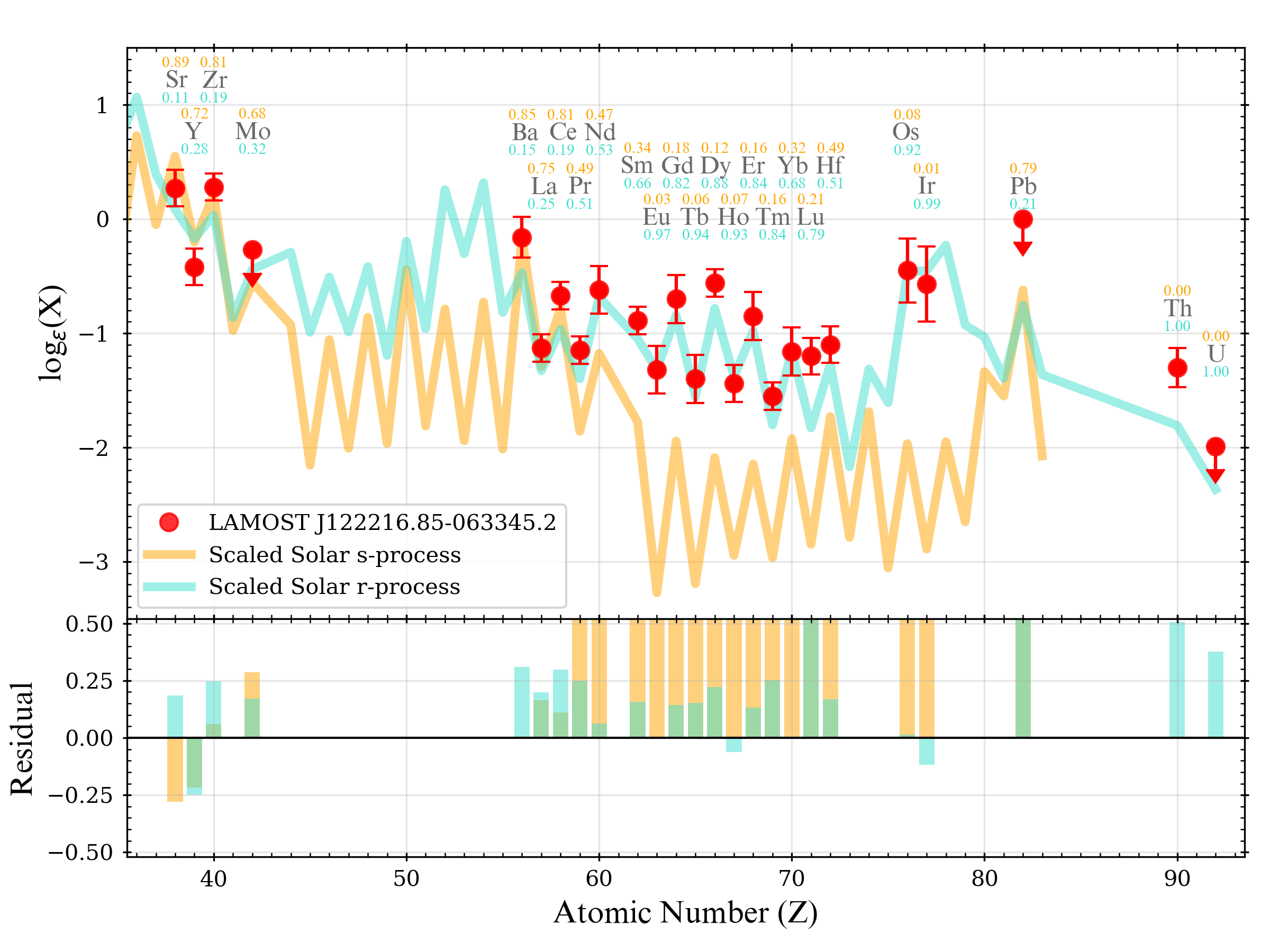
Figure 5: Abundance ratios [X/Fe] for Teff=4724±55K7, contrasting J1222 with scaled solar Teff=4724±55K8- and Teff=4724±55K9-process patterns.
Comparison with other actinide-boost stars places J1222 within the logg=1.35−0.12+0.090-I classification, yet its thorium excess exceeds expectations from scaled r-process patterns (offset >0.5 dex), demonstrating that actinide enhancement arises independently of Eu enrichment.
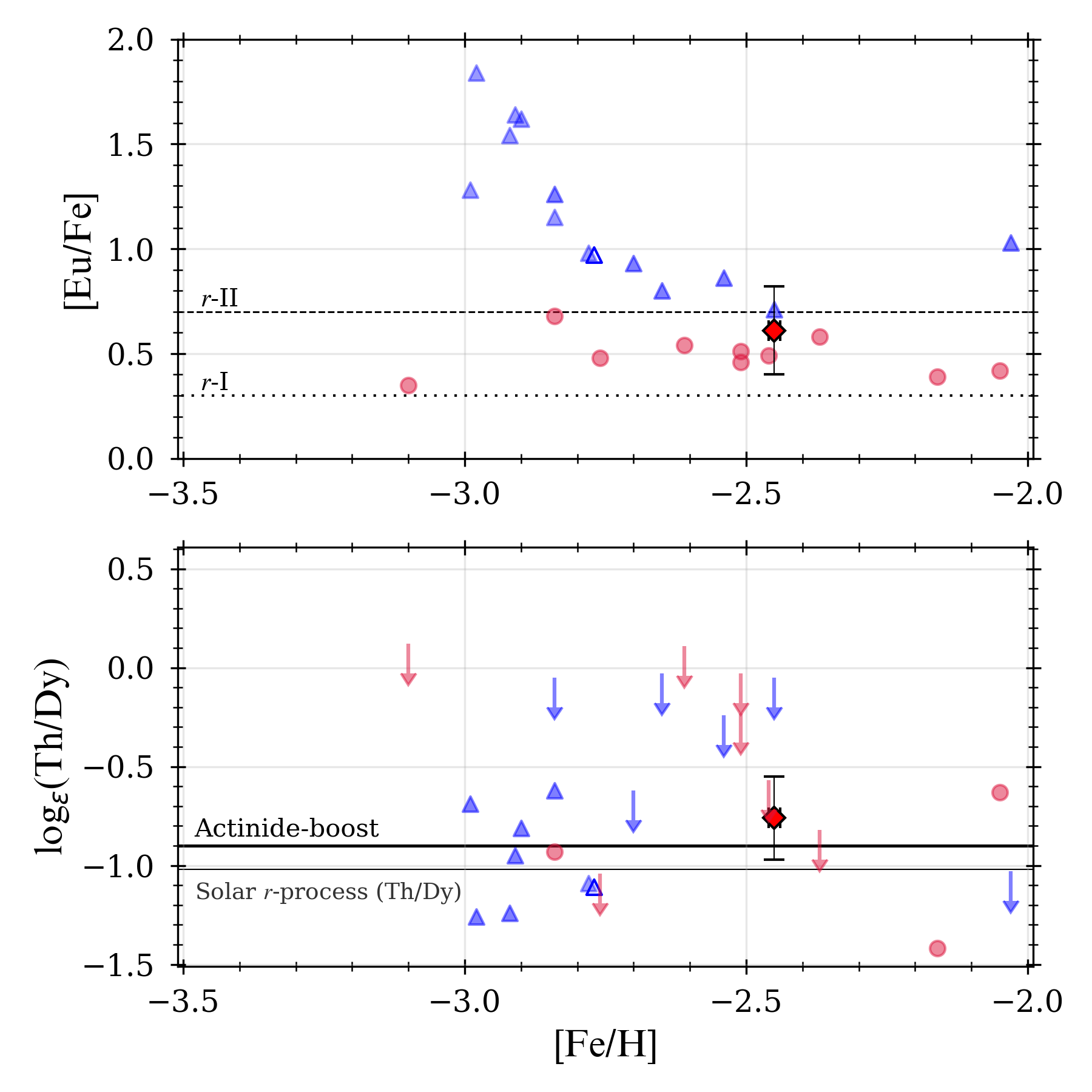
Figure 6: Top: [Eu/Fe] vs. [Fe/H] for logg=1.35−0.12+0.091-process enhanced stars; J1222 highlighted as logg=1.35−0.12+0.092-I. Bottom: logg=1.35−0.12+0.093(Th/Dy) vs. [Fe/H] with actinide-boost threshold.
Chronometric Constraints
While only an upper limit for uranium abundance could be placed (logg=1.35−0.12+0.094(U/Th) < –0.69), U/Th chronometry yields age lower limits of 9–11 Gyr for J1222. This constrains both the time elapsed since logg=1.35−0.12+0.095-process enrichment and the duration of chemical inhomogeneity prior to disruption and accretion of the progenitor system.
Kinematic and Chemical Context within I'itoi Substructure
Dynamic analysis confirms J1222's retrograde orbit and metallicity as representative of the I'itoi substructure, consistent with criteria from recent MW substructure studies. Elemental abundance comparisons against the SAGA database (non-RPE and RPE populations) show J1222's light elements match typical halo patterns, while neutron-capture elements are significantly enriched.
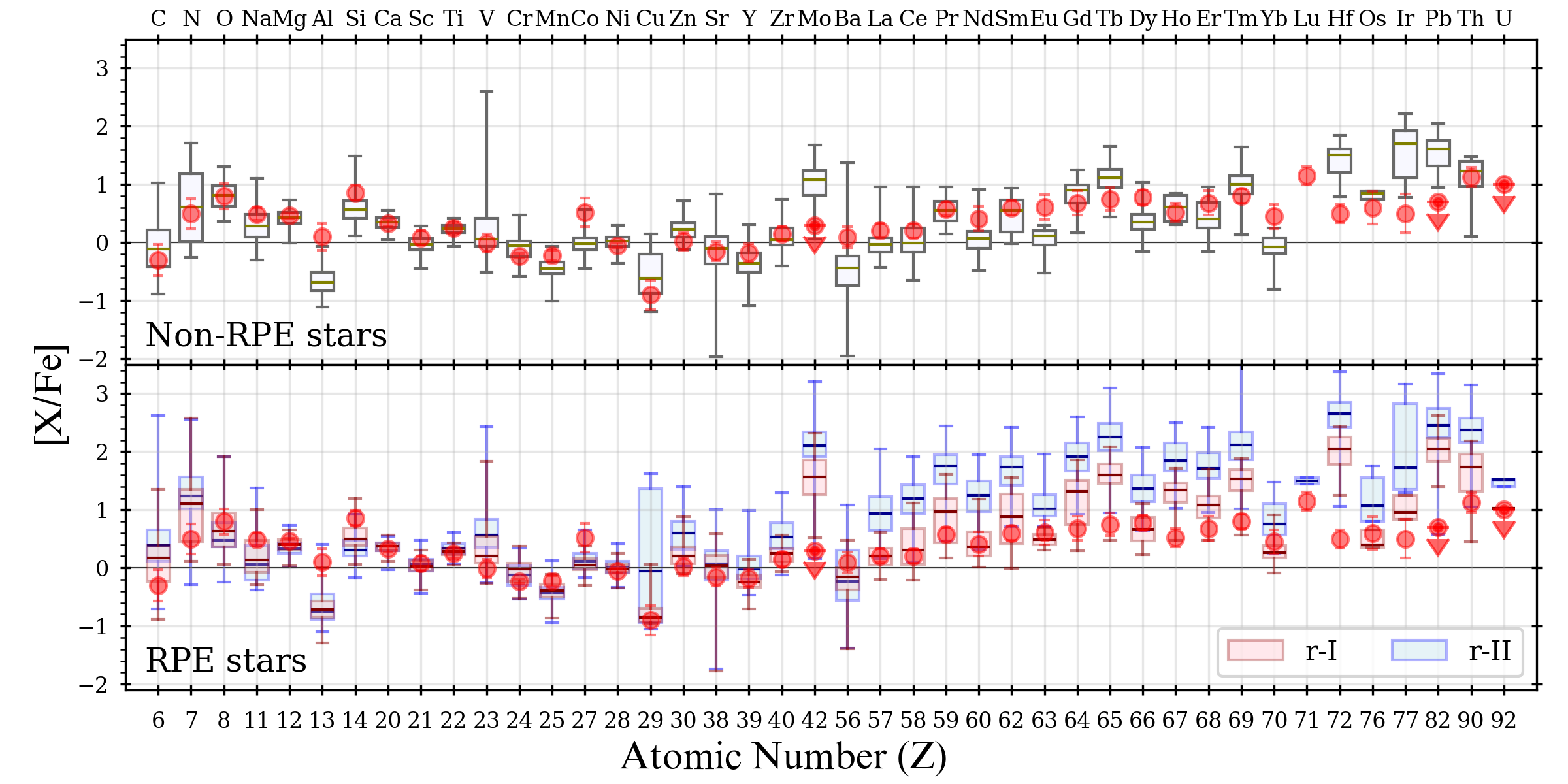
Figure 7: Boxplot comparison of J1222 with non-RPE and RPE MW stars; J1222 by red error bars.
Analysis of eight I'itoi substructure stars reveals broad dispersion in neutron-capture enhancements ([Eu/Fe]: –0.2 to +1.0), including non-RPE, logg=1.35−0.12+0.096-I, logg=1.35−0.12+0.097-II, and actinide-boost signatures. The diversity and presence of multiple actinide-boost stars within the group corroborate the inhomogeneous mixing and localized enrichment processes.
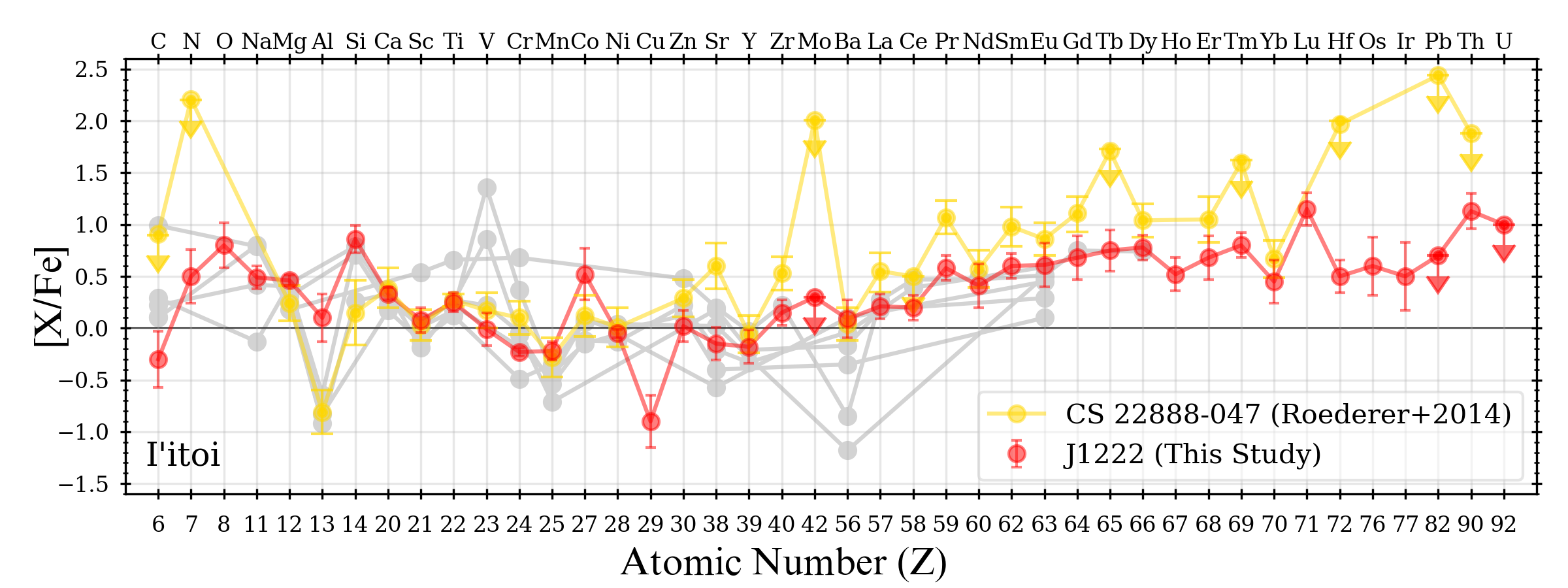
Figure 8: Chemical abundance patterns for I'itoi stars; J1222 (red), actinide-boost candidate CS~22888–047 (yellow), and six others.
Astrophysical Origins of logg=1.35−0.12+0.098-Process and Actinide Enhancement
Detailed discussion considers NSMs and BH-NSMs as the primary logg=1.35−0.12+0.099-process contributors for J1222, with dynamical and disk wind ejecta under stiff EOS (DD2) and low [Fe/H]=−2.45±0.010, analogous to progenitors of other actinide-boost stars. Synthesis from BH-NSMs is supported by recent MHD simulations predicting efficient actinide and lanthanide formation in very neutron-rich dynamical ejecta.
Alternative sources (collapsars, MR-SNe) are deemed secondary. Collapsar outflows fail to consistently synthesize actinides; MR-SNe primarily produce light [Fe/H]=−2.45±0.011-process elements, with limited contribution to actinide enrichment. I'itoi's inferred stellar mass and escape velocity are adequate to retain NSM/BH-NSM ejecta, but observed chemical diversity implies multiple spatially and temporally localized enrichment events.
Temporal and Galactic Evolution Implications
The results provide an empirical window on the timescales of [Fe/H]=−2.45±0.012-process enrichment in early satellites of the Milky Way. The retention and mixing of actinide-rich, neutron-capture material, as indicated by U/Th ages and heterogeneous abundance patterns, inform chemical evolution models of low-mass systems and the accretion history of MW halo substructures. Continued high-resolution spectroscopy of dynamically associated stars will refine system-wide chemical evolutionary narratives.
Conclusion
The detailed chemical abundance analysis of J1222 identifies it as a moderately [Fe/H]=−2.45±0.013-process enhanced, actinide-boost star in the I'itoi halo substructure, with a uniquely comprehensive neutron-capture pattern. The strong actinide enhancement, moderate Eu, and lack of [Fe/H]=−2.45±0.014-process contamination argue for NSMs and BH-NSMs as the dominant enrichment channels. The diversity of [Fe/H]=−2.45±0.015-process signatures among I'itoi-associated stars confirms inhomogeneous, localized enrichment and inefficient mixing. U/Th chronometry constrains the timescale for the preservation of chemically extreme environments in early MW satellites. The findings underscore the importance of high-resolution abundance analyses in reconstructing the nucleosynthetic and dynamical assembly of the MW halo.