- The paper demonstrates that switch-off slow shocks form robustly in the MHD domain despite local kinetic suppression when the PIC region is limited.
- It employs a multi-hierarchy simulation that integrates kinetic PIC with ideal MHD, using diagnostics like current density and pressure anisotropy.
- The study quantitatively links plasma isotropization and mode conversion to classical MHD shock theory, aligning with Petschek reconnection parameters.
Multi-hierarchy Simulation of Riemann Problem for Reconnection Exhausts
Introduction and Context
The study addresses the interplay of magnetohydrodynamics (MHD) and kinetic physics in the context of magnetic reconnection, a process that enables rapid magnetic energy conversion in astrophysical plasmas. While classical MHD models such as the Petschek scenario predict the formation of switch-off slow shocks—critical for explaining observed fast reconnection rates in solar flares—the inclusion of kinetic effects complicates this classical picture. Particle-in-cell (PIC) simulations, which fully capture kinetic physics, often fail to reproduce the Petschek switch-off shocks, particularly in collisionless regimes. This disconnect raises the unresolved question: under what plasma conditions can Petschek-like reconnection with switch-off slow shocks persist when kinetic effects are present only locally, as is the case in solar and astrophysical systems?
The paper pursues this question by leveraging a multi-hierarchy simulation framework that embeds a kinetic PIC domain within a global MHD domain. This hybrid approach enables modeling of the Riemann problem, which captures the properties of the reconnection outflow, while systematically varying the size of the PIC (kinetic) region to emulate variations in mean free path and the local strength of non-collisional effects.
Simulation Methodology
The simulation is built upon the KAMMUY codebase, which couples an ideal MHD solver with a relativistic electromagnetic PIC module. Data exchange between the two domains is facilitated through a projection and averaging interface, ensuring numerical stability and suppression of spurious noise at the boundary. The initial configuration is a force-free current sheet with finite By (guide field), representative of realistic reconnection layers. The PIC domain size, Ny,PIC, is systematically varied, and key diagnostics such as current density jz, the firehose parameter ϵ, and pressure anisotropy are extracted.
Evolution and Structure of Current Sheets
In the MHD-only regime, spatial profiles of jz exhibit the classical bifurcated structure characteristic of switch-off slow shocks, in line with the Petschek model. When embedding small PIC regions (Ny,PIC=100,200), similar shock-like structures persist, only slightly perturbed by local kinetic effects. As Ny,PIC increases ($400$ and $800$), the central current sheet becomes more elongated and single-peaked, a behavior in line with previous findings from full-PIC simulations indicating strong temperature anisotropy-induced suppression of switch-off slow shocks.
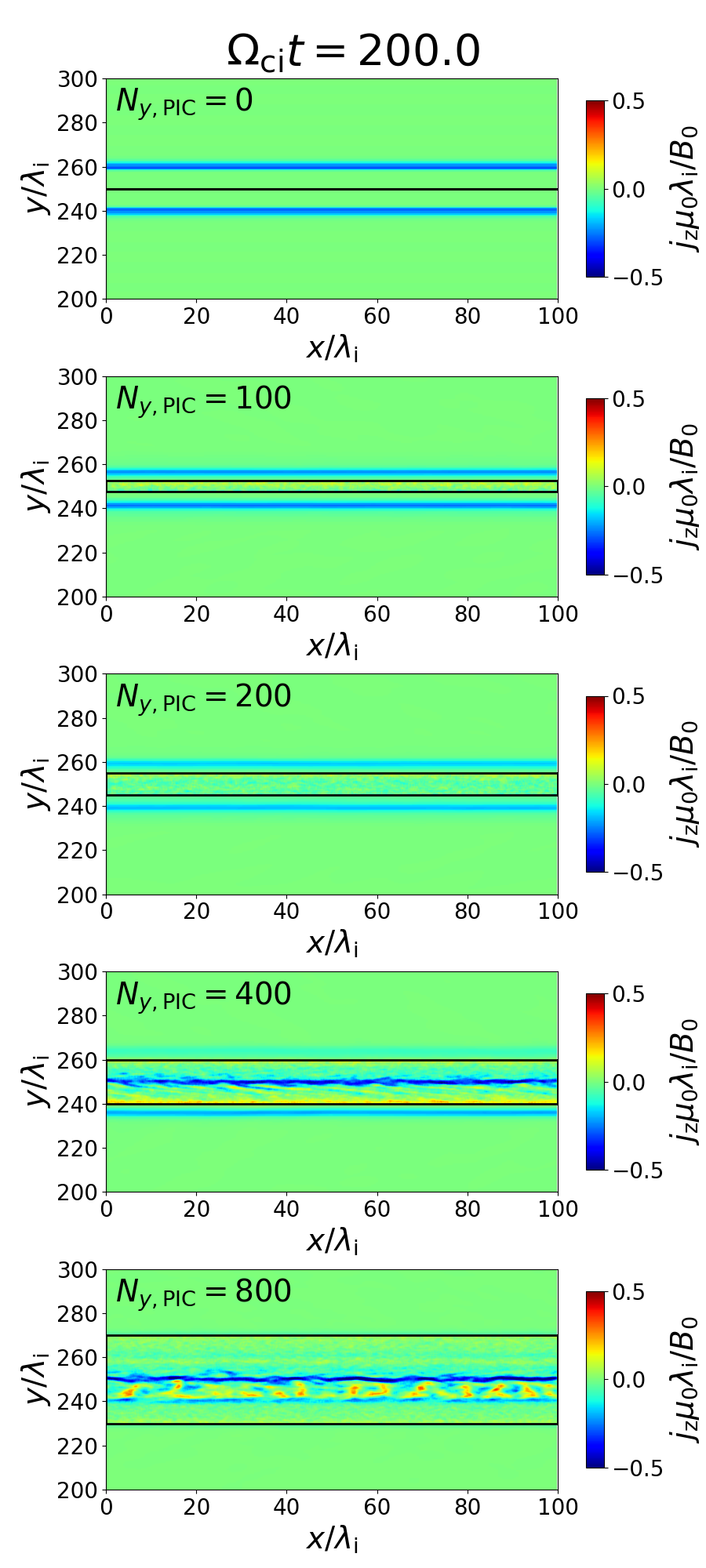
Figure 1: Spatial profiles of jz demonstrating the transition from bifurcated to single-peak structure with increasing PIC domain size.
Spatio-temporal Analysis of Reconnection Boundary Dynamics
Time evolution in the Ny,PIC0-Ny,PIC1 diagrams for Ny,PIC2 and Ny,PIC3 reveals that bifurcated structures (indicative of switch-off slow shocks) persist in the MHD regime but are progressively suppressed as the reconnection boundary remains within a growing PIC domain. The boundaries between inflow and outflow regions generate strong pulses in the PIC regime that lack classical shock attributes.
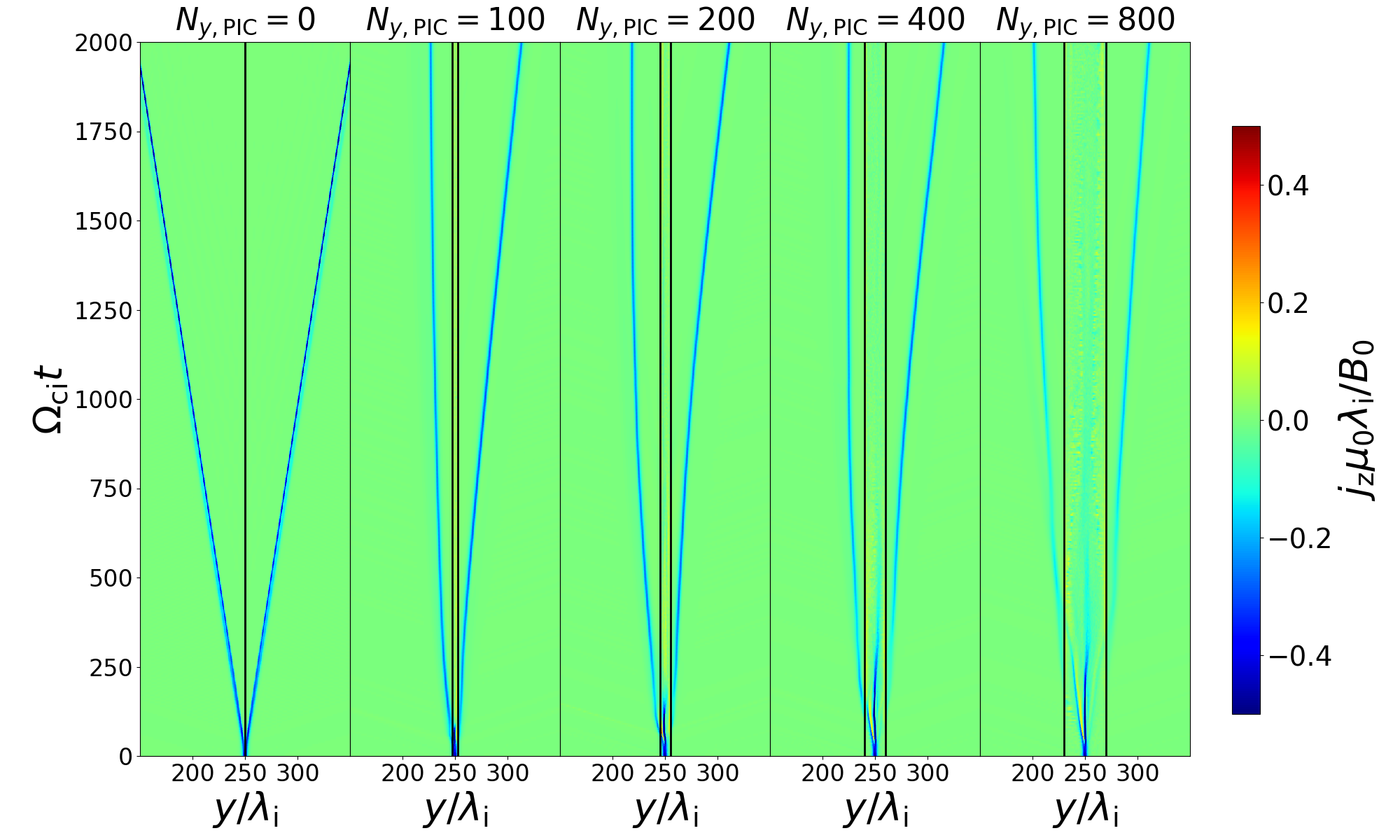
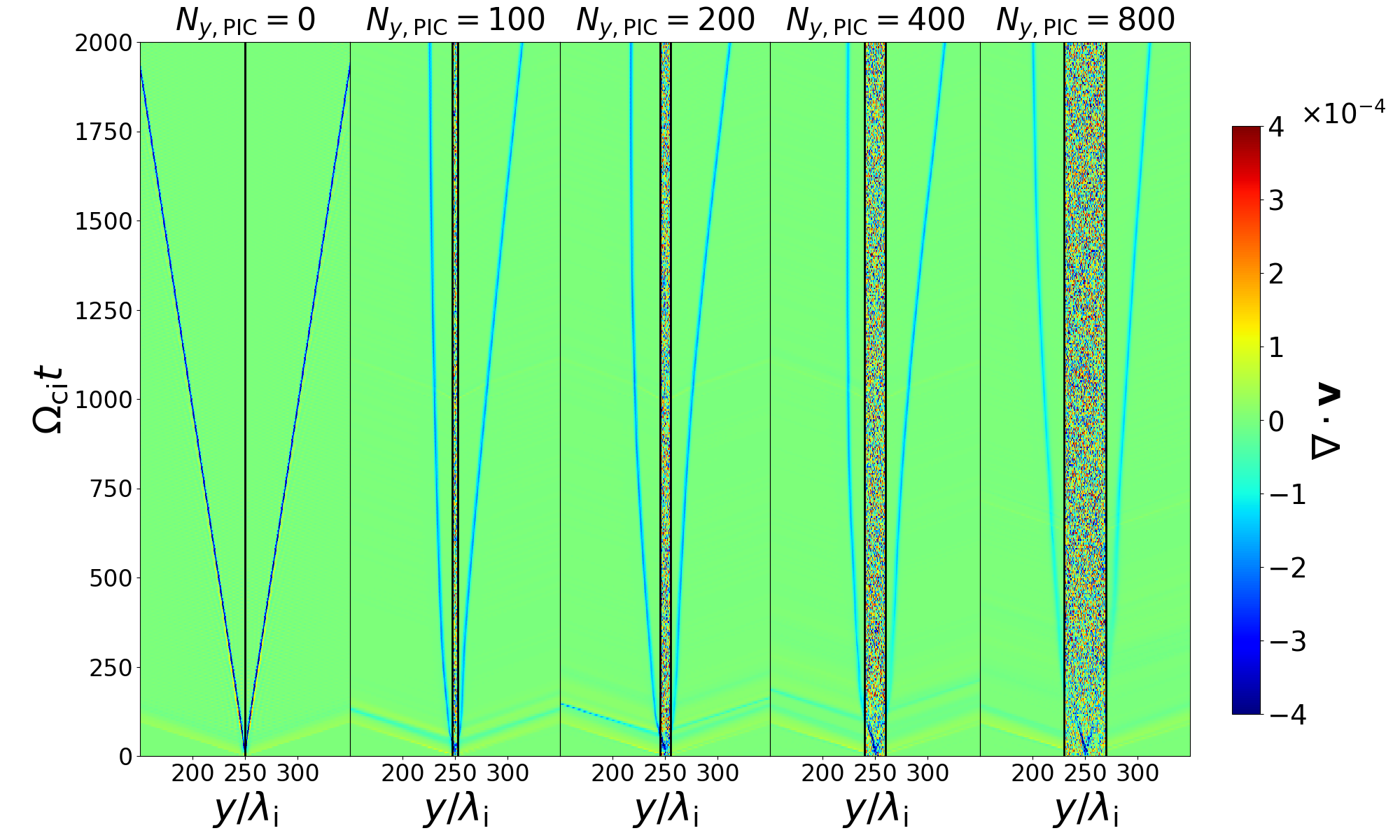
Figure 2: Ny,PIC4-Ny,PIC5 diagrams of Ny,PIC6, illustrating the evolution and migration of current structures for varying kinetic region sizes.
Magnetic Energy and Downstream Plasma Isotropization
The time sequence of magnetic energy Ny,PIC7 shows that, regardless of PIC region size, the MHD domain develops a marked reduction in magnetic energy beyond a certain time, signifying the eventual formation of shock-like transitions. This occurs after the kinetic boundary enters the MHD domain, suggesting that slow shock formation is primarily an MHD-scale outcome when the effective mean free path is small compared to the system size.
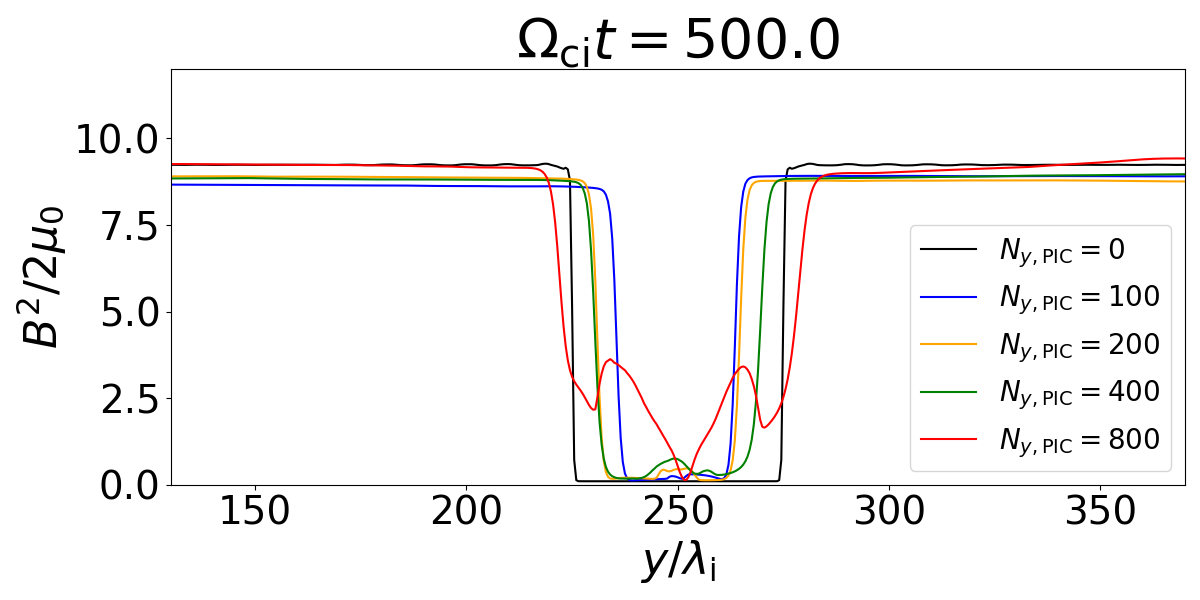
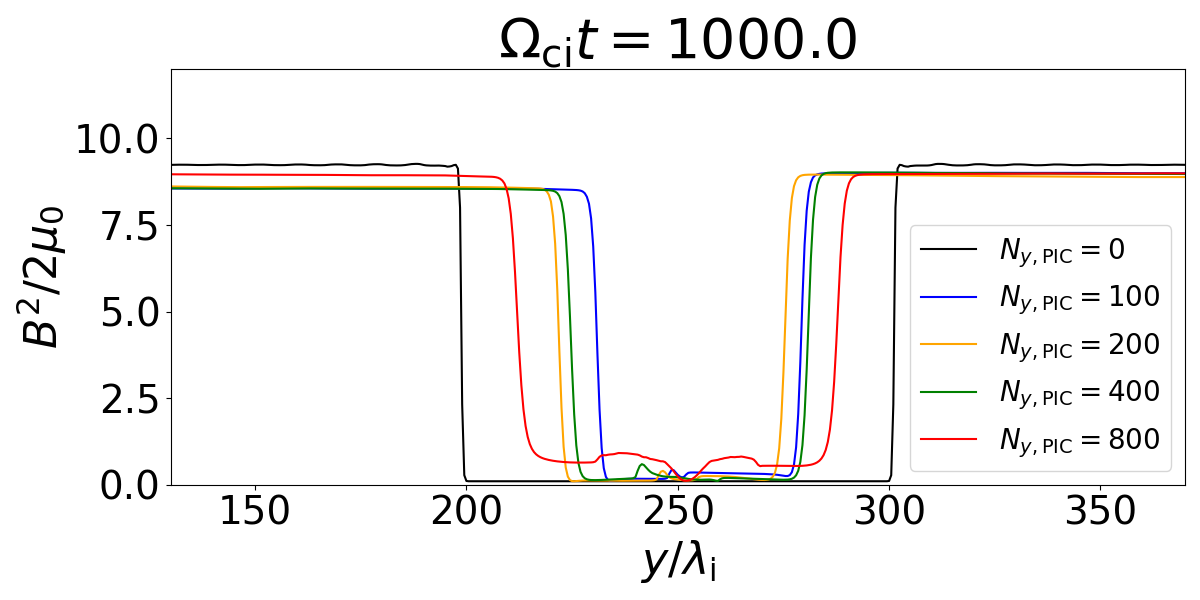
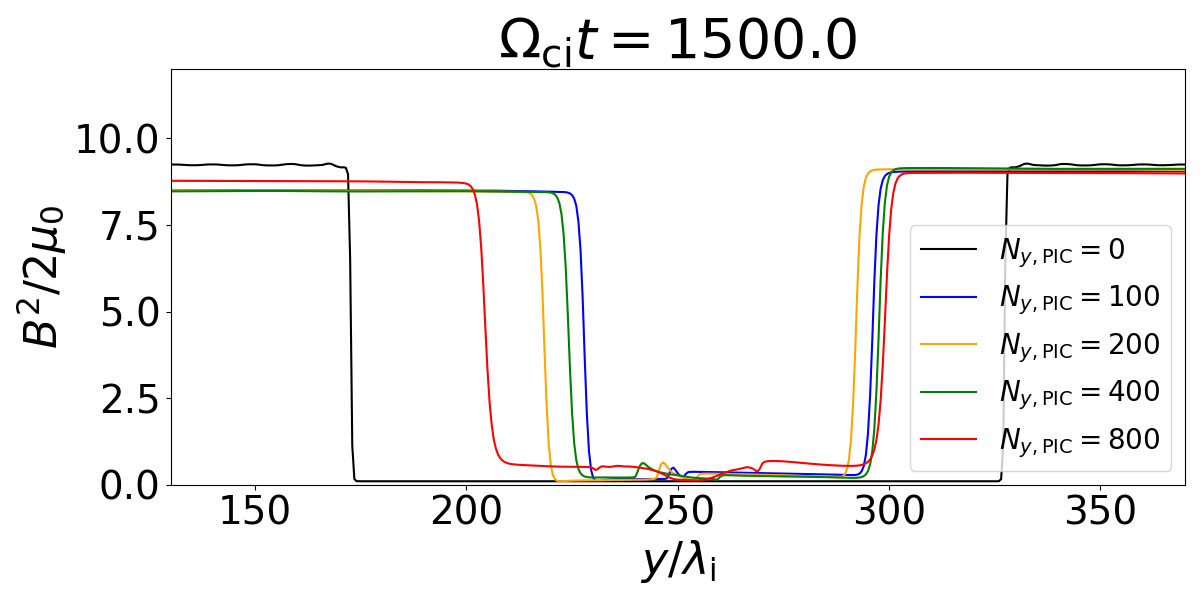
Figure 3: Snapshots of Ny,PIC8 showing magnetic energy depletion in the MHD region, consistent with slow shock formation.
Role of Pressure Anisotropy and the Firehose Parameter
Pressure anisotropy, quantified by the firehose parameter Ny,PIC9, is central to the development of reconnection dynamics. As the reconnection exhaust propagates, significant anisotropy develops in the outflow region, inhibiting the formation of classical slow shocks within the PIC domain. Only when the exhaust enters the MHD domain—where feedback enforces plasma isotropy—does the system recover shock structures congruent with the Rankine-Hugoniot (RH) conditions for switch-off slow shocks.
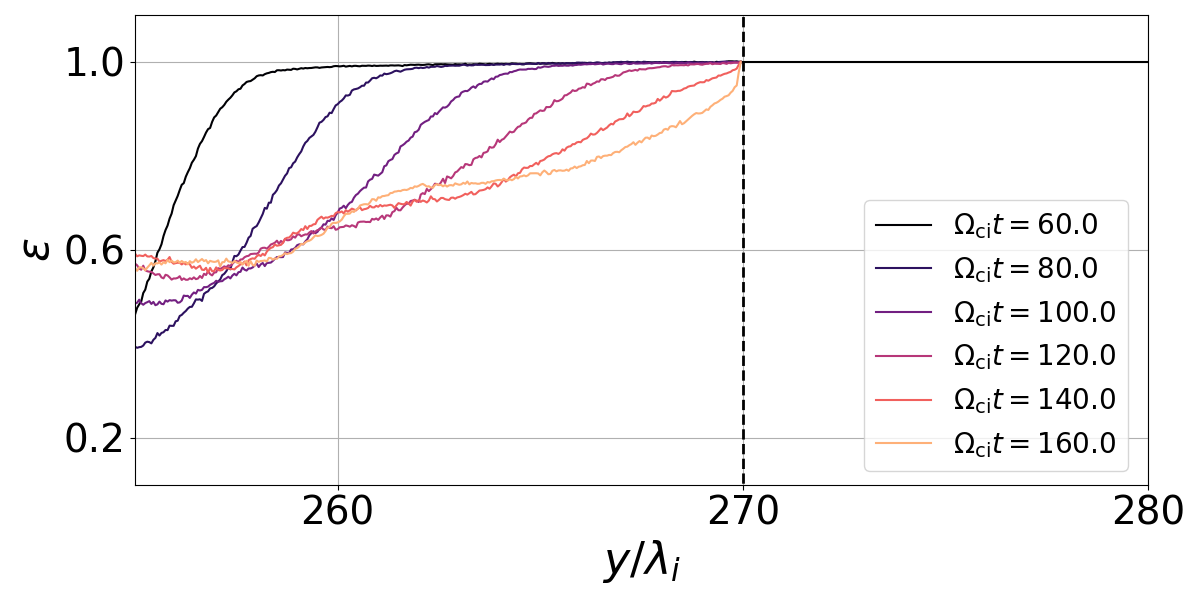
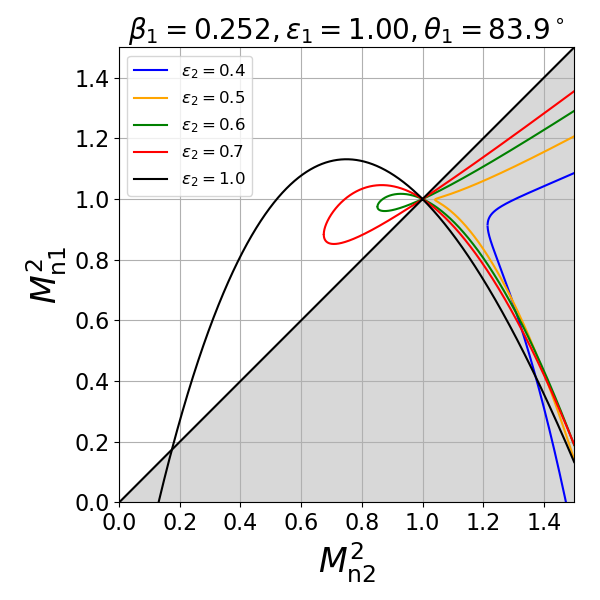
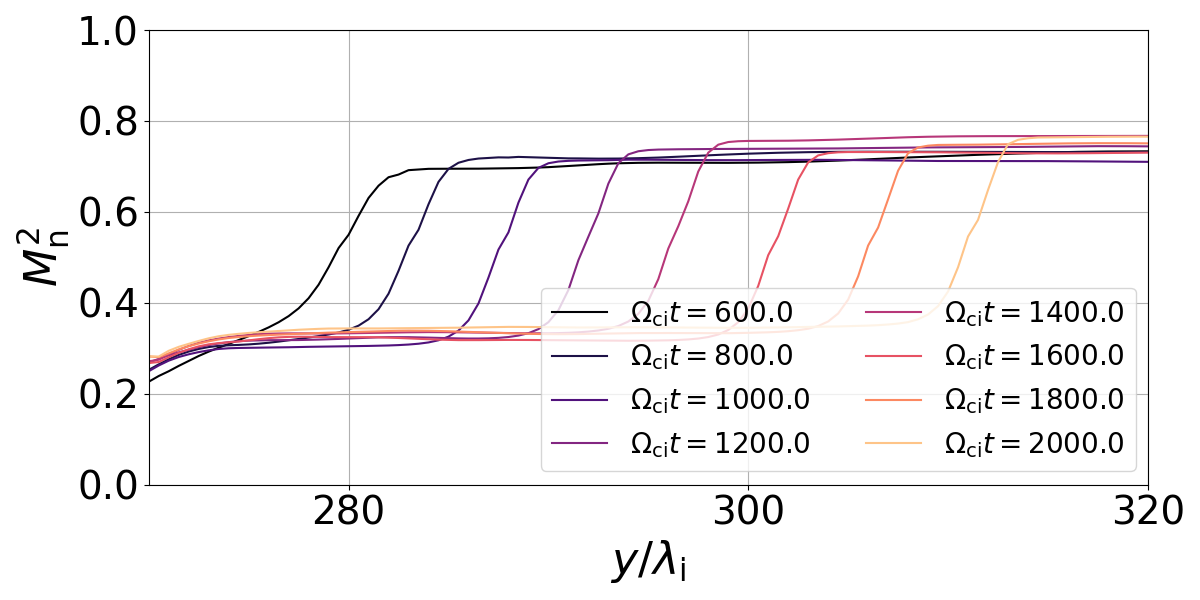
Figure 4: Snapshots of the firehose parameter jz0 as the exhaust traverses the PIC and MHD domains, evidencing the transition from anisotropic to isotropic states.
Mode Analysis and Pulse Wave Conversion
Linear analysis in anisotropic plasmas reveals that the group velocities of the slow and intermediate modes degenerate as jz1 approaches small values (firehose unstable regions), and can invert, creating compound pulse waves. These pulse waves, generated in the PIC domain, are converted into distinct MHD waves upon entering the MHD region: namely, the large-amplitude slow mode (capable of shock steepening) and small-amplitude fast and intermediate modes. The slow wave dominates post-transition and evolves into a slow shock in the isotropized MHD medium.
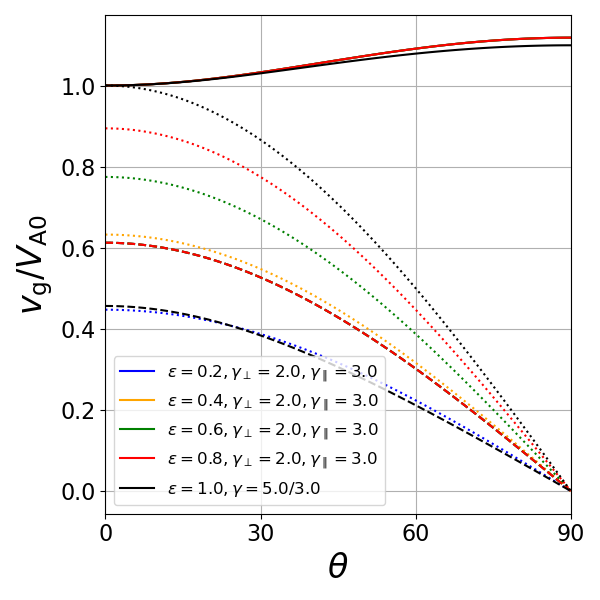
Figure 5: jz2 diagram illustrating the degeneracy and inversion of slow and intermediate mode group velocities under strong anisotropy.
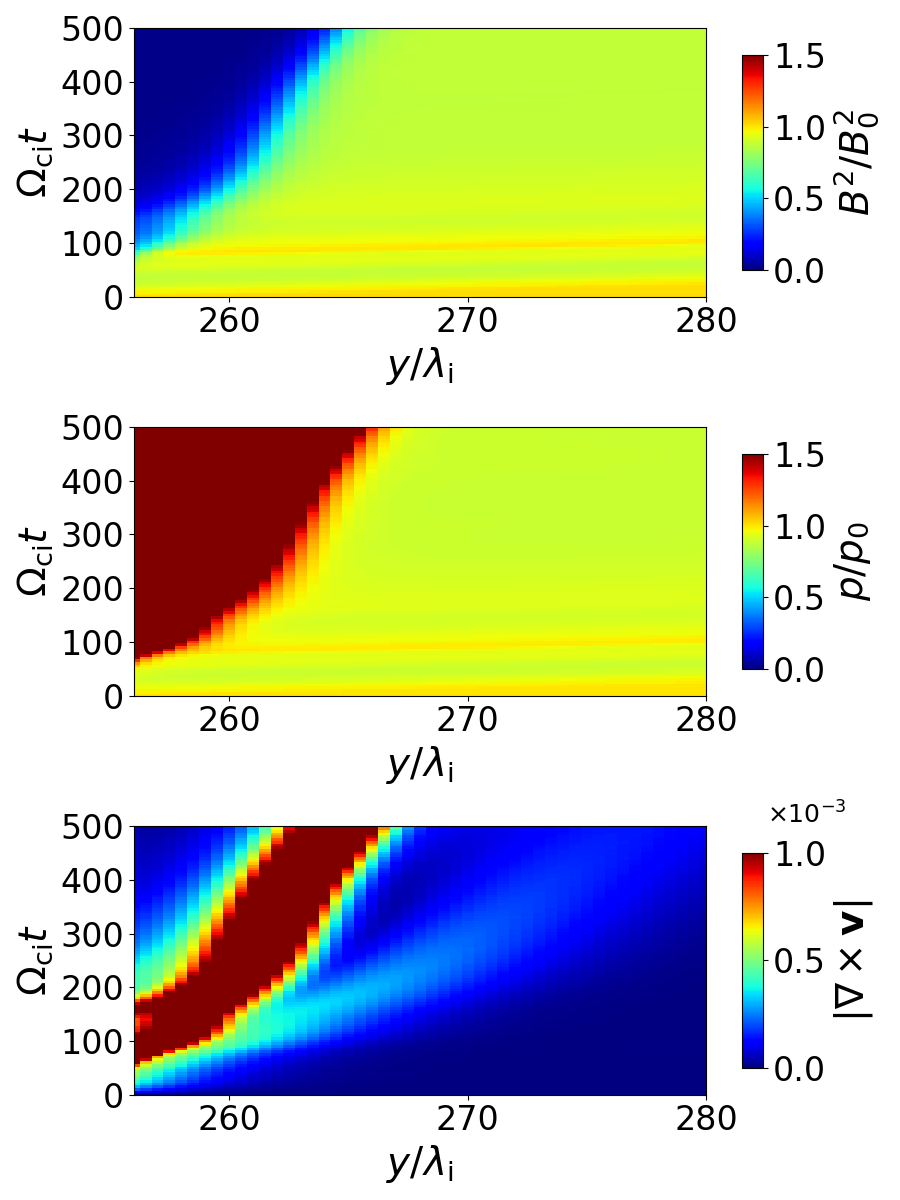
Figure 6: jz3-jz4 diagrams of magnetic and gas pressure and vorticity, tracing the conversion of pulse waves at the PIC-MHD interface.
Multiscale Coupling and Implications
A schematic encapsulates the system's evolution: in the PIC domain, high anisotropy blocks slow shock formation and maintains strong field curvature and centralized current. Upon entry into the MHD domain, shock formation enforces isotropization, eliminating the elongated current sheet and aligning with Petschek-like reconnection behavior in collisional-plasma regimes.
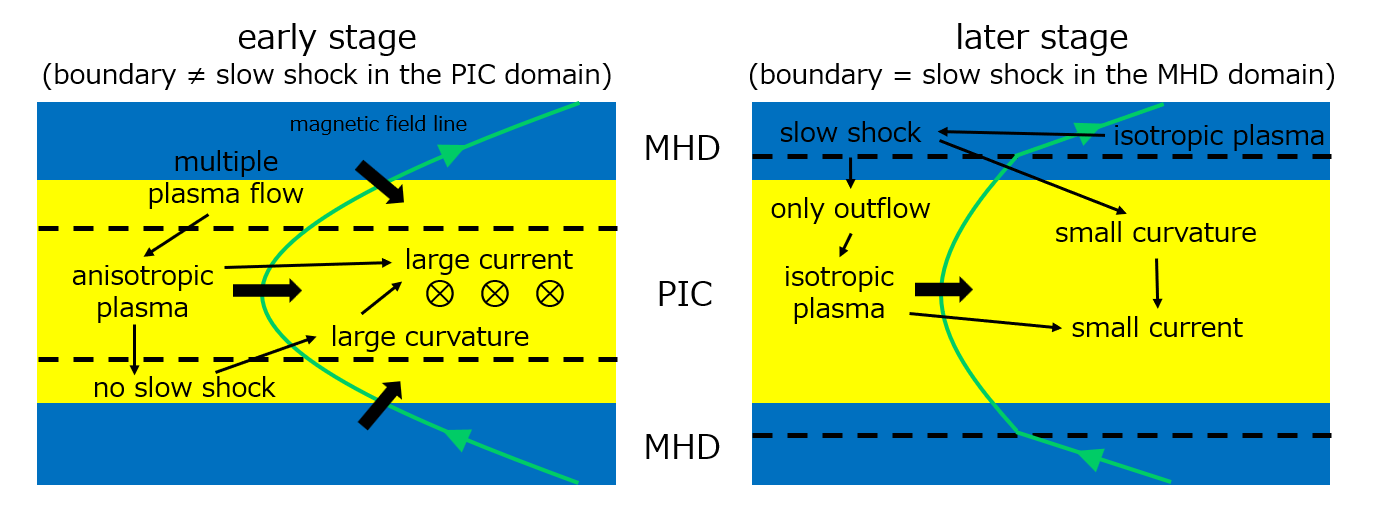
Figure 7: Schematic of multiscale interactions and feedback between kinetic (PIC) and MHD domains across the reconnection outflow.
Key Claims and Quantitative Results
- Switch-off slow shocks form robustly in the MHD domain irrespective of local suppression due to kinetic effects, provided the PIC domain is not system-spanning.
- The formation of shocks and plasma isotropization is insensitive to expanding the PIC region, as long as isotropizing mechanisms (collisions or analogous processes) dominate at large scales.
- The conversion of pulse waves at the kinetic–MHD interface is quantitatively consistent with anisotropic MHD linear theory and the compound wave structure predicted by CGL closure models.
- The observed Mach number jump for the slow shock (jz5) aligns closely with the classical Petschek model in parameter regimes relevant for solar flares.
Implications and Future Directions
The results carry significant theoretical and practical implications. For weakly collisional astrophysical plasmas, especially in solar flare environments where the mean free path remains well below macroscopic scales, classical MHD descriptions (and their associated reconnection rates) remain predictive outside localized kinetic (PIC) regions. The local suppression of slow shocks by pressure anisotropy does not prevent global shock formation and Petschek-like behavior, provided adequate isotropization occurs.
The findings also delineate the boundary between systems best modeled as globally collisionless (e.g., Earth’s magnetosphere) and those where a collisionless-collisional hybrid approach is crucial (e.g., solar flares). This justifies large-domain multi-hierarchy treatments for specific astrophysical settings and highlights the need for future collisional-PIC studies clarifying isotropization spatial and temporal scales.
Conclusion
The multi-hierarchy simulations in "Multi-hierarchy simulation of Riemann problem for reconnection exhausts" (2603.29638) demonstrate decisive evidence that Petschek-type switch-off slow shocks can be realized and persist at MHD scales, even when kinetic, collisionless effects are present locally. The critical requirement is that the macroscopic system size exceeds the kinetic (PIC) region, allowing isotropization and shock steepening to occur. These results reconcile longstanding discrepancies between MHD and PIC models of reconnection exhausts, clarify the conditions under which Petschek reconnection remains valid, and provide a practical, computationally tractable path to simulating multiscale reconnection in realistic astrophysical settings.

