- The paper develops a unified cohomological framework to express Feynman integrals as exponential periods, offering a novel geometric perspective.
- It leverages twisted de Rham cohomology and intersection theory to systematically reduce complex integrals to master integrals.
- The framework clarifies the impact of wall crossing and Stokes phenomena, enhancing analytic continuation and computational efficiency in quantum field theory.
Exponential Periods for Integrals in Physics: An Expert Analysis

Figure 1: Università degli Studi dell'Insubria logo—affiliation for the doctoral thesis introducing “Exponential Periods for Integrals in Physics” (2603.29787).
Motivation and Conceptual Framework
The paper “Exponential Periods for Integrals in Physics” (2603.29787) rigorously develops a geometric and cohomological foundation for analyzing Feynman integrals and a broader class of physical integrals. The central thesis is that much of the algebraic and analytic structure underlying perturbative quantum field theory (QFT), string theory, statistical mechanics, and related areas can be systematically formulated in terms of exponential periods—pairings between appropriate (twisted) homology and cohomology groups.
Beyond simplifying brute-force calculations, this approach reveals deep redundancies and geometric organization within amplitudes, clarifies the enumeration and reduction of master integrals (MIs), and accommodates nontrivial phenomena such as Stokes transitions and wall crossing structures. The unifying formalism leverages advances in twisted de Rham cohomology, intersection theory, sheaf theory, and complex Morse theory, extending to cases where standard tools fail due to singularities or irregular monodromy.
Mathematical Infrastructure: Modern Intersection Theory and Sheaves
The thesis provides a comprehensive mathematical account wherein (co)homological dualities, derived functors, and sheaf-theoretic machinery serve as the backbone for both the reinterpretation of Feynman integrals and the definition of exponential periods.
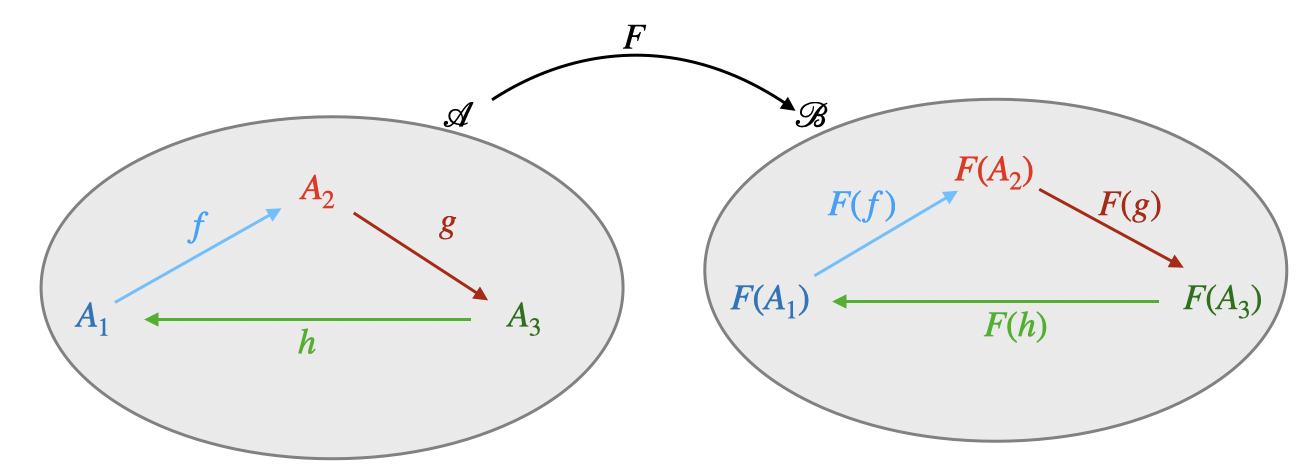
Figure 2: Covariant functor illustration—fundamental in encoding natural transformations and categorical equivalence.
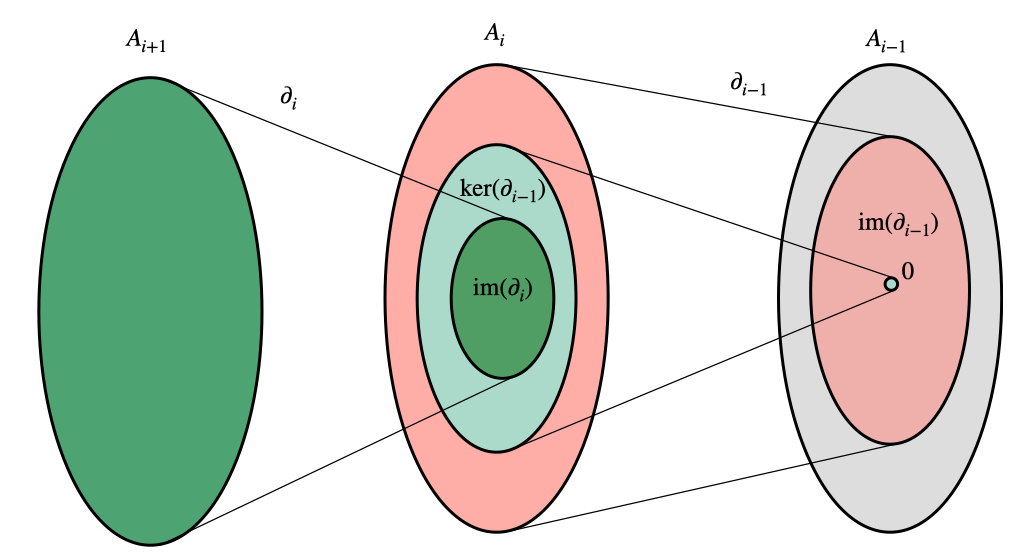
Figure 3: Chain complex schematic—distilling the structure underlying (co)homology and its role in intersection pairings.
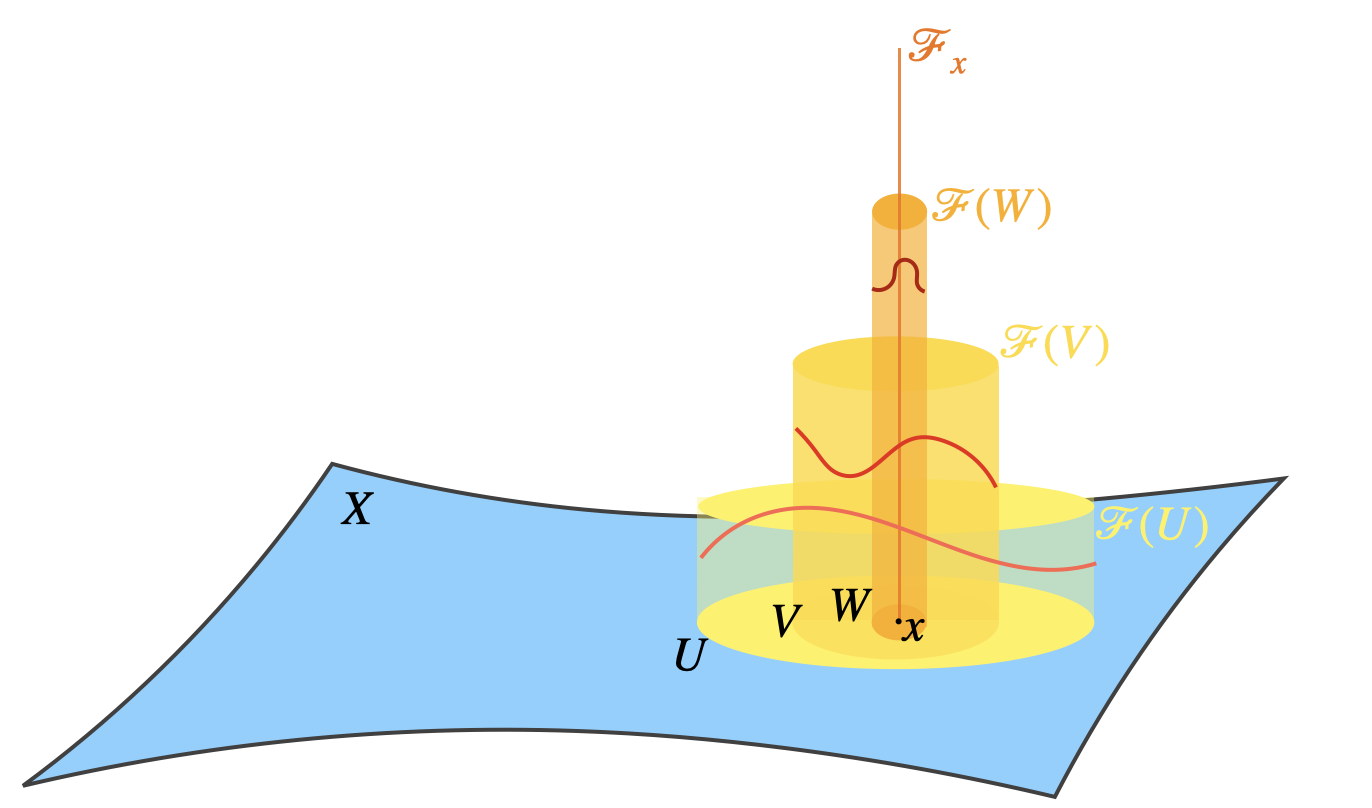
Figure 4: Representation of a sheaf and its stalks, elucidating the passage from local to global data—a critical bridge for gluing local (co)homology computations.
Key points:
- Chain complexes and their (co)homologies encode integration-by-parts (IBP) relations and equivalence classes of integrals.
- Sheaf cohomology and hypercohomology capture obstructions to gluing local data, crucial for understanding global periods and topological features that impact physical predictions.
- Spectral sequences (Serre, Leray) provide iterative computational strategies linking fiber and base cohomology.
Twisted Cohomology, Periods, and Master Integrals
The pivotal objects are Feynman-type integrals expressed as
IΓ(f,γ)=∫Γe−γfμ,
where f is a holomorphic function with isolated critical points, μ a holomorphic n-form, and Γ an integration chain. In physics, f may encode the Symanzik or Baikov polynomials in parameter or momentum space.
The formalism identifies four interrelated cohomological structures:
- Global twisted de Rham cohomology—accommodating multivalued integrands.
- Local twisted de Rham cohomology—capturing the microlocal behavior near critical points.
- Global and local Betti (co)homology—encoding the topology of integration contours relative to divisors/cuts and closures under monodromy.
These are organized into vector bundles (or local systems) over the moduli space of a complexified regularization parameter, with connections given by Gauss-Manin derivatives and monodromy governed by generalizations of the Riemann-Hilbert problem.
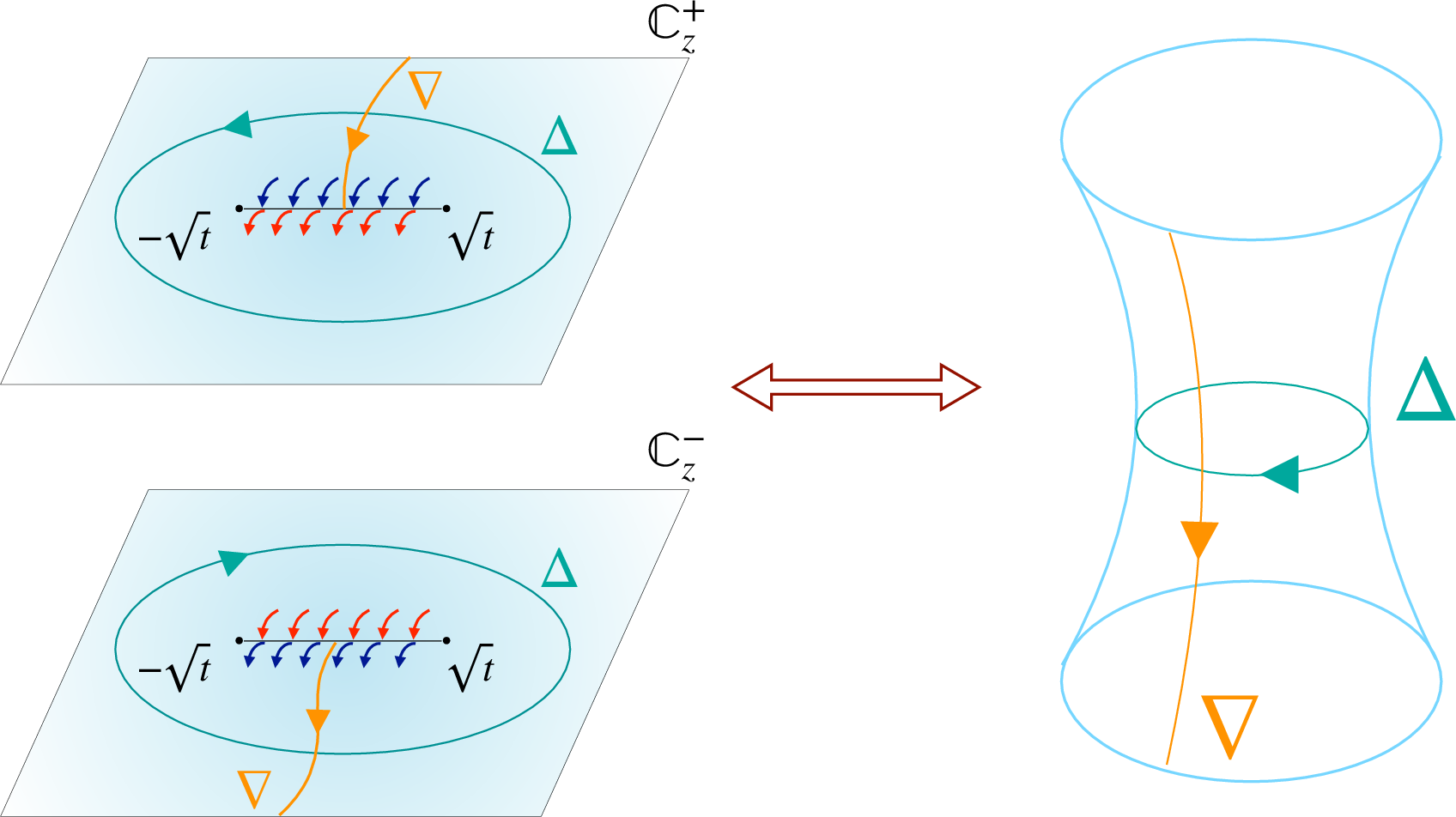
Figure 5: Gluing two Riemann sheets along a cut—modeling singular behavior at branch points and the topological structure underlying period computations.
Implications:
- Intersection pairings between twisted cycles and cocycles naturally replace IBP projections, generalizing the reduction to MIs and clarifying the enumeration of independent integrals.
- Quadratic relations (as in double-copy or KLT/BCJ structures) arise from the nondegenerate intersection pairing at the (co)homological level.
Wall Crossing Structures, Stokes Phenomena, and Homological Decompositions
A fundamental innovation is the explicit description of wall crossing structures (WCS) as the γ parameter crosses Stokes rays in the complex plane, causing jumps in the basis of thimbles (integration cycles).
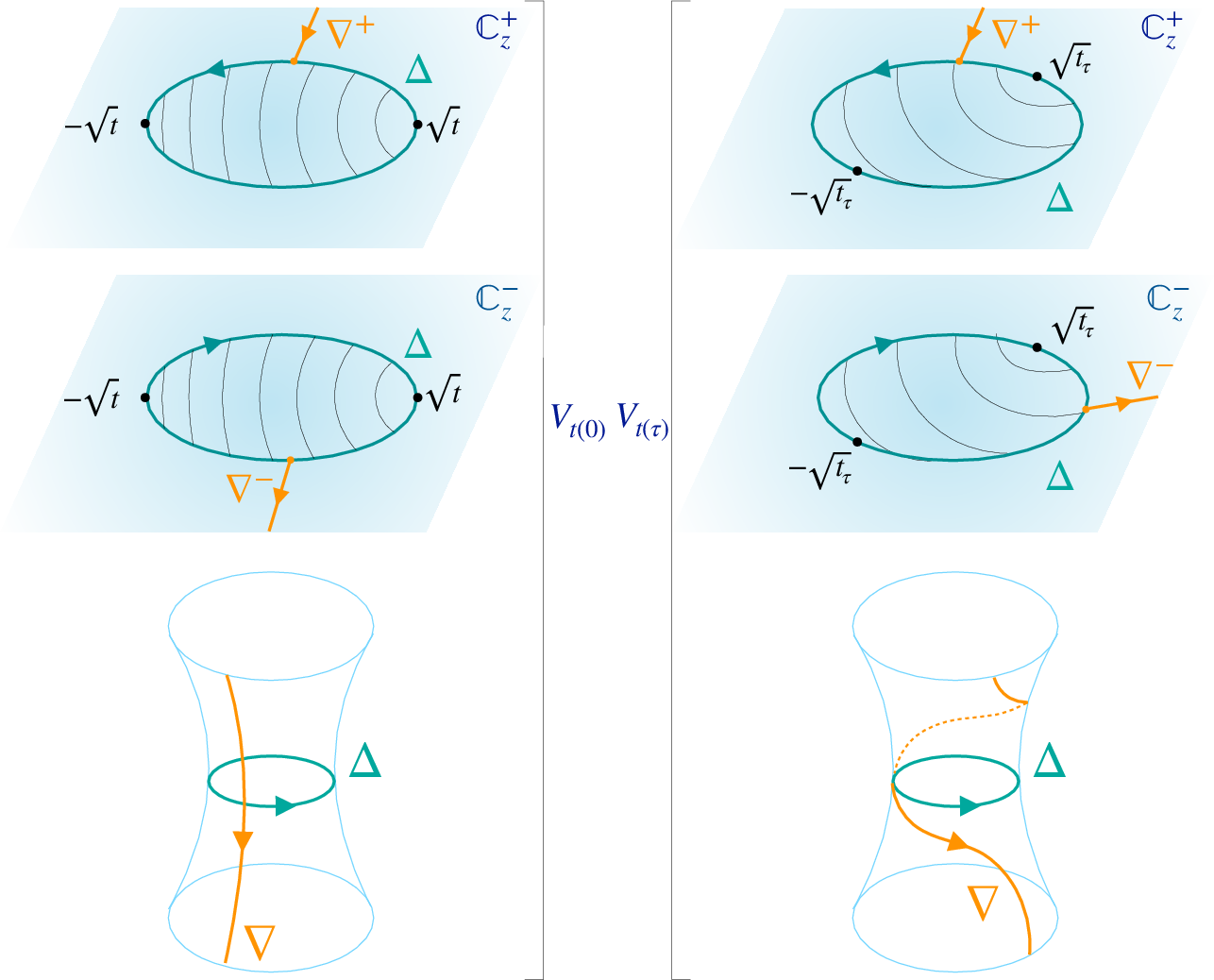
Figure 6: Action of monodromy on vanishing and covanishing cycles—encoding the transformations at wall crossing and the structure of the Stokes matrices.
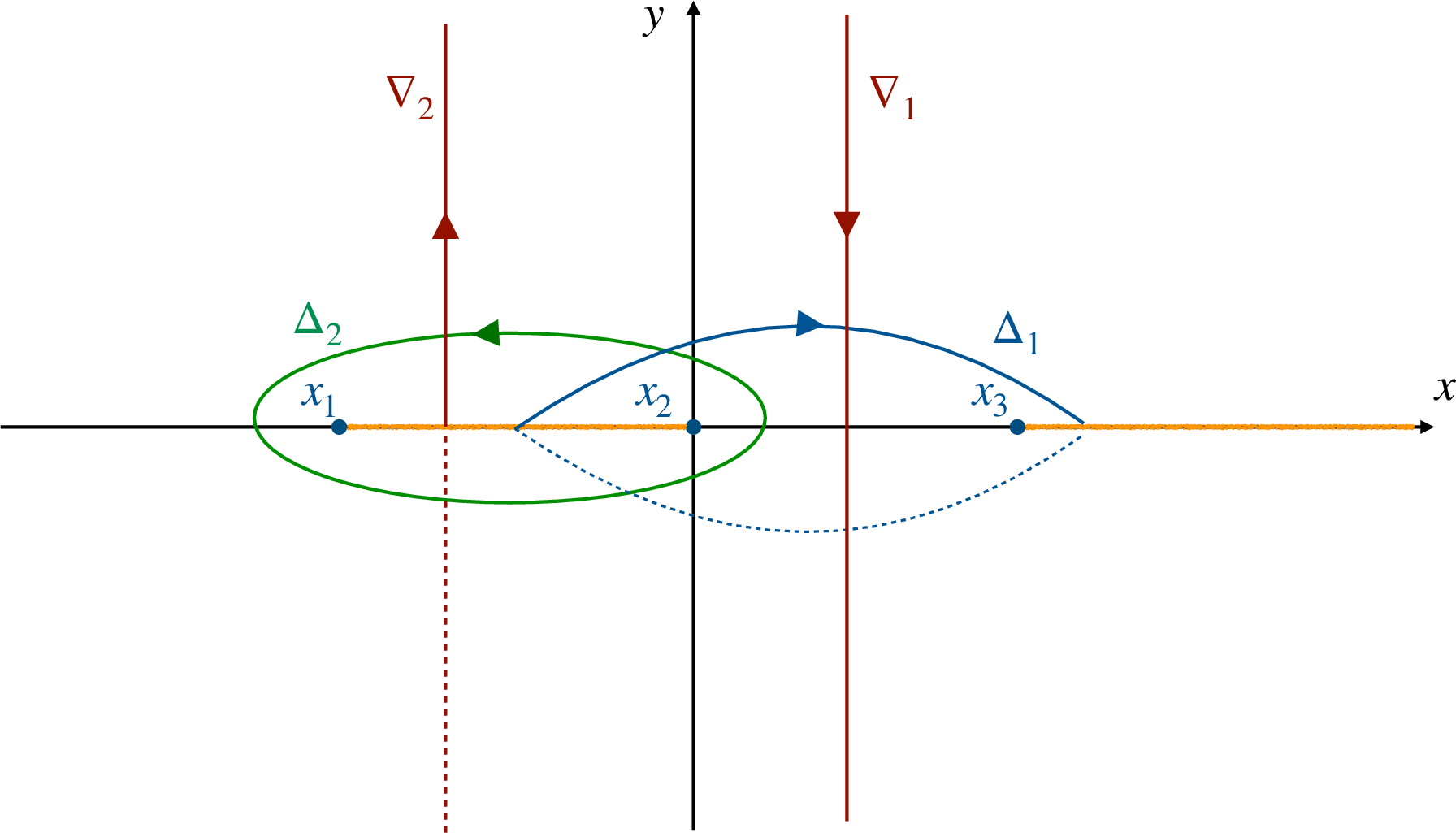
Figure 7: Visualization of vanishing and covanishing cycles in Picard-Lefschetz theory—basis for Lefschetz thimbles spanning the relevant relative (co)homology.
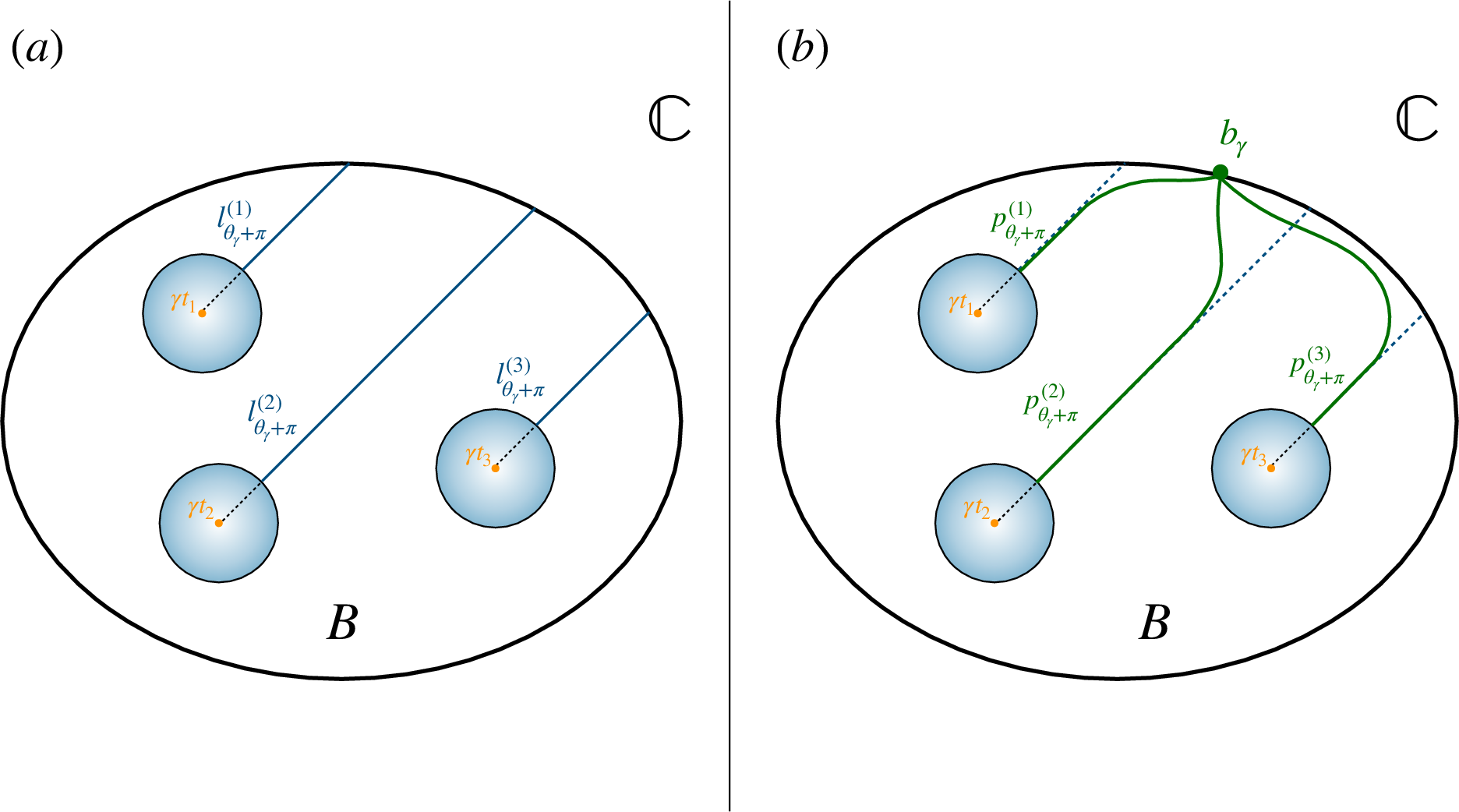
Figure 8: Homotopy deformation enacting the boundary retraction in the isomorphism from local to global Betti cohomology.
Explicitly, as γ traverses a Stokes ray determined by critical values (ti,tj) of f,
- Thimbles jump via Picard-Lefschetz transformations:
f0
where f1 is the intersection index between vanishing cycles.
- The analytic structure of the integral decomposes into sectors (petals), each governed by a stable basis of cycles and corresponding expansion.
This machinery is vital for:
- Precise determination of MI bases in irregular settings (e.g., with nontrivial monodromy).
- Correct analytic continuation and monodromy properties of periods in physical amplitudes, including the complete account of discontinuities (e.g., leading singularities, physical/landau cuts).
Generalization to Multivalued, Exponential, and Logarithmic Pairings
The formalism is substantially broadened to allow twisted differentials with non-exact closed forms f2, encapsulating cases where the integrand is f3, as typical for Baikov representations with complex dimension regularization.
Consequences:
- Feynman integrals at generic complex f4 can always be regarded as pairing between a twisted de Rham cohomology and a Betti homology—even where the geometric single-valuedness is lost.
- The correct enumeration and basis for MIs is recovered, even when the underlying algebraic variety (e.g., defined by f5) is singular, has degenerate critical loci, or exhibits monodromy that is not semisimple.
Applications: Pearcey Integrals, Banana/Sunrise Fossil, and Beyond
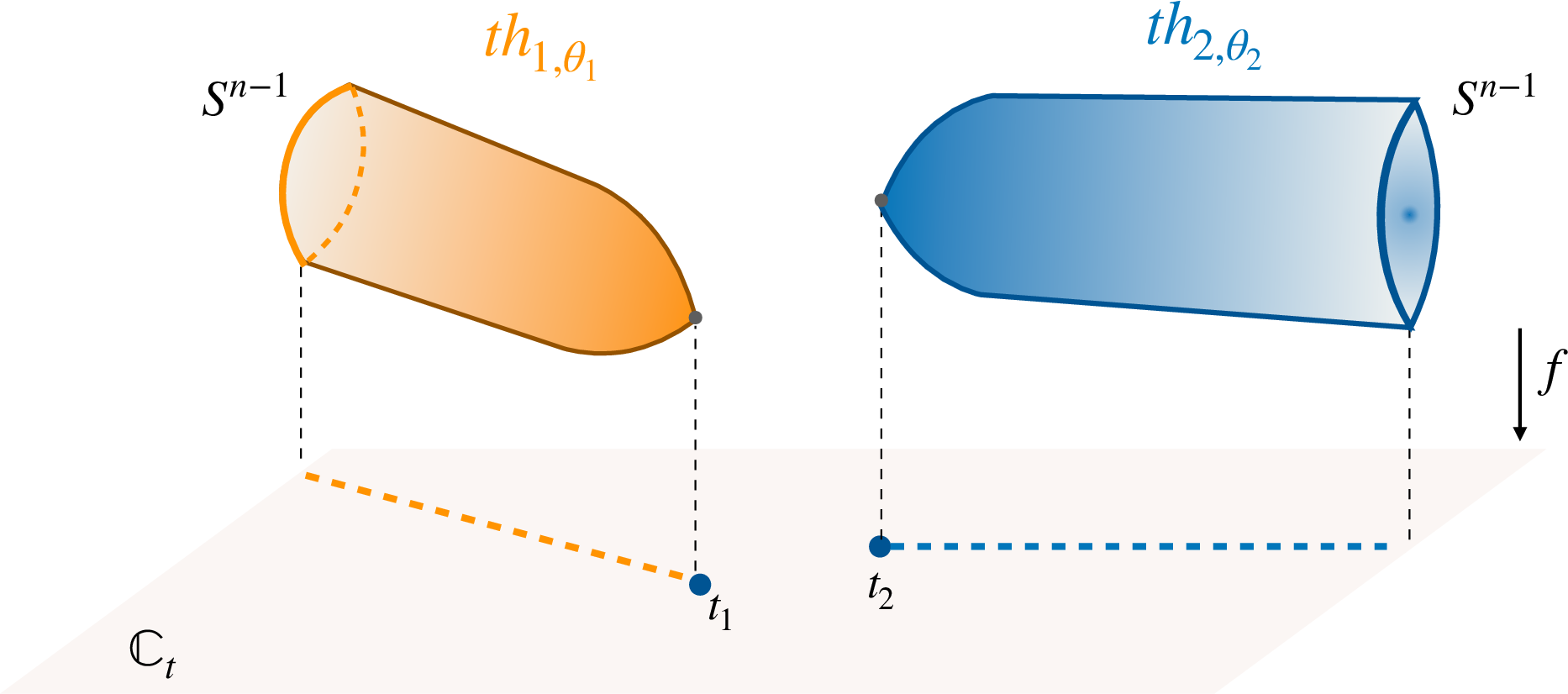
Figure 9: Illustration of thimbles for explicit exponential periods—application to Pearcey integrals and their Stokes structure.
(Figure 10, 22, 23, 25)
Figure 10:
Stokes line structure in f6 for the Pearcey integral with positive discriminant—analysis of ascendant and descendant paths spanning relative homology.Figure 11, 23:
Corresponding negative and vanishing discriminant cases, showing the role of coalescing critical points and the associated degeneration of cycles.Figure 12:
Explicit construction of thimbles within the double fibration and their relation to complex parameter spaces.
These concrete analyses demonstrate:
- The Lefschetz thimble decomposition not only supports analytic expansion (asymptotics, resummation) but also computes physical observables (partition functions, amplitude cuts) with precise control over phase structure and singularities.
- The structure of wall crossing recovers, in a more general and robust manner, the physical content of cut-constructible amplitudes, maximal cuts, and the foundations of bootstrap programs.
Implications for Physics and Prospects for Further Development
Theoretical Impact:
- Embedding perturbative integrals in a unified (twisted) (co)homology formalism reveals hidden symmetries, count invariants, and dualities not manifest in conventional diagrammatic or IBP analyses.
- Systematic handling of wall crossing and Stokes phenomena corrects and refines analytic continuation, essential for describing scattering on physical sheets, critical behavior, and matching with nonperturbative data.
- The approach is naturally extensible to string-theoretic, statistical, or even quantum mechanical integrals characterized by exponential-type and multivalued periods.
Practical Consequences:
- Provides a roadmap to systematically reduce families of Feynman integrals to minimal MI sets via (co)homological projection rather than brute force elimination.
- Supports the enumerative computation of MI numbers via Morse-theoretic or Euler characteristic methods, robust under analytic continuation and parameter variation.
- Enables fully analytic characterization of amplitude monodromy, cut structure, and the basis transformations central to the double-copy paradigm and color-kinematics duality.
Outlook:
- The formalism can be further extended to deal with nonaffine and singular geometries, possibly requiring the machinery of perverse sheaves and derived categories.
- The categorical and functorial underpinnings suggest a deep relationship to motivic periods, suggesting future connections with arithmetic geometry and the program of “cosmic Galois group” constraints on amplitudes.
- The explicit algorithmic procedures outlined (e.g., fibration analysis, spectral sequence reduction, local-to-global isomorphism construction) pave the way for computational implementations in symbolic algebra systems for amplitude calculation and reduction.
Conclusion
The thesis establishes a rigorous and systematic algebraic-geometric framework for exponential periods, unifying and extending the analysis of Feynman and related integrals across physics. The interplay between (twisted) de Rham cohomology, Betti homology, wall crossing, and intersection pairings coherently explains patterns in integral reduction, analytic structure, and amplitude properties, supporting both theoretical insight and practical computation. The framework's extensibility to multivalued, singular, and nonperturbative regimes marks it as a foundational toolset for future work in perturbative QFT, string theory, and mathematical physics.