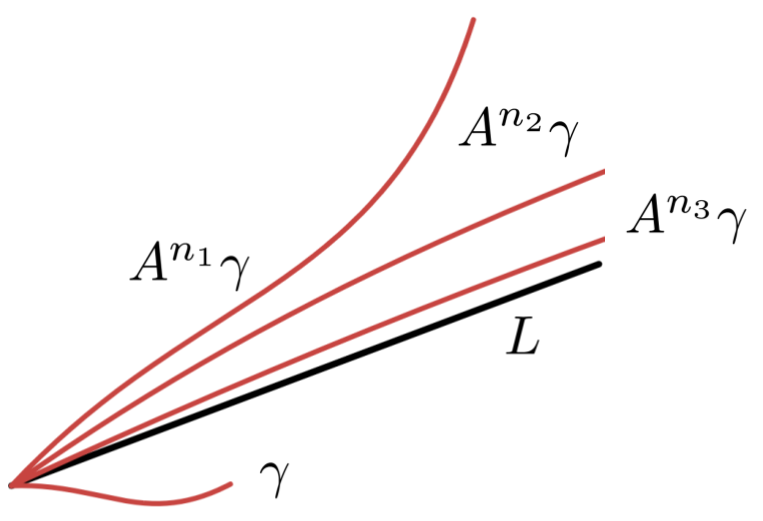
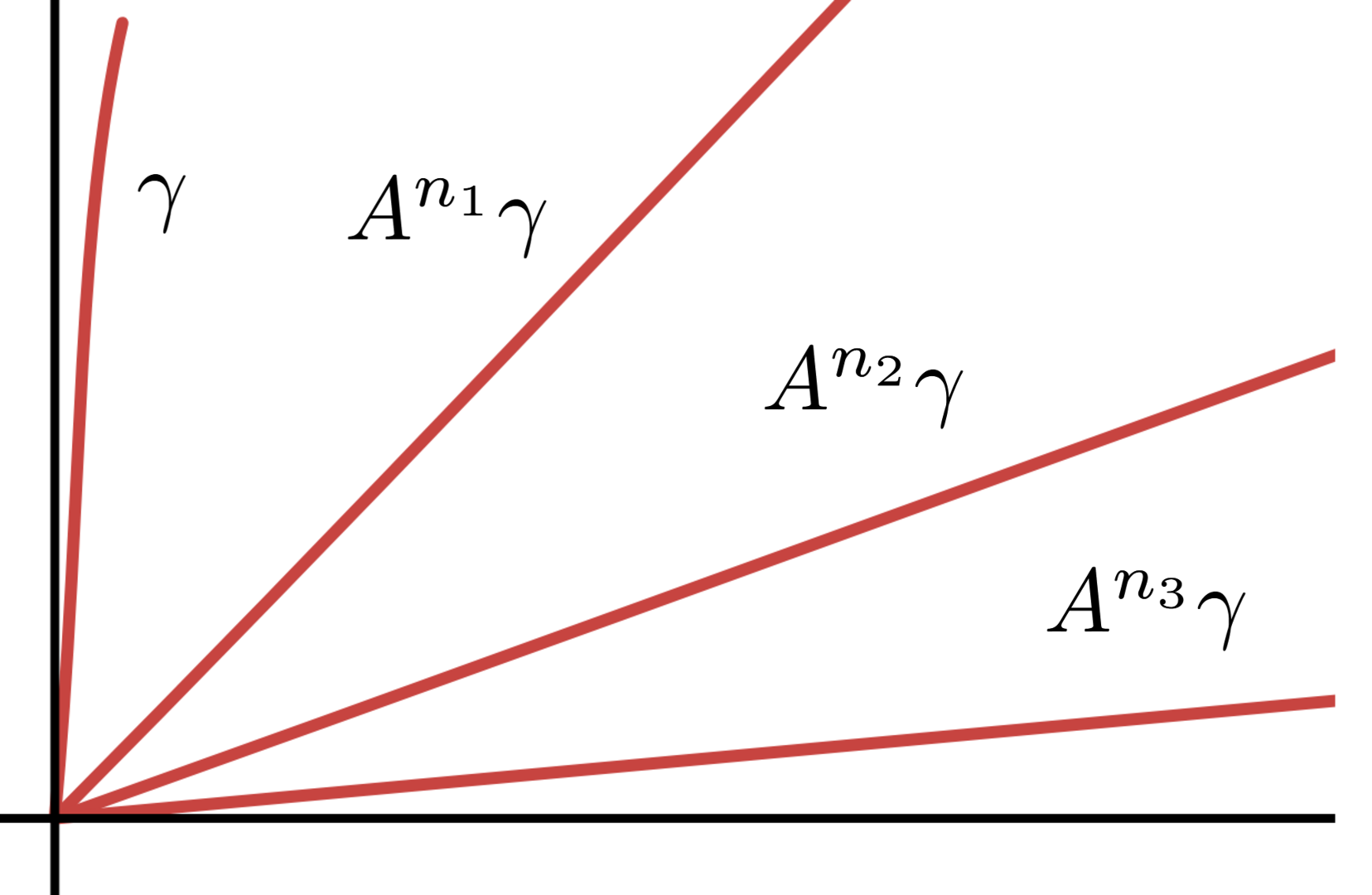
- The paper finds that an expanding toral endomorphism has a linear Markov partition if and only if a power of its defining matrix is diagonalizable with integer eigenvalues.
- It introduces constructive methods leveraging symbolic dynamics to classify smooth, nonsmooth, and hybrid boundary behaviors, with explicit combinatorial bounds in two dimensions.
- The study connects algebraic properties to geometric and ergodic aspects, providing Hausdorff dimension bounds for partition boundaries and insights for symbolic encoding.
Smoothness Criteria for Markov Partitions in Expanding Toral Endomorphisms
Introduction
The paper "Smoothness of Markov Partitions for Expanding Toral Endomorphisms" (2604.00257) establishes comprehensive smoothness criteria for Markov partitions associated with expanding toral endomorphisms. Through elementary and constructive techniques, it identifies precise algebraic conditions under which linear (hence smooth) Markov partitions exist, and provides a nuanced classification for the nonsmooth and hybrid boundary behaviors that can occur in low dimensions. The analysis leverages symbolic dynamics and ergodic-theoretic tools, and offers Hausdorff dimension bounds for partition boundaries, thereby connecting dynamical, geometric, and algebraic perspectives on toral endomorphisms.
Markov Partitions in Expanding Non-invertible Dynamics
The classical theory of Markov partitions, originally developed for invertible hyperbolic systems and automorphisms, is extended here to the context of expanding, generally non-invertible, toral endomorphisms. The primary objects of study are maps fA on Td (the d-dimensional torus), induced by expanding integer matrices A (all eigenvalues satisfy ∣λ∣>1), and the associated symbolic encodings via finite Markov partitions.
A key result in two dimensions states that an expanding toral endomorphism fA admits a linear Markov partition if and only if for some k∈N, Ak is diagonalizable with integer eigenvalues. This algebraic criterion is both necessary and sufficient, fully characterizing the existence of smooth Markov partitions in terms of the spectral properties of A.
Algebraic Construction of Smooth Markov Partitions
The constructive argument for smooth (linear) Markov partitions proceeds by leveraging the algebraic structure of expanding integer matrices and their similarity classes.
An explicit combinatorial bound for the minimal d0 required is provided, depending only on the dimension d1. In d2, it is shown that it suffices to check d3 for diagonality with integer spectrum. This is achieved by an analysis of the possible cyclotomic factors, paralleling finite order elements in d4.
Classification of Boundary Behaviors in Dimension 2
The work provides a refined classification of possible boundary regularity for Markov partitions in d5:
Implications for Boundary Geometry and Symbolic Dynamics
The boundary A6 of any Markov partition forms an invariant set under A7, and its regularity has direct implications for symbolic coding and entropy. The paper leverages symbolic dynamical correspondences: Markov partitions give rise to shifts of finite type (SFTs), and the associated coding interprets boundary behaviors in terms of complexity growth and orbit structure.
By associating transition graphs and entropy calculations to the boundary, the authors derive the following upper bound for the Hausdorff dimension of A8:
A9
where ∣λ∣>10 is the topological entropy on the boundary and ∣λ∣>11 is the minimal expansion rate.
This connects to known entropy-dimension-Lyapunov exponent relationships and shows that partition boundaries for expanding endomorphisms are always at least one-dimensional (nontrivial topological dimension), ensuring ∣λ∣>12 in every case.
Theoretical and Practical Implications
- Theoretical: The results give a complete algebraic-geometric classification of the regularity properties of Markov partitions for expanding toral endomorphisms, with explicit connections to the spectral theory of integer matrices. The identification of hybrid smoothness illustrates the richness of possible geometric structures in low dimensions, with consequences for symbolic representations and multifractal analysis.
- Practical: Understanding the precise conditions for constructing linear (smooth) Markov partitions is crucial for the effective symbolic encoding of toral systems, impacting entropy computations, orbit classification, and the study of measures of maximal entropy. The methods established also inform algorithmic strategies for partition constructions and fractal analysis.
- Future Directions: The conjectured generalization to higher dimensions suggests that similar algebraic criteria should hold, with the complexity of checking diagonalizability increasing with ∣λ∣>13. The explicit computation of Hausdorff dimension for nonconformal cases remains open. The extension to invertible and partially hyperbolic toral systems is also suggested.
Conclusion
This work rigorously characterizes when expanding toral endomorphisms admit smooth (or linear) Markov partitions in terms of the algebraic properties of the defining integer matrix. It develops explicit constructions for linear cases, a taxonomy for nonsmooth and hybrid cases, and establishes a symbolic dynamical framework for analyzing boundary dimensions. The results bridge the algebraic structure of toral maps with geometric and symbolic dynamical properties, providing a foundational reference for future theoretical and computational studies in the ergodic and symbolic analysis of toral endomorphisms.