- The paper demonstrates that quench-condensed Bi films exhibit reduced roughness, smaller grain size, and a shift from (111) to (110) texture compared to room temperature films.
- It employs AFM, XRD, and magnetotransport measurements to detail substrate- and temperature-dependent variations in morphology and crystalline order.
- Results indicate that substrate type and deposition temperature critically modulate carrier density, mobility, and overall film performance for advanced device applications.
Comparative Analysis of Morphology and Electronic Properties in Room Temperature and Quench Condensed Bismuth Films
Experimental Methods and Film Fabrication
The study conducts a comprehensive investigation of 100 nm bismuth (Bi) thin films fabricated via thermal evaporation onto three classes of substrates: epitaxial Al2O3(0001), amorphous SiO2, and van der Waals (vdW) mica. The deposition conditions are systematically varied between room temperature (296 K, RT-Bi) and cryogenic 77 K (quench-condensed, QC-Bi), enabling direct assessment of temperature-induced phenomena under otherwise identical growth rates and vacuum conditions. AFM was employed for morphological characterization, X-ray diffraction (XRD) for crystallinity and grain size, and van der Pauw geometry for four-point magnetotransport and Hall effect measurements at 296 K and 4.1 K.
Morphological Evolution: Substrate and Temperature Dependence
The atomic force microscopy data reveals a clear effect of both substrate and growth temperature on surface topography. RT-Bi films invariably exhibit pronounced three-dimensional columnar morphologies with high aspect ratios and larger roughness, whereas QC-Bi films show substantially reduced root-mean-square (RMS) roughness and a more homogeneous, less faceted landscape. Notably, QC-Bi on mica demonstrates the lowest roughness among all samples, highlighting the critical role of the vdW substrate in minimizing nucleation barriers and enabling highly planar growth by suppressing island formation.
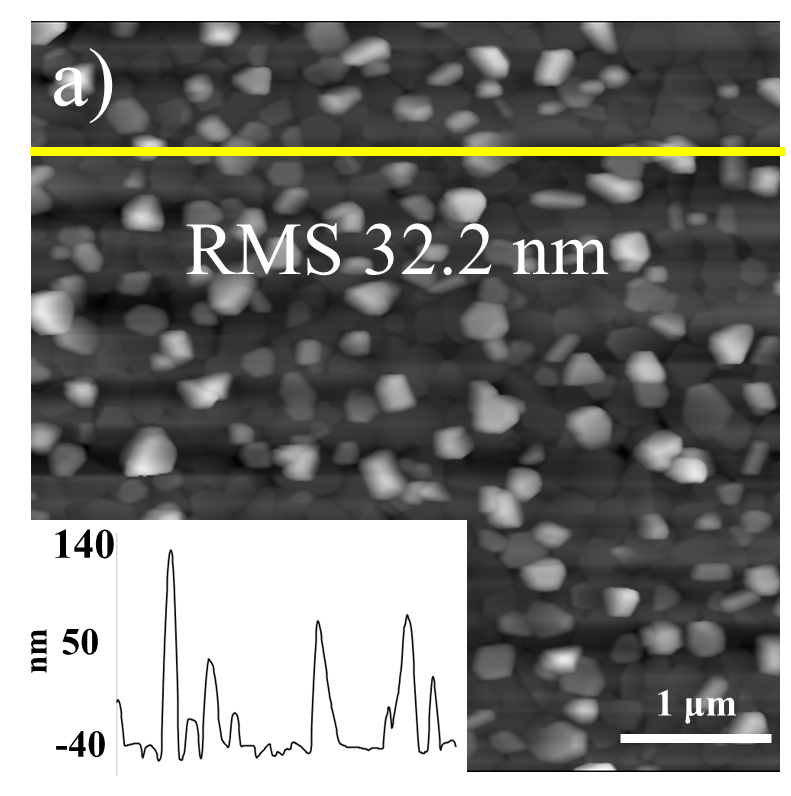
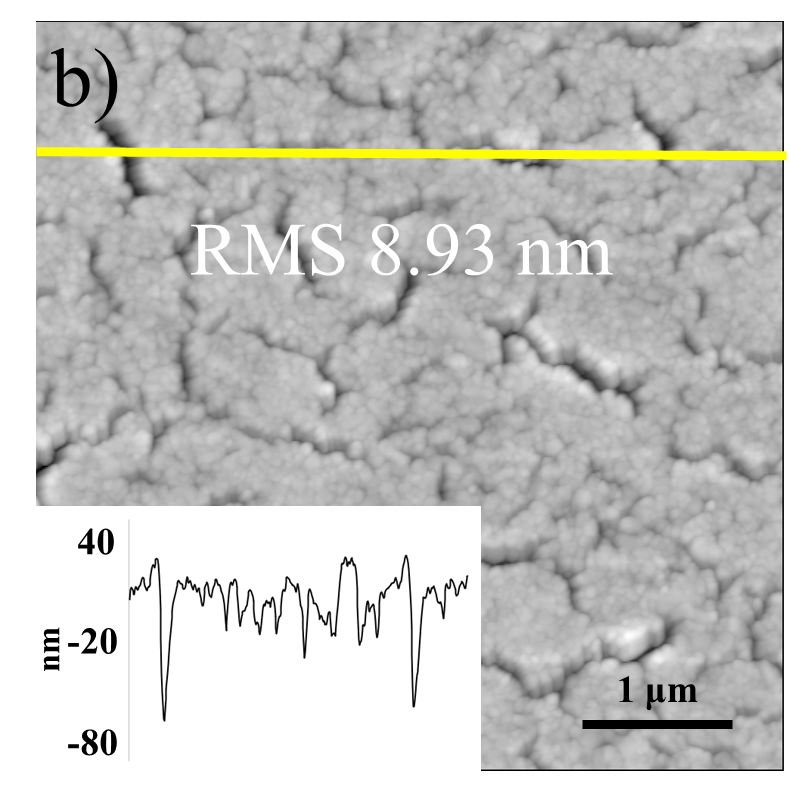
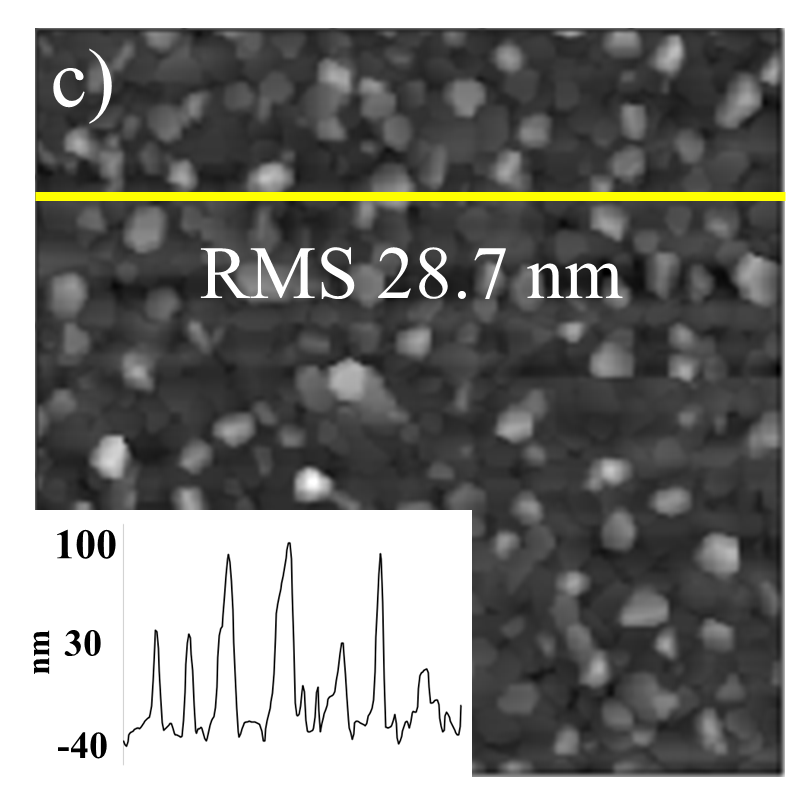
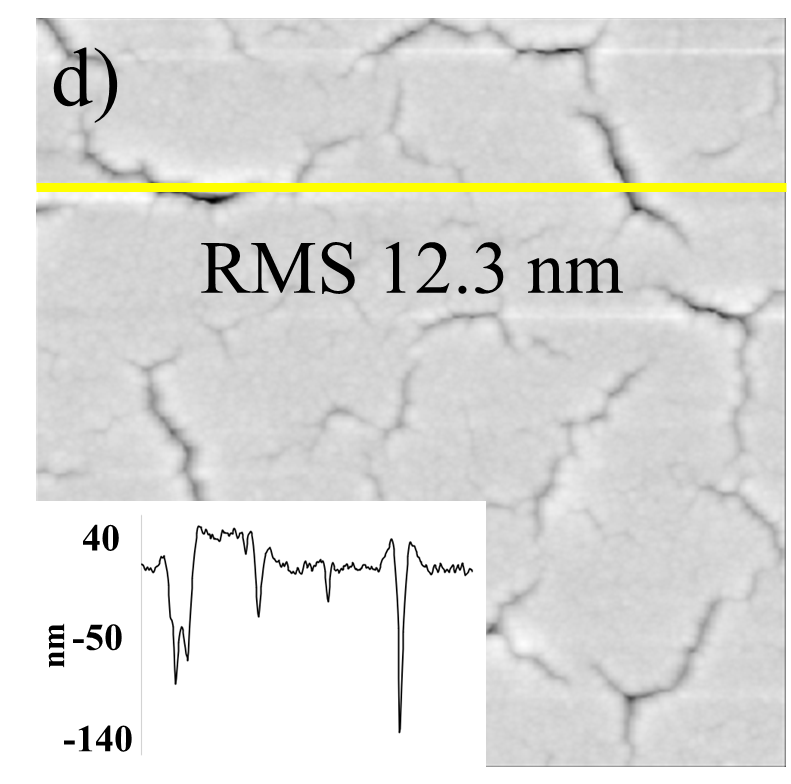
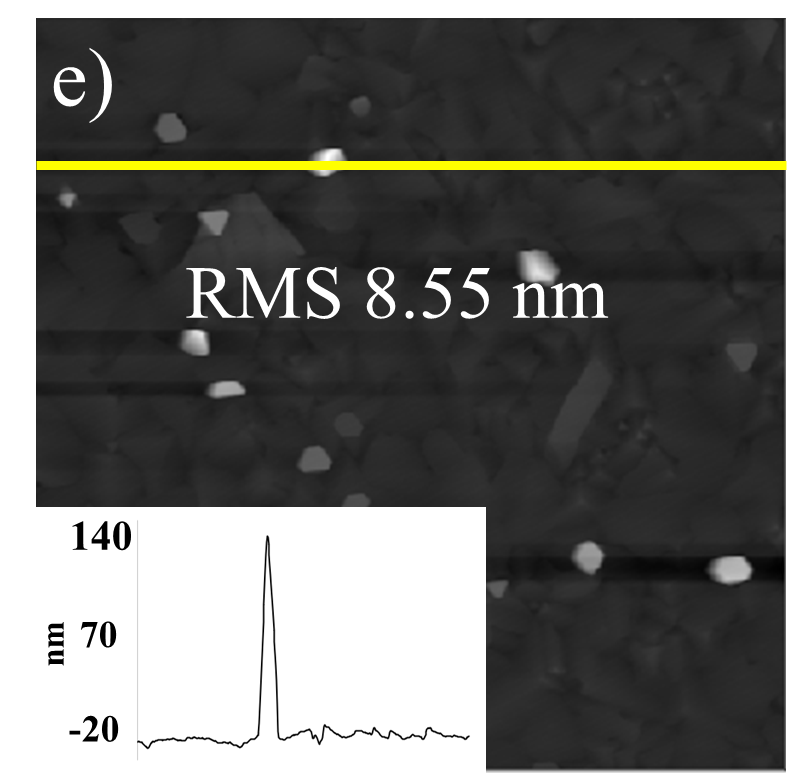
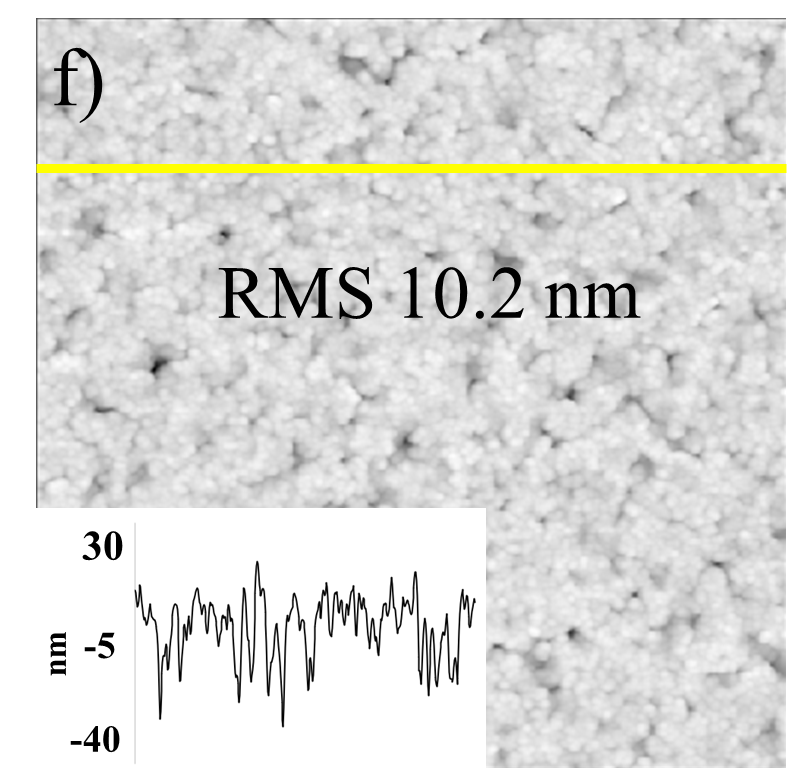
Figure 1: Atomic force micrographs of Bi films exhibiting substrate and temperature-driven transitions in roughness and surface morphology.
The compact, less rough QC-Bi morphology is consistent with limited atomic mobility at low temperature, fostering homogeneous nucleation and random deposition. In contrast, RT-Bi films display the expected Stranski-Krastanov growth, with both layered and island morphologies, particularly evident on SiO2 and Al2O3(0001). Cracking and pore features were observed on various substrates, with cracks more prominent on crystalline substrates and suppressed on mica.
Crystallinity, Texture, and Strain
XRD analysis identifies strong temperature-dependent crystalline texture transitions across all substrates. RT-Bi films consistently exhibit a dominant (111) orientation, while QC-Bi films display a switch to preferential (110) texture and pronounced reduction of higher order peaks, indicative of both suppressed crystalline order and reduced grain size.
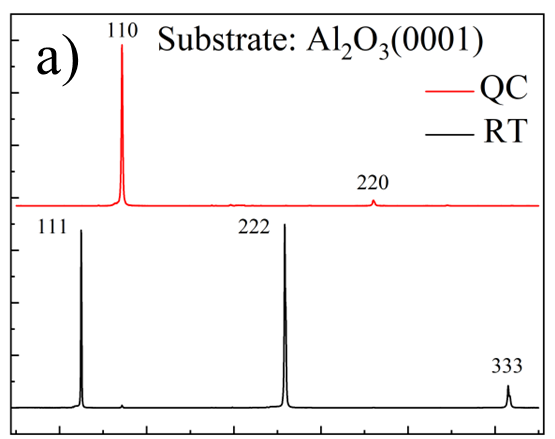
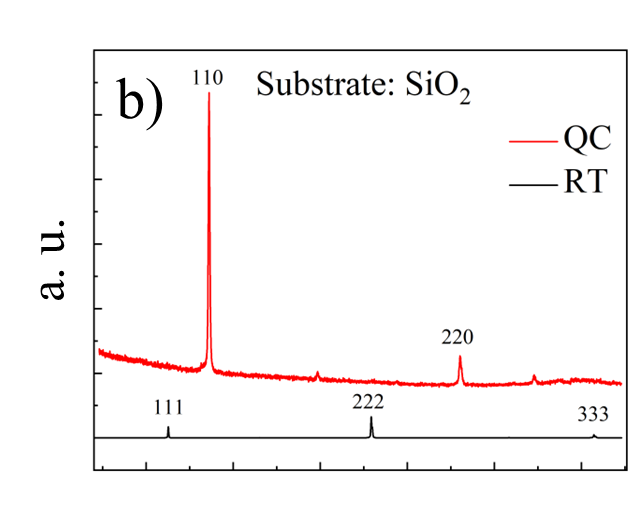
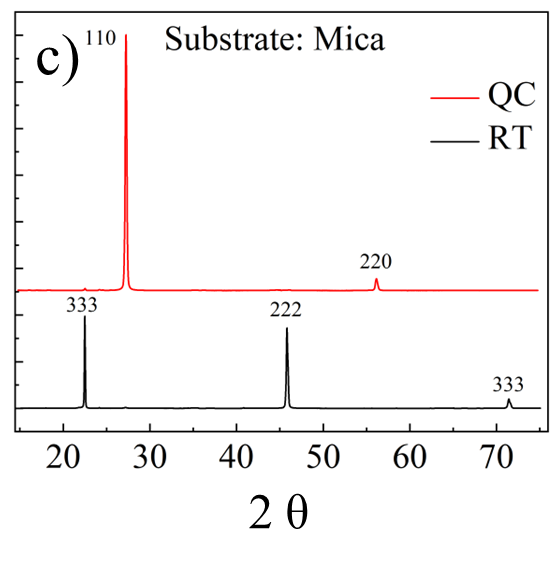
Figure 2: X-ray diffraction patterns highlighting the emergence of (110) texture in QC-Bi films and (111) in RT-Bi films, with substrate-dependent peak intensities and shifts.
Grain size analysis using the Scherrer equation yields approximately 37–42 nm for QC-Bi and 69–71 nm for RT-Bi, establishing a systematic reduction in grain size under quench condensation. Additionally, small but measurable substrate-dependent strain fields are identified via XRD peak shifts, especially for QC-Bi on amorphous SiO2 (lattice expansion) and mica (lattice contraction). The orientation and strain effects are robust across the substrate suite, though the vdW system (mica) consistently yields the highest crystalline order and minimal defects.
Electronic Transport: Sheet Resistance, Magnetoresistance, and Hall Effect
Transport measurements clearly delineate consequences of growth conditions and substrate selection on film electronic performance. QC-Bi films display significantly higher sheet resistance than RT-Bi, with the increase factor varying by substrate: 6.5× on mica, 6.9× on Al2O30(0001), and 3.131 on SiO32.
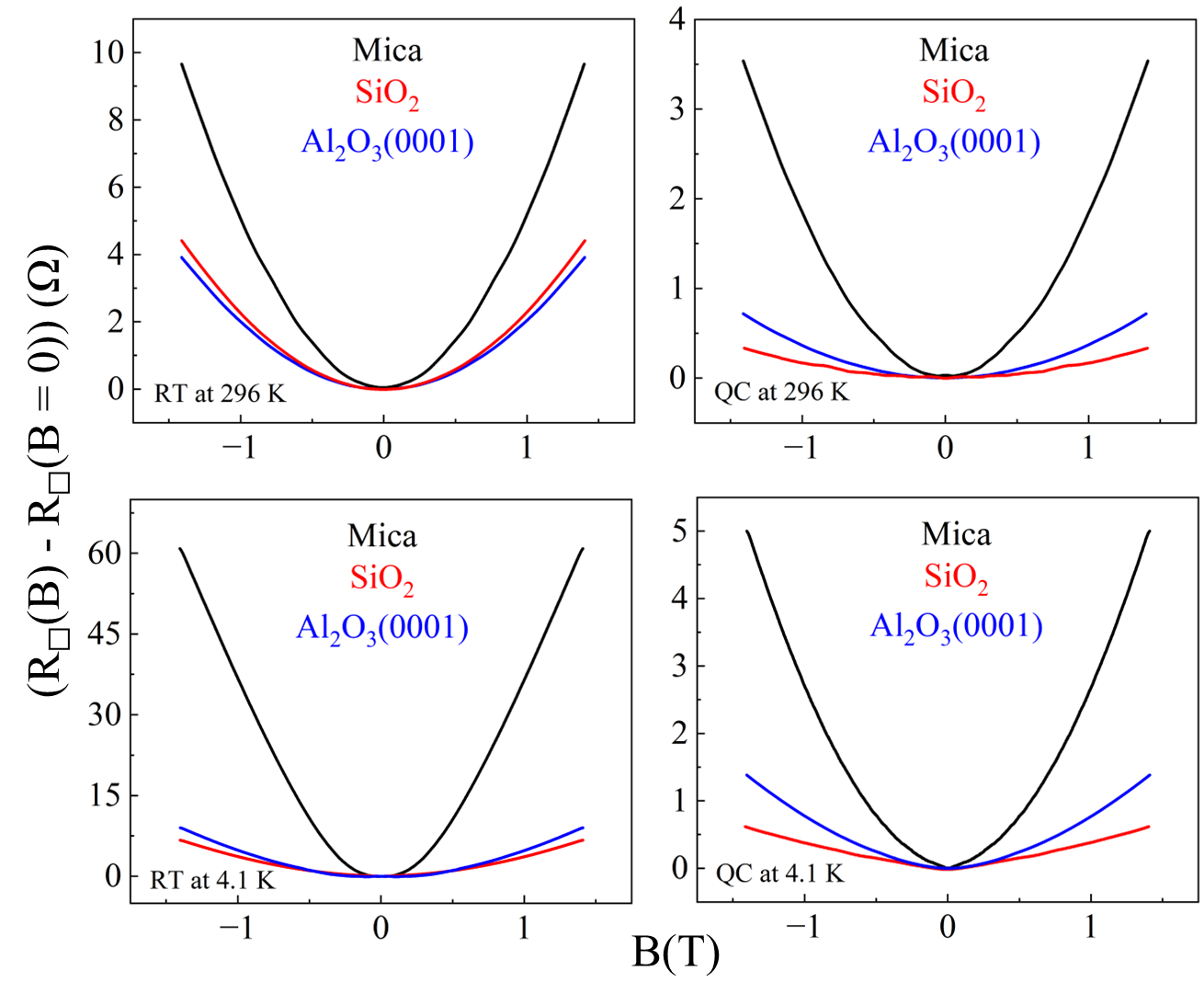
Figure 3: Magnetoresistance comparison across QC-Bi and RT-Bi films, demonstrating pronounced mobility and defect-related effects.
Carrier density is systematically lower in QC-Bi films, and Hall effect measurements reveal single carrier transport in all QC-Bi configurations, while RT-Bi/mica displays classic multicarrier behavior. This is evidenced by nonlinear Hall resistance as a function of magnetic field, mirroring high-quality bulk Bi and indicating coexistence of bulk and surface carriers. Strongest magnetoresistive response and highest inferred mobility are found in RT-Bi/mica films.
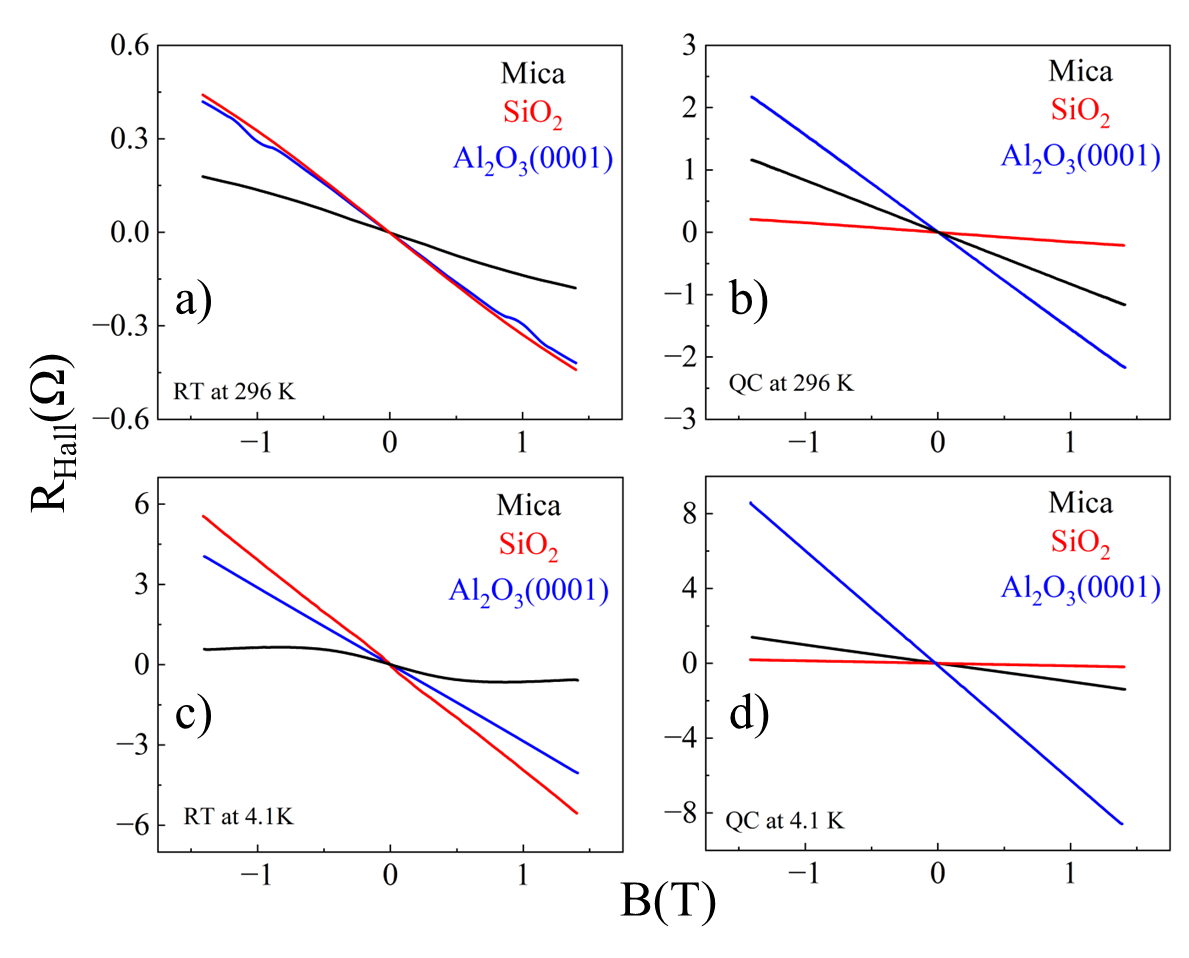
Figure 4: Hall resistance versus magnetic field data indicating multicarrier and single-carrier transport regimes as a function of growth protocols and substrate.
Films on mica consistently outperform those on amorphous or epitaxial substrates in terms of low resistivity, high mobility, and minimal disorder, independent of temperature protocol. Notably, while QC-Bi on SiO33 has enhanced sheet resistance, its resistance increase relative to RT-Bi is lower; this is ascribed to strain-induced bandgap narrowing in the (110) orientation for the amorphous substrate.
Implications and Outlook
This investigation rigorously establishes the microstructural and electronic consequences of quench condensation versus room temperature deposition of Bi films, across both epitaxial, amorphous, and vdW substrates. The substrate temperature defines the nucleation regime, grain size, and texture, while the nature of the substrate modulates strain fields, order, and the presence of low-resistance conduction pathways. These findings are critical for future device concepts where high mobility, thin Bi films of controlled orientation and grain structure are desired—such as spintronic, quantum, and topologically non-trivial systems leveraging large spin-orbit coupling and coherence effects.
The demonstration of substrate temperature-driven switching between (111) and (110) orientations, as well as the ability to tune disorder and carrier type participation, enables targeted engineering of band topology and surface state occupation. These are directly relevant for ongoing work in realizing two-dimensional topological insulators and for advancing high-performance Bi-based heterostructures, including those integrated into van der Waals optoelectronics and quantum information architectures.
Conclusion
This comparative study systematically elucidates the profound role of both substrate temperature and substrate type on the morphology, crystalline texture, and transport properties of Bi thin films (2604.00369). Quench condensation at 77 K drives a transition to lower roughness, smaller grain size, and (110) texture but at the cost of higher resistivity and reduced carrier density. Room temperature growth recapitulates larger grains, lower resistivity, and richer electronic transport phenomena, especially on mica, which emerges as the optimal substrate for minimizing disorder and maximizing carrier mobility. These results form a robust foundation for the rational design of Bi thin films tailored for diverse quantum and electronic technologies.

