- The paper develops a handle-theoretic method to compute the second Hatcher-Wagoner invariant using explicit Cerf diagrams from half-unknotted barbell maps.
- It provides detailed constructions and formulas for both embedded and immersed cases using precise handle cancellation techniques.
- The work bridges pseudo-isotopy theory with 4-manifold topology, offering concrete classifications of mapping class invariants.
Cerf Diagrams and Hatcher-Wagoner Invariants for Barbell Maps
Overview and Context
This work develops a systematic handle-theoretic framework for the computation and realization of Hatcher-Wagoner invariants in the context of half-unknotted barbell maps, both in the embedded and immersed cases, on smooth oriented 4-manifolds. The author builds upon the pseudo-isotopy theory of Hatcher and Wagoner and recent constructions of barbell diffeomorphisms by Gabai, Budney, Gay, and Hartman, providing explicit handle-cobordism and Cerf-theoretic descriptions that allow for precise calculation and realization results for the second (and vanishing of the first) Hatcher-Wagoner invariant.
Pseudo-isotopy Groups, Diffeomorphisms, and Hatcher-Wagoner Invariants
Denote by P(X) the pseudo-isotopy group of a smooth manifold X, and recall the canonical surjection P(X)→Diff(X,∂), where elements of P(X) correspond to diffeomorphisms pseudo-isotopic to the identity. Hatcher and Wagoner introduced two characteristic invariants on the path components of pseudo-isotopy groups, the first Σ (with values in a Whitehead-like group) and the second Θ (with values in a quotient of Wh1(π1X;Z2×π2X)), generalizing Whitehead torsion methods to settings where pseudo-isotopy does not always coincide with isotopy. Crucially, these invariants are most accessible when given explicit Cerf-theoretic (handle cancellation) data.
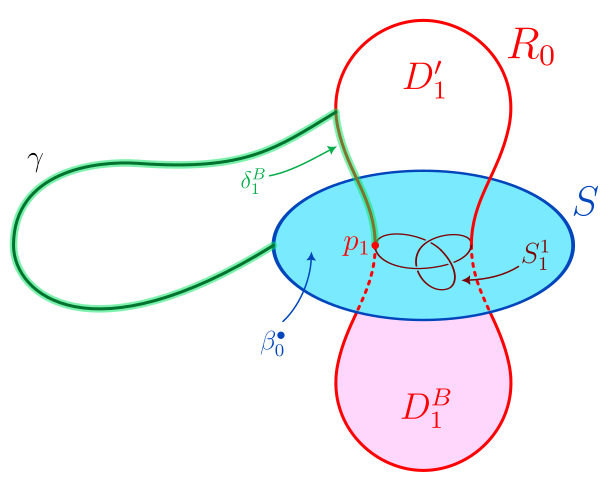
The barbell diffeomorphism, following Gabai–Budney–Gay–Hartman, is a mapping class represented in π0Diff(X,∂) and constructed by isotopy extension along certain "implanted barbell" configurations—specifically, pairs of spheres with connecting arcs (the "barbell"). If either sphere is unknotted, the resulting diffeomorphism is pseudo-isotopic to the identity, implicating a nontrivial element in the mapping class group which is, however, invisible to classical invariants.
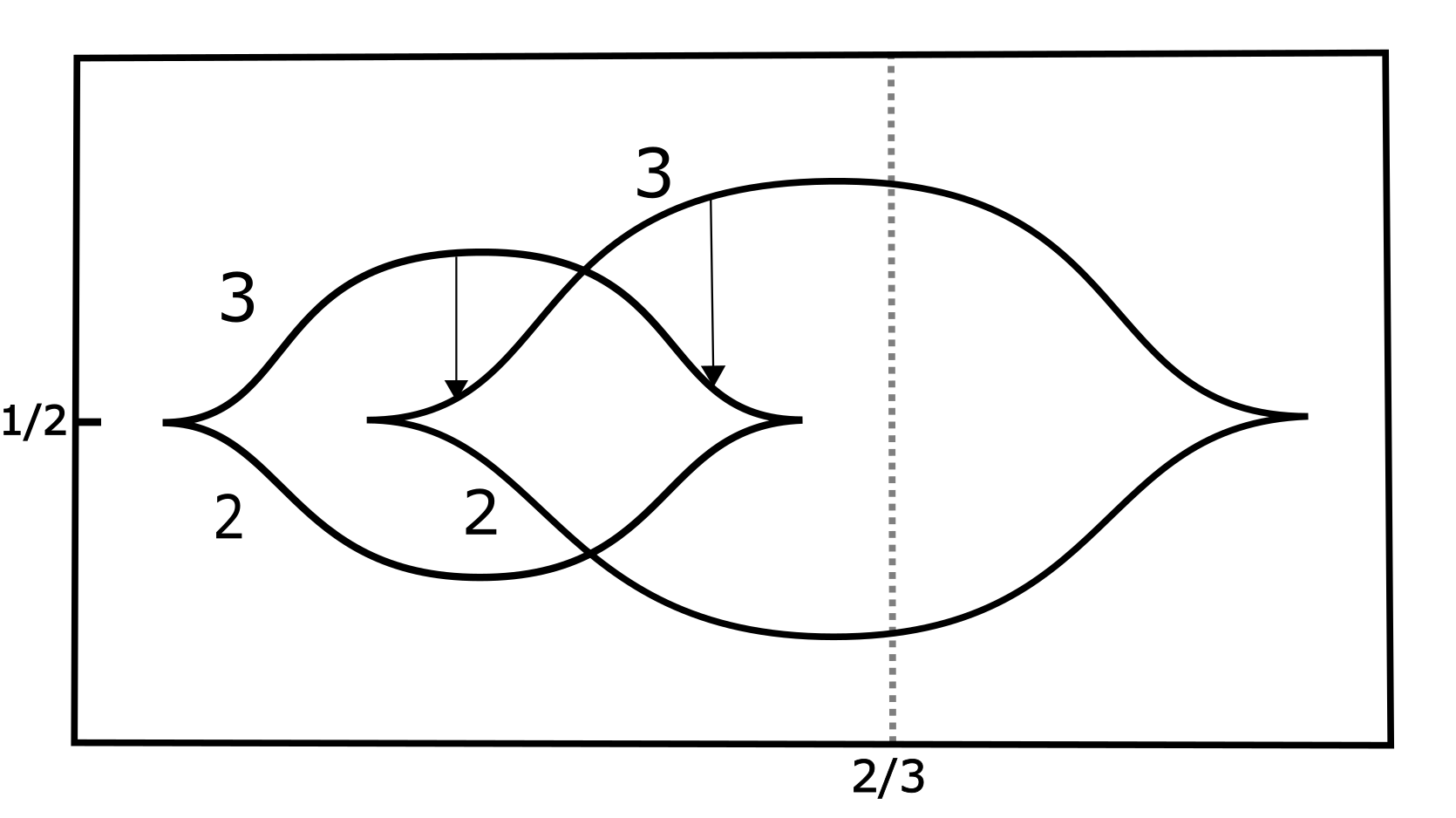
The author reformulates the trace of such pseudo-isotopies via Cerf theory. Explicitly, for a half-unknotted barbell, two explicit pseudo-isotopies are constructed:
The translation between these two handle moves provides a bridge between distinct Cerf-theoretic representatives of the same diffeomorphism, essential for explicit calculations of Θ.
Computation of the Hatcher-Wagoner Invariants
Vanishing of Σ
Both induced pseudo-isotopies for half-unknotted barbells are shown to lie in the kernel of X0. The main computational focus is thus on X1.
The explicit formula for X3 associated to a pseudo-isotopy coming from a Cerf diagram with a single (2,3)-eye is
X4
where:
The nontrivial contribution is always in the X7-summand of the target (the Whitehead group modulo appropriate relations), and the combinatorics of immersed/knotted intersections completely determine the formula.
Immersed Case
To generalize from embedded to half-unknotted immersed barbells, the author provides a meticulous 1-parameter isotopy extension argument, resolving the complications arising from self-intersections of the torus constructed during surgery. The main result is that the formula for X8 remains unchanged: only actual intersection circles contribute, and meridians arising from finger moves do not.
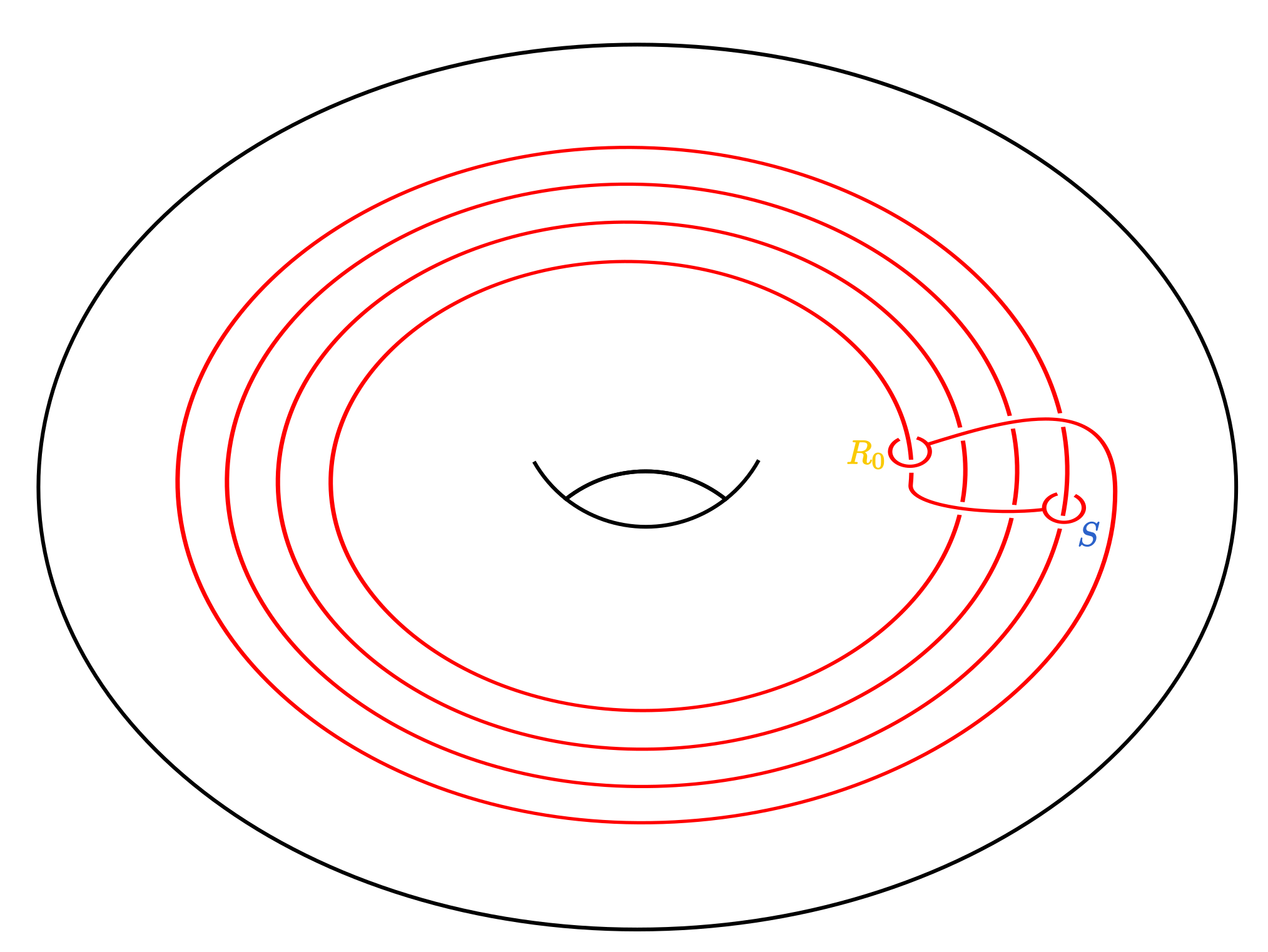
Figure 3: Immersed barbell: finger-pushing and local surgery creating self-intersections of the image torus, requiring disk "stretching" to maintain embeddedness in the construction.
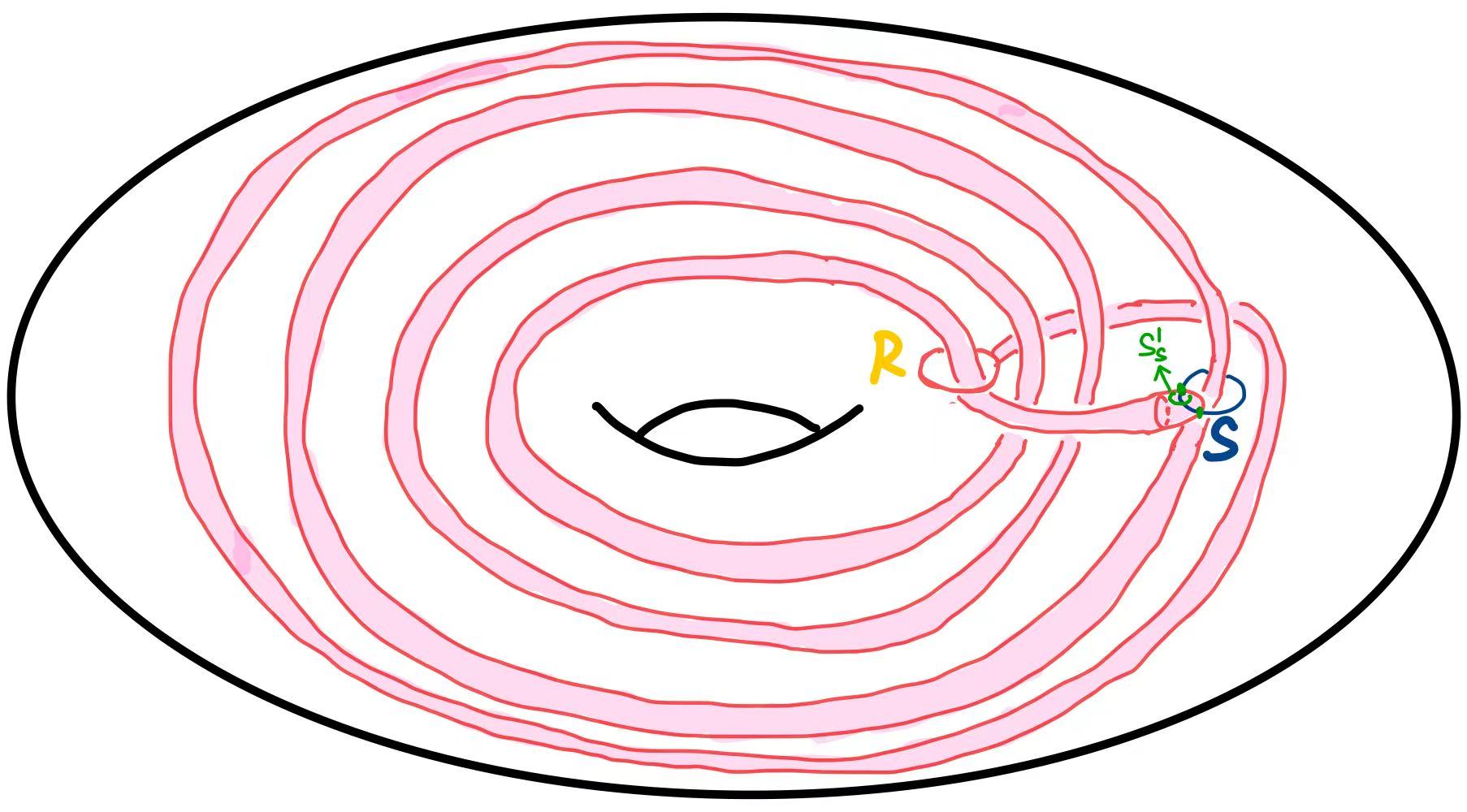
Figure 4: Illustration of the geometric transformation that occurs during the transition from an embedded to an immersed barbell map, with arc-connected self-intersection components.
Realization and Generation in X9
The explicit handlebody and pseudo-isotopic constructions provide realization results: For any P(X)→Diff(X,∂)0 and any P(X)→Diff(X,∂)1, the author constructs a half-unknotted immersed barbell diffeomorphism whose associated Hatcher-Wagoner invariant is exactly P(X)→Diff(X,∂)2. In connected sums of aspherical 3-manifolds, the resulting subgroup of the pseudo-isotopy class group is infinitely generated of infinite rank.
Illustrative Examples
A series of figures reinforces and clarifies the handlebody, surgery and Cerf-theoretic moves:
- (Figure 5) demonstrates the surgery along an embedded 2-sphere P(X)→Diff(X,∂)3, leading to an embedded torus and explicit handle decomposition, foundational for tracing the effect of a barbell map in the P(X)→Diff(X,∂)4-manifold.
- (Figure 6) and (Figure 7) display the key construction of parameterized disk and circle embeddings, central for the 1-parameter isotopy move that changes the Cerf diagram type.
- (Figure 8) captures the subtleties introduced by immersed (versus embedded) handle traces, including tracking new intersection circles with no effect on P(X)→Diff(X,∂)5.
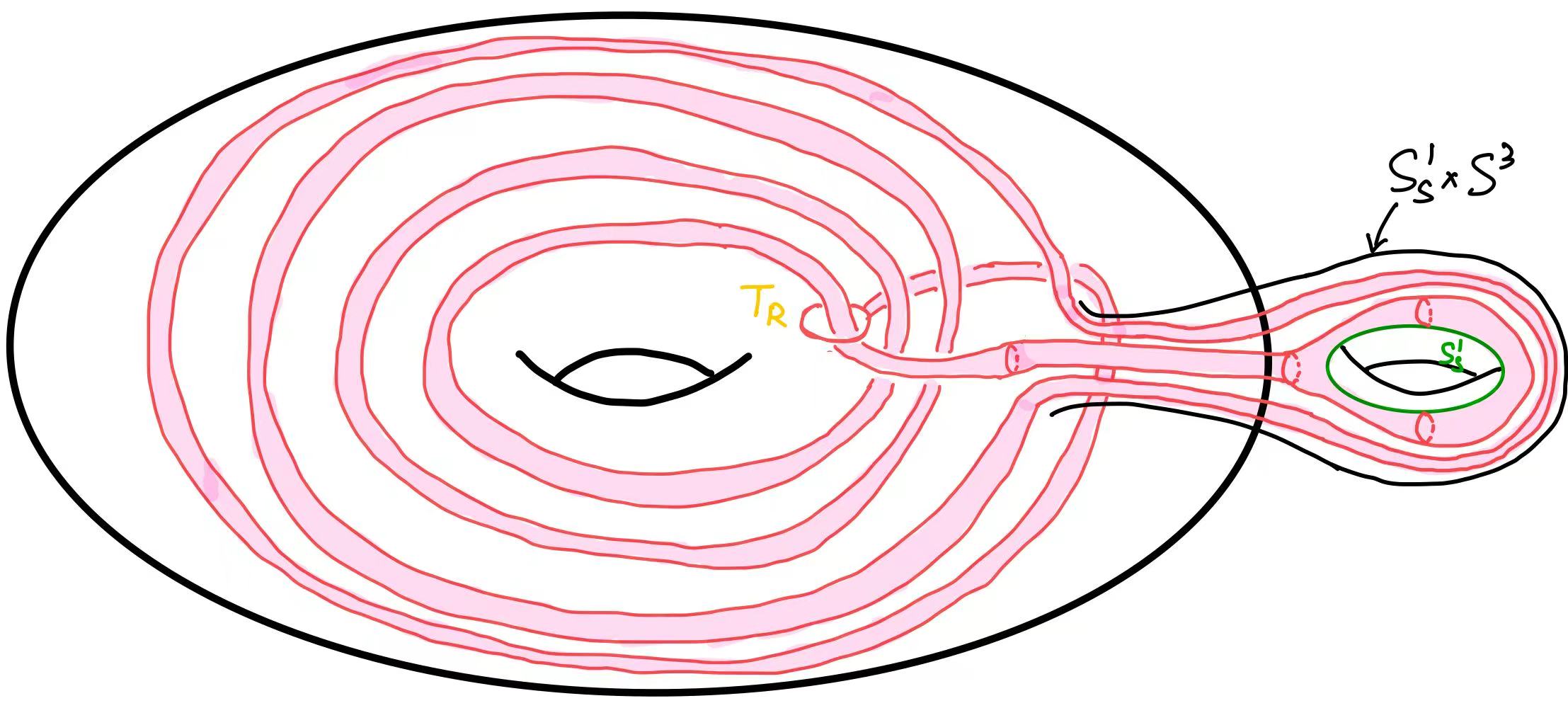
Figure 5: Surgery along P(X)→Diff(X,∂)6 creates an embedded torus P(X)→Diff(X,∂)7 representing a loop of handle decompositions corresponding to a barbell diffeomorphism.
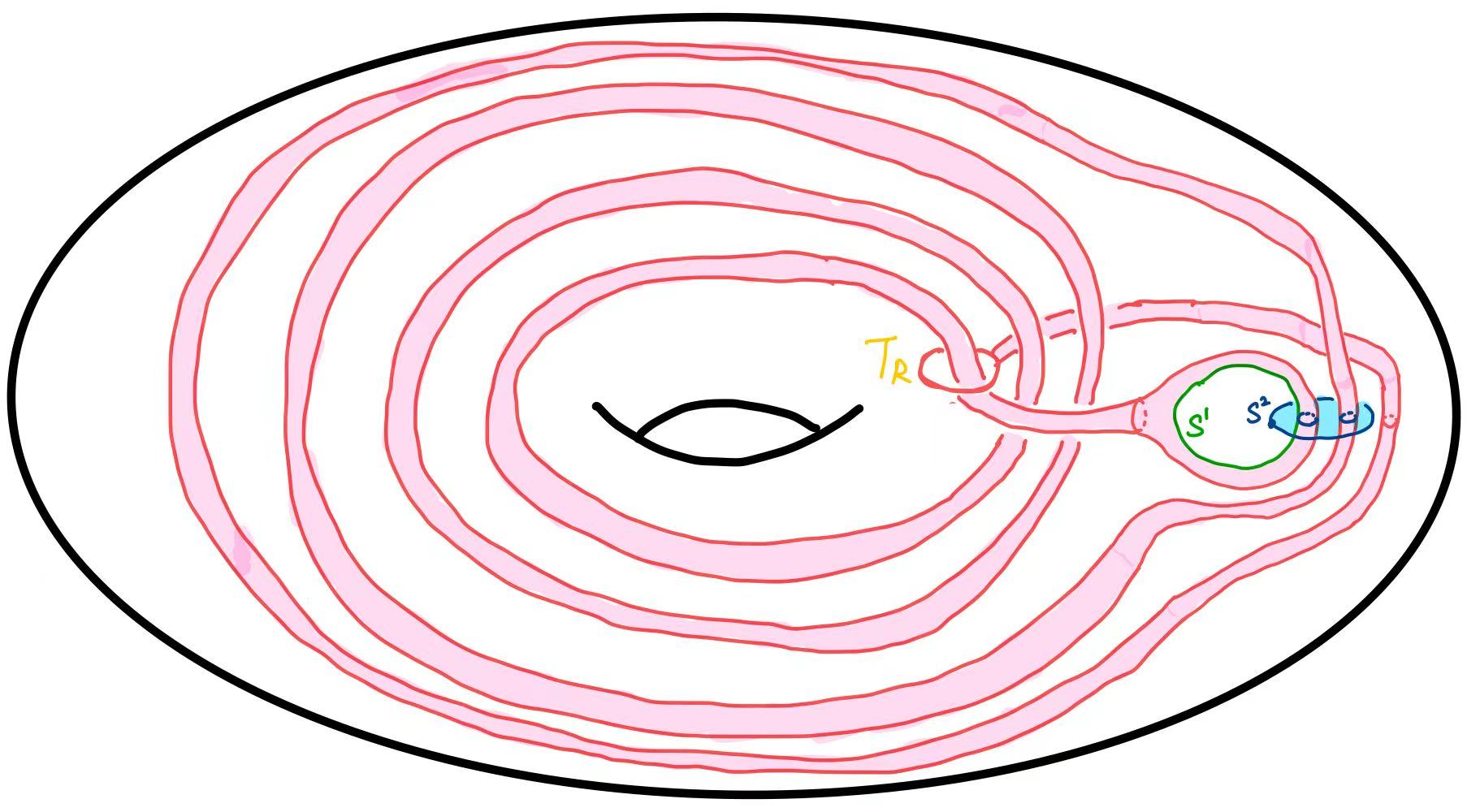
Figure 6: Dotted version of a (1,2)-handle loop: shows the parametrized motion of the P(X)→Diff(X,∂)8 showing a 1-handle in this high-dimensional representation.
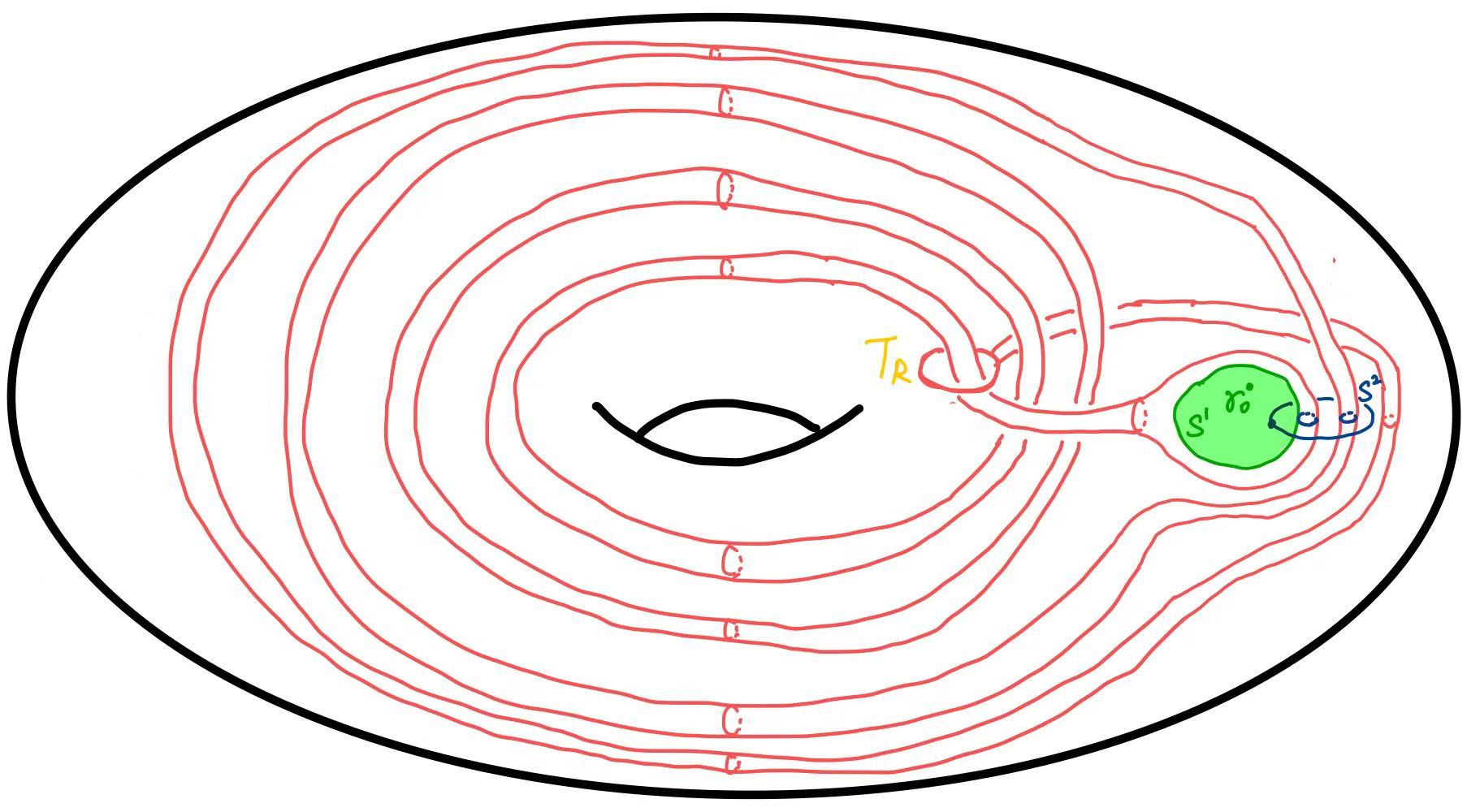
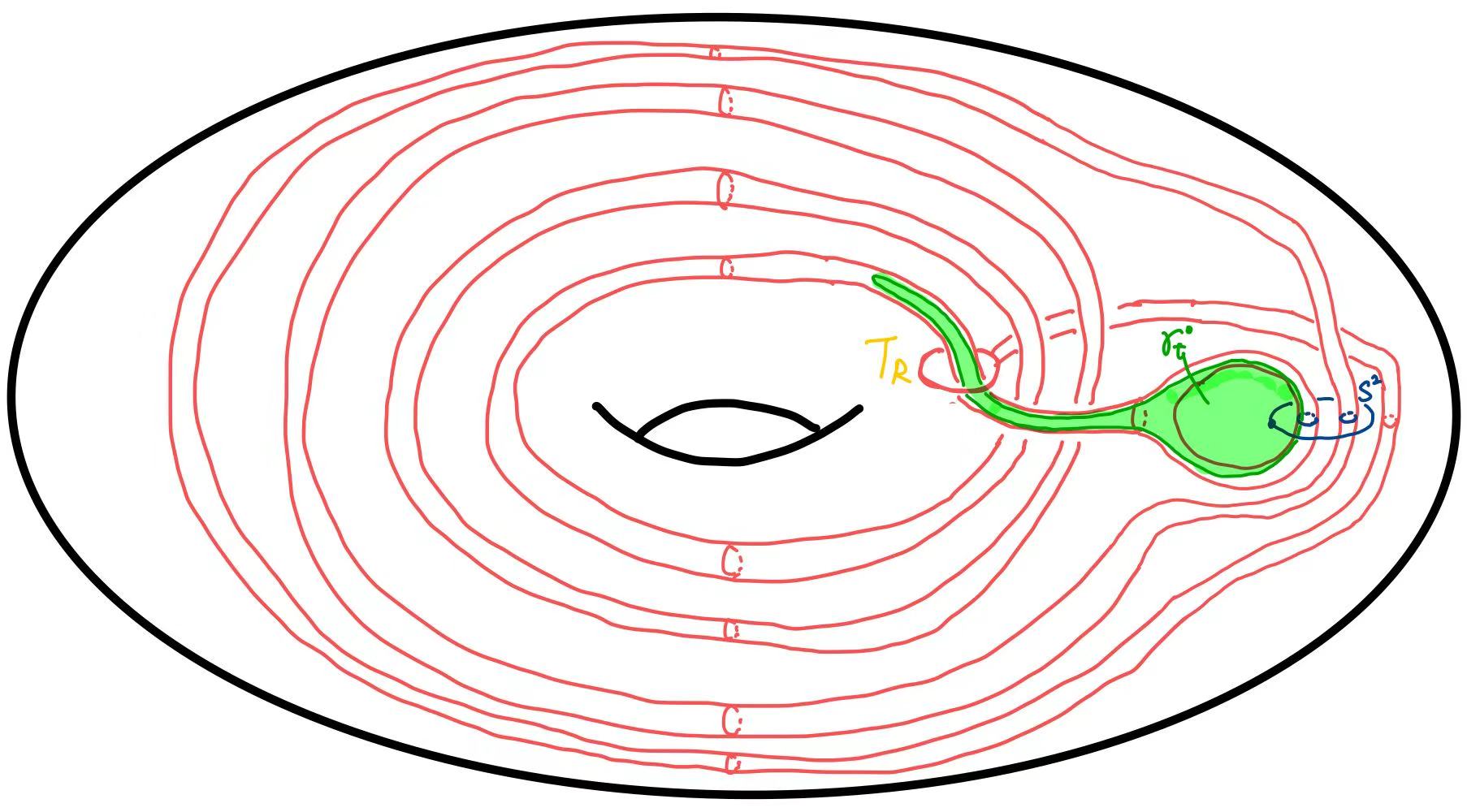
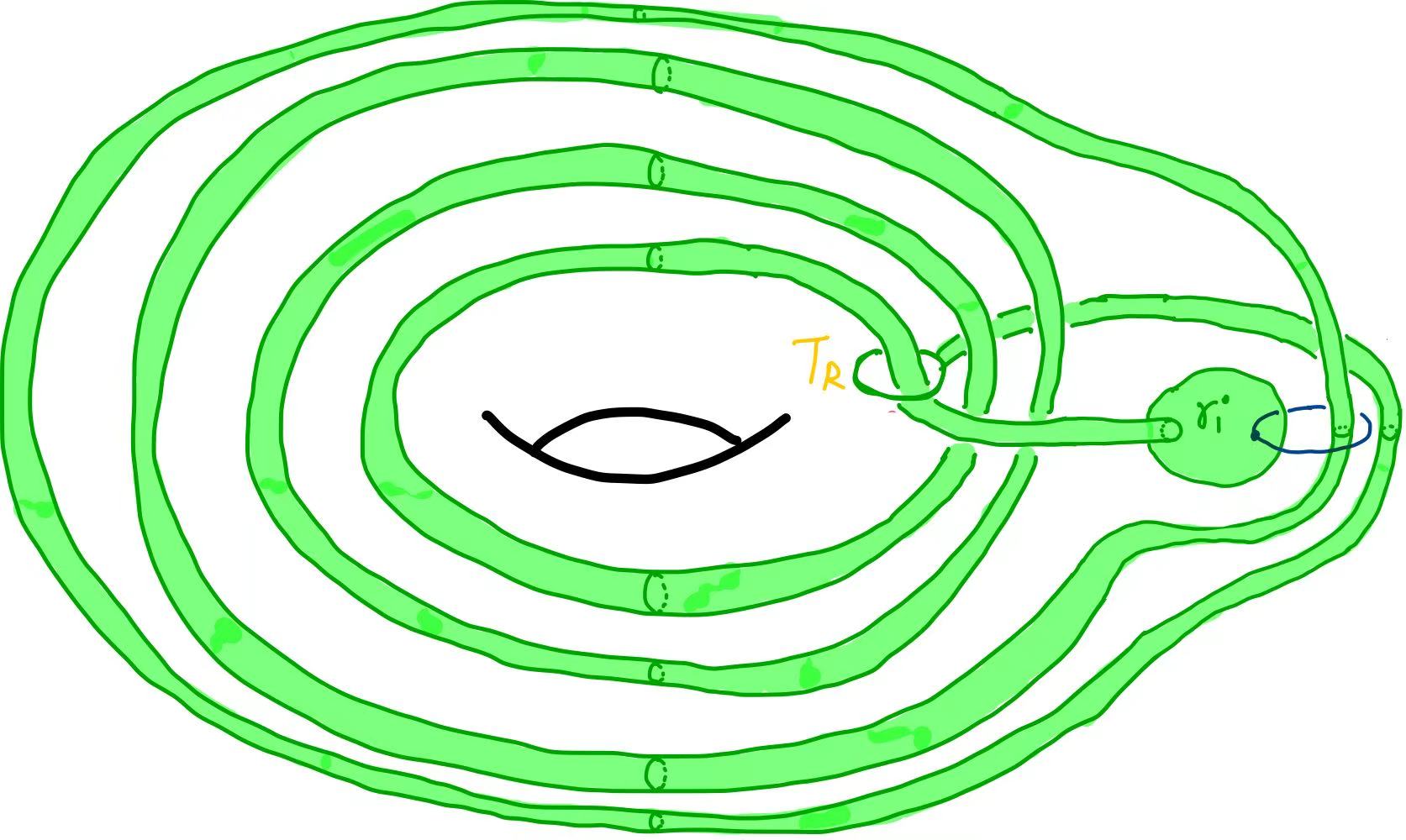
Figure 7: The deformation of attaching circles/disks over time, critical to constructing the isotopy from one Cerf diagram type to another.
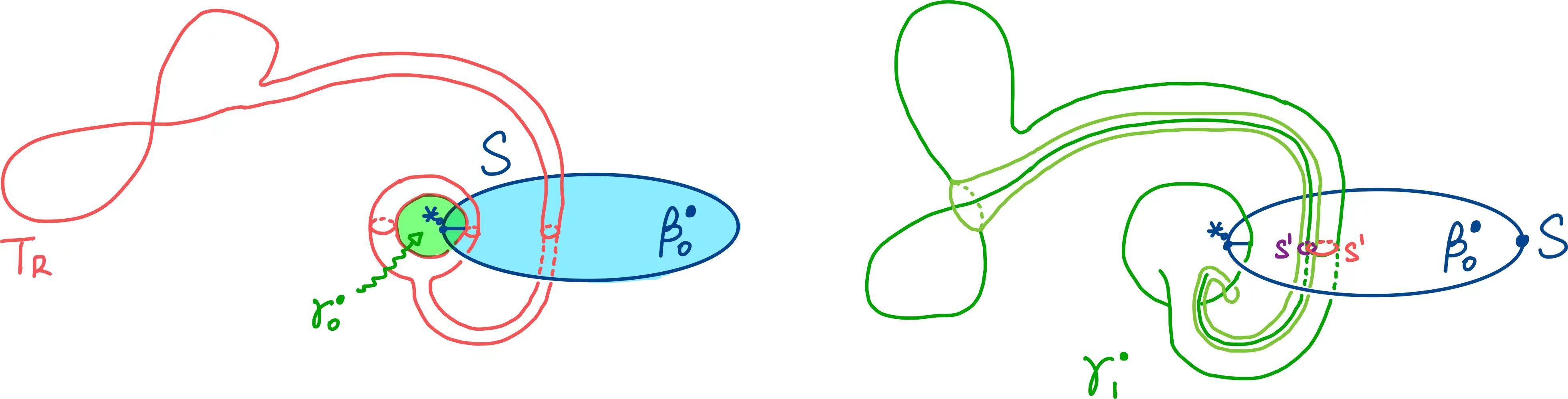
Figure 8: The effect of self-intersections on the construction of the required parameterized normal disks; only non-meridional intersection circles survive in the value of P(X)→Diff(X,∂)9.
Theoretical and Practical Implications
The results demonstrate that:
- Barbell diffeomorphisms, even when pseudo-isotopic to the identity, typically yield nontrivial mapping classes invisible to classical Whitehead invariants.
- All Hatcher-Wagoner invariants realizable by Singh's procedure can be explicitly constructed through half-unknotted barbell maps, establishing a link between the combinatorics of intersection data (handlebody theory) and stable pseudo-isotopy invariants in dimension four.
- The explicit mapping class group elements so produced are independent of the smooth structure and are thus robust under stabilization. This enables concrete control of the elements of the (often mysterious) group P(X)0 in geometric topology.
Practically, this opens the door for explicit classification and realization problems for pseudo-isotopy classes in dimension four (particularly handlebody structures built from Cerf theory) which are not accessible via classical algebraic invariants. The techniques are expected to transfer to related settings (e.g., the study of graspers and more general diffeomorphism actions in low-dimensional topology).
Conclusion
This paper provides effective, highly explicit geometric techniques to construct and control the Hatcher-Wagoner invariants corresponding to half-unknotted barbell diffeomorphisms, both in the embedded and immersed settings. The parametrized handlebody/Cerf-theoretic technology not only enables calculation of these subtler invariants but also exhausts all invariant values (of a specified type) via concrete mapping classes. This strengthens the bridge between Cerf-theory, explicit 4-manifold handlebody topology, and pseudo-isotopy theory, while providing pathways for further algebraic and geometric classification of diffeomorphism groups in dimension four.