Resolving Oblique Star-Disk Collisions in Quasi-Periodic Eruptions: Numerical Requirements and the Importance of Geometry
Published 1 Apr 2026 in astro-ph.HE and astro-ph.SR | (2604.00953v1)
Abstract: Star-disk collisions have been proposed as a promising mechanism for producing quasi-periodic eruptions (QPEs) in galactic nuclei. Because the stellar atmospheric scale height is orders of magnitude smaller than the stellar radius, studying the shock launching by stars poses a significant numerical challenge. We implement an immersed solid-boundary method in Athena++ to study bow-shock formation and ejecta launching when a solid sphere crosses an accretion disk at supersonic speed. After validating the method against experimental results for solid bodies in uniform flows, we perform two- and three-dimensional adiabatic simulations of star-disk collisions. We find that resolving the bow-shock stand-off distance during the compression phase is essential: under-resolved simulations severely underestimate the ejecta mass and energy. When adequately resolved, the ejecta properties agree well with analytical estimates. We further show that collision geometry plays a critical role. Oblique encounters, which arise naturally due to disk rotation, allow easier shock breakout from the disk's backside and substantially reduce the luminosity contrast between forward and backward ejecta compared to perpendicular collisions. These results emphasize the importance of both numerical resolution and three-dimensional geometry in modeling star-disk collisions and interpreting QPEs.
The paper presents a novel immersed solid-boundary method in Athena++ to model star-disk collisions in QPEs.
It finds that accurate simulation requires resolving the bow shock stand-off distance with at least 2 cells across 0.03 R*, as under-resolution misestimates ejecta properties.
The study reveals that oblique impacts boost ejecta energetics and backward emission, emphasizing collision geometry's role in observable QPE signatures.
Resolving Oblique Star-Disk Collisions in Quasi-Periodic Eruptions: A High-Fidelity Hydrodynamic Study
Introduction and Context
Quasi-periodic eruptions (QPEs) observed in galactic nuclei exhibit recurrent, soft X-ray flares with regular cadence and high duty cycles. The physical origin of these eruptions is debated, with leading models invoking repeated interactions between stars (or compact objects) and accretion disks around supermassive black holes (SMBHs). In the star-disk collision model, a stellar companion on an inclined orbit impacts the disk, driving supersonic shocks and generating ejecta, which subsequently produce observable QPEs. Critical aspects of the hydrodynamics—shock morphology, ejecta energetics, and radiation emission—are sensitive to the collision angle, disk/stellar parameters, and, notably, to numerical resolution in simulations.
This paper introduces an immersed solid-boundary method for Athena++ to model star-disk collisions, focusing on 2D and 3D adiabatic hydrodynamic simulations, with a particular emphasis on the role of collision geometry and numerical convergence. By treating the star as a solid, the authors rigorously assess the requirements for resolving bow shocks and ejecta, quantifying sensitivities to dimensionality and impact obliquity (i.e., the angle between disk and stellar velocities).
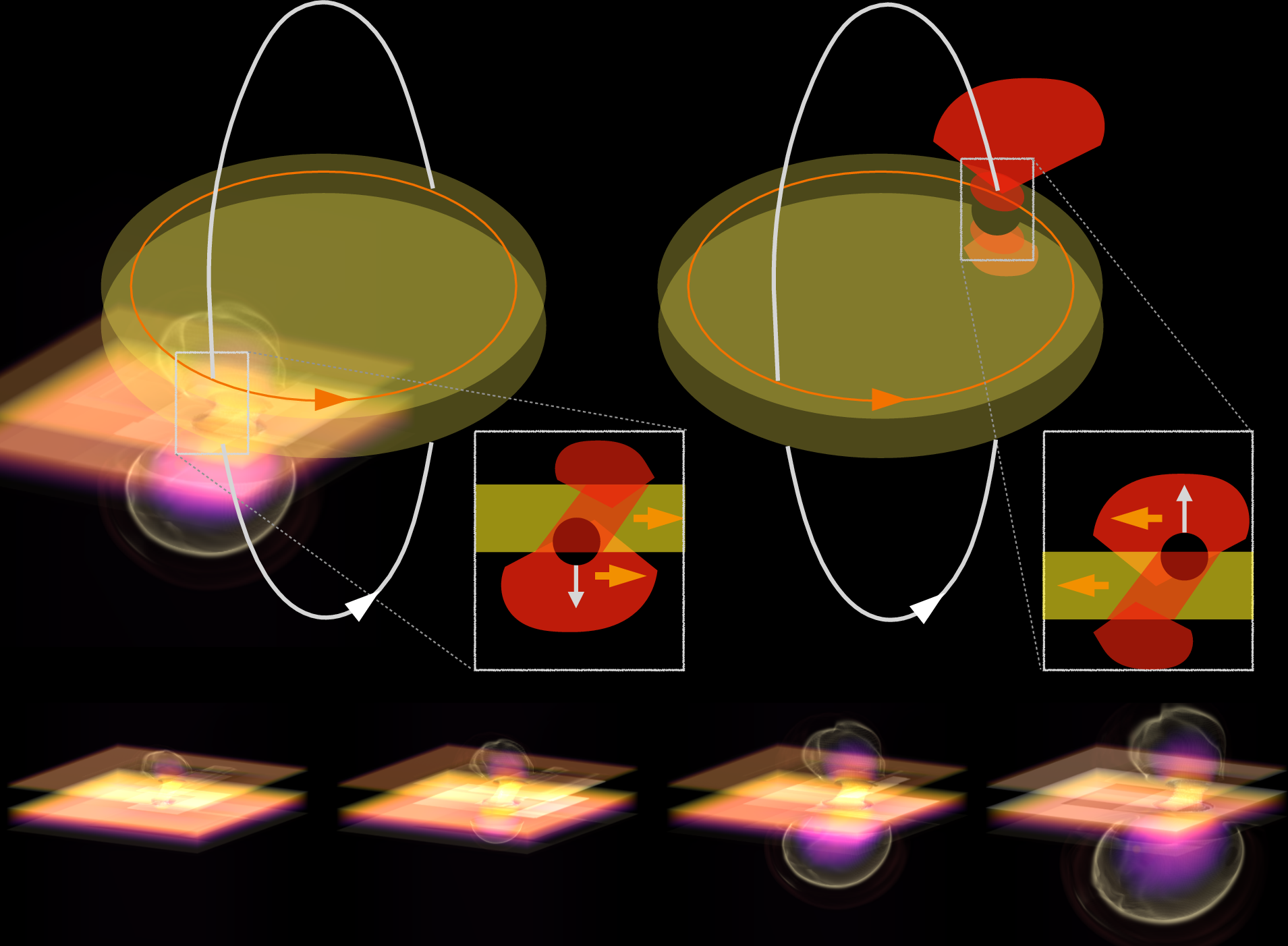
Figure 1: Schematic rendering of recurring star-disk collisions near an SMBH, resulting in episodic energy outbursts and QPEs.
The challenge of simulating star-disk collisions lies in faithfully capturing the extremely small stellar atmospheric scale heights and resolving bow shocks with stand-off distances orders of magnitude below stellar radii. The authors circumvent the inherent limitations of high-density, resolved stellar atmosphere models (which tend to over-strip mass) by treating the star as a rigid, reflective boundary. Utilizing a nonlinear ghost-cell immersed boundary scheme in Athena++, they ensure accurate enforcement of spherical boundary conditions within a Cartesian grid while retaining compatibility with mesh refinement.
Results from benchmark tests (Mach number-dependent bow shock stand-off distances, shock shapes, and drag forces) are quantitatively consistent with analytical predictions and laboratory data, verifying the method's precision across 2D and 3D domains.
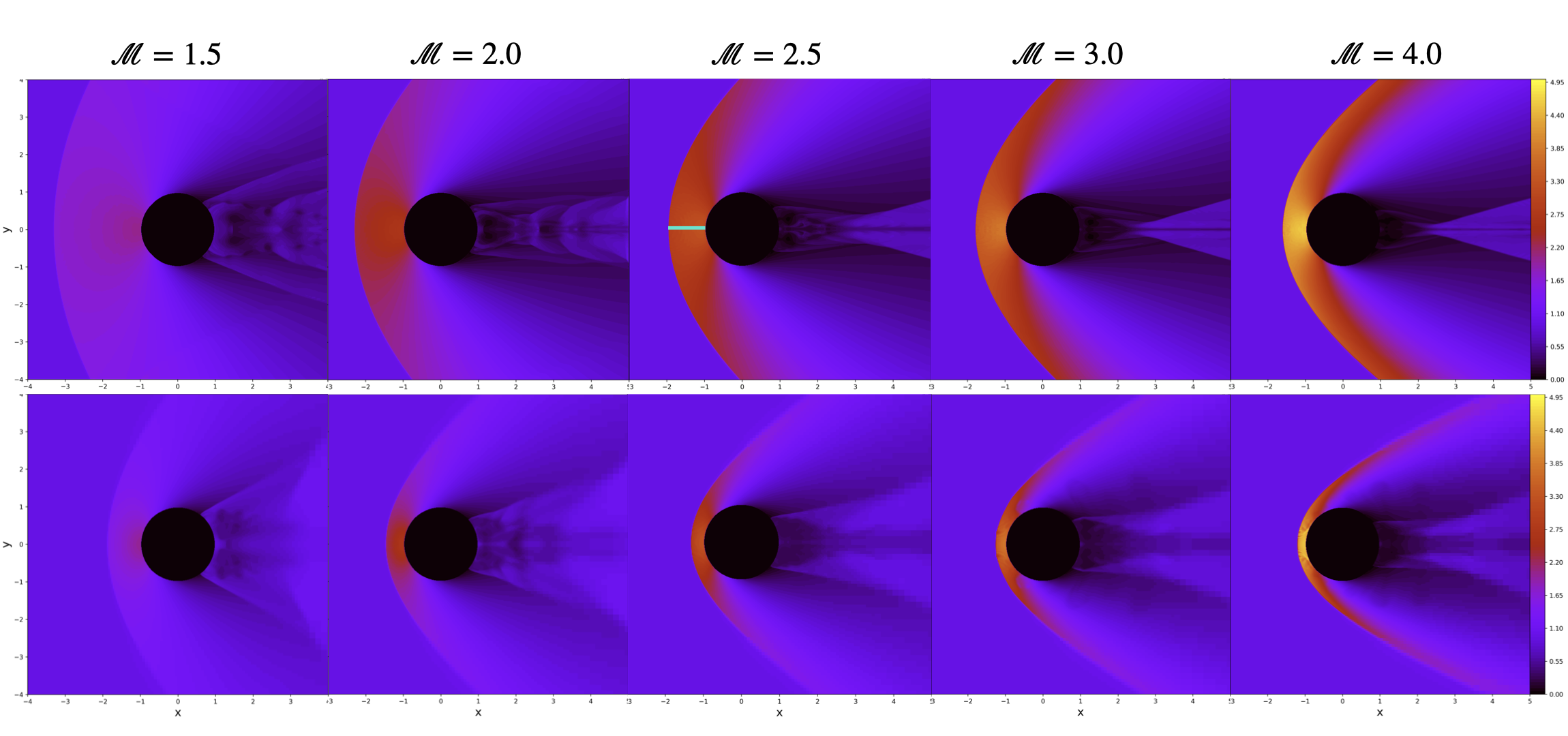
Figure 2: Density distributions of a solid sphere traversing a uniform supersonic flow at varying Mach numbers; comparison of 2D and 3D flows highlights geometric effects.
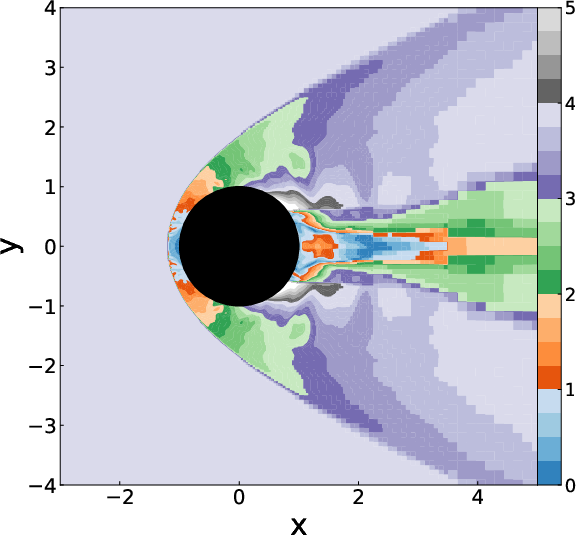
Figure 3: Steady-state midplane Mach number from a 3D supersonic flow simulation illustrates post-shock structure and wake morphology.
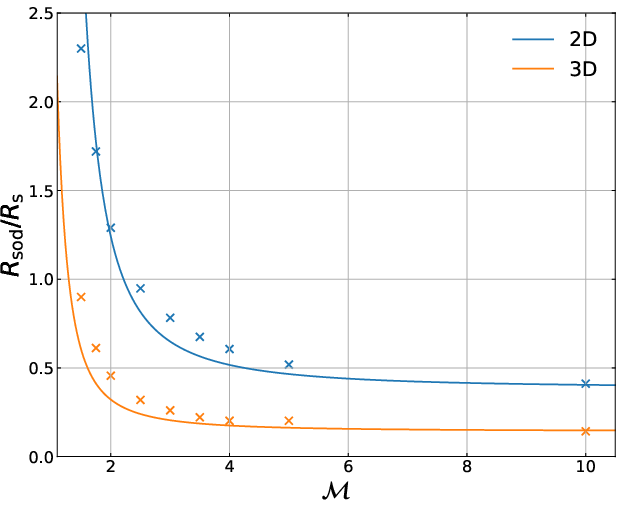
Figure 4: The shock stand-off distance Rsod as a function of Mach number, confirming empirical and analytical scaling in both 2D and 3D.
Star-Disk Collision Hydrodynamics: Resolution and Physical Regimes
The authors perform an extensive suite of 2D and 3D simulations, varying spatial resolution, impact velocity, and relative geometry (perpendicular and oblique inclinations). Key findings include:
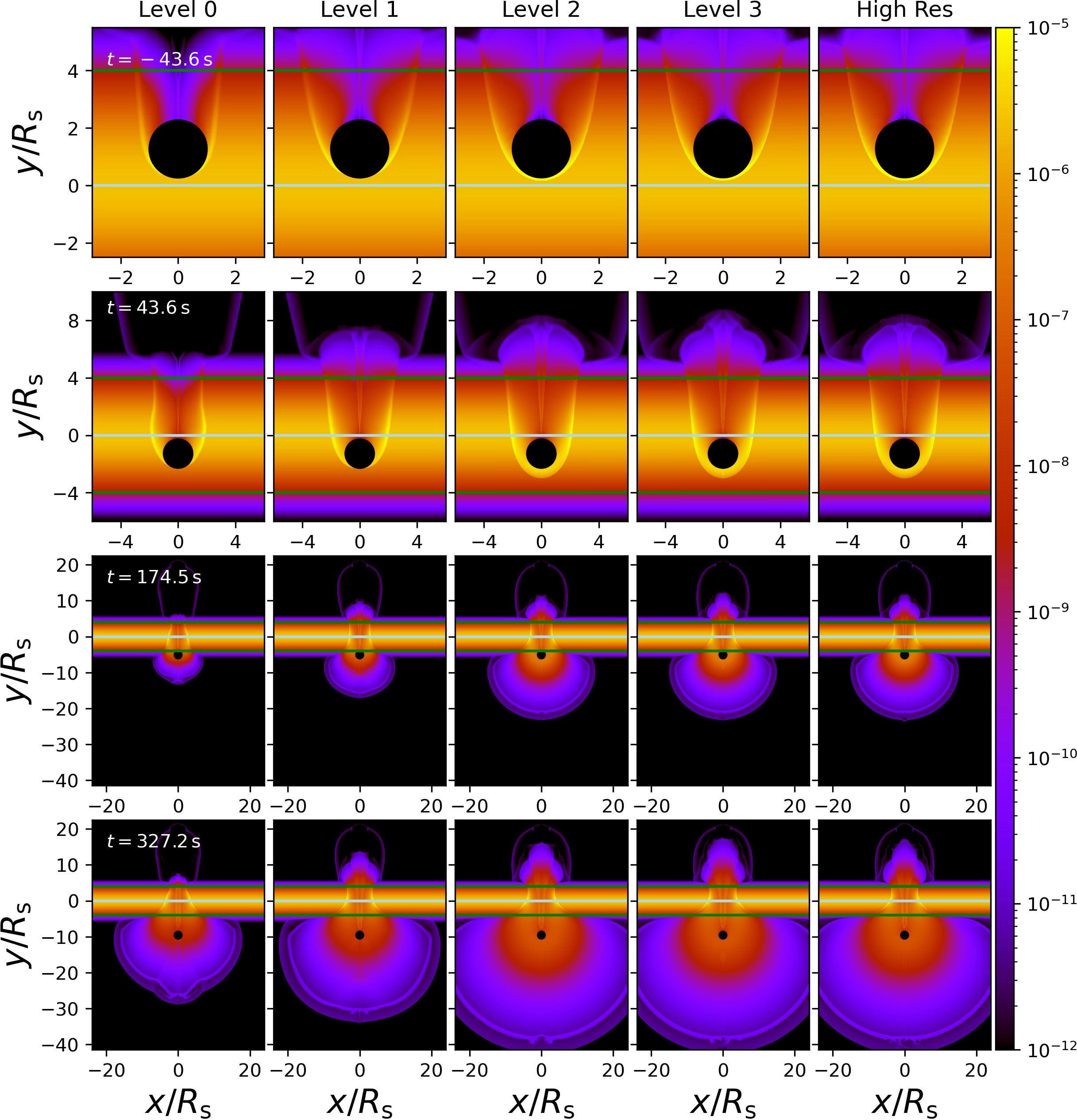
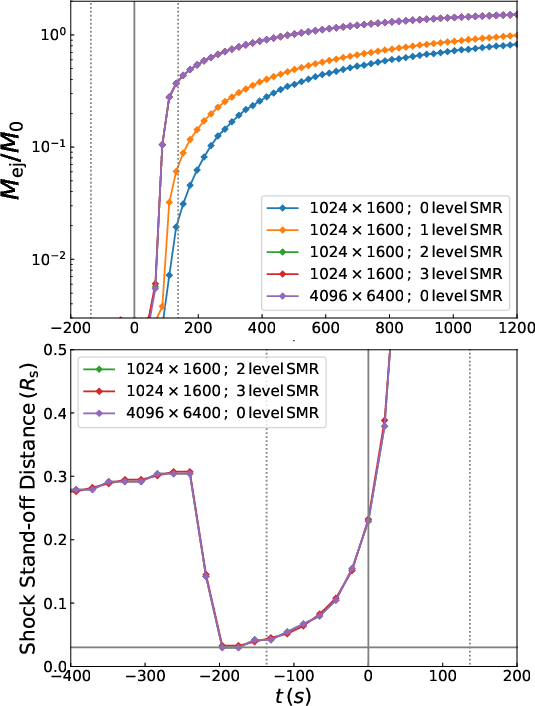
Resolution Dependence: Accurately capturing the bow-shock stand-off distance during the compression phase is mandatory for correct ejecta estimation. Under-resolved simulations dramatically underestimate mass/energy transfer into the ejecta, misrepresenting both local shock structure and radiative prospects. For a Sun-like star traversing an AGN disk, at least O(2) cells across 0.03R∗ (the shock standoff distance) are mandatory, favoring static mesh refinement (SMR) in the central region.
Figure 5: Temporal evolution of 2D density fields for various resolutions and SMR levels; under-resolved cases erase the front shock and underestimate forward expansion.
Figure 6: Time evolution of the forward ejecta mass and shock stand-off distance across resolutions; convergence demands at least 80 cells per R∗ in the impact region.
Ejecta Morphology and Energetics: The forward bow shock drives a near-parabolic shock through the disk; post-breakout, the shocked region transitions to quasi-adiabatic expansion, with a clear contact discontinuity. The backward (downstream) ejecta is systematically weaker, consistent with lower post-shock pressure and negligible breakout.
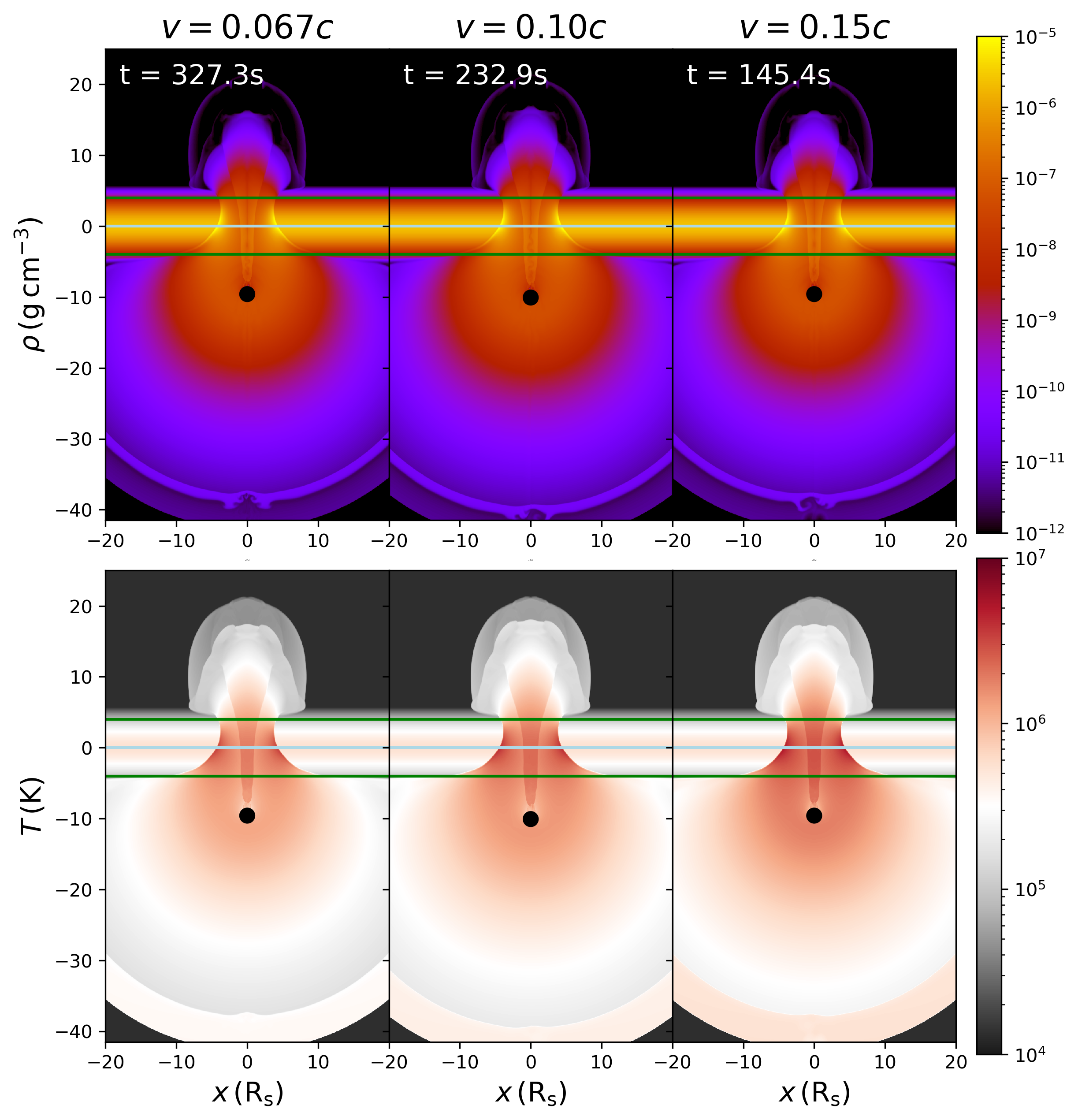
Figure 7: Density and temperature distributions for star-disk collisions at varying velocities, demonstrating insensitivity of total ejecta mass to v∗ but strong scaling of temperature/kinetic energy.
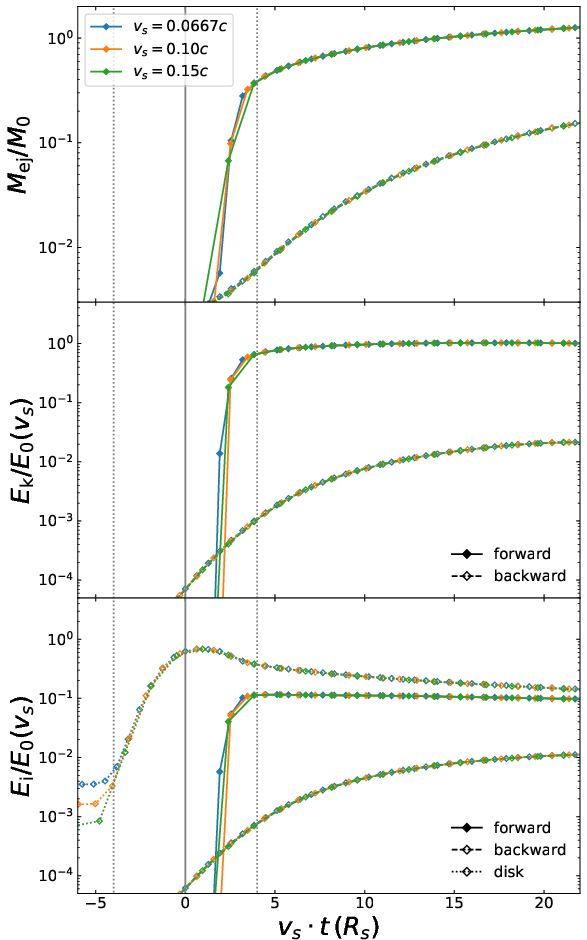
Figure 8: Scaled mass and energy release as a function of crossing distance; kinetic energy is quadratic in v∗, mass is fixed by local column density.
Impact Velocity: While post-shock temperature and expansion rate scale with v∗2, the total ejecta mass is set primarily by the local disk column swept out, independent of the impact velocity (consistent with analytical models).
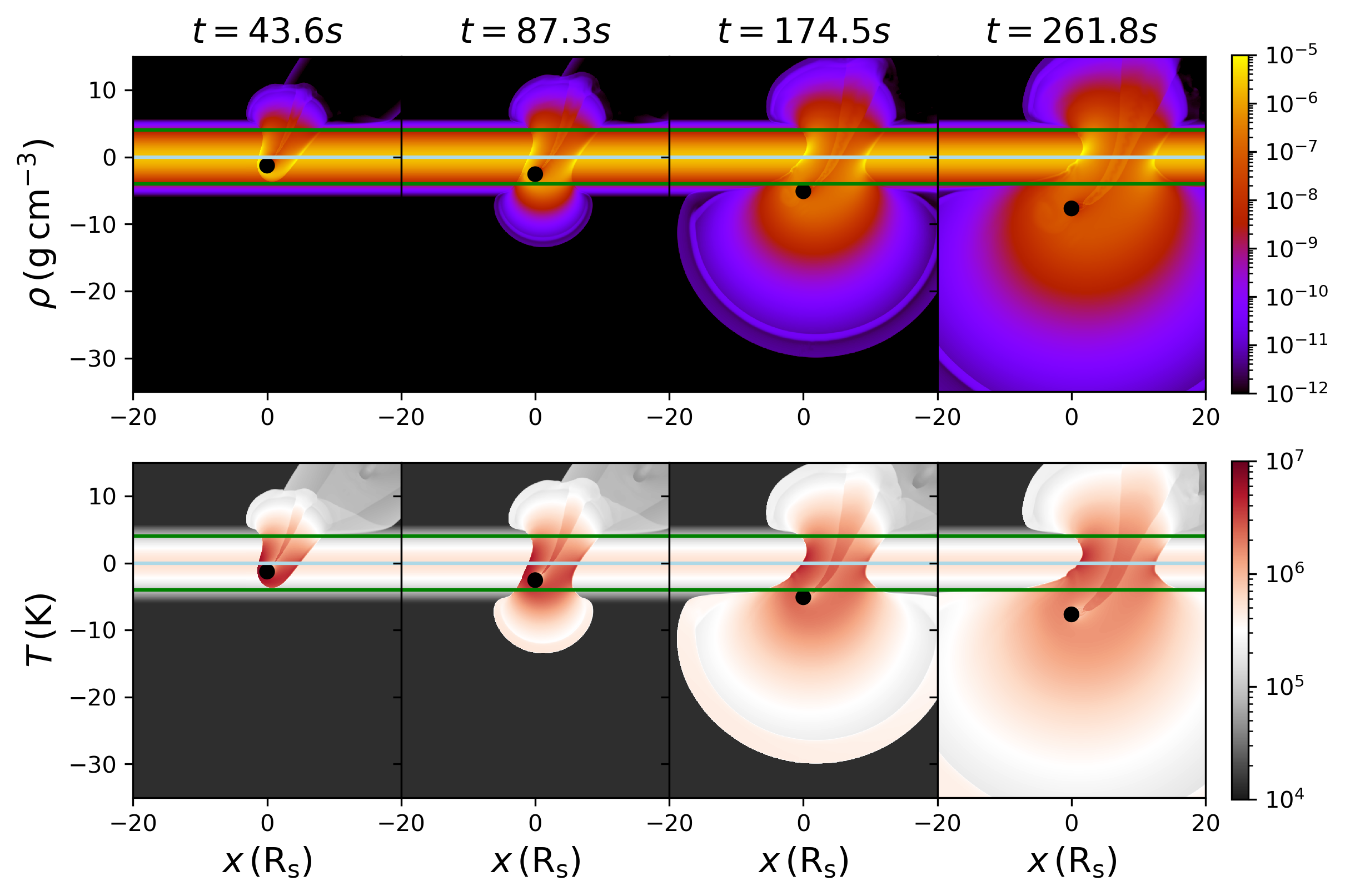
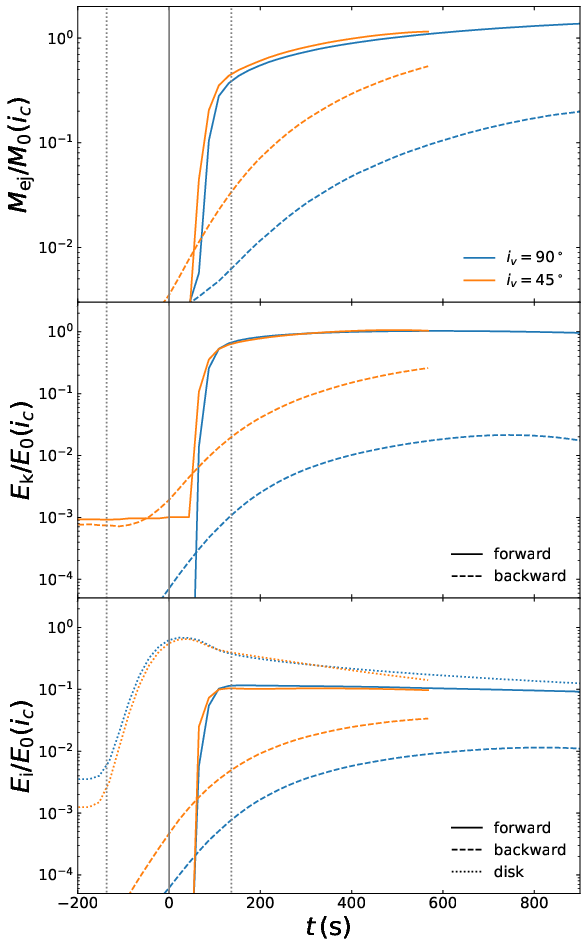
Oblique Collisions and Disk Rotation: Incorporating realistic disk rotation (i.e., vdisk∼v∗) generically induces oblique impacts with iv=45∘, increasing the effective column density encountered and therefore the total ejecta mass/energy by a factor 2 relative to the O(2)0 case. Most critically, oblique geometry supports earlier breakout and more pronounced backward ejecta, shrinking the luminosity contrast between forward and rear-side emission.
Figure 9: Density and temperature evolution for an inclined (O(2)1) impact; the expansion is asymmetric due to the disk’s vertical stratification.
Figure 10: Forward and backward ejecta mass and energy, normalized by effective cross-section, explicitly verifying the predicted enhancement and symmetry breaking in the oblique regime.
Three-Dimensional Effects and Photospheric Emission
3D simulations demonstrate several key alterations relative to 2D:
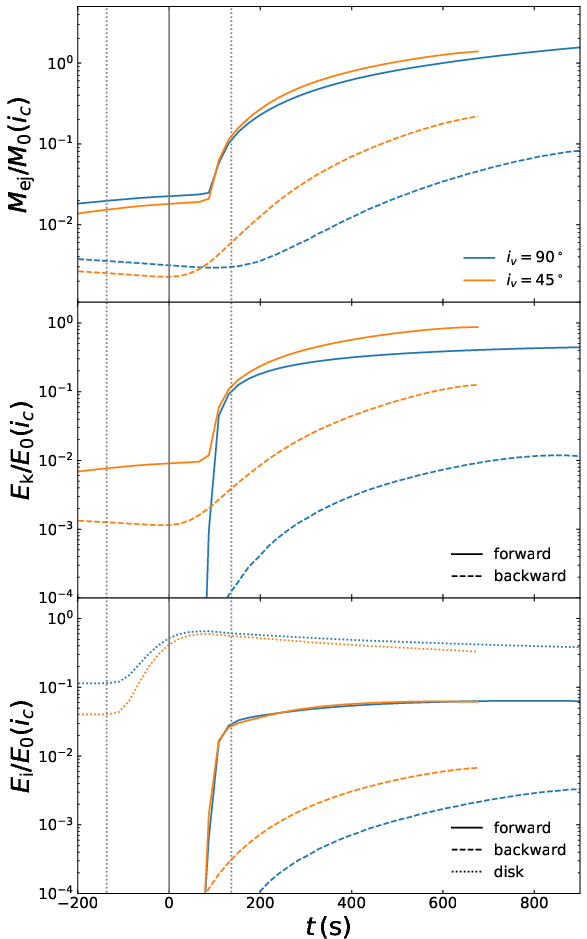
Reduced Forward Expansion: The ejecta expands more slowly as outflow is no longer collimated by cylindrical symmetry. The stand-off distance decreases; the total swept mass/energy remains consistent with analytic predictions, but the fraction converted to forward kinetic energy is diminished.
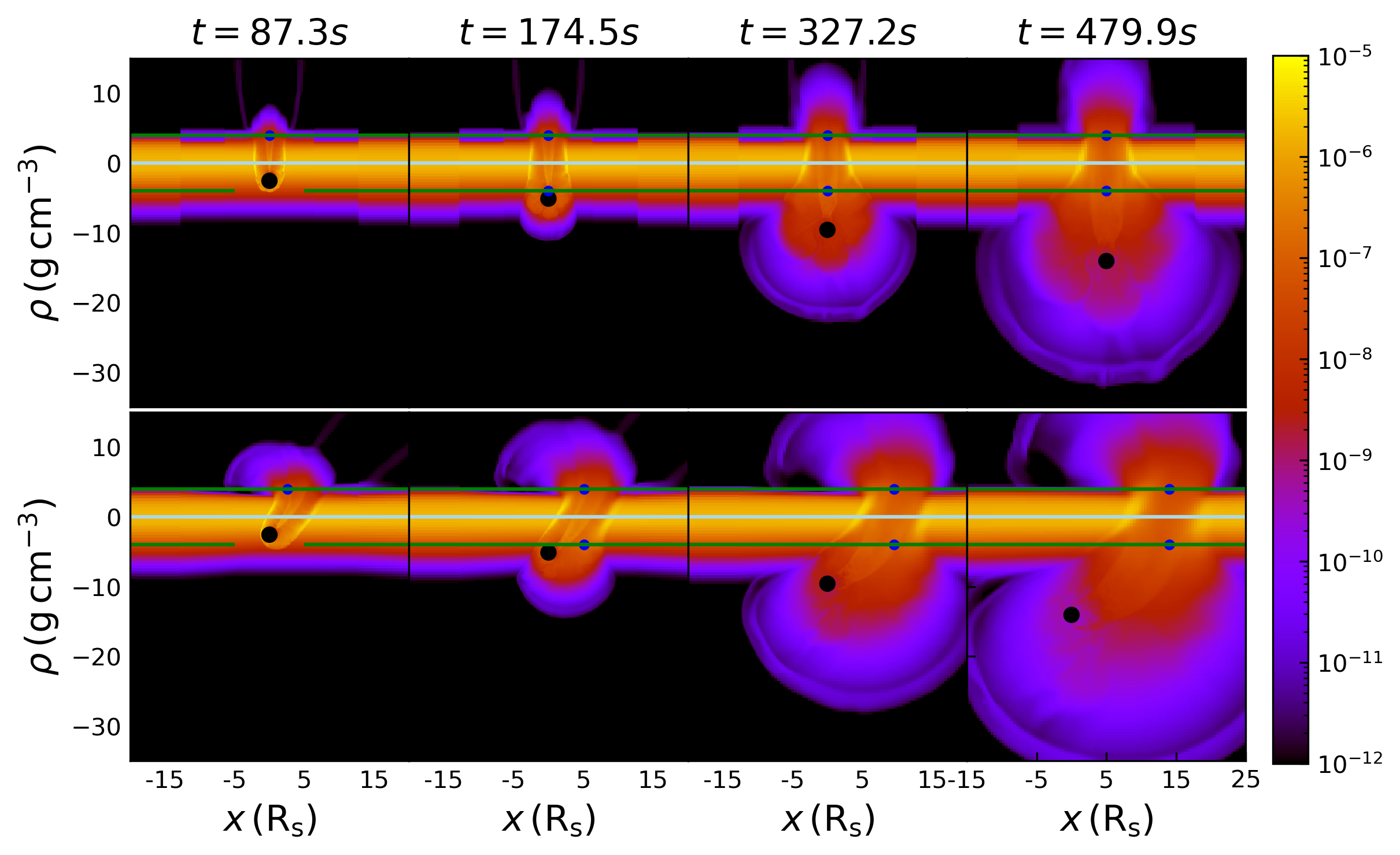
Figure 11: 3D midplane density snapshots for both perpendicular and oblique impacts, with clear identification of forward and backward ejecta morphology.
Shock Structure: Full 3D profiles confirm the presence of significant anisotropy in inclined collisions, with material preferentially pushed along and counter to the stellar trajectory.
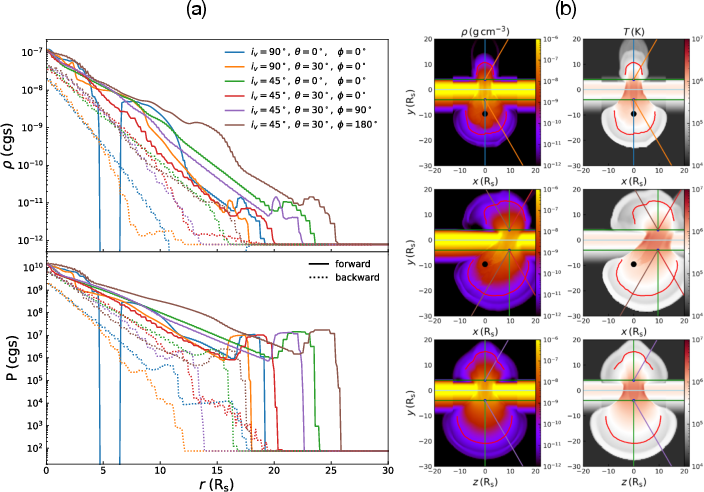
Figure 12: Ejecta mass, kinetic energy, and residual disk internal energy from 3D simulations; the oblique geometry boosts backward emission, but forward kinetic energy fraction drops.
Figure 13: Radial profiles of density and pressure as a function of distance from the impact point, showing persistently higher backward densities in oblique cases.
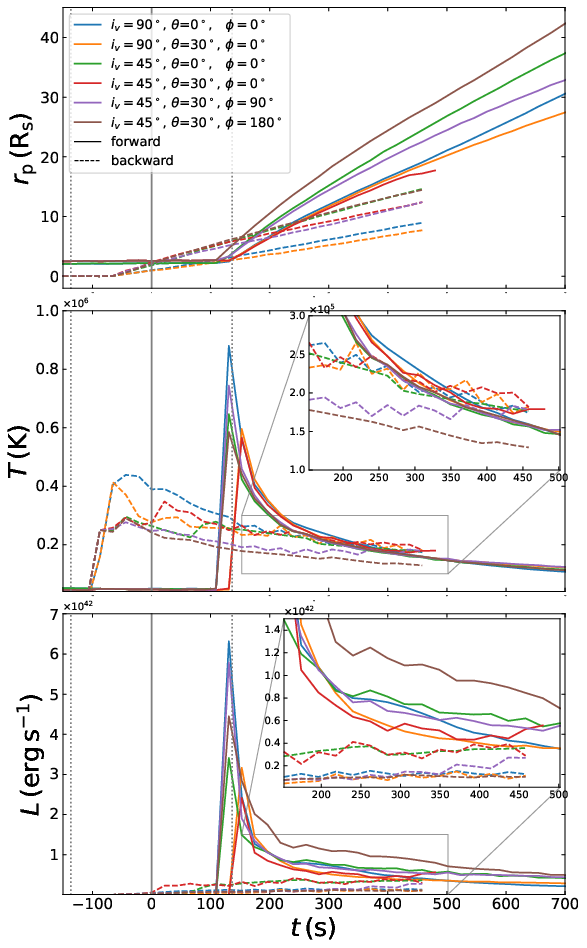
Photospheric Analysis and Luminosity: Radiative output is inferred by computing the position of the O(2)2 photosphere along selected directions. The peak forward luminosity attains O(2)3, consistent with observed QPEs when scaled appropriately. Crucially, backward emission becomes much closer in magnitude to forward emission in oblique cases, down from O(2)4 to a few times; cooling timescales and lightcurve symmetry are geometry-dependent.
Figure 14: Directional dependence of the photospheric radius, temperature, and luminosity in 3D; oblique impacts increase backward observable emission.
Implications, Limitations, and Future Directions
These results quantitatively establish several key points for modeling QPEs and related phenomena:
Numerical Requirements: Accurate resolution of shock front morphologies—specifically, the bow-shock stand-off distance—is required for correct ejecta mass/energy estimation. Under-resolved simulations risk grossly mischaracterizing observable signatures.
Geometry Dominance: The impact inclination O(2)5, primarily set by disk rotation but in real systems potentially modulated by Kerr frame dragging and orbital eccentricity, has a leading-order effect on both luminous and morphological outcomes. Variations in O(2)6 could plausibly account for much of the diversity in QPE observational properties.
Dimension and Energy Partition: Dimensionality dictates the efficiency of energy conversion into observable forward emission. Analytical formulae for ejecta mass/energy (e.g., scaling with swept disk column) hold robustly in both 2D and 3D, but kinetic energy fractions and lightcurve timescales require 3D treatment.
Theoretical implications include constraining the structure and scale height of AGN disks, the possible contribution of repeated star-disk interactions to nuclear X-ray transients, and refinement of EMRI rates from observed QPE timescales.
Practically, these results give direct input into synthetic lightcurve/radiative transfer work, including the scaling of observable emission with varying geometry. The authors’ approach, in concert with recent multi-physics studies incorporating radiative transfer and atmospheric ablation, offers the first pathway toward consistent, high-fidelity predictions of QPE properties for comparison to next-generation time-domain surveys.
Conclusion
The immersed solid-boundary framework introduced here advances the state of the art in high-resolution, ab initio star-disk collision hydrodynamics. The work establishes, quantitatively and for the first time in 3D, the critical dependence of ejecta properties and predicted luminosity on numerical resolution and impact geometry. These findings clarify the theoretical underpinning of star-disk QPE scenarios and underline the necessity of realistic 3D modeling to capture the observable diversity of QPEs in galactic nuclei. Further development—including incorporation of full radiative transfer, disk structure evolution, and stellar deformation—will enable increasingly predictive comparisons to the rapidly growing observed QPE sample.
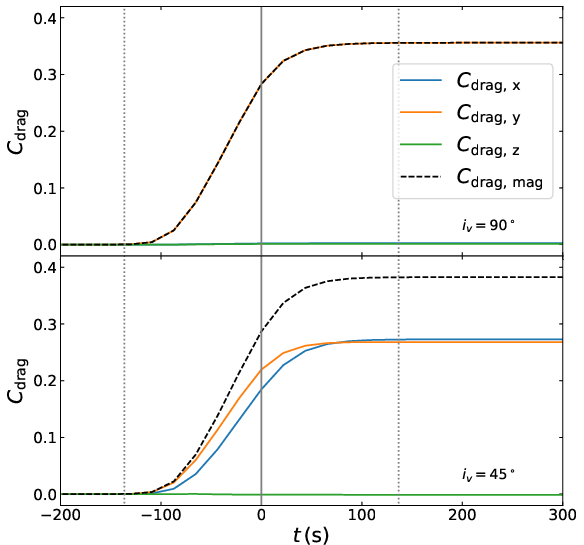
Figure 15: Time-dependent aerodynamic drag coefficients measured in 3D for perpendicular and oblique impacts, confirming higher net drag in oblique geometries due to augmented ejecta momentum.