- The paper introduces a spin-2 mediated dark matter model where only photons couple to the mediator, enabling freeze-in production via photon-fusion.
- The study employs vector boson fusion and boosted decision trees to distinguish signal from background, achieving 95% CL limits for mG up to 1 TeV at HL-LHC.
- The analysis connects collider results with cosmological constraints, highlighting the complementarity between collider searches and non-collider dark matter probes.
Probing Freeze-In Dark Matter via a Spin-2 Portal at the LHC with Vector Boson Fusion and Machine Learning
The paper systematically investigates a dark matter (DM) model in which the Standard Model (SM) communicates with a hidden scalar DM sector exclusively through a massive spin-2 mediator, Gμν. This mediator couples minimally via the energy-momentum tensor, providing a theoretically consistent and UV-motivated framework. The coupling structure is parametrized via two scales: Λγ (coupling to photons) and Λχ (coupling to DM), with the possibility of asymmetric interactions between sectors.
A salient feature of this model is the "photon-only portal": Gμν couples only to photons in the SM, suppressing standard resonance channels relying on quark or gluon initial states and evading stringent direct detection and astrophysical constraints. The dominant cosmological DM production mechanism is freeze-in via photon-fusion,
γγ→G∗→χχ,
where the feeble interaction (large Λγ,Λχ) ensures DM never thermalizes. The relic abundance calculation determines the viable parameter space consistent with cosmological and reheating temperature (TR) constraints, incorporating off-resonant (UV freeze-in) and resonant (on-shell G production) regimes.
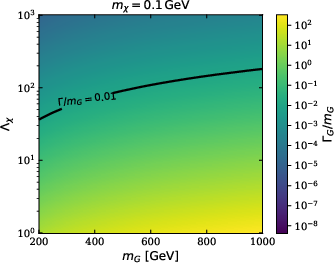
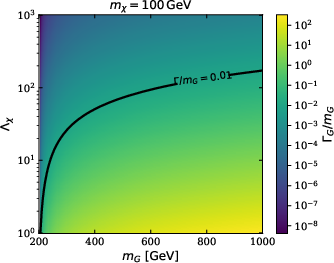
Figure 1: Ratio of decay width to spin-2 mediator mass for different mχ, indicating the relative lifetimes of the mediator as a function of model parameters.
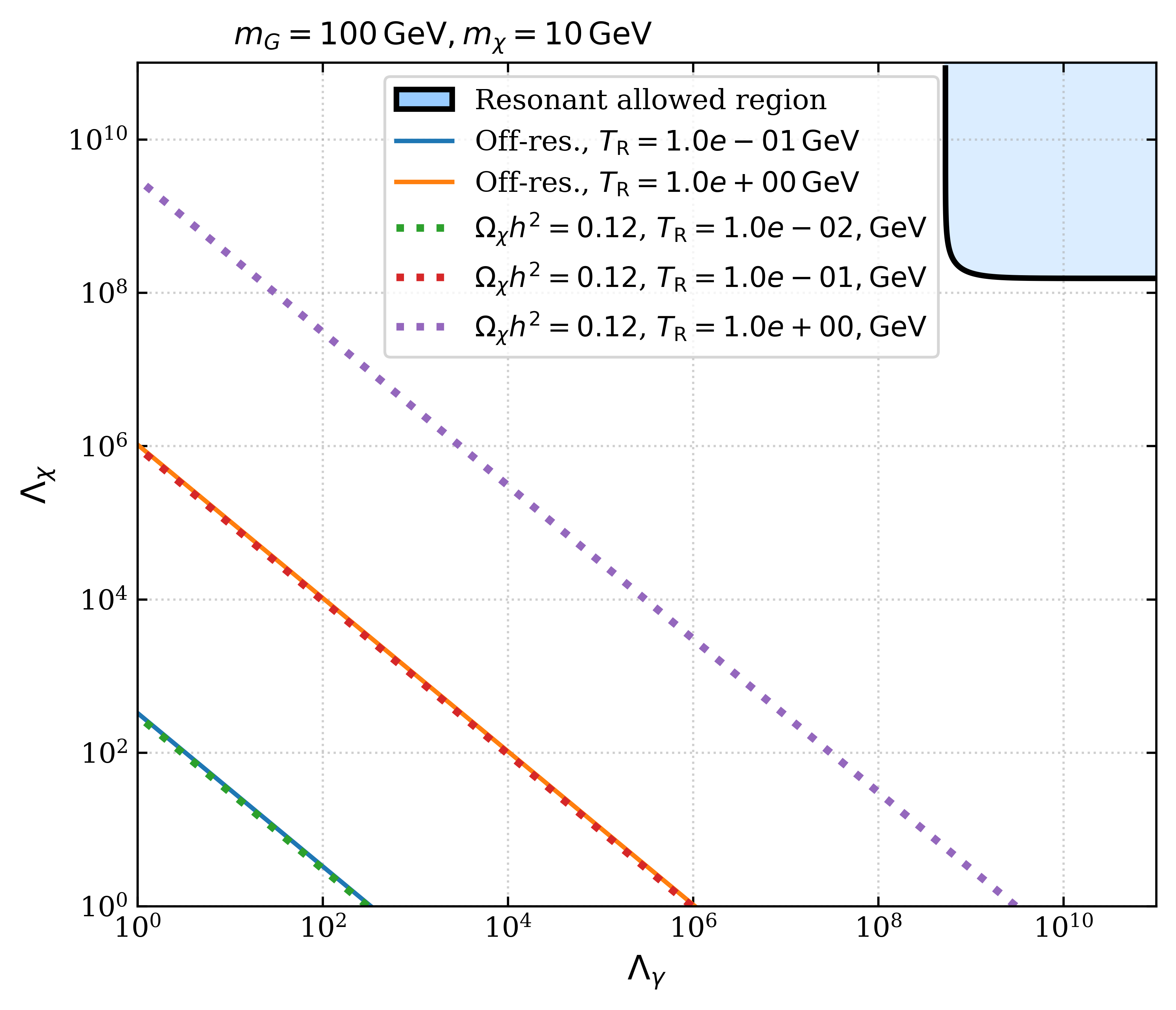
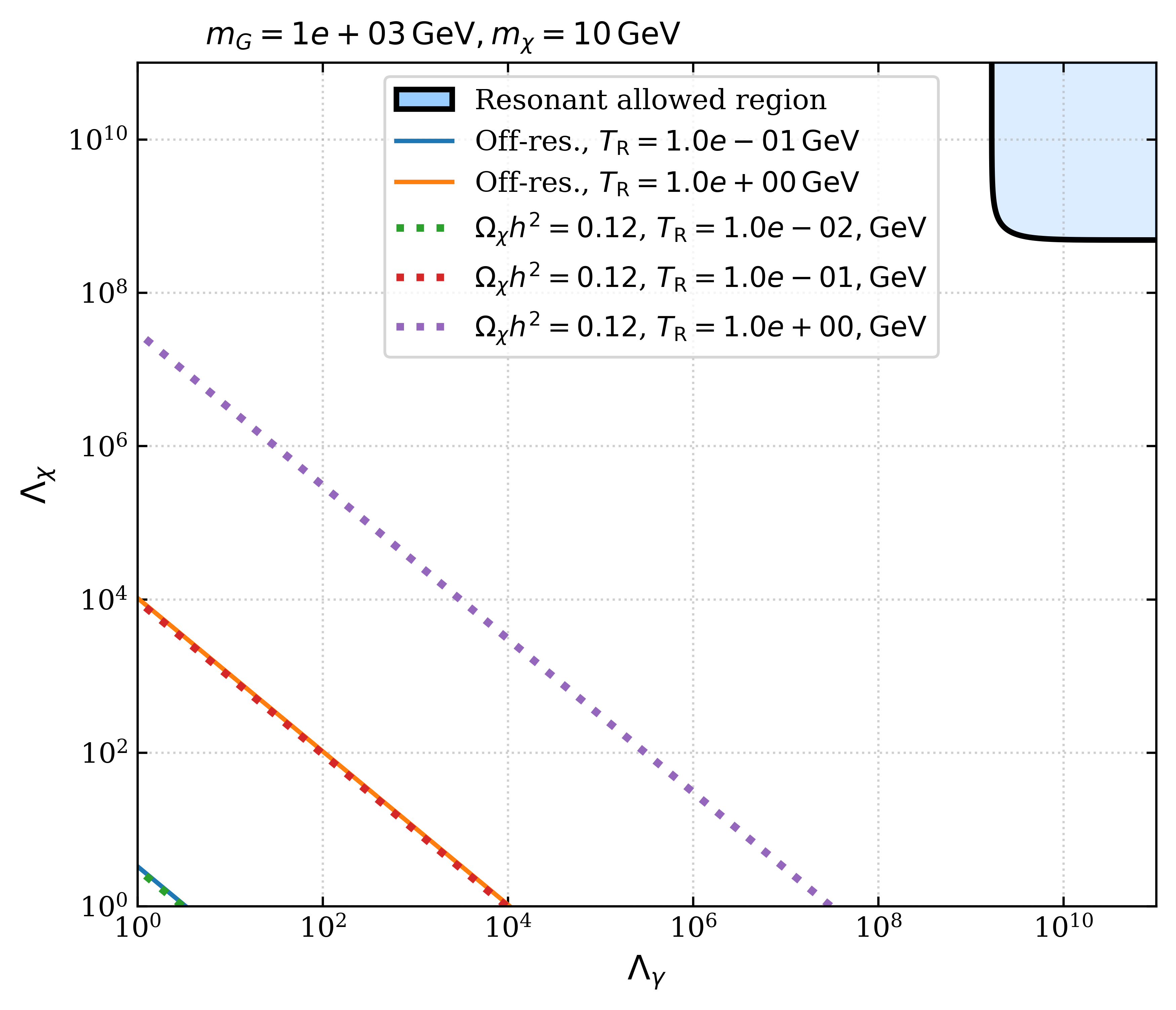
Figure 2: Theoretically allowed parameter space for Λγ,Λχ set by freeze-in conditions and relic abundance for several Λγ0 values.
Collider Phenomenology: LHC Sensitivity and Experimental Considerations
Given the suppressed couplings and photon-only portal, conventional LHC searches (e.g., diphoton, dijet, dilepton) lack sensitivity to this framework, especially for Λγ1 GeV. The work focuses on electroweak production mechanisms—particularly vector boson fusion (VBF), where photon-fusion dominates—yielding a unique LHC signature characterized by missing transverse energy (Λγ2) recoiling against two forward jets.
To test this, a Monte Carlo simulation chain is established, incorporating leading-order event generation with MadGraph5_aMC@NLO, detector effects via Delphes, and realistic pileup at HL-LHC conditions. The primary backgrounds are SM processes featuring genuine Λγ3 and forward jet activity, notably Λγ4jets and diboson production.
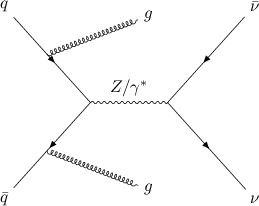
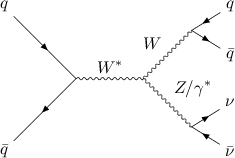
Figure 3: Representative Feynman diagrams for SM background Λγ5 production.
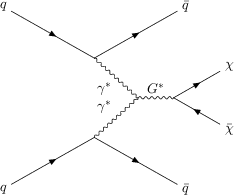
Figure 4: Signal Feynman diagram for Λγ6 via photon-photon fusion producing the spin-2 mediator.
Advanced Analysis: Machine Learning for Signal-Background Separation
Because of the challenging kinematics and low cross sections, the analysis employs a multivariate approach using boosted decision trees (BDTs) built with XGBoost. The BDTs are trained on eight engineered features: Λγ7, leading/subleading jet Λγ8, Λγ9, jet Λχ0, and Λχ1, Λχ2 between jets. This approach leverages subtle, correlated differences between signal and background beyond reach for standard cut-based analyses.
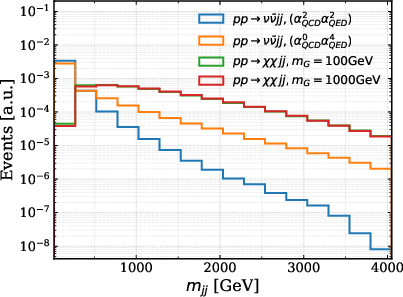
Figure 5: Dijet invariant mass distributions demonstrate the broad VBF signature for signal versus sharply peaked backgrounds.
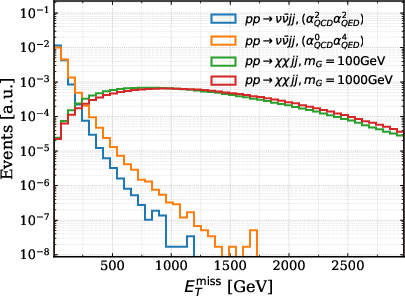
Figure 6: Missing transverse energy (Λχ3) distribution for signal and backgrounds highlights the harder spectrum for signal.
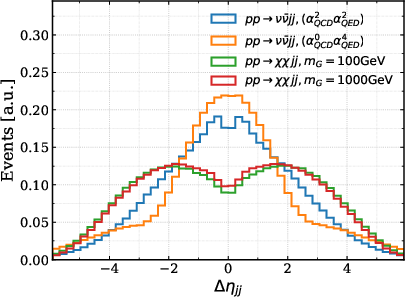
Figure 7: Pseudorapidity separation between jets (Λχ4), showing the pronounced forward jet signature of VBF processes.
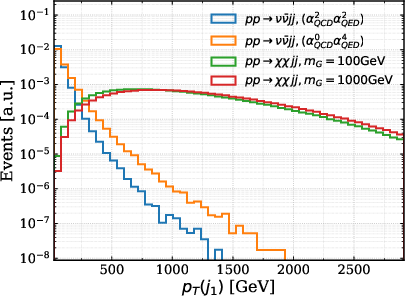
Figure 8: Leading jet Λχ5 distributions, emphasizing the harder spectrum in signal events typical of VBF production.
Feature importance studies confirm Λχ6, Λχ7, and Λχ8 as dominant for discrimination.
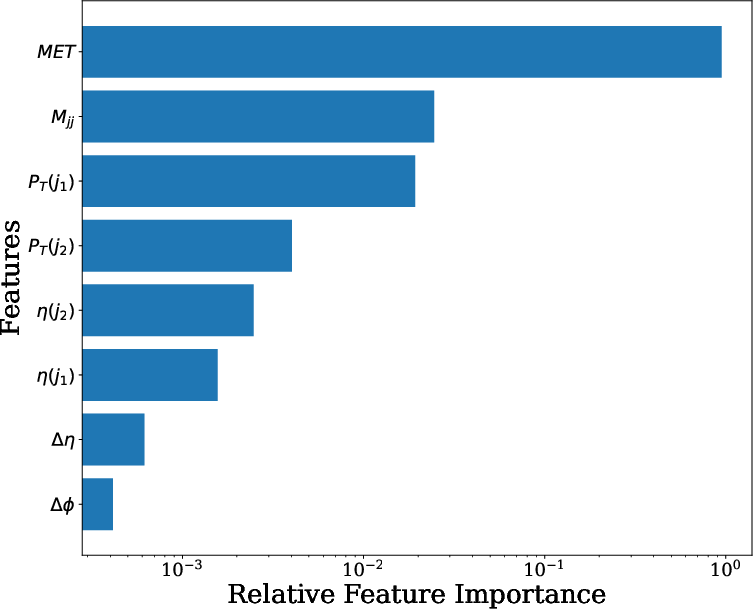
Figure 9: Relative importance of input variables in BDT training for Λχ9 TeV benchmark.
BDT output distributions for benchmark masses indicate strong separation between signal and SM backgrounds and are utilized in a profile likelihood framework—including shape and normalization uncertainties—to derive projected exclusion limits.
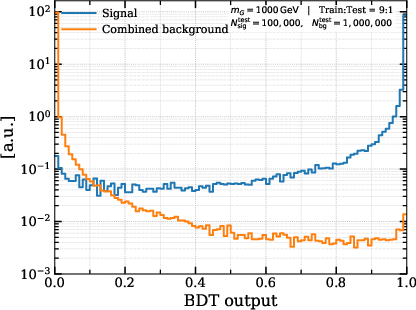
Figure 10: BDT classifier output for Gμν0 TeV, showing clear separation between signal and background events.
Projected Sensitivity and Implications for Cosmology
The high-luminosity LHC (HL-LHC) projections, assuming 3000 fbGμν1, provide Gμν2 CL upper limits on
Gμν3
reaching the Gμν4 pb level for Gμν5 up to 1 TeV. The projected reach covers Gμν6 in the Gμν7--Gμν8 GeV range, intersecting with cosmologically viable regions for low Gμν9 (γγ→G∗→χχ,0 MeV), particularly in the off-resonant freeze-in regime.
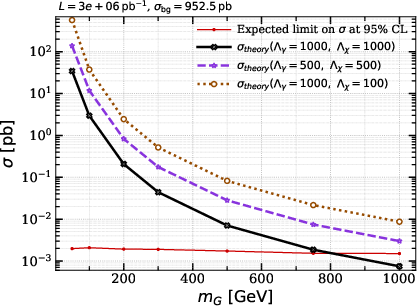
Figure 11: Projected γγ→G∗→χχ,1 CL upper limits on inclusive signal cross section as a function of γγ→G∗→χχ,2 at HL-LHC compared to theoretical predictions.
A key result is the HL-LHC's ability to exclude parameter space that yields the observed relic abundance for low γγ→G∗→χχ,3, directly testing a substantial fraction of the FIDM parameter space. For higher γγ→G∗→χχ,4 or in resonant production regimes, required couplings are too feeble for HL-LHC sensitivity.
Comprehensive phase space overlays illustrate the interplay between collider reach and cosmological constraints for γγ→G∗→χχ,5~GeV.
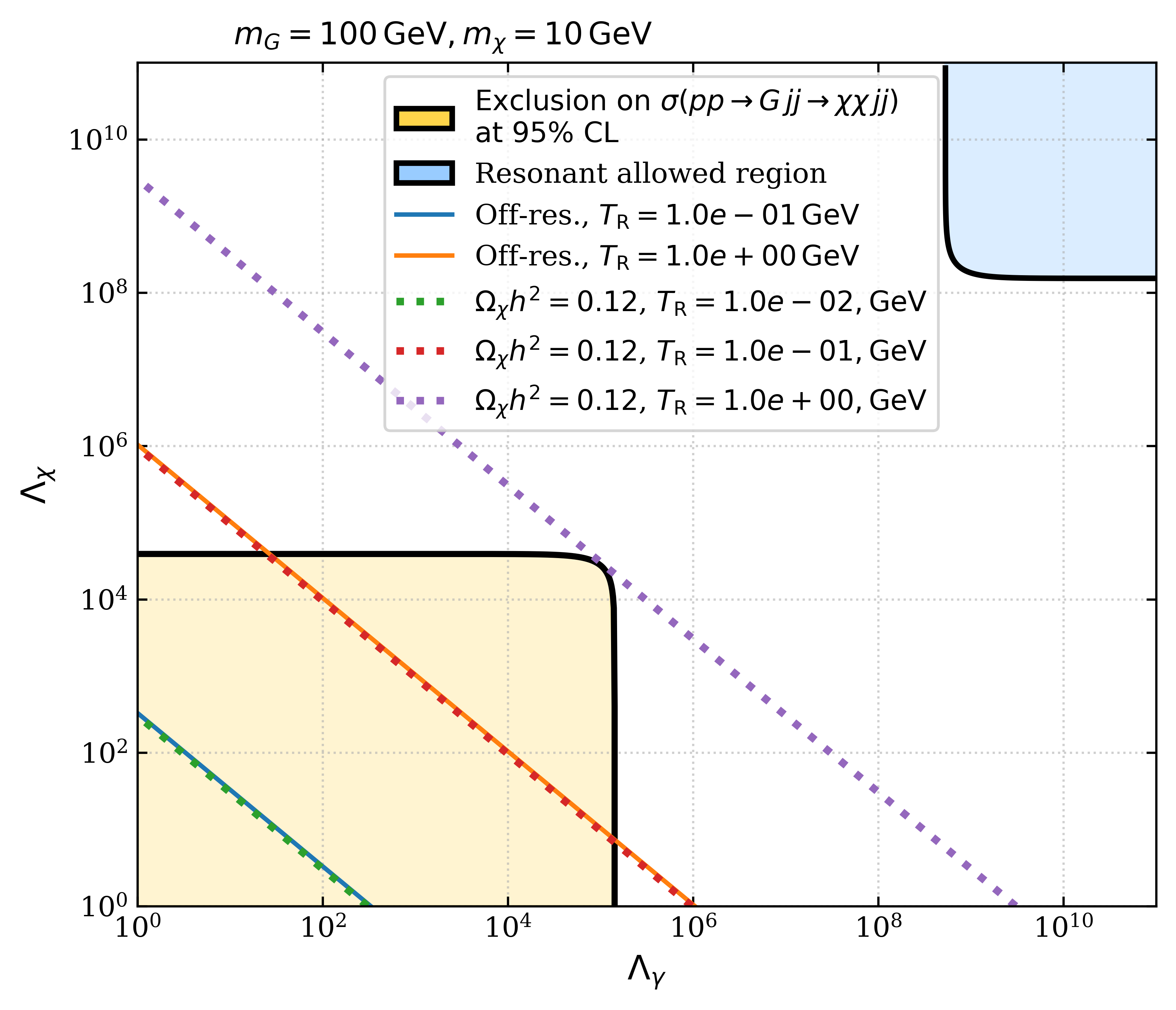
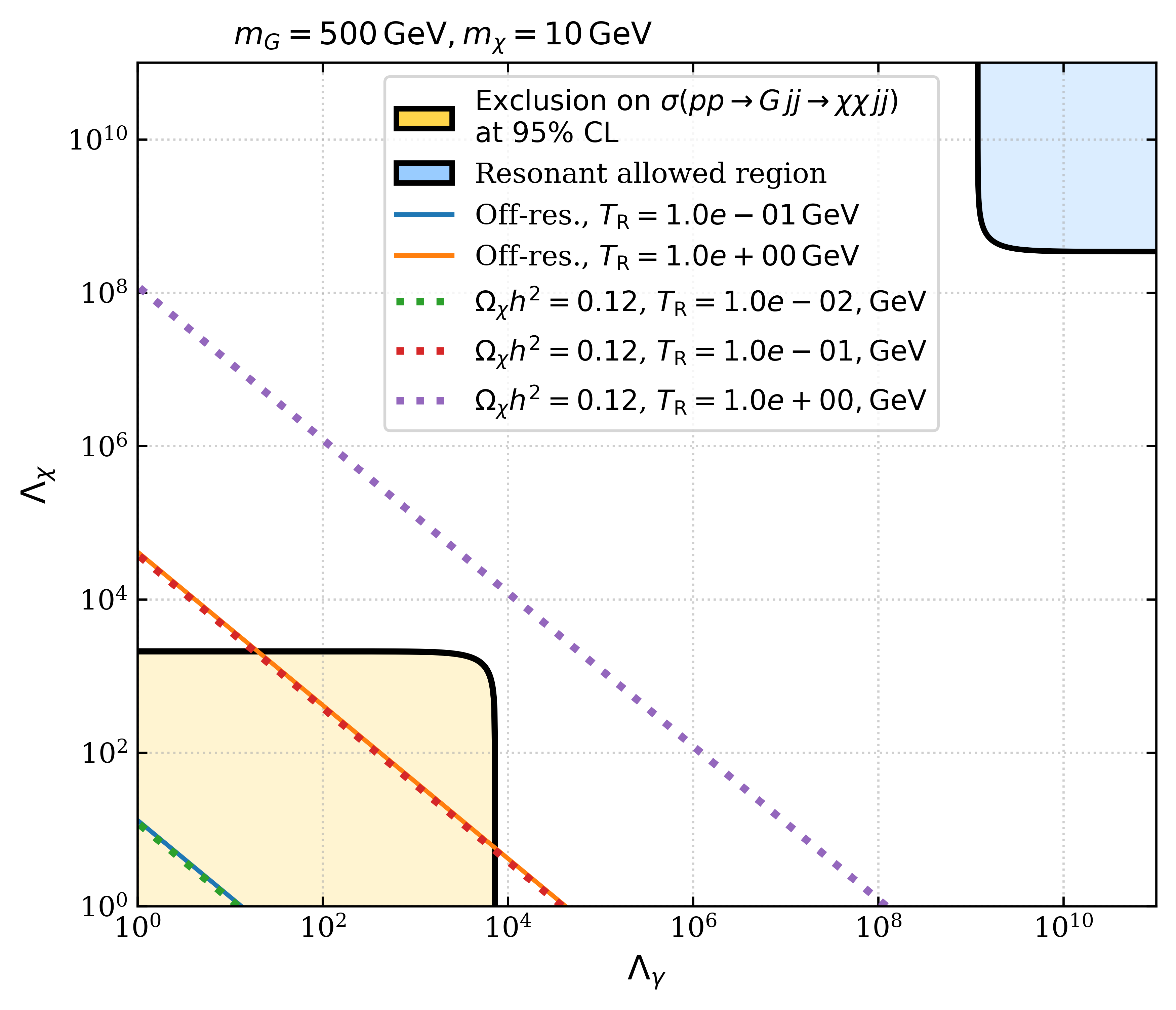
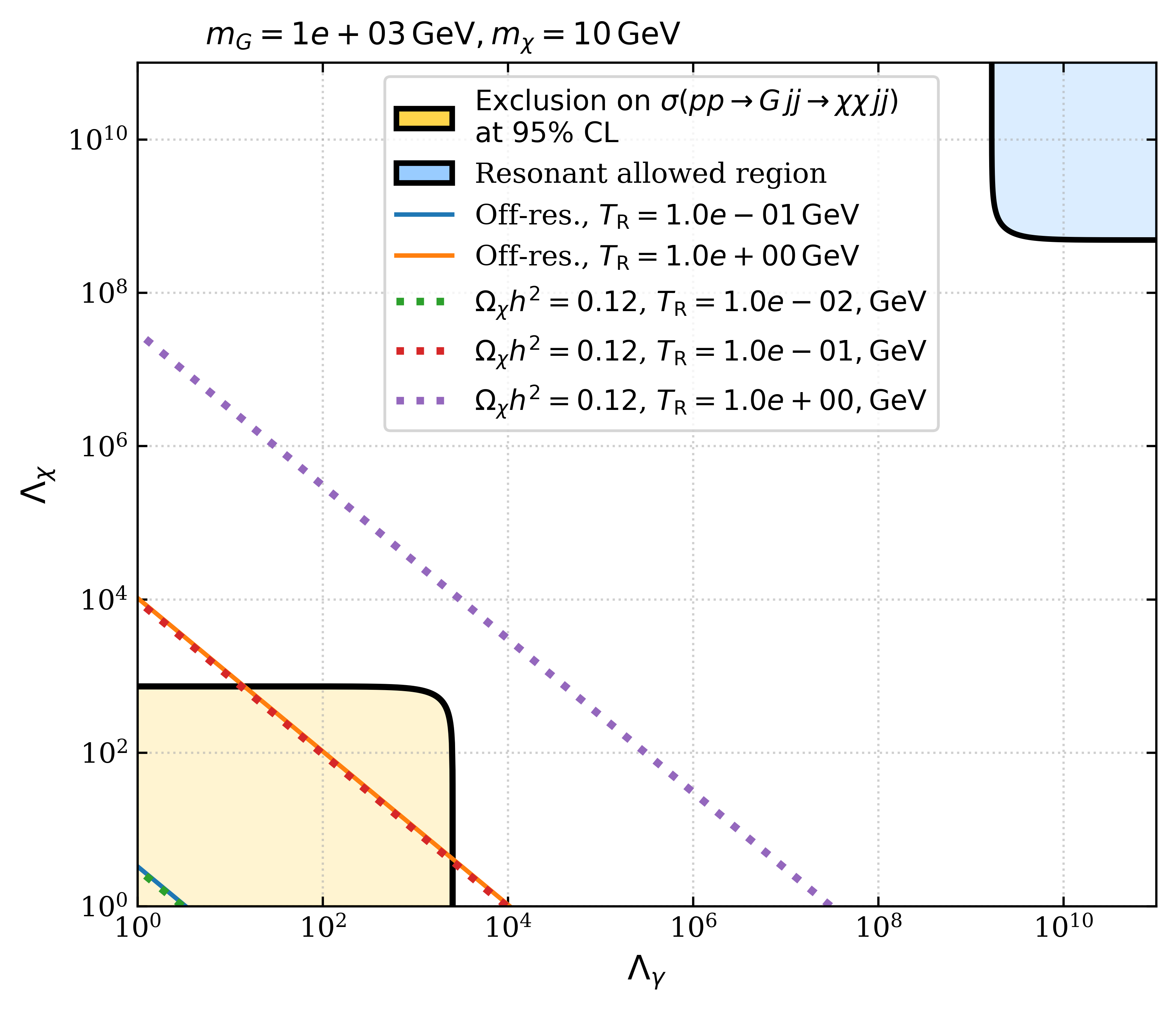
Figure 12: Projected collider constraints on γγ→G∗→χχ,6 for several mediator masses, superimposed on theoretical/ cosmological boundaries for three γγ→G∗→χχ,7 values.
Discussion and Outlook
This study demonstrates an end-to-end framework connecting early universe cosmology with LHC collider phenomenology for feebly interacting spin-2 mediated DM. The synergy between the distinctive VBF signature and machine learning-based analysis bypasses limitations of traditional resonance searches in this suppressed-coupling regime, substantially improving LHC reach.
These results emphasize several important implications:
- Complementarity with non-collider probes: The suppressed couplings render conventional direct detection and astrophysical searches ineffective, making collider VBF searches with ML crucial for testing such FIDM scenarios.
- Parameter space coverage: The HL-LHC can directly probe cosmologically favored regions for low γγ→G∗→χχ,8, underscoring the importance of precise theoretical modeling of the early universe reheating history.
- Future directions: Higher energy or luminosity colliders could further extend sensitivity, while refined ML techniques or alternative kinematic variables may optimize reach. Extensions to broader mediator coupling structures, multi-component DM scenarios, or combination with cosmological probes remain open.
Conclusion
This work provides a detailed and quantitative assessment of HL-LHC sensitivity to freeze-in DM produced via a spin-2 portal, leveraging advanced VBF production and BDT-based discrimination. The HL-LHC emerges as a uniquely sensitive probe for cosmologically viable, feebly-coupled spin-2 DM models in regimes inaccessible to alternative detection strategies, setting a new benchmark for experimental tests of gravitationally-motivated dark sector scenarios.