- The paper introduces a graded coherent-state representation that maps the Hubbard model onto a semiclassical framework while preserving fermion parity with minimal Grassmann variables.
- The approach is benchmarked on one- and two-site models, accurately reproducing key observables like particle number, double occupancy, and spin correlations across various conditions.
- The paper establishes a controlled large-M expansion to extend the method to multiorbital systems and nonequilibrium scenarios, circumventing typical sign problems in quantum simulations.
Semiclassical Representation of the Hubbard Model: A Detailed Analysis
Introduction and Motivation
The paper "Semiclassical representation of the Hubbard model" (2604.02769) presents a systematic reformulation of the Hubbard model's path-integral representation using an unconventional coherent-state basis. This approach is motivated by limitations in standard semiclassical approximations, particularly the inability to adequately capture intersite correlations within the standard static Hubbard-Stratonovich (HS) framework. By introducing a graded coherent-state representation with a minimal use of Grassmann variables—explicitly enforcing the Z2 fermion parity structure—a tractable semiclassical approximation becomes feasible. This formalism not only improves the handling of static intersite correlations but is also naturally extensible to multiorbital systems, thereby laying the groundwork for more general applications beyond the single-band Hubbard model.
The authors construct a local coherent state that captures the four physical states of a single Hubbard site—∣0⟩, ∣↑⟩, ∣↓⟩, and ∣↑↓⟩—by combining two independent Bloch spheres (spin and charge) with a single Grassmann parameter mediating transitions between even and odd fermion parity sectors. This yields a coherent-state manifold Sspin2×Sη2, a significant reduction from the full projective Hilbert space CP3:
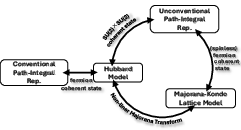
Figure 1: Overview of the alternative representations of the Hubbard model explored in the semiclassical coherent-state approach.
Within this formalism, the Hubbard model's partition function is recast as an integral over both classical bosonic fields (properly parametrizing the coherent-state manifold) and the single Grassmann variable, with the resulting action bilinear in Grassmann variables. Notably, the interaction term in this representation becomes bilinear, simplifying the integration over the fermionic sector and enabling the use of Hamiltonian-based numerical techniques for fixed field configurations.
Semiclassical Approximation: Implementation, Benchmarking, and Limits
By neglecting the imaginary-time dependence of the bosonic variables, the semiclassical approximation is obtained—analogous to large-S approximations in spin models. This yields a nonperturbative, controlled approximation for thermodynamic quantities, directly benchmarking against exact results for one- and two-site systems.
Hubbard Atom (One-Site Limit)
The method is shown to qualitatively reproduce the behavior of exact solutions, particularly at half filling. Deviations are traced to the underlying continuous density of states produced by the semiclassical treatment, as opposed to discrete spectra in the quantum Hubbbard atom. Strong agreement is highlighted in particle number and double occupancy observables, except for noninteracting limits (U=0), where artificial correlations appear due to the continuous spectrum. The algebraic decay in observables (as a function of chemical potential) contrasts with the exponential decay of the exact spectrum, reflecting the semiclassical approximation's characteristic artifacts.
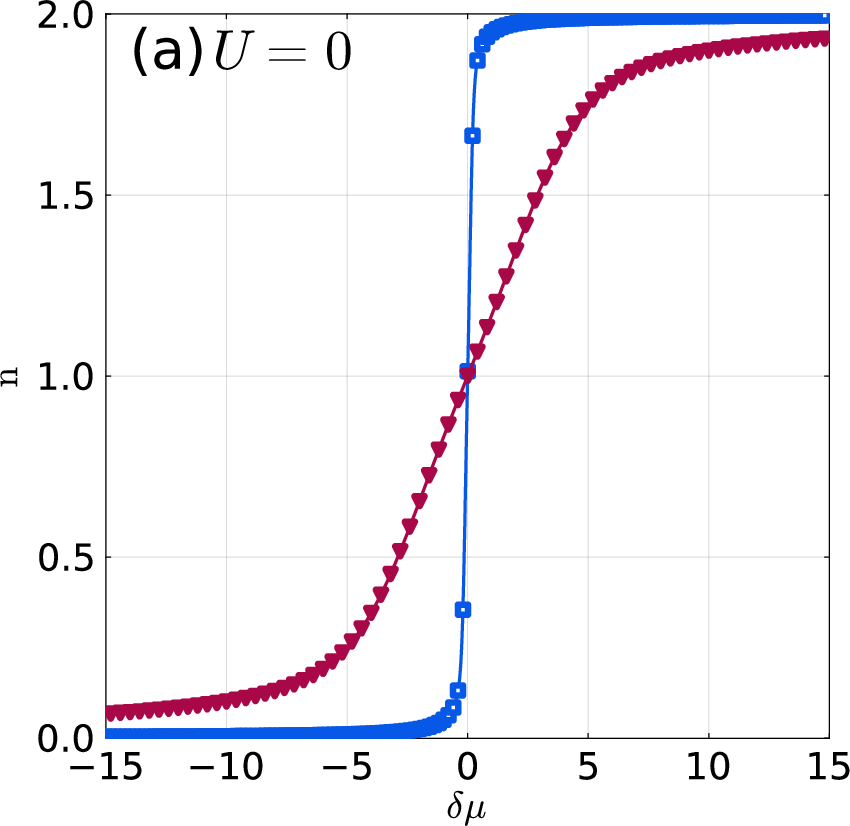
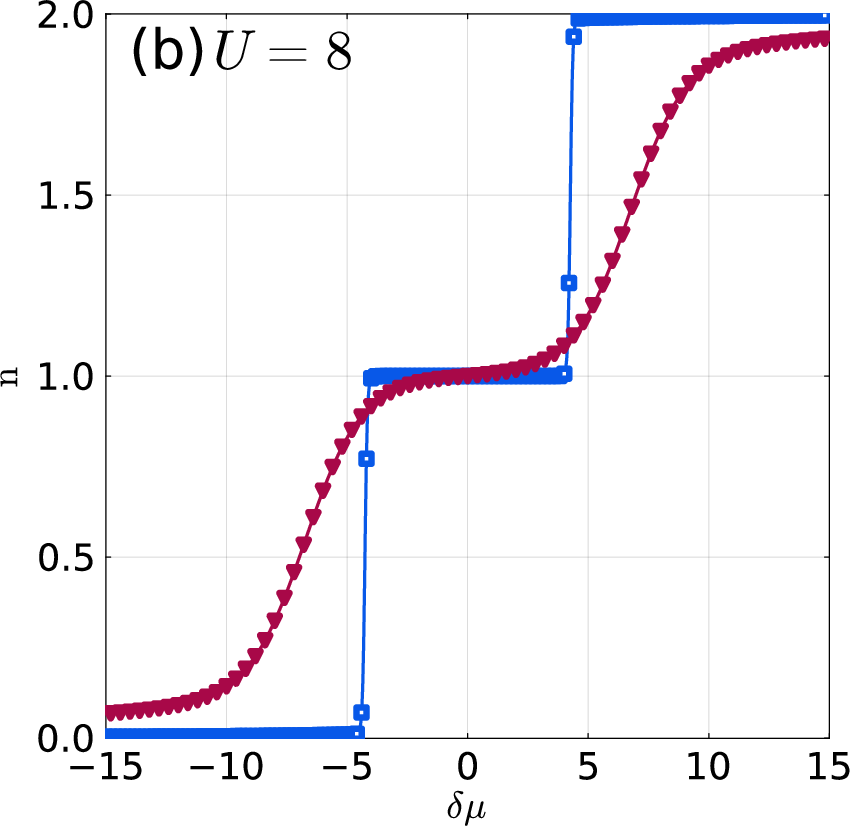
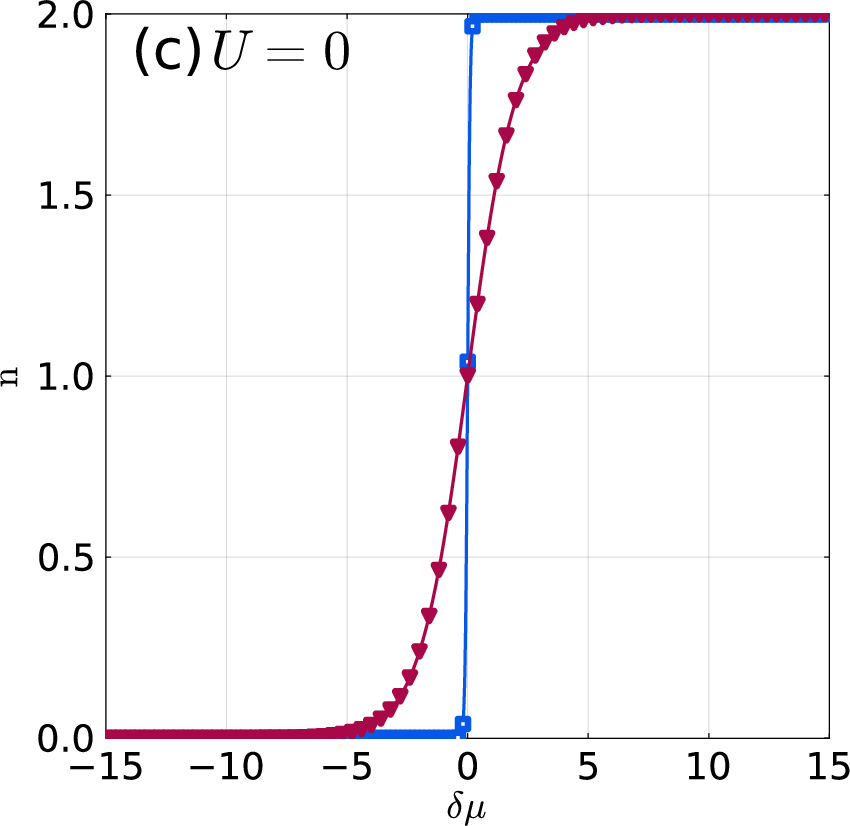
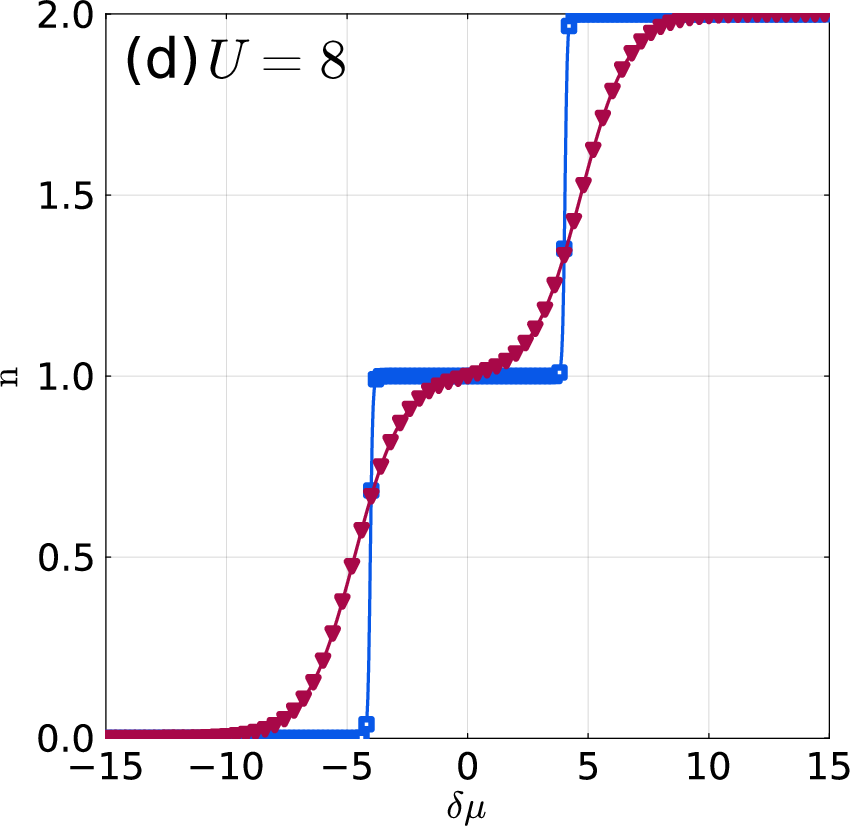
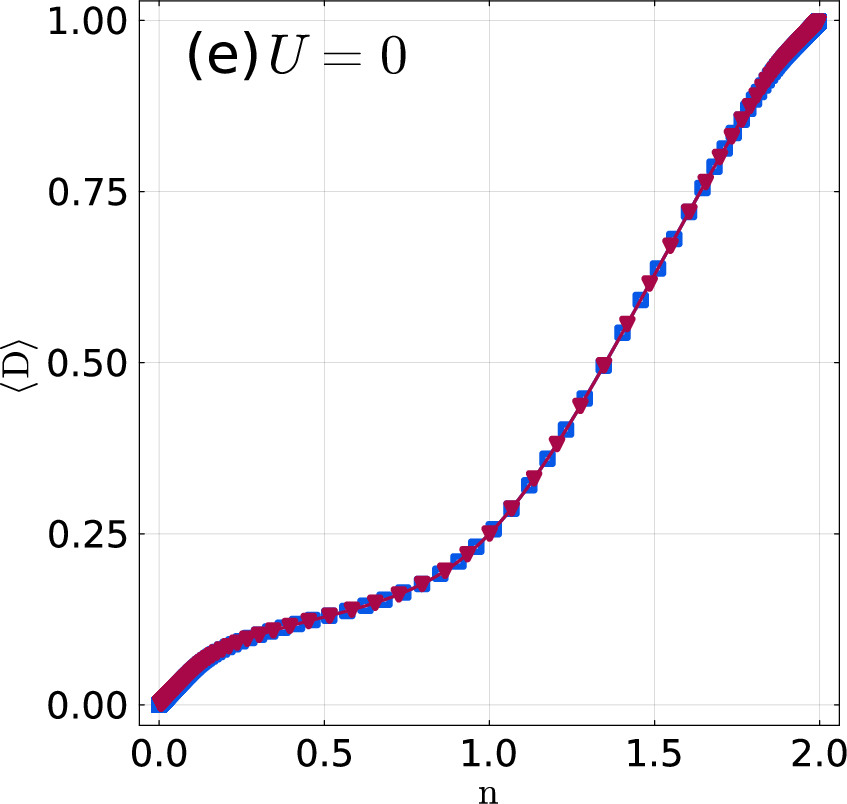
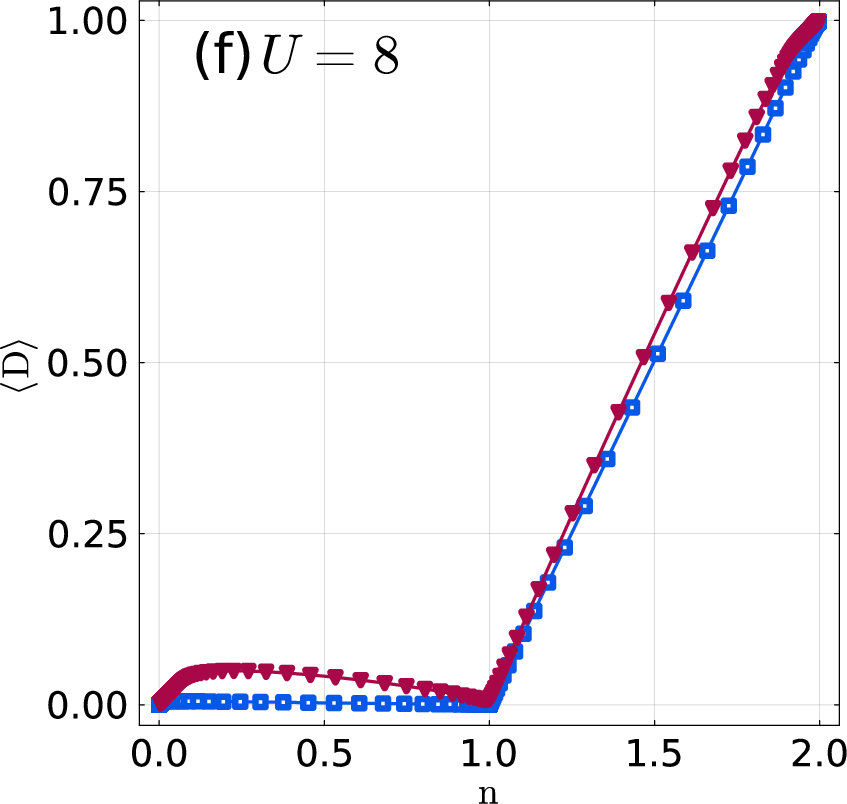
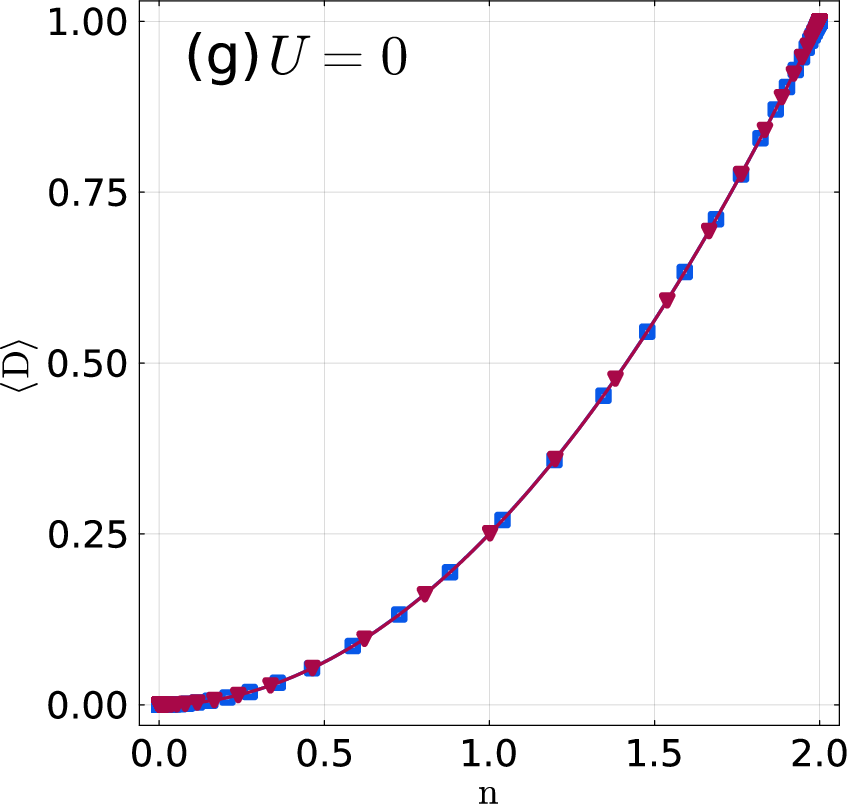
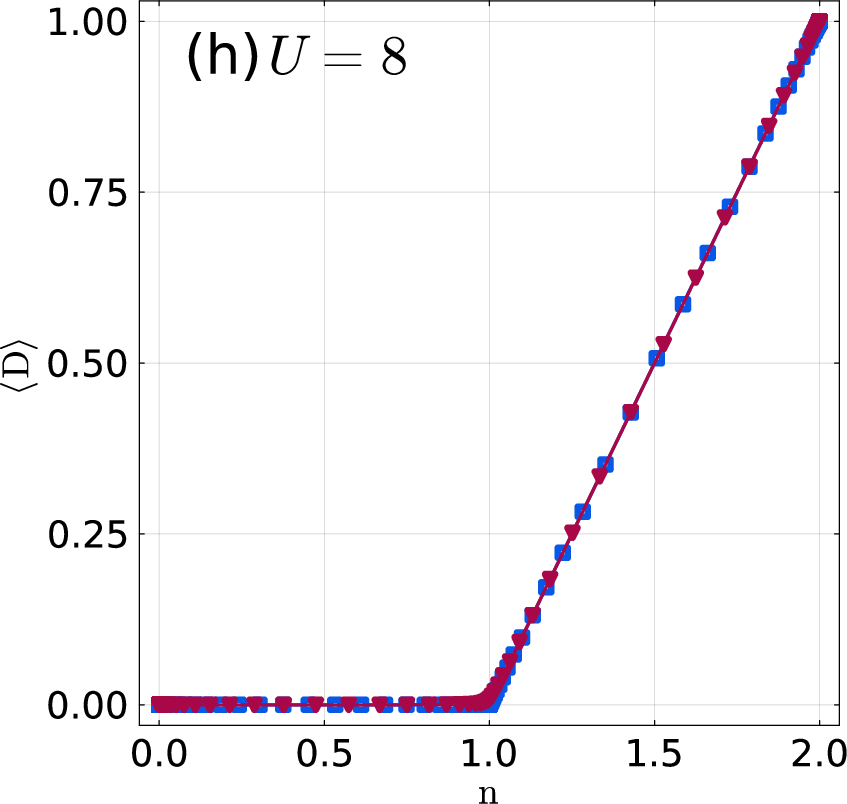

Figure 2: Top: Filling versus chemical potential δμ for semiclassical and exact results at two temperatures and two interaction strengths (∣0⟩0, ∣0⟩1). Bottom: Double occupancy versus filling for the same parameters, highlighting deviations at high temperature and low filling.
Two-Site Hubbard Model
For the two-site problem, spin correlations and hopping amplitudes are computed and compared to exact diagonalizations. The semiclassical approach correctly reproduces qualitative trends with temperature, filling, and interaction strength. However, the low-temperature limits of observables such as ∣0⟩2 display reduced absolute values relative to exact results, reflecting the classical character of the effective spins: at half filling and large ∣0⟩3, the exact quantum singlet correlation (∣0⟩4) is replaced with ∣0⟩5, as expected from the classical-spin analogy.
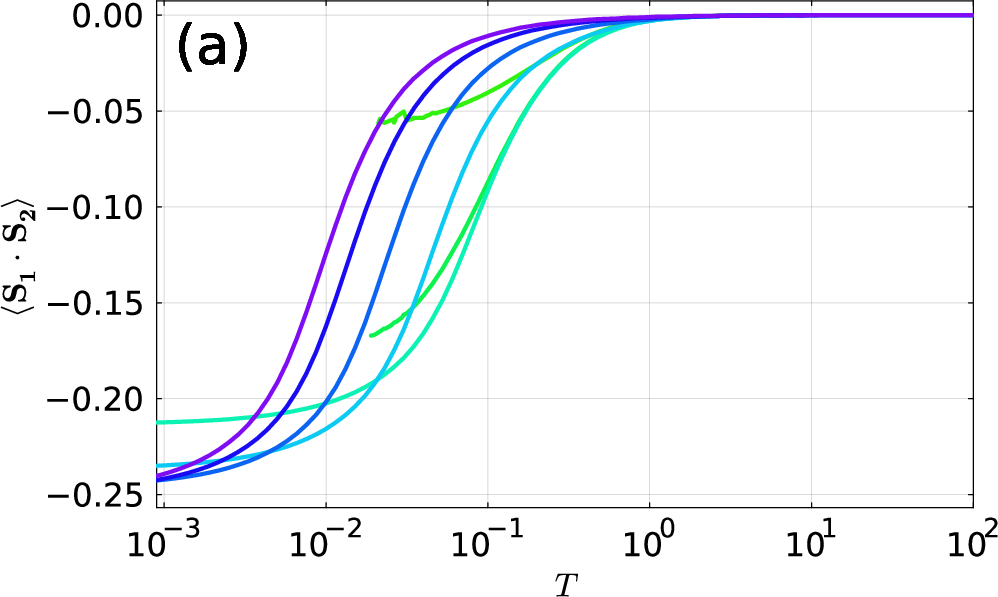
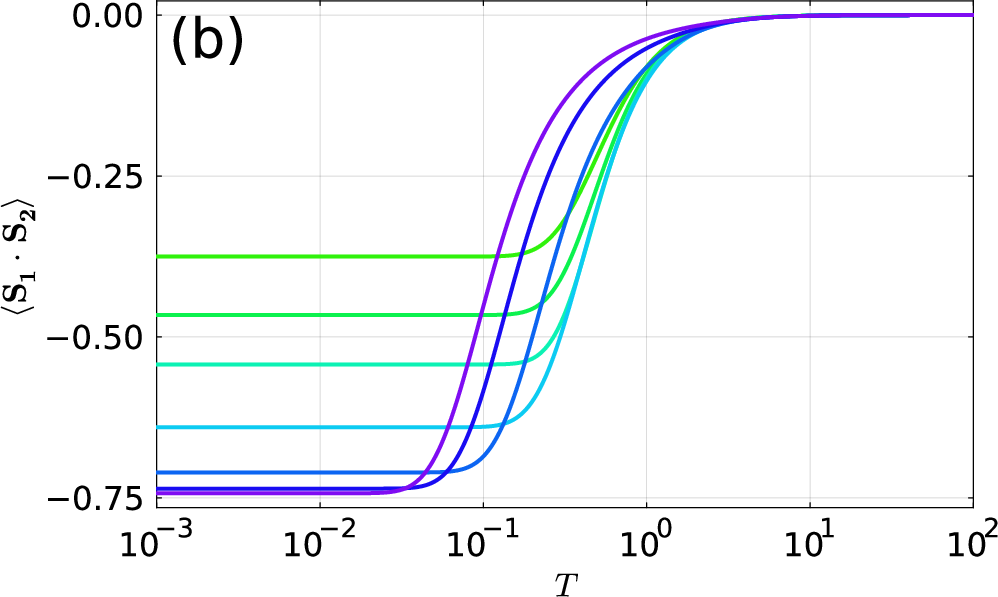
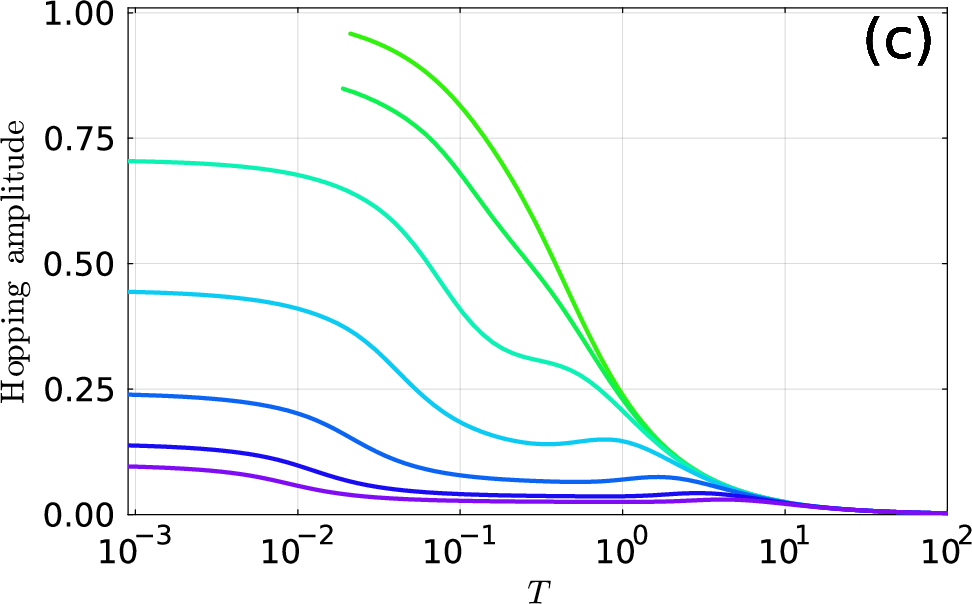
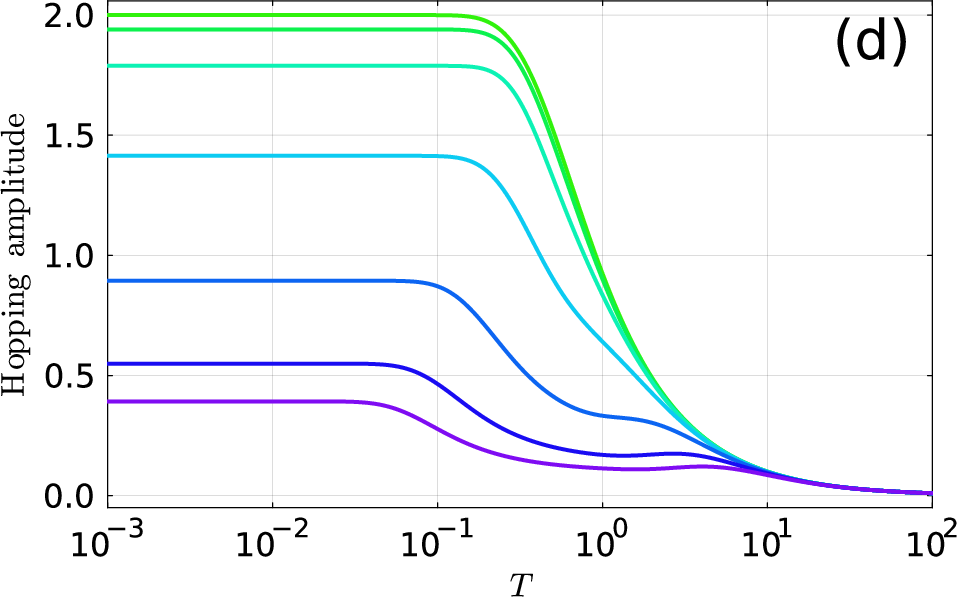

Figure 3: Top: Temperature dependence of the two-site spin correlation for several values of ∣0⟩6 using the semiclassical method (left) and exact calculation (right). Bottom: Corresponding results for the hopping amplitude.
Importantly, the energy scale governing low-temperature behavior (superexchange) is systematically underestimated (by a factor of four at leading order), consistent with the reduction from quantum to classical spin correlations in the large-∣0⟩7 limit.
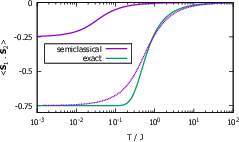
Figure 4: Temperature dependence of the spin correlation in semiclassical and quantum two-site spin models, with the semiclassical result rescaled to illustrate correspondence of characteristic energy scales.
A detailed exploration of filling dependence demonstrates that the semiclassical approximation robustly captures the shape of observables across interaction strengths, with only moderate quantitative discrepancies at high temperature or near integer fillings.
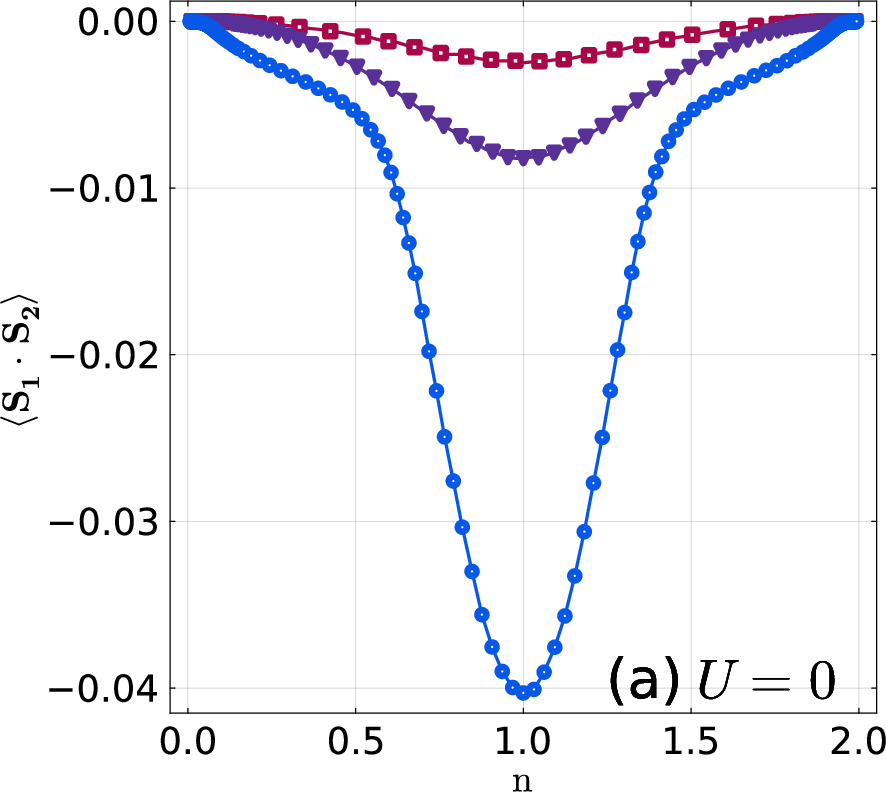
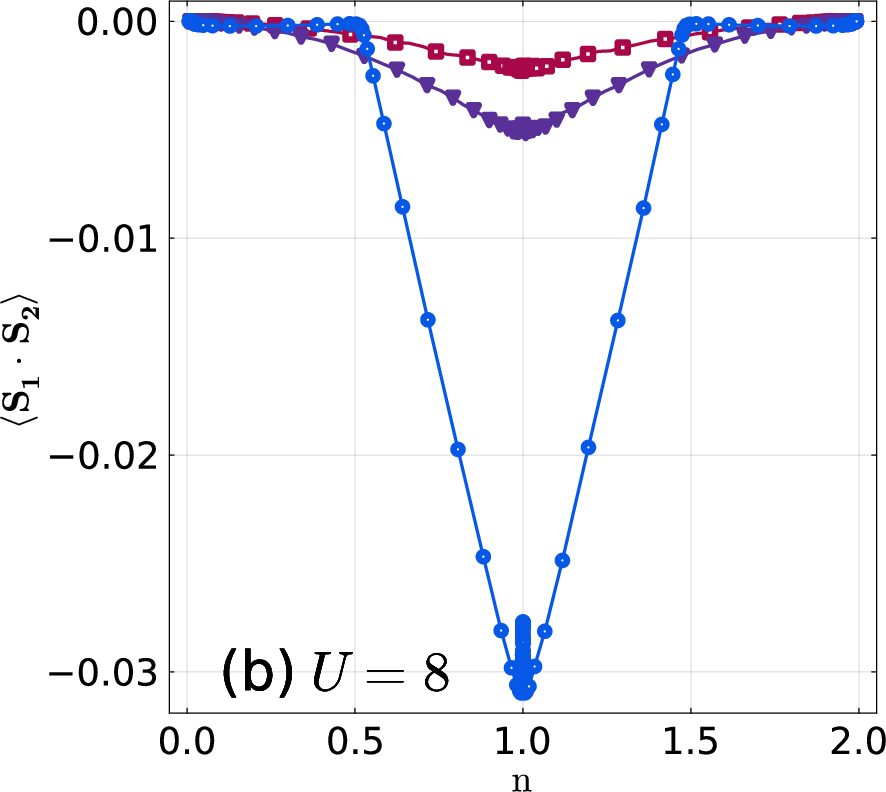
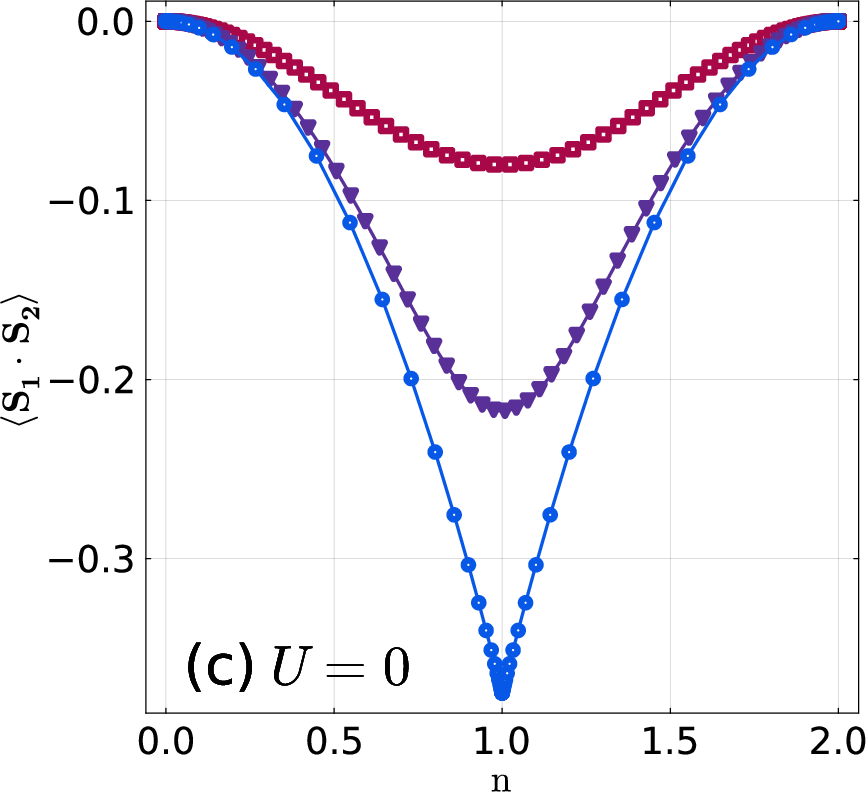
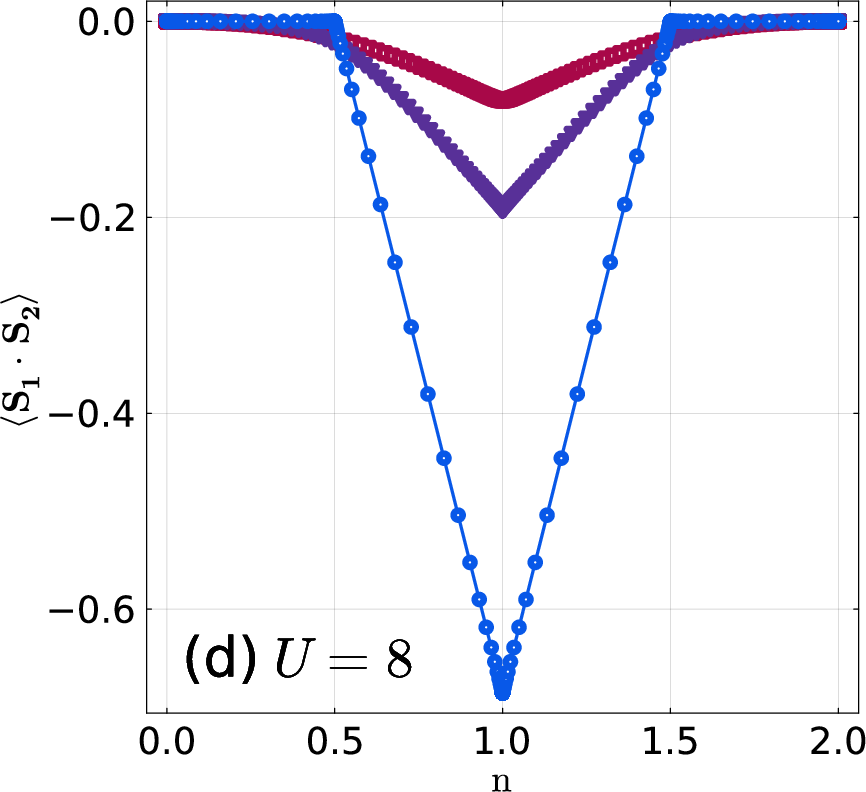
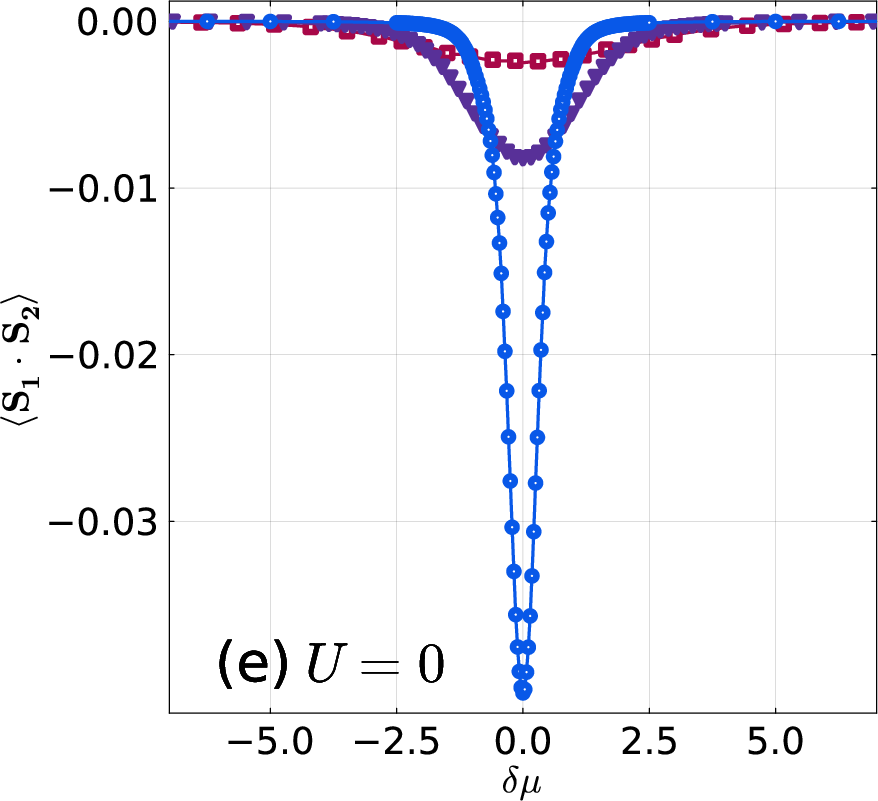
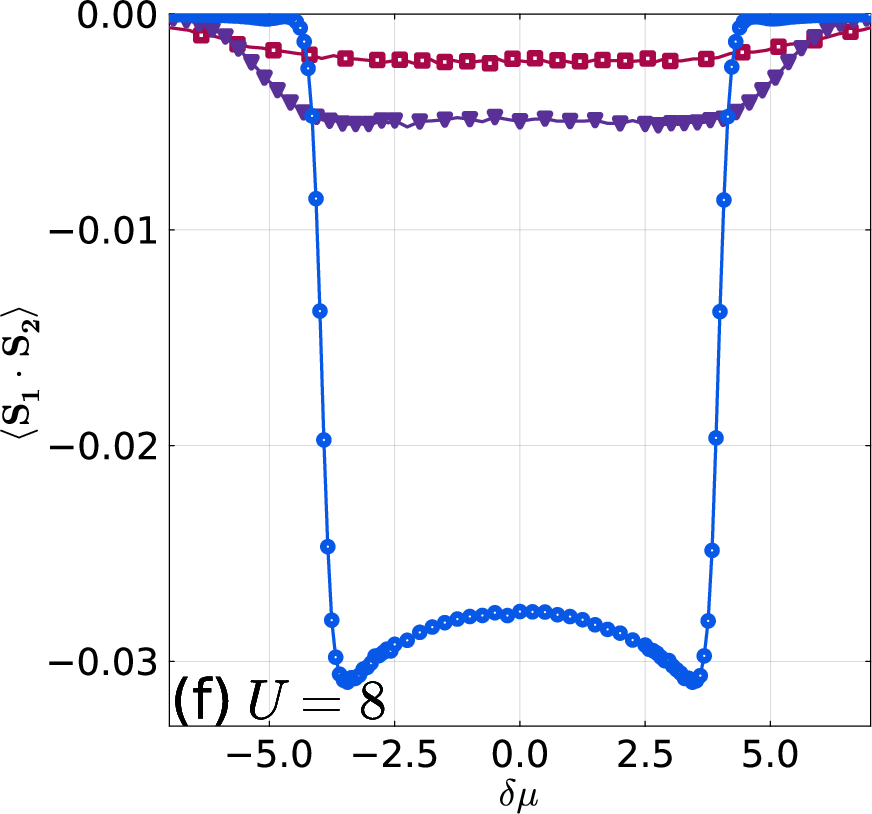
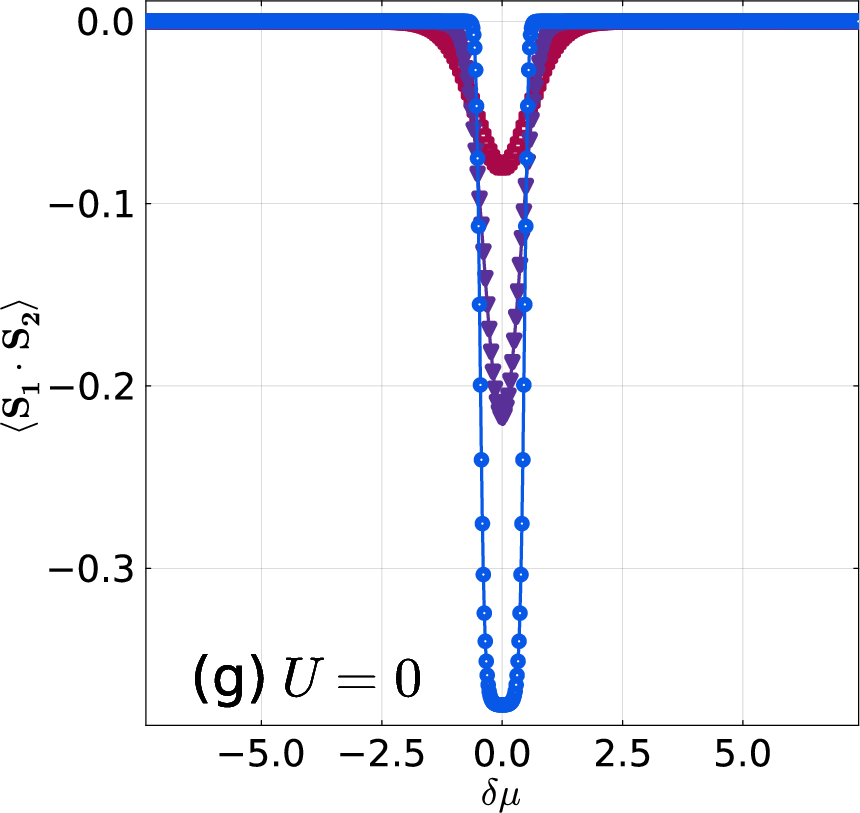
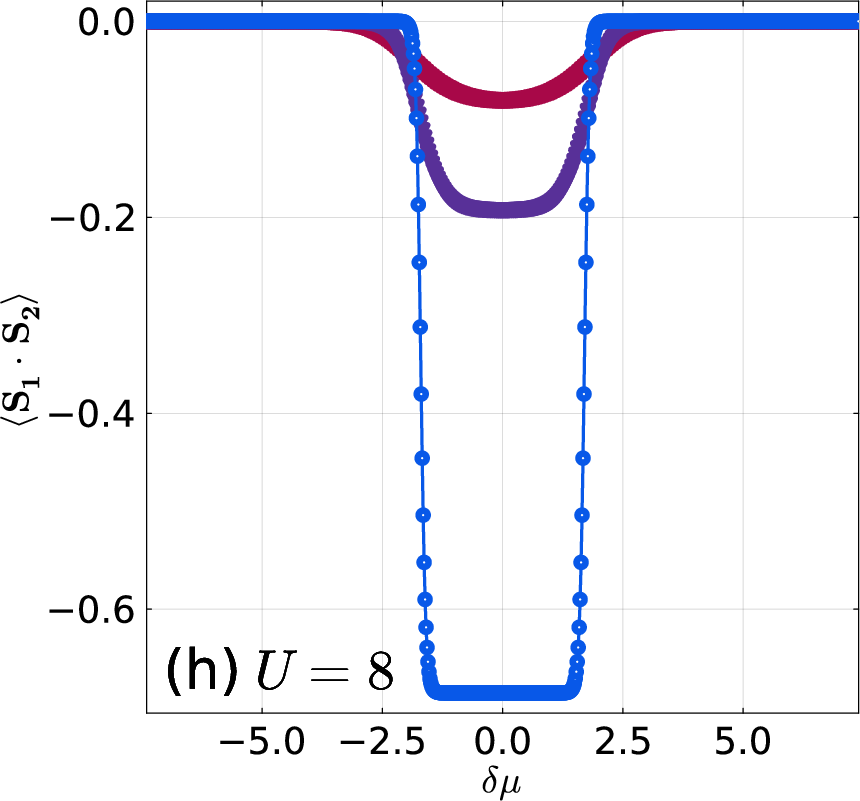
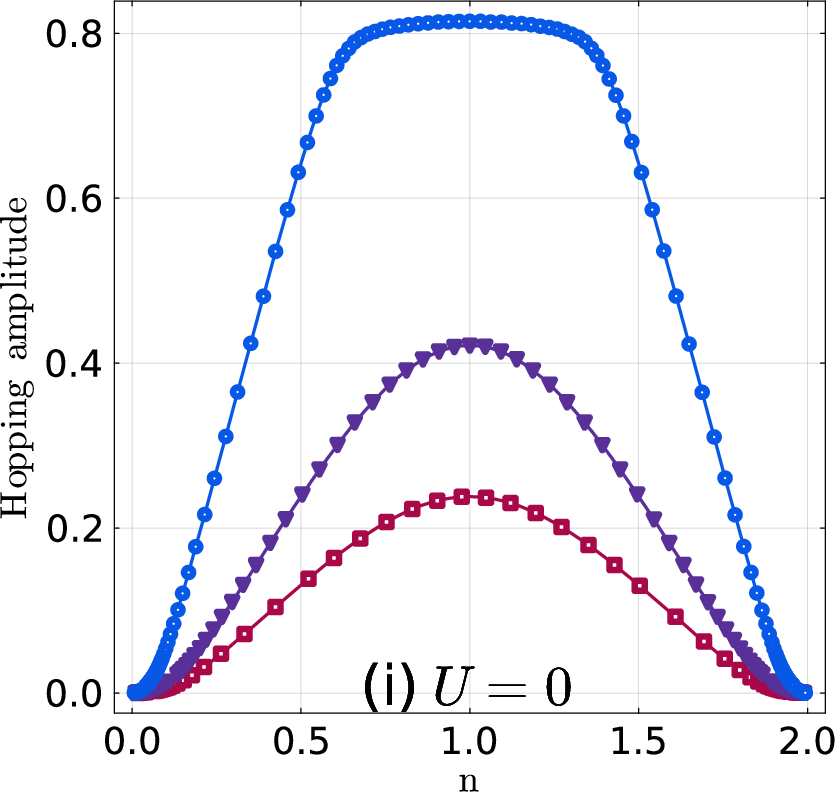
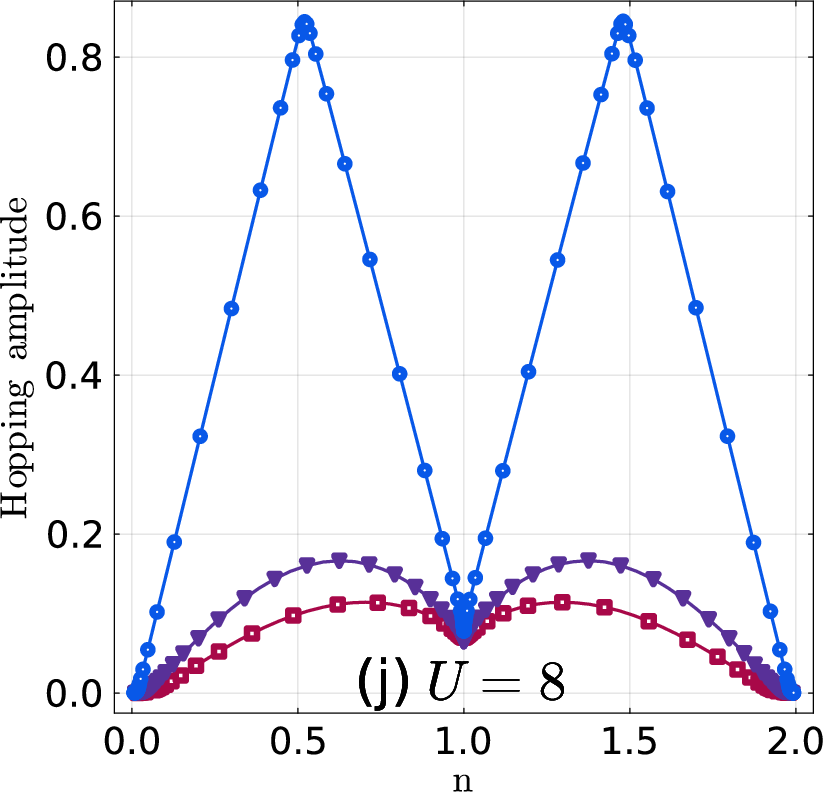
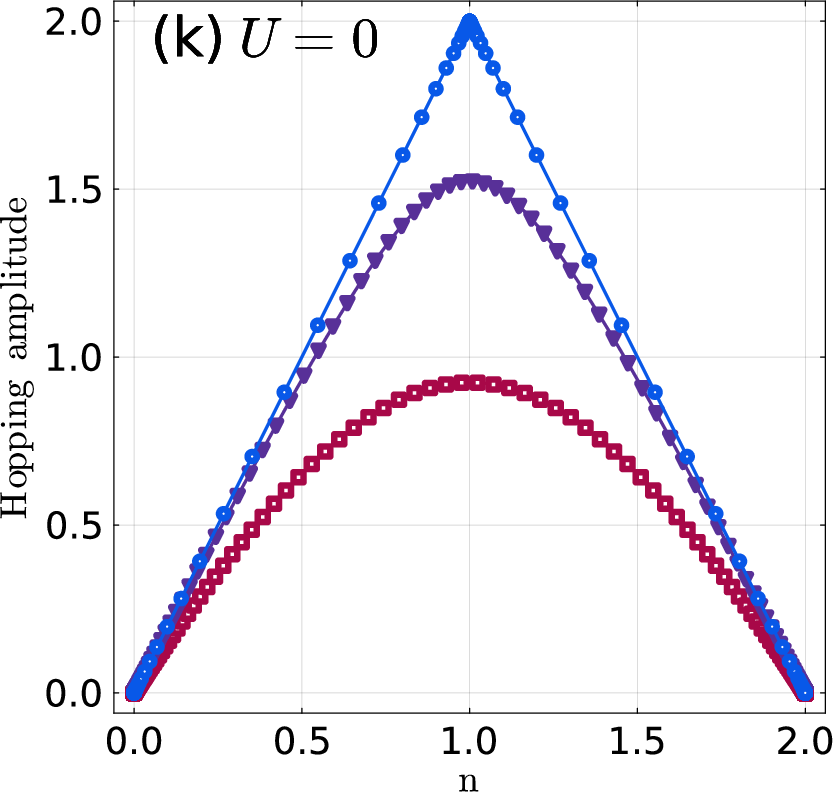
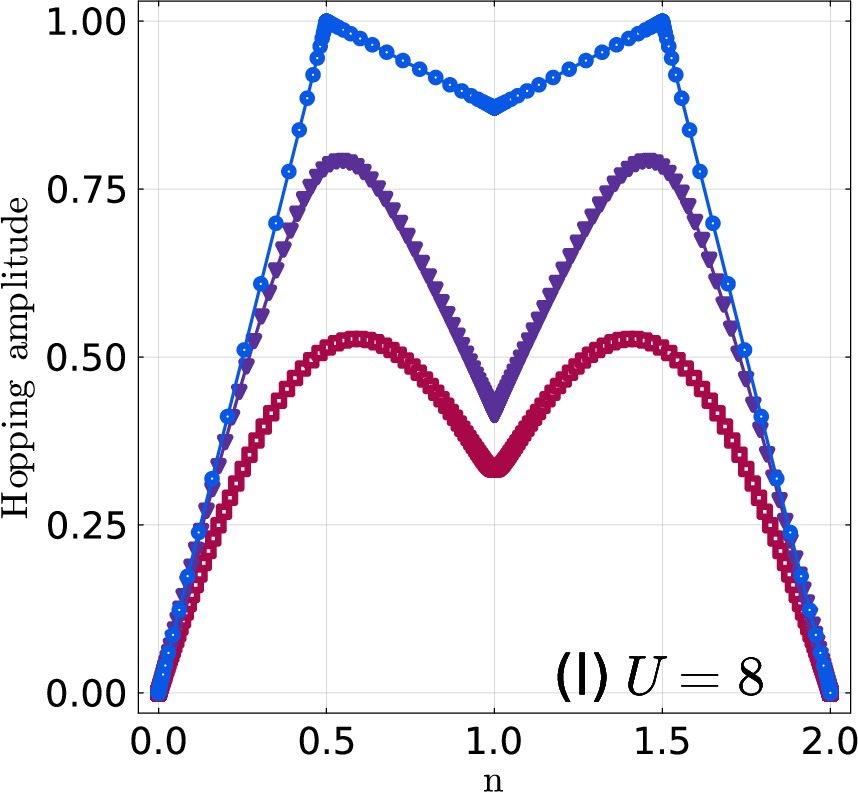
Figure 5: Top: Filling dependence of the two-site spin correlation at several temperatures by (left) semiclassical method and (right) exact calculation for ∣0⟩8 (top row) and ∣0⟩9 (second row). Middle: Same data, now plotted versus chemical potential. Bottom: Hopping amplitude as function of filling.
Controlled Semiclassical Limit and Generalization
A major theoretical contribution of the work is placing the semiclassical approximation on firm footing via a large-∣↑⟩0 construction, wherein the local Hilbert space is symmetrically replicated and projected onto the highest-weight irreducible representation. In this limit, quantum fluctuations are suppressed as ∣↑⟩1 and the path integral becomes dominated by stationary configurations—thus, the leading term of a systematic ∣↑⟩2 expansion corresponds precisely to the present semiclassical scheme.
This framework naturally extends to multiorbital models by exploiting the graded structure of the local Hilbert space. The construction generalizes to configurations with ∣↑⟩3 spin-orbital flavors, allowing the systematic treatment of multiorbital Hubbard-like systems, with the minimal Grassmann parametrization efficiently encoding parity transitions.
Alternative Operator Representations and the Majorana-Kondo Lattice
An important structural insight provided by the authors is the mapping of the Hubbard model under unconventional coherent-state transformations to an effective Kondo lattice comprising itinerant Majorana fermions coupled to localized pseudospins. This transformation, which leads to composite fermionic or Majorana variables, offers both conceptual and computational avenues for studying strong-correlation effects—especially in regimes featuring intertwined spin and charge order. The connection is established by operator mappings and is explicitly constructed for two-site problems, as detailed in the appendices.
Implications and Future Directions
Practically, the semiclassical coherent-state approach offers a nonperturbative, computationally efficient alternative for investigating thermodynamics and static correlations in the Hubbard and related models at finite temperature, especially in cases where quantum Monte Carlo or ED methods are intractable. The graded-coherent state formalism avoids sign problems typical in HS decompositions with complex auxiliary fields and is particularly promising for multiorbital, multiband, or nonequilibrium scenarios where classical approximations remain informative.
Theoretically, the scheme introduces a clear separation between spin and charge sectors at the semiclassical level—making it suitable for investigating intertwined orders, complex symmetry breaking, or the emergence of nontrivial topological phases contingent on both spin and charge fluctuations.
The authors highlight the potential extensions to ∣↑⟩4-wave superconductivity, two-dimensional lattices with topological excitations (e.g., Kosterlitz-Thouless scenarios), and nonequilibrium dynamics. Integration with first-principles techniques (electronic structure methods) seems feasible, given the tractable nature of the semiclassical action and its suitability for large system studies. Systematic improvements via ∣↑⟩5 expansions or the inclusion of quantum fluctuations about the classical saddle may further bridge the gap with exact solutions.
Conclusion
This work provides a rigorous and extensible semiclassical coherent-state representation for the Hubbard model, quantitatively benchmarked and theoretically justified through a large-∣↑⟩6 limit construction. The explicit treatment of both spin and charge classical variables enables the study of complex order in strongly correlated systems with broad applicability to multiorbital and nonequilibrium settings. The pathway to more accurate or generalized treatments—via the inclusion of ∣↑⟩7 corrections or coupling to ab initio structure—remains open for further methodological and computational developments.