- The paper demonstrates that chemical disorder and compositional gradients intrinsically generate finite DMI and global chirality in FePd heterostructures.
- It employs neutron scattering, HAADF-STEM, and advanced modeling (first-principles, machine learning) to correlate disorder with magnetic texture.
- The study highlights that disorder-induced chirality presents new avenues for designing skyrmion-hosting materials and superconducting spintronic devices.
Disorder-Induced Chirality in Superconductor-Ferromagnet Heterostructures: Multiscale Experimental and Theoretical Analysis
Introduction
Understanding the microscopic origin of magnetic chirality in superconductor-ferromagnet (S/F) heterostructures is critical for spintronic and superconducting device functionality. While chiral magnetic textures such as domain walls and skyrmions are traditionally associated with noncentrosymmetric systems or interface-driven Dzyaloshinskii-Moriya interaction (DMI), the role of disorder in nominally centrosymmetric bulk alloys remains unresolved at the microscopic and quantitative level. The referenced study employs comprehensive structural, magnetic, and chiral characterization coupled with first-principles, machine-learning, and mesoscale modeling to demonstrate that chemical disorder and compositional gradients intrinsically generate net chirality in L10 FePd-based heterostructures, independent of explicit interface effects (2604.02824).
Structural and Magnetic Characterization
The growth and detailed characterization of thick FePd films—both as single layers and as Nb/FePd S/F heterostructures—reveal substantial deviations from ideal L10 order. Both i.Nb/FePd and ii.FePd samples feature partial long-range structural order with order parameters S=0.70 and S=0.52, respectively. XRD and SQUID magnetometry identify pronounced perpendicular magnetic anisotropy (PMA), with Ku directly reflecting the degree of chemical order.
The macroscopic magnetic and domain structure is further elucidated by hysteresis and magnetic force microscopy:
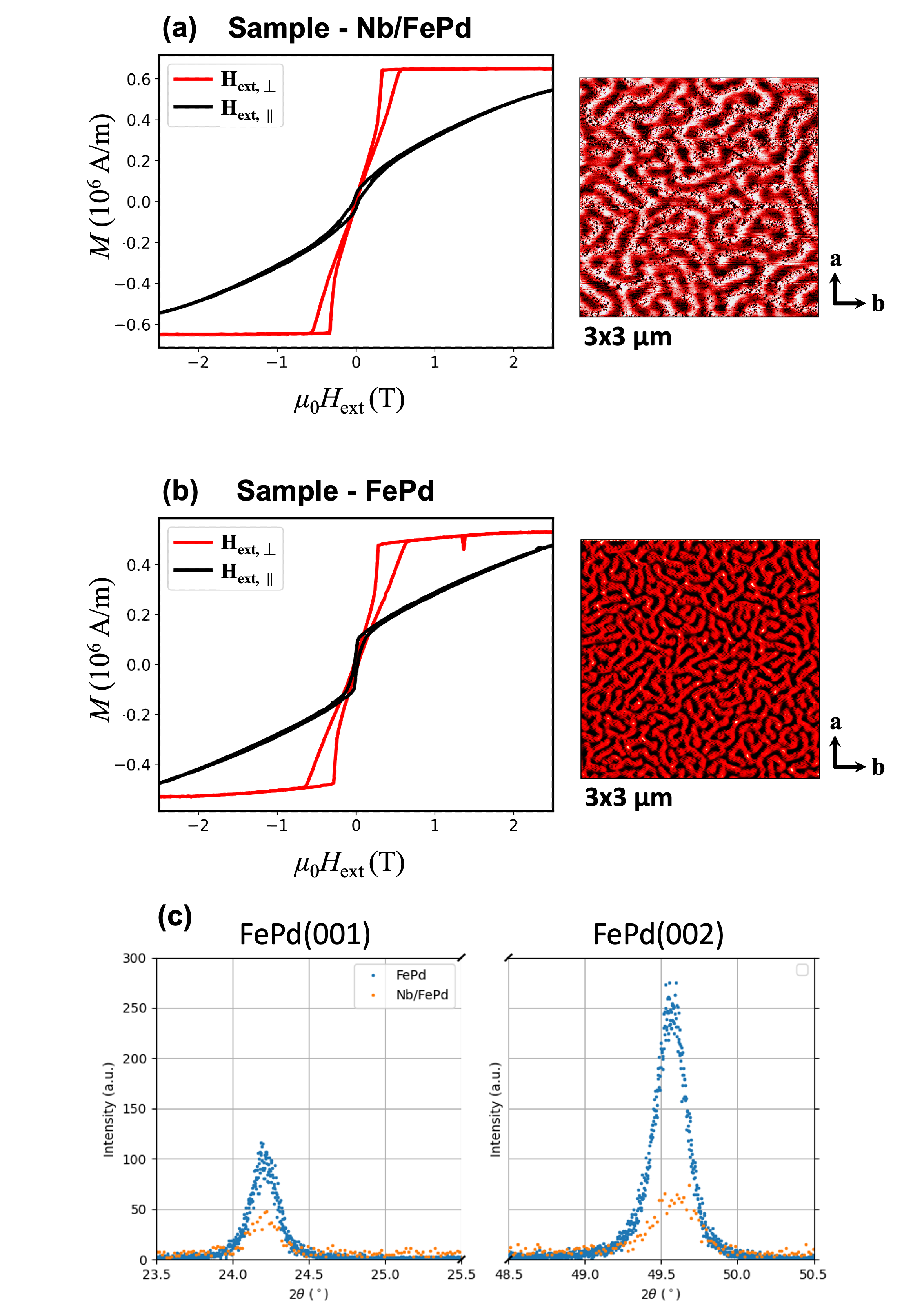
Figure 1: Magnetic and structural signatures of i.Nb/FePd and ii.FePd; hysteresis, domain images, and XRD peaks indicate partial L10 ordering at 300 K.
HAADF-STEM imaging combined with EDX demonstrates strong intermixing and a marked compositional gradient across the FePd thickness, particularly near the buffer and capping interfaces, breaking the local inversion symmetry:
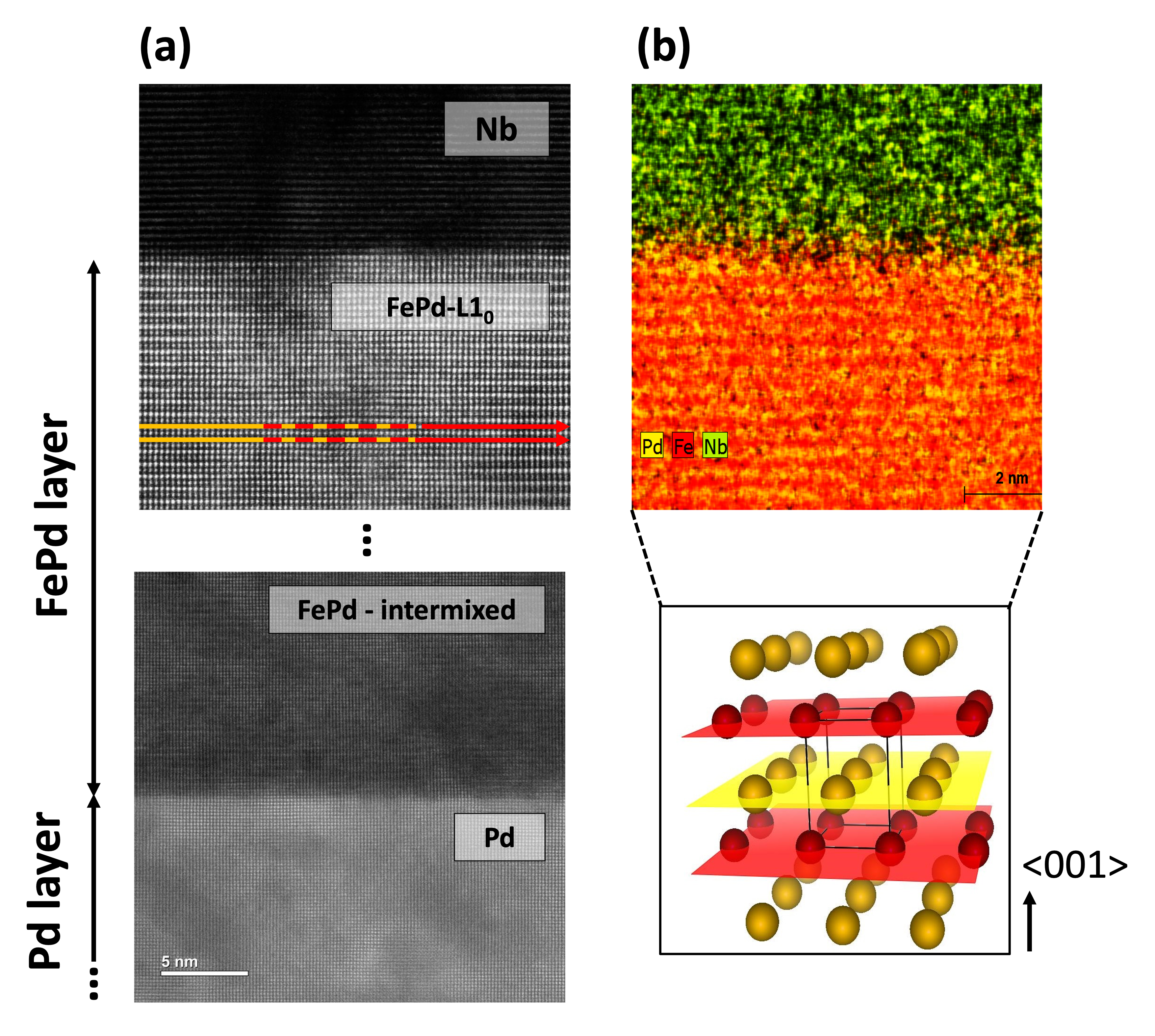
Figure 2: Atomic-scale cross-sections reveal disorder near the interface and progressive ordering towards the Nb/FePd boundary; layer-level mapping confirms local Fe-Pd alternation is disrupted by intermixing.
Anti-phase boundaries are detected as additional planar defects, contributing further to the breakdown of local symmetry and homogeneity:
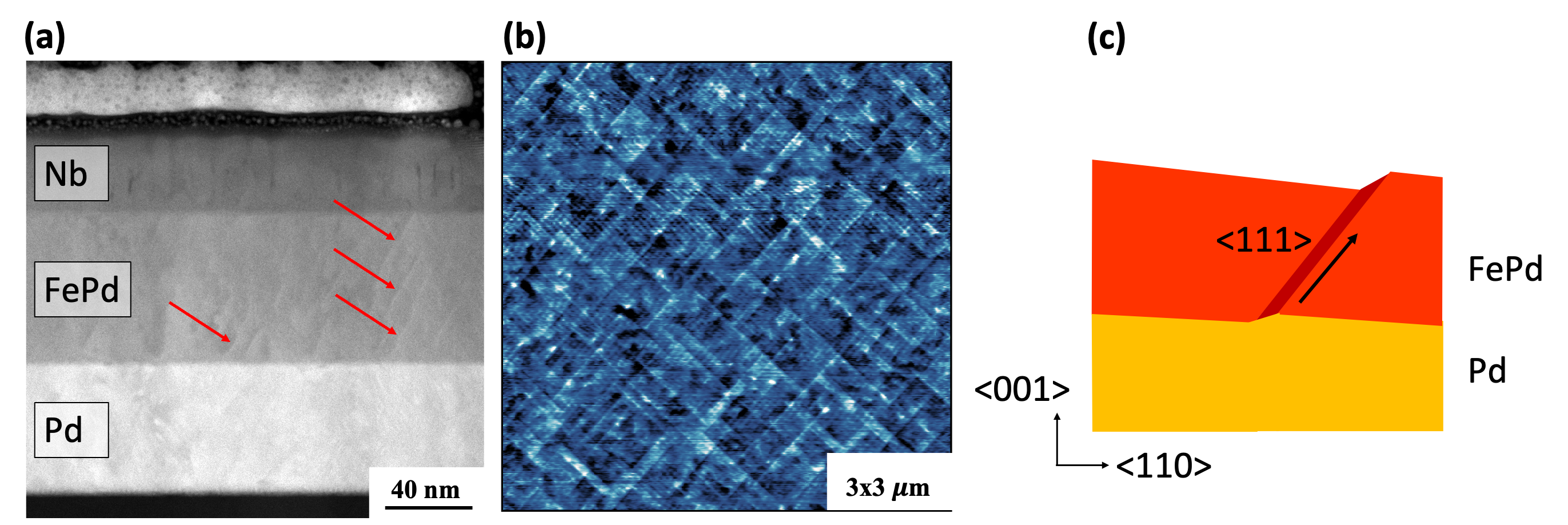
Figure 3: Plan-view and cross-sectional imaging highlight anti-phase boundaries (APBs) and topographic modulations relevant to domain wall pinning and inhomogeneity.
These results establish a clear landscape of chemical disorder, depth-dependent gradients, and defect-induced inhomogeneity—providing a real-system context for emergent chiral interactions.
Experimental Detection of Chirality
Polarization-analyzed grazing-incidence small-angle neutron scattering (PA-GISANS) directly probes the lateral and depth-resolved chiral characteristics of the domain wall textures. Both S/F and F-only samples exhibit pronounced GISANS asymmetry peaks, with i.Nb/FePd showing a significantly stronger chiral signal than ii.FePd. The asymmetry is largest for in-plane polarization, indicating that the dominant chirality is encoded in Bloch/Néel domain wall admixture, but finite out-of-plane chirality is also evident—a direct fingerprint of depth-inhomogeneous disorder:
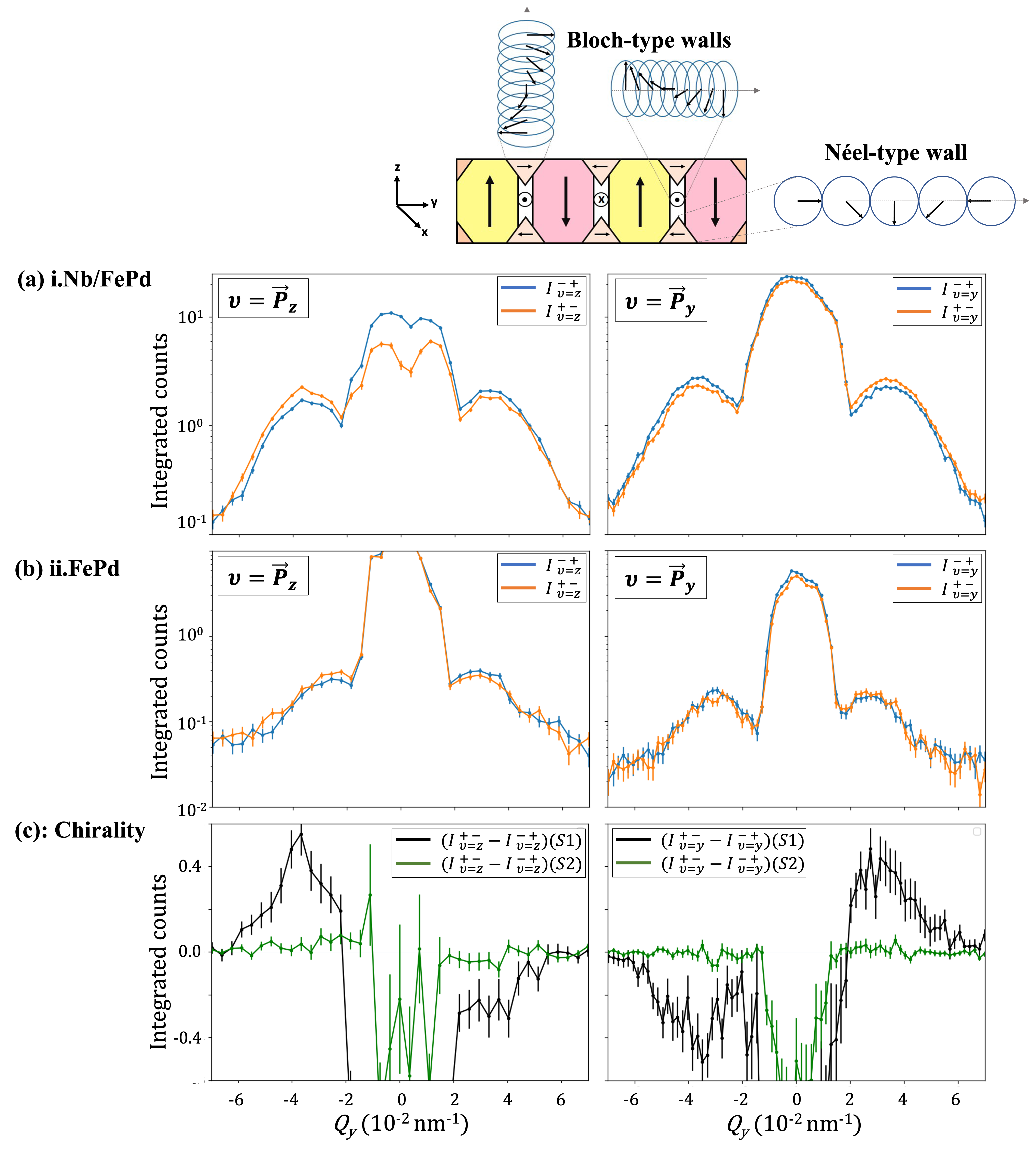
Figure 4: PA-GISANS data and chiral asymmetry plots establish the existence of robust in-plane chirality with a non-negligible out-of-plane contribution, mapped onto domain wall and defect morphology.
First-Principles and Multiscale Modeling
Theoretical analysis commences with pristine L10 FePd, confirming the expected vanishing of Fe-Fe and Pd-Pd DMI due to high symmetry, but nonzero values for Fe-Pd DMI by Moriya's rule:
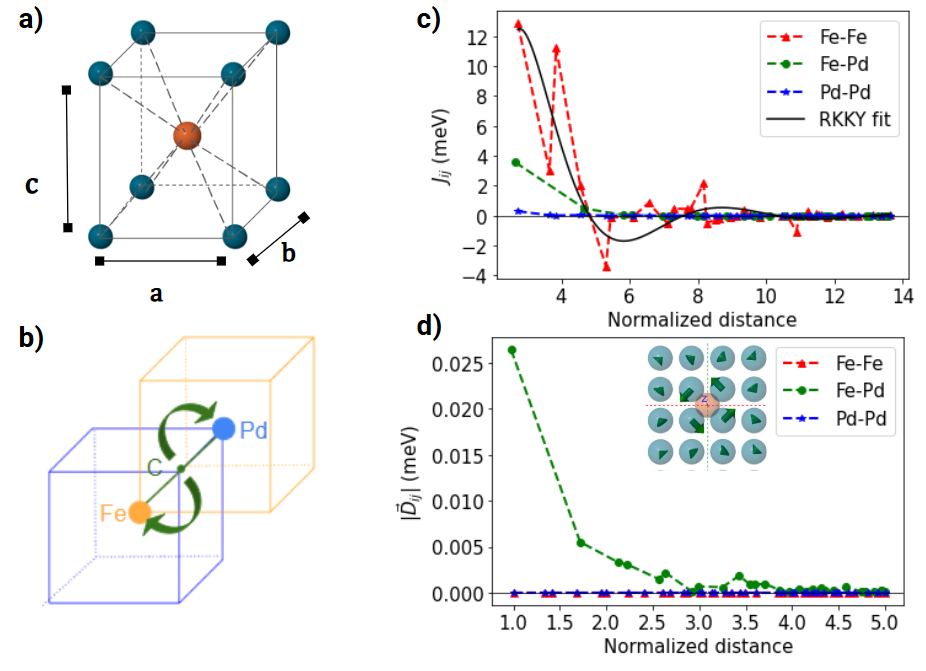
Figure 5: Structure and DMI tensors for ordered L10 FePd; only directly symmetry-breaking bonds exhibit finite DMI, consistent with pure crystal symmetry constraints.
Localized intermixing scenarios—introduced as specific chemical substitutions in supercell calculations—demonstrate that disorder robustly generates noncollinear ground states with finite Bloch-Néel admixture and modulation periods from 40–90 nm, with the modulation wavevectors tightly correlated with the type and spatial arrangement of defects:
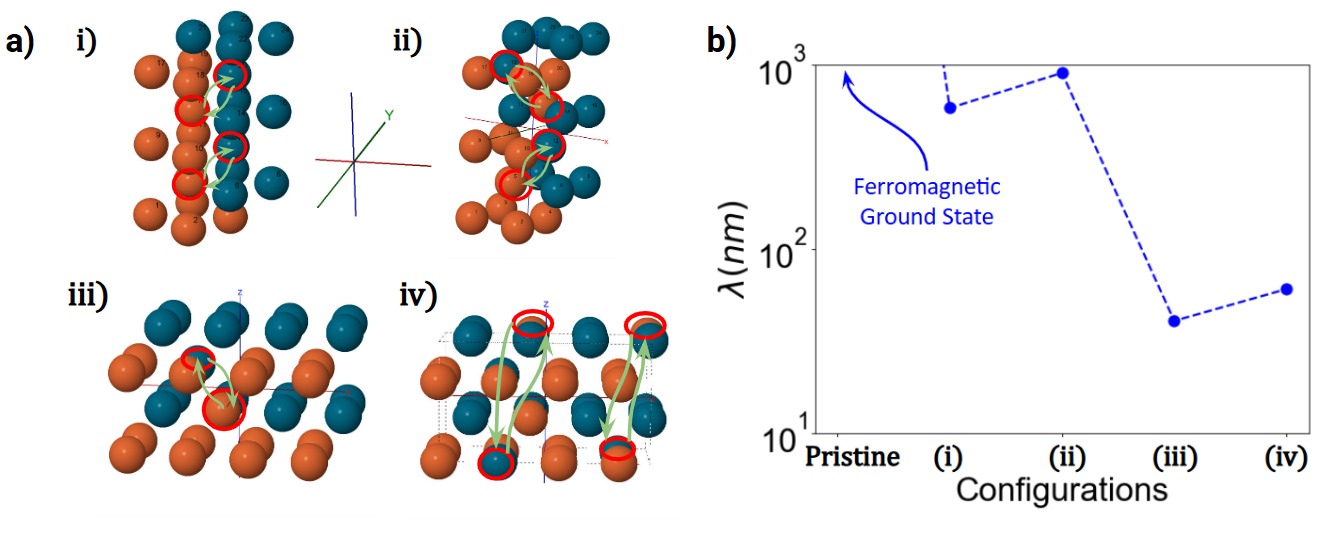
Figure 6: Enumeration and embedding of local intermixing environments; only configurations with pronounced local symmetry breaking produce substantial DMI and spiral states.
Spin dynamics simulations confirm the emergence and thermal stability of these nanometer-scale chiral modulations. Quantitative analysis of the reciprocal-space spin structure factor and GISANS analogs clearly shows asymmetries consistent with experiment:
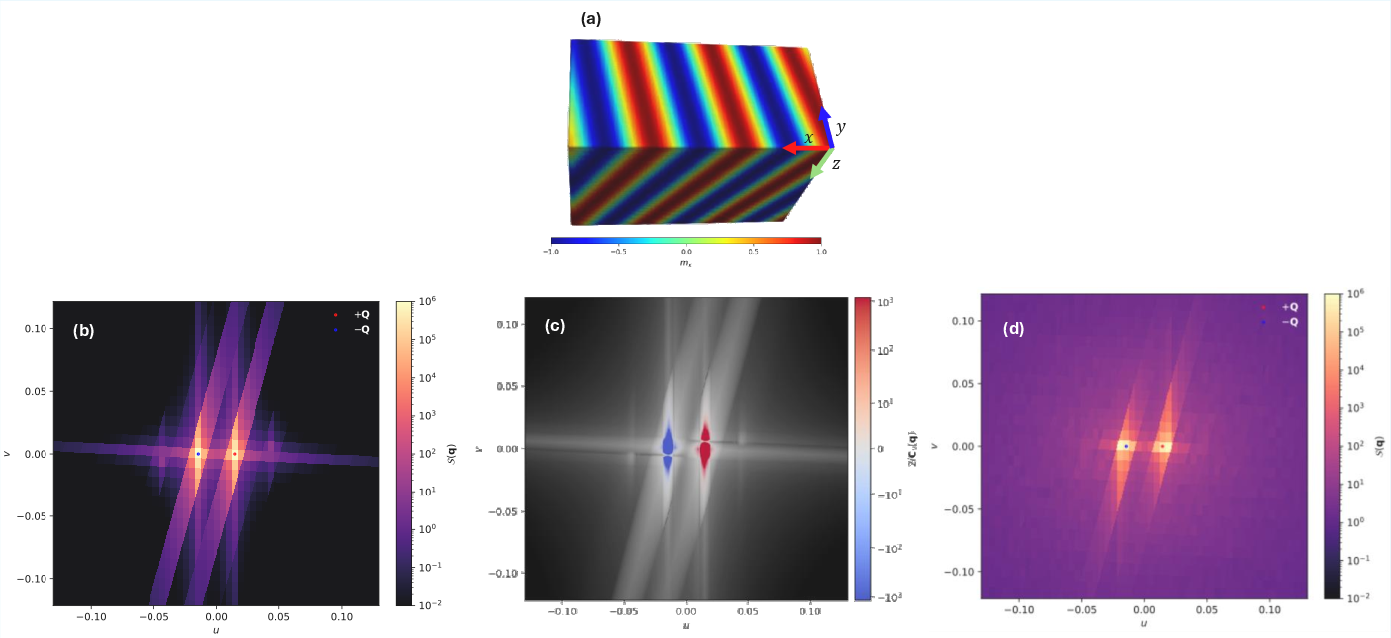
Figure 7: Real-space and reciprocal-space images of noncollinear spin textures for disordered cases; dominant Bragg features persist at 300 K.
To scale up from local disorder to realistic mesoscale films, the composition-gradient model is constructed, explicitly encoding gradient-driven intermixing over experimentally relevant ∼105 atom supercells. A species-aware graph neural network (SAGNN) is trained on DFT-derived pair interactions to predict both Jij and DMI tensors as a function of local atomic environments:
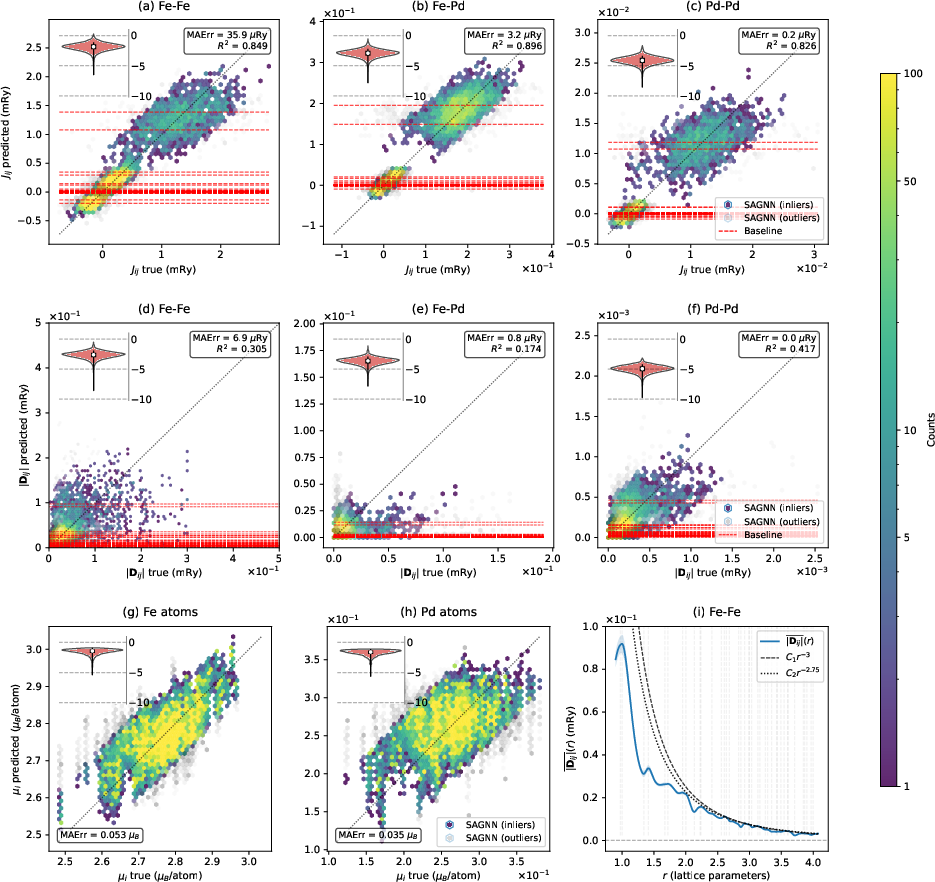
Figure 8: Parity and radial decay analysis of GNN predictions reveal that the model reproduces both magnitude and anisotropy of DMI and magnetic moments over several orders of magnitude and structural configurations.
Direct comparison between DFT, baseline, and SAGNN-predicted interactions for synthetic Fe00Pd01 alloy gradients demonstrates that only models capturing local-environment variability reproduce both the correct finite-02 instability and lower transition temperatures—shell-averaged or mean-field baselines fail to recover chiral ground states:
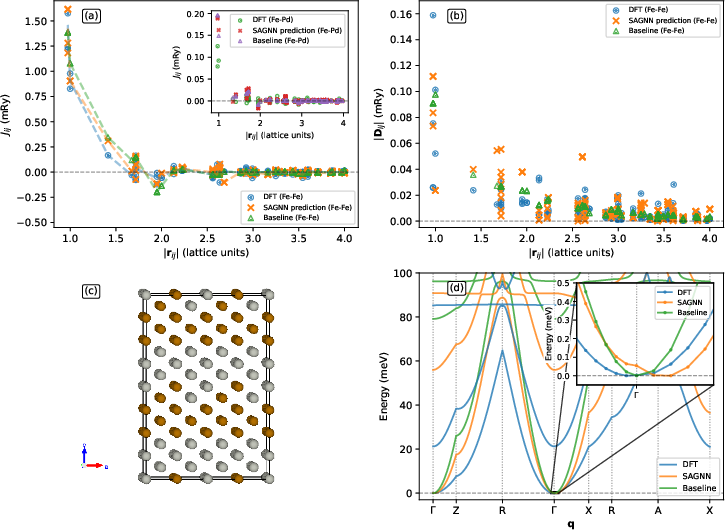
Figure 9: Benchmarking of interaction models in disordered alloys; only SAGNN can recover the necessary variability for finite-03 ordering and realistic low-energy spectra.
Mesoscale minimization under varying effective anisotropy reveals a robust window where the ground state is chiral, with an in-plane modulation period of 68–72 nm (close to but smaller than the experimental 185–217 nm observed by GISANS):
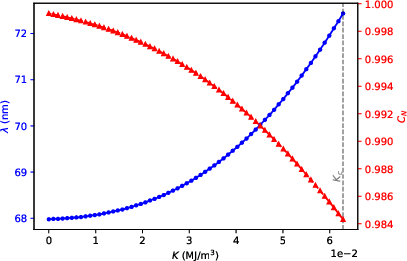
Figure 10: Anisotropy sweep demonstrating stability regime for modulated chiral order; 04 chirality measure and modulation period closely track experimental observables.
Analysis of DFT data shows that disorder-induced DMI decays slower than canonical RKKY (05 vs 06) and exhibits a residual preferred orientation, with group-level averages up to 12% of the RMS DMI—sufficient for collective chirality and measurable effects in neutron experiments:
(Figure 8, panel i)
Figure 8(i): Power-law behavior of disorder-induced DMI highlights robust long-range contributions and collective orientation bias, critical for mesoscale chirality.
Implications and Theoretical Significance
The central result is that chemical disorder—especially when correlated with a compositional gradient—is both necessary and sufficient to generate finite DMI and establish global magnetic chirality in FePd-based heterostructures. The chirality emerges independently of interface effects and is robust at room temperature. The SAGNN approach enables tractable parameterization and analysis at orders of magnitude scale beyond ab initio or shell-averaged models, a requirement for capturing frustration, disorder-activated anisotropies, and the actual spin textures realized in such alloys.
These findings fundamentally revise the interpretation of magnetic chirality in centrosymmetric S/F hybrids: interface engineering is not the only route to DMI-driven phenomena. Instead, microstructural control of bulk disorder and compositional profiling can tune chiral effects, presenting new avenues for the design of skyrmion-hosting materials, S/F spintronic devices, and DMI-driven phenomena including unconventional superconductivity, triplet pairing, and emergent topological order.
Conclusion
This work delivers a comprehensive experimental and multiscale theoretical framework establishing disorder-induced chirality as an intrinsic property of partially ordered FePd alloys. By directly connecting structural disorder to finite DMI and macroscopic chiral magnetic textures, it resolves longstanding ambiguity regarding the origin of chirality in centrosymmetric S/F systems. The physical insights gained extend to the design of complex oxide and metallic heterostructures for next-generation superconducting spintronic and topological devices. The demonstrated SAGNN-based pipeline provides a general strategy for exploring disorder-induced phenomena where multiscale complexity precludes brute-force ab initio modeling.