- The paper presents a novel MLNF that partitions electromagnetic fields into scattering and medium-assisted sectors.
- The study demonstrates that anisotropic squeezed vacuum states can induce net quantum forces exceeding 160 fN on macroscopic bodies.
- The findings offer actionable insights for precision measurement and quantum control in advanced optomechanical systems.
Quantum Optomechanics of Lossy Bodies
Introduction
The study presented in "Quantum Optomechanics of Lossy Bodies: General Approach and Structured Squeezed Vacuum Effects" (2604.05864) investigates the quantum optomechanical interactions between macroscopic non-equilibrium systems and structured quantum fields. By ingeniously deploying the Modified Langevin Noise Formalism (MLNF), the paper addresses the challenges inherent in modeling electromagnetic forces acting on lossy bodies under quantum illumination conditions. This theoretical framework innovatively explores scenarios where incoming fields are entangled or squeezed, promoting non-trivial electromagnetic fluctuations without detectable mean fields, thus expanding the scope of quantum optomechanics beyond classical paradigms.
Theoretical Framework
The MLNF serves as the backbone of the paper's theoretical analysis. This formalism systematically partitions the global electromagnetic field space into two orthogonal sectors: the scattering sector and the medium-assisted sector. The former represents incoming radiation excitations, while the latter embodies quantized dipolar sources materializing within the volume of the absorbing medium. The approach quantizes electromagnetic interactions in the presence of dispersive and absorbing media without resorting to differential absorption models at boundaries, thereby enabling the precise capture of quantum and classical dynamics in arbitrary geometries.
Optomechanical Force Analysis
The primary focus within this theoretical context is the derivation of the time-averaged Maxwell stress tensor and the subsequent calculation of forces under externally defined quantum conditions. This paper exhibits how anisotropic, multimode squeezed vacuum states can drive electromagnetic quantum fluctuations, breaking traditional symmetries and inducing net forces absent any classical coherent illumination. Such forces hinge on second-order field correlations, identifying a fundamentally quantum mechanical interaction.
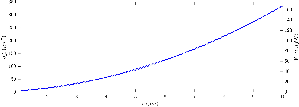
Figure 1: Radiation pressure cross-section σω0.
Key Findings
Coherent and Thermal Radiation Comparisons
The paper examines disparate quantum illumination scenarios, comparing coherent and thermal states with squeezed vacuum states. Calculations reveal that squeezed vacuum states engender forces primarily driven by structured vacuum fluctuations, starkly contrasting classical coherent fields which mainly function under the influence of squared mean fields. The purely quantum-driven force arising in the absence of shot noise and classical carriers provides a new tool for quantum optomechanics, allowing less perturbative manipulation of macroscopic bodies.
Implications on Macroscopic Bodies
When applied to a homogeneous lossy sphere, the theory underscores how significant non-classical forces can be generated. Evaluating practical parameters, such as silicon microparticles under ultrabroadband squeezed vacuum illumination, the paper demonstrates that realistic quantum radiation pressure can exceed 160 fN. Such findings imply that structured quantum fluctuations can be harnessed to achieve controlled mechanical actions without the classical field-induced decoherence typical in conventional optomechanical systems.
Conclusion
This research establishes a foundational theory for quantum optomechanics that incorporates the non-equilibrium loss dynamics of macroscopic bodies and structured quantum illumination. The implications span potential developments in precision measurement, quantum manipulation of macroscopic systems, and improvements in the understanding and engineering of quantum systems beyond classical limits. With experimental feasibility confirmed, the paper's findings promise to facilitate advancements in quantum technologies that rely on macroscopic interactions mediated purely by quantum states, circumventing traditional constraints dictated by classical optics and thermodynamics.