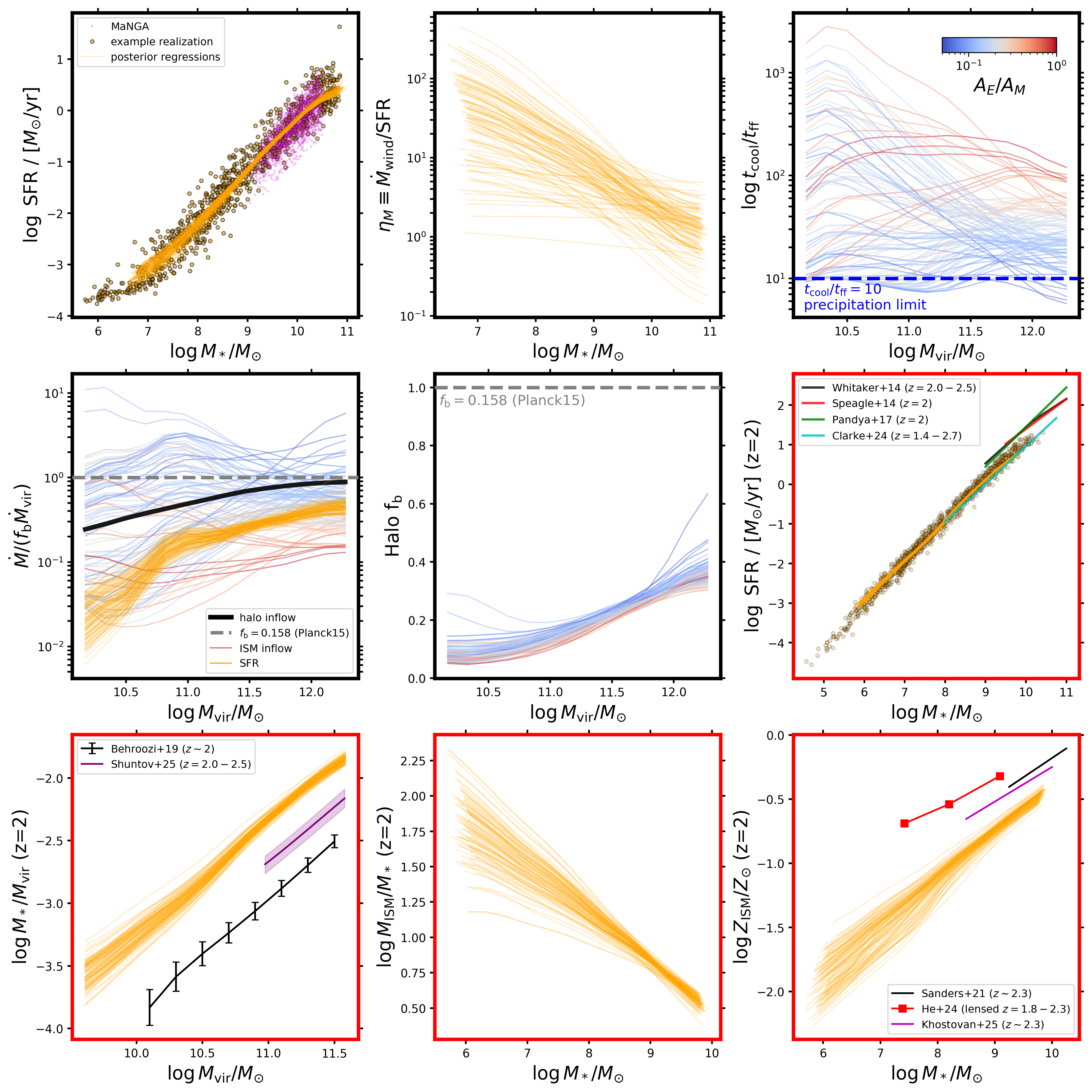
- The paper introduces sapphire, a modular GPU-accelerated framework that integrates physics-informed and data-driven modeling to improve galaxy formation simulations.
- The paper employs automatic differentiation with robust ODE solvers in JAX to perform high-resolution sensitivity analyses and systematically explore high-dimensional parameter spaces.
- The paper demonstrates that incorporating multiple observables breaks degeneracies in key feedback parameters, enabling precise estimation of energy and mass loading factors.
Introduction and Motivation
The study introduces sapphire, a modular, fully differentiable, GPU-accelerated semi-analytic model (SAM) framework designed for galaxy formation and evolution, implemented in JAX. The motivation is rooted in longstanding challenges facing both empirical and fully physical models, including the limited interpretability and causal identifiability of hydrodynamical simulations and the incomplete connection to underlying astrophysics in empirical models. Sapphire addresses these by enabling interpretable, gradient-accessible, and scalable population modeling in a Bayesian setting, with the ultimate goal of unifying SAM and simulation-based approaches to galaxy formation within a hybrid, physics-informed, data-driven paradigm.
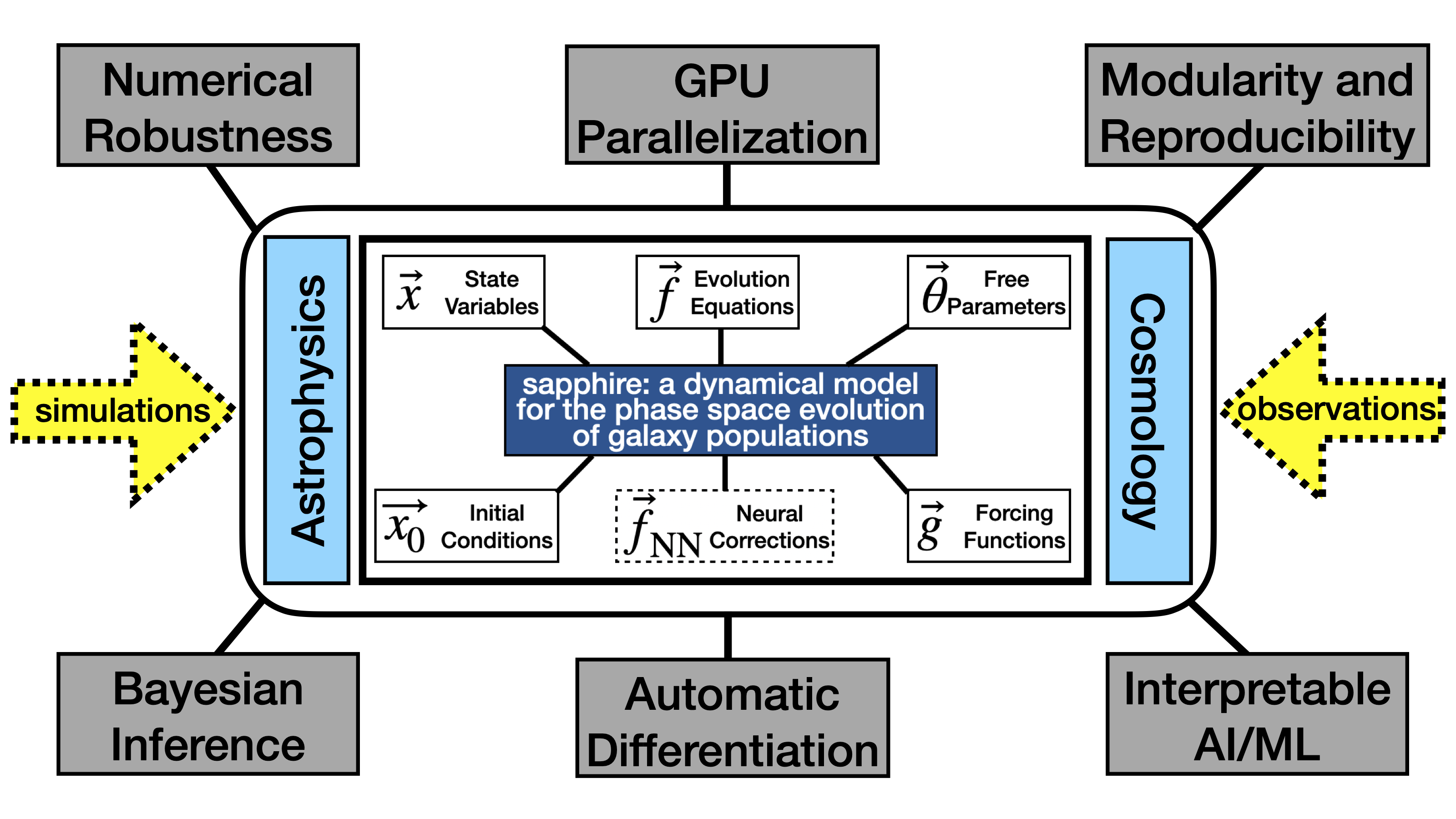
Figure 1: Schematic overview of sapphire, emphasizing its identification of universal dynamical ingredients, modular architecture, and pathways for hybrid data-driven corrections to governing equations.
Framework Architecture and Numerical Robustness
Sapphire is architected for modern multi-GPU infrastructure and employs automatic differentiation throughout the numerical solution of galaxy evolution ODEs. Core dynamical elements include selection and interpolation of dark matter halo merger trees, parallel ODE evolution for ensemble galaxies, differentiable kernel regression for producing scaling relations, and explicit computation of likelihoods and their parameter gradients.
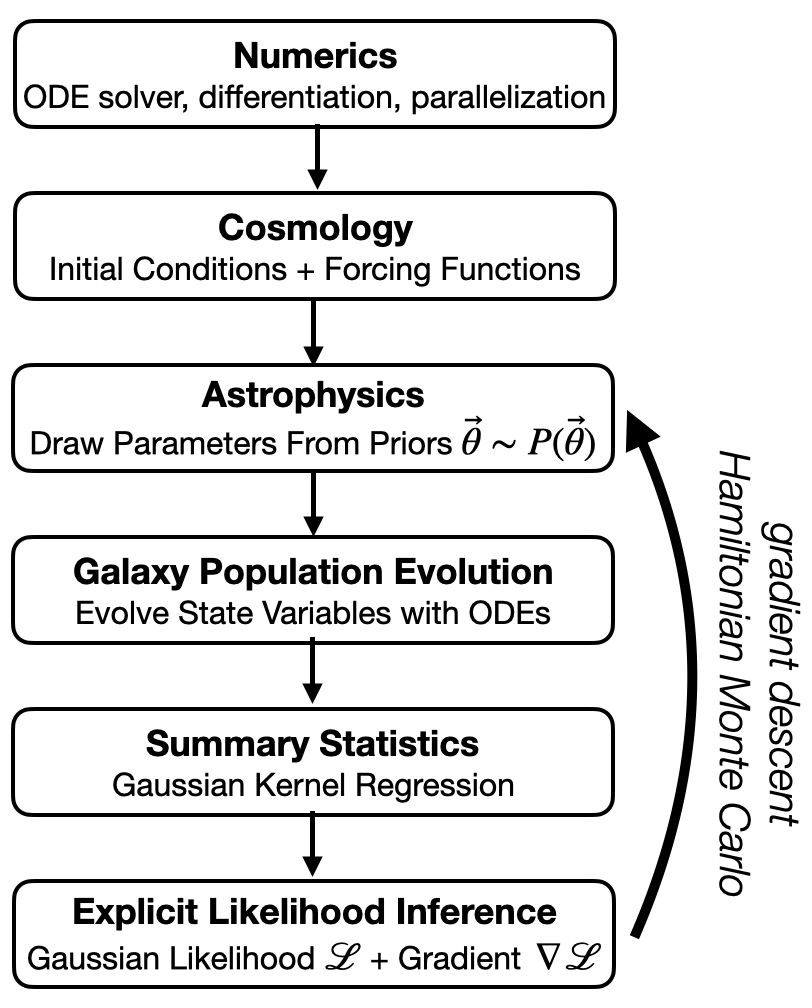
Figure 2: Flowchart of the sapphire population evolution pipeline, detailing the interface between numerics, cosmology, astrophysical parameter inference, and Bayesian optimization.
Robustness of the autodiff pipeline is maintained with validated ODE solvers (Tsit5/Bosh3), rigorous convergence and stability diagnostics, and batch vectorization across large halo ensembles. This enables efficient global exploration of high-dimensional parameter spaces and sensitivity landscapes.
Sensitivity and Identifiability Analysis
Leveraging exact Jacobians and Hessians through autodiff, sapphire enables for the first time interpretable, high-resolution sensitivity analyses of galaxy evolutionary outcomes to model parameters (wind mass, energy, and metal loading; ISM depletion time). Individual halo Jacobians reveal non-random, astrophysically interpretable structures:
- Energy loading amplitude (AE) consistently dominates the sensitivity of all z=0 state variables.
- Mass loading has weaker, often sign-opposite influence compared to energy loading.
- Sensitivities are robust across parameter space and wide halo mass ranges, disrupted only by extrema or imposed parameter clipping.
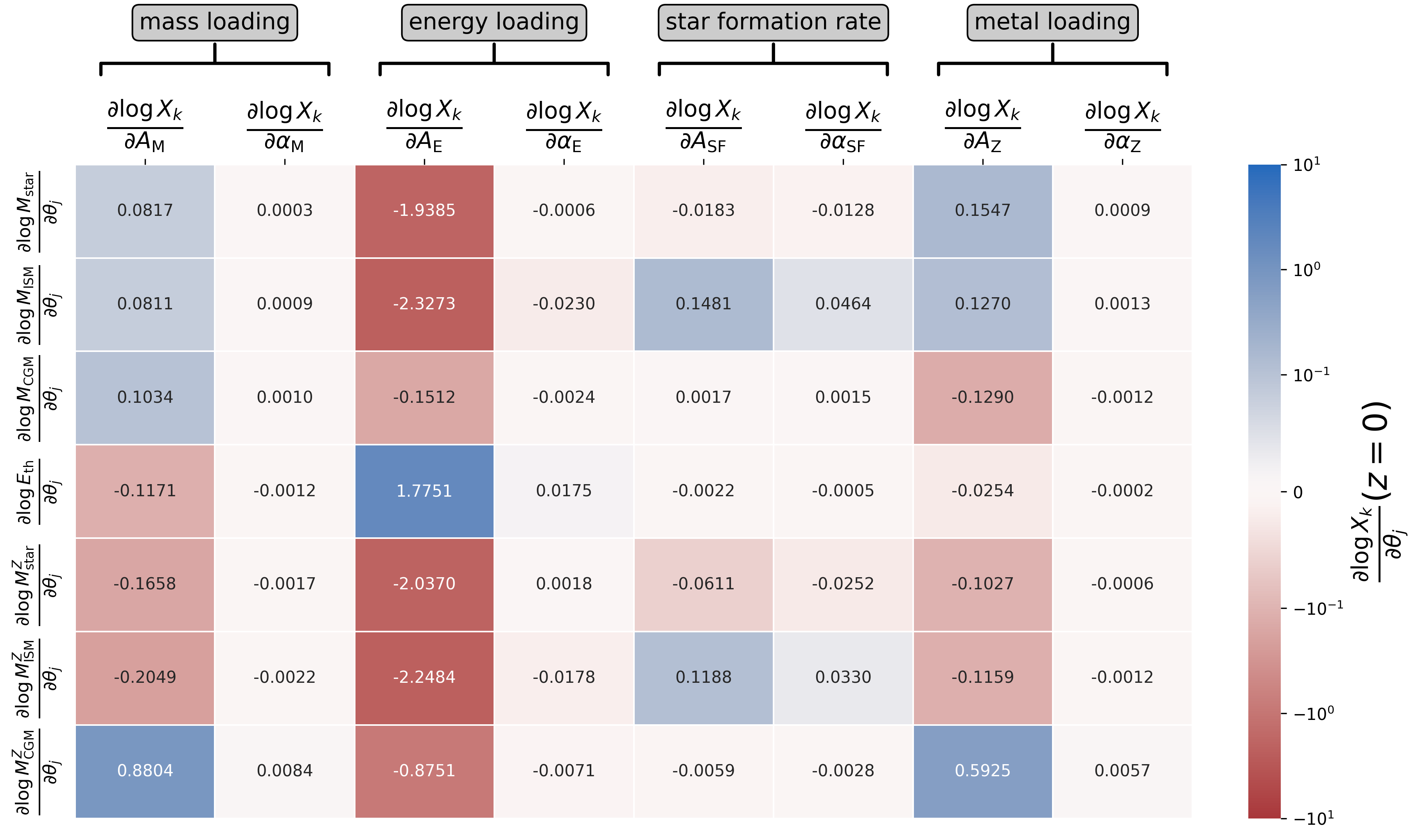
Figure 3: Example Jacobian showing the dominance of energy loading parameter gradients in determining z=0 state variables for a MW-scale halo.
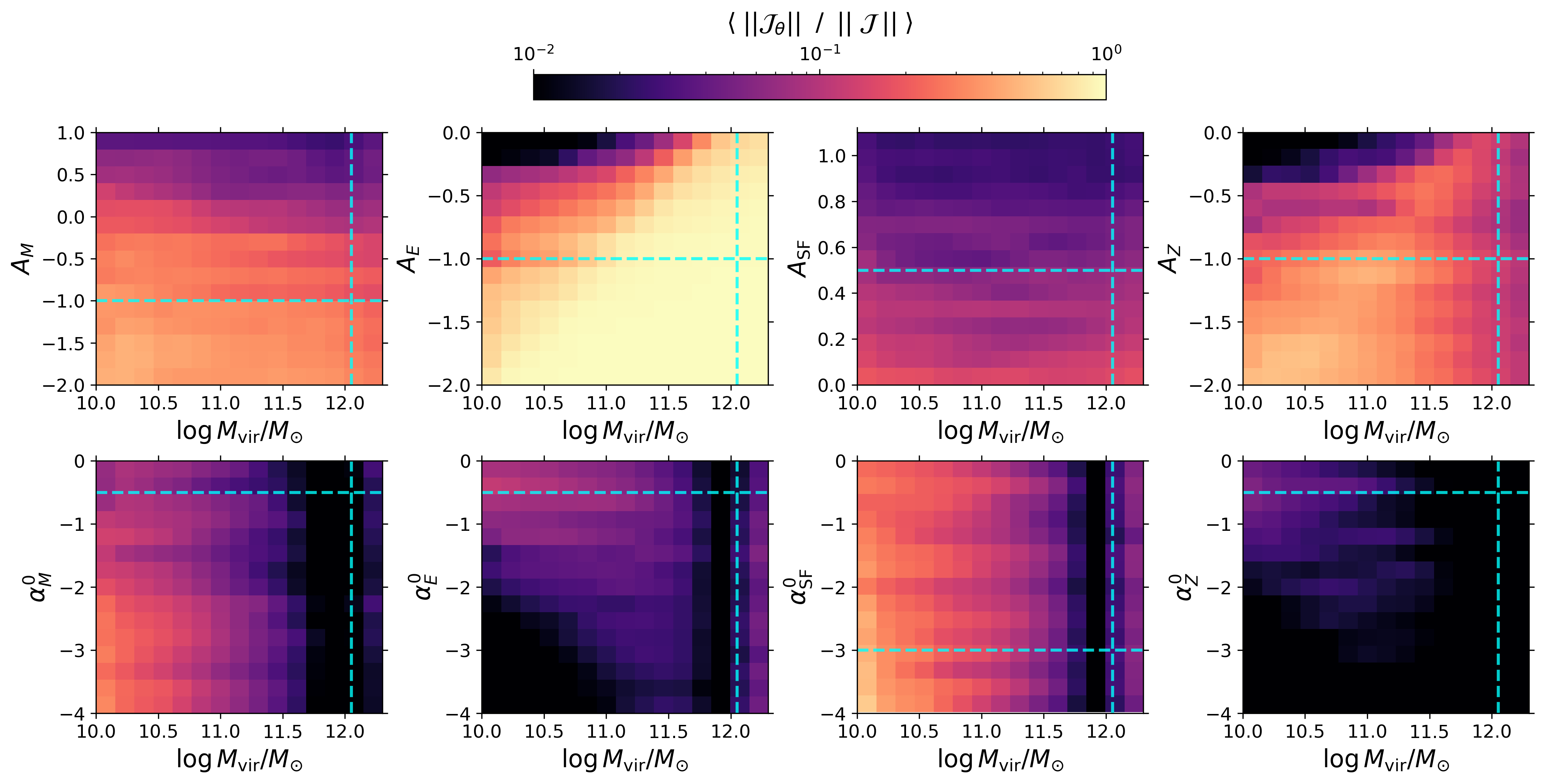
Figure 4: Fractional parameter sensitivity across halo mass and parameter space, with AE consistently dominating except where physically clipped.
Parameter Inference and Information Content of Observables
Mock recovery experiments and Bayesian inference on observational data sets—stellar-mass–halo-mass relation (SMHM), ISM-to-stellar-mass ratios (fISM), and ISM mass–metallicity relation (MZR)—show that:
- The SMHM relation alone underdetermines key feedback and star formation parameters due to degeneracies and saddle points.
- Addition of fISM and MZR progressively breaks degeneracies, localizes the posteriors, and enables recovery of meaningful, tight parameter constraints (e.g., AE, tdep).
- In mock tests, parameter precision scales nearly linearly with observational uncertainty, permitting percent-level constraints with high-quality data.
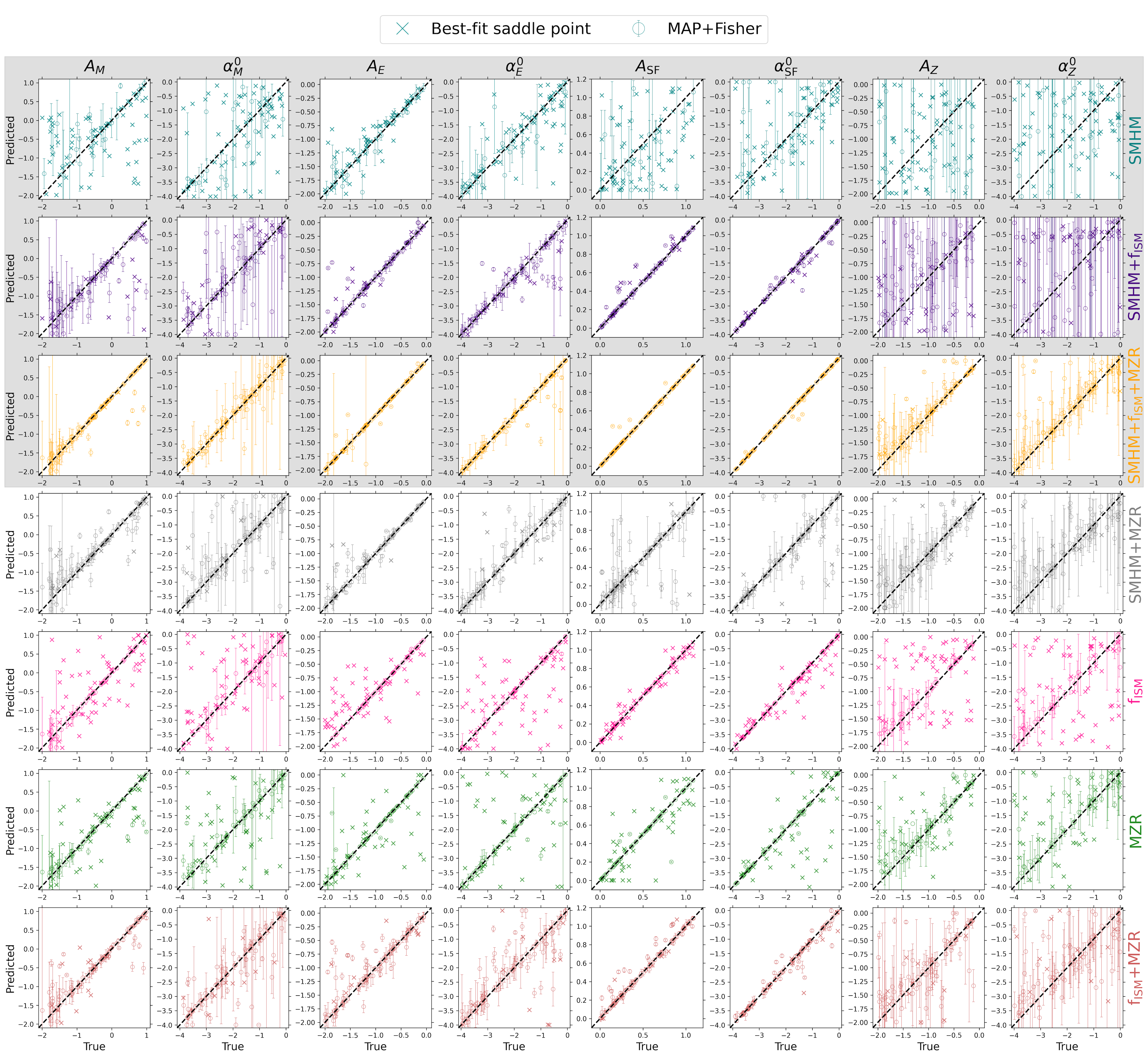
Figure 5: Mock parameter recovery comparisons show the improvement in identifiability with the number and combination of observational constraints.
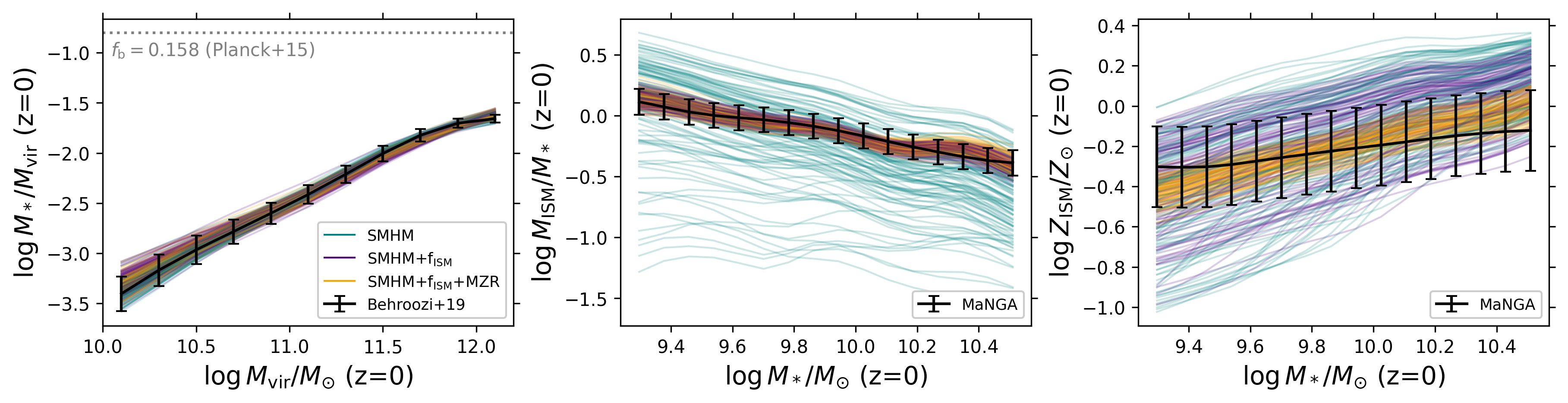
Figure 6: Posterior predictive checks demonstrate constraint tightening and model–data compatibility as more observables are included in the inference.
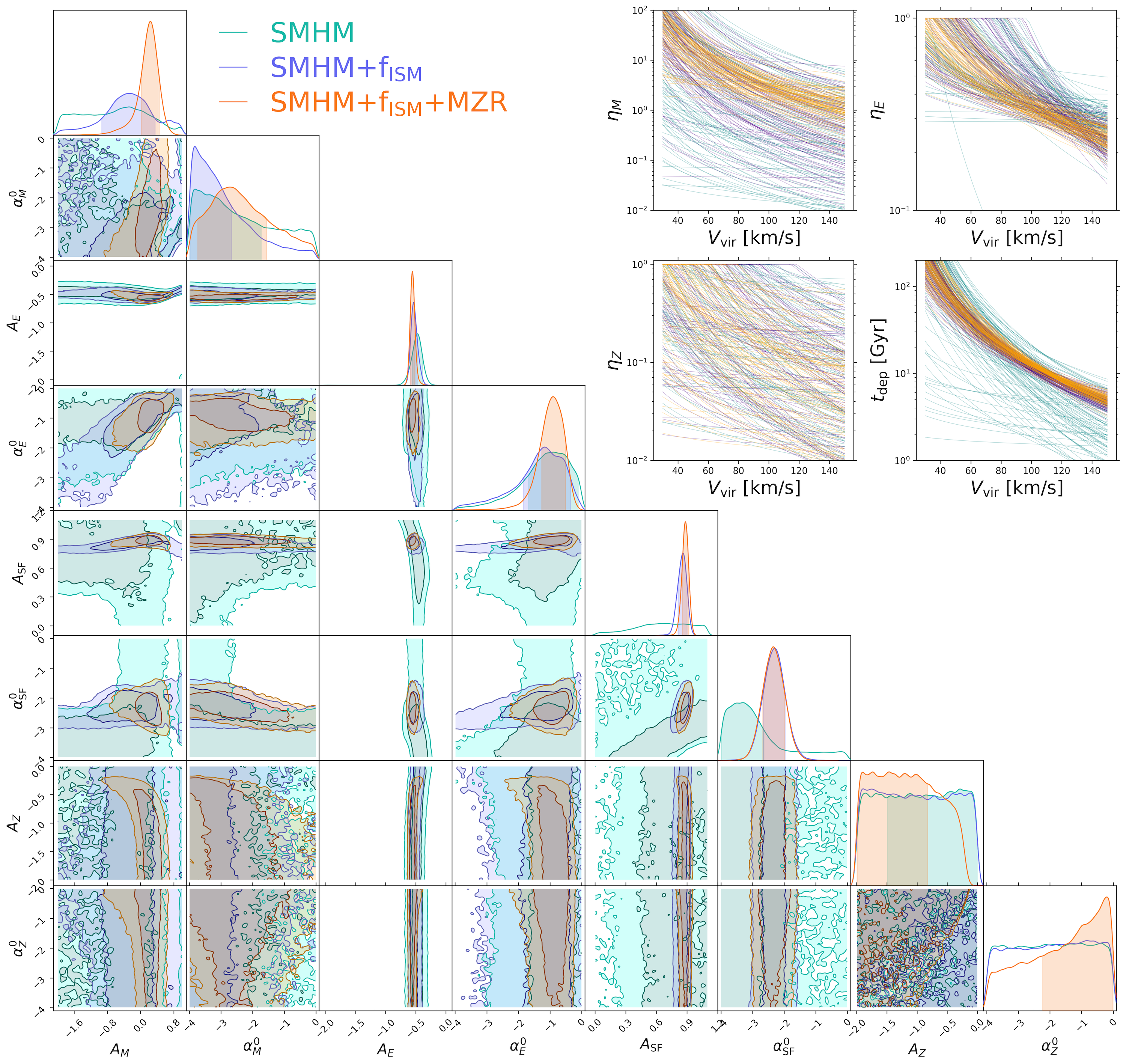
Figure 7: Joint posteriors of astrophysical parameters, highlighting tight constraints on AE and improved localization when all constraints are employed.
Astrophysical Implications and Robustness
Posterior parameter estimates indicate:
- Low mass loading (ηM≲1 at MW scale and z=00 in dwarfs) and high energy loading (z=01–z=02) are favored, implying that feedback in galaxies is predominantly preventative rather than ejective. This suggests suppression of gas accretion and CGM over-pressurization are critical to self-regulation of star formation.
- Systematically shifting or perturbing input scaling relations clearly maps to interpretable changes in the inferred feedback (e.g., increasing SMHM normalization leads to lower z=03 and higher z=04; Figure 8).
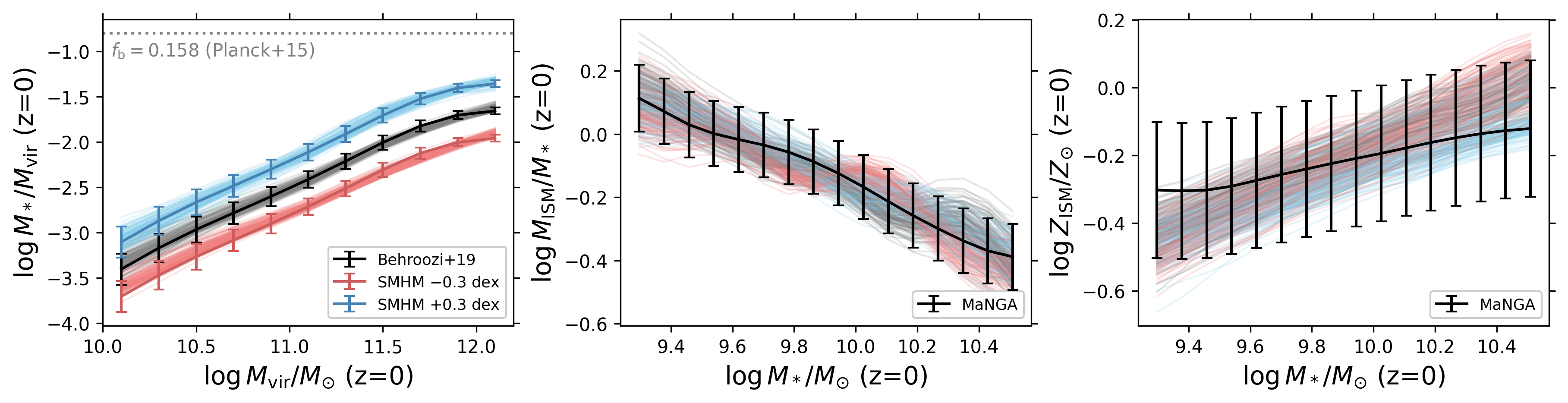
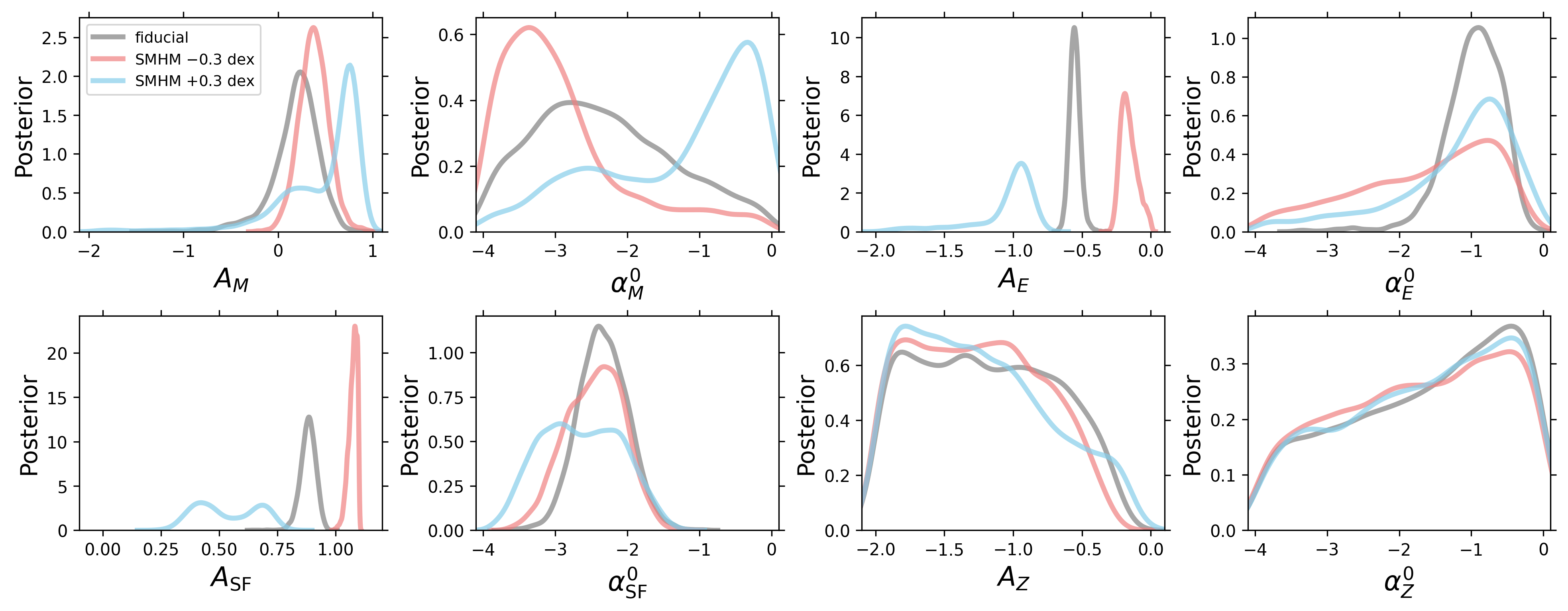
Figure 8: Direct illustration of how systematic shifts in the SMHM relation are traced by shifts in the inferred feedback parameters.
Forecasts with further reduced observational uncertainties show the framework's potential for achieving sub-percent precision in key astrophysical parameters (Figure 9).
Posterior predictive checks for observables not used in fitting (z=05 and z=06 scaling relations, SFMS, CGM thermodynamic properties) indicate:
Theoretical and Practical Implications
Sapphire's architecture and methodology carry significant implications:
- Automatic differentiation through dynamical population models unlocks systematic, interpretable local/global sensitivity analysis previously inaccessible in the field.
- The physically motivated, modular framework is extensible to additional processes (satellite and black hole feedback, environmental effects, non-thermal CGM physics), and can serve as a testbed for hybrid approaches (e.g., neural ODE-based data-driven model correction).
- Sapphire's differentiable infrastructure lays foundational groundwork for implementing automated evidence calculations and hierarchical Bayesian inference across library models—a necessity for future population-level astrophysics in the era of massive cosmological data sets.
Conclusion
Sapphire defines a new quantitative standard for interpretable, physics-informed inference on the evolution of galaxy populations. The demonstrated ability to compute exact gradients through population-scale dynamical models, access sensitivity and uncertainty landscapes, and robustly infer feedback and star formation parameters from multi-observable constraints marks a substantial advancement for semi-analytic modeling. Its modularity and extensibility provide a scalable path forward for integrating simulation-based priors, further physical process complexity, and data-driven discovery for both astrophysical and cosmological inference (2604.06318).