- The paper details a multipronged analysis using neural topic modeling and qualitative synthesis on 14,253 forum posts to map security risks in AI code assistants.
- The study identifies key threat areas including data exposure, propagation of insecure code, and legal licensing ambiguities affecting Copilot.
- Methodology validated with high inter-rater agreement and sentiment analysis across platforms underscores a growing trust gap in developer practices.
Introduction
This paper, "Security Concerns in Generative AI Coding Assistants: Insights from Online Discussions on GitHub Copilot" (2604.08352), systematically examines how developers articulate and negotiate the security risks associated with GenAI-based coding assistants, focusing specifically on GitHub Copilot. Leveraging a dataset of public discussions from Stack Overflow, Reddit, and Hacker News, the study employs neural topic modeling and qualitative analysis to uncover the range, frequency, and sentiment of emerging security-related concerns. This multiplatform, developer-centered methodology provides a granular mapping of how practitioners perceive the evolving intersection between GenAI and secure software engineering.
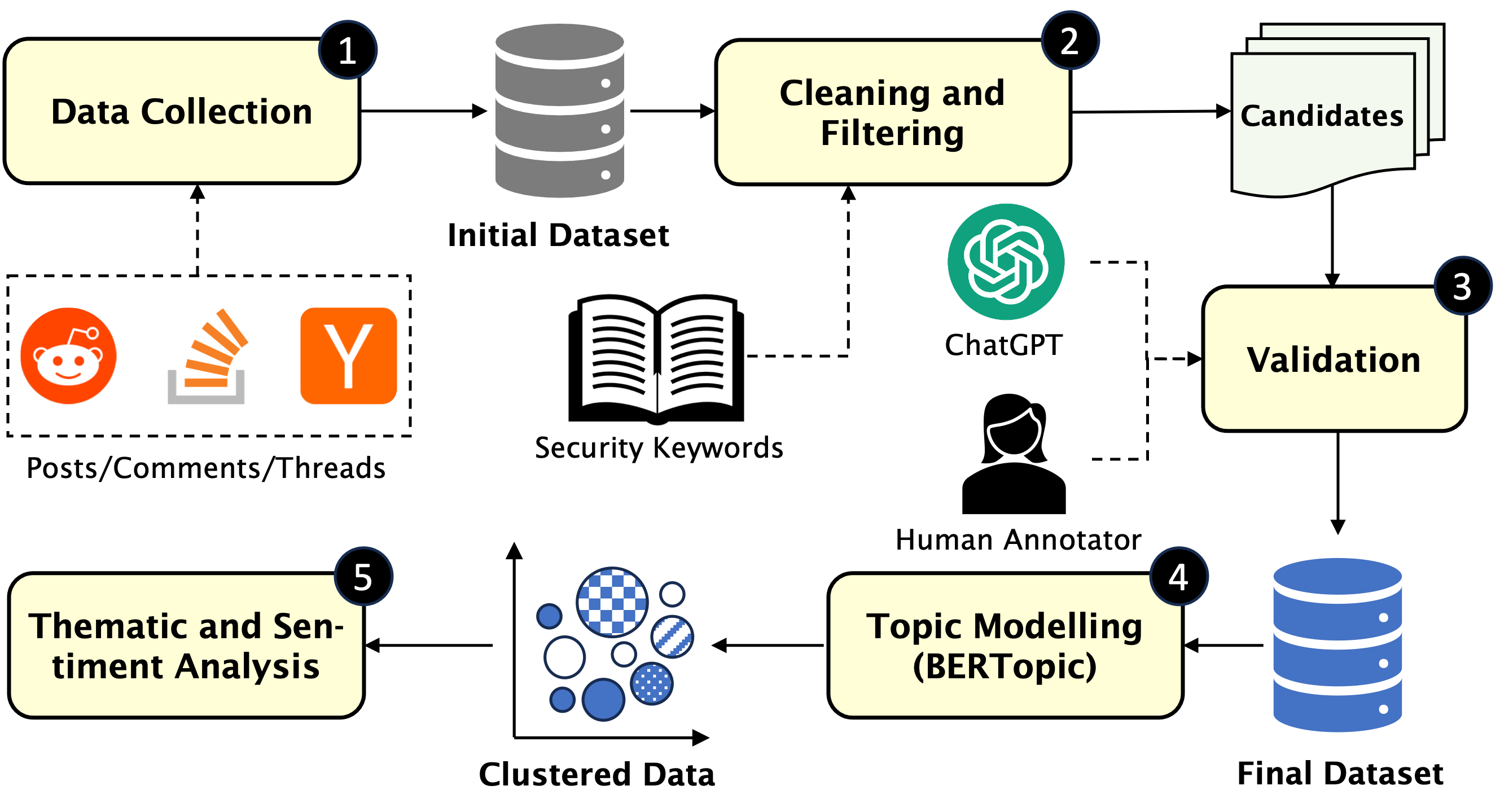
Figure 1: Overview of the study’s mixed-methods design, integrating multiplatform data collection, neural topic modeling, and qualitative synthesis.
Methodology
The study constructed a corpus of Copilot-related security discussions by mining three major forums: Stack Overflow, Reddit, and Hacker News, resulting in an initial dataset of 14,253 entries. Security-relevant posts were identified via a curated list of 266 security keywords and subjected to multi-stage manual and assisted filtering, resulting in 383 validated concerns (Stack Overflow: 20, Hacker News: 170, Reddit: 193). BERTopic, utilizing SBERT and HDBSCAN, was employed for semantic clustering (11 clusters), which were then synthesized via thematic analysis into four major security concern categories.
Thematic coding was validated with high inter-rater agreement (Cohen’s Kappa > 0.9), and sentiment analysis was performed using a transformer-based polarity model to probe affective nuances across platforms. The methodology is robust in mitigating noise, triangulating qualitative themes, and preserving cross-platform comparability.
Identified Security Concern Areas
1. Exposure and Integrity of Public Training Data
The predominant concern pertains to inadvertent or adversarial memorization and regurgitation of sensitive, proprietary, or licensed code by Copilot. Developers debated both direct leakage risks through inference attacks and the impact of data poisoning—deliberate injection of malicious snippets into public repositories impacting downstream model suggestions. The linkage between model transparency deficits and opaque training data governance generates normative and practical uncertainties regarding confidentiality, intellectual property, and attack surface expansion.
2. Insecure Code Suggestions and Vulnerability Patterns
A large fraction of discourse critiques Copilot’s tendency to propagate pre-existing vulnerabilities and insecure coding idioms: SQL injection, insufficient authentication, hardcoded secrets, and deprecated API invocations are frequently cited. Practitioners attribute these faults to the overrepresentation of low-quality or vulnerable code in the training corpus and the absence of model-inherent quality/sanitization constraints. Specific criticisms highlight that Copilot prioritizes code plausibility and syntactic conformity over robust defensive patterns, amplifying downstream vulnerability risk if developer vigilance lapses.
3. Legal, Licensing, and Attribution Ambiguity
Substantial attention is devoted to legal ambiguities: uncertain provenance, license compliance (GPL, MIT, etc.), and inadequate (or absent) attribution mechanisms. Developers express concern about both explicit legal risk and workflow friction—insufficient traceability hinders due diligence, auditability, and compliance, especially in environments subject to stringent regulatory, IP, or organizational policy scrutiny. These licensing anxieties are exacerbated by Copilot’s black-box operation, which obscures the lineage of generated code and inhibits license risk assessment.
4. Developer Trust Erosion and Overdependence on GenAI
A less empirically explored but distinctly emergent theme is the erosion of individual and collective security acumen. Discussions reflect apprehension regarding overreliance on GenAI for routine coding, leading to decreased oversight, reduction in secure development judgment, and misplaced trust in model outputs. While some embrace Copilot’s efficiency gains, others document outright bans in enterprise contexts due to negative experiences with reliability and latent vulnerabilities.
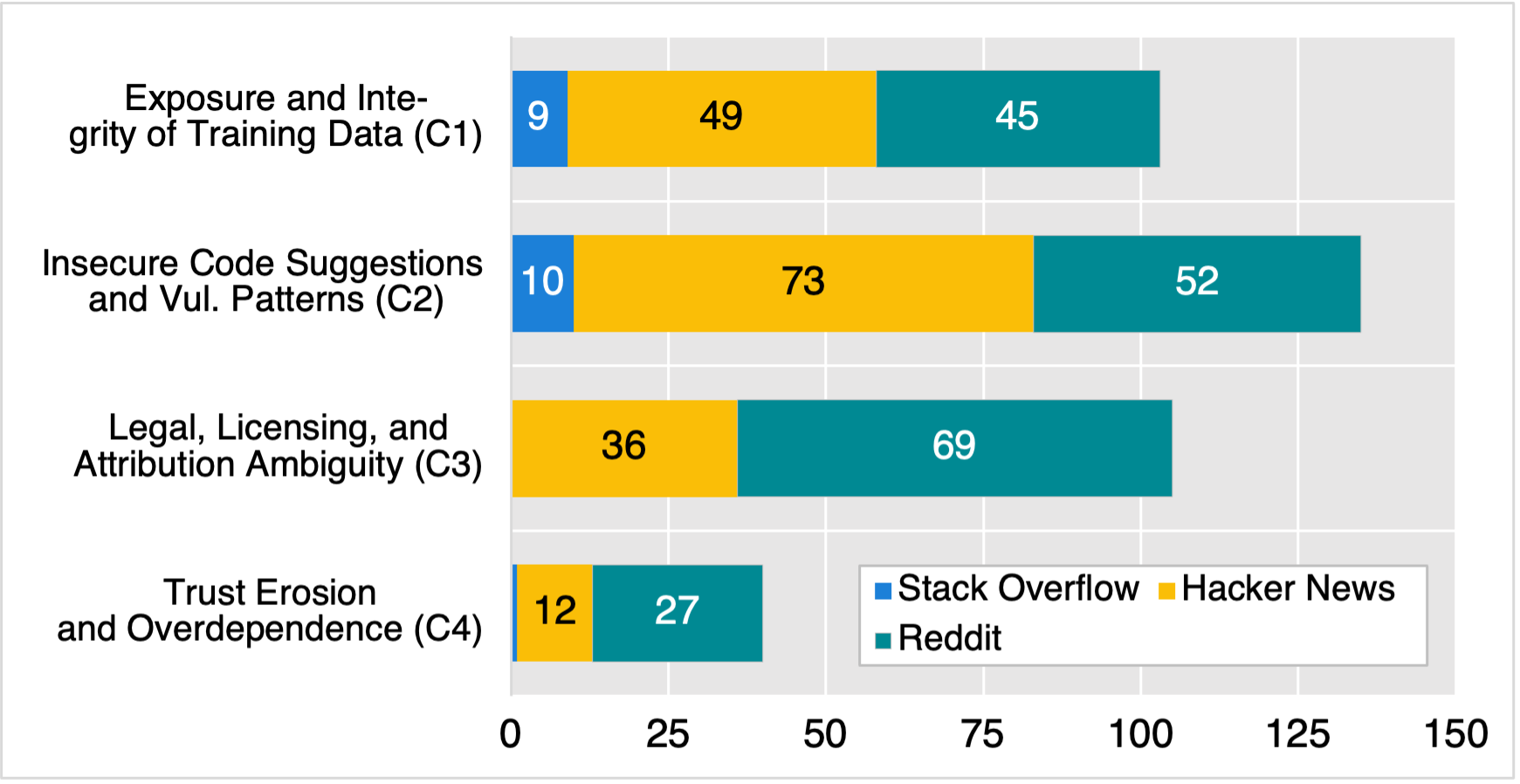
Figure 2: Distribution of security-relevant discussion clusters across Reddit, Hacker News, and Stack Overflow, showing platform-specific thematic prevalence.
Analysis indicates clear platform effects. Reddit harbors broader, sentiment-laden, and experiential narratives, with emphasis on both training data exposure and legal ambiguity. Hacker News exhibits technically nuanced debates, frequent reference to adversarial ML concepts, and alignment with adversarial prompting/poisoning risks. Stack Overflow discussions are more tightly scoped, focusing on concrete code correctness and remediation, rarely touching on broader legal or trust issues. Sentiments toward Copilot on Reddit and Hacker News skew strongly negative, especially for trust and legal concerns, whereas Stack Overflow remains affectively neutral, reflecting a focus on pragmatic Q&A over opinion-based discourse.
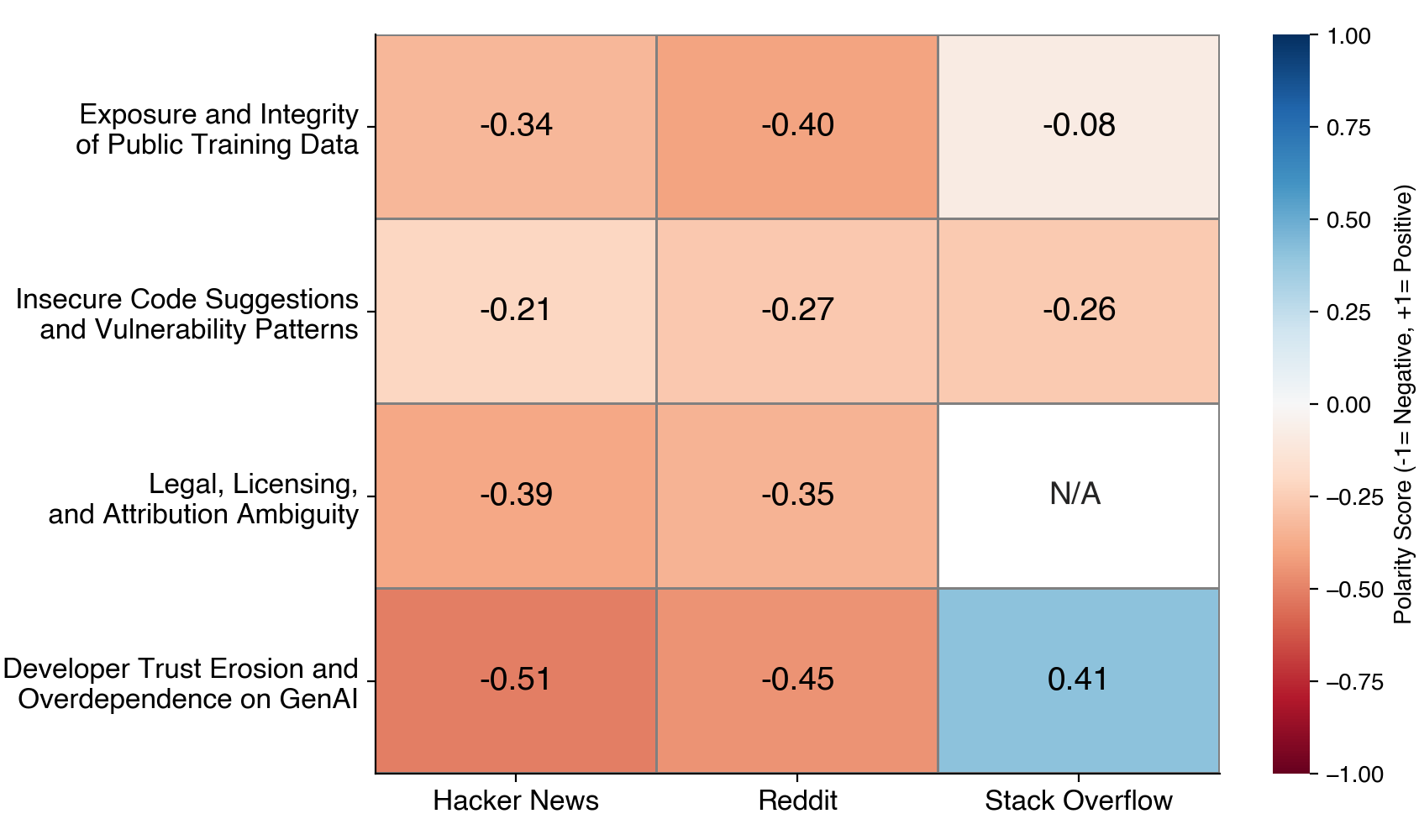
Figure 3: Sentiment polarity distribution for Copilot security discussions, stratified by platform and concern category.
Temporal analysis (Figure 4) reveals increasing engagement with security concerns over time, indicating not only persistent but intensifying apprehension as Copilot’s adoption scales and its impact on workflows crystallizes.
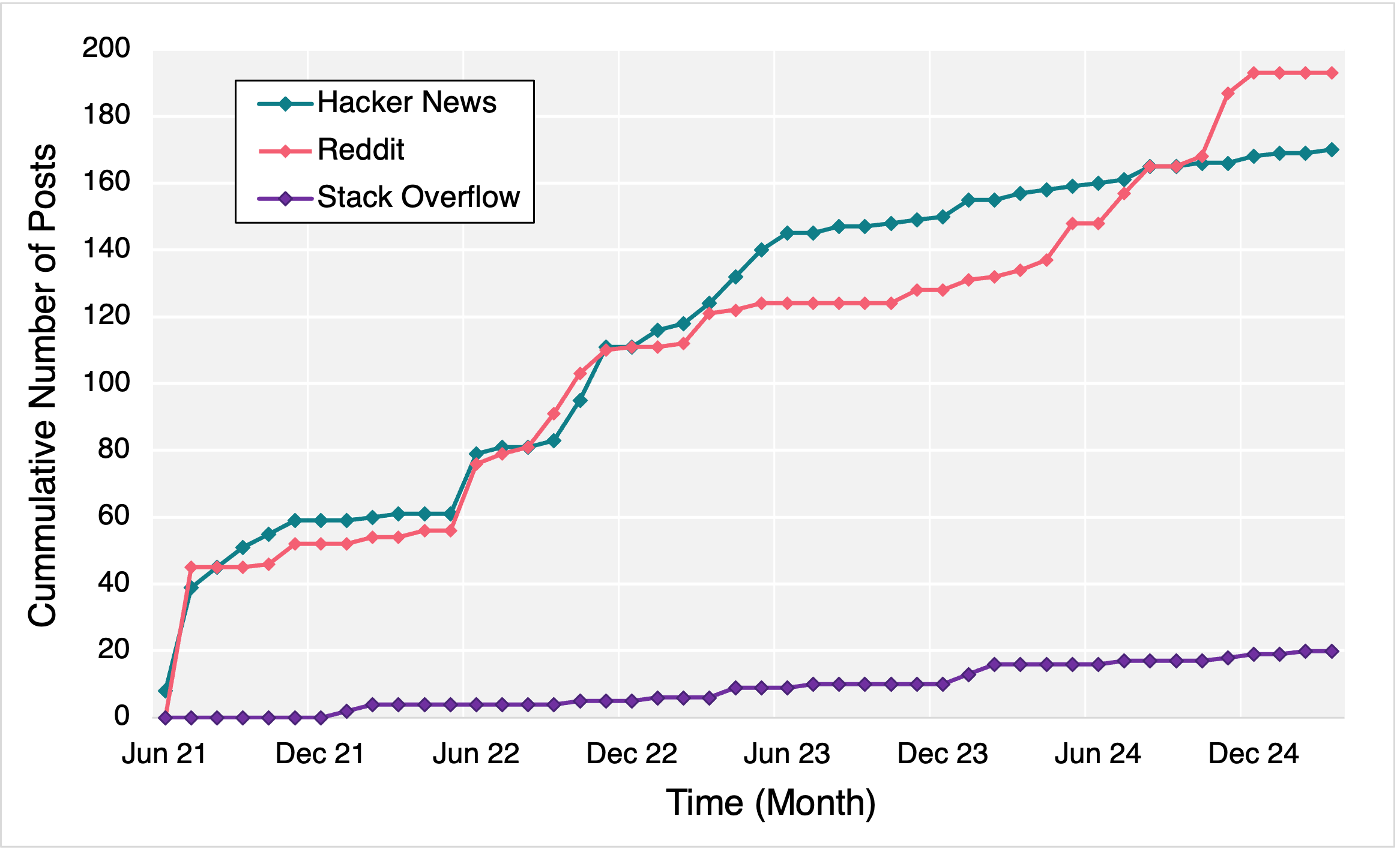
Figure 4: Cumulative volume of security-relevant posts over time, indicating sustained and growing critical discourse.
Discussion and Implications
The results outline a multi-dimensional trust gap in GenAI coding assistants. Key implications include:
- Training Data Governance: Persistent exposure risks highlight urgent need for privacy-preserving training pipelines, fine-grained monitoring of memorization, and the application of machine unlearning or real-time sensitive data detection techniques during code suggestion.
- Security-Aware Generation: Current approaches (e.g., secure prompting, post-hoc static analysis) are reactive and user-dependent. There is a strong case for embedding security constraints, provenance tracing, and automated vulnerability control into the core model and its serving framework.
- Attribution and License Transparency: Real-world deployment in compliance-heavy environments will remain problematic without output provenance, reliable license tagging, and automated risk surfacing. Emerging technical benchmarks (e.g., LiCoEval) provide starting points but have yet to be embedded into developer-facing tooling.
- Developer Security Behavior: The findings stress an erosion of security reflexes among less experienced developers—a problem best mitigated by integrated “security nudges”, enforced double-checks, and default-off for the most risk-prone generation behaviors.
- Adaptive Policy and Socio-Technical Interventions: Addressing these challenges requires not only technical advances in GenAI safety but also organizational, educational, and UX-level interventions to recalibrate developer-GenAI interaction models. Security-by-design and transparency-focused reforms are critical.
Limitations
The study’s dataset, while multi-platform, is necessarily partial to the subset of developers active in popular forums and does not capture perspectives from closed or enterprise contexts. Results pertain specifically to GitHub Copilot as of March 2025 and may not generalize perfectly to alternative coding assistants. Sentiment and topic prevalence are descriptive and do not infer causality.
Conclusion
This study delivers a detailed, discourse-centered mapping of security concerns in GenAI coding assistants, highlighting developer anxiety around data leakage, insecure generation, legal risk, and changing patterns of trust and accountability. The analysis underscores that technical advances in LLM code generation must be matched by robust provenance, attribution, and behavioral interventions to prevent security, legal, and skill erosion risk as automation permeates the development workflow. Future research should triangulate these insights with surveys of enterprise practitioners, expand platform coverage, and empirically evaluate integrated safeguards and feedback mechanisms in live GenAI coding environments.

