- The paper introduces the NTIRE 2026 RAIM Track 2 challenge, addressing multi-exposure image fusion under dynamic conditions with real-world degradations.
- It details innovative techniques such as Swin Transformer-based architectures, global context guidance, and curriculum training to mitigate motion artifacts and misalignment.
- The evaluation integrates quantitative metrics (PSNR, SSIM, LPIPS) with efficiency and perceptual criteria, ensuring methods are both robust and deployment-ready.
NTIRE 2026 Restore Any Image Model (RAIM) Challenge: Multi-Exposure Image Fusion in Dynamic Scenes
Challenge Overview and Motivation
The NTIRE 2026 RAIM Track 2 challenge (2604.09030) addresses multi-exposure image fusion (MEF) under dynamic real-world conditions, with emphasis on high dynamic range (HDR) imaging for scenes containing substantial object and camera motion, illumination variations, and severe local misalignment. The benchmark departs from conventional static datasets by curating realistic capture sequences that systematically expose state-of-the-art MEF algorithms to motion-induced artifacts, ghosting, and the efficiency constraints of practical deployment.
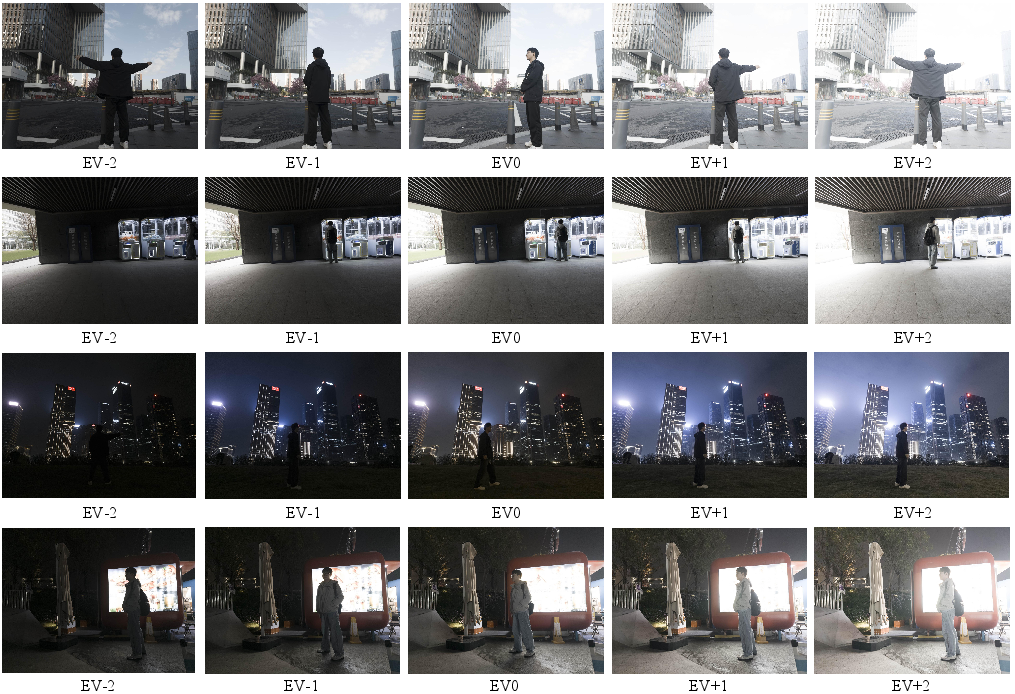
Figure 1: Representative image sequences in RAIM MEF in dynamic scenes, focusing on high dynamic range and challenging exposures.
The benchmark offers 100 training sequences (7 exposure levels) and 100 test sequences (5 exposure levels), each encompassing the heterogeneous degradations encountered in handheld mobile photography. Submissions are ranked on a composite metric aggregating PSNR, SSIM, and LPIPS, supplemented by reproducibility and practical criteria including runtime, parameter budget, and subjective fidelity.
Dataset, Protocol, and Benchmark Complexity
The evaluation protocol combines signal fidelity (PSNR, SSIM), perceptual similarity (LPIPS), and supplementary metrics (DISTS, NIQE, subjective scores, and efficiency). This multidimensional approach ensures that competitive solutions must balance fine structural recovery, robust artifact suppression, and both objective and perceptual image quality. The dataset's reduction from 7 training to 5 test exposures increases difficulty by constraining dynamic range information available during inference, rigorously testing algorithmic generalization and exposure compensation mechanisms.
Methodological Advances by Top Teams
WHU-VIP: AFUNet Variant with Reliability Gating and Curriculum Training
The WHU-VIP team leverages AFUNet—a Swin Transformer driven architecture—augmented with several key innovations. Three-exposure input selection ($0$EV, ±2EV) improves operational efficiency and reduces the accumulation of motion-induced misalignments prevalent when fusing more frames. The integration of a spatial feature transform (SFT) module and the novel DCM-RG (Data Consistency Module with Reliability Gating) provides spatially adaptive fusion weights and pixel-level gating, directly attenuating unreliable information introduced by misalignment and extreme exposures.
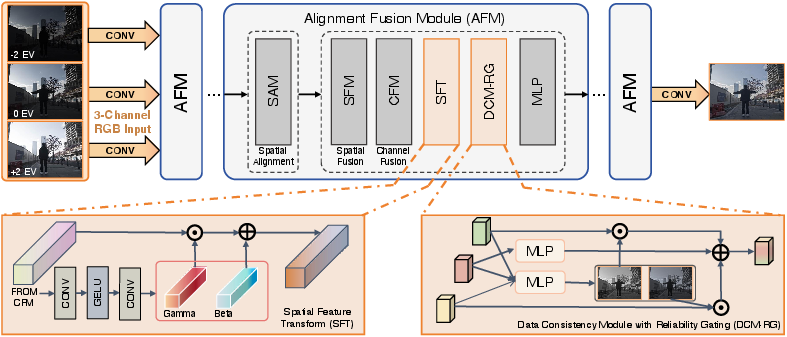
Figure 2: Overview of the WHU-VIP method with AFUNet backbone, SFT for regional feature adaptation, and DCM-RG for pixel-robust gating.
Notably, a multi-phase curriculum strategy—progressing from strict alignment to quantization-aware refinement via staged augmentation and weighting—drives the network to both structural fidelity and robust perceptual detail recovery. Empirically, WHU-VIP achieves the highest overall composite score (58.889), attaining the lowest LPIPS across stages and consistently outperforming on perceptual quality.
SHL: Global Context Guidance and NPR Loss
SHL proposes augmenting existing restoration backbones with a lightweight branch that extracts global context from a downsampled full-resolution input, concatenated with the main input tensor to infuse long-range structural priors. Additionally, the Neighboring Pixel Relationships (NPR) loss is introduced to explicitly enforce edge and local structure consistency, mitigating the blurring and detail-losing artifacts of patchwise training.
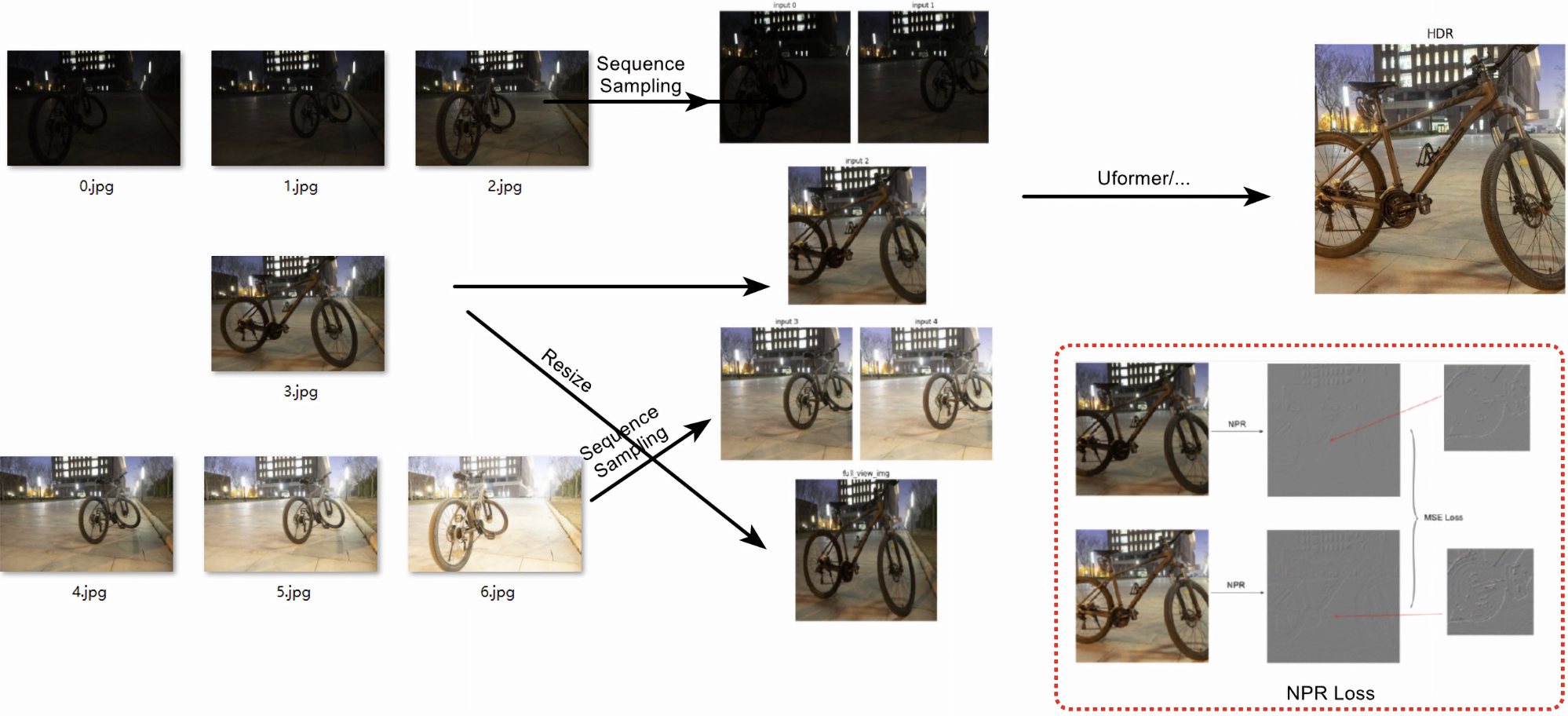
Figure 3: SHL’s lightweight framework introducing a global context branch and NPR loss for preserving high-frequency details.
The approach demonstrates that meaningful performance gains may be achieved with minimal computational overhead, provided global references and explicit structural losses are applied. SHL achieves the second-best overall ranking, excelling in PSNR and SSIM.
nunucccb: HDR-Transformer with Context-Aware Vision Transformers
The nunucccb team employs an HDR-Transformer built around CA-ViT blocks to capture both global and local dependencies critical for robust fusion under motion and exposure variations. Their design encompasses parallel feature extraction from each exposure, alignment via spatial attention, and deep fusion through a sequence of CA-ViT modules, followed by residual reconstruction anchored to the reference frame.
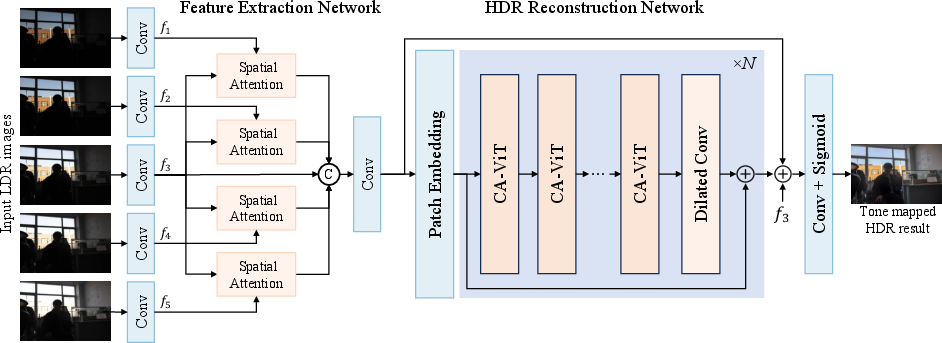
Figure 4: Overview of the nunucccb method, utilizing CA-ViT blocks for suppressing motion-related artifacts and detail-preserving fusion.
Training employs a perceptual loss in addition to pixel-level objectives, ensuring competitive generalization and suppression of ghosting effects, as reflected in its consistent leaderboard performance.
Additional Notable Architectures
untrafusion introduces explicit exposure priors via luminance-guided realignment and a scale-evolving curriculum, utilizing a motion-compensated Restormer backbone. Their method is robust to test-train disparities in exposure count, an important practical advantage.
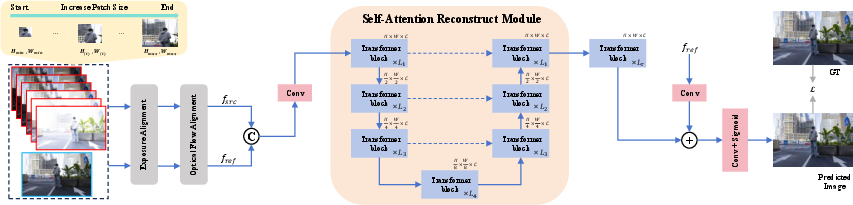
Figure 5: Overview of the untrafusion pipeline, integrating exposure-prior realignment and progressive patch scaling.
I² Group (Transsion) utilizes wavelet-based decomposition, splitting the fusion into dedicated low- and high-frequency branches. Residual maps refine high-frequency content, mitigating ghosting without neglecting structural integrity.
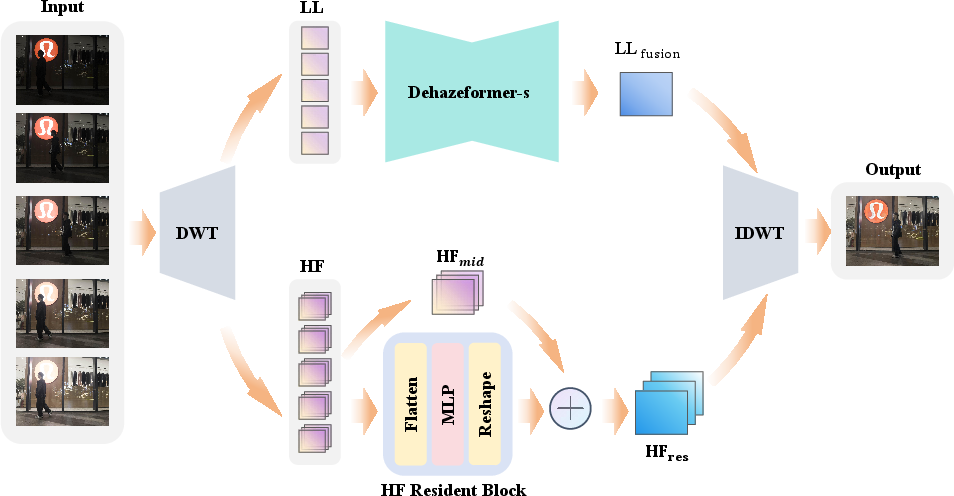
Figure 6: Overview of the I² Group Transsion method, based on wavelet decomposition and frequency-specific fusion.
NTR adopts a time-conditioned U-Net, initialized from a masked diffusion autoencoder, and optimizes alignment with the exact challenge metric. This underscores a trend toward metric-oriented fine-tuning in practical image restoration.
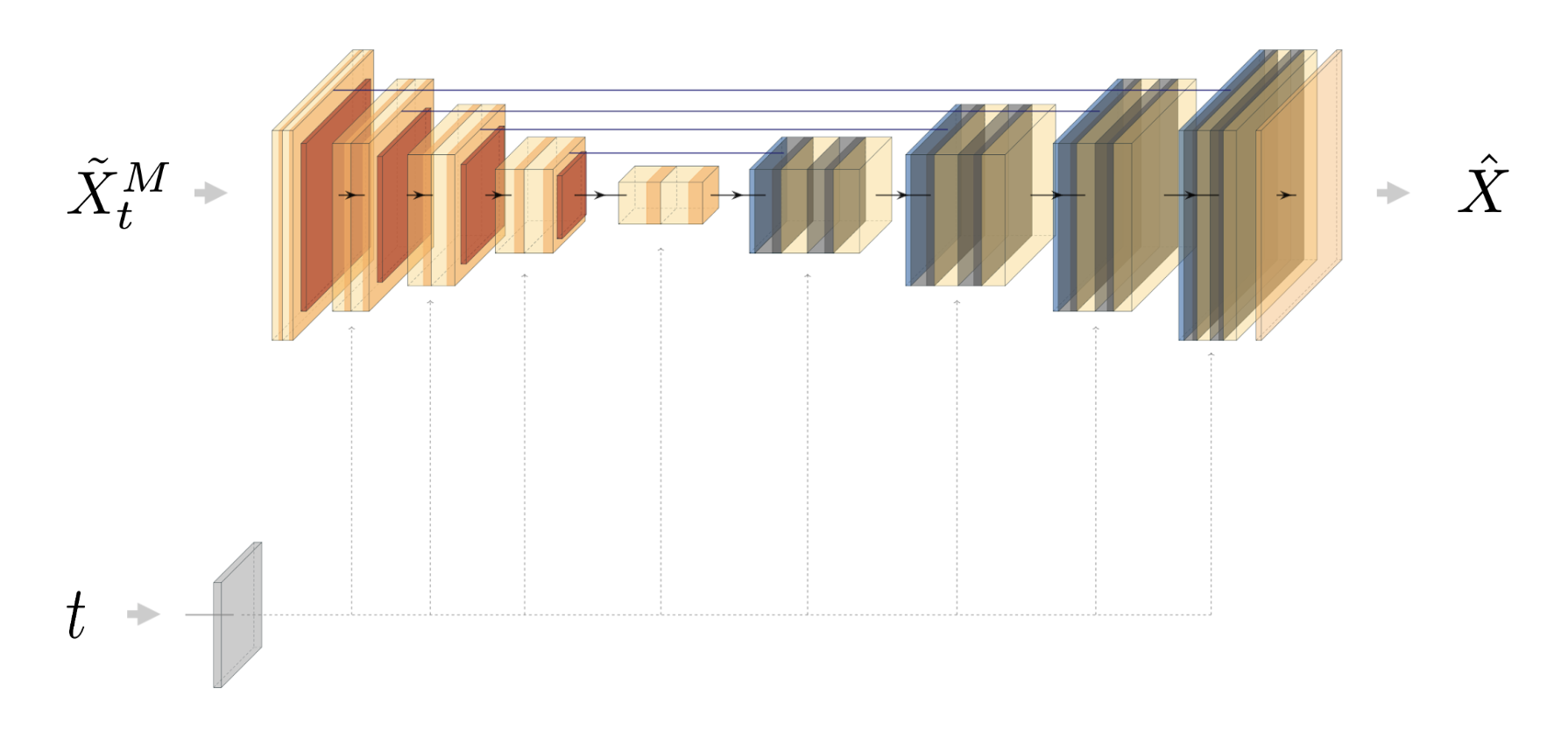
Figure 7: TimeDiffiT architecture highlighting the time-conditioned, metric-aligned restoration network.
Quantitative and Qualitative Results
Comprehensive evaluation indicates WHU-VIP, SHL, and nunucccb all maintain strong performance between Test Stage 1 and Test Stage 2, while lower-ranked teams show significant robustness declines—primarily due to composition and motion-induced degradations not fully addressed by simpler fusion strategies. The best methods exhibit both lower LPIPS and stable quantitative metrics across stages.
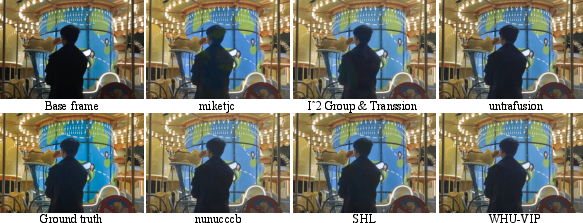
Figure 8: Visual comparison for Test Stage 1 reveals differences in detail preservation, ghosting, and structure.
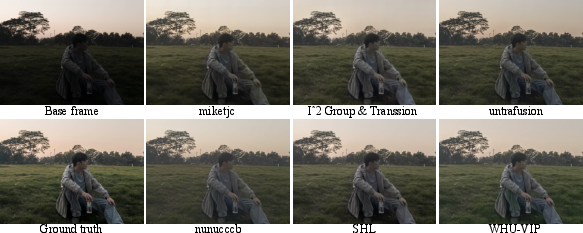
Figure 9: Visual comparison for Test Stage 2, emphasizing robustness to motion, exposure, and artifact suppression.
Qualitative exemplars verify that top methods suppress ghosting, maintain structure, and preserve high-frequency textures, especially in dynamic or poorly aligned regions.
Implications and Future Directions
The challenge demonstrates that the gap between static-benchmark dominance and practical, dynamic-scene fusion remains non-trivial. Advances highlight:
- the necessity of spatially adaptive feature fusion to suppress unreliable regions in motion-heavy contexts,
- the efficacy of explicit global guidance and context modeling,
- the ongoing effectiveness of curriculum-based training for robustness gains,
- and the importance of aligning training objectives with deployment or benchmark metrics.
Future directions include unified treatment of misalignment and exposure disparity without external supervision, further efficiency gains for real-time mobile deployment, joint modeling of image formation and signal processing, and extension to video or event-based HDR imaging. The NTIRE RAIM benchmark and results serve as a reproducible substrate for both architectural and algorithmic innovation toward generalizable, deployment-ready HDR fusion.
Conclusion
NTIRE 2026 RAIM Track 2 consolidates a rigorously challenging and multidimensional evaluation for dynamic-scene MEF and HDR restoration. The top-performing methods demonstrate nuanced architectural innovation, robust curriculum strategies, and precise alignment to practical constraints. The dataset, metrics, and codebase establish a foundation for continued research on efficient, artifact-resistant, and high-fidelity fusion tailored to the operational demands of computational photography and mobile imaging.