- The paper shows a statistically significant gap between young adults’ stated preference for quality news and their engagement with lower-quality, sensational content.
- It employs a mixed-methods design with surveys and interviews to compare user-curated feeds against engagement-maximizing baselines.
- Findings highlight that algorithmic curation favors polarizing content, underscoring the need for value-aligned controls in news recommendation systems.
Study Design and Methodology
This study employed a mixed-methods approach to interrogate how the divergence between stated and revealed preferences manifests in news feed usage among U.S. young adult social media users (ages 18–24). Specifically, the study centered on four research questions: the existence and nature of the gap between stated (what users say they prefer) and revealed (what they actually engage with) preferences; how users reason about and interpret this gap; the value dimensions users believe should structure news curation; and practical design pathways for creating value-aligned recommendation systems.
The empirical protocol comprised a two-stage data collection:
- Survey: Participants engaged with a mock social media feed to capture engagement behavior (revealed preferences), followed by a coin allocation task to elicit stated preferences for various content typologies (quality, trustworthiness, veracity, partisanship).
- Interview with Feed Curation Task: Participants curated an ideal news feed for a hypothetical third-party persona from a fixed inventory, with explicit reflection and reasoning about both ranking and content exclusion. The curated feeds were then compared to an engagement-maximizing baseline feed, which ranked posts by aggregate engagement metrics.
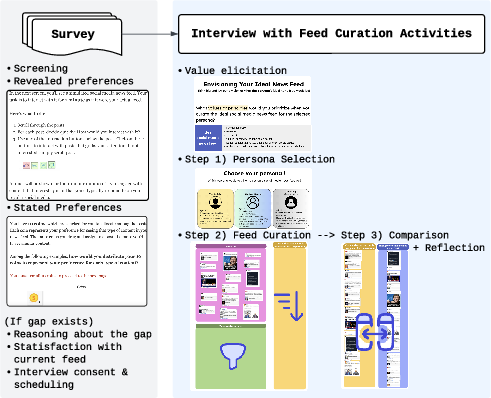
Figure 1: Study overview: participants completed a survey, followed by an interview with feed curation activities.
The sample (N=20) was balanced for demographic and political affiliation distributions relative to the national young adult population.
Empirical Evidence for the Stated-Revealed Preference Gap
Analysis substantiates a robust and statistically significant gap between stated and revealed preferences. While participants allocated a greater share of their stated preference budgets (coins) toward high-quality, trustworthy sources, their engagement behaviors in the simulated feed exhibited no analogous preference—participants frequently engaged with low-quality or less reliable content.
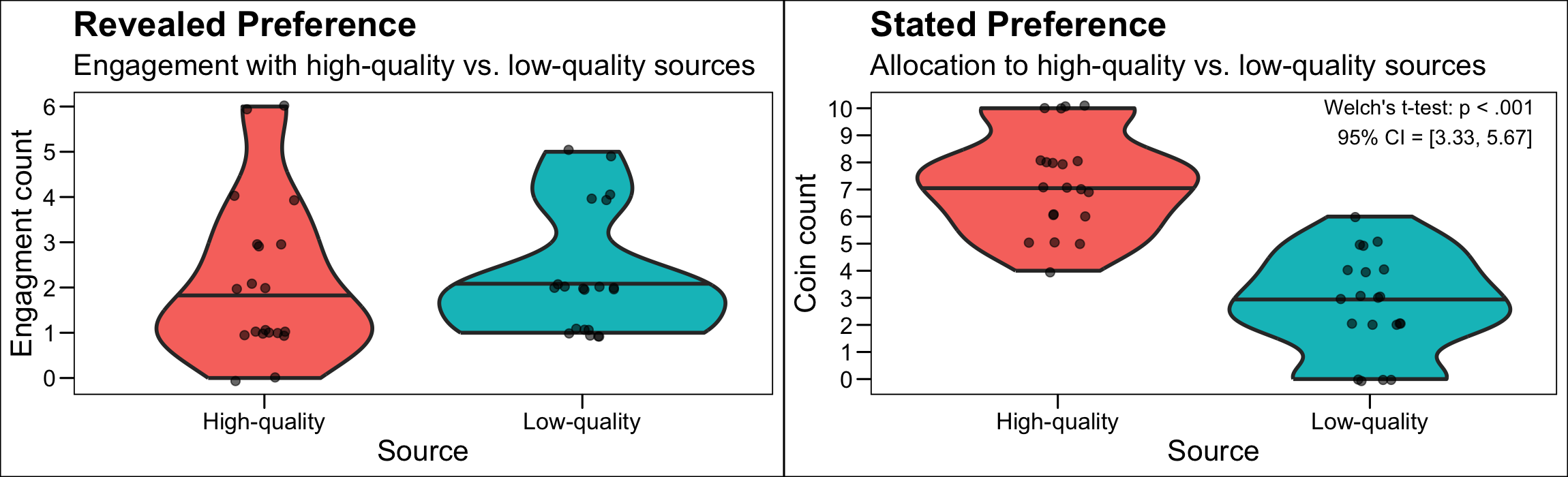
Figure 3: Violin plots of revealed vs. stated preferences for high- and low-quality sources confirm higher stated value for high-quality sources, with median allocation favoring high-quality posts, but engagement behavior not reflecting this preference.
Comparison between user-curated feeds (stated preference-based) and the engagement-maximizing feed revealed profound divergence, exceeding what would be observed by random chance. Using metrics such as Ranked-Biased Overlap (RBO), curated feeds diverged more from engagement-maximizing baselines than randomly shuffled feeds from the same inventory.
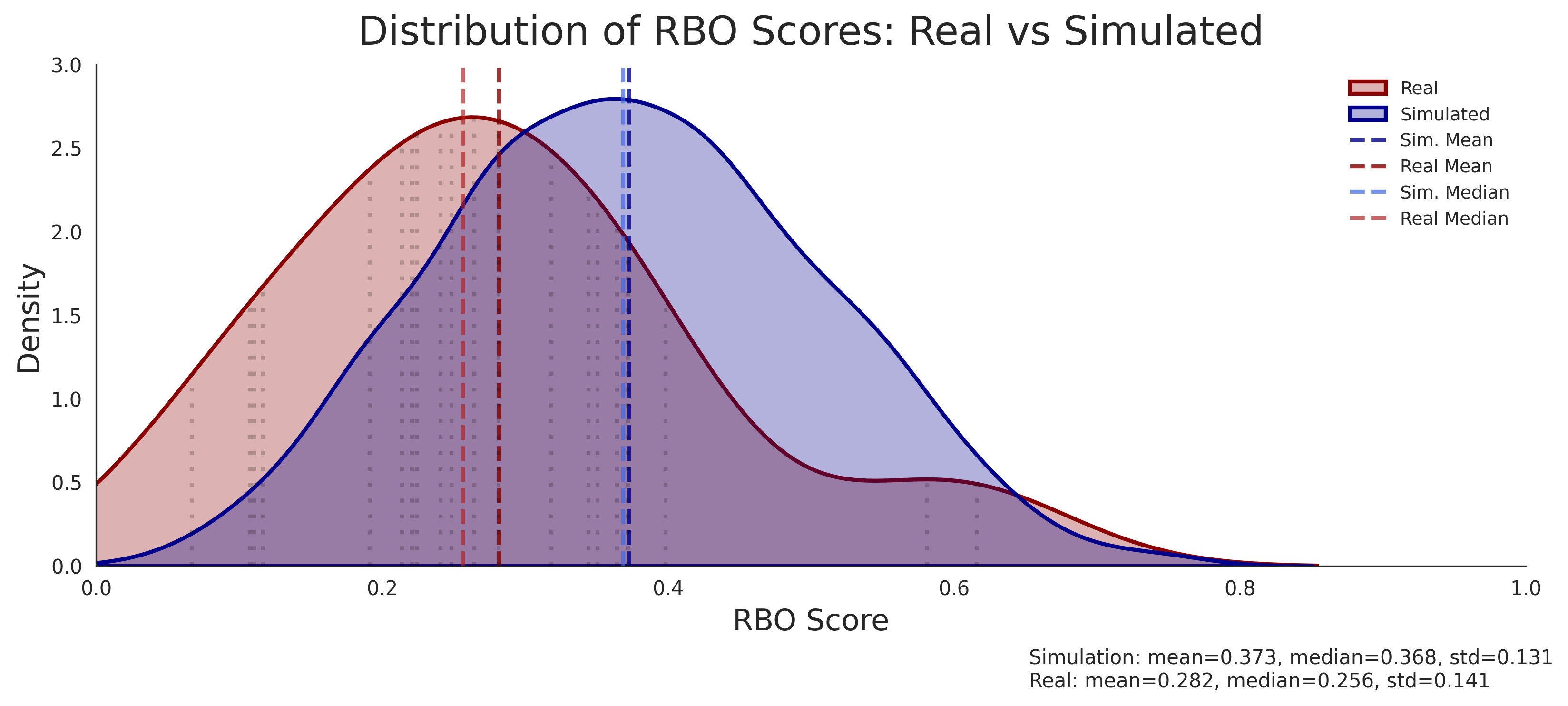
Figure 5: Density plots indicate lower RBO (less similarity) between curated and engagement-maximizing feeds than random baselines, indicating systematic divergence beyond noise.
Attribute-specific analysis reveals that engagement-driven feeds favored polarizing, potentially lower-quality content, while curated feeds foregrounded trustworthiness, balance, and credibility, especially in higher-ranked positions.
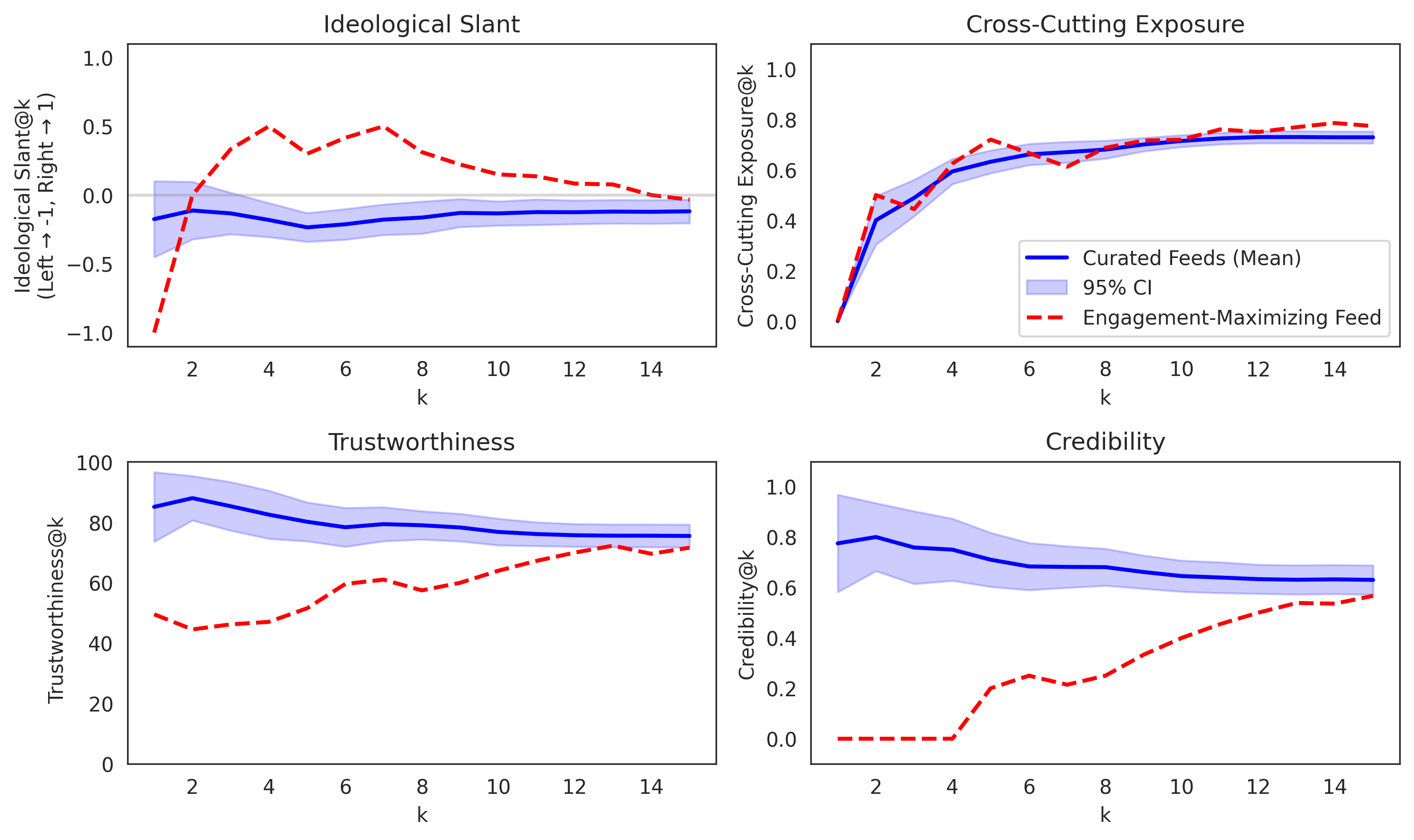
Figure 2: Curated feeds show higher trustworthiness and credibility in top-k ranks, and maintain comparable or higher cross-cutting exposure versus engagement-maximizing feeds.
User Interpretations and Algorithmic Folk Theories
Participants generally manifest a sophisticated awareness of algorithmic mediation and its limitations. Most attribute the observed gap to algorithmic prioritization of engagement—interpreted as a function of platform commercial incentives—over their actual values or information needs. The consensus is that algorithms conflate engagement with endorsement, notably amplifying sensational, emotionally charged, or divisive content at the expense of factual accuracy or nuanced discourse.
Users express a higher degree of satisfaction with their "ideal" (curated) feeds, perceiving them as more reflective, balanced, and aligned with their values or the imagined values of their personas. They also display skepticism towards the ultimate objectives of recommendation systems, citing both the opacity of algorithmic logic and the potential for systemic bias towards engagement as a platform KPI.
Value Dimensions and Agency in Feed Curation
Qualitative analysis of feed curation activities demonstrates that when granted explicit agency (even in the context of a third-party persona), users operationalize a distinct value hierarchy. Six value dimensions emerged as salient:
- Balance/Diversity: Desire for exposure to multiple viewpoints, avoidance of echo chambers.
- Trustworthy/Accuracy: Emphasis on credible, fact-based, science-oriented, or fact-checked content.
- Sensitivity/Ethical: Exclusion of inflammatory or negative content on normative grounds.
- Informative/Educational: Prioritization of posts providing substantive informational value.
- Relevance: Preference for timely or widely discussed issues.
- Entertainment: Lesser, but present, emphasis on engaging/fun content.
Negotiation between these values is evident; for instance, entertainment is sometimes deliberately deprioritized in favor of accuracy, or exposure to opposing opinions is actively included even when it contravenes personal or persona-specific preferences.
Contextual factors—persona's characteristics, social cues within content, participants’ own partisan predispositions, and pre-existing knowledge about sources—influenced ranking outcomes. The curation process concretely illustrates that value negotiation in real-world use is a situated, context-dependent social judgment, challenging the sufficiency of simplistic, engagement-centric optimization.
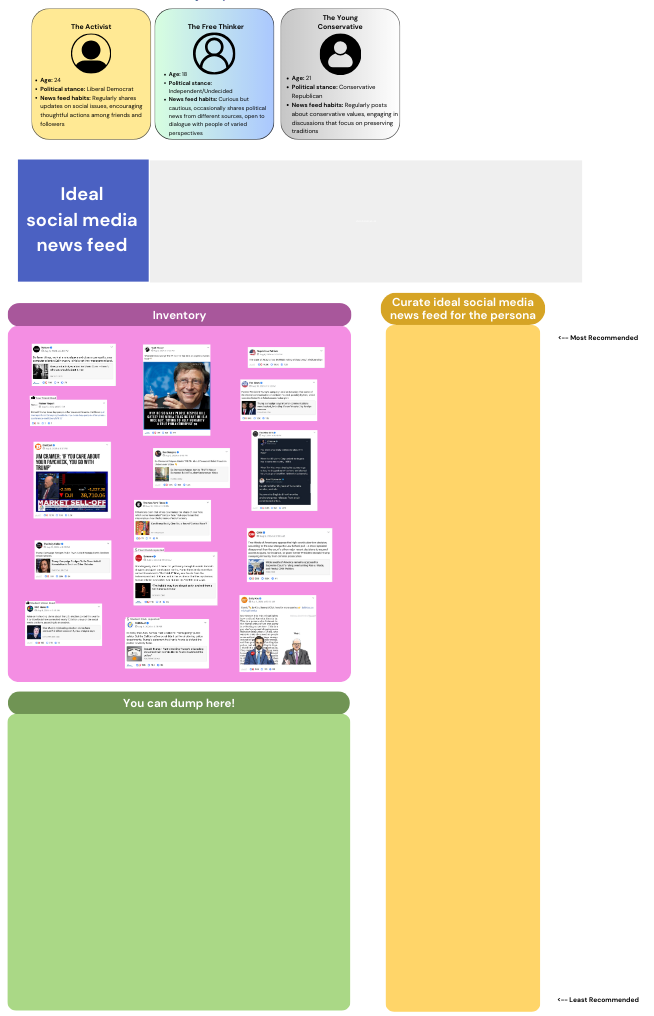
Figure 4: Canva board layout visualizes how participants structured value dimensions, filtering, and ranking decisions during curation.
Design Recommendations and Systemic Constraints
Participants uniformly advocate for improved value-aligned controls in recommendation feeds. Proposals include:
- Explicit Elicitation of Stated Preferences: At onboarding and through dynamic UI elements (e.g., sliders for diversity, trustworthiness).
- Enhanced Feed Control Interfaces: Accessible, effective, and understandable options to adjust content balance beyond standard opaque algorithm settings.
- Customizable Algorithmic Modes: Practical capacity to switch or blend among feed logics (e.g., relevance, recency, trustworthiness, partisanship).
- Transparency and Explainability: Features surfacing why content is ranked/presented, including built-in fact-checking affordances.
- Algorithmic Literacy Interventions: Mechanisms to help users critically interrogate and refine their own stated preferences.
Users anticipate significant, possibly structural, obstacles to these interventions—notably, platform-level incentive misalignment (engagement maximization vs. value alignment), the cognitive demands of articulating and maintaining consistent preferences, and the risk that a meaningful minority of users lack clear or stable values. Some propose alternative economic models (e.g., paid tiers for higher control, advertiser incentives conditioned on reliability) as more conducive to sustainable, value-aligned systems.
Theoretical, Practical, and Future Implications
The findings directly challenge the predominant technical paradigm that equates engagement with user welfare, confirming theoretical predictions from behavioral economics and human-computer interaction that revealed preferences—especially in feed-based, high-noise, high-velocity environments—often diverge from reflective, value-centered preferences. The data aligns with recent empirical work documenting the amplification of low-quality or divisive content by mainstream ranking strategies [MilliEtAl2023a, StewartEtAl2024].
Pragmatically, participant-specified curation logics demonstrate that systems which elicit, operationalize, and adapt to user- or community-articulated values (either via direct elicitation, UI affordances, or LLM-mediated prompt frameworks) are feasible and can maintain attribute diversity and content quality. However, they require deliberate UI/UX and algorithmic infrastructure, and their success is conditioned on platform-level willingness to de-prioritize engagement as a single-metric utility.
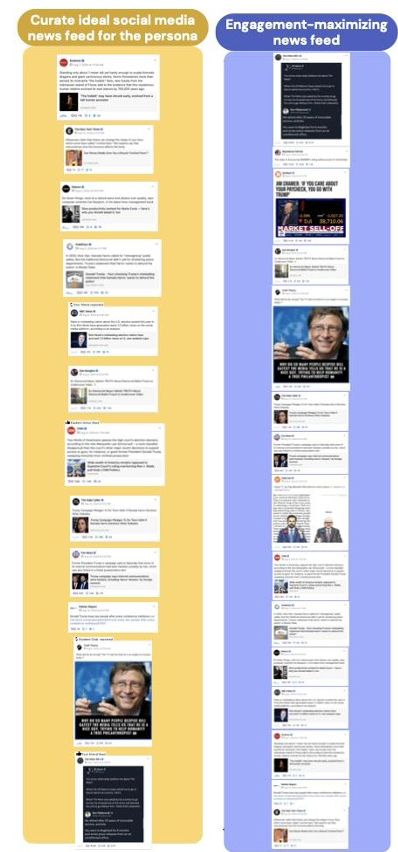
Figure 6: Example of a completed Canva board after curation activity, illustrating participants’ translation of abstract values into concrete content-level decisions.
From a research agenda perspective, there is strong indication that iterative, participatory, and context-sensitive approaches to value elicitation offer both measurement and design improvement over legacy "item-by-item" stated preference frameworks. However, persistent challenges remain around representativeness, stability of preferences, incentives for both platforms and users, and the avoidance of unintended bias or designer value imposition (i.e., value lock-in).
Conclusion
This study provides robust empirical and qualitative evidence that among young adult social media users, there exists a systematic and consequential gap between what users say they value in news content and what engagement-based algorithms infer or optimize. When provided control and reflective space, users consistently articulate and operationalize value systems prioritizing trustworthiness, diversity, and content quality—distinct from the behavioral signals algorithms currently exploit. This finding suggests the need to reformulate algorithmic curation as a multistakeholder, socially situated process, and compels the development of value-aligned, user-driven mechanisms for preference elicitation and feed control. Addressing the underlying incentive misalignments and practical constraints in these socio-technical systems remains an open and critical challenge for both theoretical and applied research on algorithmic media environments.