- The paper introduces a diffusion-based framework that probabilistically forecasts soccer tactics by integrating trajectory sampling with discrete event recognition.
- It leverages spatiotemporal player and ball tracking data with factorized attention to capture multi-agent interactions and reduce error drift during predictions.
- Empirical evaluations show significant improvements in geometric accuracy, tactical consistency, and cross-sport generalization compared to deterministic models.
GenTac: Diffusion-Based Generative Modeling for Soccer Tactical Forecasting
The paper introduces GenTac, a diffusion-based generative framework targeting the stochastic modeling of soccer tactics by unifying multi-agent trajectory forecasting and discrete event recognition (2604.11786). The approach reconceptualizes tactical dynamics as a probabilistic process, accommodating the inherent unpredictability and branching in open-play soccer. Unlike prior works constrained to deterministic forecasting or set-piece focused prediction, GenTac leverages high-fidelity player tracking data to sample diverse plausible futures over long time horizons. The framework encapsulates both continuous spatial evolutions (player and ball trajectories) and discrete semantic events (15-class tactical taxonomy), supporting rich contextual conditioning mechanisms: opponent behavior, team and league identity, and explicit tactical objectives.
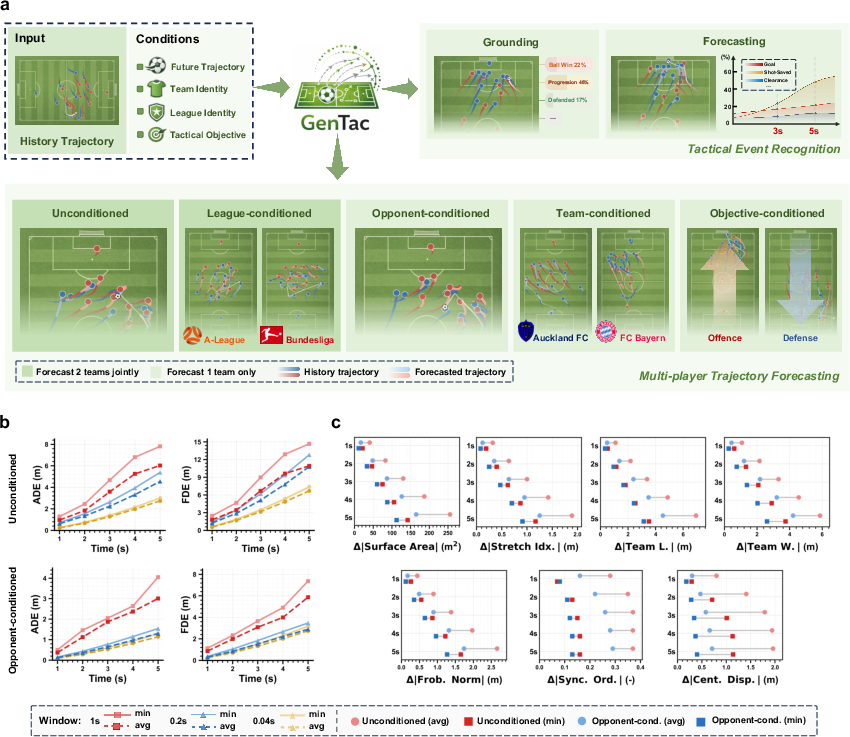
Figure 1: GenTac's dual capabilities, including trajectory forecasting under five contextual conditions and event recognition from observed or generated data, paired with evaluations of geometric accuracy and structure preservation.
Architecture and Methodological Advancements
GenTac utilizes a tokenized, spatiotemporal representation of match history that combines player and ball coordinates, structural embeddings, and context vectors. The backbone leverages factorized attention—temporal and spatial modules—to capture multi-agent interaction dynamics. For trajectory prediction, the model employs a denoising diffusion process within a sliding causal window; this localizes the forecast, mitigating error drift during autoregressive rollout. Key distinctions:
- Sampling conditional futures: Instead of yielding a single deterministic prediction, GenTac generates K samples per instance, reconstructing a distribution over collective behavior.
- Contextual conditioning: Forecasts can be guided by opponent trajectories, team or league priors, or explicit objectives, enabling scenario-based tactical analysis and counterfactual simulation.
- Semantic event grounding: Discrete events are inferred both retrospectively (event grounding) and prospectively (event forecasting) from generated trajectory rollouts, establishing a rigorous link between spatial evolution and tactical outcome.
Empirical Evaluation
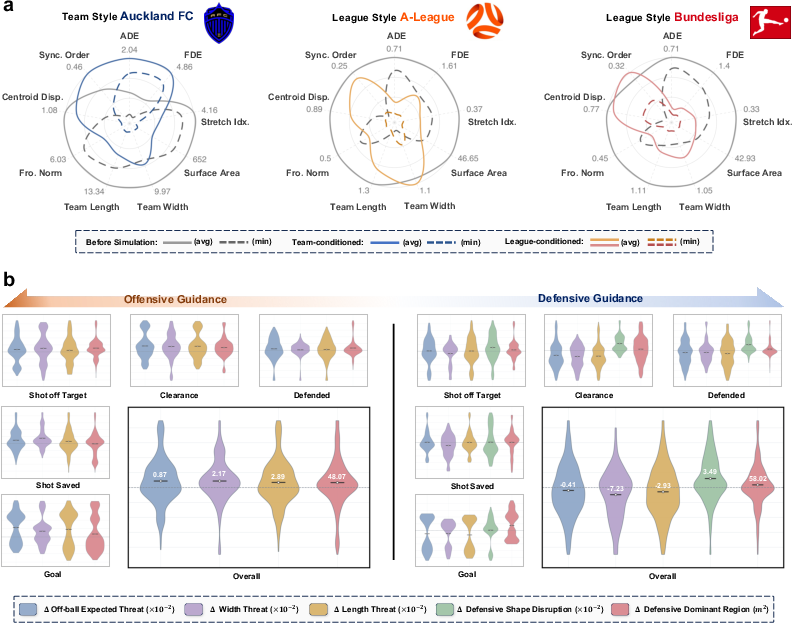
Extensive experiments on the TacBench benchmark—curated from multiple public soccer trajectory datasets—establish four main findings. GenTac achieves robust, multi-agent prediction metrics while preserving collective structure, simulates fine stylistic nuances, supports trajectory-guided counterfactual tactical exploration, and accurately grounds/anticipates event semantics.
Tactical Guidance and Multi-Sport Generalization
- Objective-conditioned forecasting: Generated trajectories exhibit consistent shifts aligned with offensive or defensive goals. Defensive guidance reduces attacking threat metrics (off-ball expected threat, depth, width), and increases defensive disruption and dominant region. Offensive guidance expands attack metrics with expected concessions in pitch control.
- Cross-sport generalization: Training on basketball, American football, and ice hockey demonstrates transferability. Opponent conditioning universally improves geometric precision (e.g., min ADE at 5\,s = 0.32\,m for basketball, 1.06\,m for football, 1.04\,m for hockey).
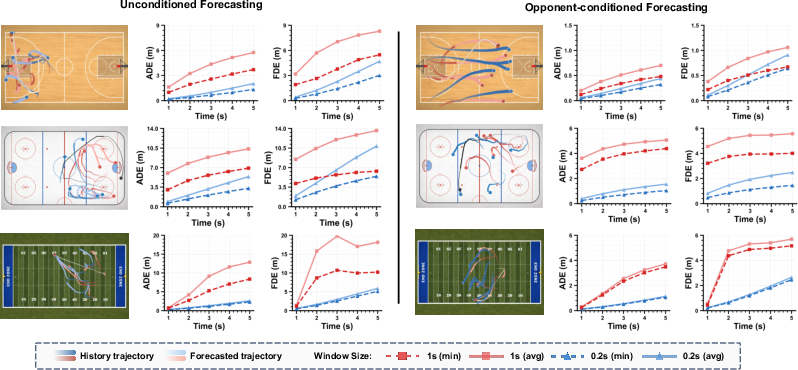
Figure 3: GenTac's trajectory forecasting generalizes robustly to basketball, American football, and ice hockey, maintaining low geometric errors across conditional settings.
Semantic Event Recognition
- Event grounding: Top-1 accuracy at the type level: 71.2%; top-3: 97.4%. Macro-averaged recall@1: 76.3%. Subtype results: top-1 accuracy 53.7%, top-3 87.5%, macro recall@1 44.4%, recall@3 72.2%.
- Event forecasting from sampled futures: Multiple rollouts yield probability distributions over tactical events, supporting scenario-based semantic interpretation.
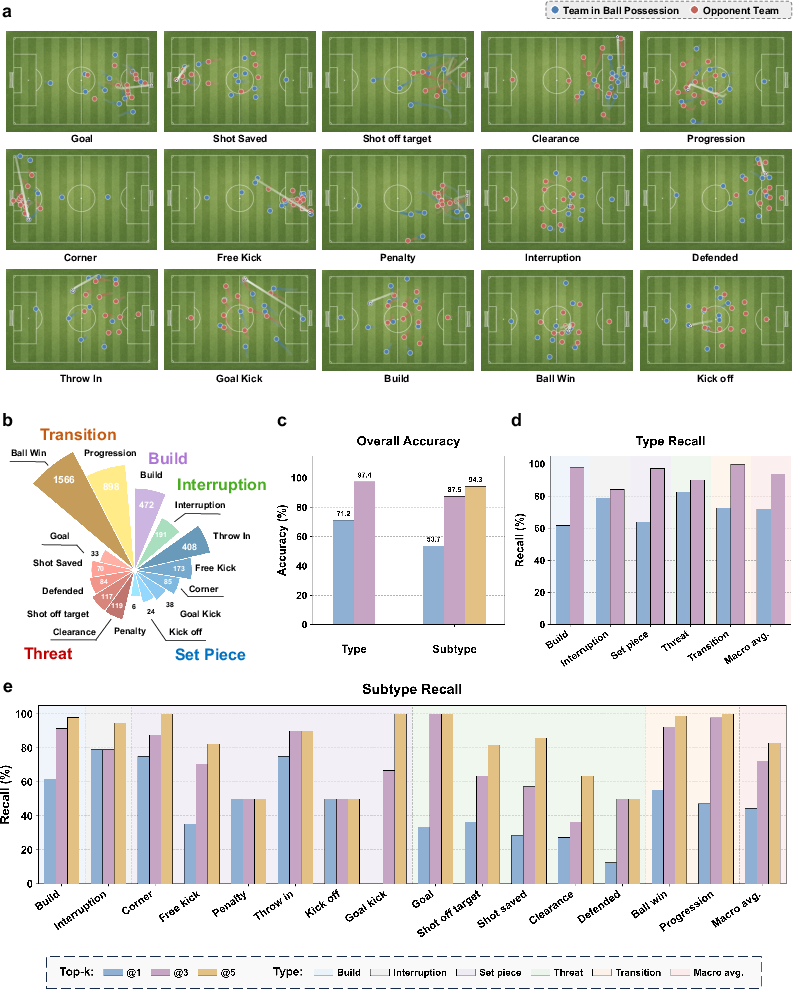
Figure 4: Distribution, example, and classification metrics for event grounding; high recall and accuracy on both type and subtype levels.
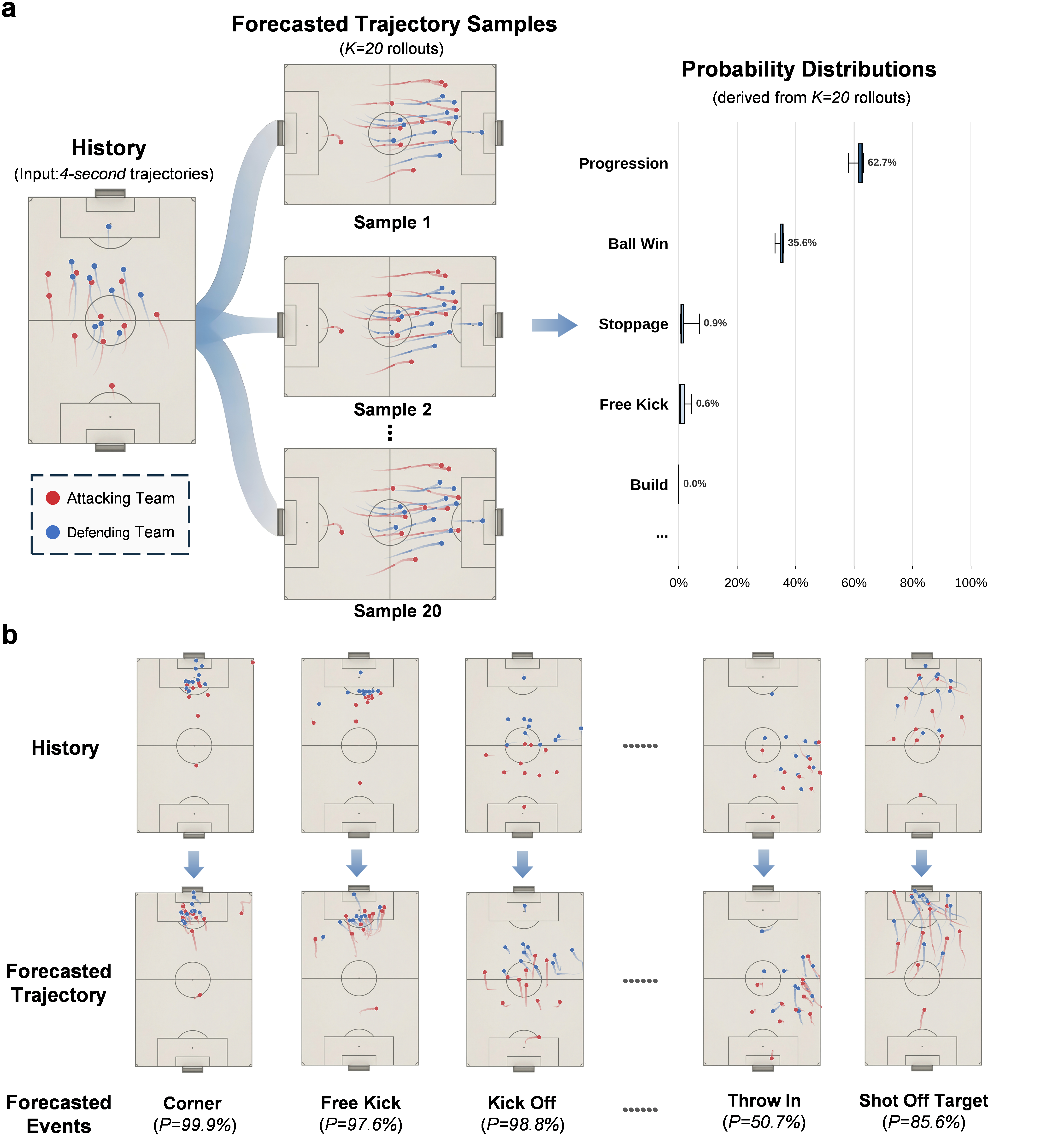
Figure 5: Tactical event forecasting pipeline, with predictive distributions from diverse sampled trajectories and qualitative joint spatial-semantic forecasts.
Annotation Pipeline and Metric Visualizations
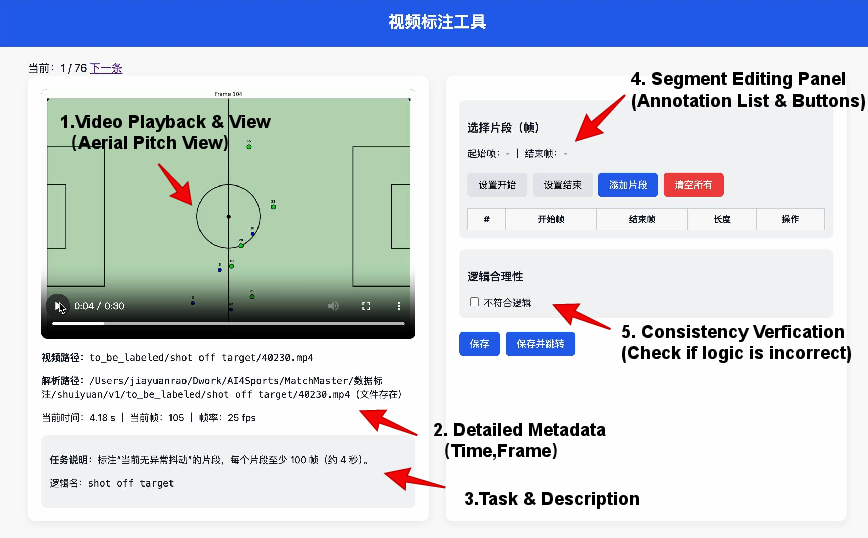
Figure 6: Manual annotation interface for broadcast-derived trajectory clips, ensuring positional reliability and exclusion of calibration anomalies.
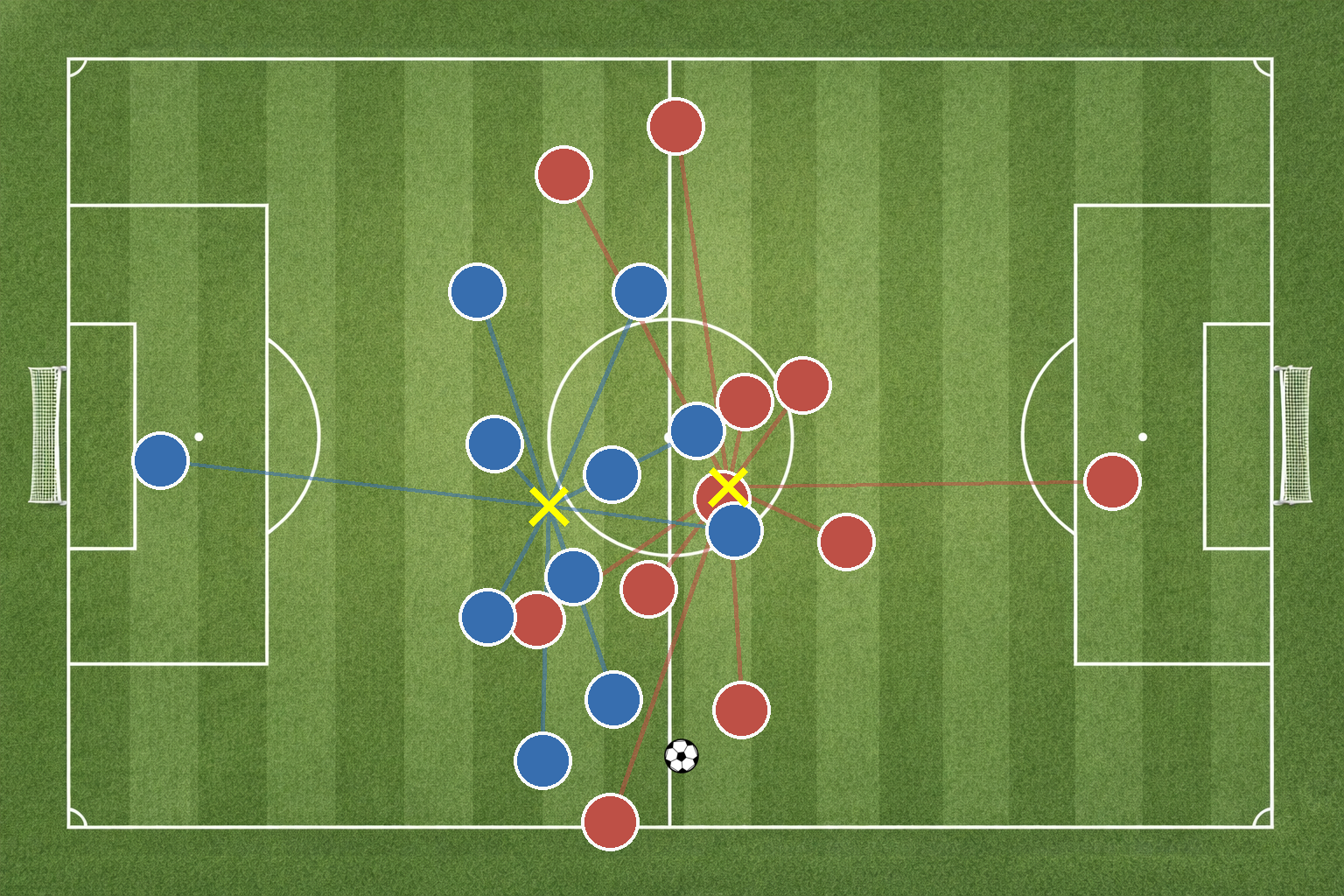
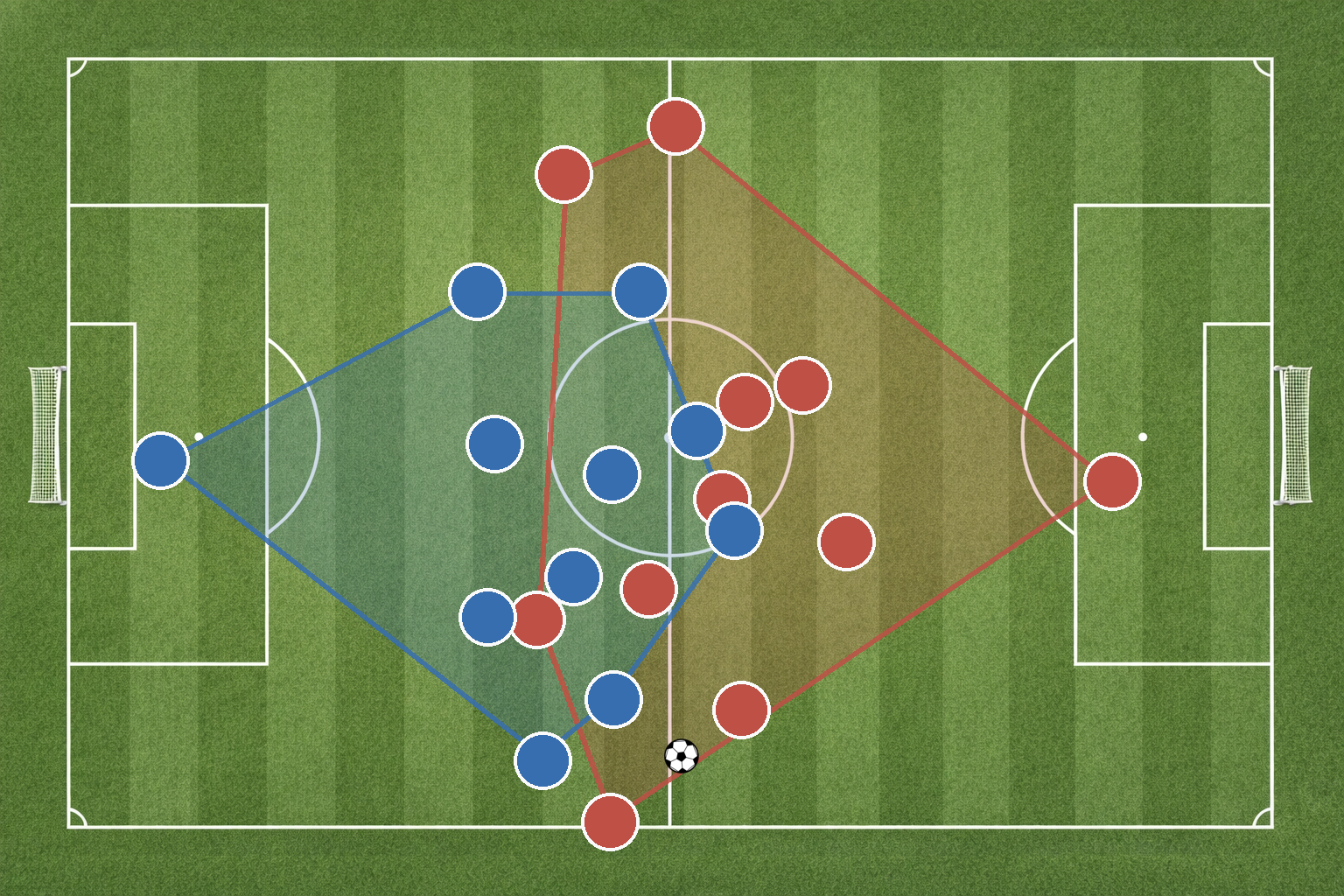
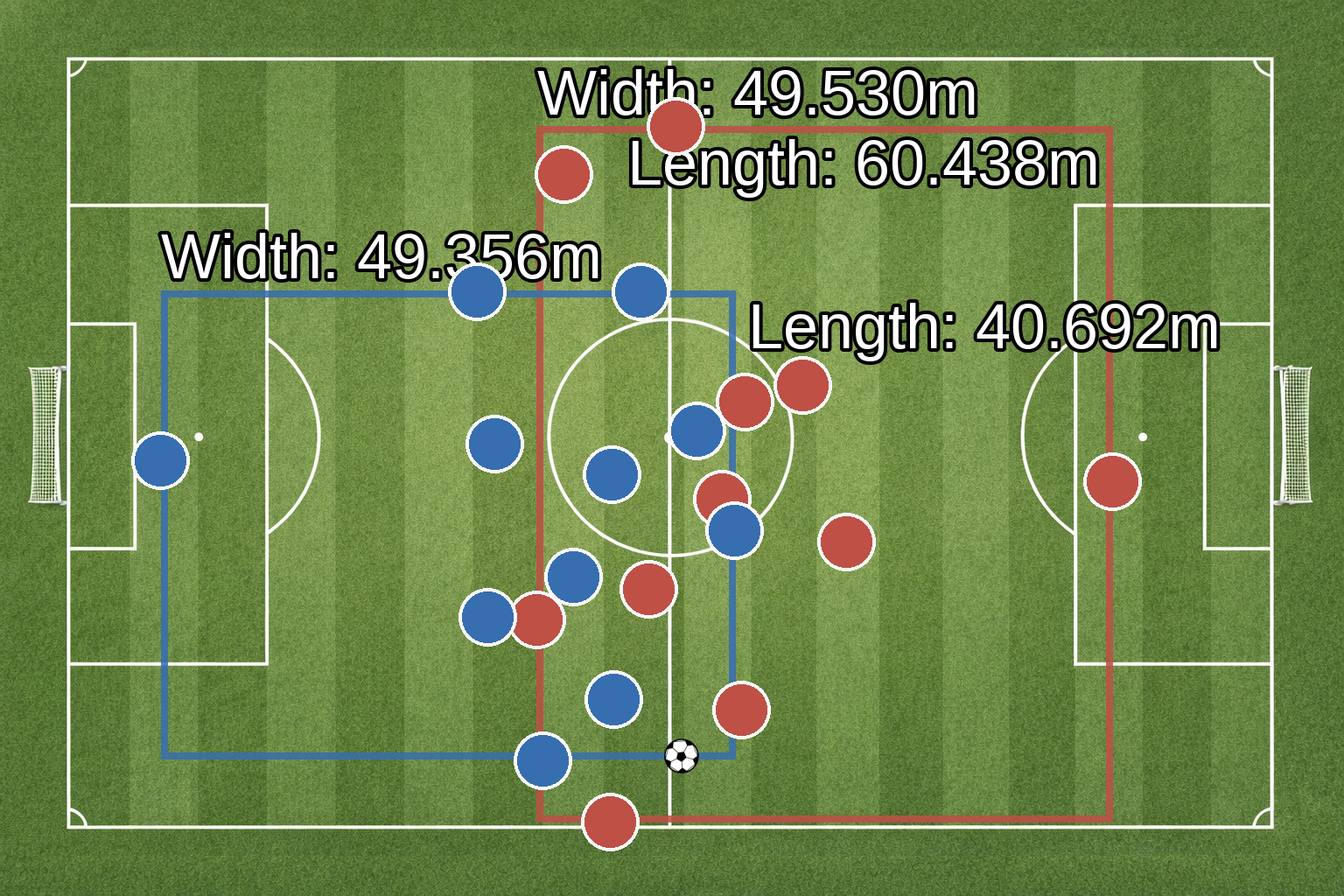
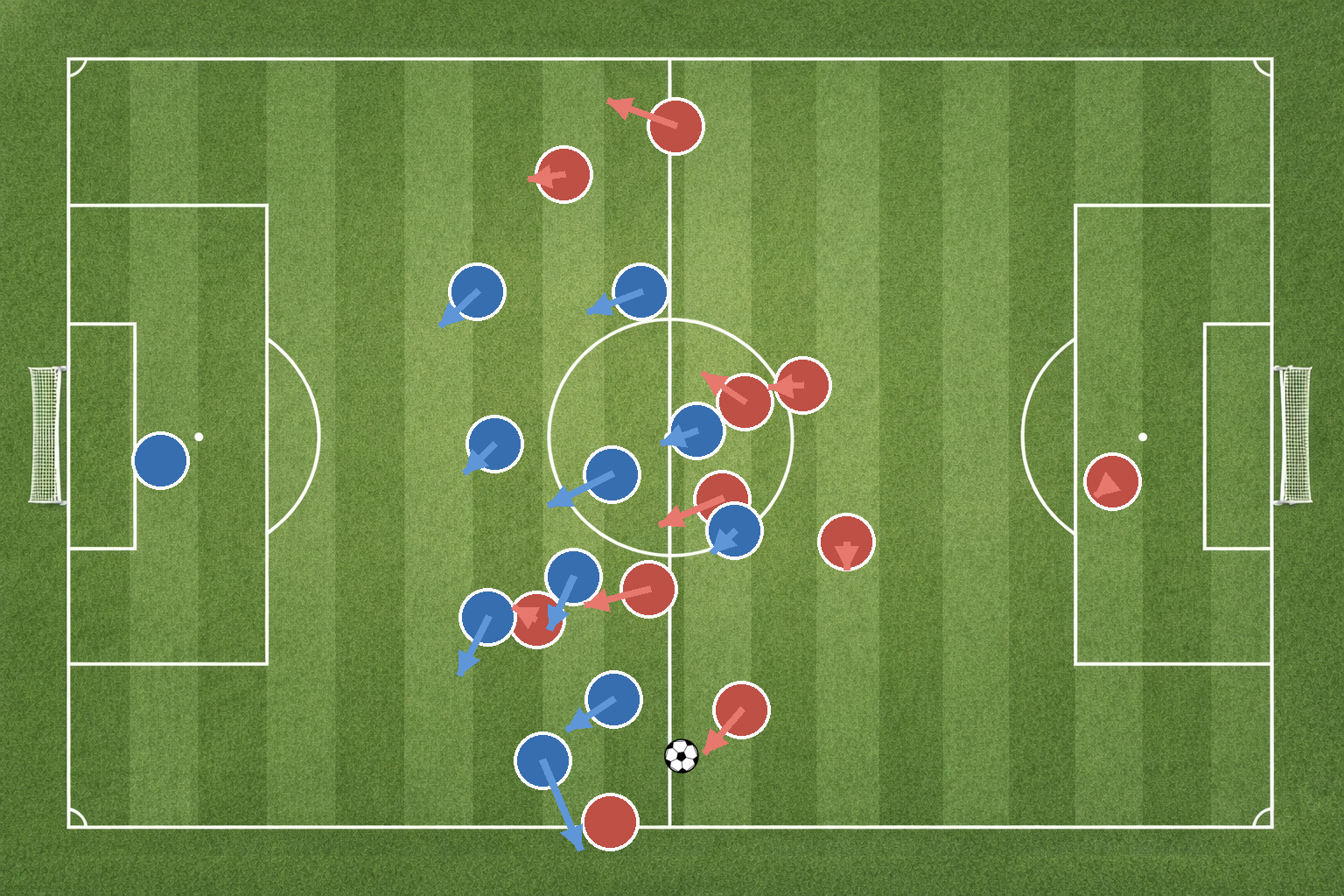
Figure 7: Stretch index visualization, mapping player distances to centroid and contrasting team compactness.
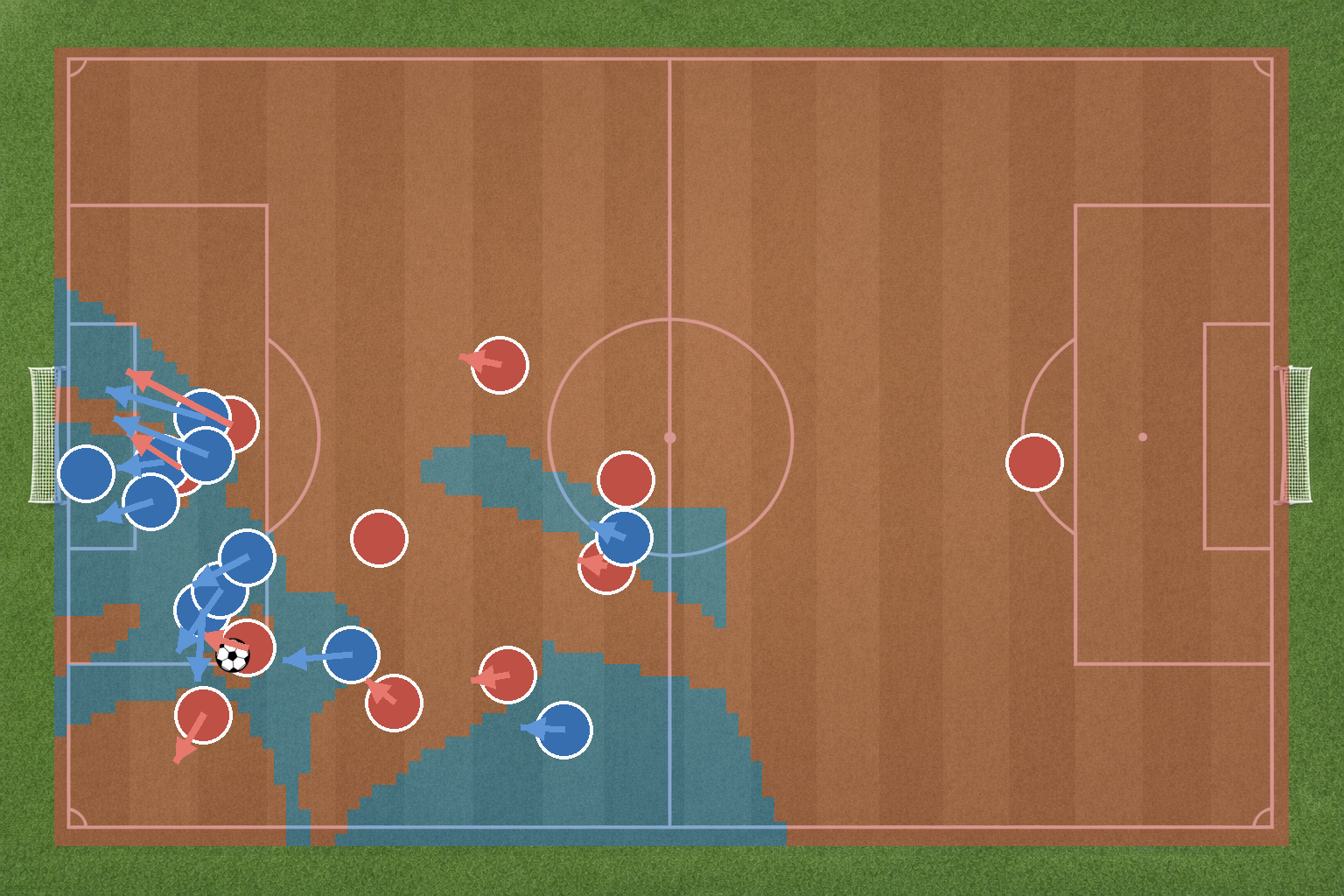
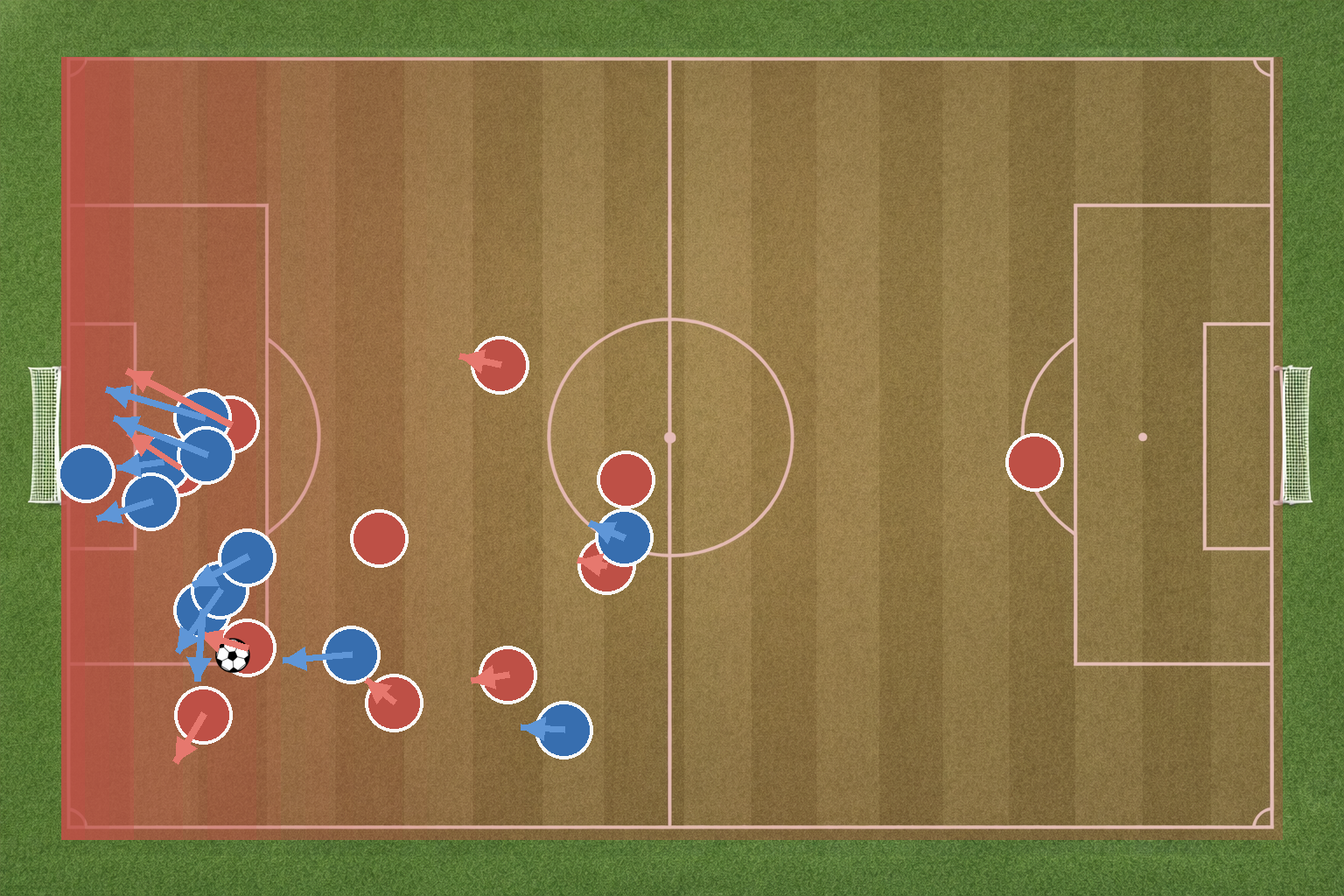
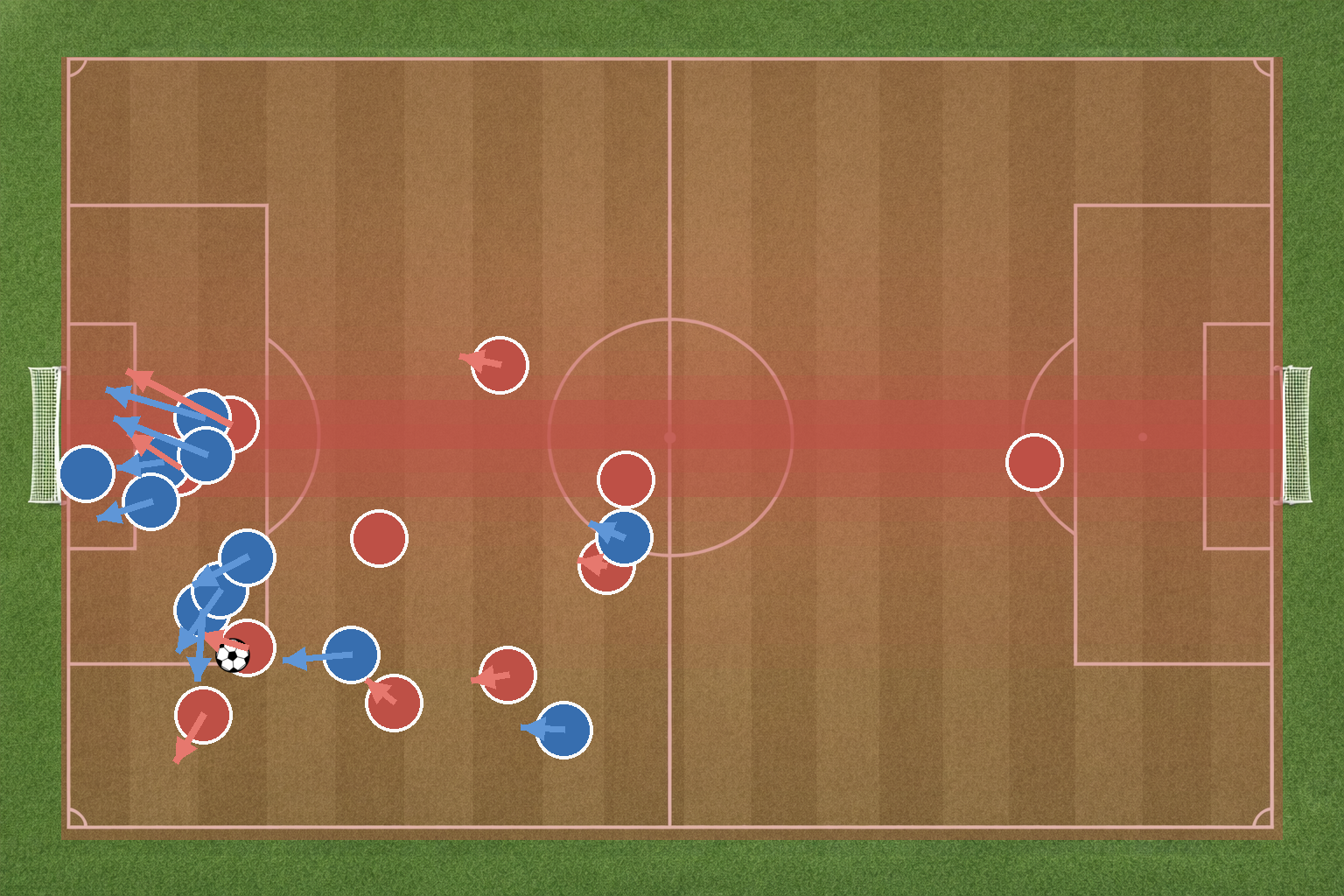
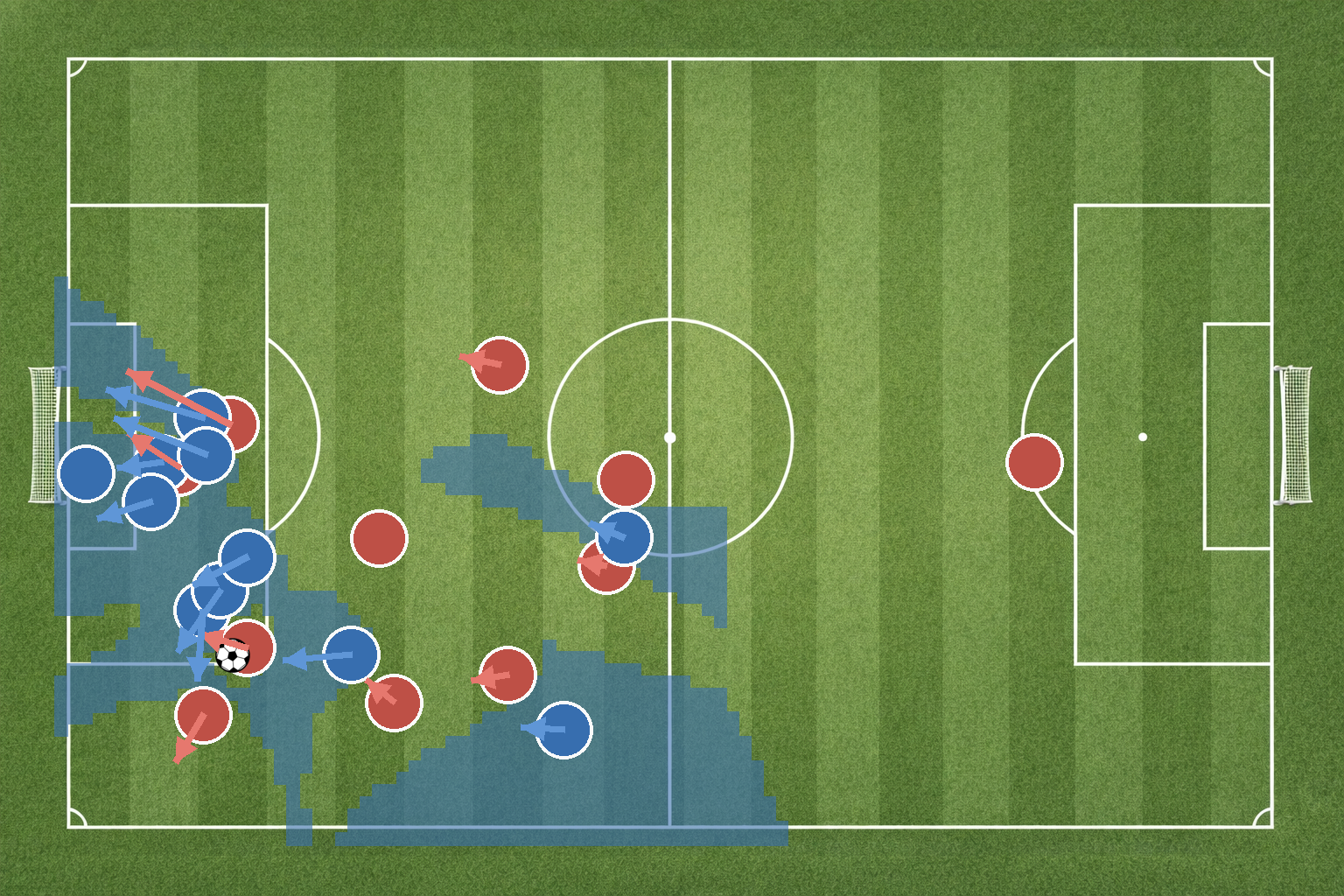
Figure 8: Off-ball expected threat visualized, mapping spatial control and EPV distribution for attacking and defending sides.
Practical and Theoretical Implications
The generative paradigm enables probabilistic scenario analysis for tactical planning, post-hoc evaluation, and explainable counterfactual reasoning. The ability to steer forecasts via context (style, objectives) and predict discrete events from sampled spatial futures grounds match simulation in actionable semantics. The demonstrated cross-domain generalization foreshadows broader applications in multi-agent sports and reinforces the foundational role of generative modeling in domain-specific AI. The approach addresses the limitations of deterministic modeling, providing a distributional representation aligned with the stochastic reality of team sports.
Challenges remain regarding the incorporation of latent, unobservable factors (strategy, player cognition) and the accessibility of tracking data; future developments could integrate multimodal sources (broadcast video, pose estimation) and more contextual priors.
Conclusion
GenTac advances generative sports analytics by unifying stochastic trajectory sampling and semantic event recognition under a contextual, diffusion-based framework. The methodology delivers robust forecasting, interpretable scenario simulation, and actionable tactical insight, marking a significant step toward distributional, explainable AI in multi-agent temporal dynamics. The framework's flexibility and empirical performance suggest strong potential for extension to other domains and for bridging the gap between descriptive analytics and dynamic tactical simulation in sports AI.