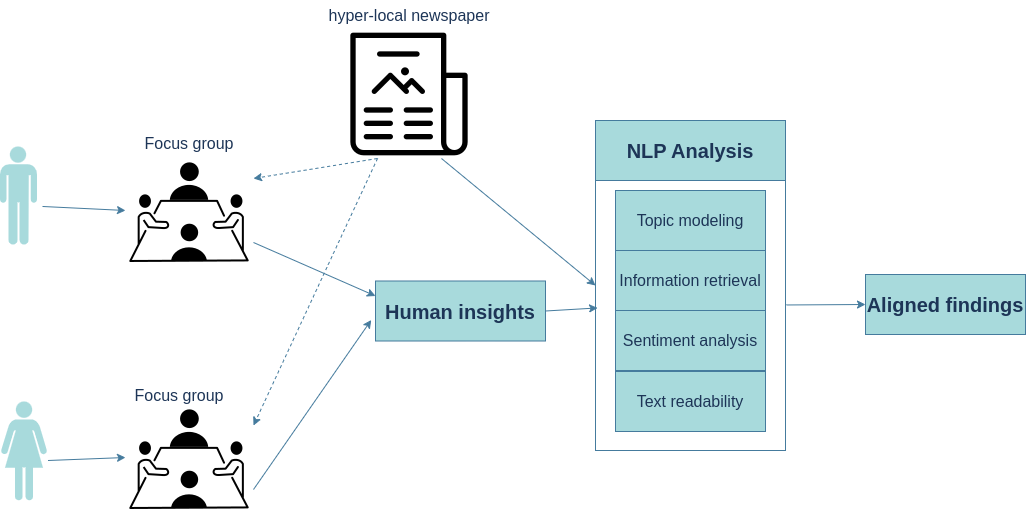
- The paper's main contribution is integrating community-derived qualitative insights with computational NLP to expose content gaps between local news and migrant needs.
- Using mixed-methods, it quantitatively evaluates sentiment, topic coverage, and readability of 2,666 French news articles to reveal underrepresentation in key thematic areas.
- The findings advocate for dynamic, community-responsive content curation and inclusive communication strategies, suggesting actionable pathways for media reform.
The paper "Migrant Voices, Local News: Insights on Bridging Community Needs with Media Content" (2604.16651) addresses the persistent deficiency in understanding how local news ecosystems align with the informational and representational needs of migrant communities, an especially pertinent issue in urban European contexts with significant migrant populations. Extant literature documents both the underrepresentation and misrepresentation of migrants in media, as well as the role of local journalism in fostering civic belonging; however, there has been insufficient integration of computational analysis and bottom-up community engagement to systematically quantify these gaps or alignments.
This research employs a mixed-methods design, integrating qualitative focus group data with quantitative NLP applied to 2,666 hyper-local French-language newspaper articles. The central research questions probe: (1) migrant community needs, sentiments, and consumption patterns regarding local news, and (2) the extent to which these needs are reflected in actual hyper-local media coverage, as revealed through topic modeling, information retrieval, sentiment analysis, and text readability assessments.
Research Methodology
The methodology explicitly anchors computational analysis in community-derived themes, ensuring qualitative insights are not decoupled from quantitative findings. The research process involves two gender-stratified focus groups, designed to surface nuanced perspectives regarding intersectional experiences of news consumption among migrants. Detailed qualitative coding identifies emergent topics, sentiment toward existing media, and perceptions of accessibility.
These qualitative themes inform an NLP pipeline encompassing:
Corpus Statistics and Temporal Distribution
The news article dataset contains 2,666 articles over a four-year span, extracted with structural meta-data enabling stratification by theme and time. Analysis of publication distribution reveals event-driven density as well as categorical imbalances.
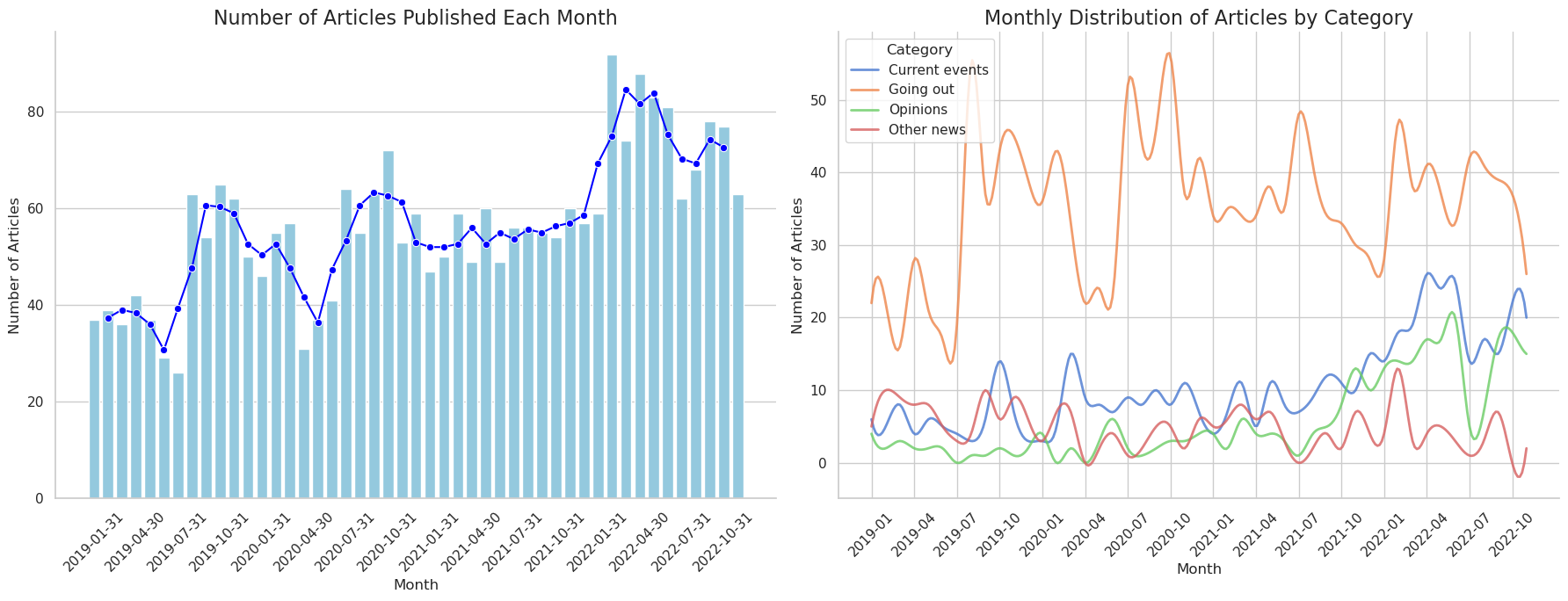
Figure 2: Article publication dynamics and thematic category distributions over time, reflecting event-driven spikes and a dominant "Going Out" category.
Key Qualitative Insights: Migrant News Consumption and Needs
Participants cited local news as instrumental for both linguistic acquisition and socio-cultural integration, yet highlighted considerable barriers: language complexity, content irrelevancy (especially for youth or specific intersectional groups), and a surplus of emotionally negative coverage that induces selective avoidance. Notably, participants did not universally report misrepresentation in hyper-local media—contradicting broader literature on mainstream media, but articulated significant thematic gaps: limited coverage of sports, nature, humanitarianism, migration, and generational interests.
A recurring preference emerged for investigative journalism and viewpoint diversity, with skepticism about both the neutrality of traditional outlets and the reliability of social networks. The importance of readability and clear audience targeting (e.g., labeling content for different age demographics) was underscored.
Computational Findings and Alignment with Community Needs
Topic Modeling
Topic modeling yielded nine coherent themes, with outliers, primarily focused on leisure, culture, local history, domestic issues (including sensitive topics), and city infrastructure. There was a lack of substantial topic clusters on migration, humanitarianism, or contemporary youth concerns—validating participants’ claims of coverage gaps.
BERT-based similarity search revealed quantifiable deficits: only 34 articles matched ‘sport’, 36 ‘Africa’, and 38 ‘feminism’, while ‘inequality’ yielded 191 results and ‘migration’ 82. Several focus-group-identified topics appeared only marginally in the corpus. For nuanced local issues (e.g., neighborhood centers, mobility controversies), direct keyword search found 19 relevant articles each—indicating minimal sustained coverage despite reported local salience.
Sentiment Analysis
Contrary to participants' perceptions of news negativity, sentiment analysis demonstrated overall higher positive than negative polarity across all text granularities. Title and subtitle sentiment magnitudes exceeded those in article bodies, reflecting established journalism practices in attention-capture. This raises questions regarding cognitive biases in news perception and potential opportunities for media organizations to communicate their positive editorial bias more effectively.
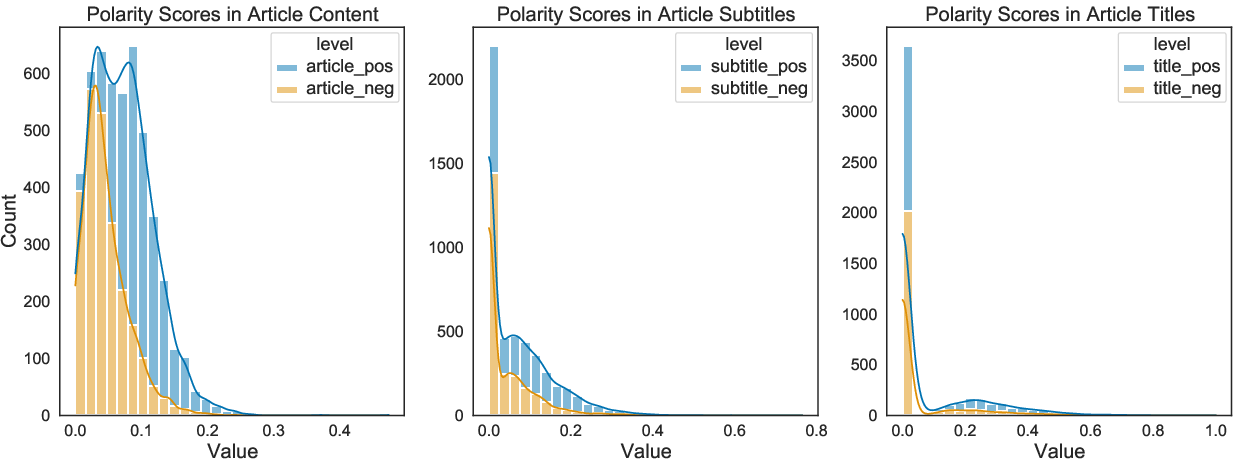
Figure 3: Log-based distribution of sentiment polarity by article segment; positive sentiment systematically outweighs negative sentiment.
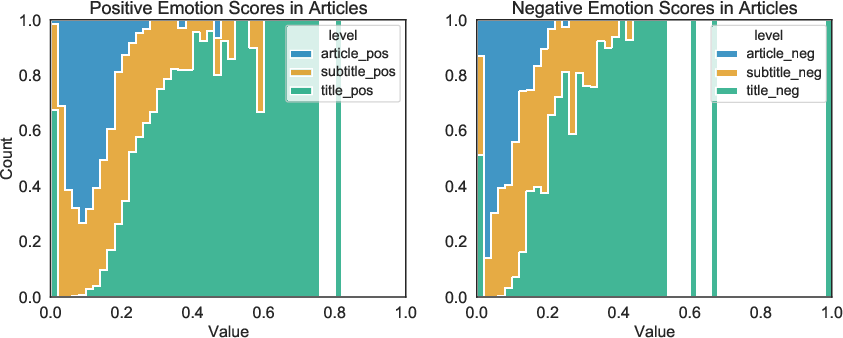
Figure 4: Relative share of high polarity scores by segment; titles and subtitles systematically exhibit higher sentiment than article bodies, both positive and negative.
Readability Analysis
Readability assessment classified the majority of articles at B1 (intermediate) or C (advanced) CEFR levels, with fewer than 10% at beginner levels (A1/A2). This implies that the corpus is not accessible to early-stage L2 French learners and may be a significant exclusionary barrier for some migrants. For fully functional access to the newspaper, at least an upper-intermediate French proficiency is required.
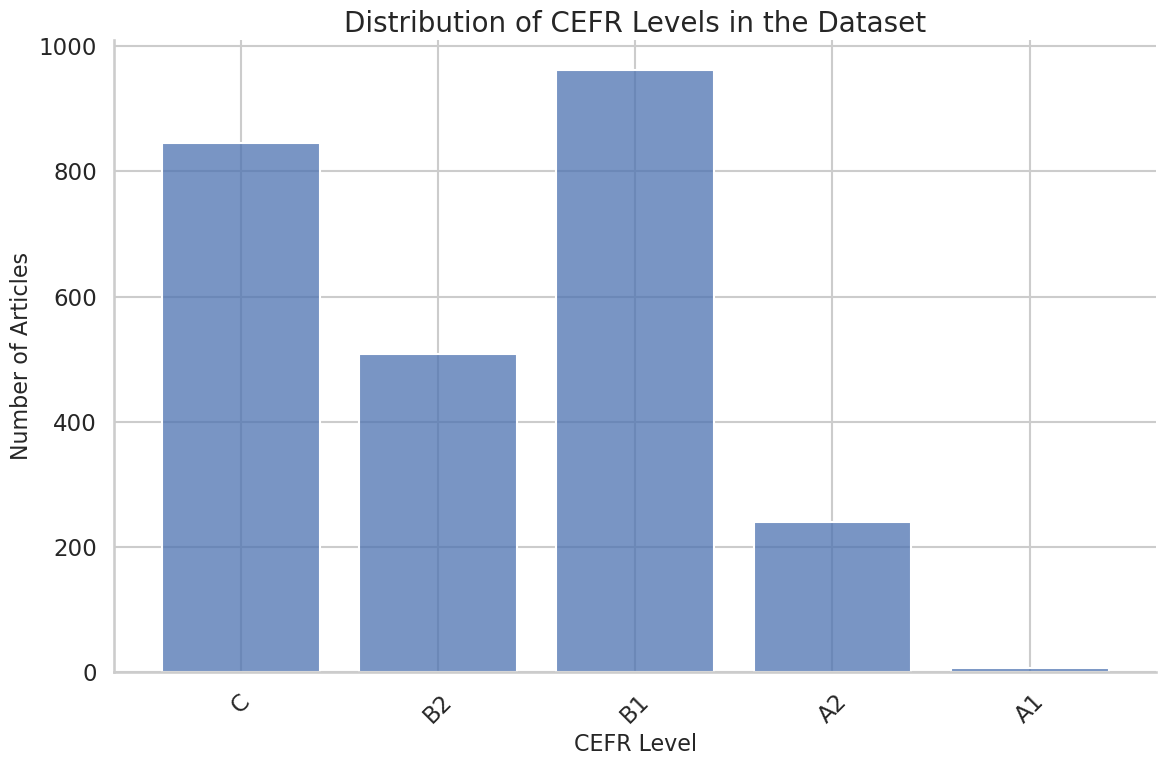
Figure 5: CEFR-level distribution of article readability, indicating predominance of intermediate-to-advanced complexity.
Implications and Theoretical Significance
The findings validate the efficacy of a mixed-methods, audience-centered computational journalism approach for both surfacing content gaps and rectifying misalignments between editorial strategy and community needs. The explicit lack of coverage on salient migrant-identified themes quantifies editorial blind spots not apparent from superficial corpus analysis, aligning with claims in the literature on representational disparities in local journalism. The divergence between user-perceived negativity and the objectively measured positive news sentiment exposes perceptual biases and carries implications for editorial transparency and news literacy.
From a systems design perspective, these results argue for dynamic, community-responsive content curation, improved readability stratification, and inclusive topic sourcing via participatory or co-production mechanisms. Additionally, the hybrid pipeline presented here demonstrates an actionable framework for ongoing audience-aligned content audits in local journalism.
Speculation on Future AI Developments
This research trajectory could be expanded through:
- Active-learning based topic modeling that iteratively incorporates community feedback for theme granularity adjustment.
- Multimodal sentiment/engagement analytics, including integration of social media metadata and in situ user interaction data.
- Adaptive readability personalization targeting L2 proficiency identification and live document simplification.
- Recommender systems for local news platforms explicitly tuned to underrepresented audience needs, leveraging weakly supervised NLU approaches for low-signal topic discovery.
- Longitudinal studies across multiple media outlets to produce comparative alignment measures at regional or national scales.
Conclusion
This work presents a rigorous, empirically grounded methodology for diagnosing and quantifying the degree of alignment between hyper-local media content and the informational needs of migrant communities. By synthesizing qualitative focus group inquiry with a multi-pronged computational NLP pipeline, the authors provide substantive evidence of thematic coverage gaps, overestimated negativity perceptions, and accessibility barriers. The implications extend to both the design of empathetic, inclusive news systems and the theoretical modeling of audience–media alignment, establishing a baseline for interventions in computational journalism and participatory media analytics.