Charge-dependent scalarization of Einstein- Euler-Heisenberg black holes
Published 15 May 2026 in gr-qc and hep-th | (2605.15566v1)
Abstract: Charge-dependent scalarization of the Einstein-Euler-Heisenberg (EEH) black hole is carried out in the EEH-scalar theory by introducing an exponential scalar coupling with $α$ coupling constant to the Maxwell and nonlinear electrodynamic terms. The bald black hole (EEHBH) is described by mass $M$ and arbitrary magnetic charge $q$ and has a single horizon when choosing the action parameter $μ=0.3$. The spontaneous scalarization ($α+$) of this black hole is available for charge $0<q< q_c=1.115$ and positive $α$, whereas its new scalarization ($α^-$) occurs for $q> q_c$ and negative $α$. The former case of $q=0.5$ implies infinite branches of scalarized EEHBHs but its fundamental branch ($n=0$) is stable against radial perturbations, while the latter cases of $q=2,20$ show two stable single branches of scalarized EEHBHs.
The paper demonstrates how exponential scalar coupling in EEH theory leads to charge-dependent scalarization, bypassing the no-hair theorem to produce 'hairy' black holes.
It employs numerical analysis and resonance methods to delineate distinct scalarization regimes for low and high charge values, with a critical charge q_c marking the transition.
The study identifies stability criteria for both infinite and single scalarized branches, offering insights for quantum-corrected strong gravity models.
Charge-Dependent Scalarization in Einstein–Euler–Heisenberg Black Holes
Introduction and Context
This work investigates scalarization phenomena in black holes arising in the Einstein–Euler–Heisenberg-scalar (EEHS) theory, wherein the classical Einstein–Maxwell paradigm is extended by both quantum one-loop effects (modeled via the Euler–Heisenberg non-linear electrodynamics term, parameterized by μ) and a real scalar field ϕ coupled exponentially with strength α to both Maxwell and non-linear electrodynamic sectors. Unlike the Reissner–Nordström solution, the EEH black hole admits solutions with a single event horizon for unrestricted values of magnetic charge q, provided that μ>0.08 when M=1. The no-scalar-hair theorem, normally precluding stationary scalar configurations for minimally coupled fields, is bypassed here via non-minimal couplings.
Scalarization—tachyonic instability of the scalar sector resulting in new "hairy" black hole branches—has previously been discussed for the EEH solution under limited couplings (e.g., only to Maxwell, or with specific potentials). This work addresses comprehensive charge-dependence of scalarization when ϕ is coupled exponentially to both matter sectors, delineating the parameter domains for spontaneous scalarization and stability of the resulting solutions.
EEHS Theory and Background Solutions
The action of the EEHS theory is given by: SEEHS=16π1∫d4x−g[R−2∂μϕ∂μϕ−e−αϕ2(F−μF2)]
where F=FμνFμν and α controls the strength of the scalar coupling.
The prototypical "bald" (scalar-free) EEH solution is parameterized by mass ϕ0, charge ϕ1, and ϕ2. For ϕ3, the metric function with a single horizon reads: ϕ4
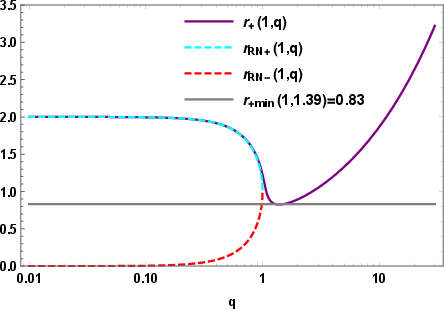
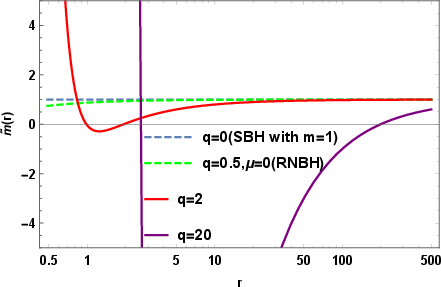
Compared to the Reissner–Nordström case (ϕ5), the EEH solution's horizon structure is modified, notably without restrictions on maximum charge, and with altered thermodynamic properties (no Davies point in the specific heat, distinct mass functions for large ϕ6).
Figure 1: (Left) Outer horizons ϕ7 for EEHBH compared to Reissner–Nordström; (Right) Mass functions ϕ8 for various ϕ9 and α0.
Scalarization Onset: Charge Dependence and Critical Thresholds
The scalar field can develop a tachyonic instability, leading to spontaneous scalarization. The mechanism depends on the sign and magnitude of the effective scalar mass squared: α1
The sign of α2 required for instability depends on α3:
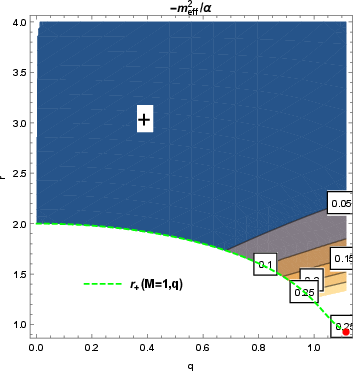
For α4:α5 for α6, permitting spontaneous scalarization ("α7 scalarization").
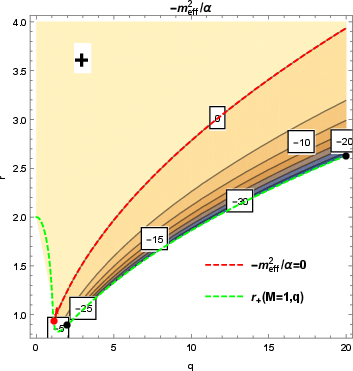
For α8:α9 requires q0, corresponding to a distinct family of solutions ("q1 scalarization").
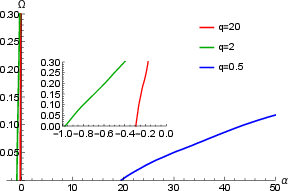
These regimes are separated by a critical charge q2 derived via the Hod resonance method. The resonance condition identifies q3 as the value where no tachyonic instability exists at the horizon, dictating the boundary between the two scalarization types.
Figure 2: Effective scalar mass as a function of q4 and q5; the sign of q6 for instability flips at q7.
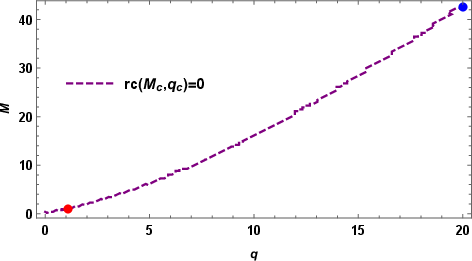
Figure 3: Resonance curve for the critical onset of q8 scalarization, showing loci of q9 and μ>0.080.
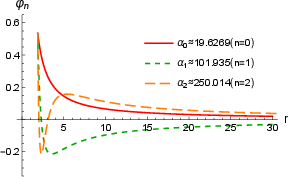
Scalar clouds at the bifurcation points act as seeds for new black hole branches. For μ>0.081, there is a tower of scalarized "clouds" indexed by node number μ>0.082, leading to an infinite set of scalarized branches.
Branch Structure and Instability Conditions
Tachyonic instability and scalarized branch structure are compared via several criteria:
Sufficient condition for instability: μ>0.083, where μ>0.084.
Precise threshold (μ>0.085) via direct perturbative analysis: The lowest μ>0.086 for which an exponentially growing (μ>0.087) scalar mode exists.
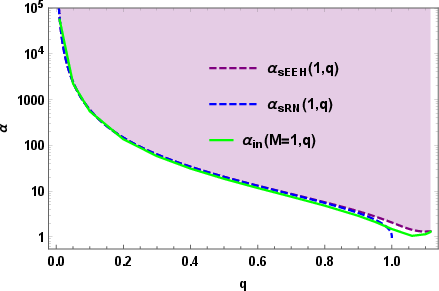
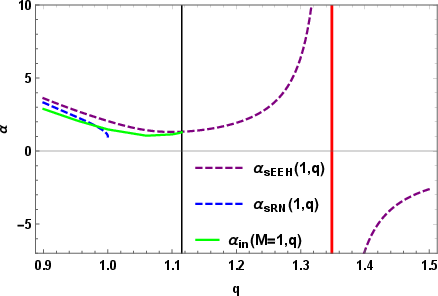
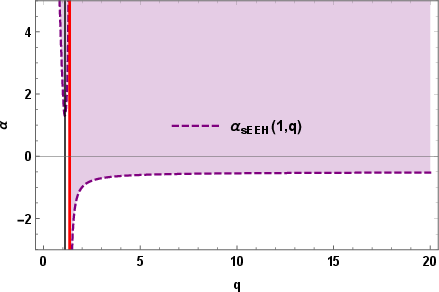
Figure 4: Instability threshold curves μ>0.088 and μ>0.089 vs M=10; positive and negative regions delineate domains of scalarization.
For M=11 (M=12), the analysis yields:
M=13
Infinite branches indexed by M=14, with the M=15 branch exhibiting stability.
For M=16 (M=17):
M=18 and M=19, respectively
Only a single branch per ϕ0 is observed, both stable.
The scalar cloud eigenvalues and corresponding critical ϕ1 were numerically confirmed.
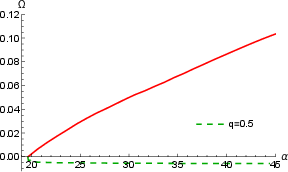
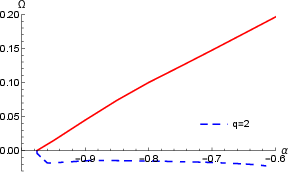
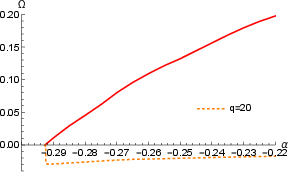
Figure 5: (Left) Growth rate ϕ2 vs ϕ3 for ϕ4 (threshold crossings); (Right) Static scalar clouds ϕ5 at ϕ6 for the lowest three branches.
Full Numerical Solutions and Features
Full scalarized EEHBH solutions were constructed by integrating the ODEs resulting from the coupled Einstein, Maxwell, and scalar field equations, using appropriate boundary conditions at the subextremal horizon and spatial infinity. The solutions interpolate between hairy black holes and Reissner–Nordström-like geometries.
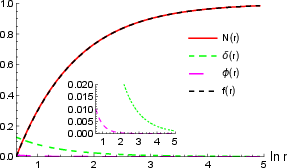
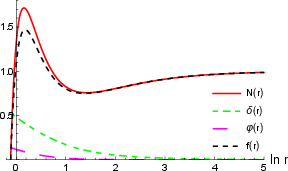
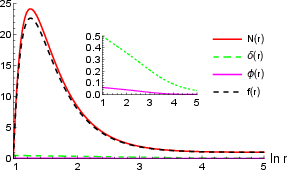
Figure 6: Metric and scalar profiles for scalarized EEHBHs at ϕ7, ϕ8, and ϕ9.
Distinct features include:
The SEEHS=16π1∫d4x−g[R−2∂μϕ∂μϕ−e−αϕ2(F−μF2)]0 (SEEHS=16π1∫d4x−g[R−2∂μϕ∂μϕ−e−αϕ2(F−μF2)]1) branch exhibits typical scalar hair and a horizon radius at SEEHS=16π1∫d4x−g[R−2∂μϕ∂μϕ−e−αϕ2(F−μF2)]2.
The SEEHS=16π1∫d4x−g[R−2∂μϕ∂μϕ−e−αϕ2(F−μF2)]3 and SEEHS=16π1∫d4x−g[R−2∂μϕ∂μϕ−e−αϕ2(F−μF2)]4 branches manifest for negative SEEHS=16π1∫d4x−g[R−2∂μϕ∂μϕ−e−αϕ2(F−μF2)]5, with smooth metric and scalar profiles, and adjusted horizon radii.
At the transition SEEHS=16π1∫d4x−g[R−2∂μϕ∂μϕ−e−αϕ2(F−μF2)]6, the solution degenerates to a Schwarzschild black hole with constant scalar hair, representing a bifurcation point between two qualitatively distinct scalarization regimes.
Stability Analysis of Scalarized Branches
Stability under radial (SEEHS=16π1∫d4x−g[R−2∂μϕ∂μϕ−e−αϕ2(F−μF2)]7-mode) scalar perturbations is tested via the associated Schrödinger-type equation for the perturbation, examining the sign structure of the effective potential SEEHS=16π1∫d4x−g[R−2∂μϕ∂μϕ−e−αϕ2(F−μF2)]8 and direct numerical evaluation of SEEHS=16π1∫d4x−g[R−2∂μϕ∂μϕ−e−αϕ2(F−μF2)]9 (the growth/decay rate).
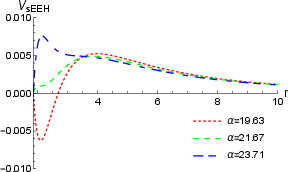
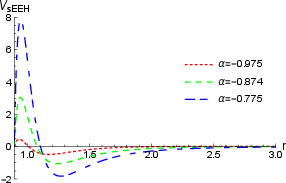
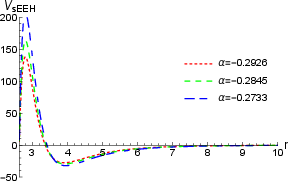
Figure 7: Scalar perturbation potentials F=FμνFμν0 for F=FμνFμν1 and various F=FμνFμν2.
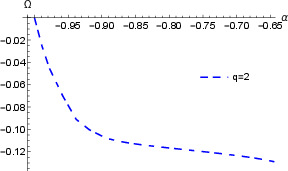
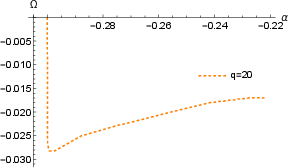
Despite small negative regions near the horizons, direct calculations confirm negative F=FμνFμν3 for F=FμνFμν4 and single branches, indicating stability against radial perturbations.
Figure 8: Growth rate F=FμνFμν5 as function of F=FμνFμν6 for F=FμνFμν7; all scalarized branches show stability for F=FμνFμν8.
Figure 9: Zoomed-in view of F=FμνFμν9 for negative α0 at α1, confirming stability of α2 scalarized branches.
The excited α3 branches at α4 (as in other scalarization scenarios) are expected to be unstable.
Theoretical and Practical Implications
The study elucidates how the presence of non-linear electrodynamics terms and scalar couplings to multiple matter sectors alters the spectrum and stability of black hole solutions. Two robust scalarization regimes emerge:
α5-scalarization (α6): Infinite stable and unstable branches (only α7 is stable), driven by positive coupling and enabled by tachyonic instability in the scalar sector.
α8-scalarization (α9): Single stable branches at large charge, requiring negative coupling constants.
At the underlying theoretical level, the result demonstrates a deepened structure of black hole solutions in modified gravity with non-linear matter couplings. Practically, this analysis identifies stable parameter regimes for possible endpoints of scalarization transitions and has implications for the phenomenology of black hole scalar hair, quantum-corrected strong-gravity signatures, and constraints on non-minimal couplings in gravity.
Conclusion
This analysis systematically maps the charge-dependent scalarization landscape of EEH black holes in the presence of exponential scalar coupling to both Maxwell and non-linear electrodynamics sectors. It establishes the existence and stability of infinite scalarized branches for ϕ00 and single branches for ϕ01, sharply distinguishing these two regimes. The results offer a thorough framework for further studies of black holes in semi-classical gravity, the phenomenology of hairy compact objects, and the non-perturbative implications of quantum corrections in strong-field scenarios.