Constraining Black Hole Parameters in Non-Commutative Geometry using Machine Learning
Published 19 May 2026 in gr-qc and hep-th | (2605.22862v1)
Abstract: Motivated by string theory, we constrain non-commutative black hole parameters through shadow behaviors using machine learning techniques combined by CUDA computations. To do so, we first investigate the structure of the event horizon of non-commutative black holes in the presence of string clouds and dark energy sectors by exploiting CUDA-based methods. We numerically approach the shadow properties and the energy emission rate of rotating and charged black holes in non-commutative geometry via such high-performance parallel computings. To bridge these findings with observational data, we implement a CUDA-based framework in order to constrain the involved black hole parameters including the non-commutative one. Using the resulting numerical data, we build a robust training datasets for a fully connected neural network to determine whether a given set of parameters matches with the observational data provided by Event Horizon Telescope collaborations. As a result, we find that the non-commutative model under study is consistent with the observations of $SgrA*_{\mathrm{Keck}}$ black holes.
The paper introduces a novel framework using CUDA simulations and a fully connected neural network to constrain black hole parameters in non-commutative geometry.
It demonstrates how rotation, charge, and external factors alter shadow morphology and energy emissions, with validation from EHT data.
Machine learning achieves >98% accuracy in mapping parameter spaces, highlighting the NC parameter 'b' as a critical observable factor.
Constraining Black Hole Parameters in Non-Commutative Geometry using Machine Learning
Overview
The paper "Constraining Black Hole Parameters in Non-Commutative Geometry using Machine Learning" (2605.22862) presents a comprehensive analysis of rotating and charged black holes embedded in non-commutative (NC) geometries, with additional contributions from string clouds and dark energy sectors. The approach is characterized by the integration of high-performance CUDA-based numerical simulations, theoretical modeling grounded in modified gravity and string-inspired scenarios, and rigorous machine learning methods to confront the resulting predictions with Event Horizon Telescope (EHT) observations. The principal focus is the quantification and constraint of the NC parameter, alongside other gravitational and matter field parameters, via optical properties—specifically, black hole shadow behavior and energy emission rates.
Black Hole Modeling in Non-Commutative Geometry
The formulated black hole solution is derived from an NC deformation of spacetime, parameterized by Θ, leading to modified Einstein equations incorporating smeared mass and charge distributions. Deformations are introduced via perturbative corrections in the metric, characterized by the NC parameter b (defined as b=8Θ/π), rotation parameter a, electric charge Q, cloud of strings parameterα, and quintessence sector parameters N and w. The resulting moduli spaceMbh is partitioned into internal (M,Q,a) and external (b0) contributions.
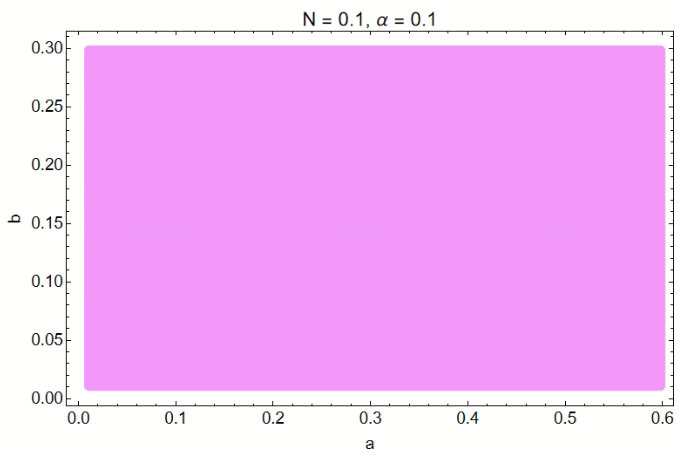
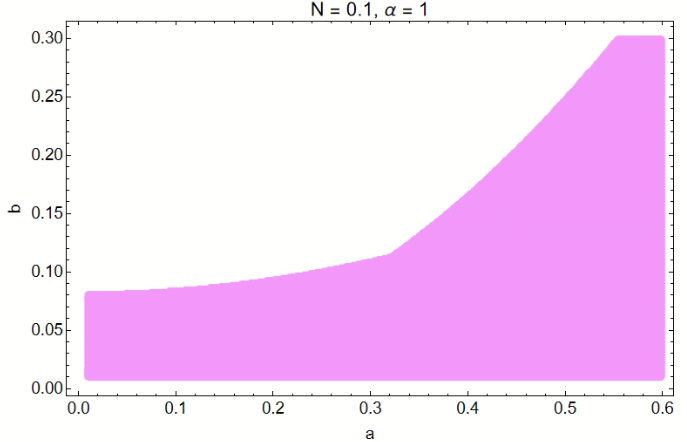
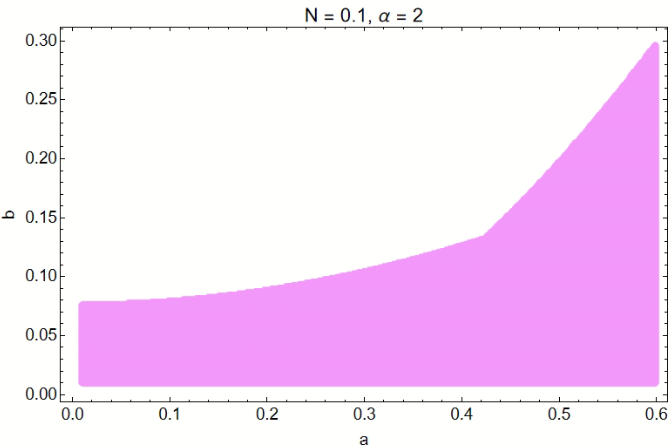
Numerical exploration of event horizon existence is performed extensively in the b1 plane, with varying b2 and b3, leveraging CUDA to deploy parallel computations across GPUs and efficiently probe parameter regions supporting physical horizons. Regions admitting at least one real event horizon are mapped, demonstrating how increasing b4 systematically restricts viable solution domains.
Figure 1: Regions in the b5 plane where the metric admits at least one real event horizon radius.
Optical Properties: Shadows and Energy Emission
Detailed optical analysis is conducted using CUDA-accelerated geodesic integration in the Hamilton–Jacobi formalism for the extended NC metric. The investigation encompasses shadow morphology and photon cross-section, and energy emission rates.
Key findings include:
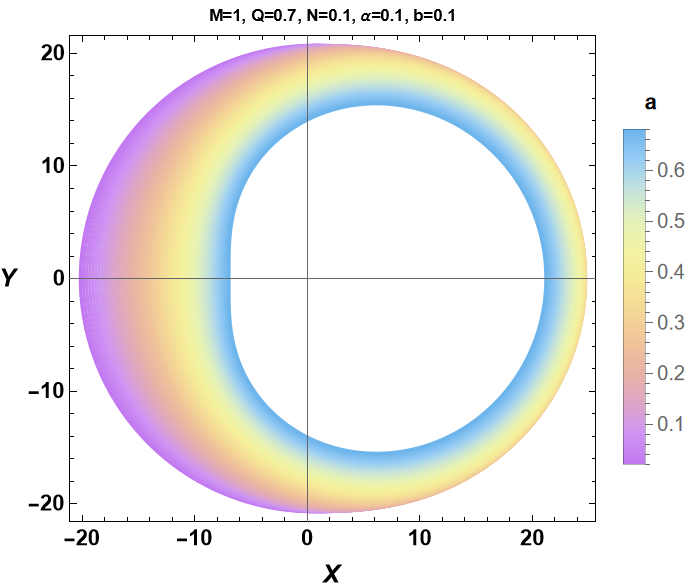
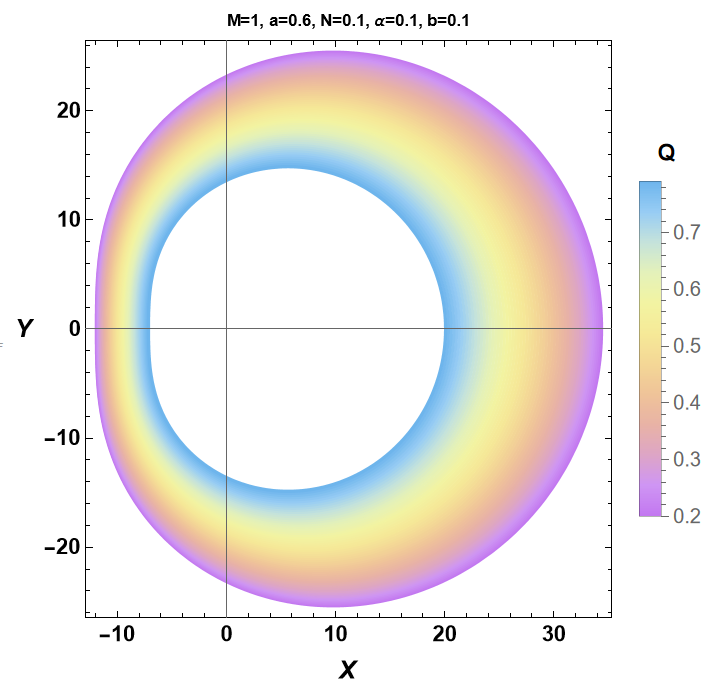
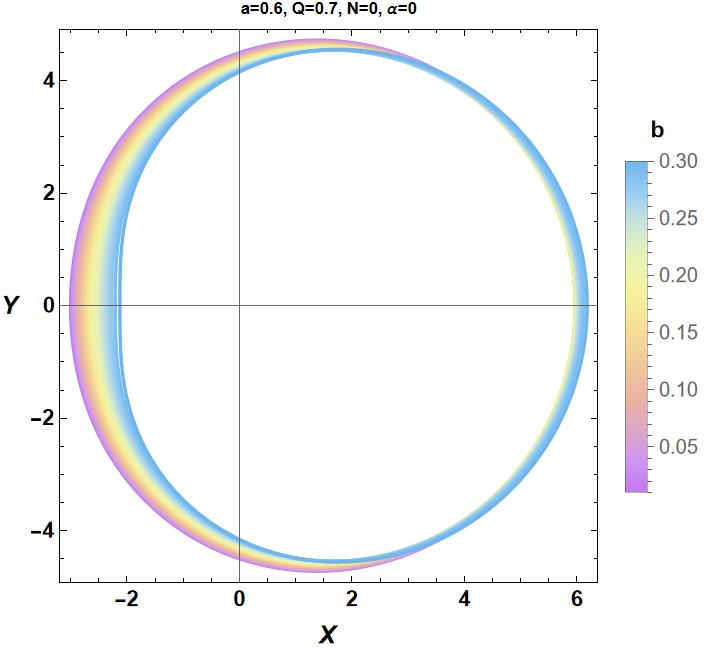
Rotation parameter b6 and electric charge b7: Both reduce shadow size and induce shape deformations, notably a D-like structure as b8 increases; b9 predominantly affects size without strong shape distortion but expands the parameter range relative to standard charged black holes.
Figure 2: Effect of internal parameters—rotation b=8Θ/π0 and charge b=8Θ/π1—on shadow behavior.
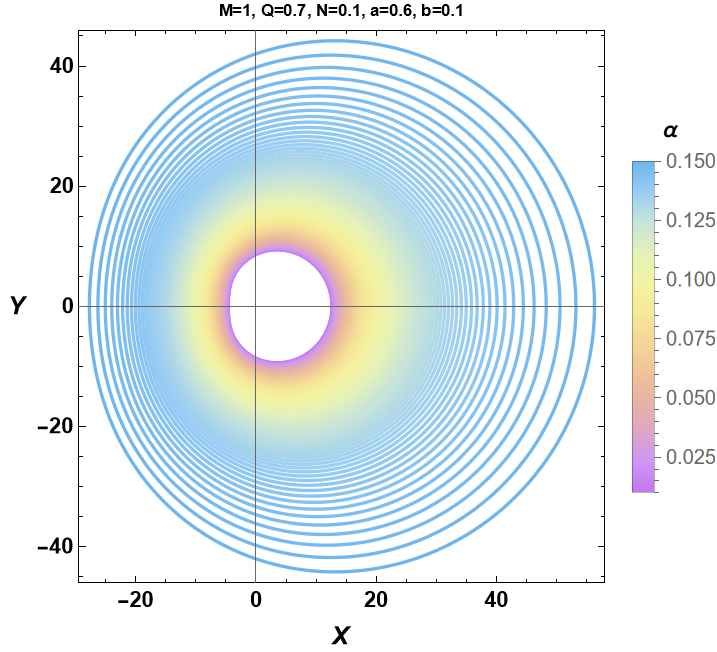
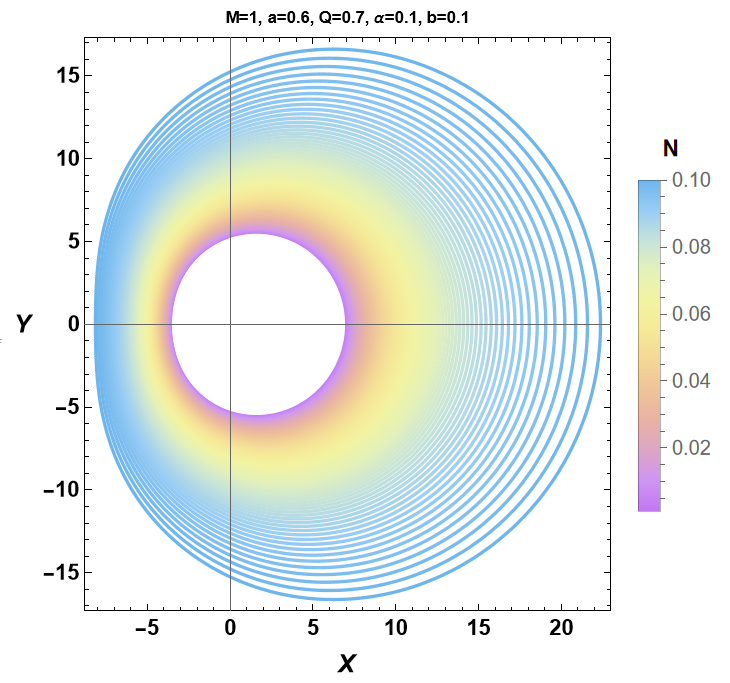
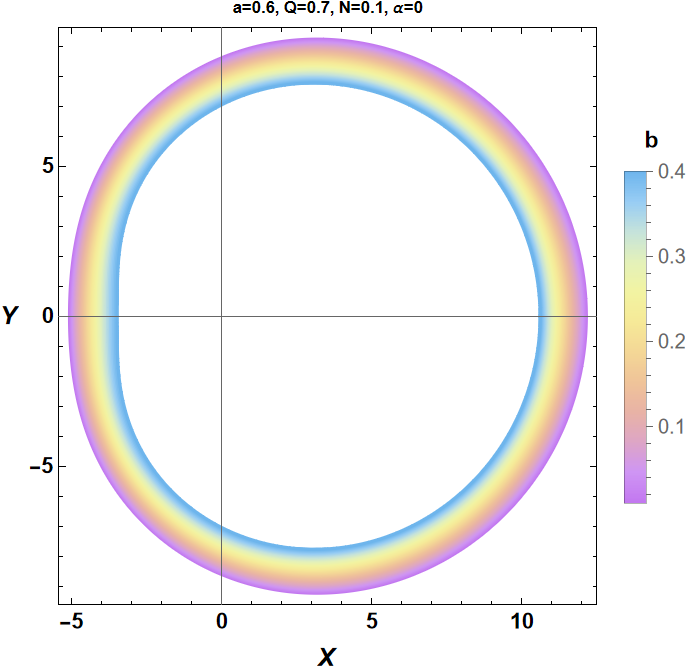
External parameters b=8Θ/π2 and b=8Θ/π3: Both increase shadow size; high b=8Θ/π4 and low b=8Θ/π5 produce pronounced D-like shadow signatures, which abate as b=8Θ/π6 rises or b=8Θ/π7 falls.
Figure 3: Effect of b=8Θ/π8 (left) and b=8Θ/π9 (right) on shadow behavior.
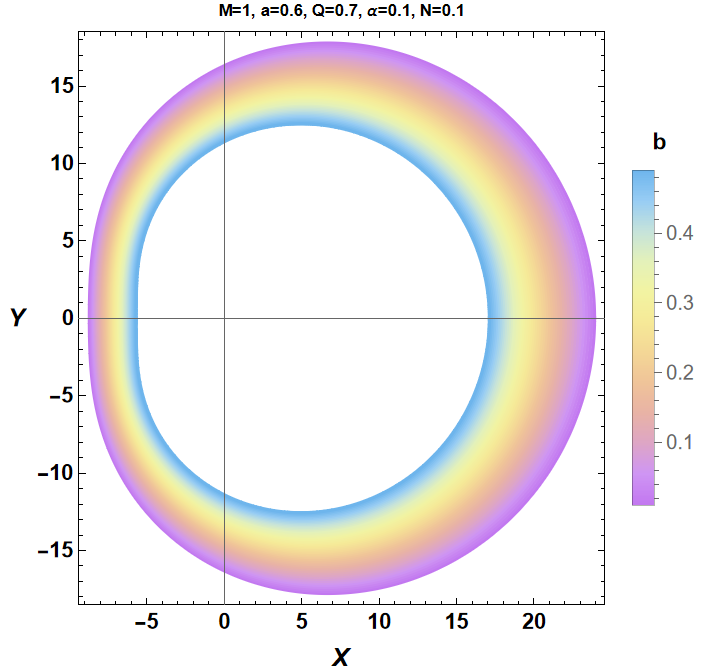
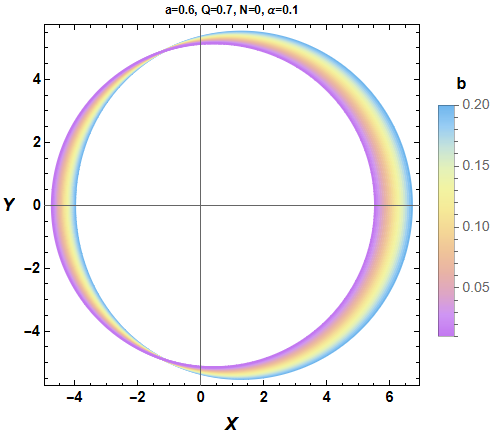
Non-commutative parameter a0: a1 exhibits robust control over both shadow size and shape, where higher a2 values yield enlarged and extended shadows, while low a3 produces nearly circular configurations.
Figure 4: Effect of parameter a4 on black hole shadow behavior.
Energy emission rate: Quantified via the geometric cross-section and Hawking temperature, results show that increasing a5 or a6 initially amplifies emission but suppresses it beyond critical thresholds. In contrast, a7, a8, and a9 monotonically dampen emission, with Q0 decisively reducing both peak and total emission amplitude.
Constraining Parameters via EHT Observations
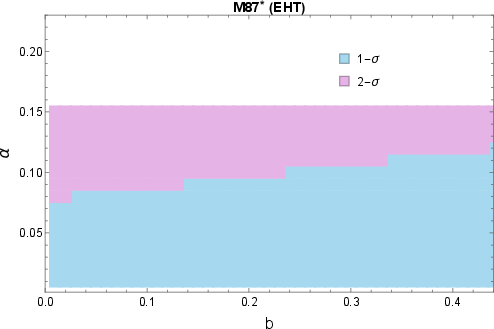
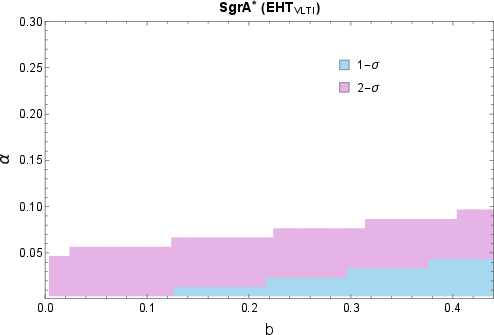
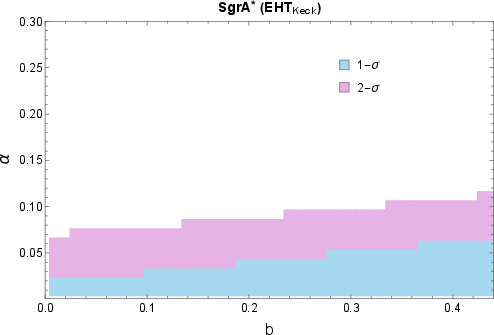
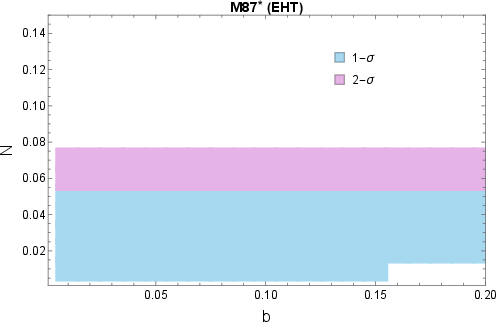
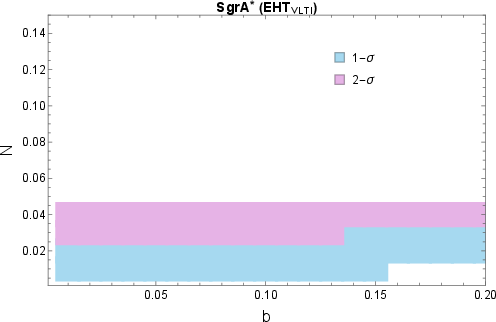
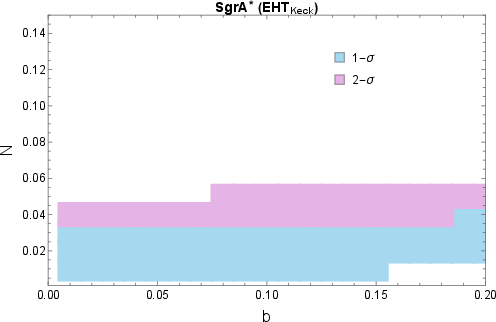
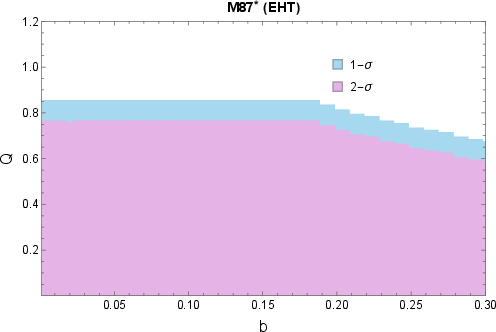
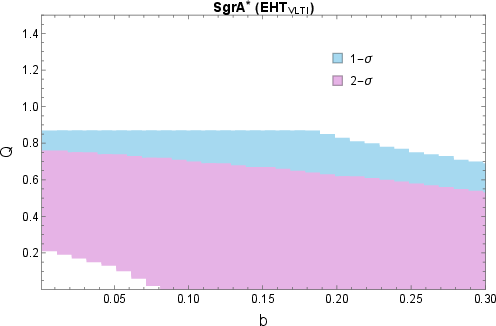
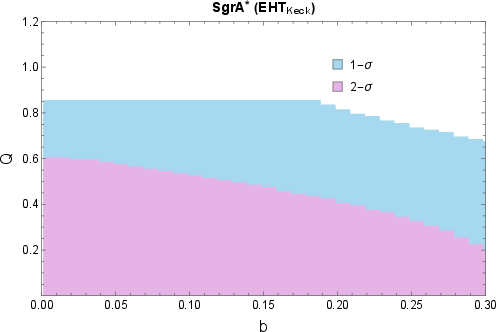
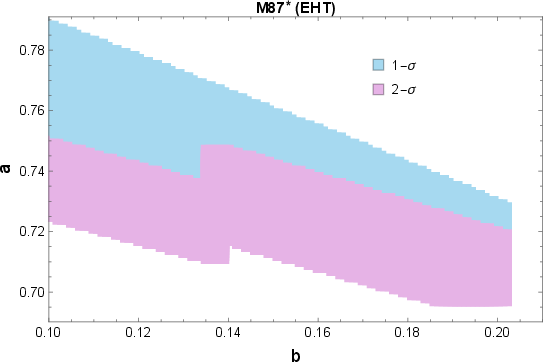
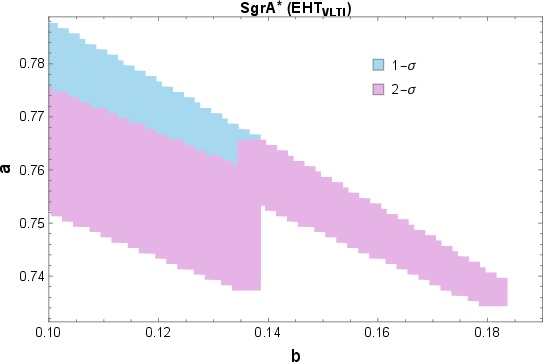
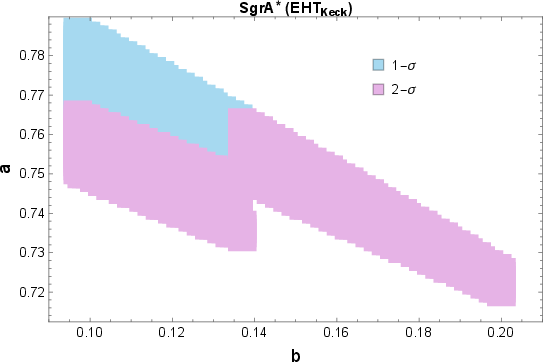
The paper utilizes shadow radii from EHT observations of M87Q1 and SgrAQ2 to impose empirical bounds on NC and associated parameters. CUDA-based simulations efficiently scan multidimensional parameter space, identifying regions in Q3, Q4, Q5, and Q6 compatible with Q7-Q8 and Q9-α0 EHT intervals.
Figure 5: Combined constraint regions in the parameter spaces α1, α2, α3, and α4 obtained from CUDA-based simulations.
Analysis reveals that while theoretical parameter space is broad, only narrow domains—particularly for α5—are permitted by observational bounds. The parameter α6 consistently acts as a critical control parameter, tightly constrained to α7, with further restriction depending on fixed values of α8, α9, N0, and N1.
A fully connected neural network (FCNN) is trained on CUDA-generated datasets to classify whether parameter sets produce shadow radii consistent with EHT constraints. Data are filtered, normalized, and split for robust supervised training, utilizing a voting ensemble to stabilize predictions under parameter perturbations. Architecture employs consecutive ReLU activations and a final softmax output for binary classification.
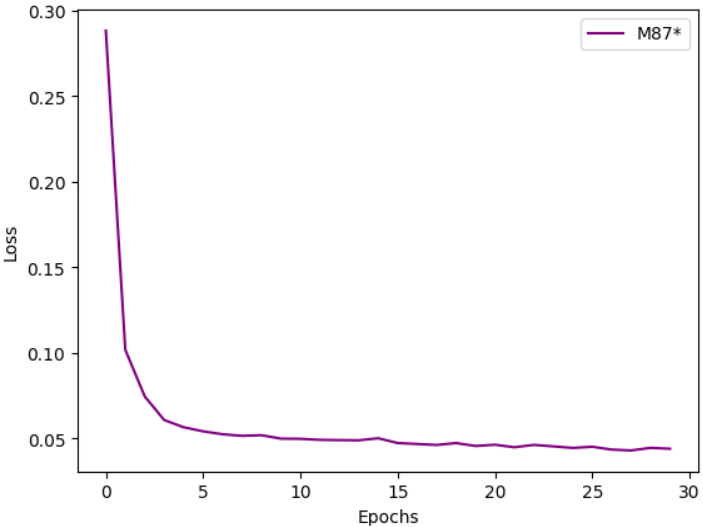
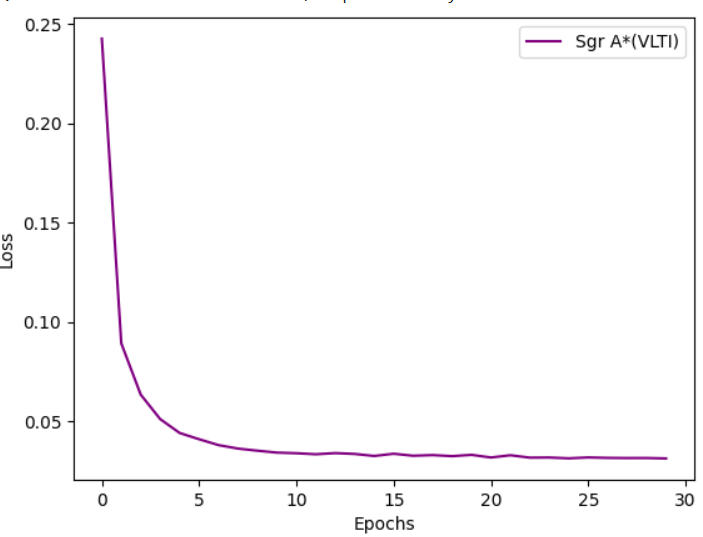
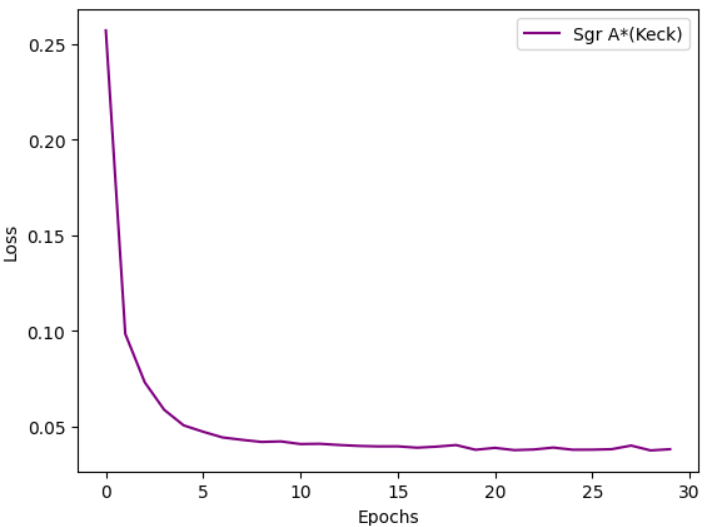
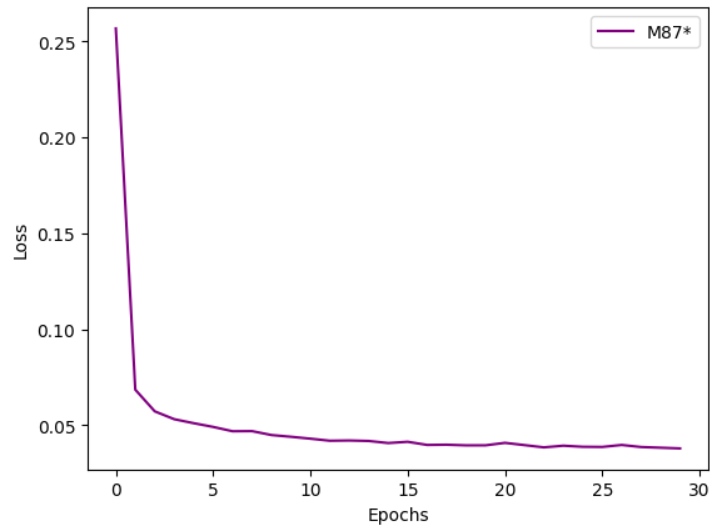
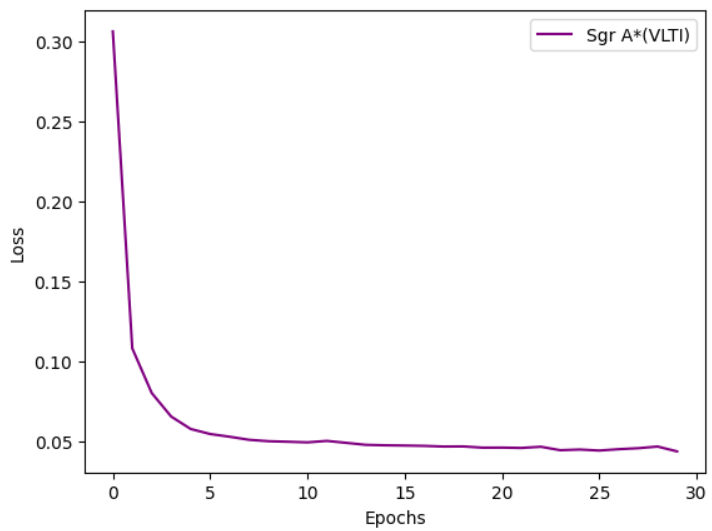
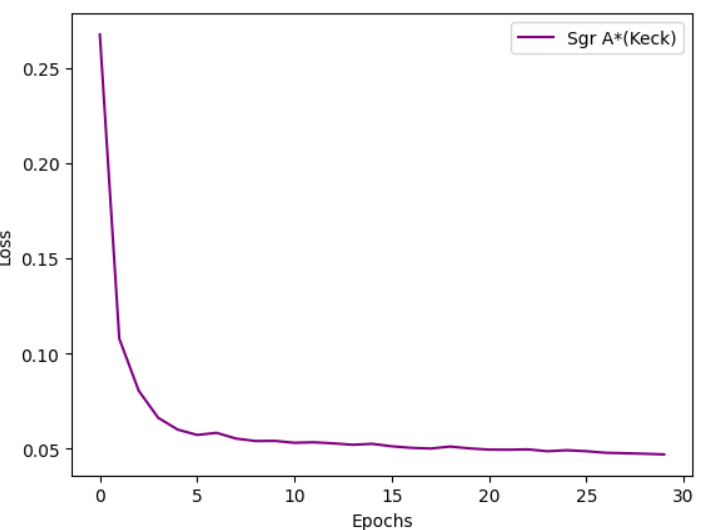
Training and validation curves demonstrate rapid convergence and high accuracy, with consistent generalization across test sets. Confusion matrices confirm negligible misclassification rates, and aggregate metrics show accuracy exceeding N2 for both N3-N4 and N5-N6 regimes, with optimal performance for N7 in the N8-N9 interval.
Figure 6: Training curves of the FCNN model for the w0-w1 observational constraint.
Figure 7: Training curves of the FCNN model for the w2-w3 observational constraint.
Implications and Future Directions
The synthesis of NC geometry, high-performance numerical simulations, and machine learning provides a rigorous framework for constraining quantum gravity-inspired black hole models by direct comparison with astrophysical data. Theoretical implications include the identification of NC parameter w4 as a primary empirical interface between quantum spacetime structure and observable features, suggesting that future multi-modal datasets—such as EHT imaging at higher resolutions—may further refine constraints or differentiate between NC and other modified gravity models.
Practically, the demonstrated efficiency and accuracy of CUDA-driven simulations and FCNN classification indicate that these methods are viable for rapid exploration of extended parameter regimes and could be generalized to more elaborate theoretical settings (e.g., richer string compactifications or non-standard matter coupling). The voting strategy enhances robustness against small parameter variations and supports reliable automated classification.
Potential future developments include implementation of more sophisticated learning models, integration of additional observational features beyond shadow radius, and systematic inclusion of ROC and precision-recall analyses. The paper highlights the necessity to interpret machine learning results cautiously, especially in light of the limited scope of shadow-based constraints relative to the full breadth of EHT data.
Conclusion
This work establishes a technically robust pipeline for constraining black hole parameters in NC geometries via GPU-accelerated numerical simulations and machine learning, evidencing strong correspondence between theoretical NC models and empirical shadow observations. The NC parameter w5 is tightly constrained, and FCNN models achieve high fidelity in mapping parameter spaces to observational consistency. The approach underscores the utility of computational and data-driven techniques in gravitational physics and motivates further refinement and extension to broader modified gravity and quantum gravity scenarios.