- The paper presents a novel framework using differentiable B-spline basis functions for simultaneous tomographic reconstruction and geometry calibration.
- It derives explicit, analytic gradients of the x-ray transform to efficiently correct various geometric misalignments including angular errors and detector shifts.
- Empirical results on simulated and real datasets demonstrate significant improvements, reducing geometry errors by up to 55% in 3D calibration tasks.
Differentiable Ray-Based Geometry Calibration in Tomography
Introduction
The paper "Geometry Calibration in Tomography with a Differentiable Ray-Based Model" (2606.21405) presents a unified framework for joint tomographic reconstruction and geometry calibration applicable to arbitrary source–detector configurations. This work systematically addresses geometric misalignments—which manifest as angular errors, detector shifts, source jitter, center-of-rotation deviations, and detector vibrations—by formulating and deriving explicit, efficiently-computable gradients of the x-ray transform with respect to all acquisition parameters. The framework generalizes beyond the traditional reliance on fiducials, feature-based alignment, or sinogram corrections, which are typically specialized to limited scanner geometries.
Traditionally-used tomographic forward models and their open-source implementations (e.g., ASTRA, TIGRE, TomoPy) do not expose gradients with respect to acquisition parameters, precluding geometry optimization in hybrid or unconventional imaging geometries. In this work, the authors introduce a general differentiable x-ray transform operator in which the reconstructed volume is parameterized as a sum of differentiable basis functions, specifically B-splines, conferring continuous differentiability with respect to geometric parameters. In contrast to classical voxel discretizations yielding piecewise-constant, non-useful or ill-conditioned gradients, the B-spline-parametric representation produces smooth, well-behaved optimization landscapes.
An augmented ray tracing algorithm, similar in structure and asymptotic cost to explicit forward-projection (e.g., Siddon's method or DDA), is used not only for forward modeling but also for explicit, analytic gradient computation with respect to intercepts and directions of rays. Reference-point translation is introduced to localize angular parameter gradients to the intersections of rays with grid cells, thereby making computation compatible with efficient cell-wise traversal. This operation enables direct calculation of vector Jacobians with respect to both intercepts and directions during a single DDA pass.

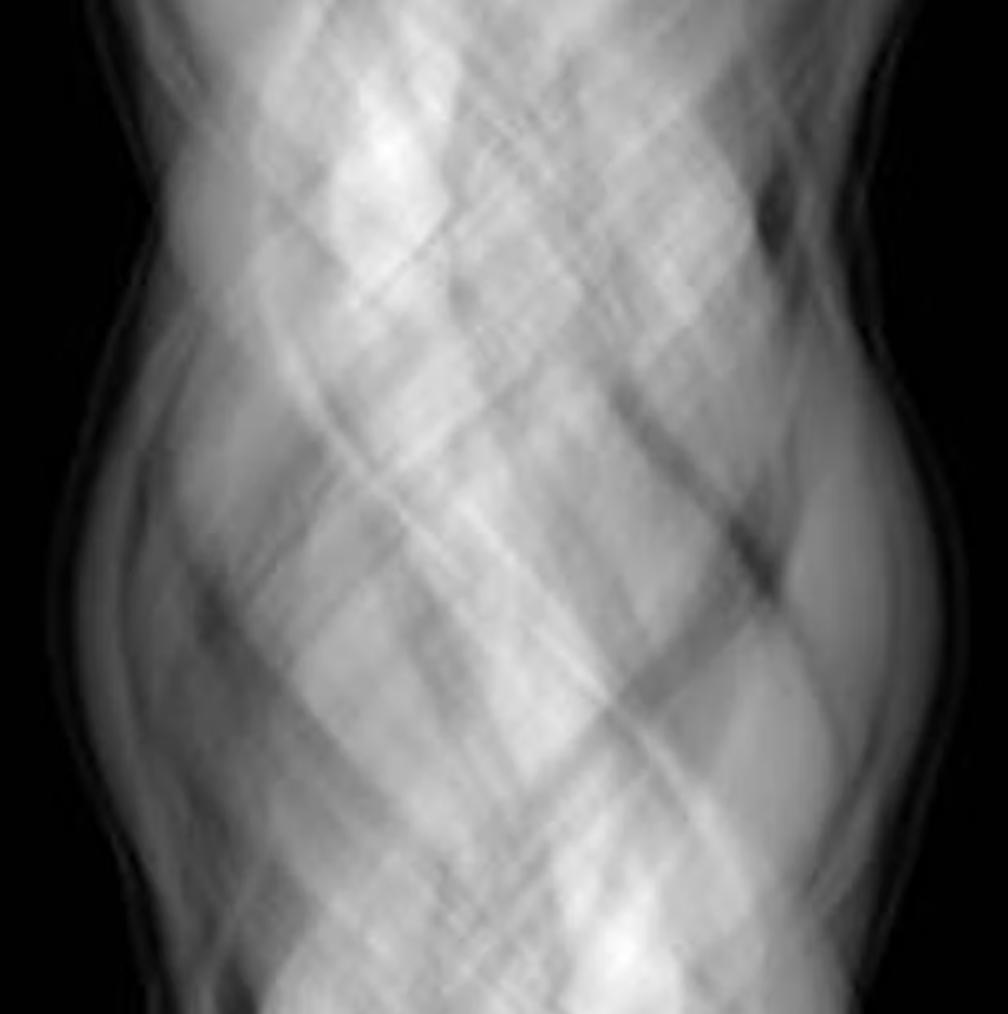
Figure 2: Overview of the differentiable framework, including differentiable basis representation, forward and adjoint operations, and geometry update via explicit gradients.
Backward-mode automatic differentiation is applied only to small, closed-form polynomial subroutines associated with B-spline line integrals, not to the main ray traversal loops, avoiding memory overheads and control-flow limitations of AD frameworks. When using voxels (indicator functions), explicit, closed-form formulas for these gradients are also derived, though the lack of smoothness in the loss landscape is demonstrated to impede effective optimization.
The computational cost for each Jacobian evaluation is empirically verified to be nearly identical to the forward projection, with a typical runtime ratio close to 1.07, making the proposed method viable even for high-dimensional acquisition parameter spaces.
Numerical Experiments and Quantitative Results
Simulated Experiments
The framework is validated in simulated CT and PET setups, covering canonical and perturbed geometries (cone-beam, parallel-beam, and ring PET). In CT with strong geometric jitter (up to nine detector-widths standard deviation), standard uncalibrated reconstruction yields pronounced artifacts and severe degradation in both PSNR and SSIM. After joint geometry and volume optimization via the differentiable framework, reconstructions approach ground truth quality even at the highest perturbation levels.

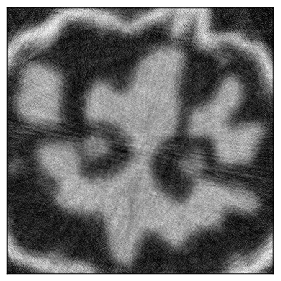
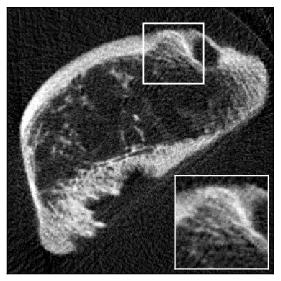


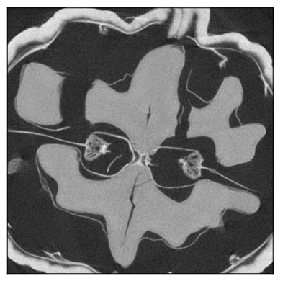

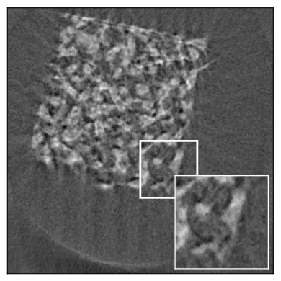
Figure 4: Uncalibrated and calibrated reconstructions using real data. Top: reconstructions with nominal (misaligned) geometry. Bottom: reconstructions after joint calibration, demonstrating removal of artifacts across a range of misalignment types.
In PET-like synthetic phantoms, block-wise detector position errors are fully compensated, with highly accurate recovery of both geometry and image, again yielding near-perfect loss minimization as quantified by data-fidelity loss curves.
A direct comparison between voxel-based and B-spline-based discretizations for geometry optimization reveals two critical findings: (1) the loss landscape under voxel discretization is highly non-smooth, presenting zero-gradient plateaus that preclude convergence; (2) the B-spline model is continuously differentiable, facilitating efficient and accurate joint optimization and reducing final geometry errors by 55% in the 3D parallel-beam calibration task.
Real Data
On real datasets (micro-CT sand, cone-beam walnut, micro-CT bone, nano-CT battery), each with different and challenging misalignment characteristics (center-of-rotation shifts, source jitter, angular imprecision, detector vibrations), the proposed method consistently removes artifacts introduced by geometric miscalibration. In all cases, data-fidelity loss is shown to decrease substantially throughout optimization, and the final calibrated reconstructions show restoration of expected anatomical and structural details.
Practical and Theoretical Implications
Practically, the method provides a unified, generalizable calibration and reconstruction protocol that obviates the need for physical calibration phantoms, fiducial markers, or feature engineering, and can accommodate arbitrary acquisition geometries and perturbations. This is critical for modern scanner systems (micro-/nano-CT, arbitrary laboratory and hybrid acquisition setups, and advanced PET designs) where mechanical and electronic instabilities are non-negligible relative to system resolution.
Theoretically, the work bridges a significant gap by deriving, for the first time, closed-form, efficiently-computable geometric gradients for the x-ray transform applicable to arbitrary basis functions and high-dimensional parameterizations. The analysis further demonstrates that the choice of differentiable basis functions (e.g., higher-order B-splines) is not only beneficial but necessary for well-posed geometry optimization in the continuous domain.
Future Directions
The methodology opens avenues for self-calibrated, operator-learning approaches in a variety of tomographic inverse problems, particularly in systems where scanner geometry is subject to dynamic or unknown perturbations. Extensions could incorporate constraints or priors regularizing plausible geometric parameters, integrate stochastic modeling of time-dependent misalignments, and apply to more sophisticated forward models including physical effects (beam hardening, scattering).
From a computational perspective, the compatibility with GPU- and JIT-based implementation frameworks enables integration into real-time, closed-loop acquisition–reconstruction pipelines. The framework is also well-suited for hybrid optimization strategies where geometry and regularized volume reconstructions (e.g., deep priors or plug-and-play schemes) are learned simultaneously.
Conclusion
This work introduces a general, differentiable, ray-based framework for simultaneous geometry calibration and volumetric reconstruction in tomography. The approach yields analytic, efficiently-computable Jacobians with respect to arbitrary acquisition parameters, enabling gradient-based optimization over unconstrained scanner geometries. The use of higher-order differentiable basis functions (B-splines) is key in ensuring smooth and convergent optimization landscapes, with empirical validation showing strong recovery of image fidelity and geometry across simulated and real data (CT, micro-/nano-CT, PET). The framework is broadly applicable in modern and emerging tomographic modalities and geometries, scaling efficiently to large datasets and high-dimensional parameter spaces.