- The paper presents a unified group-theoretic approach to derive explicit Wigner functions for squeezed states of light.
- It details how symmetry groups like Sp(2), E(2), and SO(3,2) govern canonical transformations and entanglement in both single- and two-mode systems.
- Numerical results confirm enhanced photon fluctuations and quantum noise characteristics, underpinning applications in quantum metrology and information processing.
Understanding Squeezed States of Light via Wigner's Phase-Space Representation
Phase-Space Foundations and Group-Theoretic Structure
The paper constructs a unified and rigorous exposition of quantum phase-space methods, emphasizing the Wigner function as an analytical bridge between the Schrödinger state formalism and phase-space approaches. Central to this bridge is the exploitation of symmetry groups—chiefly the symplectic (Sp(2), Sp(4)), Euclidean (E(2)), and Lorentz (SO(2,1), SO(3,1), SO(3,2)) groups. This group-theoretic perspective is critical in demonstrating how canonical transformations in classical and quantum mechanics preserve the structure of Hamiltonian dynamics and extend naturally to quantum optics, especially to the treatment of squeezed states.
Wigner Function and Harmonic Oscillator Quantum States
The paper provides a careful derivation of the Wigner function for both pure and mixed quantum states. For the harmonic oscillator, the Wigner function's analytical expressions for the ground and excited states are derived, revealing how quantum non-classical features (such as negativity in the Wigner function) manifest, particularly in excited states. The explicit forms make it evident that while the ground state Wigner distribution is strictly positive, higher excited states exhibit oscillatory behavior with regions of negativity, agreeing with foundational results linking negativity to non-classicality and the failure of simple probabilistic interpretations in quantum physics.
(Figure 1)
Figure 1: Wigner functions (with right-angle cross sections) of the harmonic oscillator for the ground state and first three excited states, showing increasing phase-space oscillations and negativity as the excitation number grows.
(Figure 2)
Figure 2: The Wigner function for the harmonic oscillator in the first excited state (W1(x,p)) shows central negativity, while the integrated position probability density ρ1(x) remains positive.
The Wigner function's role is further reinforced by showing that its marginals correspond to standard probability densities, and that integral overlaps of Wigner functions yield scalar products (transition probabilities) between quantum states. The analysis is meticulous regarding the mathematical structure and its physical implications.
Coherent and Squeezed States in Phase Space
Coherent states, generated by unitary transformations acting on the vacuum, are represented in phase space as displaced minimal-uncertainty Gaussians. Their symmetry group is E(2). The transformation properties under translations and rotations are made explicit, and the overcompleteness of coherent states is mathematically connected to the geometry of phase-space.
For squeezed states—generated by quadratic forms of the creation/annihilation operators and thus associated with Sp(2) or Lorentz group operations—the authors derive explicit expressions for Wigner functions of single-mode squeezed states and the squeezed vacuum:
(Figure 3)
Figure 3: The Wigner function for the squeezed vacuum and the first excited squeezed state, with strong anisotropy due to squeezing, contrasted to the isotropy of the unsqueezed ground state.
Squeezing operations deform the phase-space Gaussian from a circle to an ellipse, preserving the uncertainty product area while redistributing uncertainty between conjugate quadratures. The paper carefully details the group structure (rotations and squeezes do not commute); general canonical transformations are described in terms of sequences of translations, rotations, and squeezes, each corresponding to specific matrix groups.
Symmetries, Two-Mode Squeezing, and Entanglement
In quantum optics, two-mode squeezing is essential for generating entanglement between modes. The symmetry structure underlying these processes is extended to Sp(4)0 and the de Sitter group Sp(4)1. The paper provides a rigorous account of the explicit generators for these symmetry groups and demonstrates their action on both Fock space and phase-space representations. The four-dimensional Wigner function is employed to analyze these multimode scenarios.
The transition from separability to entanglement is characterized both by reduced density matrix analysis (with Sp(4)2 for entangled states) and the structure of the Wigner function itself, which cannot generally be factorized across modes when entangled. The cross-application of group-theoretic methods, phase-space formalisms, and density matrix methods is comprehensive.
Application: Decoherence, Density Matrices, and the Poincaré Sphere
The treatment of decoherence through the evolution of the density (coherency) matrix, with Stokes parameters forming a Minkowskian four-vector, is mathematically sophisticated. The invariance of the determinant of the density matrix under Lorentz-like transformations of the Poincaré sphere is thoroughly detailed. The necessity of extending the symmetry group to Sp(4)3 to accommodate dynamical decoherence is theoretically justified, with implications for open quantum systems and the generalized geometric picture (e.g., variable-radius Poincaré spheres).
Numerical Results and Analytical Claims
The paper provides strong analytical results, such as:
- Overlap integrals of squeezed state Wigner functions yield simple closed-form expressions, e.g., Sp(4)4, providing exact transition probabilities between oppositely squeezed vacua.
- Explicit photon number mean and variance for squeezed vacua: Sp(4)5, Sp(4)6, capturing enhanced photon fluctuations in squeezing.
These results directly quantify effects such as increased noise and quantum enhancement in squeezed states, which are central for applications in quantum metrology and information.
Practical and Theoretical Implications; Prospects
From a theoretical perspective, the explicit mapping between classical symplectic geometry, quantum groups, and quantum state representations sharpens our understanding of non-classical light, quantum limits of precision, and entanglement structure in multimode systems. Practically, the framework solidifies phase-space (particularly Wigner function) approaches as indispensable tools for state tomography and quantum information protocols involving continuous variables.
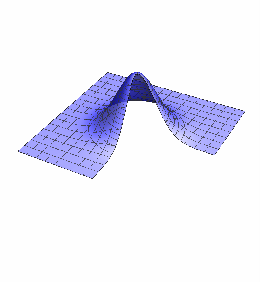
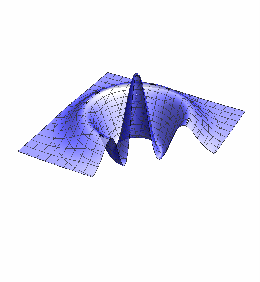
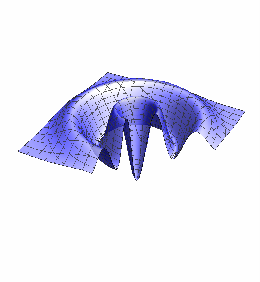
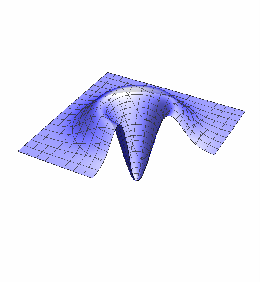
Figure 4: The variable-radius geometry of concentric Poincaré spheres, illustrating the interplay between coherence, decoherence, and Lorentz-type group symmetries in the polarization description of quantum light.
The connection to advanced quantum technologies—such as CV-based quantum information processing, quantum-enhanced measurements, and photonic quantum computing—is immediate. Future developments may exploit the group-theoretic approach to generalize phase-space symmetries for higher-dimensional and multimode entangled systems, as well as for engineered non-Gaussian states.
Conclusion
This paper rigorously develops a group-theoretic, phase-space-centric account of squeezed states of light and their Wigner representations, elucidating the interplay of canonical transformations, symmetries, and quantum correlations. The mathematical clarity, explicit calculations, and systematic treatment of phase-space structure will inform further investigations in quantum optics, quantum information, and the broader foundations of quantum theory.