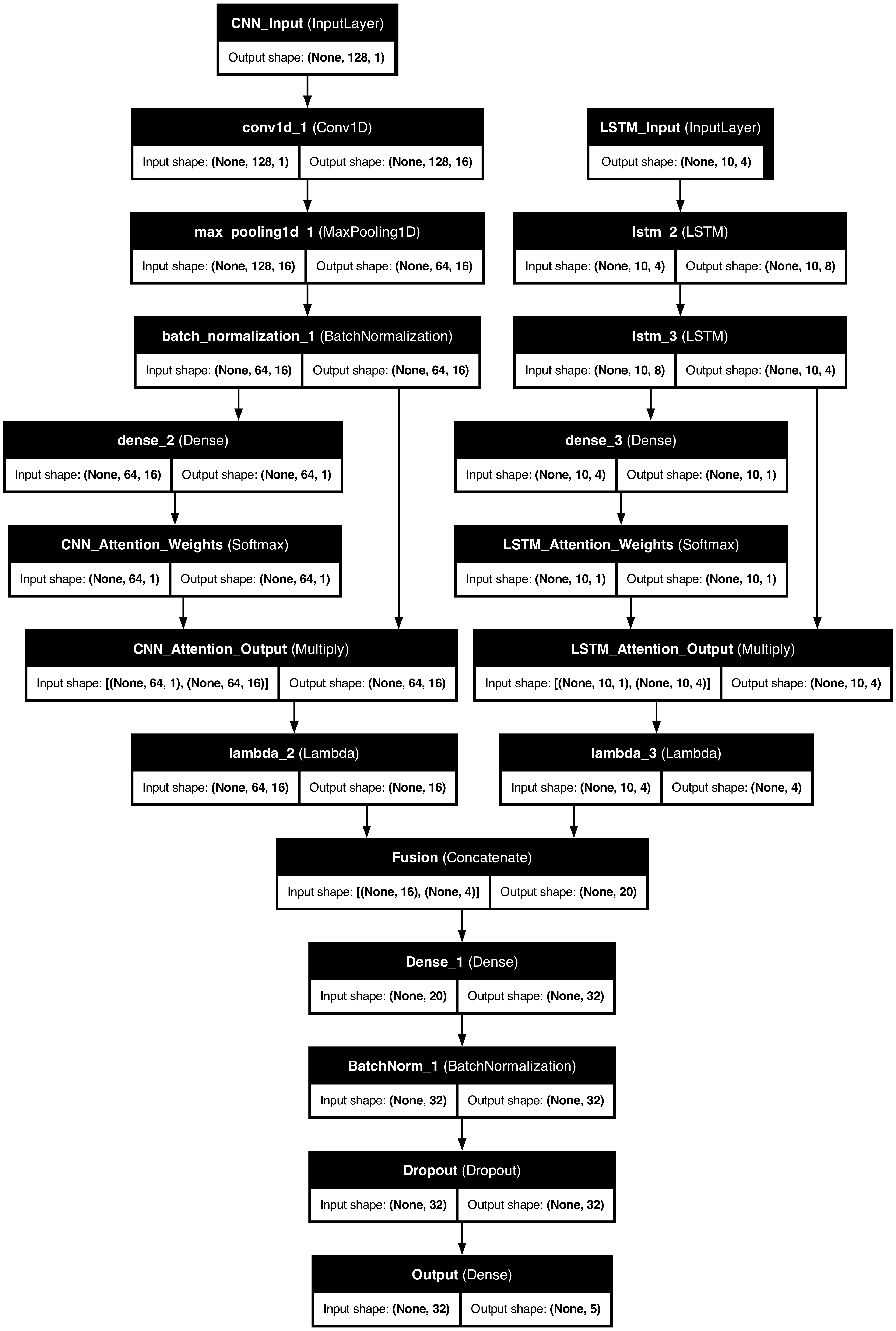
- The paper demonstrates a hybrid CNN+LSTM+Attention model that attains up to 78.5% within-subject accuracy, outperforming traditional classifiers.
- Methodology combines raw waveform CNN encoding with band-power sequence analysis through LSTM, enhanced by dropout and L2 regularization to mitigate noise.
- Implications include the potential for real-time cognitive load monitoring using consumer-grade EEG to enable adaptive feedback in online education.
Single-Channel EEG-Based Cognitive Load Estimation: A Hybrid Deep Learning Approach
Introduction
This work addresses the challenge of assessing cognitive load in online education using a single-channel consumer EEG device—specifically, the NeuroSky MindWave Mobile 2. The absence of real-time, face-to-face feedback in remote learning environments motivates the need for scalable, objective tools to monitor learner difficulties. Classical EEG-based protocols rely on multi-channel hardware and complex preprocessing, creating deployment barriers in educational settings. This study investigates whether a minimalist EEG setup, combined with modern deep learning architectures, can yield informative cognitive load estimates in naturalistic online learning environments.
Methods
Data Acquisition and Preprocessing
Data were sourced from Wang et al., consisting of EEG recordings from ten post-secondary participants as they viewed ten two-minute educational video clips of varying difficulty, rated both by predefined expert label and post-hoc self-reported confusion. One subject was excluded due to excessive noise, yielding nine subjects and 90 trials.
Raw EEG was captured at 512 Hz from a single frontal channel (FP1). The signal was segmented into short, non-overlapping windows; for each window, two parallel feature sets were extracted:
- The raw waveform segment for CNN-based encoding,
- A sequence of band-power vectors (delta, theta, alpha, beta) for recurrent modeling.
Device-generated summary features (such as proprietary attention indices) were discarded based on low variance and limited discriminative information. Standard time-domain features were retained for baseline classifiers.
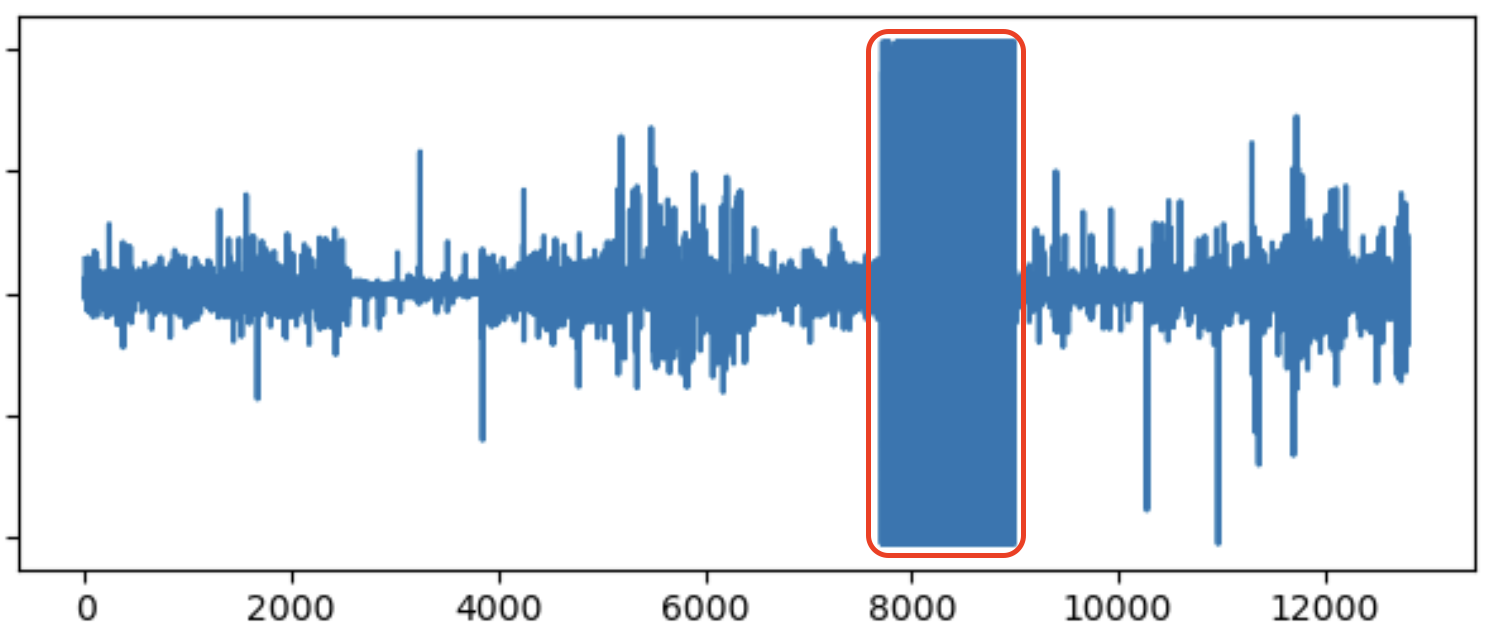
Figure 1: Raw single-channel EEG for excluded Subject #6, whose high-amplitude noise motivated removal from analysis.
Model Development
Baseline classifiers (Random Forest, XGBoost, SVM, Logistic Regression, KNN, etc.) operating on hand-crafted descriptors achieved limited predictive performance, with accuracy plateauing at approximately 55%. These results highlight the intrinsic difficulty of inferring cognitive states from low-dimensional, noisy data.
The primary methodological contribution is a hybrid dual-branch CNN+LSTM+Attention architecture:
Regularization and Evaluation
Given the small cohort and risk of overfitting, the model employs aggressive regularization: dropout and L2 penalties, combined with early stopping. Evaluation is primarily within-subject (train/test splits from the same subject), validated across multiple window sizes to balance temporal context and data diversity.
Results
Baseline machine learning models on handcrafted features performed only slightly above chance: the top validation accuracy peaked at 55% (Decision Tree, KNN, Logistic Regression). This underlines the limitations of shallow, feature-based approaches with low-sample and low-SNR data.
The hybrid CNN+LSTM+Attention model achieved a maximum within-subject accuracy of 78.5% using a 50-sample window (∼0.1 s), sharply exceeding baseline models. Despite this apparent improvement, overfitting signatures were pronounced in unregularized variants, with a persistent gap between training and validation curves.
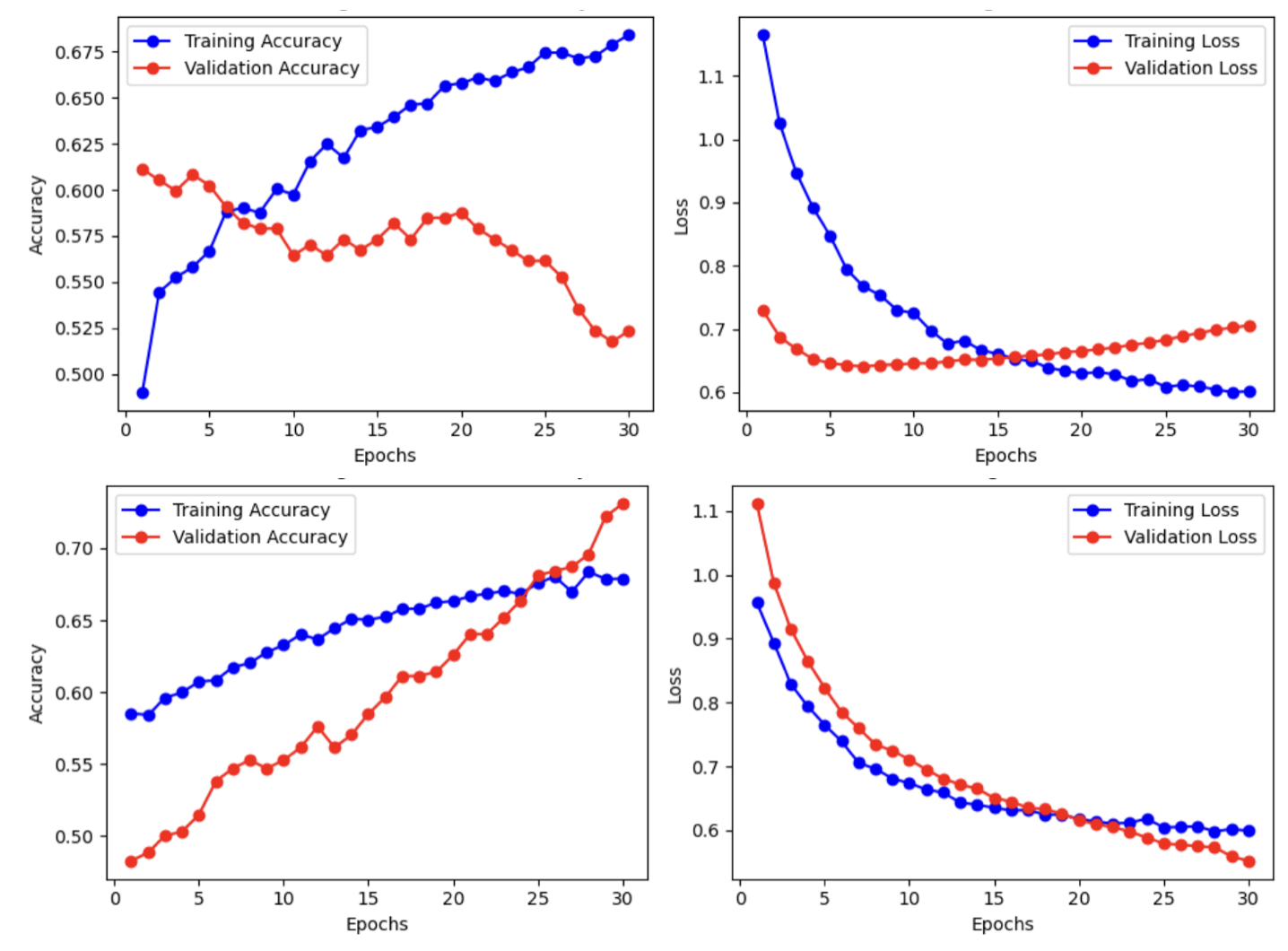
Figure 3: Training/validation accuracy and loss before (top) and after (bottom) regularization. Dropout and L2 shrink the train–validation gap and stabilize validation scores at approximately 68–73%.
Window-size analysis demonstrated that predictive accuracy peaked at 50 samples, suggesting a trade-off between temporal context and training set size. Larger window sizes reduced effective sample count due to increased padding; shorter segments lost informative signal structure.
Qualitative Visualization
A qualitative pipeline overlays cognitive load estimates as a heatmap along the video timeline, enabling segment-level inspection of cognitive effort. While not quantitatively validated for localization, this provides an intuitive interface for educators to synchronize content adaptations with putative cognitive bottlenecks.
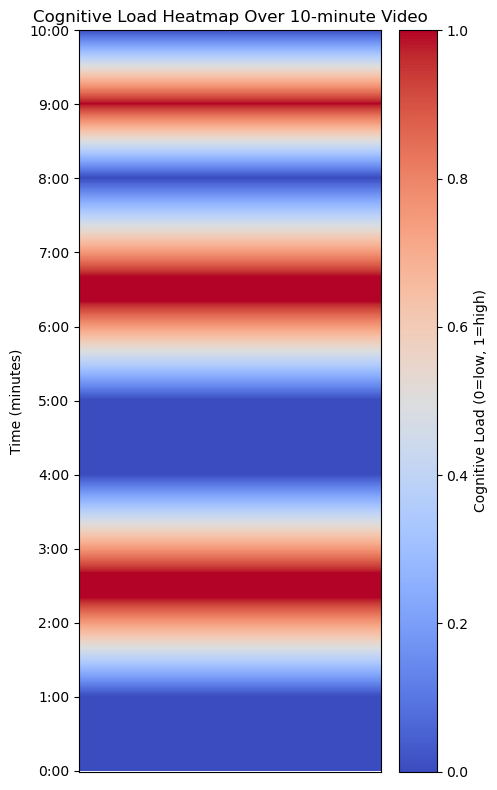
Figure 4: Cognitive-load heatmap visualization across a concatenated educational video, highlighting segmental variations in inferred mental effort.
Subject-Independence and Generalization
The authors emphasize that within-subject results are fundamentally optimistic: overlapping subject distributions in train/test splits facilitate memorization of idiosyncratic noise, not generalizable cognitive correlates. The correct evaluation for practical deployment is leave-one-subject-out (LOSO) cross-validation, paired with appropriate statistical baselines (majority-class, permutation testing). To address this, the authors release their full evaluation pipeline—including LOSO protocols and ablation tests—enabling reproducible generalization assessment on future, larger or more diverse datasets.
Implications and Future Directions
Practical Implications
This feasibility study suggests that single-channel EEG, when coupled with sophisticated temporal DL methods, can achieve non-trivial accuracy in detecting cognitive difficulty states. Consumer-grade hardware and notebook-based pipelines lower real-world barriers, making integration into online learning platforms conceivable for context-sensitive instructional feedback.
However, the limited sample size, reliance on within-subject validation, and the single-channel setup preclude claims of robust cross-user generalization. Thus, the tool currently functions as a proof-of-concept and exploratory instrument rather than a production-ready assessment technology.
Theoretical Implications
The results reinforce the view that hierarchical temporal modeling (combining CNNs, RNNs, and attention) outperforms classical classifiers on non-stationary biosignals, even when the input dimension is minimal. The attention mechanism's efficacy in EEG settings mirrors its successes in other sequential tasks.
The work also reiterates the necessity of subject-independent evaluation in physiological signal analysis to avoid overestimation of model performance—an issue that has pervaded small-sample BCI and affective computing literature. Establishing methodological best practices and releasing open pipelines is crucial for the community's progress toward replicable results.
Future Developments
To realize robust, generalizable EEG-based cognitive load estimation, several advances are warranted:
- Larger, more diverse datasets: scaling the sample size and demographics to cover broader neurophysiological variance.
- Multi-channel and multimodal inputs: combining additional EEG electrodes or integrating physiological/behavioral sensors to enrich cognitive state inference.
- Domain adaptation and augmentation: harnessing synthetic data and transfer learning to handle data scarcity and cross-domain adaptation.
- Interpretability and explainability: elucidating which EEG features most closely track cognitive effort, for actionable feedback.
- Real-time integration: embedding lightweight inference pipelines into synchronous educational systems for personalized content delivery.
Conclusion
This study demonstrates the technical feasibility of single-channel EEG-based cognitive load estimation using a hybrid CNN+LSTM+Attention model. The observed performance improvement over traditional approaches is contingent on within-subject evaluation and is not directly indicative of subject-independent generalizability. By providing an open, reproducible evaluation framework and visualization tool, the study sets the foundation for future work on robust, scalable neuroadaptive educational technology. The essential next step is rigorously quantifying subject-independent performance in larger, more heterogeneous cohorts, and expanding the modality space for improved cognitive state modeling.