- The paper presents a systematic taxonomy of human-AI teams by synthesizing 53 experimental studies using psychological team frameworks.
- It employs a PRISMA-guided scoping review and deductive content analysis to reveal significant operational diversity across various team types.
- The study challenges existing human team theories by illustrating that current human-AI teaming practices often lack unique and complementary roles.
Taxonomizing Human-AI Team Types: Operational Diversity, Methodological Rigor, and Conceptual Implications
Introduction and Motivation
The definitional and conceptual ambiguity surrounding "human-AI teaming" has impeded synthesis and progress across the literature. "What Types of Human-AI Teams Exist?" (2607.02198) addresses this ambiguity through a scoping review and deductive content analysis of experimental studies in the domain, systematically categorizing extant research using psychological team taxonomies. The study's primary goals are (i) to elucidate the operational diversity of human-AI teams as they are instantiated in empirical studies, (ii) to provide guidance for more precise reporting and synthesis, and (iii) to challenge the notion of definitional coherence in the field by highlighting strong heterogeneity in both team structures and underlying theoretical commitments.
Methods: Systematic Review and Taxonomic Coding
The methodology combines a PRISMA-guided scoping review (Figure 1) with taxonomic coding based on Wildman et al.'s team classification framework. The initial literature set was drawn from major technical libraries (ACM, IEEE, Web of Science), resulting in 552 candidate papers, reduced to a core of 53 experimental studies following rigorous inclusion/exclusion criteria, focused strictly on those self-labeling as "Human-AI Teaming" studies.
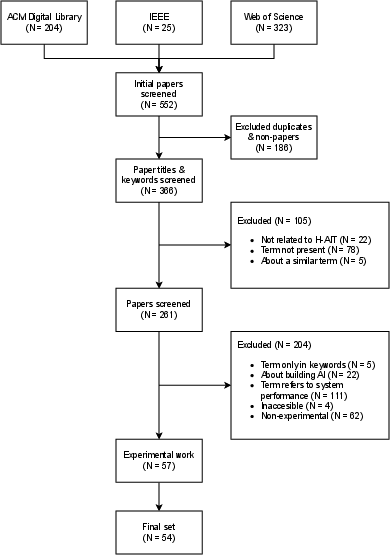
Figure 1: Paper screening process following the PRISMA method.
Subsequent deductive content analysis encoded each study along taxonomic dimensions: task-level (defined/ill-defined problem-solving, psychomotor action, managing/advising, etc.) and team-level (interdependence, role structure, leadership structure, communication, physical distribution, life span). This framework distinguishes both the micro-level division of labor and the macro-level organizational structure, allowing systematic clustering and comparison of operational team types.
Empirical Landscape of Human-AI Teaming
The review documents a marked increase in "human-AI teaming" experimental outputs over the past several years (Figure 2). Domains are diverse but heavily weighted toward gaming, classification, and safety-critical environments (aviation, military, healthcare) (Figure 3). Empirical instantiations are overwhelmingly one-human/one-AI pairings, with multi-human/multi-AI teams being comparatively rare (Figure 4). This quantitative mapping reveals that while the term "teaming" is broadly applied, experimental paradigms are highly skewed in their operationalization.
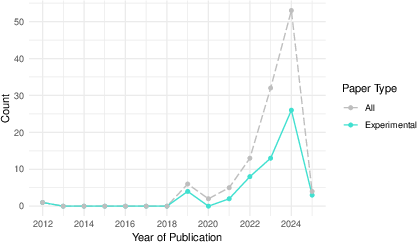
Figure 2: The publication frequency of papers that use the term Human-AI Teaming in the title or keywords. The blue line represents experimental studies, of which 54/57 are analysed in this paper.
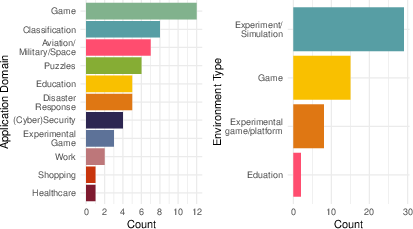
Figure 3: The type of application domain (left) and type of experimental environment (right) for the experimental studies.
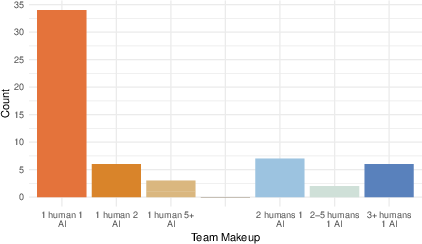
Figure 4: The number of humans and AI present in the experimental studies. Note that four papers contained experimental conditions with 1 human 2 AI as well as 2 humans 1 AI; these were split to create an overall number of 58.
In terms of tasks, the bulk of studies utilize defined/ill-defined problem solving, with a complementary structure: humans more often perform management roles while AIs are frequently cast as advisors (Figure 5).
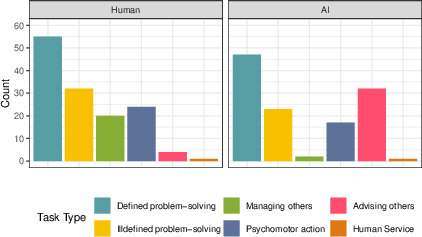
Figure 5: A bar chart showing the different task level characteristics for each paper, separated by human and AI teammates.
Taxonomic Classification: Five Canonical Team Types
Clustering along team-level axes surfaces five dominant "sub-types" of human-AI teams, each with distinct implications for the application and validity of cross-study generalizations. The key differentiating factors are the patterns of interdependence (sequential, reciprocal, intensive), role structure (functional vs divisional), leadership (designated vs distributed), and communication architecture.
Team Type 1: AI Assistant
This is the modal configuration in the field. The structure is that of a functionally differentiated, sequentially interdependent dyad, with the human in the designated leadership role and chain communication. The AI acts as a recommender; the human decides. Notably, 18/53 studies instantiate this paradigm (Figure 6). The field's insights about "teaming" are often derived from these assistant configurations, which may not generalize to more distributed or intensive team-based interactions.
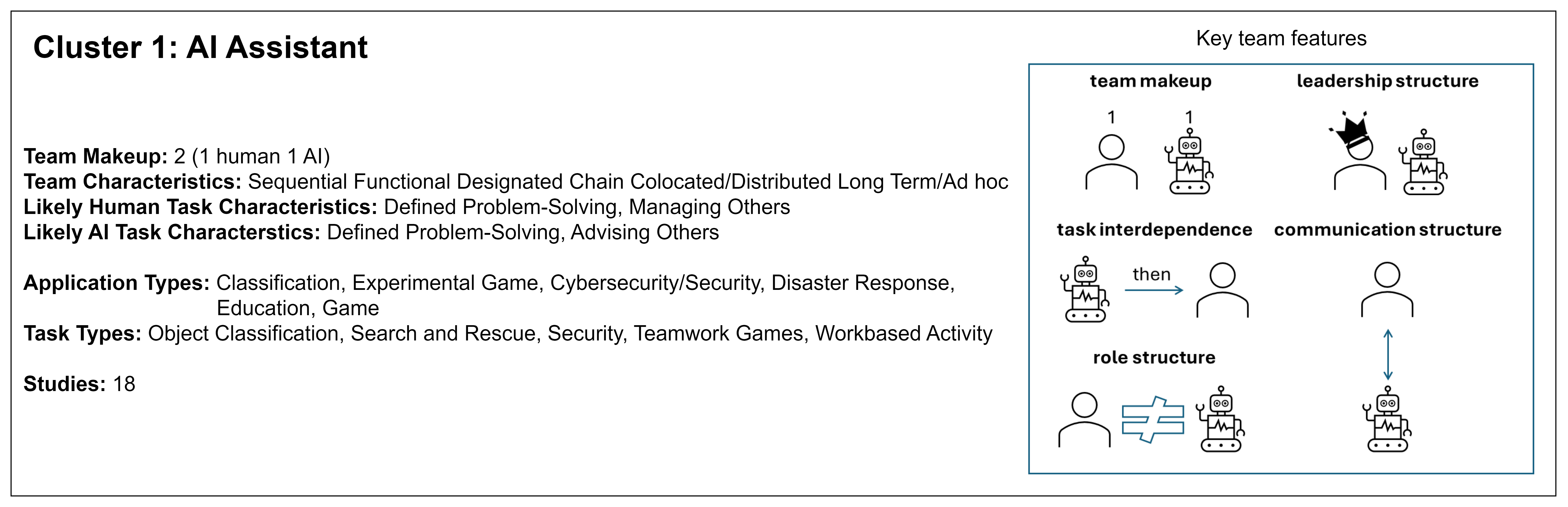
Figure 6: A summary of the AI Assistant sub-type of Human-AI Teaming.
Team Type 2: Ad hoc Dependency
Characterized by ≥3 heterogeneous team members (human and AI), intensive interdependence, functional role specialization, distributed leadership, and star (fully connected) communication. Such teams model collaborative, co-active interaction, often in safety-critical or highly strategic settings (Figure 7).
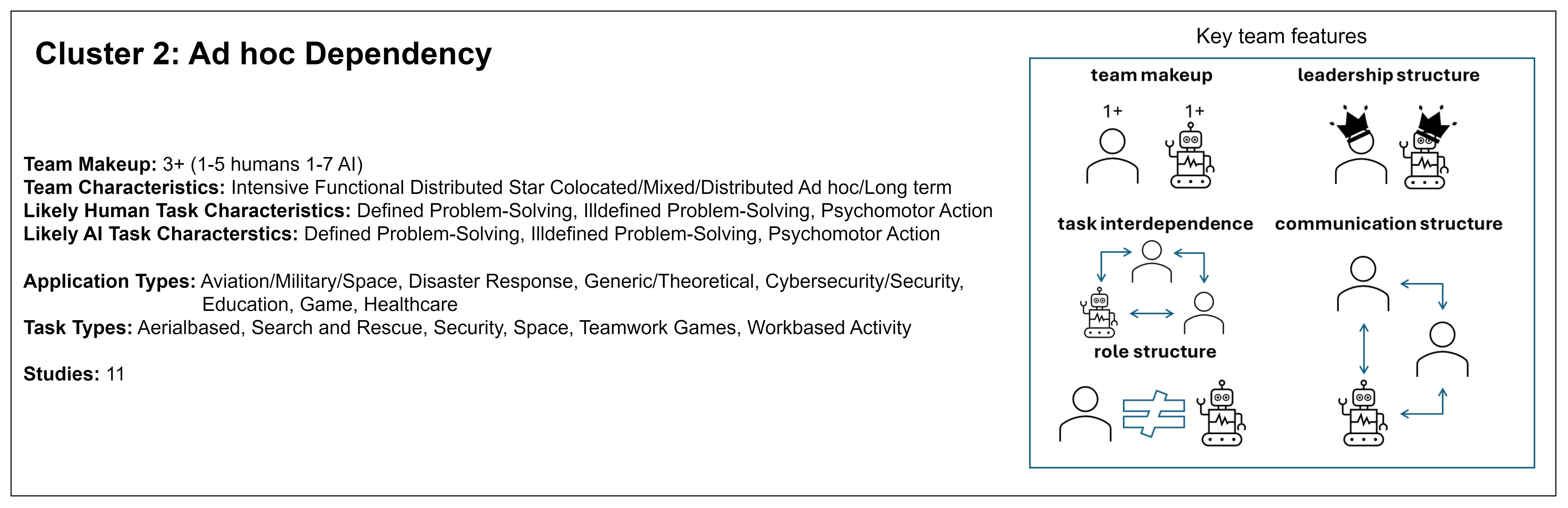
Figure 7: A summary of the Ad hoc dependency team sub-type of Human-AI Teaming.
Team Type 3: Ad hoc Forced Dependency
A dyadic structure, but with reciprocal interdependence—actors depend explicitly on each other's actions across multiple stages in a task, roles remain functionally distinguished, and leadership is designated (Figure 8). Importantly, this cluster involves scenarios where neither agent can complete the task alone, a stronger operationalization of ‘teaming’ than seen in AI Assistant teams.
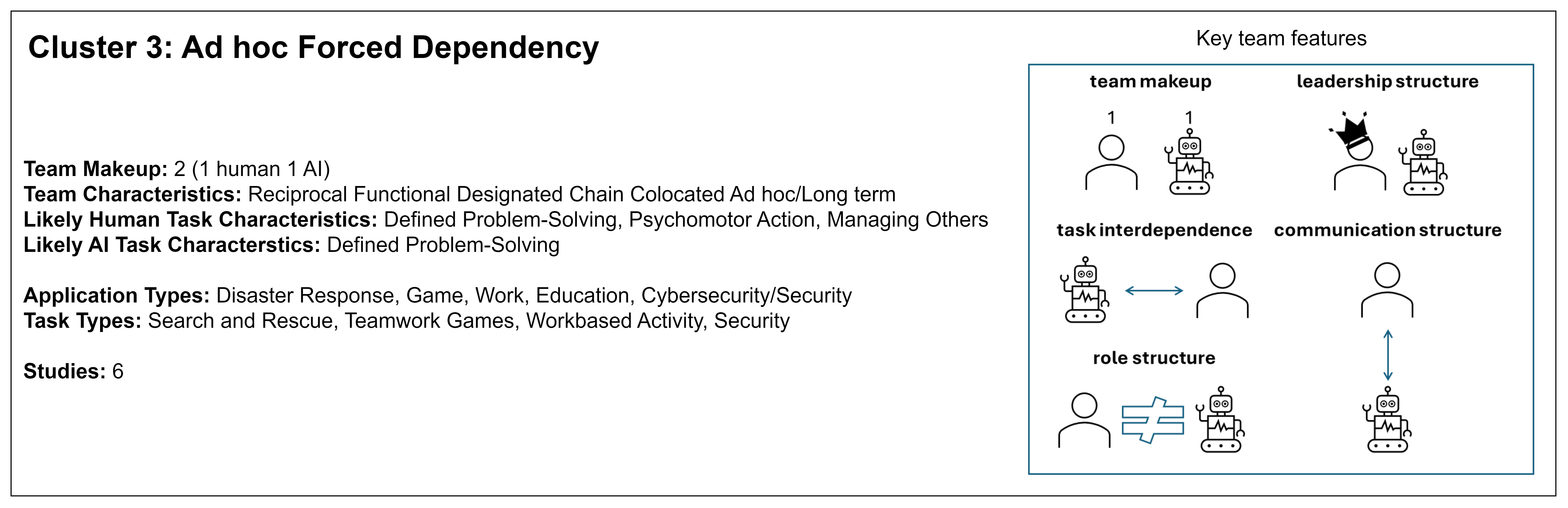
Figure 8: A summary of the Ad hoc forced dependency team sub-type of Human-AI Teaming.
Team Type 4: Paired Equanimity
Consists of two agents performing the same (divisional) roles, with reciprocal interdependence, distributed leadership, and star communication (Figure 9). Both human and AI engage symmetrically in the task, e.g., co-controlling entities in collaborative games. This configuration challenges the assertion that "unique and complementary capabilities" are a requirement for human-AI teams.
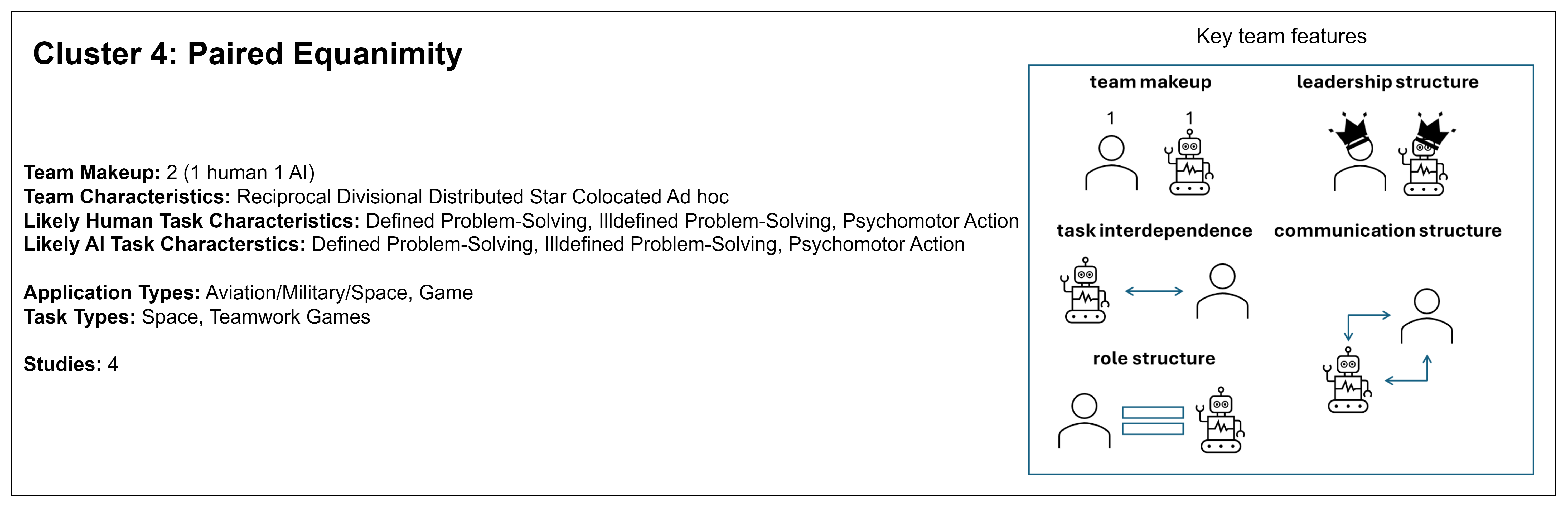
Figure 9: A summary of the paired equanimity team sub-type of Human-AI Teaming.
Team Type 5: Group Equanimity
A multi-agent generalization of Team Type 4 featuring three or more team members, intensive interdependence, divisional roles, and distributed leadership/star communication (Figure 10). This cluster further undermines the notion that complementary, non-interchangeable roles are essential for ‘teaming’ as practiced in current experimental research.
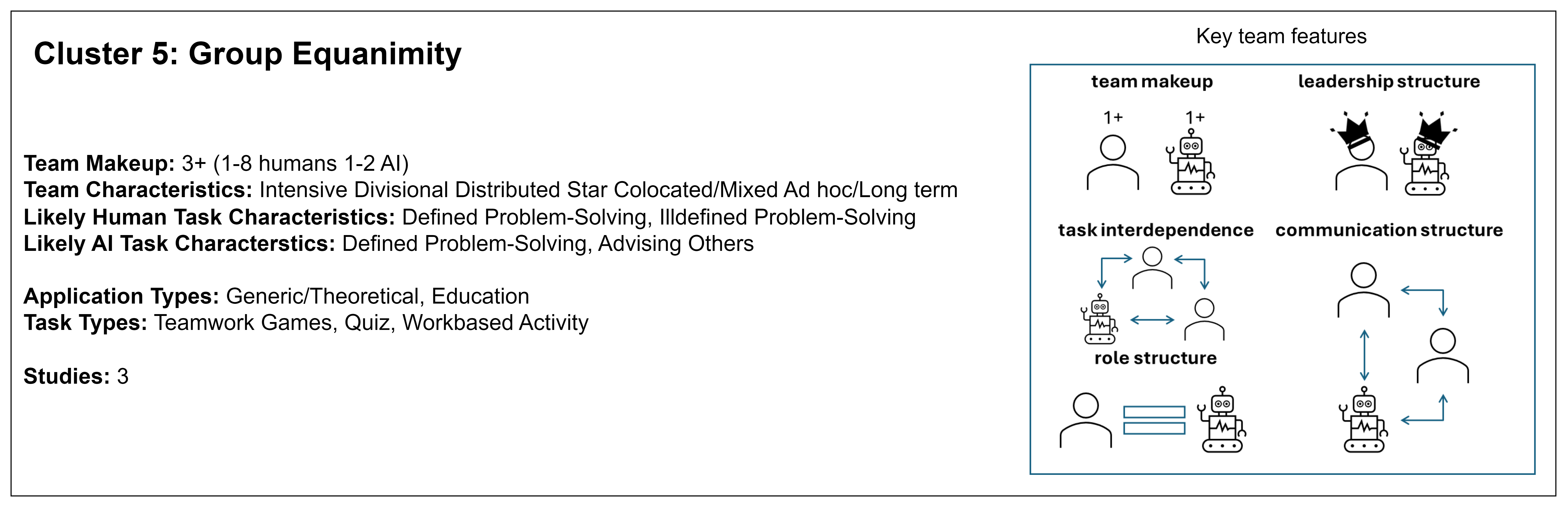
Figure 10: A summary of the Group Equanimity team sub-type of Human-AI Teaming.
Conceptual and Theoretical Implications
The review’s operational taxonomy reveals that "human-AI teaming" in practice encompasses structurally and functionally divergent systems, many of which do not align with canonical theoretical definitions. For example:
- Lack of Interchangeability: Team Type 1 is functionally identical to decision support or "AI-as-tool" systems with only a minimal gloss of "teaming," challenging the value of cross-applying insights from genuine collaborative teams.
- Absence of Complementarity: Team Types 4 and 5 instantiate divisible, interchangeable roles violating the asserted necessity of "unique and complementary" agent capacities, contradicting current theoretical formulations of human-AI teaming.
- Leadership and Interdependence Divergence: No studies embody pooled interdependence or external manager leadership—dimensions included in human team theory but almost never instantiated in human-AI team experiments.
- Consequent Lack of Transferability: Given these systematic differences across clusters, insights or ‘best practices’ derived from one human-AI team type are rarely directly transferable to others, especially those differing in leadership, role division, or interdependence regimes.
These findings expose a critical limitation of modern reviews and position papers: meta-analytic or generalized recommendations are substantially compromised by underlying operational heterogeneity.
Guidance for Future Work and Reporting Standards
The paper proposes a structured checklist for specifying the team characteristics in future human-AI team research. Taxonomic rigor and explicitness will be necessary for valid synthesis, regulatory clarity, comparative evaluation, and for the development/assessment of accompanying assurance or safety cases in safety-critical applications.
Furthermore, the authors make a strong claim that current theoretical importation from human team psychology is insufficient and often misleading in the AI context. Human-AI teams may require new, AI-specific taxonomies to account for fundamental differences in agency, accountability, and organizational structure that arise from machine participation.
Conclusion
This work provides a robust, operationally instantiated taxonomy of human-AI teams as currently studied. It demonstrates that research using the "teaming" moniker is not monolithic and that the major experimental paradigms diverge markedly in both structure and epistemic claims. The theoretical, methodological, and practical implications are non-trivial: synthesis across the "human-AI teaming" literature is not valid without explicit attention to underlying taxonomic heterogeneity. Addressing this problem will require the development of new reporting standards and potentially the formulation of AI-specific team theories moving beyond simple adaptation of human-team psychology.