- The paper introduces a neuro-symbolic approach that decouples neural perception, probabilistic modeling, and symbolic reasoning to enhance UAV landing-site assessment.
- It employs an INT8-quantized SegFormer-B0 and builds a Probabilistic Semantic Scene Graph to execute explicit, rule-based safety decisions.
- The system outperforms baselines in simulated scenarios while maintaining real-time, edge deployment on embedded UAV platforms.
NeuroSymLand: Neuro-Symbolic Landing-Site Assessment for Robust UAV Autonomy
Introduction and Motivation
Autonomous UAV operation in unstructured real-world environments necessitates robust landing-site assessment (LSA) under perceptual uncertainty, variable terrain, occlusions, and mission-dependent constraints. Prevailing learning-based approaches for marker-free LSA offer geometric and semantic hazard detection but often conflate perception with safety logic, compromising interpretability and adaptability. Moreover, black-box LLM/VLM solutions hinder deterministic certification and embedded deployment due to their runtime unpredictability and compute demands.
NeuroSymLand(2607.02277) addresses these limitations by explicitly decoupling neural perception, probabilistic world modeling, and fully symbolic mission-level reasoning. The framework constructs a Probabilistic Semantic Scene Graph (PSSG) from lightweight segmentation, then applies Scallop-based rule inference to execute explicit, reconfigurable safety policies. This architecture is engineered for edge deployment, ensuring bounded latency and resource utilization on embedded UAV platforms.
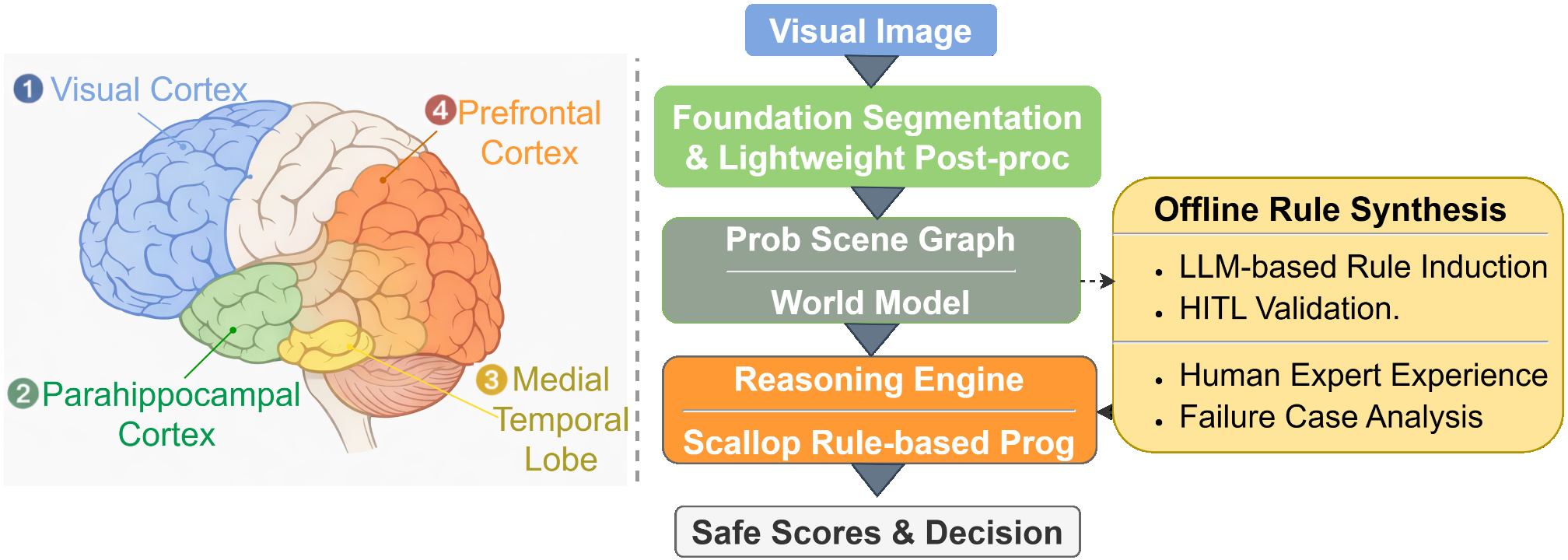
Figure 1: Functional correspondence between brain systems and a perception-world modeling-reasoning architecture with offline cognitive control.
System Architecture
NeuroSymLand’s pipeline comprises three modular layers: perception, world modeling, and symbolic reasoning. It leverages an INT8-quantized SegFormer-B0 for semantic segmentation coupled with geometric post-processing. Regions and attributes are deterministically extracted and embedded into a PSSG, where nodes encode objects (with attributes such as flatness, area, semantic class) and edges indicate spatial or semantic relations (e.g., adjacency, containment, proximity).
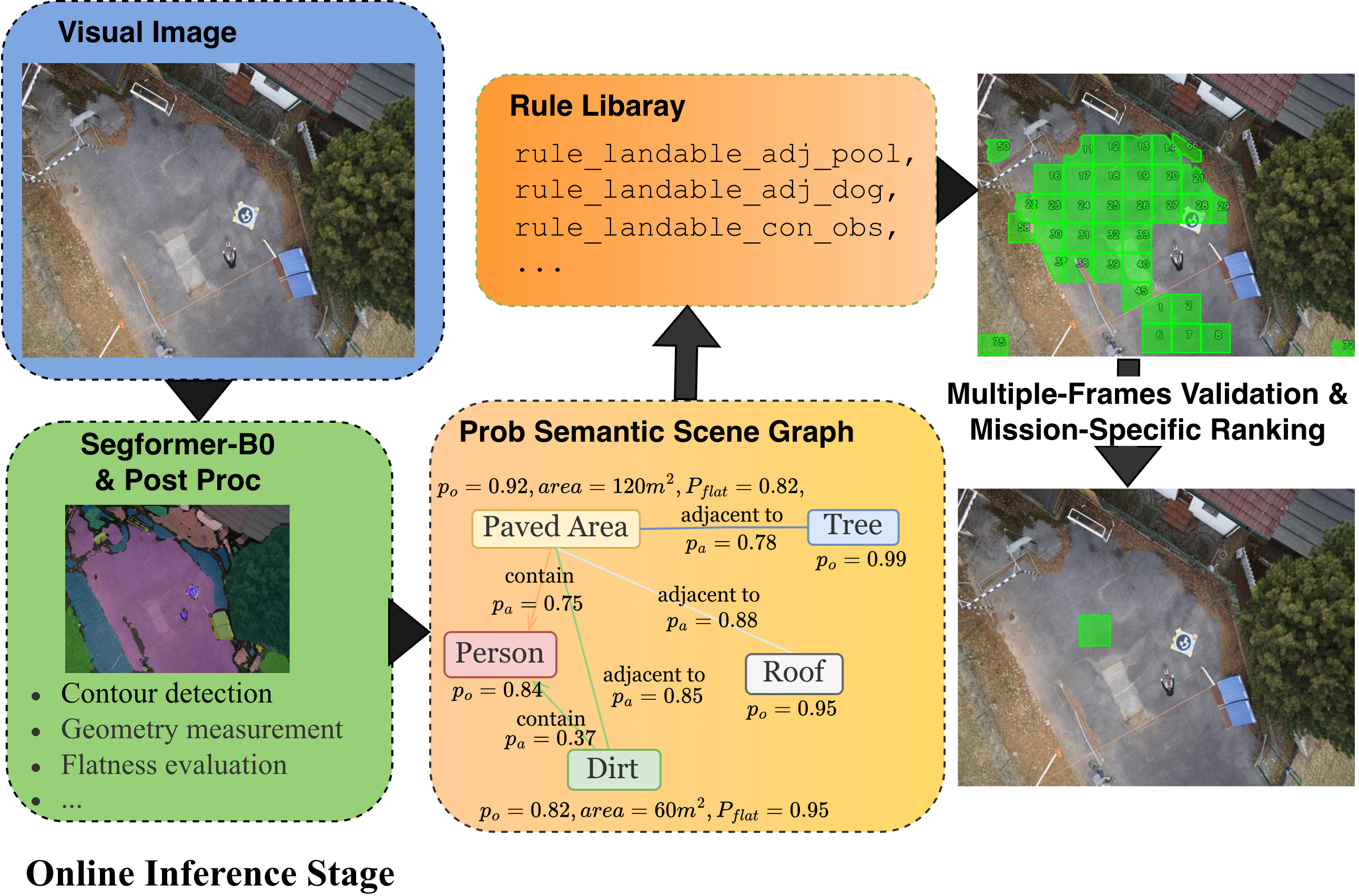
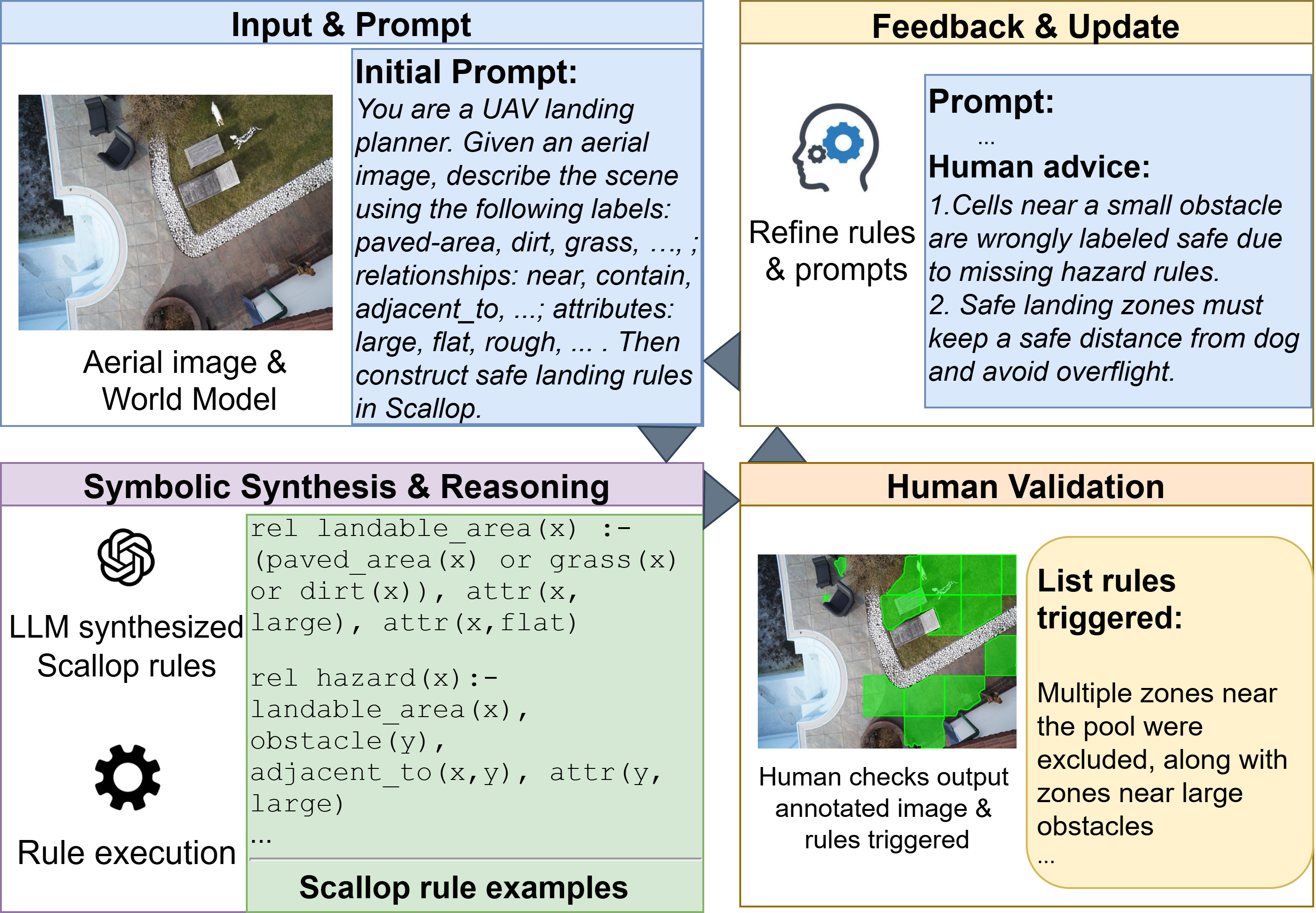
Figure 2: Online inference in NeuroSymLand segments visual inputs, builds a PSSG, filters unsafe regions via symbolic rules, and produces interpretable landing decisions through mission-specific ranking.
World-model construction and schema are fixed and unified across perception and reasoning stages, enabling algorithmic auditability and stable PSSG-based facts. The symbolic reasoning engine, implemented in Scallop, consumes only these facts; it executes a Datalog-style logical program wherein safety and hazard inferences, together with provenance traces, are strictly determined by explicit rules authored and refined offline.
Human-in-the-loop (HITL) rule synthesis integrates LLM support exclusively during offline rule authoring and debugging, allowing domain experts to augment or modify rules based on observed edge cases or mission reconfigurations. The deployed system executes entirely without LLM backing at runtime, thus supporting deterministic and certifiable inference.
Symbolic Reasoning and Mission-Specific Adaptation
NeuroSymLand’s rule engine operates over the PSSG, inferring region-level hazard and safety using multi-clause, weighted rules reflecting geometric, semantic, and relational constraints (e.g., "flat, obstacle-free, distant from people"). Temporal robustness is ensured via multi-frame validation—regions must exhibit both semantic and geometric stability over a temporal window to be admissible.
Final selection applies a mission-conditioned utility that adapts candidate ranking to task priorities (e.g., maximizing safety, minimizing distance in rescue scenarios). Only candidates passing symbolic safety gates are ranked; the mission utility acts as a post-filter to trade off admissible features under different operational contexts.
Evaluation: Effectiveness and Efficiency
Landing Assessment Robustness:
Across 72 simulated AirSim scenarios, NeuroSymLand registered 61 successful LSA outcomes, outperforming all baselines—PEACE (57), SafeUAV (47), and LLMExplain (37). The ablation replacing probabilistic reasoning with deterministic FOL (DetFOL) yielded 58 successful assessments, underscoring the incremental value of probabilistic logic over strict FOL in noisy or ambiguous scenes. Notably, strong safety margins (MOD) were maintained despite perceptual uncertainty; performance constraints were predominantly dictated by upstream world-model errors rather than reasoning failures.
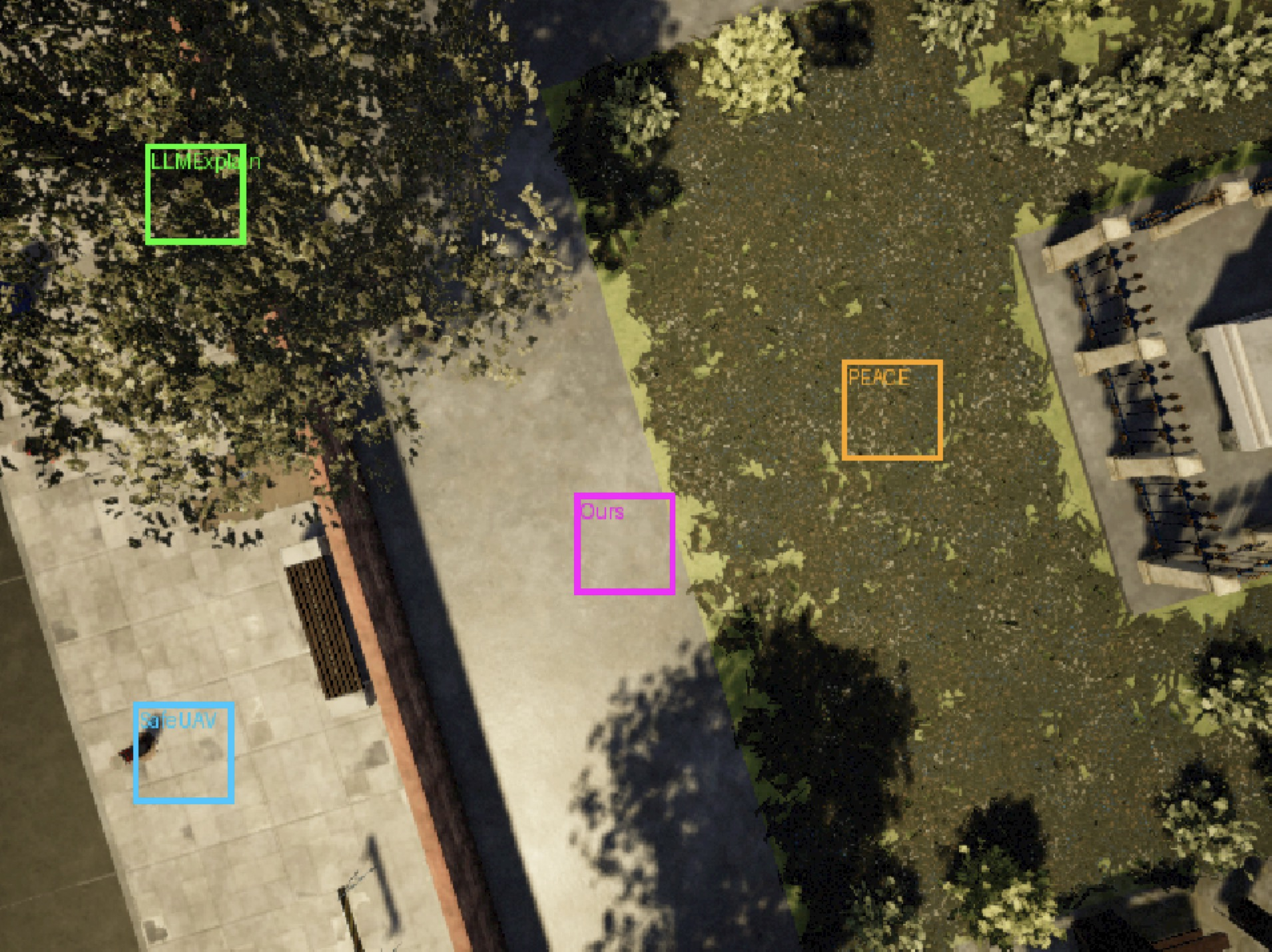
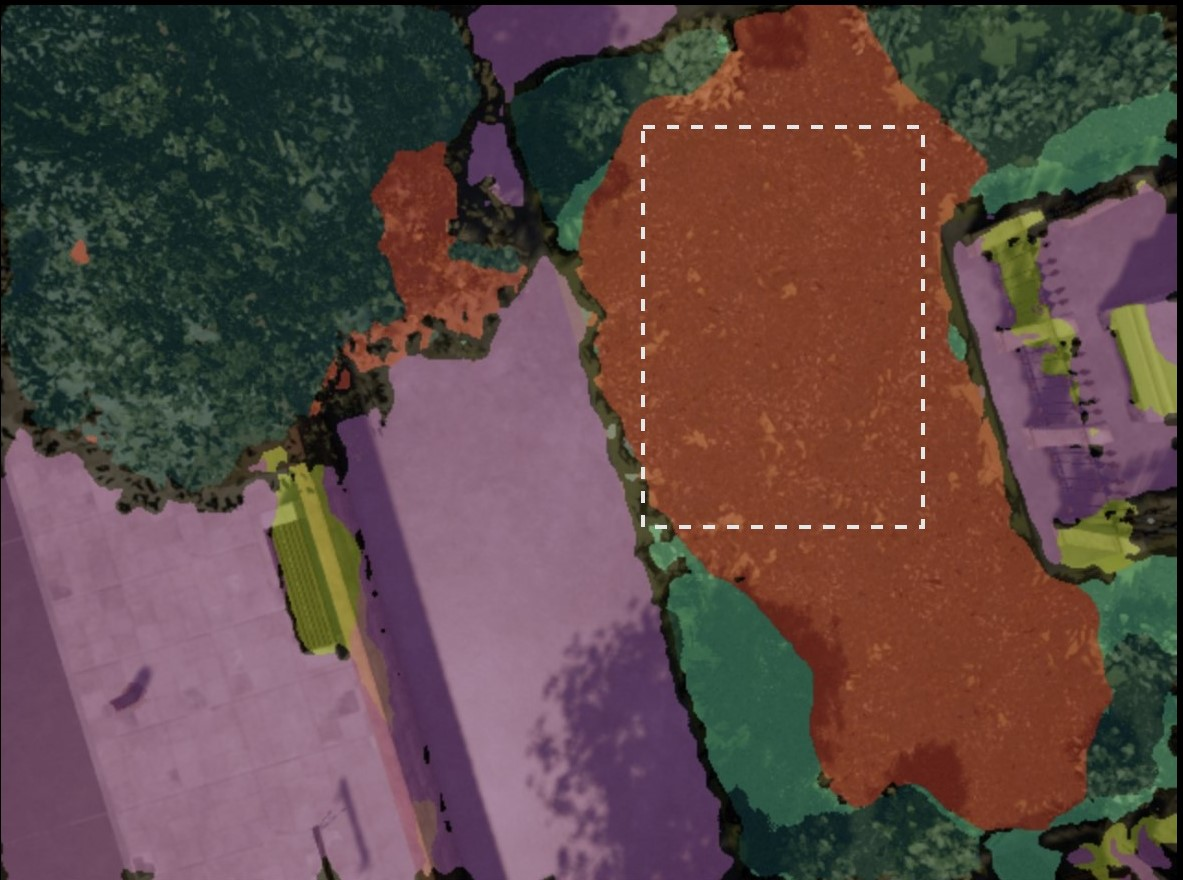
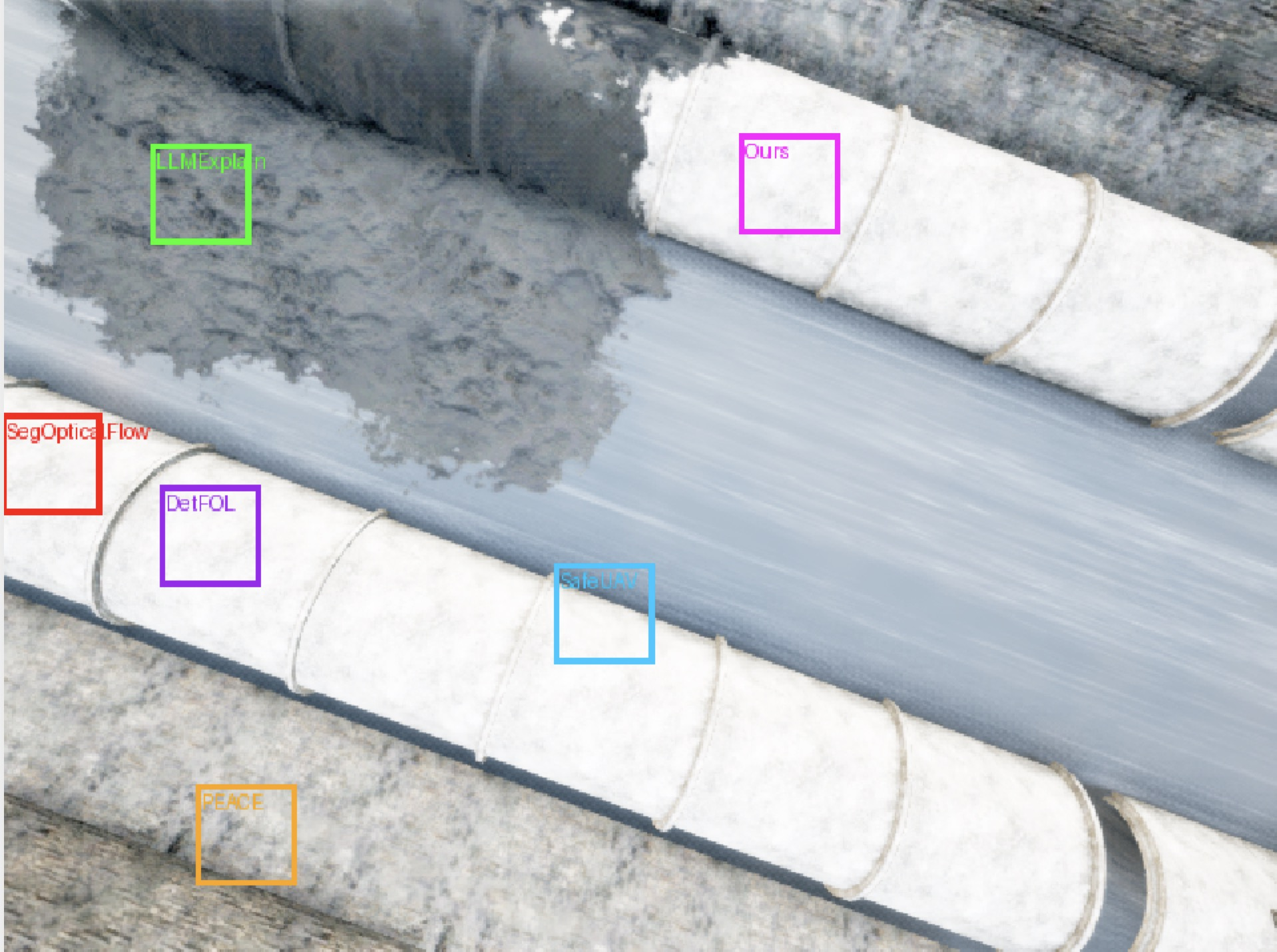
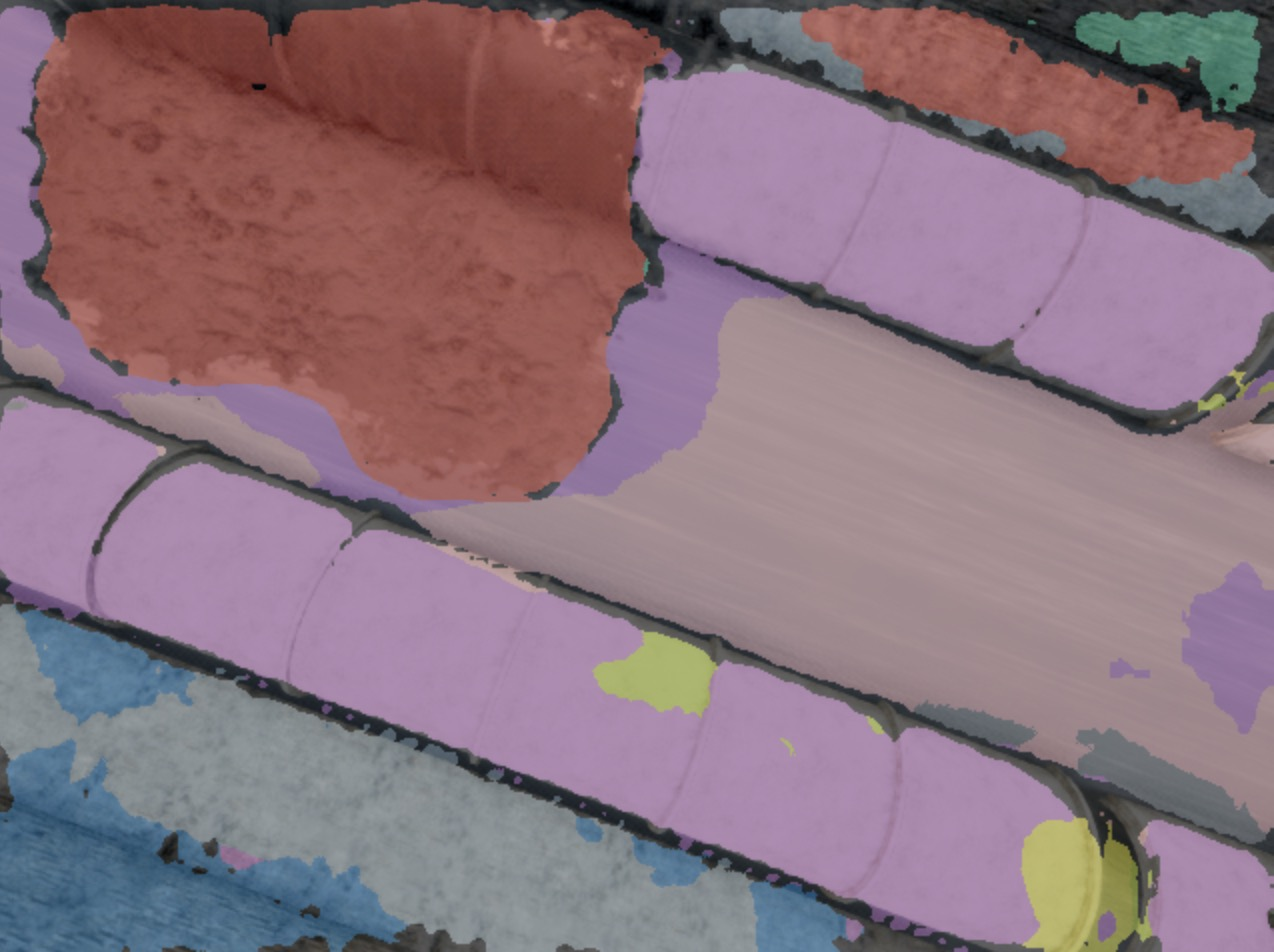
Figure 3: Success (RGB).
Qualitative analysis further revealed that rule-based disambiguation enabled stability under fragmented or spurious semantic labeling, whereas black-box or mask-driven pipelines exhibited erratic behavior due to lack of relational reasoning.
Embedded Edge Deployment:
On Jetson Orin Nano, the end-to-end stack executed with a median frame latency of 1.04 s, where over 94% of computational cost was due to perception and PSSG construction. Symbolic reasoning contributed less than 2% of latency (20 ms/frame), verifying its suitability for real-time, onboard safety-critical tasks. Memory, thermal, and power consumption were consistently within platform envelope. Competing hybrid or LLM-driven contenders could not execute within embedded resource bounds.
Interpretability and Mission Adaptation
NeuroSymLand's design confers explicit interpretability: every landing decision is traceable to the exact set of symbolic rules and grounded PSSG predicates triggered. Mission logic can be adapted by offline rule edits and mission score weight modification, with no need for neural module retraining or end-to-end model redeployment.
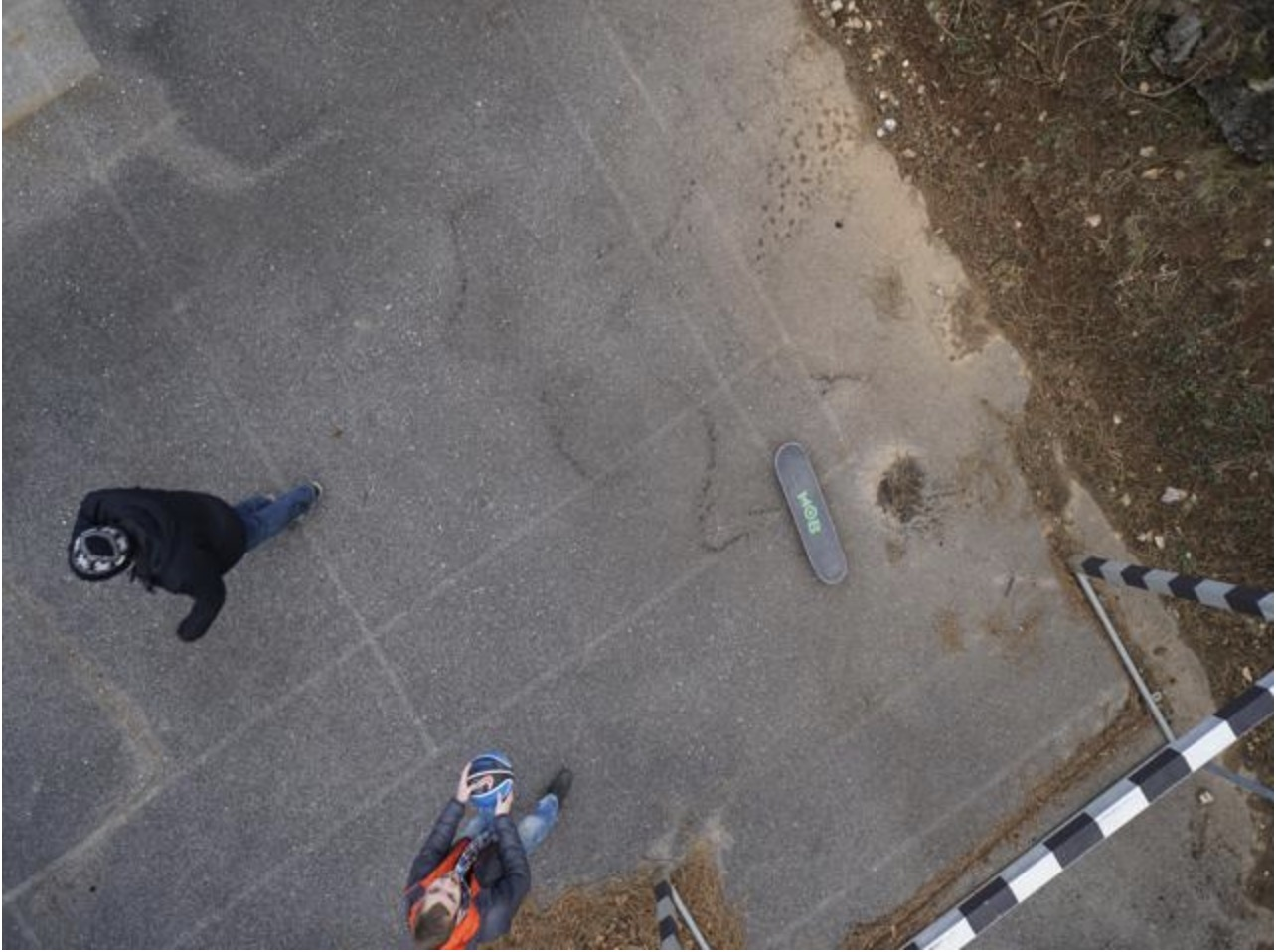
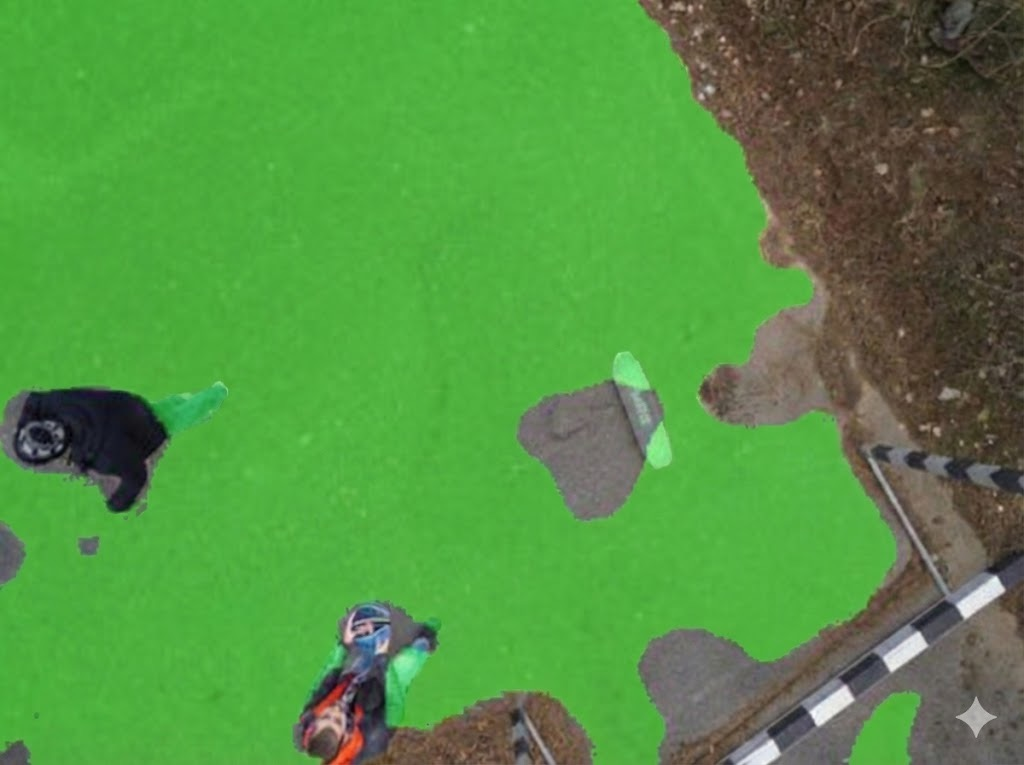
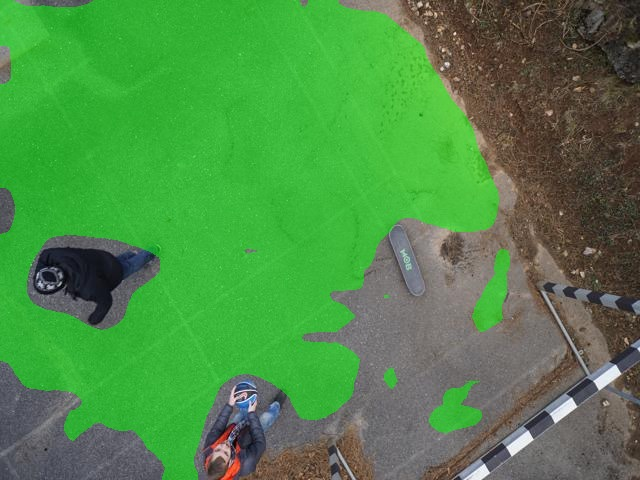
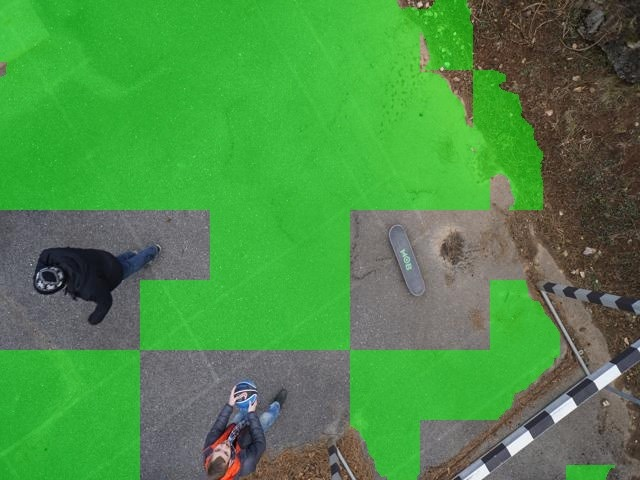
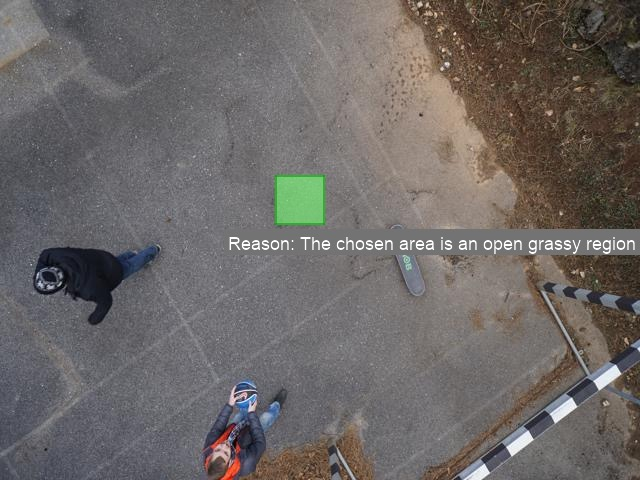
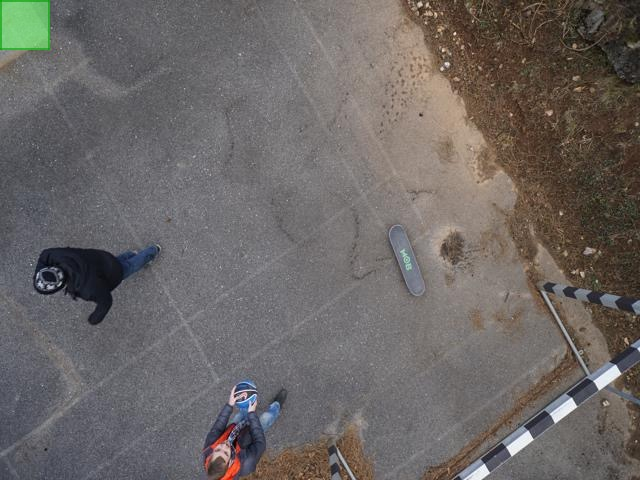
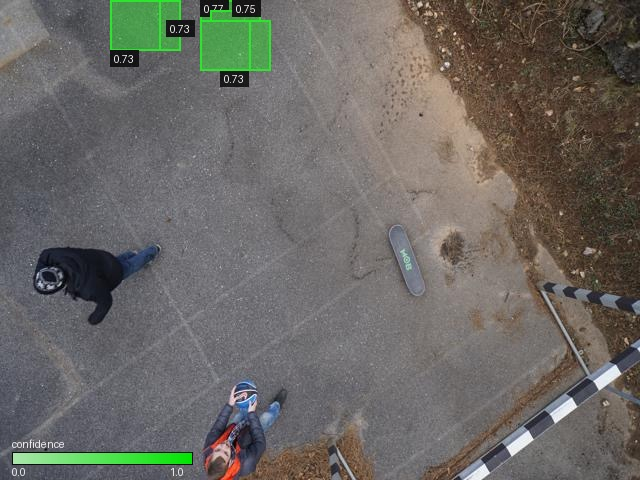
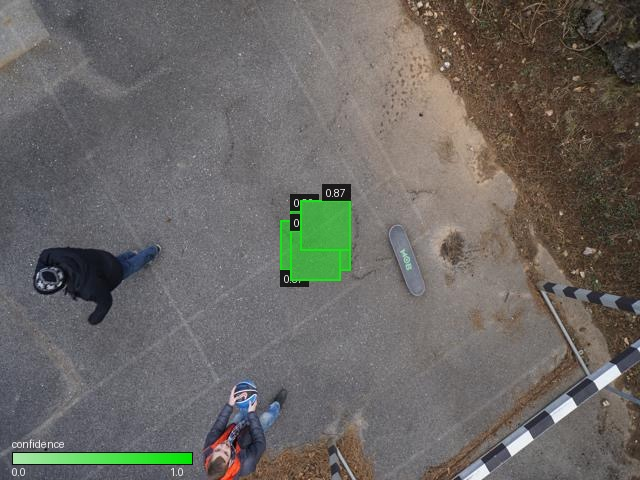
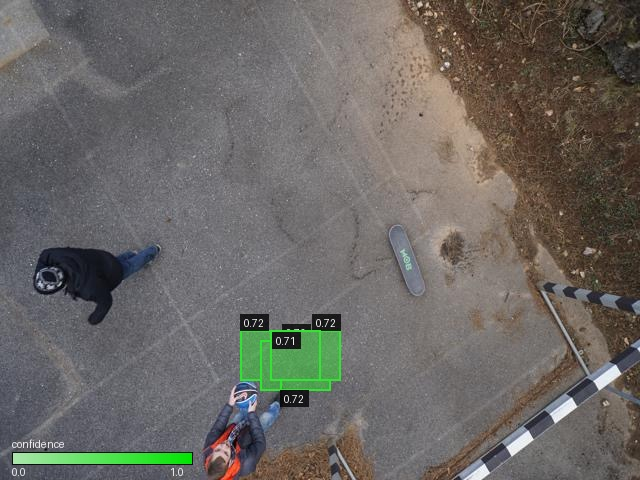
Figure 4: Qualitative comparison on an AirSim scene. NeuroSymLand adapts landing decisions to distinct mission contexts via symbolic reasoning over a fixed world model, contrasting with learning-based or opaque explainable baselines.
Empirical case studies demonstrated compliance with mission profiles (safe/emergency/rescue), with rule-level attributions mapping decision shifts to explicit changes in rule triggers (e.g., proximity to persons/obstacles/walls).
Limitations and Future Directions
NeuroSymLand's ultimate reasoning fidelity is upper-bounded by the quality of the PSSG; segmentation or taxonomy errors propagate deterministically into symbolic inference, limiting the recoverability of safety decisions. Scenario diversity in evaluation centered primarily on static geometry and moderate dynamics; generalization to highly dynamic or visually degraded settings remains an open avenue.
Future research should address:
- World-model enhancement: Improved uncertainty calibration, outlier detection, and integration of additional sensing modalities
- Temporal and dynamic reasoning: Extension of rule sets to capture short-horizon dynamics, moving hazards, and anticipatory safety assessment
- Incremental world-model updates: Efficient online PSSG updates to further reduce latency without accuracy loss
- Closed-loop UAV control integration: Full-system validation in real-world autonomous landing, encompassing state estimation and flight control
Conclusion
NeuroSymLand establishes a principled neuro-symbolic architecture for landing-site assessment in UAV autonomy, achieving high robustness, auditability, and edge deployability. By separating perception, world modeling, and symbolic reasoning, it delivers explicit, interpretable safety logic amenable to mission adaptation and deterministic verification. This separation provides a template for transparent, certifiable autonomy stacks that remain tractable for field deployment and regulatory oversight, while highlighting the persistent challenge of ensuring world-model correctness as the foundation of autonomy.