- The paper proves that any irreducible, non-cyclic homomorphism between braid groups is centrally equivalent to the identity, except for the known quartic-to-cubic Ferrari case.
- It demonstrates that nontrivial holomorphic maps between configuration spaces are affine equivalent to the identity when n ≥ 5, ensuring a strong rigidity property.
- The study leverages Nielsen–Thurston theory and canonical reduction systems to resolve longstanding conjectures and delineate possible symmetry breaking in these spaces.
Rigidity Phenomena for Maps Between Configuration Spaces
Introduction and Problem Context
The configuration space $#1{n}$ of n unordered points in the complex plane, quotiented by affine transformations, exhibits deep rigidity properties both at the level of its topology (via braid groups) and holomorphic geometry (via maps between configuration spaces). The paper establishes strong classification theorems for both group homomorphisms Φ:Bn→Bm (where Bn denotes the braid group on n strands) and holomorphic maps Ψ:#1{n} \to $#1{m}$, resolving and sharpening several longstanding conjectures and open problems.
Central results determine that, with precise and sharp exceptions, any irreducible and non-cyclic homomorphism Φ:Bn→Bm (for n≥5,m≥3) must, up to automorphisms and central factors, be the standard isomorphism Bn≅Bn, and that any nontrivial holomorphic map between configuration spaces must come from the identity (again, modulo affine automorphisms), unless n0, corresponding to the classical Ferrari (quartic-to-cubic) map.
Braid Groups, Mapping Class Groups, and Configuration Spaces
The correspondence between configuration spaces and braid groups is formalized via n1 and mapping class groups. For n2, the configuration space n3 is a complex manifold whose fundamental group is n4, isomorphic to n5, the mapping class group of the n6-times punctured disk. Standard generators n7 are realized as half-twists, permuting pairs of punctures; their relations encode the full Artin braid group structure.
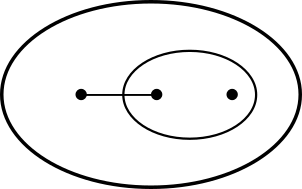
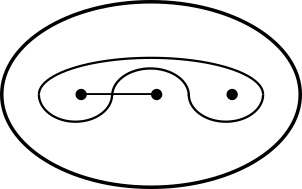
Figure 1: The effect of the half-twist n8 on a curve n9 in Φ:Bn→Bm0, visualizing the geometric braid action.
Special elements such as Φ:Bn→Bm1 (a full rotation of the punctures) and Φ:Bn→Bm2 (rotation fixing a puncture) articulate the group’s center and periodic elements, while the abelianization is isomorphic to Φ:Bn→Bm3, reflecting the total winding number. This structure is crucial for the reduction of the main theorem to statements about central equivalence (modulo the center).
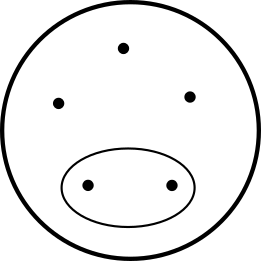
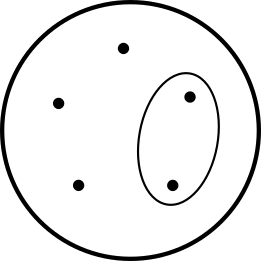
Figure 2: The standard central root Φ:Bn→Bm4 moving the punctures by a rotation.
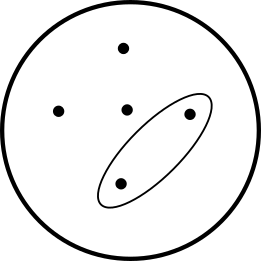
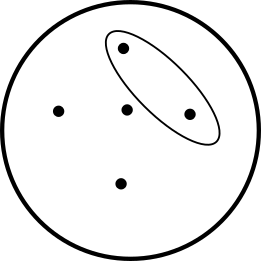
Figure 3: The central root Φ:Bn→Bm5 fixes a puncture and rotates the others.
Historical Context, Previous Work, and Sharpness
Prior work (e.g., Bell-Margalit, Castel, Chen-Kordek-Margalit, Lin) has classified injective, and in some cases arbitrary, homomorphisms Φ:Bn→Bm6 for various ranges of Φ:Bn→Bm7, often requiring Φ:Bn→Bm8, or reducibility assumptions. A central conjecture (Chen-Kordek-Margalit), and a problem from the K3 list, asked for a complete classification when Φ:Bn→Bm9, Bn0 in the irreducible non-cyclic case. The present work resolves this in the affirmative, showing
- if Bn1 is irreducible and non-cyclic (for Bn2, Bn3), then Bn4 and Bn5 is centrally equivalent to the identity.
A notable exception arises for Bn6, Bn7, reflecting the geometric construction originally due to Ferrari, corresponding to the quartic-to-cubic transition in quartic equation solution.
Canonical Reduction Systems and Nielsen–Thurston Theory
The proofs rely on detailed analysis of the Nielsen–Thurston classification and canonical reduction systems (CRS) for mapping classes. CRS detects "reducibility" of a mapping class (or braid): if any nontrivial multicurve is preserved, the image is reducible. The core technical work shows that:
- If a homomorphism "collapses" the images of two distinct standard generators, it must be cyclic, unless in low rank cases captured by the Ferrari map.
- For images of standard generators, the possible nontrivial algebraic and geometric behaviors (periodic, pseudo-Anosov) are tightly controlled by the CRS and their interactions under the group relations.
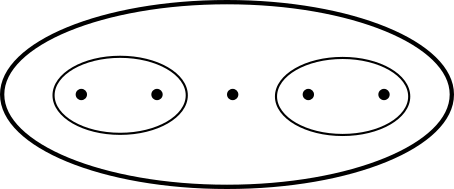
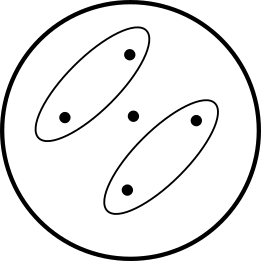
Figure 4: The canonical reduction system of Bn8, visualizing reducing systems.
The interplay between the CRS structure, the geometry of the cut surfaces (by curves and multicurves), and the group-theoretic commutation/centralization allows a delicate inductive control of all possible images, culminating in the rigidity result.
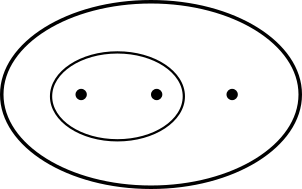
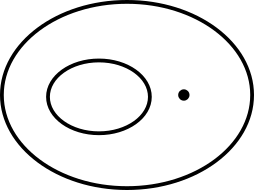

Figure 5: Cutting a curve yields a disconnected surface—a once-punctured annulus and a twice-punctured disk.
Affine and Central Equivalence of Holomorphic Maps
On the holomorphic side, the action of the affine group Bn9 on configuration spaces induces a quotient relation for holomorphic rigidity; "affine equivalence" identifies maps that differ by post-composition with such actions. The analogous central equivalence in braid group homomorphisms passes through capping and analysis of the center.
The main analytic result is thus:
- Every holomorphic map n0#1{m}n1n \geq 5, m \geq 3,notaffineequivalenttoaconstant,isaffineequivalenttotheidentity</strong>.Equivalently,anynontrivialn$2-algebraic (holomorphic) morphism between generic configuration spaces is, after normalization, just the tautological map between equal numbers of points.
Topological and Geometric Techniques
Central to the analysis is a fine-grained study of arcs, curves, and multicurves in the punctured disk and their images under mapping classes and homomorphisms. The paper introduces rigorous partial orders on curves (interior/exterior), tracking how cuttings, nesting, and puncture containment propagate through the group relations.
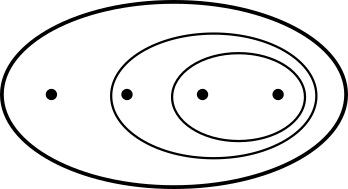
Figure 6: A demonstration that a curve $n$3 is interior to another $n$4.
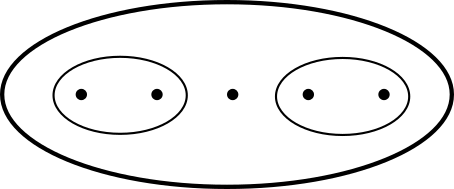
Figure 7: Both curves, $n$5 and $n$6, are exterior to one another.
The argument proceeds by
- Transferring group-theoretical statements (whether elements are periodic, pseudo-Anosov, reducible) to geometric properties of the associated CRS.
- Analyzing all possible "types" of punctures under repeated action and the behavior of multicurves under homomorphisms, using connectivity and expansion properties of the standard/braid relations graph (the commuting graph).
- Showing that, except in codified low-degree exceptions, the only non-cyclic, irreducible possibilities are those central-equivalent to the identity.
Quantitative and Qualitative Rigidity: Main Theorems
The main theorems can be stated as follows:
Theorem: If $n$7, $n$8, and $n$9 is a homomorphism with irreducible, non-cyclic image, then $\Psi :$0 and $\Psi :$1 is centrally equivalent to the identity.
Corollary: If $\Psi :$2, $\Psi :$3, and $\Psi :$4#1{n} \to $\Psi :$5 is a nonconstant holomorphic map, then $\Psi :$6 and $\Psi :$7 is affine equivalent to the identity (up to affine twist).
These results are sharp: the existence of the (rational, polynomial, holomorphic) Ferrari map $\Psi :$8#1{3}$, corresponding to quartic solution via mapping to cubic equations, witnesses the tightness.
Further Consequences and Extensions
Moduli of Curves and Hyperelliptic Locus
The rigidity statement extends to maps between moduli spaces: e.g., any holomorphic map from the moduli space Ψ:9 of curves with a marked point to $#1{m}$0 sending the hyperelliptic locus $#1{m}$1 into $#1{m}$2 must be the identity (for $#1{m}$3), and any map from a configuration space to the hyperelliptic locus factors through the canonical covering defined by classical invariants.
Configuration Spaces on Other Surfaces
Recent related developments, including the work of Chen-Salter and Antonakoudis-Aramayona-Souto, have established similar rigidity results for configuration spaces on general Riemann surfaces and for holomorphic mappings of moduli spaces, further emphasizing the categorical centrality of the phenomena described in this work.
Figure 8: Visualization of a puncture $#1{m}$4 interior to two disjoint curves, highlighting multicurve structure.
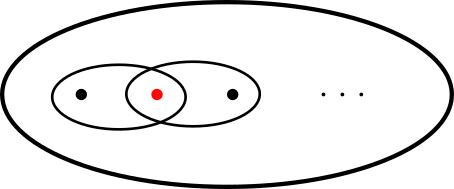
Figure 9: Example of a puncture $#1{m}$5 interior to a maximal curve, illustrating type computations.
Conclusion
This paper provides a definitive and sharp classification of irreducible, non-cyclic homomorphisms between braid groups, as well as holomorphic maps between configuration spaces of unordered points in $#1{m}$6. The recognition that, except for well-understood small-dimensional exceptions, all such maps are central/affine twists of the identity, resolves several conjectures and open problems around configuration space rigidity. The methodology—combining mapping class group analysis, Nielsen–Thurston theory, and geometric understanding of curves and punctures in the disk—offers a template likely to remain fruitful for stratified moduli problems and beyond.
The theoretical implications include a structural understanding of automorphisms and deformations in configuration and moduli spaces, while on the practical side, these rigidity results delimit the possible "symmetry breaking" operations available in both algebraic and holomorphic contexts.
Future questions involve extending such rigidity results to configuration spaces of points on higher-genus surfaces, further structure of continuous (not necessarily holomorphic) mappings, and interactions with arithmetic and dynamics.