Self-Testing Any Quantum State Without Trust
This presentation explores a breakthrough in quantum device certification: a universal scheme that can verify any quantum measurement and state without trusting the device. The authors demonstrate how quantum networks combined with Bell inequalities enable device-independent self-testing, a critical advancement for secure quantum protocols and cryptography that sidesteps the need to trust potentially compromised hardware.Script
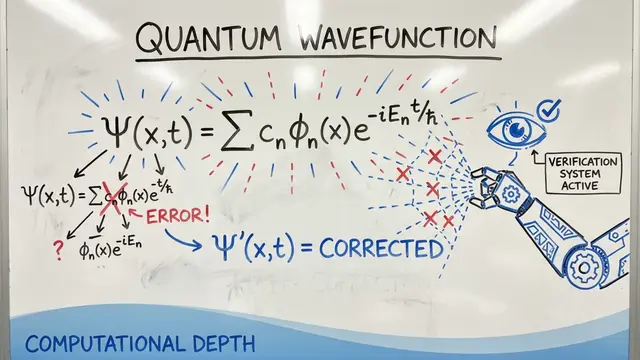
When you run a quantum protocol, how do you know your device isn't lying to you? The researchers behind this paper solve a fundamental trust problem: they show how to certify any quantum measurement and any quantum state without trusting the device at all.
Quantum cryptography and computation depend on genuine quantum behavior. But skepticism is justified: a compromised or faulty device could undermine everything. Device-independent schemes solve this by checking quantum properties from correlation statistics, not device specifications.
The authors construct a universal approach using quantum networks.
Earlier self-testing schemes targeted specific cases: pure states and simple measurements. This work breaks that limitation. By deploying star-shaped quantum networks with multiple parties and leveraging Bell nonlocal correlations, the authors achieve something remarkable: a method that works for any measurement and any state.
The scheme works in stages. Multiple external parties, each connected to a central party named Eve, perform measurements on shared entangled states. By first certifying the external measurements and source states as complete for tomography, the network then constrains Eve's measurement through Bell inequalities and causality. The statistics alone reveal whether Eve's device performs the intended quantum operation.
This universal scheme opens new doors for quantum cryptography, where trust in hardware is a vulnerability. But the approach demands highly entangled states and intricate configurations. The authors point toward future challenges: making the scheme robust to imperfections, exploring partial state certification, and scaling to real-world quantum networks.
Self-testing transforms quantum skepticism into quantum certainty, one correlation at a time. Visit EmergentMind.com to explore more research and create your own presentation videos.