OpenRubrics: Multi-Dimensional Reward Modeling
OpenRubrics introduces a principled framework for generating and applying structured rubrics as reward signals in large language model alignment. By decomposing evaluation into explicit, multi-dimensional criteria—ranging from hard verifiable rules to softer qualitative principles—the framework addresses fundamental limitations of scalar preference modeling. Through contrastive rubric generation, preference-label consistency filtering, and rubric-based reward modeling, OpenRubrics achieves significant gains in accuracy, interpretability, and fine-grained alignment across diverse domains including instruction-following, reasoning, and biomedical applications.Script
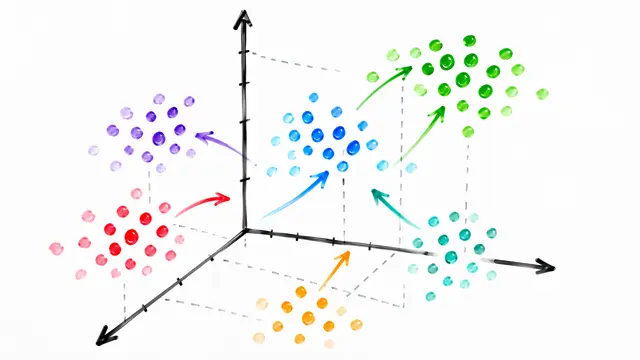
How do you teach an AI system to understand quality when human judgment itself is multi-dimensional and nuanced? Traditional reward models compress complex preferences into single numbers, losing the very distinctions that matter most.
Let's examine why this compression creates fundamental alignment problems.
Building on that challenge, traditional reinforcement learning from human feedback treats preferences as binary or scalar choices. This approach fundamentally cannot distinguish between a response that's factually accurate but stylistically weak versus one that's engaging but contains errors.
The framework addresses this through an innovative synthesis algorithm.
The Contrastive Rubric Generation algorithm works by analyzing preference pairs systematically. Given a prompt with preferred and rejected responses, the system extracts both verifiable constraints and qualitative principles, then validates that each generated rubric can actually discriminate the provided preference.
Each rubric combines two types of criteria. Hard rules are concrete, verifiable requirements extracted directly from the prompt. Principles are softer, qualitative standards abstracted from what distinguishes better responses, typically capturing style, depth, and domain conventions.
This synthesis pipeline produces a large-scale dataset spanning multiple benchmark sources. The rubrics cover 40 percent general helpfulness, 30 percent instruction tasks, and 30 percent scientific reasoning, with semantic clustering ensuring broad representation.
Now let's see how these rubrics become effective reward models.
The Rubric-RM architecture consists of two specialized models trained on the filtered dataset. The generator creates rubrics from new preference pairs, while the judge evaluates candidate responses against those rubrics, enabling efficient inference through rubric caching.
The results demonstrate substantial improvements across diverse evaluation settings. Rubric-RM-8B outperforms competing reward models consistently, with particularly strong gains on instruction-following and successful transfer to specialized biomedical domains where nuanced evaluation is critical.
Multi-dimensional rubrics transform how we align language models by making quality evaluation explicit, interpretable, and scalable. Visit EmergentMind.com to explore the full framework and see how structured criteria are reshaping reward modeling.