- The paper introduces PANDA, an end-to-end AI platform that overcomes usability barriers by simplifying data preparation, modeling, and deployment.
- It emphasizes interactive, user-friendly tools for data visualization and annotation, ensuring cost-sensitive and secure handling of sensitive data.
- The work demonstrates practical interfaces like drag-and-drop model construction and distributed hyper-parameter search, balancing performance with interpretability.
PANDA: Facilitating Usable AI Development
The paper "PANDA: Facilitating Usable AI Development" (1804.09997) addresses the pressing challenge of democratizing AI for practical applications across various domains, particularly for non-AI experts such as clinicians in healthcare. The authors propose PANDA, an end-to-end AI development platform aimed at overcoming the barriers that hinder the widespread adoption of AI in domains like healthcare and finance. This essay explores the essential components of PANDA and the significant implications of its framework for facilitating usable AI development.
Barriers to AI Adoption
The paper emphasizes the multifaceted nature of AI application development, which includes stages such as data preparation, application modeling, and product deployment. A gap exists between the rapid advancements in AI and the practical usability requirements in real-world applications, particularly in areas requiring specialized domain knowledge.
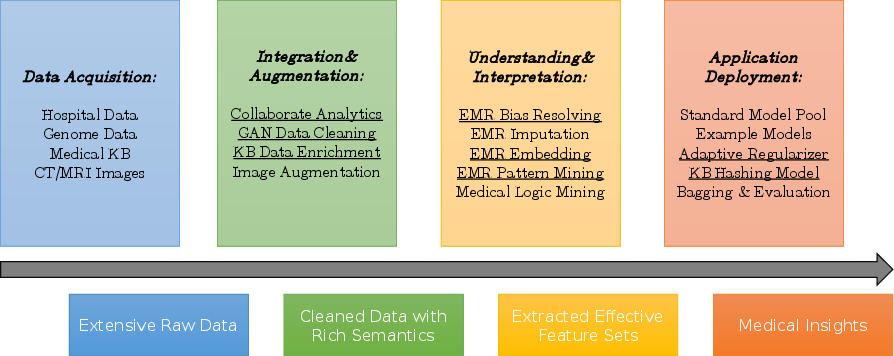
Figure 1: AI Development pipeline for Healthcare.
Data Preparation Challenges
The initial stage of AI application development is heavily reliant on data preparation. Despite the ubiquity of data, its manual creation and refinement pose significant challenges. The quality and structure of raw data, especially from sources such as electronic medical records (EMR), play a critical role in determining the efficacy of AI models.
Visualization and Interaction
The paper advocates for user-friendly data visualization tools that facilitate domain experts in effectively engaging with and annotating data. An emphasis on interactive tools with collaborative capabilities aids experts in contributing domain-specific insights to the AI workflow.
Cost-sensitive Acquisition and Data Privacy
Efficient data preparation demands a focus on cost-sensitivity, ensuring that only informative samples requiring expert input are utilized. Furthermore, data privacy is paramount, especially in sectors like healthcare, where integrated data from multiple institutions necessitates secure storage and analysis.
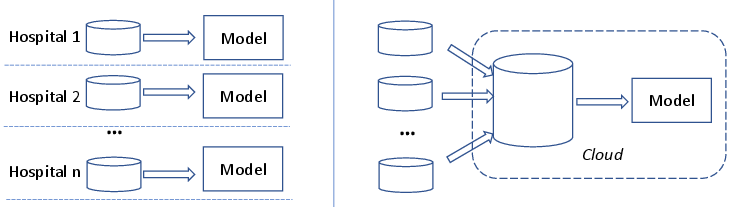
Figure 2: Collaborative analysis by integrating data from multiple hospitals.
Application Modeling and Deployment
PANDA outlines the importance of model selection and cost-sensitive modeling for practical application development. The challenge lies in making these processes accessible for AI researchers, beginners, and domain experts with varying levels of expertise.
Model Selection and Cost-sensitive Modeling
Tailored solutions such as distributed hyper-parameter search and drag-and-drop interfaces for model construction (Figure 3) are proposed to cater to novice AI developers, while experienced researchers benefit from efficient model management systems. The paper also underscores the trade-offs between model complexity and resource efficiency, emphasizing the need for optimization without compromising performance.
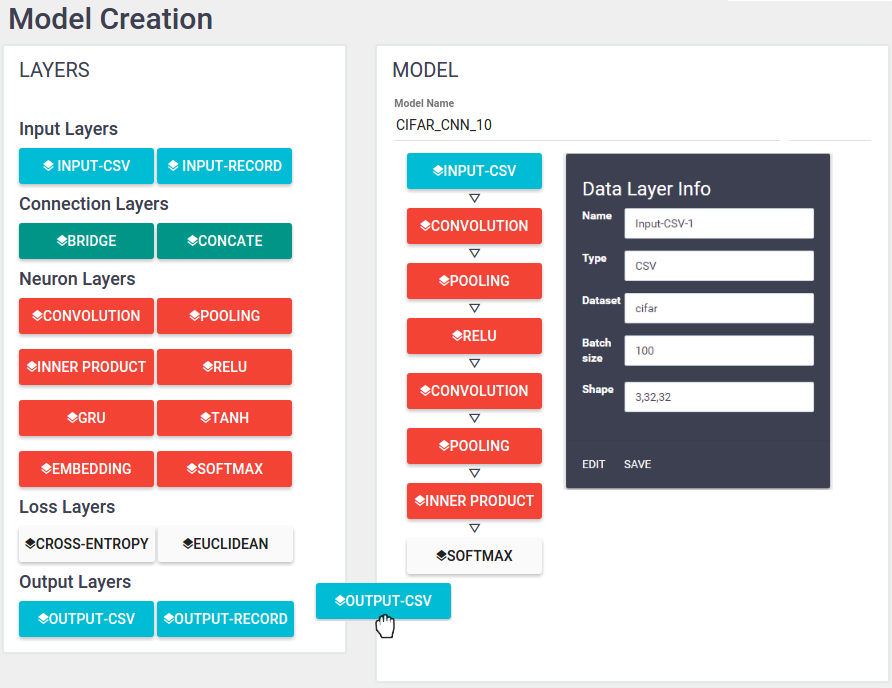
Figure 3: Drag-and-drop interface for model construction.
Ensuring Reliability and Security
Deployment necessitates rigorous checks and real-time monitoring to ensure the reliability and interpretability of AI applications, especially in high-stakes domains. The paradigm shifts towards developing AI models that operate robustly within reliably defined data regions, thereby enhancing trust and reducing human oversight.
Conclusion
PANDA represents an effort to surmount inherent challenges within AI development for domain-specific applications. By focusing on usability, efficiency, and security across critical stages such as data preparation, modeling, and deployment, PANDA aims to democratize AI. The implications of this work suggest further research opportunities that include developing interfaces that bridge the gap between domain expertise and AI proficiency, as well as models that balance performance with interpretability and cost-effectiveness.

