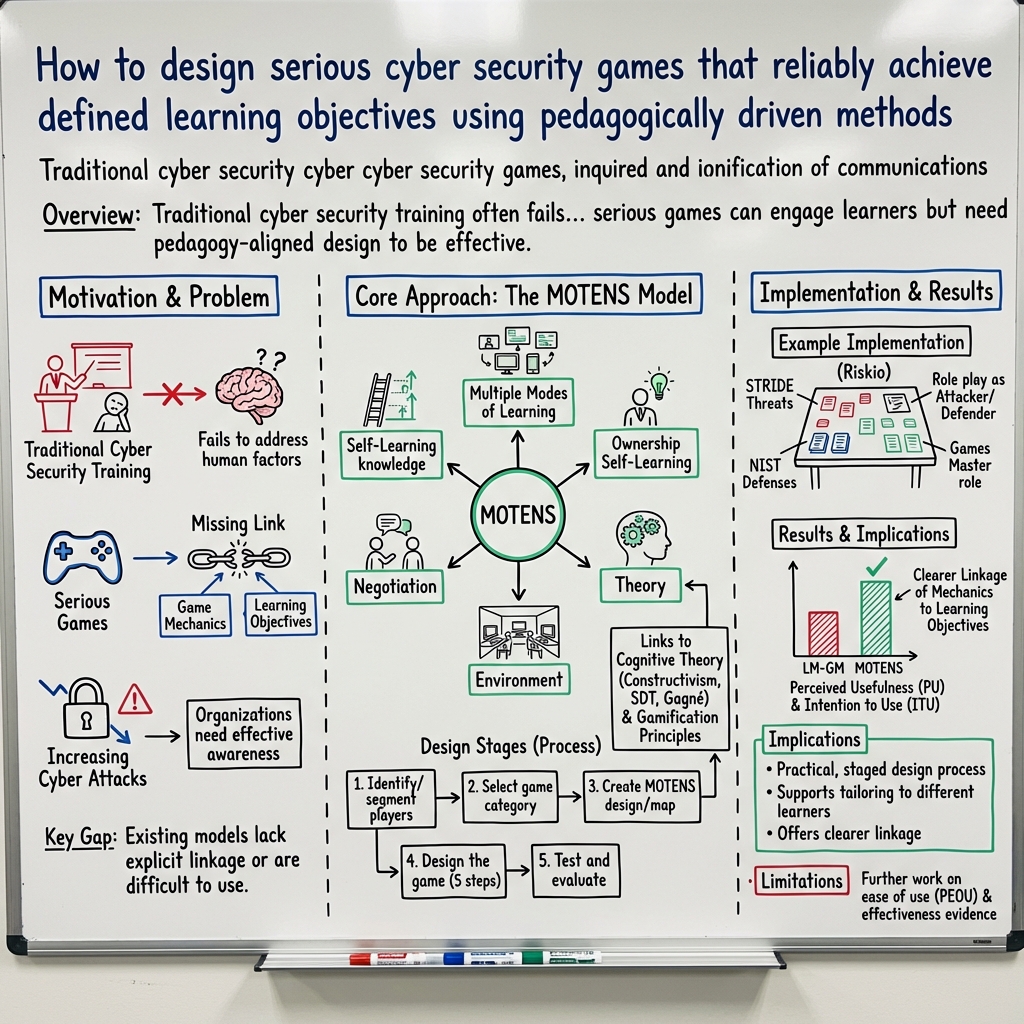
- The paper introduces MOTENS, a novel framework that aligns game mechanics with pedagogical goals to bolster cybersecurity training.
- It employs cognitive principles such as constructivism and Self-Determination Theory to drive both intrinsic and extrinsic motivation.
- Case studies, including the Riskio game, validate the model's effectiveness in linking educational objectives with engaging gameplay.
MOTENS: A Pedagogical Design Model for Serious Cyber Games
Introduction
The paper entitled "MOTENS: A Pedagogical Design Model for Serious Cyber Games" (2110.11765) introduces MOTENS, a novel pedagogical framework designed to enhance the development of serious cyber games aimed at fostering cybersecurity awareness and education. This approach addresses deficits in existing models, which often lack robust pedagogical guidance, failing to effectively integrate learning objectives with game mechanics. The proposed MOTENS model, derived from insights gathered through the development of the Riskio cybersecurity tabletop game, provides a comprehensive blueprint for structuring serious games to achieve educational outcomes.
Background and Cognitive Principles
The current landscape of cybersecurity education emphasizes the need for innovative training methodologies that counter traditional educational shortcomings in fostering genuine cybersecurity prowess among learners. Serious games, defined by their integration of game mechanics into educational contexts, offer potential as engaging tools for teaching cybersecurity concepts. The MOTENS model leverages cognitive principles foundational to learning theories such as constructivism and Self-Determination Theory (SDT) to impart valuable insights into game-based learning, prioritizing intrinsic and extrinsic motivations of participants.
Essentials for Learning
Central to the MOTENS framework is the integration of cognitive mechanics, dynamics, and emotions—core components identified by Robson et al. as essential to gamification. These elements shape the interaction, progression, and emotional engagement of players within a game environment. An exemplar of this in practice is the Riskio game, which exemplifies differentiated game mechanics tailored to diverse player demographics, enabling adaptability in learning experiences.
MOTENS Model Composition
The MOTENS model comprises six primary components: multiple modes of learning, ownership self-learning, theory, environment, negotiation, and self-learning. These components are specifically curated to facilitate a structured approach to serious game design, linking game mechanics directly to pedagogical goals and cognitive theory. The framework progresses through distinct design phases ensuring the alignment of game features with learning objectives, offering a systematic guide for developers.
Model Components
- Multiple Modes of Learning: Incorporates diverse educational methods within gameplay, offering varied learning opportunities relative to player backgrounds.
- Ownership Self-Learning: Encourages player autonomy in choosing game scenarios to enhance intrinsic motivation.
- Theory: Provides cognitive support, grounding game mechanics in educational theory conducive to effective learning.
- Environment: Crafts an appropriate game setting, fostering an optimal learning atmosphere.
- Negotiation: Shifts the focus from traditional instruction to a problem-based learning framework, emphasizing interactive learning.
- Self-Learning: Enhances players' knowledge construction through engaging gameplay and cognitive processes.
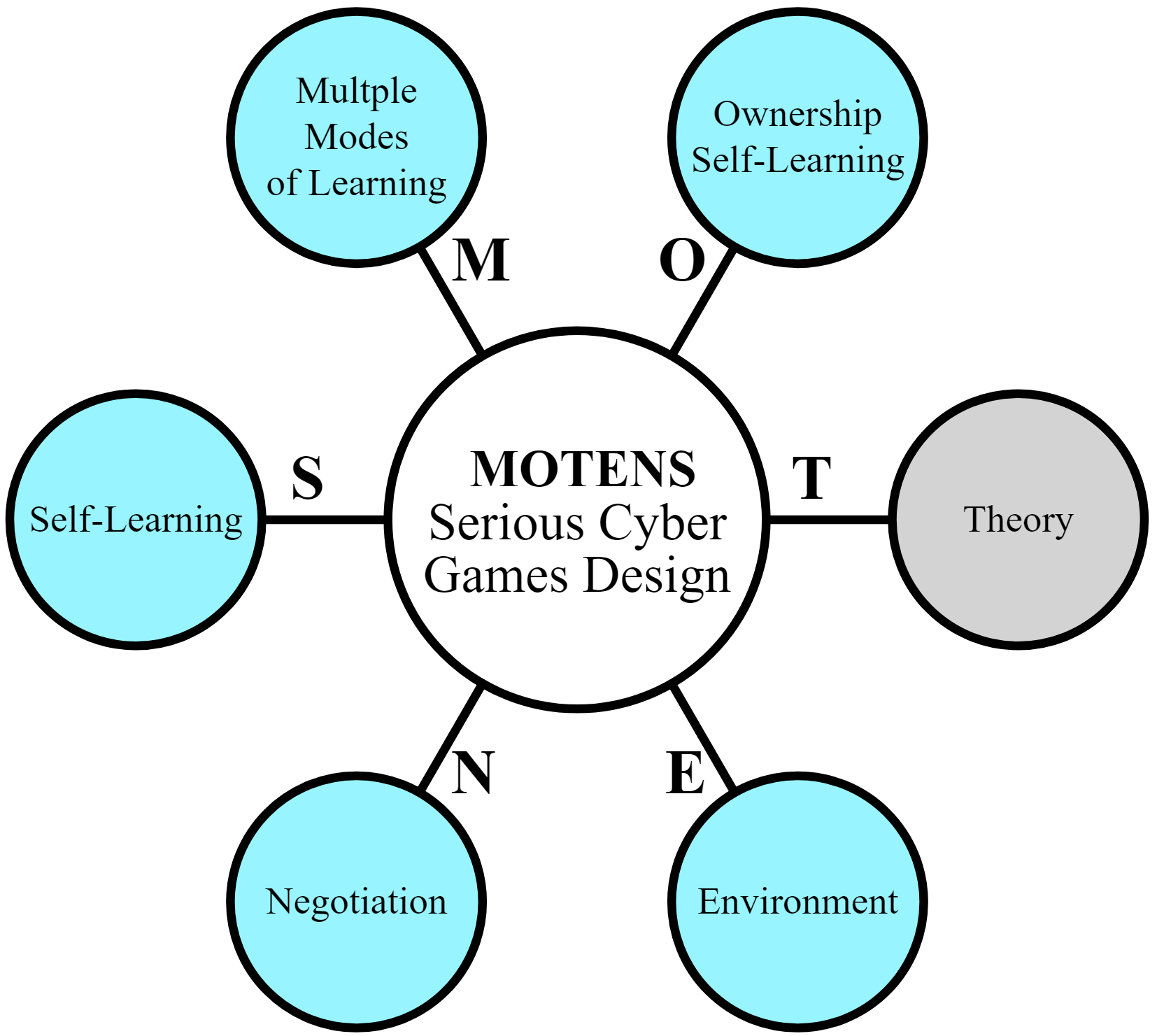
Figure 1: MOTENS Model.
Assessment and Efficacy of MOTENS
Illustrative and comparative case studies evaluate the efficacy of the MOTENS model. Participants—comprising academic professionals, students, and cybersecurity experts—underwent surveys assessing perceived usefulness, ease of use, and intention to use the model in serious game design. Results indicate recognition of the MOTENS model as a well-rounded framework, deemed effective in aligning game mechanics with pedagogical objectives, despite suggestions for increased simplicity in user applicability.
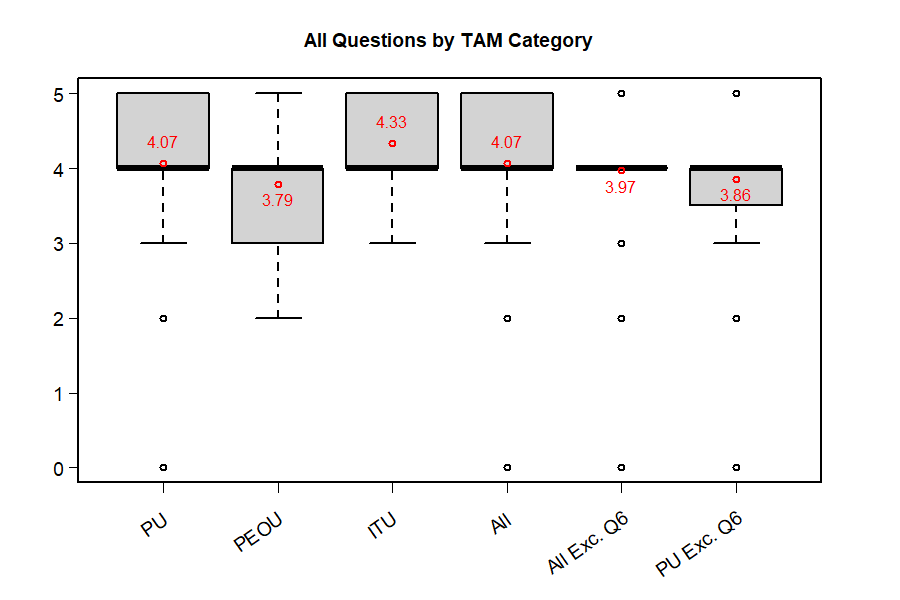
Figure 2: MOTENS Questions by TAM Category.
Conclusion
The MOTENS model serves as a valuable contribution to serious cyber game design, addressing the critical gap in pedagogically-driven game development. By applying the principles outlined in cognitive learning theories and observed outcomes from Riskio's development, the MOTENS framework promises enhanced educational efficacy and appeal in game-based cybersecurity training. Further research is essential to refine user engagement and ease of application, ensuring the model's robustness across diverse educational scenarios. Ultimately, the MOTENS model proclaims a promising stride towards revolutionizing cybersecurity education through strategic serious game design.