- The paper introduces an AI assistant that uses fine-tuned GPT-3 to generate 600-800 word movie plots and screenplay scenes from brief prompts.
- It employs curated and manually annotated datasets from Wikipedia and IMSDb, structured by a 4-act model, to ensure enhanced narrative coherence.
- Evaluation metrics like Perplexity, BLEU, and ROUGE along with human feedback highlight the system's fluency improvements and reveal areas for creative control refinement.
"Kurosawa": A Script Writer's Assistant Overview
"Kurosawa" introduces an AI-based script-writing workbench designed to automate the creation of movie plots and scripts. The paper details the methodology employed to generate 600-800 word plots from 15-40 word prompts and convert brief scene descriptions into screenplay format scenes. The workbench utilizes the GPT-3 model, refined using curated datasets. It aims to alleviate the creative and time pressures on scriptwriters by offering automated generation capabilities, integrating advanced AI capabilities to assist scriptwriters globally.
Data Acquisition and Annotation Strategy
The creation of bespoke datasets forms a cornerstone of the "Kurosawa" model's effectiveness. The researchers compiled and manually tagged 1000 movie plots extracted from Wikipedia, annotated in accordance with a 4-act structure to enhance narrative coherence. Additionally, scripts sourced from IMSDb were dissected into scenes and annotated with integral screenplay elements—scene headings, action lines, character names, and dialogues (Figure 1).
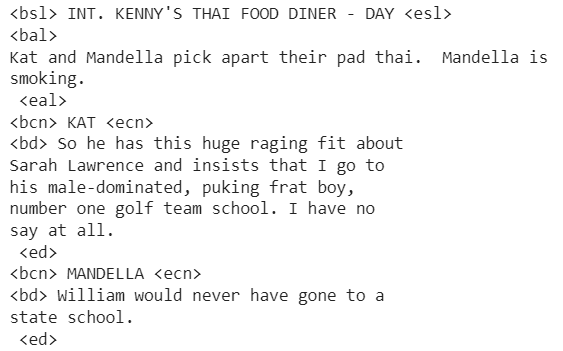
Figure 1: The image depicts a portion of a movie scene with the four major elements annotated.
This careful cross-referencing of sources from IMDb and Wikipedia ensures a comprehensive dataset ready for fine-tuning of the GPT-3 model, allowing for high fidelity plot and scene generation.
Model Fine-Tuning and Experimentation
GPT-3 was fine-tuned using several configurations to facilitate plot and scene generation under varying conditions, including short and long prompts, and genre-based modifications. The paper discusses the integration of genre information directly into storyline prompts to guide more genre-specific plot definitions (Figure 2).
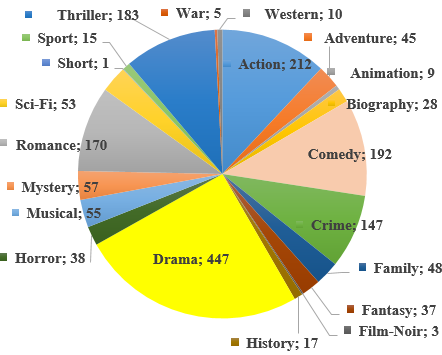
Figure 2: Genre distribution within the plot dataset.
The focus on enhancing model output from syntactic correctness to robust thematic representation led to multiple levels of annotation complexity and input variations, maximizing the framework’s adaptability across different storytelling requirements (Figure 3).
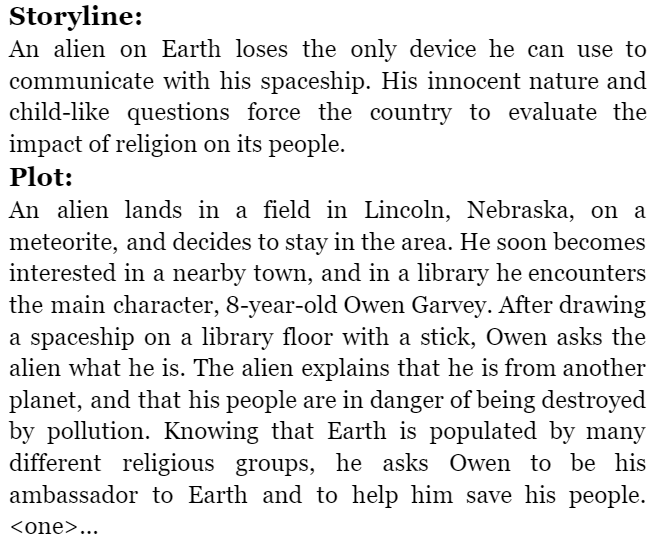
Figure 3: The above paragraph is a partial example of a movie plot generated by the model fine-tuned with input as short storyline and output as plot annotated with the 4-act structure.
Evaluation Methodology
Performance matrices incorporated both automatic measures such as Perplexity, BLEU, and ROUGE alongside human evaluations. The Likert scale underscored strengths in fluency while highlighting areas for improvement in coherence and relevance primarily through professional feedback from industry scriptwriters (Figure 4).
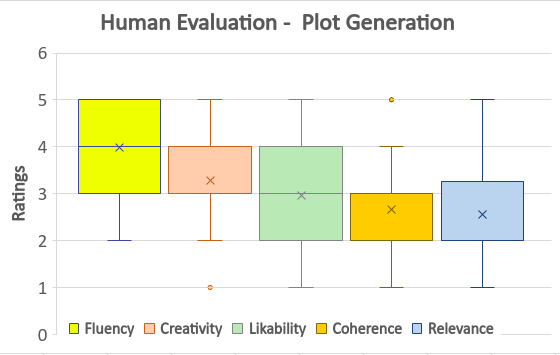
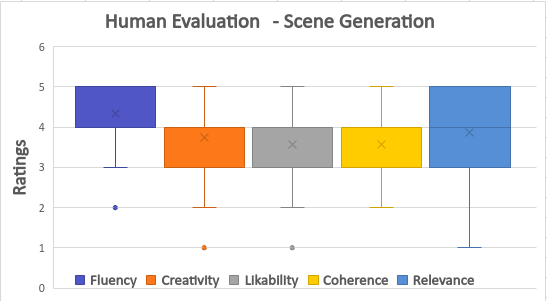
Figure 4: Boxplot graphs for Human Evaluation of the plot and scene generation models.
The assessment demonstrated that annotated plots yielded more structurally coherent narratives, although creative control requires refinement as evidenced by low BLEU and varied MAUVE scores.
Qualitative Insights
Expert evaluations pin-pointed scene and plot generation issues, notably coherence lapses and irrelevant character introduction, urging ongoing improvements to curtail such errancies and promote narrative fidelity. The addition of genre influences bolstered plot alignment with thematic expectations, granting anecdotal genre-specific insights beneficial to scriptwriters aspiring for originality while adhering to industry norms.
Conclusions and Forward-Looking Observations
"Kurosawa" successfully pioneers automated story generation in film through concerted data curation and model fine-tuning efforts, setting benchmarks for AI-assisted scriptwriting. Future iterations will focus on rectifying dataset imbalances, addressing cultural variability in scripting practices, and harnessing AI to navigate factual inconsistencies and hallucinations—a prevalent challenge in narrative generation.
The implications suggest potential widescale adoption across media industries, reshaping scriptwriting paradigms and empowering content creators with AI-augmented prowess to tackle burgeoning entertainment demands.