Papers
Topics
Authors
Recent
Search
2000 character limit reached

Nigerian Schizophrenia EEG Dataset (NSzED) Towards Data-Driven Psychiatry in Africa

Published 30 Nov 2023 in cs.NE, eess.SP, and q-bio.NC | (2311.18484v2)

Abstract: This work has been carried out to improve the dearth of high-quality EEG datasets used for schizophrenia diagnostic tools development and studies from populations of developing and underdeveloped regions of the world. To this aim, the presented dataset contains international 10/20 system EEG recordings from West African subjects of Nigerian origin in restful states, mental arithmetic task execution states and while passively reacting to auditory stimuli, the first of its kind from the region and continent. The subjects are divided into patients and healthy controls and recorded from 37 patients and 22 healthy control subjects identified by the Mini International Schizophrenia Interview (MINI) and also assessed by the Positive and Negative Symptoms Scale (PANSS) and the World Health Organization Disability Assessment Schedule (WHODAS). All patients are admitted schizophrenia patients of the Mental Health Ward, Medical Outpatient Department of the Obafemi Awolowo University Teaching Hospital Complex (OAUTHC, Ile-Ife) and its subsidiary Wesley Guild Hospital Unit (OAUTHC, Ilesa). Controls are drawn from students and clinicians who volunteered to participate in the study at the Mental Health Ward of OAUTHC and the Wesley Guild Hospital Unit. This dataset is the first version of the Nigerian schizophrenia dataset (NSzED) and can be used by the neuroscience and computational psychiatry research community studying the diagnosis and prognosis of schizophrenia using the electroencephalogram signal modality.

Definition Search Book Streamline Icon: https://streamlinehq.com
References (12)
  1. Guy M Goodwin and John R Geddes “What is the heartland of psychiatry?” In The British Journal of Psychiatry 191.3 Cambridge University Press, 2007, pp. 189–191
  2. Rajiv Tandon, Henry A Nasrallah and Matcheri S Keshavan “Schizophrenia,“just the facts” 4. Clinical features and conceptualization” In Schizophrenia research 110.1-3 Elsevier, 2009, pp. 1–23
  3. Assen Jablensky “The diagnostic concept of schizophrenia: its history, evolution, and future prospects” In Dialogues in clinical neuroscience Taylor & Francis, 2010
  4. “Schizophrenia: overview and treatment options” In Pharmacy and Therapeutics 39.9 MediMedia, USA, 2014, pp. 638
  5. Carla Barros, Carlos A Silva and Ana P Pinheiro “Advanced EEG-based learning approaches to predict schizophrenia: Promises and pitfalls” In Artificial intelligence in medicine 114 Elsevier, 2021, pp. 102039
  6. “Unveiling the associations between EEG indices and cognitive deficits in schizophrenia-Spectrum disorders: a systematic review” In Diagnostics 12.9 MDPI, 2022, pp. 2193
  7. “Detection of time-, frequency-and direction-resolved communication within brain networks” In Scientific reports 8.1 Nature Publishing Group UK London, 2018, pp. 1825
  8. Chiahui Yen, Chia-Li Lin and Ming-Chang Chiang “Exploring the frontiers of neuroimaging: a review of recent advances in understanding brain functioning and disorders” In Life 13.7 MDPI, 2023, pp. 1472
  9. “Method for Classifying Schizophrenia Patients Based on Machine Learning” In Journal of Clinical Medicine 12.13 MDPI, 2023, pp. 4375
  10. “EEG-based schizophrenia diagnosis through time series image conversion and deep learning” In Electronics 11.14 MDPI, 2022, pp. 2265
  11. “Fusion of pattern-based and statistical features for Schizophrenia detection from EEG signals” In Medical Engineering & Physics 112 Elsevier, 2023, pp. 103949
  12. “Schizophrenia diagnosis using innovative EEG feature-level fusion schemes” In Physical and Engineering Sciences in Medicine 43.1 Springer, 2020, pp. 227–238
Summary

  • The paper presents NSzED, the first West African EEG dataset for schizophrenia, addressing critical data gaps in psychiatric research.
  • It details rigorous data acquisition protocols using dual-machine setups and standardized paradigms to capture MMN and fuzzy entropy measures.
  • The dataset reveals distinct brain signal patterns between patients and controls, paving the way for more robust, computational diagnostic models.

Nigerian Schizophrenia EEG Dataset (NSzED): A Step Towards Data-Driven Psychiatry in Africa

Introduction

The paper "Nigerian Schizophrenia EEG Dataset (NSzED) Towards Data-Driven Psychiatry in Africa" introduces a novel EEG dataset aimed at improving schizophrenia diagnostic tools by providing high-quality recordings from an underrepresented population. The dataset comprises recordings from 37 schizophrenia patients and 22 healthy controls in Nigeria, distinguishing itself as the first of its kind from West Africa. The paper establishes the significance of data diversity in enhancing the robustness and generalizability of EEG-based diagnostic models, notably addressing the gap in datasets from developing regions.

Methodology

EEG Data Acquisition

EEG recordings for the NSzED were obtained using the international 10/20 electrode system. This involved using two machines with distinct sampling rates, Contek-2400 (200 Hz) and BrainAtlas Discovery-24E (256 Hz). The acquisition protocols were designed to enable multimodal feature extraction that includes mismatch negativity (MMN), steady-state responses (SSR), and entropy measures.

Data Collection Protocol

EEG data was collected under controlled conditions, involving restful states, mental arithmetic tasks, and auditory stimuli presentations. The auditory stimuli aimed to elicit MMN, a pivotal marker for cognitive processing anomalies in schizophrenia. Two EEG data acquisition protocols were implemented, depending on the machine, ensuring comprehensive feature computation across different experimental paradigms.

Participants and Dataset Features

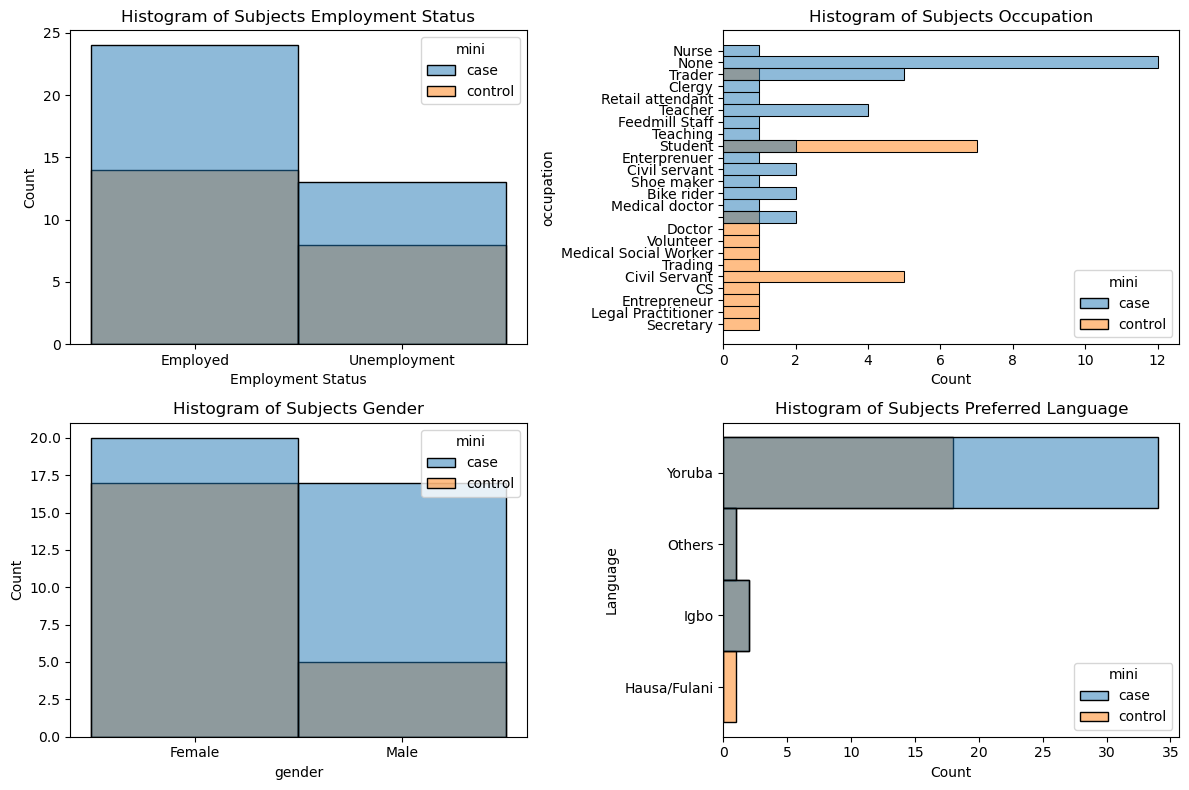
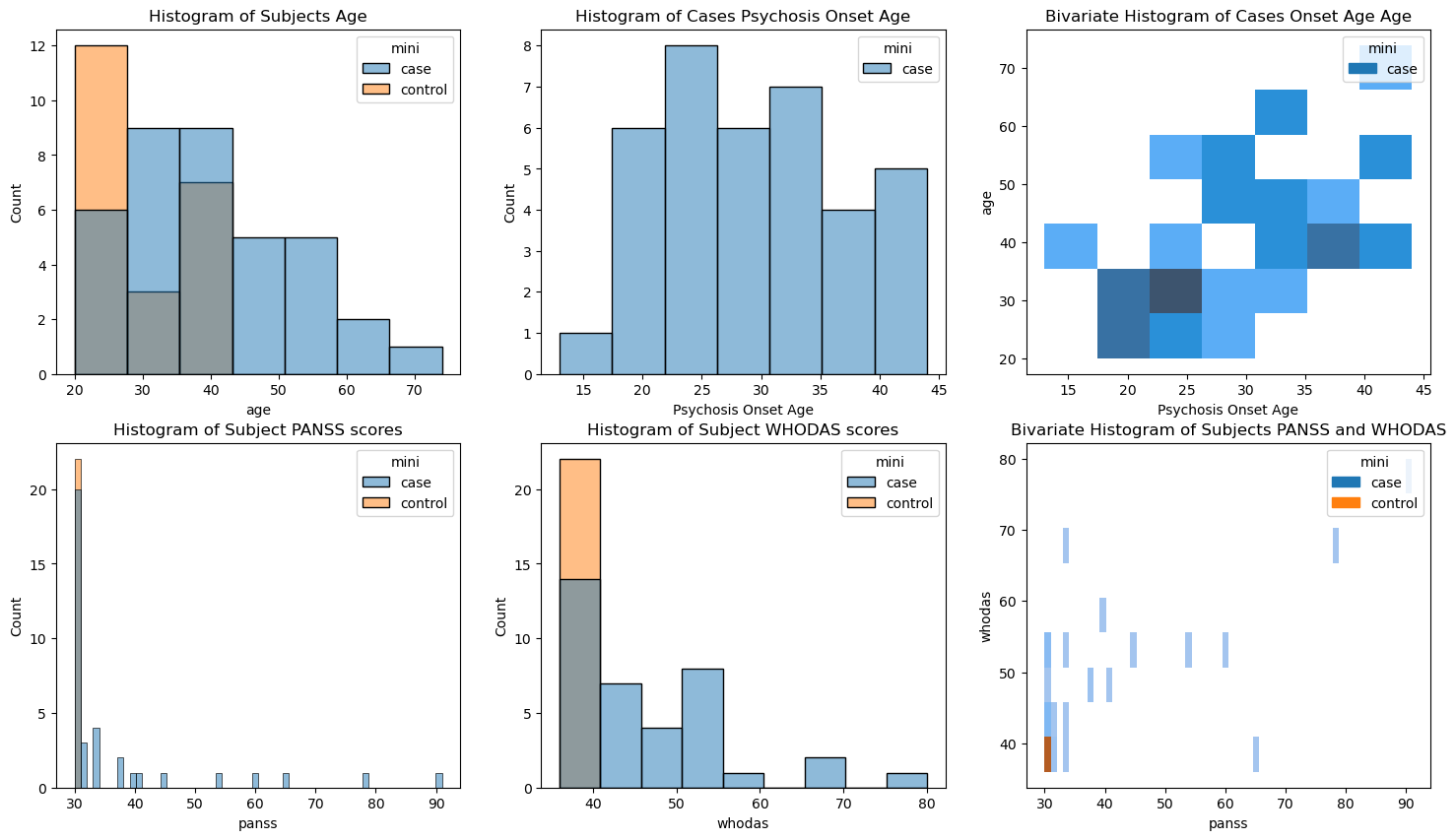
The participants, primarily from the Obafemi Awolowo University Teaching Hospital Complex in Nigeria, included patients diagnosed following stringent criteria and healthy controls. Clinical assessments like the Mini International Schizophrenia Interview (MINI), PANSS, and WHODAS were utilized to ensure accurate characterization of subjects. The collected dataset is organized in EDF format, ensuring accessibility for the research community interested in computational psychiatry. Figure 1

Figure 1: Demographic Information Plots.

Figure 2

Figure 2: Demographic Information Plots.

Dataset Utility and Feature Analysis

Mismatch Negativity (MMN)

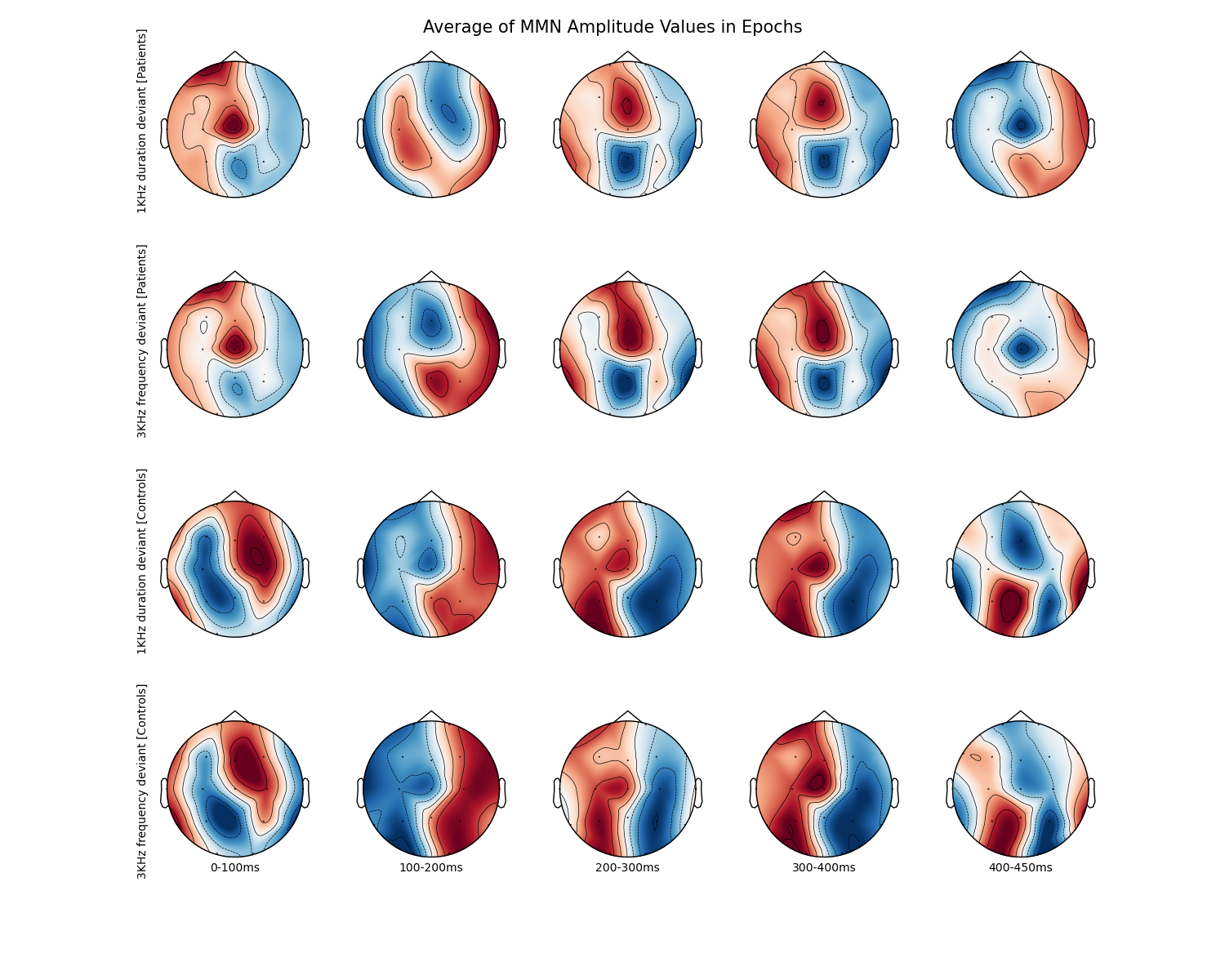
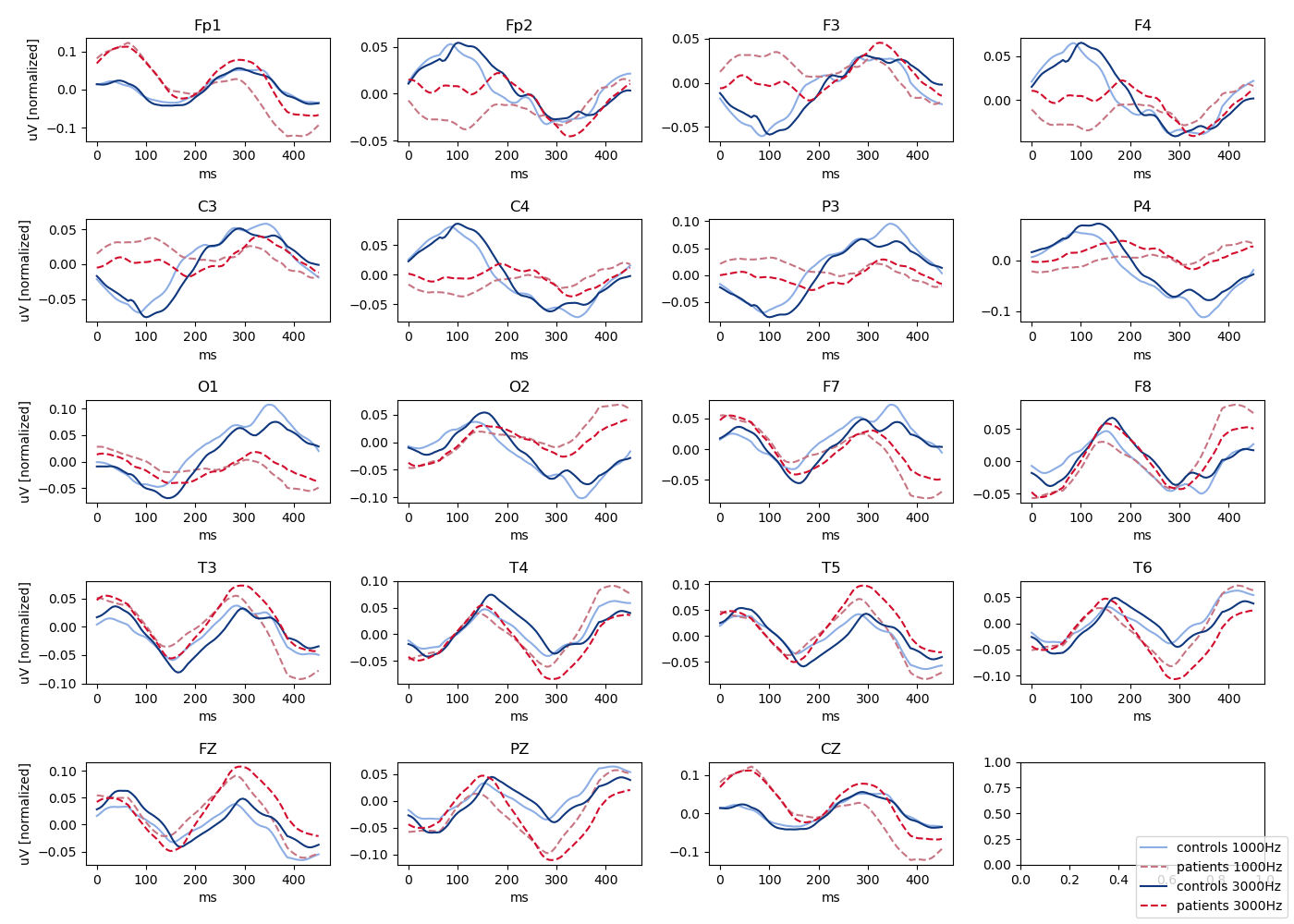
MMN was analyzed by comparing ERP responses between standard and deviant auditory stimuli. This analysis demonstrated distinct waveform variations between patients and controls, offering insights into auditory processing deficiencies prevalent in schizophrenia. Figure 3

Figure 3: Average of Mismatch Negativity Amplitude Values Across Patients and Controls.

Figure 4

Figure 4: Average of Mismatch Negativity Waveforms Across Patients and Controls.

Fuzzy Entropy

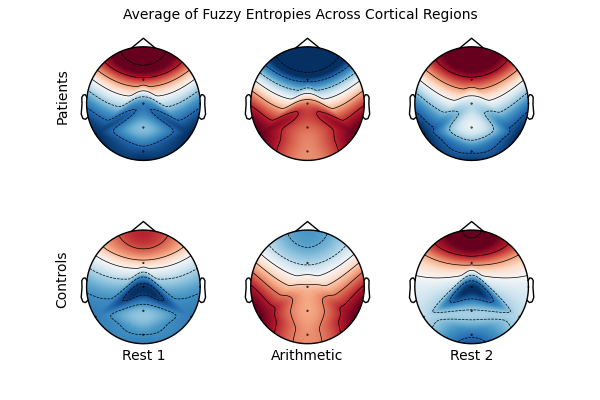
Fuzzy entropy was utilized to evaluate the complexity of EEG signals. Variability in these measures between the schizophrenia and control groups highlighted differences in brain signal regularity, an aspect crucial for refining diagnostic algorithms. Figure 5

Figure 5: Average of Fuzzy Entropy Values Across Patients and Controls.

Significance and Future Implications

The introduction of NSzED marks an essential step toward diversifying EEG databases, offering data-driven solutions in psychiatry for underrepresented regions. The dataset's potential lies in refining existing diagnostic models and uncovering novel neural markers. The incorporation of comprehensive EEG features allows for enhanced classification models, potentially impacting the understanding and management of schizophrenia globally. Future endeavors may include expanding the dataset's demographic diversity and integrating novel computational techniques to further elucidate the multifaceted nature of schizophrenia.

Conclusion

The NSzED provides a foundational resource for computational psychiatry and neuroscience, emphasizing the necessity of geographical and demographic diversity in research datasets. Through detailed methodology and systematic data collection, the paper underlines the opportunity for advancing schizophrenia studies, particularly in regions previously overlooked within the scientific community. The dataset's availability is poised to foster innovation in diagnostic technologies, paving the path for more generalized and effective psychiatric assessments.

Whiteboard

No one has generated a whiteboard explanation for this paper yet.

Open Problems

We haven't generated a list of open problems mentioned in this paper yet.

Collections

Sign up for free to add this paper to one or more collections.