- The paper identifies that EIP-4844 increases fork rates and synchronization delays, affecting network consensus stability.
- It shows that rollups have increased their use of Ethereum with a 116.83% rise in data posting and a 71.38% drop in transaction fees.
- The study reveals that the newly introduced blob gas fee market is more volatile, suggesting a need for improved fee mechanism optimizations.
Impact of EIP-4844 on Ethereum: A Detailed Analysis
The implementation of EIP-4844, known as Proto-Danksharding, represents a significant update to Ethereum, enhancing its capabilities as a data availability (DA) layer. This essay provides a detailed analysis of EIP-4844’s effects on Ethereum’s consensus security, usage, rollup transaction dynamics, and blob gas fee market. The empirical findings presented here aim to elucidate the nuanced changes brought about by this protocol upgrade.
Consensus Security
The introduction of EIP-4844 brought about structural changes in how data is propagated in Ethereum, potentially impacting the network's consensus security. The key aspects considered in this analysis include the increase in fork rates and synchronization times post-EIP-4844.
Fork Rates
The implementation of EIP-4844 has correlated with an increase in fork rates, rising from 3.097 to 6.707 per 2000 slots. This suggests heightened instability in the network, which may be due to the increased data handling required by the protocol or potential misconfigurations during its early adoption phase.
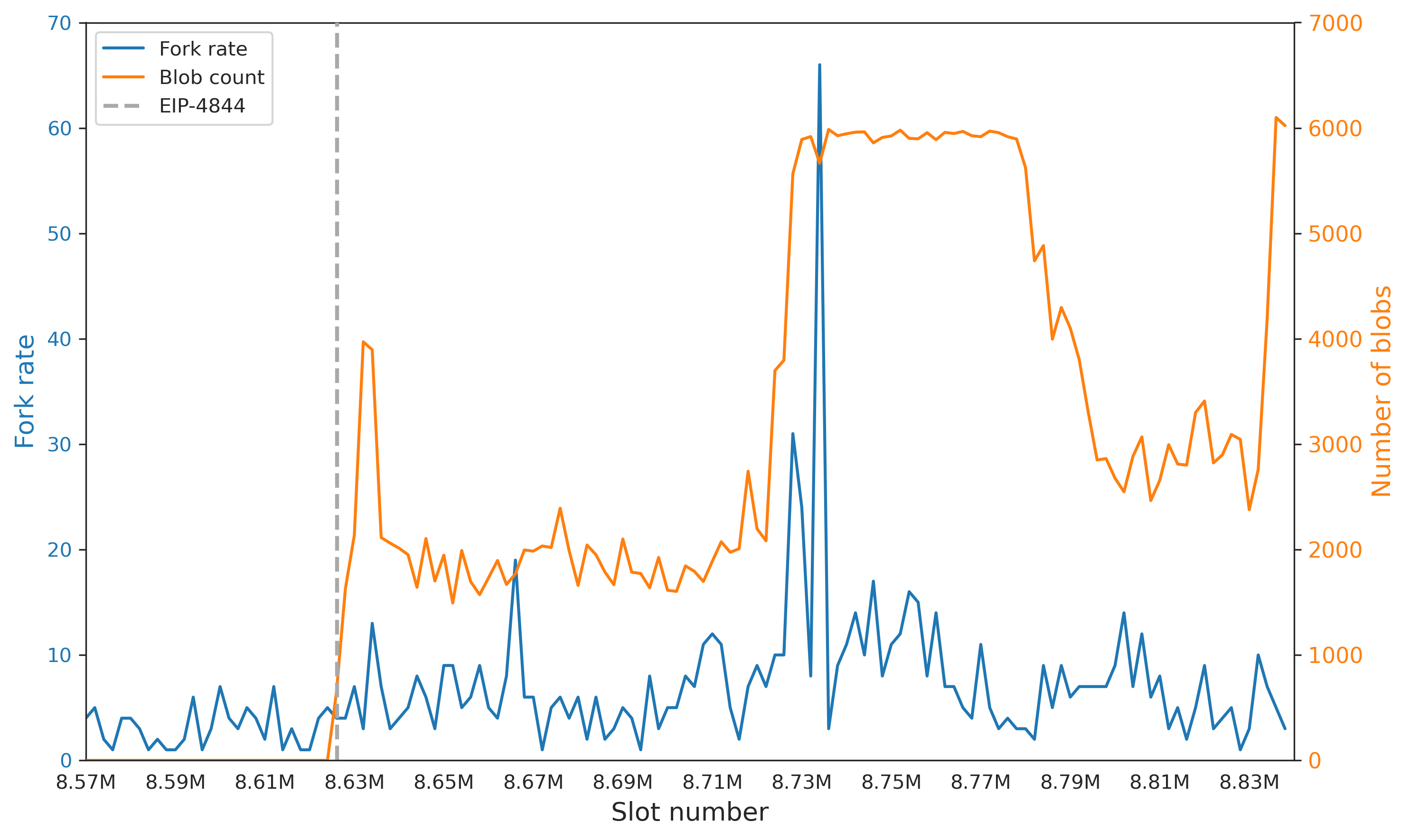
Figure 1: Change in fork rate pre-4844 and post-4844, with an anomaly between slots 8,720,000 and 8,740,000 due to an implementation bug.
Synchronization Times
Synchronization times have also increased following the upgrade, particularly in slots that utilize blob transactions. The incremental delay, particularly in receive times, can be partly attributed to the extra processing burden EIP-4844 places on nodes.
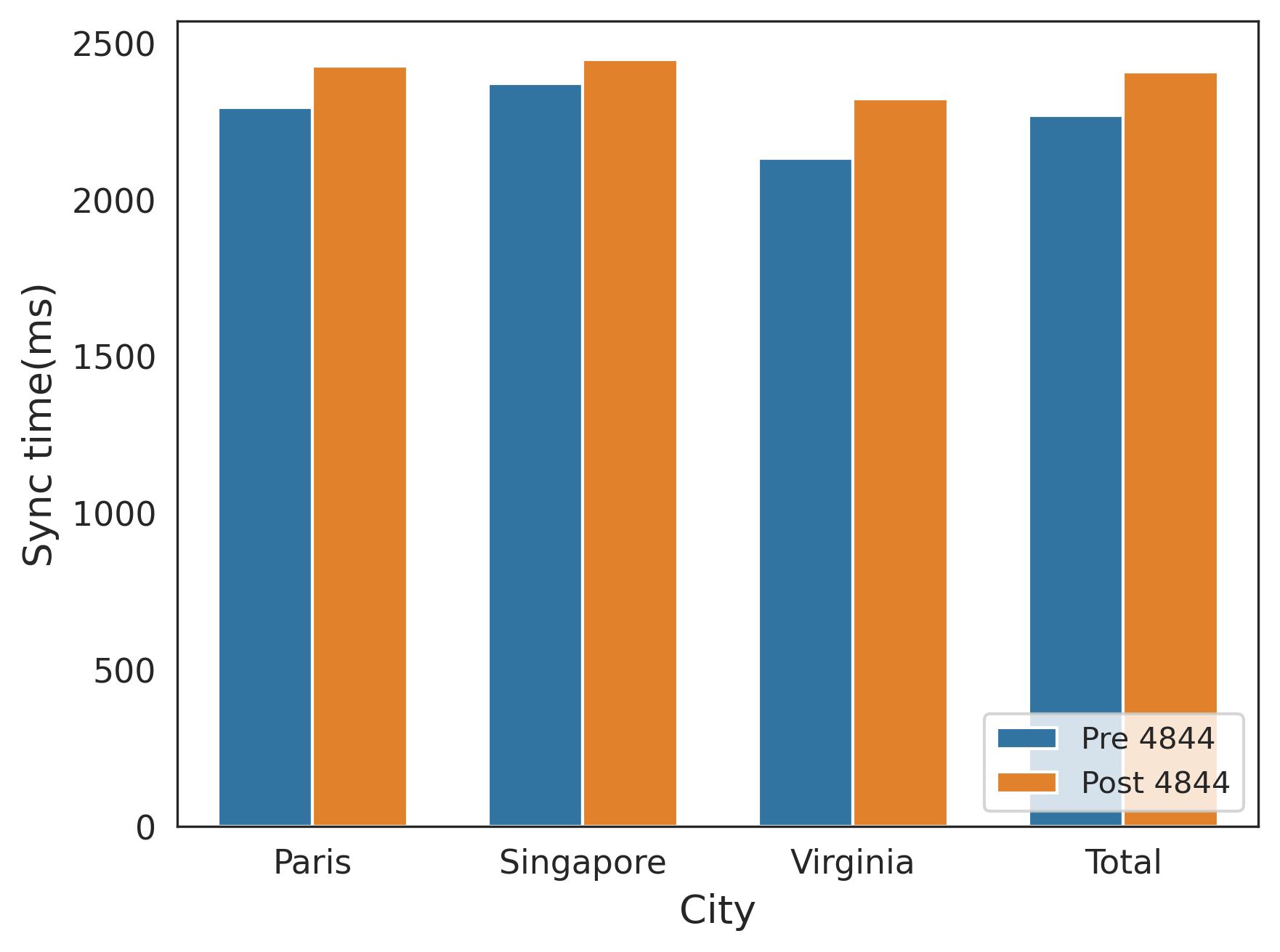
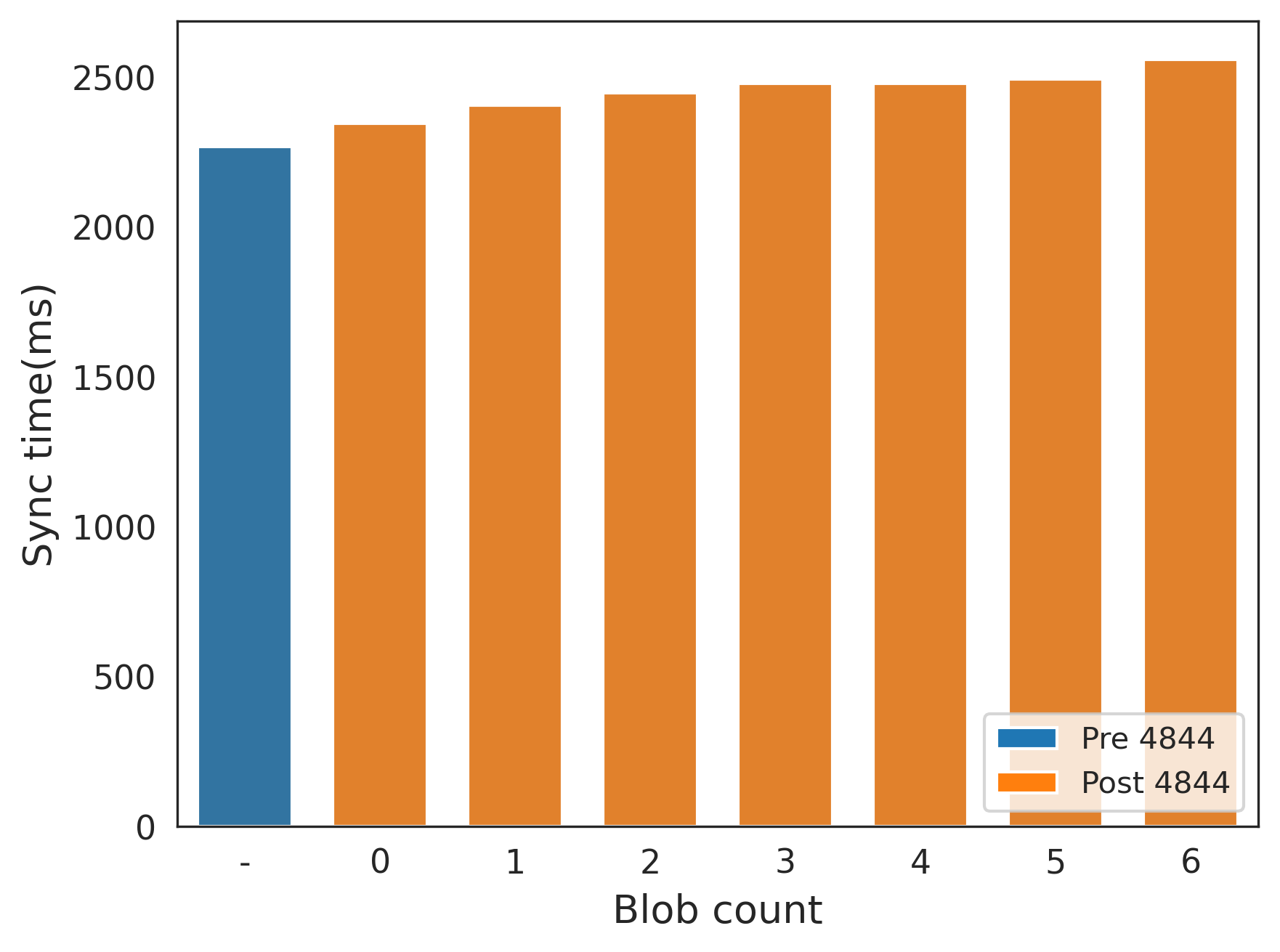
Figure 2: Average sync times across different cities and overall.
Ethereum Usage
The introduction of EIP-4844 has notably changed how Ethereum is used as a data availability layer, especially by rollups. This section explores the fluctuations in posted data sizes and transaction fees associated with rollups.
Data Posting
Rollups have increased their use of Ethereum for data availability by 116.83%, driven by the reduced costs associated with blob transactions. This change is more pronounced in optimistic rollups, suggesting they benefit more from the cost efficiencies introduced by EIP-4844.
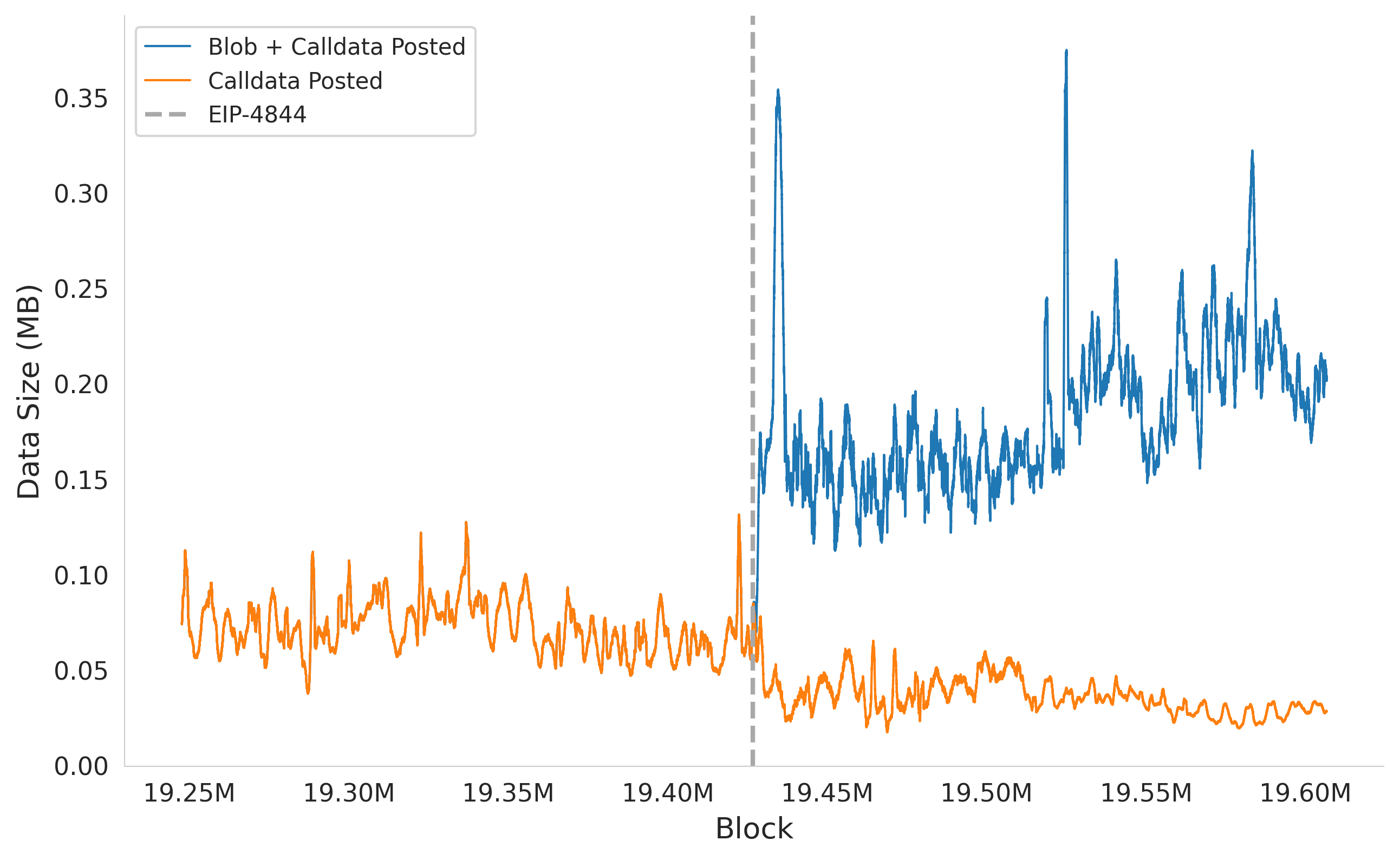
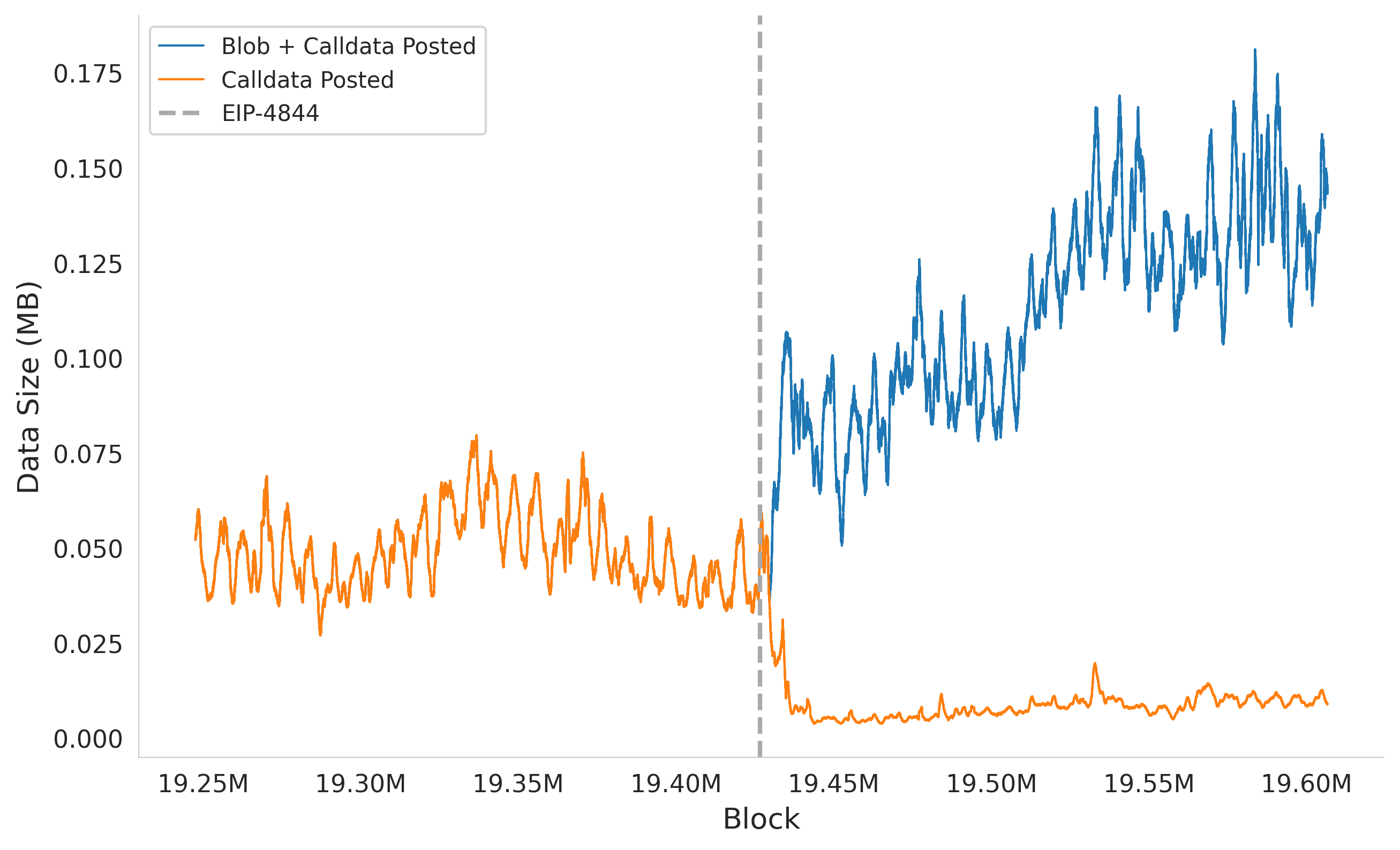
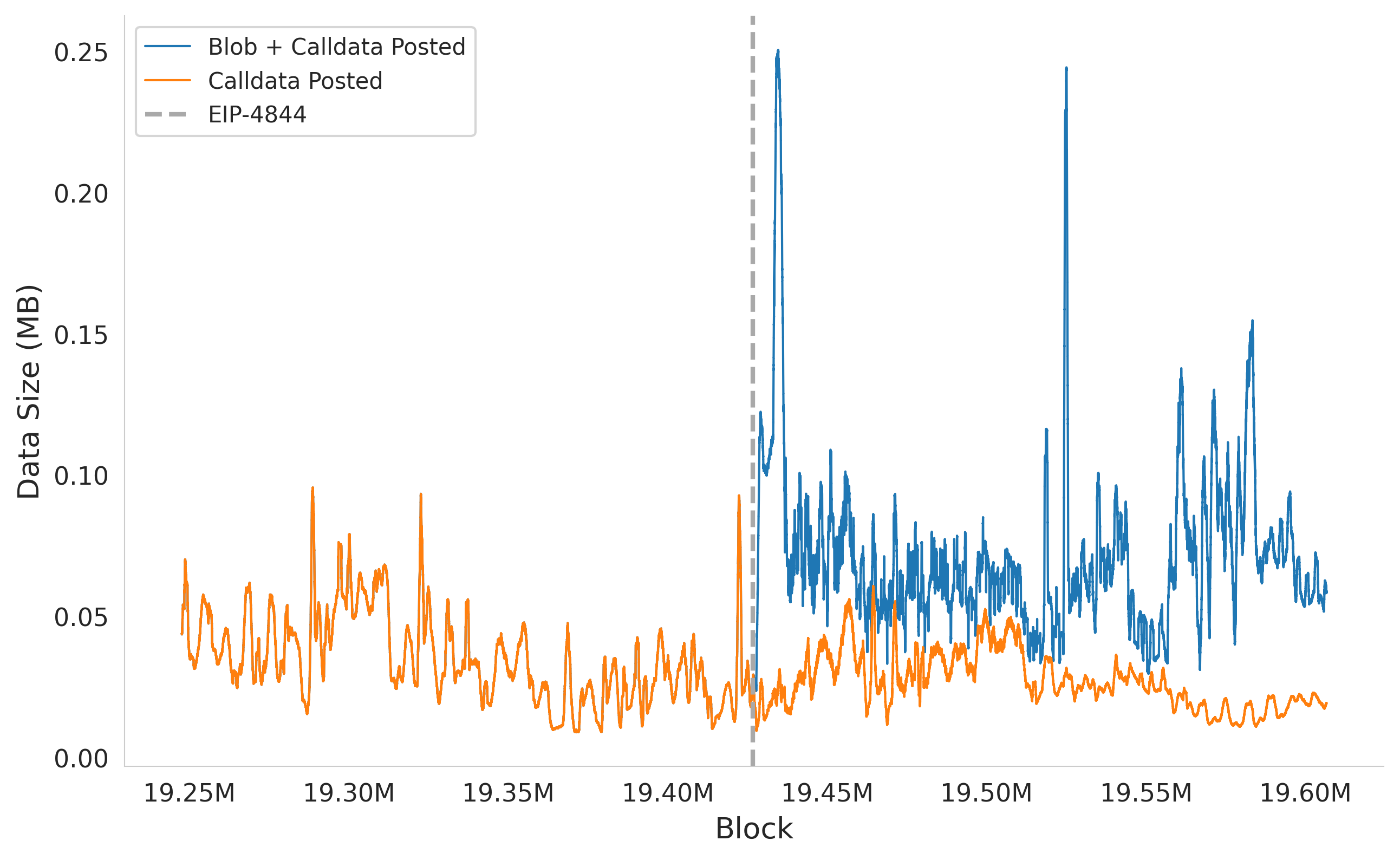
Figure 3: All rollups.
Transaction Fees
There has been a substantial decrease in the average transaction fees paid by rollups, dropping by about 71.38% post-implementation. This reduction underscores the efficacy of EIP-4844 in lowering costs for rollup transactions.
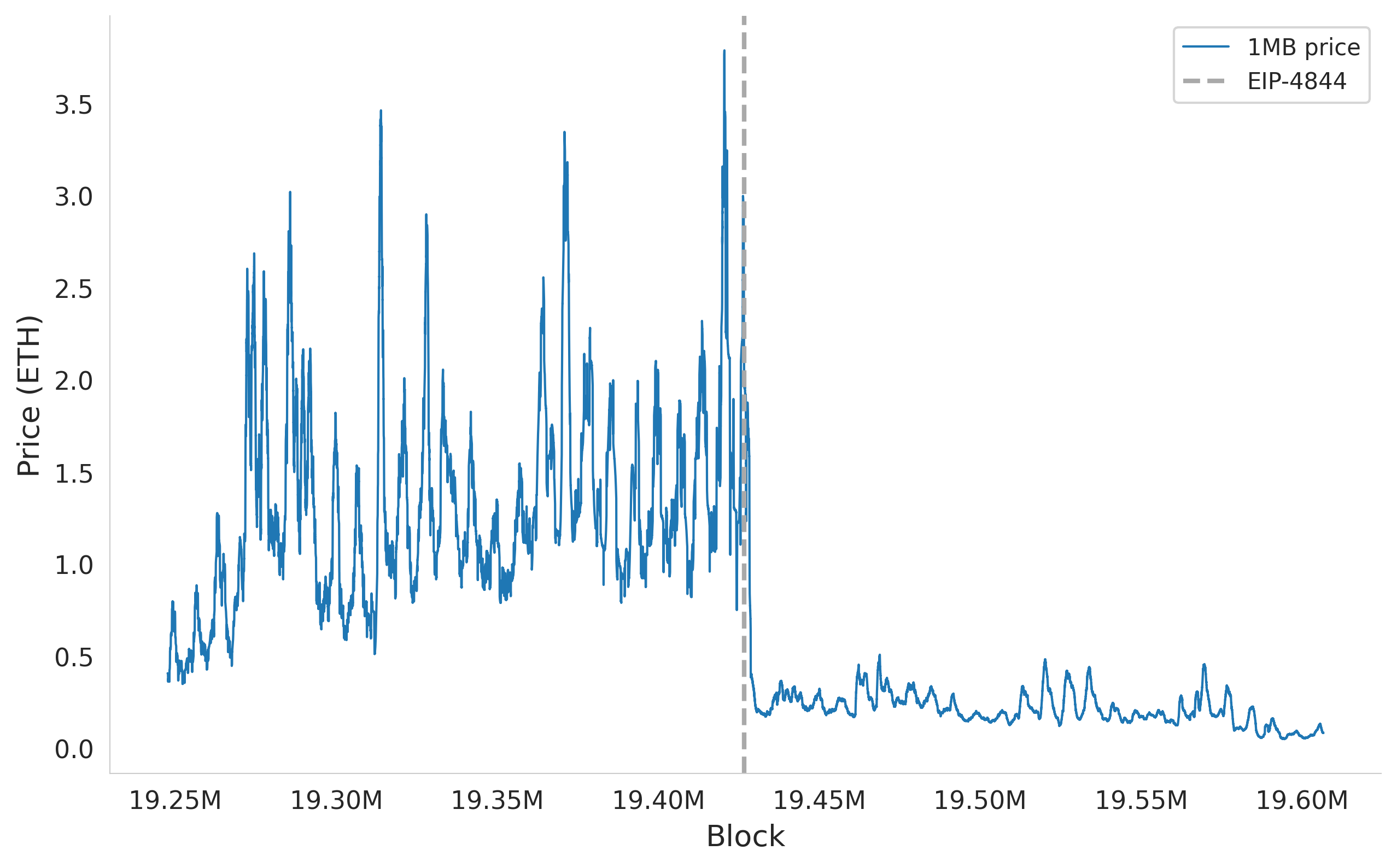
Figure 4: 1MiB price of Ethereum as a DA layer.
Rollup Transaction Dynamics
The dynamics of rollup transactions have been significantly altered by EIP-4844. Two primary areas of impact are transaction volume and user delays.
Transaction Volume
Overall, the volume of rollup transactions posted on Ethereum has seen a significant increase, most notably in Base, which has more than tripled its transaction count. This increase can be partially attributed to the reduced transaction fees.
User Delays
While transaction volumes have increased, user delays have also grown for most rollups, except for Arbitrum One and zkSync, which managed to reduce their delays. This suggests that despite fee reductions, efficiency in transaction finalization remains a challenge for some rollups.

Figure 5: Illustration of the data collection and preprocessing for Arbitrum blocks.
Blob Gas Fee Market
The introduction of a blob gas fee market represents a significant shift toward a multidimensional fee structure within Ethereum. Analyzing the interactions between the blob gas and traditional gas markets highlights some crucial findings.
Market Dynamics
The blob gas fee market exhibits higher volatility compared to the traditional gas market. However, the base fee adjustments appear to effectively capture user demand dynamics, leading to generally favorable predictions for blob gas pricing.
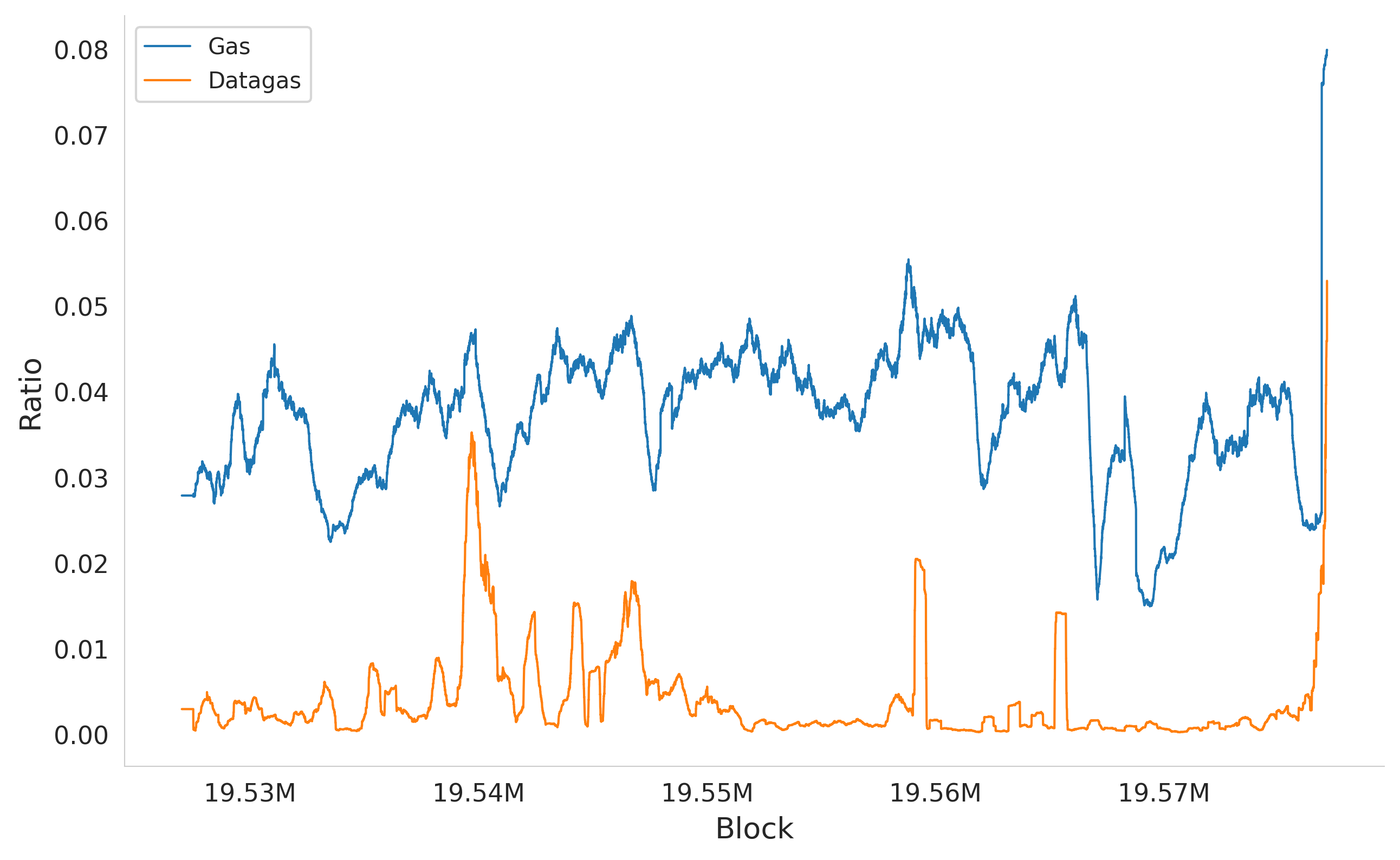
Figure 6: Ratio of priority fee to base fee for gas and blob gas.
Blob Gas Priority Fee
The newly introduced metric for the blob gas priority fee provides a functional measure of demand intensity for blob transactions. This metric's validation shows it contributes to a robust understanding of fee dynamics in the blob market.
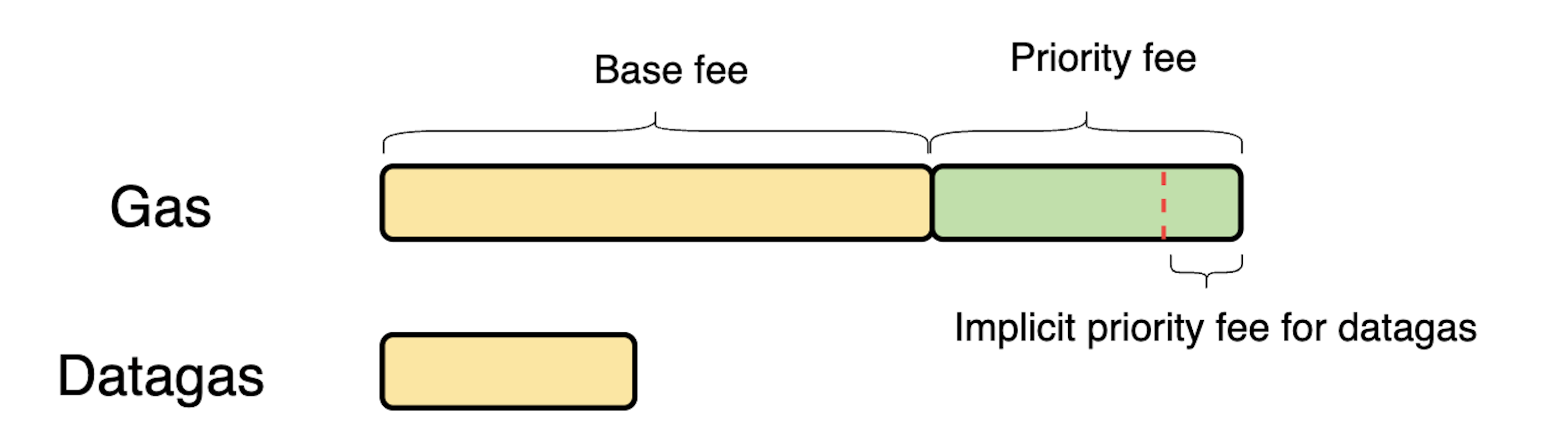
Figure 7: Implicit priority fee of blob gas.
Conclusion
The implementation of EIP-4844 has significantly altered multiple facets of the Ethereum ecosystem. While it has effectively reduced costs and increased the usage by rollups as a DA layer, it has also introduced new complexities in consensus security and transaction dynamics. The insights derived from this detailed analysis offer valuable considerations for further optimizations and future protocol enhancements within Ethereum. The evolving blob gas fee market and its intricacies suggest rich avenues for further research, particularly in optimizing fee mechanisms and enhancing predictability.