- The paper introduces optimistic MEV as a speculative approach that quantifies the impact of cyclic arbitrage on Layer 2 gas usage.
- It employs a multi-stage identification pipeline and regression analysis to demonstrate how network design and fee structures influence MEV dynamics.
- The study underscores the need for protocol-level adjustments, such as fee modifications and enhanced mempool privacy, to optimize network efficiency.
Optimistic MEV in Ethereum Layer 2s: Insights and Implications
Introduction
The paper "Optimistic MEV in Ethereum Layer 2s: Why Blockspace Is Always in Demand" examines the underexplored dynamics of Maximal Extractable Value (MEV) on Ethereum's Layer 2 rollups. These rollups, which have rapidly become vital to the Ethereum decentralized finance (DeFi) ecosystem by offering scalability through off-chain execution and on-chain anchoring of results, now secure significant financial value. This growth highlights a reshaped MEV landscape, instigated by Layer 2 networks' unique characteristics, including different fee mechanisms, shorter block times, and variable transaction ordering policies.
Optimistic MEV Characterization
Optimistic MEV represents a particular form of MEV activity wherein transaction profitability is determined during execution through on-chain state queries. Unlike traditional MEV strategies, which rely on off-chain calculations, optimistic MEV involves speculative execution without prior opportunity verification, leading to frequent probing transactions that do not result in actual trades.
In Layer 2 environments, such as Arbitrum, Base, and Optimism, optimistic MEV is primarily observed in cyclic arbitrage, where bots speculate on price discrepancies across decentralized exchanges without assured profitability. This speculative behavior is facilitated by low fees and abundant blockspace, which allow high-frequency, exploratory interactions with liquidity pools.
Analysis and Findings
The study applies a multi-stage identification pipeline to quantify optimistic MEV on major Layer 2s. It reveals that cyclic arbitrage, as a form of optimistic MEV, constitutes a large portion of on-chain activity, predominantly manifesting on Base and Optimism, where it accounts for over 50% of gas usage. In contrast, Arbitrum and Ethereum Layer 1 networks show markedly lower engagement in optimistic MEV, reflecting differences in network design such as transaction ordering policies and fee structures (Figures 1, 2, and 3).
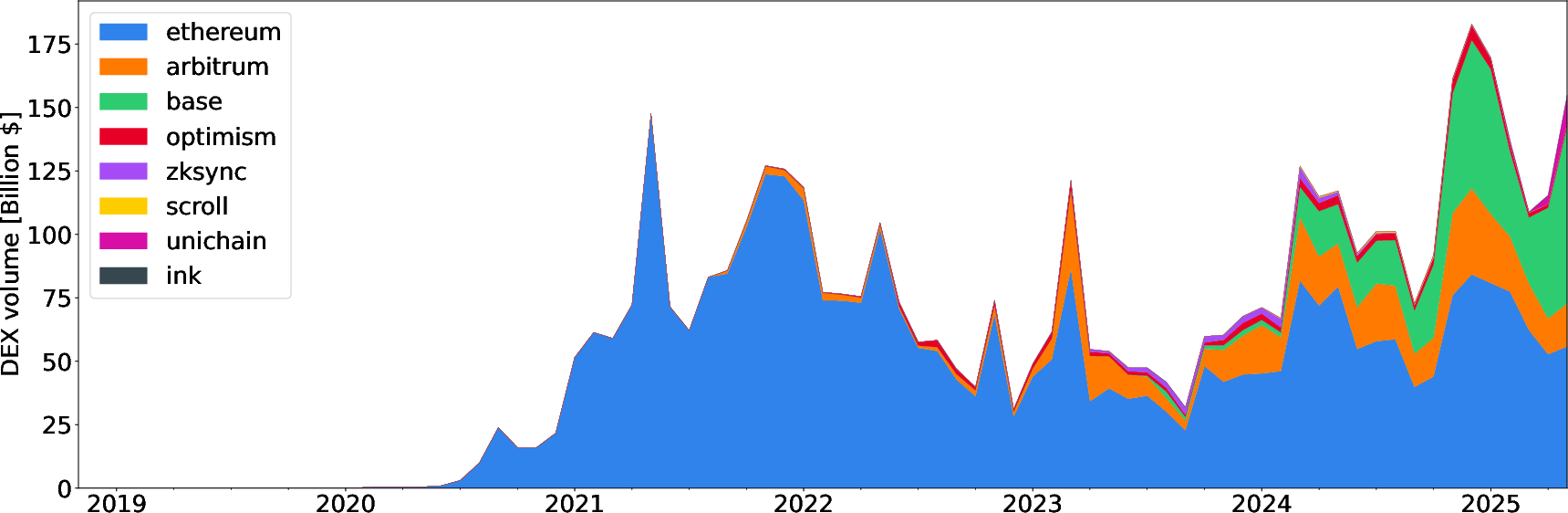
Figure 1: Monthly DEX transaction volume by network from November 2018 to May 2025. The plot highlights the significant rise of Layer 2 networks in total DEX activity.
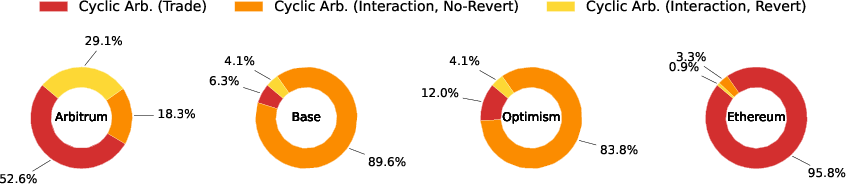
Figure 2: Distribution of cyclic arbitrage transaction outcomes across networks.
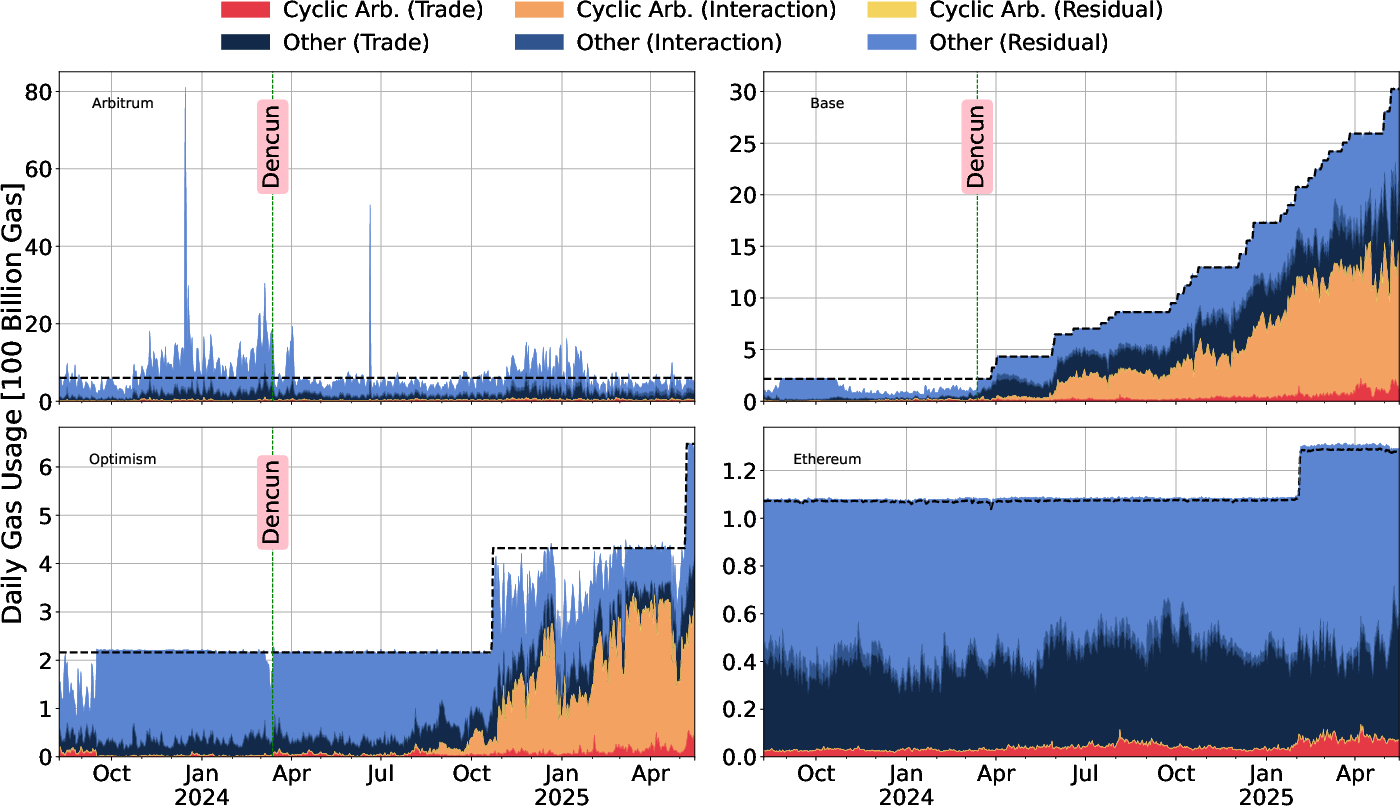
Figure 3: Daily gas usage by transaction category on Arbitrum, Base, Optimism, and Ethereum Layer 1.
Factors Influencing Optimistic MEV
Key drivers of optimistic MEV include low transaction fees, extended interblock times conducive to speculative execution, and variations in sequencer policies. The regression analysis in the study highlights that increased ETH volatility and changes in retail trading behavior significantly impact the prevalence of optimistic MEV. Conversely, the Ethereum Layer 1 network and Arbitrum's operation discourage such speculative activities due to higher fees and different mempool structures.
Moreover, economic incentives for engaging in optimistic MEV are altered by PGA mechanisms. On Arbitrum, these dynamics drive MEV bots towards latency-sensitive strategies rather than speculative probing.
Practical Implications
The prominence of optimistic MEV implicates broader ecosystem efficiency, as it leads to persistent high gas consumption with limited value creation. It highlights the necessity for redesigned mitigation strategies, such as fee adjustments and mempool privacy enhancements, to reduce speculative spam and enhance fair competition among MEV strategies. Additionally, the varying responses of Layer 2 networks to optimistic MEV underscore the potential for protocol-level optimizations to curb inefficiencies.
Conclusion
The findings of this research present a comprehensive view of how Layer 2 infrastructure influences MEV dynamics, especially through optimistic execution. The paper suggests that as Ethereum's Layer 2 ecosystem continues to mature, understanding and addressing optimistic MEV will be crucial for maintaining network performance and user experience.
Understanding these dynamics is pivotal for blockchain developers and network architects aiming to optimize transaction efficiency and maintain equitable network usage. Future work should explore adaptive policies that refine the trade-off between transaction cost and network throughput, potentially through novel decentralized auction mechanisms or enhanced sequencer designs.

