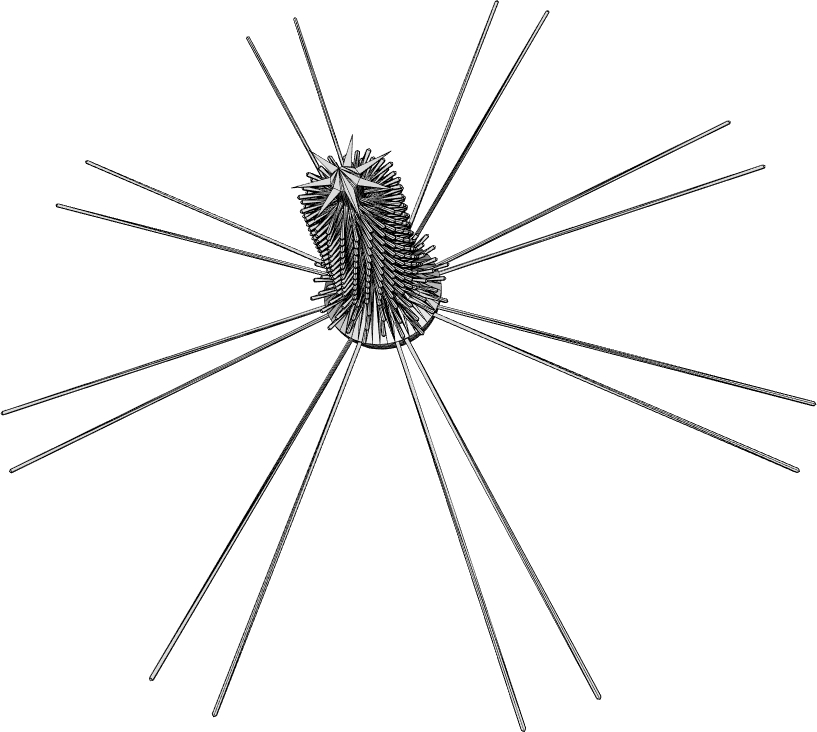
- The paper introduces a progressive mesh simplification strategy that integrates quadric-based edge collapsing with a Tabu Unfolder to dynamically adjust the unfolding process.
- It achieves high success rates and minimal approximative error, as evidenced by consistent coverage and low Hausdorff distances on the Thingi10k dataset.
- The approach overcomes traditional not-unfoldability challenges by ensuring a single-patch, overlap-free unfolding even for complex, high-genus meshes.
Unfolding via Progressive Mesh Approximation
Introduction
The paper "Unfolding via Progressive Mesh Approximation" presents a novel approach for dealing with the geometric problem of unfolding 3D meshes into 2D representations. This method addresses the computational challenges and limitations associated with previous techniques, by implementing a progressive mesh simplification strategy that allows for real-time adaptation and optimization of mesh representations during the unfolding process. Unlike traditional methods that maintain a fixed mesh approximation for unfolding, this technique dynamically alters the mesh approximation, thereby increasing the likelihood of successfully unfolding complex geometries.
Technical Approach
The authors propose a pipeline that integrates mesh approximation with unfolding by leveraging an edge collapsing technique combined with the Tabu Unfolder approach. The process is carried out in three main steps:
- Mesh Simplification: Initially, the 3D object is simplified using an edge collapsing approach. This simplification reduces the geometrical complexity by decreasing the number of mesh faces, leading to lower computational requirements for subsequent steps. The chosen simplification strategy is quadric-based, which balances between minimizing geometric error and computational efficiency.
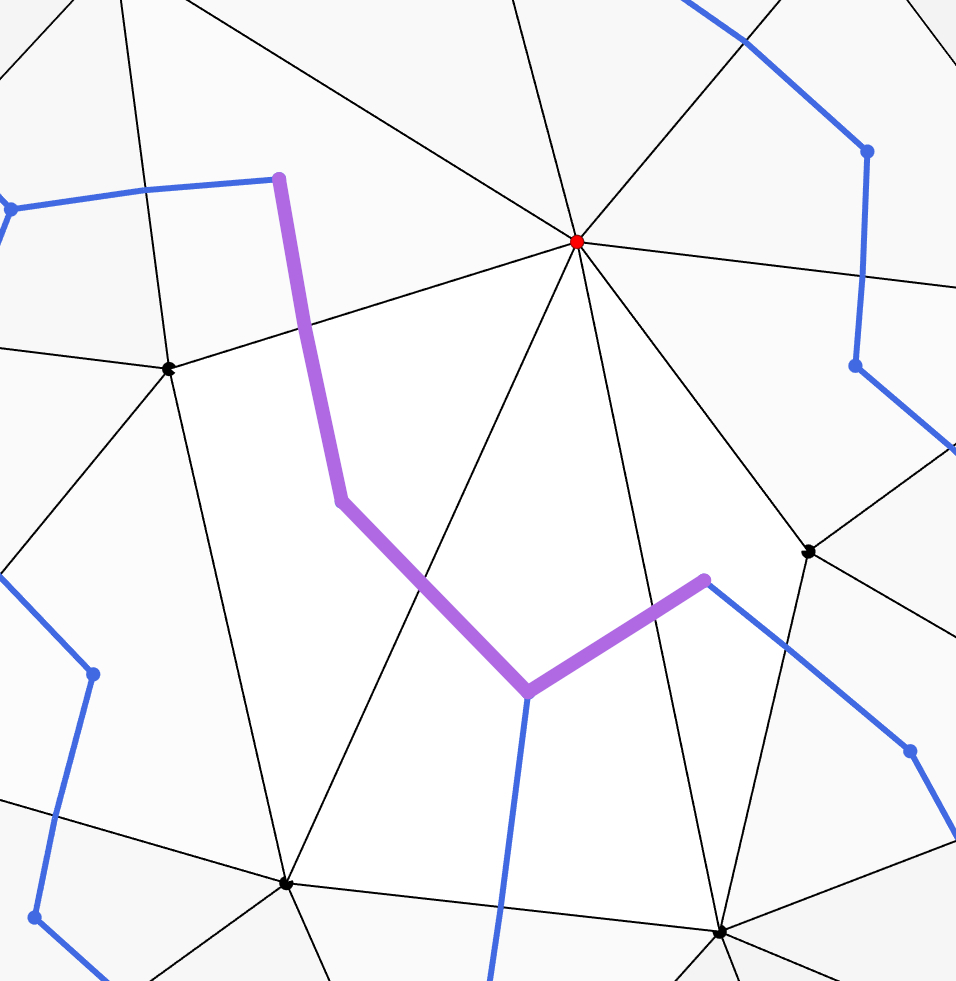
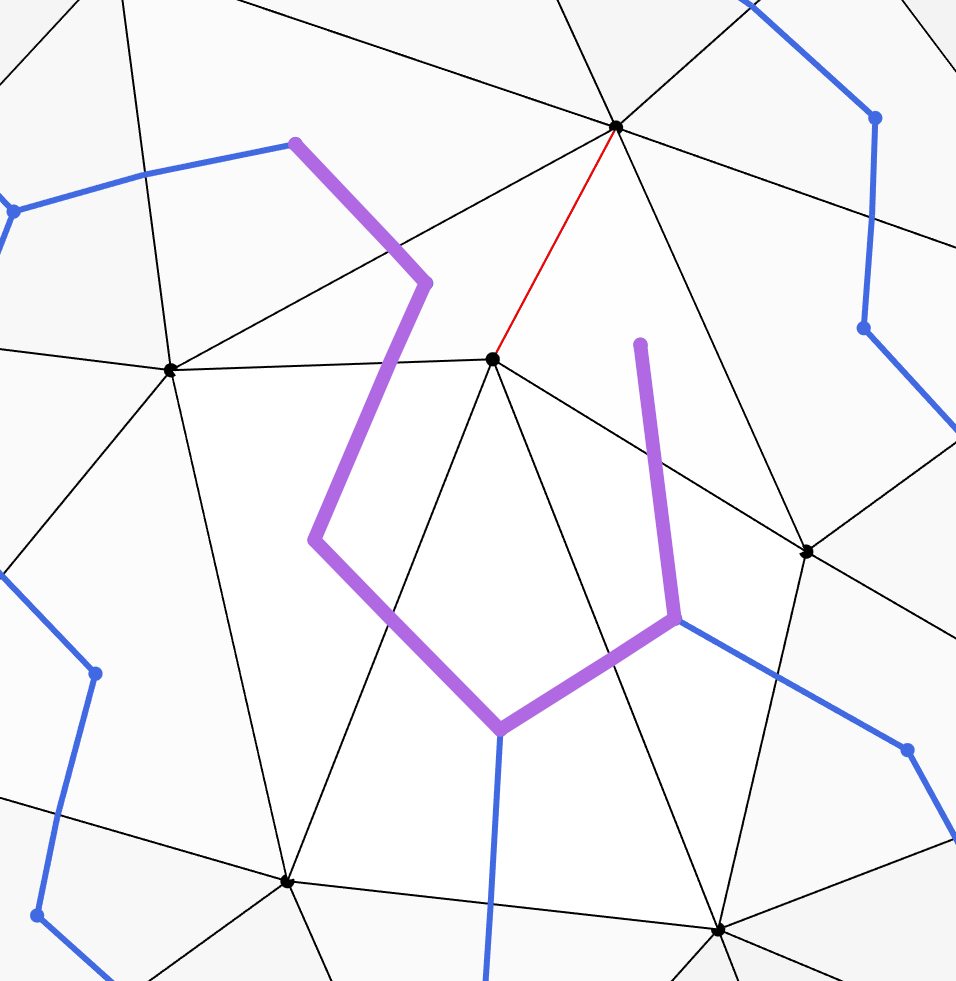
Figure 1: Before uncollapsing an edge.
- Unfolding the Simplified Mesh: Once the mesh is sufficiently simplified, a stable and overlap-free 2D unfolding of the low-resolution mesh is performed using a Tabu Unfolder. The unfolding process deals with resolving overlaps and minimizing material waste upon cutting.
- Progressive Uncollapsing: Starting from the simplified unfolded mesh, edges are incrementally uncollapsed to transition back towards the original high-resolution mesh. During uncollapsing, any resulting overlaps are handled iteratively to retain an overlap-free and single-patched unfolding.
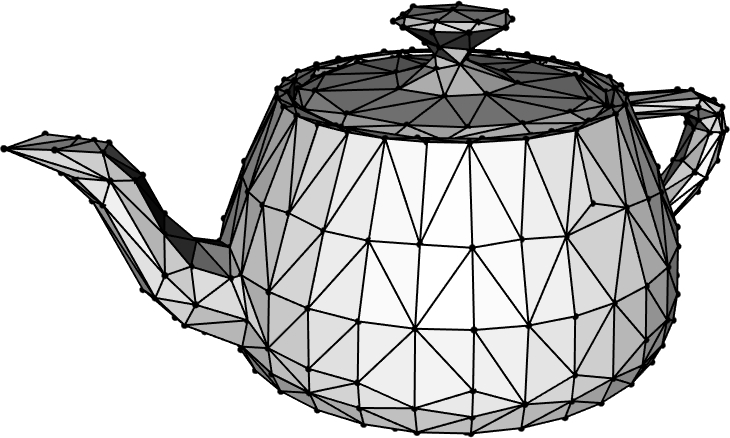
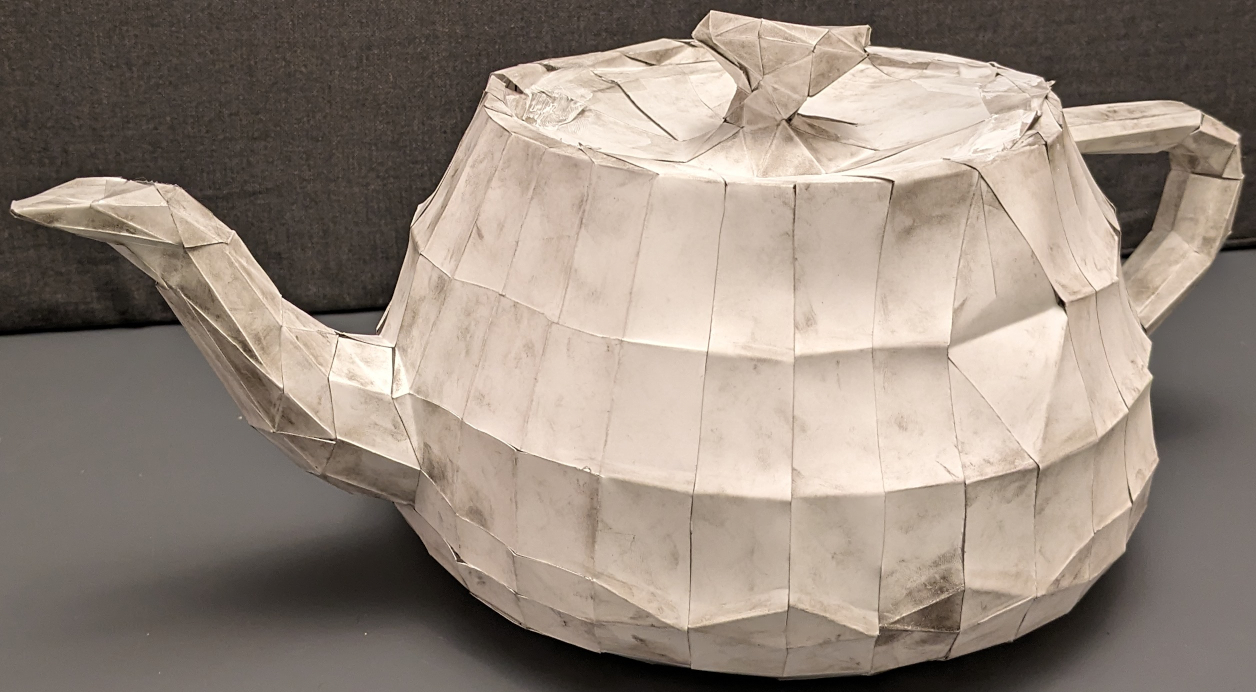
Figure 2: The 3D model.
The proposed approach demonstrates superior reliability and efficiency compared to traditional unfolding techniques. The authors conducted extensive evaluations using the Thingi10k dataset, analyzing multiple metrics including coverage, aspect ratio, success rates, and approximation quality:
Discussion
One of the key advances presented is the method's ability to overcome the not-unfoldability problem by dynamically adjusting the mesh during the unfolding process. The approach proves especially beneficial for complex or high-genus meshes, where traditional unfolding strategies may falter. Notably, the method ensures a single-patch unfolding, avoiding fragmentation and maintaining structural integrity.
Conclusion
This paper contributes a significant advancement in mesh unfolding techniques, offering a practical solution to longstanding issues such as not-unfoldability and computational inefficiency. Future work may explore extensions to non-triangular meshes or further enhancements in edge selection strategies to optimize the unfolding of even more complex geometrical configurations. By doing so, this technique could find broad applications in fields ranging from robotics to architectural modeling, demonstrating substantial versatility and adaptability.